Procurement Risk: A Wine Carrier Is Load-Bearing Retail Packaging
Wholesale canvas wine carriers for hotel retail may look like simple branded bags during artwork review. Once a bottle goes in, they behave more like load-bearing packaging. A filled 750 ml glass wine bottle commonly weighs about 1.2-1.5 kg, depending on the bottle weight, closure, and fill. Two bottles can bring normal carried weight close to 2.6-3.0 kg, and sparkling or champagne-style bottles can push the load higher. That weight does not spread evenly. It concentrates at the handle anchors, upper side seams, divider, bottom corners, and fabric around reinforcement stitches.
Many RFQs still say only canvas wine bag with logo. That is not enough for a fair quote or a safe approval. A bag sold in a resort gift shop needs a different standard than a one-night event handout. A welcome amenity may be packed by hotel staff in small batches. A winery partnership order may be packed at a distributor warehouse. A room-service upsell carrier may be handled quickly by staff and guests in public areas. Each scenario changes the required strength, presentation, barcode workflow, carton plan, and inspection method.
The commercial risk is bigger than one torn handle. Weak carriers can break bottled stock, create guest complaints, make retail displays look tired, and lead to shipment disputes that are hard to settle after delivery. The supplier may say the sample matched the mockup. The buyer may say the bag failed normal use. Both sides avoid that situation by turning design intent into measurable requirements before comparing unit prices: fabric weight, finished dimensions, handle method, seam construction, divider design, decoration method, packing plan, durability tests, and final inspection criteria.
- Define whether the carrier is for paid retail, gifting, staff packing, event distribution, room service, or warehouse transfer.
- State the expected loaded weight and a higher test load for single-bottle and two-bottle styles.
- Ask factories to quote construction details, not only a unit price and a front-view mockup.
- Approve a loaded sample using the largest intended bottle before releasing bulk production.
- Connect every durability requirement to a pass/fail inspection point so quality claims are not subjective.
Fabric Specification: Oz, GSM, Finish, and Tolerance
Canvas weight drives much of the product outcome. It affects strength, shelf shape, print appearance, sewing efficiency, carton volume, and freight. For most hotel retail wine carriers, 10 oz to 12 oz cotton canvas is a practical starting point. Depending on weave and finish, that often corresponds roughly to 280-340 GSM. Buyers should not assume every supplier defines ounces in the same way, so the specification should include both oz and GSM, plus the accepted tolerance. If the mill can support it, a practical target such as +/-5% GSM gives the inspection team something clear to check.
Lighter and heavier fabrics both have trade-offs. An 8 oz canvas may be acceptable for a low-cost single-bottle giveaway, but it can sag around the bottle shoulder, wrinkle under the logo, and show stress faster around stitch holes. A 14 oz canvas feels substantial, yet it can increase material cost, needle wear, sewing-line difficulty, bulky seams, carton cube, and landed freight. Heavier is not automatically better. A cleanly sewn 12 oz carrier with the right handle reinforcement may outperform a bulky 14 oz version with poor stitch balance.
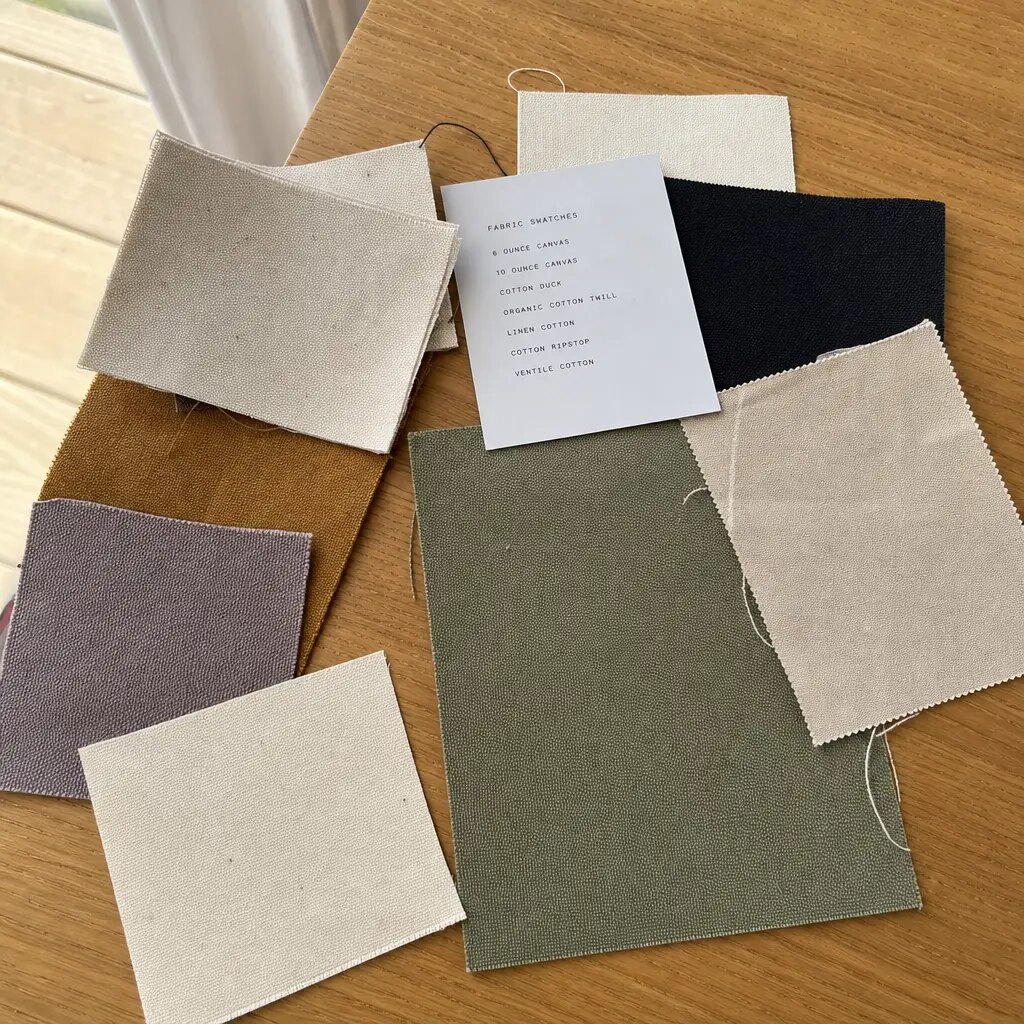
Finish control deserves the same attention as weight. Natural unbleached canvas is popular in hotel retail because it feels tactile, relaxed, and reusable. It also contains seed flecks, shade movement, and occasional slubs. These are not defects if the buyer approves them in advance; they become disputes when nobody defines the standard. Dyed canvas helps with brand color, but it needs lab dip approval, shade lot control, and colorfastness expectations. Washed canvas gives a softer hand, although washing can change dimensions, hand feel, and print response. If the carrier is promoted as washable, shrinkage tolerance and care wording should be discussed before sampling.
- Standard retail starting point: 10 oz to 12 oz cotton canvas, about 280-340 GSM depending on construction.
- Budget single-bottle option: 8 oz only after checking loaded appearance, seam strength, and handle performance.
- Premium option: 14 oz only when the buyer accepts stiffer seams, larger cartons, higher cost, and added freight weight.
- Natural canvas control: define acceptable seed flecks, shade band, slubs, stains, and darker yarn contamination before cutting.
- Dyed canvas control: approve lab dip, bulk shade, colorfastness expectation, and panel matching method.
Bottle Fit: Design Around the Largest Real Bottle
Bottle fit is where many bulk orders go wrong. A carrier that fits a straight-sided Bordeaux 750 ml bottle may be too tight around Burgundy shoulders, too short for some sparkling wine bottles, or unstable with heavier champagne-style glass. Before sampling, procurement should collect real bottle data: full height, base diameter, shoulder diameter, widest body diameter, neck diameter if the opening is narrow, and filled weight. If a hotel group rotates wine partners by season or property, design around the largest realistic bottle in the program instead of the easiest bottle used during artwork approval.
For a single-bottle carrier, the cavity has to balance easy insertion with a clean shelf shape. If the fit is too tight, staff may force the bottle into the bag and stress side seams or bottom corners. If it is too loose, the bottle shifts while carried, the bag collapses on the shelf, and the logo panel twists or creases. Finished internal width, gusset depth, body height, top opening, and handle drop should be measured after sewing and pressing. Flat pattern dimensions are useful for development, but they are not enough for final inspection.
Two-bottle carriers need more engineering. The divider is not decoration; it prevents glass-to-glass contact, helps the bag hold shape, and reduces pressure on the outer panels. A divider caught only at the top opening can look fine in a sample photo but move once the bag is loaded. A stronger divider is stitched into the bottom seam, side structure, or reinforced internal panels. Divider height also matters. Too low, and bottles touch. Too high, and staff insertion slows down. The best approval method is simple: load the sample with the intended assortment, carry it, set it down, inspect the seams, and repeat.
- Measure the largest bottle before sampling: height, base diameter, shoulder diameter, widest body diameter, and filled weight.
- For single-bottle bags, test insertion speed, shelf posture, front-panel distortion, and bottle movement.
- For two-bottle bags, specify cavity width, divider height, bottom attachment, side attachment, and top opening.
- Test sparkling and champagne-style bottles separately because shoulder shape and base diameter often change fit.
- Confirm whether the empty carrier must stand upright or only needs structure once loaded.
Handles, Seams, and Load Path Details
The handle is the main load path, so it deserves more scrutiny than any other component. A handle is not strong because it looks thick. It is strong when material, insertion depth, stitching, thread, and the surrounding panel work together without tearing the fabric. Self-fabric handles can create a clean retail look and match the body material, but they must be folded, inserted, and stitched correctly. Cotton webbing handles often provide more predictable strength for two-bottle carriers because the webbing is built for repeated load and abrasion.
A useful quote states handle width, handle drop, insertion depth, reinforcement pattern, thread, and stitch density. Box-X stitching, bar tacks, multi-row stitching, and seam-captured handles can all distribute stress when executed well. Decorative topstitching alone should not be accepted as reinforcement. Stitch density needs balance. Around 8-10 stitches per inch is a practical starting reference for many canvas constructions, but the right setting depends on the fabric and thread. Too many stitches can perforate the canvas and create a tear line near the handle anchor.
Side seams and bottom corners carry the rest of the load. A French seam, bound seam, or reinforced overlock can work if seam allowance is controlled and raw edges are protected. The bottom gusset must support the bottle base without corner distortion. Two-bottle styles add divider stress, so internal divider seams should be inspected with the same seriousness as exterior seams. Failure criteria should be written plainly: no handle tearing, seam popping, fabric splitting, stress-hole expansion, divider detachment, or bottom distortion under the agreed test load.
- Handle details to quote: material, width, drop, insertion depth, reinforcement stitch, thread, and attachment point.
- For one-bottle bags, self-fabric handles can work if load-tested with the final canvas and stitch pattern.
- For two-bottle bags, cotton webbing or wider reinforced self-fabric handles are usually easier to validate.
- Seam details to specify: seam type, seam allowance, stitch density, bottom-corner reinforcement, and raw-edge control.
- Failure criteria should include visible stress holes and progressive seam damage, not only complete breakage.
Decoration: Print Durability and Brand Control
Hotel teams usually notice the logo first. Procurement still needs to ask a second question: will the decoration survive the way the bag is folded, packed, handled, displayed, and carried? Screen printing is often the most practical bulk method for solid hotel marks, resort names, winery partner logos, and one- or two-color artwork. It can perform well on cotton canvas when ink type, screen setup, pressure, curing, and fabric texture are controlled. The buyer should approve printing on the final or production-equivalent canvas, because a paper proof cannot show ink absorption, slub interference, edge softness, or fabric show-through.
Heat transfer can be useful for lower-volume property splits or small multi-color designs. It needs its own checks. Transfers can lift at edges, crack across fold lines, or leave heat marks on some canvas finishes. Ask for peel review, fold testing, and dry rub after curing. Embroidery can look premium, especially for boutique retail, but it may pucker lighter canvas panels and change the way the front panel looks when a bottle is inserted. If embroidery is selected, approve backing, stitch density, thread color, and loaded appearance rather than judging only the flat sample.
Logo placement should have a reference point and a tolerance. Soft canvas panels move during sewing, pressing, and folding, so visual centering is not a reliable inspection method. State logo size, distance from the top edge or side seam, allowable skew, and color reference. If the carrier is folded for packing, make sure fold lines do not cross heavy ink or transfer edges. If printed panels touch each other in cartons, use paper interleaving or another protection method. Also confirm that ink is fully cured before packing, especially when cartons will be closed soon after printing.
- Screen print: practical for solid logos, repeat programs, and cost-controlled bulk hotel retail orders.
- Heat transfer: useful for small multi-color runs but requires peel, fold, dry rub, and heat-mark checks.
- Embroidery: approve only after reviewing puckering, backing, stitch density, and loaded panel shape.
- Inspection tolerance: measure logo position from top edge, side seam, bottom seam, or approved centerline.
- Packing link: protect printed panels from abrasion, ink transfer, fold cracking, and carton compression.
RFQ Structure: Make Supplier Quotes Comparable
Very different prices often come from different assumptions, not better sourcing. One factory may quote 10 oz natural canvas with self-fabric handles and bulk packing. Another may quote 12 oz dyed canvas, cotton webbing handles, a stitched divider, woven label, hangtag, barcode sticker, individual bag, and stronger export cartons. Both may call the item a canvas wine carrier. To compare quotes fairly, procurement should issue a specification sheet that separates the base construction from optional branding, retail presentation, and packing details.
MOQ also needs a clean structure. A factory's MOQ is shaped by fabric roll purchasing, cutting efficiency, print setup, sewing-line planning, and packing labor. A hotel group may want several property logos on the same carrier, but each logo can require a separate screen, artwork approval, carton mark, barcode setup, and inspection sample. Each fabric color may introduce a separate dye lot. Each packing method changes labor and carton cube. Ask suppliers to price one base bag first, then show the cost effect of each split.
A stronger quote identifies what is included and what is not: fabric procurement, cutting, sewing, print setup, artwork handling, sample fees, woven labels, care labels, hangtags, barcode labels, belly bands, individual bags, cartons, local transport, export handover, and inspection support. This detail prevents a low unit price from hiding charges that are unavoidable later. It also helps hotel operations teams understand landed cost and delivery timing before rolling the program across multiple properties.
- Quote the base bag separately from logo, label, hangtag, barcode, packing, and destination splits.
- Ask for pricing by 10 oz, 12 oz, and 14 oz only if the supplier can state GSM ranges and tolerances.
- Break out screen charges, transfer plates, embroidery digitizing, sample costs, and packing material costs.
- Identify each logo, color, or packing version as a separate production lot if it affects MOQ or inspection.
- Require lead time by stage: material, sample, revision, bulk cutting, printing, curing, sewing, inspection, packing, and handover.
Sample Approval Path: Fit, Print, Construction, and Packing
Sampling should answer known risks before bulk production starts. A blank fit sample is useful when bottle dimensions are uncertain because it validates cavity width, gusset, body height, divider design, handle drop, and shelf shape without waiting for final artwork. Load it with the largest bottle in the assortment. If hotel staff will pack the carrier at the property, ask someone to insert and remove bottles several times. A bag that looks good in a photo can still be slow or awkward in daily use.
The printed approval sample tests logo clarity, ink coverage, placement, curing, and panel distortion. Review it flat and loaded, because the front panel changes once the bottle is inside. For heat transfer, check edge adhesion and fold behavior. For embroidery, check puckering and backing. If the first sample is revised, record exactly what changed: dimensions, fabric weight, handle drop, divider height, seam type, print size, label position, or packing method. Informal photo approval through messages is risky for a product with load-bearing requirements.
The pre-production sample is the control sample. It should use final fabric, final color, final handle construction, final seam method, final divider, final decoration, final label, and final packing. Keep one approved sample with the buyer, one with the supplier, and one available for inspection where practical. A packing or shipping sample then confirms fold method, interleaving, hangtag, barcode position, carton count, carton dimensions, gross weight, and carton marks before mass packing begins.
- Blank fit sample: confirms dimensions, insertion speed, divider behavior, handle drop, and loaded shape.
- Printed sample: confirms artwork size, print clarity, placement, curing, fold impact, and loaded panel distortion.
- Pre-production sample: locks fabric, construction, decoration, labeling, packing, and tolerance reference.
- Packing sample: confirms fold direction, retail presentation, barcode location, carton quantity, and carton strength.
- Approval record: document measurements, material, seam method, handle method, print method, packing, and accepted deviations.
Durability Testing Checklist for Hotel Retail Buyers
Durability testing does not need a complex laboratory setup for every order, but it does need a written protocol. The goal is to prove that the carrier can survive the handling it will actually see: factory packing, carton movement, freight, back-of-house storage, staff filling, shelf display, guest purchase, and possible reuse. A simple pass/fail test with photos and retained samples is stronger than a broad request for good quality. The protocol should state load weight, duration, cycle count if used, sample quantity, and failure criteria.
Start with real load. Weigh the intended filled bottle or use a conservative estimate, then add a safety margin. A single-bottle carrier should be tested above one filled bottle weight. A two-bottle carrier should be tested above the combined filled weight of the two heaviest bottles in the program. Request static hanging under the agreed test load, repeated lift cycles, and a loaded carry check. After testing, inspect handle anchors, side seams, bottom corners, divider seams, and fabric around stitch holes. Look for progressive damage, not only sudden breakage.
Add tests that match the retail environment. A divider test confirms that two bottles do not strike each other while carried. A print rub test checks dry transfer after curing. A fold and pack test shows whether the logo cracks, creases, or sticks when packed the same way as production. A carton handling review confirms carton quantity, gross weight, compression risk, and whether handles are crushed. For higher-risk programs, ask the supplier to test several pieces from bulk production, not only the golden sample.
- Static load test: hang the finished carrier at the agreed test load and inspect all load points after the defined duration.
- Lift-cycle test: repeatedly lift and lower the loaded carrier by the handles and inspect for progressive damage.
- Divider test: carry the two-bottle bag with intended bottles and confirm separation, bottom stability, and seam integrity.
- Print rub test: rub cured print with a dry cloth and inspect transfer, smearing, cracking, peeling, or heavy abrasion.
- Fold test: fold using final packing method and check whether print, transfer, embroidery, or panel shape is damaged.
- Carton test: confirm carton count, gross weight, compression resistance, and protection against logo or handle deformation.
Packing, Barcodes, and Hotel Distribution Workflow
Packing is not an afterthought for hotel retail. A canvas wine carrier may move from factory packing to a forwarder, central warehouse, property receiving area, back-of-house stockroom, and gift shop shelf before a guest handles it. Packing decisions affect cleanliness, unit counting, carton cube, freight cost, retail presentation, plastic use, barcode workflow, and receiving labor. A low unit price can disappear quickly if the packing plan creates rework at the hotel.
Folded bulk packing is usually the most cost-efficient option and can reduce plastic use, but it requires print protection and controlled carton pressure. Individual bags keep units cleaner and simplify unit barcode scanning, although they add material, labor, and carton volume. Belly bands, kraft sleeves, and hangtags improve shelf presentation and allow retail information or barcodes to be added without printing extra content on the carrier. Paper interleaving can help when printed panels face each other, especially with dark ink or large logo areas.
Carton data should be part of the quote, not a surprise at shipment. Ask for units per carton, carton dimensions, gross weight, net weight, carton marks, item code, logo version, color, barcode version, destination, and carton number. Avoid mixing property logos unless the buyer has a controlled allocation process. Overpacked cartons can crush handles and leave permanent fold lines across logos. Underpacked cartons waste freight and allow abrasion. Good packing protects the product and fits the receiving workflow.
- Folded bulk pack: lowest packing cost but requires print protection and fold control.
- Individual bag: cleaner inventory and easier unit barcode handling but higher material use and carton volume.
- Belly band or kraft sleeve: stronger retail presentation but requires extra artwork approval and packing labor.
- Paper interleaving: useful when printed panels touch or when abrasion risk is high.
- Carton specification: units per carton, size, gross weight, net weight, marks, destination, and logo-version label.
Inspection Plan, Defect Classes, and Shipment Release
Inspection should be defined before production, not negotiated after defects appear. Start by classifying defects. Critical defects include safety or usability failures such as handle tearing under test load, open bottom seams, divider failure that allows bottle contact, severe contamination, or wrong construction that makes the carrier unsuitable for the intended bottle. Major defects include wrong fabric weight, incorrect dimensions outside tolerance, visible stains, broken stitches, poor logo placement, uncured print, wrong barcode, or packing that damages the product. Minor defects can include small loose threads or minor natural canvas slubs when they stay within the approved standard.
A practical inspection plan has three stages. Raw material inspection checks GSM, shade, stains, weaving defects, finish, and fabric width before cutting. In-line inspection checks handle reinforcement, seam allowance, stitch density, divider attachment, print curing, trimming, and panel matching while problems can still be corrected. Final inspection checks finished dimensions, loaded bottle fit, load test results, logo placement, decoration quality, carton labels, carton quantity, and packing condition. If the order is split by property logo, barcode, or color, each lot should be sampled and counted separately.
Shipment release should be tied to evidence. Request inspection photos, durability test records, carton list, packing photos, and reference to the approved pre-production sample. If defects are found, define the rework path: trim threads, replace stained units, resew handles, remake failed goods, reprint rejected panels, or repack cartons. Discounts may be acceptable for cosmetic issues if the buyer approves them. Structural failures should not be accepted for hotel retail use unless the use case and risk assessment change.
- Raw material checks: GSM, shade, stains, slubs, weave defects, finish, and fabric width.
- In-line checks: handle anchors, seam allowance, stitch density, divider attachment, print curing, and trimming.
- Final checks: dimensions, loaded fit, durability tests, logo placement, decoration quality, carton labels, and packing.
- Defect classes: define critical, major, and minor defects before the factory starts bulk production.
- Release evidence: require carton list, packing photos, inspection records, approved sample reference, and rework confirmation.
Specification comparison for buyers
| Sourcing decision | Practical B2B specification | Acceptance target | Procurement risk to control |
|---|---|---|---|
| Fabric weight | 10 oz to 12 oz cotton canvas, typically about 280-340 GSM depending on weave and finish; record both oz and GSM on the spec sheet | Bulk fabric within the approved GSM range, commonly +/-5% when the mill and order size can support it | Catalog descriptions such as heavy canvas are too vague; 8 oz may sag under load, while 14 oz can raise sewing difficulty, carton cube, and freight cost |
| Natural canvas finish | Unbleached natural cotton canvas with an approved swatch, seed fleck standard, shade band, and stain rejection rule | Bulk panels visually match the approved swatch under consistent light; natural flecks accepted only within the agreed standard | Natural canvas varies by lot; disputes often come from undefined flecks, slubs, shade variation, or darker yarn contamination |
| Dyed or washed canvas | Lab dip approval before bulk dyeing; Pantone or physical swatch reference; shrinkage and colorfastness expectations stated | Shade lot controlled by roll or panel; shrinkage expectation written if the carrier is marketed as reusable or washable | Dyed rolls can vary; washed canvas may change dimensions, hand feel, print result, and finished tolerance |
| Bottle fit | Design around the largest bottle in the program, not only a Bordeaux 750 ml bottle; record height, base diameter, shoulder diameter, and filled weight | Bottle inserts smoothly, sits upright, and does not overstress seams; two-bottle styles keep bottles separated with a tested divider | Burgundy, sparkling, and champagne-style bottles can exceed standard assumptions and strain seams or slow hotel staff packing |
| Two-bottle divider | Divider stitched into the bottom and side structure or otherwise supported by the load path; not only caught at the top hem | Bottles remain separated during insertion, lift-cycle testing, and carton handling simulation | Loose dividers allow glass contact, transfer load into side panels, and create failures that are not visible in flat sample photos |
| Handle reinforcement | Self-fabric or cotton webbing handles with stated width, drop, insertion depth, thread, and box-X, bar-tack, or multi-row reinforcement | No tearing, seam popping, fabric splitting, stress-hole growth, or handle distortion after agreed static-load and lift-cycle tests | Decorative topstitching can look strong in photos while failing under two-bottle retail loads |
| Seam construction | French seam, bound seam, or reinforced overlock with controlled seam allowance and 8-10 SPI as a starting reference | Consistent seam allowance, no skipped stitches at load points, reinforced bottom corners, clean trimming, and protected raw edges | Raw inner edges can fray; excessive stitch density can perforate canvas and weaken the panel |
| Logo method | Screen print for solid marks; heat transfer for small multi-color runs; embroidery only after puckering, backing, and loaded-panel review | Decoration passes dry rub, fold, scratch, peel where relevant, and placement checks after curing or finishing | Canvas texture affects ink coverage; transfers can lift; embroidery can distort lighter panels and change how the carrier sits when loaded |
| Retail packing | Define folded bulk, paper interleaving, belly band, hangtag, kraft sleeve, barcode sticker, or individual bagging | Cartons protect logo, handles, and folds; carton count, dimensions, gross weight, and marks are approved before shipment | Packing changes unit cost, plastic use, barcode workflow, carton cube, shelf presentation, and final inspection sampling |
Buyer checklist before sampling
- Confirm the actual use case: gift shop retail sale, room-service wine upsell, guest welcome amenity, tasting event, winery partnership, minibar add-on, or internal property transfer.
- List every bottle type that may be packed: Bordeaux 750 ml, Burgundy 750 ml, sparkling wine, champagne-style bottle, half bottle, magnum if relevant, and any boxed accessory bundle.
- Record maximum bottle height, base diameter, shoulder diameter, neck diameter, and filled bottle weight; send physical bottles or dimensioned drawings when fit is critical.
- Specify cotton canvas by oz and GSM, including allowed GSM tolerance, weave, finish, color, shrinkage expectation, visible fleck standard, and approved swatch control.
- Define finished dimensions after sewing: body width, height, gusset, top opening, handle drop, handle width, divider height, cavity width, and tolerance for each measurement.
- For two-bottle carriers, state whether the divider is stitched into the bottom, side seams, top hem, or a separate insert, and require a loaded carry test with the intended bottles.
- Set normal working load and test load for each style; include a safety margin above actual bottle weight and state what visible damage counts as failure.
- Require handle details: material, width, drop length, insertion depth, reinforcement shape, thread type, stitch density, and whether load is distributed into the side seam or top hem.
- Define seam construction: seam type, seam allowance, stitches per inch, bottom-corner reinforcement, raw-edge control, skipped-stitch limits, loose-thread limits, and fraying limits.
- State logo method, artwork size, color reference, print location, placement tolerance, ink or transfer type, curing requirement, and rub, fold, peel, or scratch test requirement.
Factory quote questions to send
- What exact fabric are you quoting: cotton canvas oz, GSM range, yarn or weave description if available, finish, color, and expected bulk tolerance?
- Will bulk GSM be checked from fabric rolls or cut panels before sewing, and can the approved production swatch be retained for future repeat orders?
- Is the material greige, bleached, natural unbleached, dyed, washed, enzyme washed, or pre-shrunk, and what shrinkage or shade variation should we write into the specification?
- For our largest bottle, what finished internal width, height, gusset, top opening, and handle drop do you recommend, and what finished-dimension tolerance can you hold?
- For two-bottle styles, how is the divider attached at the bottom, sides, and top, and what test will prove the bottles remain separated during carrying?
- For a loaded two-bottle carrier around 2.6-3.2 kg in normal use, what handle material, handle width, insertion depth, reinforcement pattern, thread, and stitch density do you recommend?
- Can you provide your proposed static load test, lift-cycle test, seam test, divider test, and print rub or peel test, including load weight, duration, cycle count, and pass/fail criteria?
- Which logo method are you quoting, how many colors are included, what ink, transfer, or thread is used, and what screen, plate, digitizing, or artwork fees are separate?
- What logo placement tolerance can you maintain on sewn canvas panels, and will measurements be taken from the top edge, side seam, bottom seam, or centerline?
- What is the MOQ for one fabric color and one logo, and how does unit price change if we split the order across two hotel property logos, two barcodes, or two packing methods?
Quality-control points to confirm
- Bulk fabric GSM must be measured from actual production material, not estimated from a catalog swatch or previous order sample.
- Approved fabric swatches should be used to check shade, hand feel, weave density, seed flecks, slubs, stains, and finish before cutting begins.
- Finished dimensions must be measured after sewing and pressing, including width, height, gusset, top opening, handle drop, handle width, divider height, and cavity width.
- Bottle fit must be checked with the largest approved bottle or a dimensionally accurate substitute, including insertion speed, panel distortion, and shelf posture.
- Static load testing must check handles, handle anchor points, side seams, bottom corners, divider attachment, and fabric stress holes at the agreed test load.
- Lift-cycle testing must confirm that repeated handling does not produce seam popping, stitch breakage, handle tearing, divider detachment, or progressive fabric damage.
- Two-bottle styles require a loaded divider test because divider failure can allow bottle contact even when outer seams look acceptable.
- Stitch density, seam allowance, and reinforcement stitching must be consistent at handles, side seams, bottom corners, top hems, and divider attachment points.
- Logo placement must be measured from agreed reference points with an allowed tolerance; visual centering on soft canvas is not sufficient for inspection.
- Screen print must be checked after curing for dry rub transfer, cracking at fold lines, scratch damage, ink buildup, and unacceptable fabric show-through.