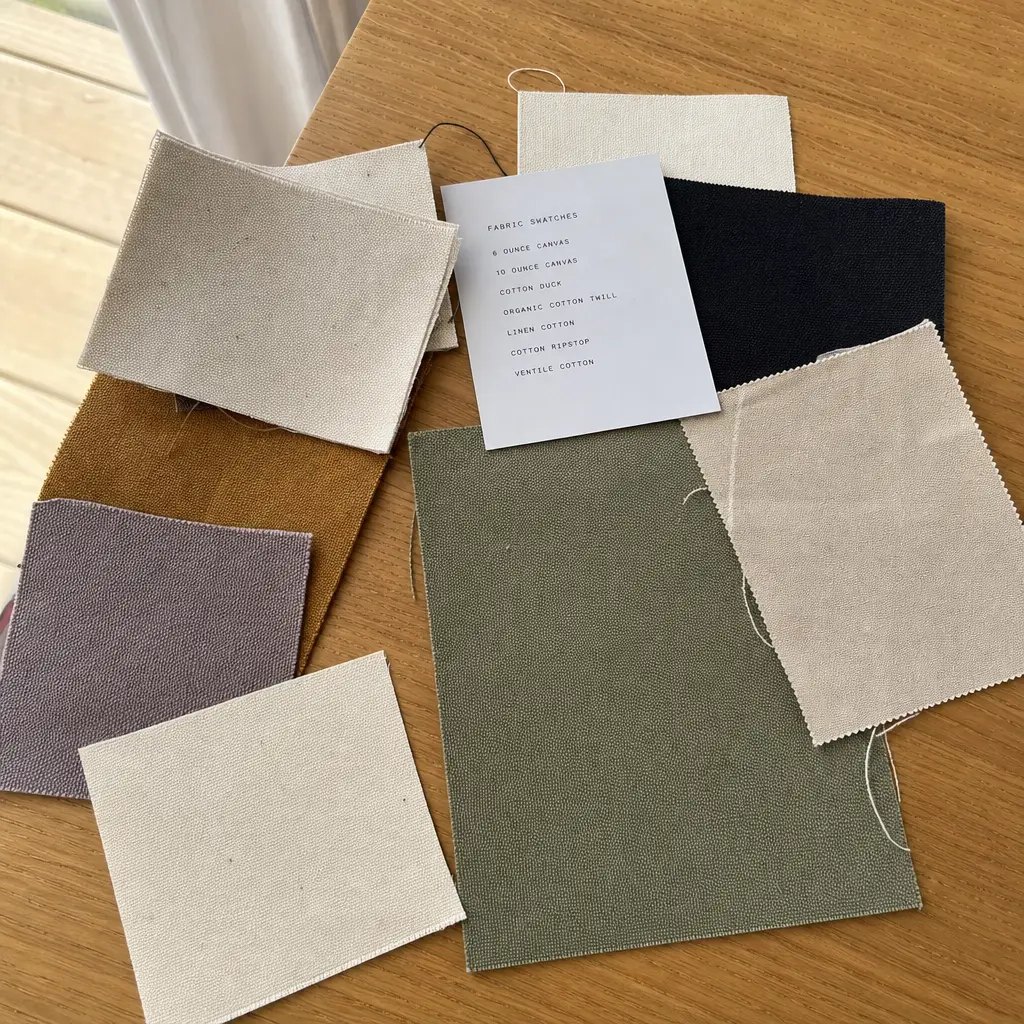
Why material choice matters for subscription box wine carriers
For subscription boxes, a canvas wine carrier is not just a decorative bag. It has to protect the bottle, pack efficiently, survive fulfillment handling, and still look premium when the customer opens the box. The wrong fabric weight or construction can create problems that show up late: distorted print, wrinkled packing, weak handles, or a carrier that feels cheap next to the wine itself.
The best sourcing approach starts with the end-use, not the decoration. If the carrier sits inside a monthly subscription box, the buyer usually needs a balance of structure, compact folding, and repeatable decoration rather than a heavy gift bag that looks good on a table but wastes carton space. The material choice should support the box program, not fight it.
- Match fabric weight to bottle count and packing format.
- Build the quote around finished size, not only cut size.
- Treat decoration method as a material decision because it affects handfeel and shrinkage.
- Plan for fulfillment efficiency: easy folding, low lint, and consistent thickness.
Canvas GSM ranges that work in real sourcing
Most wholesale canvas wine carriers for subscription boxes land in the 10 oz to 12 oz range, or roughly 340 to 410 GSM depending on weave and finishing. That range usually gives enough body for a premium presentation without making the carrier too stiff to fold into a shipping carton. If the carrier includes a divider or bottle padding, the upper end of that range usually performs better because the seams have more stability.
Lightweight canvas below that band can still work for pilot programs or mailer inserts, but it tends to lose structure after printing and packing. Heavier canvas above 12 oz can be useful for gift retail or reusable premium sets, but freight and handling cost rise quickly. Buyers should ask for washed or pre-shrunk fabric where possible, since post-sewing shrinkage changes size control and can affect logo placement.
- 10 oz is a practical starting point for single-bottle subscription inserts.
- 12 oz is safer for premium builds, divider panels, and repeated handling.
- Pre-washed fabric helps stabilize dimensions and reduces surprise shrinkage.
- Ask the factory whether GSM is measured before or after finishing.
Fabric finish and construction choices that change performance
Canvas finish affects more than appearance. A smoother finish improves print sharpness, reduces lint, and makes folding easier. A more rustic finish may look authentic but can make fine-logo screen printing less reliable. For buyers comparing quotes, the most useful question is not whether the fabric is “nice”; it is whether the weave, finishing, and shrinkage will stay consistent across production lots.
Construction details matter just as much as fabric selection. Reinforced side seams, bar-tacks at handle joints, and a clean top hem make a big difference in perceived quality. If the carrier includes a stitched divider for two bottles, that divider should be built from the same or similar fabric weight as the body or it may pull the bag out of shape during packing.
- Choose smoother canvas for small logos and crisp line art.
- Choose brushed or washed canvas only if the brand wants a softer, more casual look.
- Specify reinforcement at stress points in the RFQ.
- Confirm seam construction with sample photos, not only spec sheets.
Print methods and branding placement that survive packing
For subscription box programs, decoration should be selected based on order volume, artwork complexity, and the way the carrier will be folded. Screen print remains the most practical choice for simple one-color or two-color branding on medium and high volumes. It gives strong coverage and stable unit cost, but it needs clean artwork and enough print area to avoid crowding seams or folds.
Heat transfer can be acceptable for smaller pilot orders or multi-color artwork, but buyers need to test for cracking and edge lift after folding. Woven labels or side labels work well when the brand wants a premium, understated look and does not need a large logo panel. Embroidery can be attractive on thicker canvas, though it adds cost and can create stiffness that interferes with compact packing.
- Keep logos away from major fold lines.
- For screen print, approve ink opacity on the actual fabric color.
- For transfers, test abrasion after repeated folding.
- For woven labels, specify size, color count, and edge finish early.
Supplier routes: direct factory, trading company, or local converter
The cheapest quote is not always the best route. A direct factory usually gives better control over fabric sourcing, stitch details, and production timing, especially when the order repeats every month or quarter. A trading company can be useful when the buyer needs mixed materials, short color runs, or faster communication across several product types in one shipment. A local converter may win on speed for samples and small urgent programs, but the unit cost is often higher.
When comparing supplier routes, the buyer should look at who owns the fabric, who controls the print process, and who takes responsibility for dimensional QC. If those responsibilities are split, the quote can look competitive but the risk moves to the buyer during approval and inspection. Ask each supplier to state whether the fabric is mill-booked, stocked, or sourced after order confirmation.
- Direct factory: strongest for repeat volume and tighter cost control.
- Trading company: useful for variety and multi-item procurement bundles.
- Local converter: useful for urgent sampling and short lead-time needs.
- Ask who handles dye lot control, print setup, and final inspection.
MOQ logic and how it affects quote quality
MOQ for wine carriers is often driven by three separate factors: fabric color booking, print setup, and sewing efficiency. Buyers sometimes focus only on the finished-unit minimum, but a factory may still require a minimum per color or per artwork version. If the program needs seasonal colors, gift set variations, or private label inserts, the real MOQ can rise quickly even when the nominal order looks small.
A better RFQ gives the factory enough detail to quote by route, not guesswork. State the number of colorways, whether the same pattern repeats across all SKUs, and whether the logo changes. That makes the quote more honest and reduces the chance that the factory adds hidden costs later for extra screen setup, thread color changes, or packaging changeovers.
- Ask for MOQ by fabric color, print artwork, and packaging version.
- Separate pilot run volume from repeat order volume in the RFQ.
- If multiple SKUs share the same base, ask for a common-material quotation.
- Watch for MOQ inflation caused by custom labels or special cartons.
Sample approval and QC thresholds before bulk release
A sample should prove more than visual appearance. The buyer needs to approve fabric handfeel, size tolerance, print registration, handle strength, and folding behavior. If the carrier will ship inside subscription boxes, the sample should also be tested in the actual box format to see whether it creases badly, catches on insert tabs, or changes the pack-out sequence. That is where many late-stage problems appear.
Approval should happen in stages. A fabric swatch or lab dip confirms the material direction, a pre-production sample confirms construction and decoration, and a sealed reference sample sets the standard for bulk. If the factory offers only a photo approval, the buyer should treat that as a risk signal, not a shortcut. For this kind of product, physical approval is the safer route.
- Measure final size after pressing and folding.
- Confirm logo placement against seam lines and handle anchors.
- Inspect stitching at the top hem and divider joints.
- Keep one approved sample sealed as the bulk reference.
Packing format, carton control, and subscription-box fit
Packing format is a cost driver, not just a logistics detail. A carrier folded flat in a polybag takes less space and usually lowers outbound volume costs, while a retail-style insert card or kraft sleeve can improve presentation but adds labor and carton bulk. For subscription box programs, the best approach is usually a packing format that protects the canvas from dust and keeps the folded size predictable for the box line.
Master carton design matters as much as the inner pack. If cartons are too heavy or too loosely packed, the bag can shift, crease, or arrive with edge crush. Buyers should define carton count, carton dimensions, and maximum gross weight before the factory finalizes packing. If the carrier includes metal hardware or thicker canvas, carton limits become especially important for freight planning.
- Specify whether the carrier ships flat, half-folded, or pre-packed in the box insert.
- Set a carton weight limit that matches warehouse handling.
- Request carton photos and packing lists during pre-shipment review.
- Avoid overpacking that creates permanent fold lines on printed areas.
Lead time, freight risk, and landed-cost comparison
The lead time for wholesale canvas wine carriers usually breaks into fabric booking, sample approval, bulk sewing, inspection, and dispatch. If the order needs custom-dyed fabric or special labels, the fabric stage often becomes the longest step. Buyers should request timing by stage rather than a single delivery estimate so they can see where the schedule may slip.
For landed cost, compare not only unit price but also setup charges, packing labor, carton dimensions, and the likely freight class. A slightly higher unit price with better packing efficiency can produce a lower landed cost than a cheaper quote that ships in oversized cartons. This matters especially for subscription box programs, where inbound cube cost can affect the monthly margin more than the bag itself.
- Separate sample lead time from bulk lead time in the quote.
- Ask whether the fabric is stock-supported or mill-order only.
- Compare carton cube, not just carton count.
- Include decoration setup, insert cost, and inspection cost in the landed-cost view.
A practical sourcing workflow for procurement teams
The most reliable sourcing workflow is simple: define the use case, lock the fabric target, approve a physical sample, then compare quotes on the same packed specification. If buyers send vague RFQs, suppliers fill the gaps with assumptions and the quotes become impossible to compare. That leads to cost creep later when the factory treats hidden choices as extras.
For subscription box wine carriers, the best procurement documents usually include bottle size, target canvas GSM, print method, folding method, packing format, and an agreed approval sample. With those items fixed, the buyer can compare supplier quotes on real commercial differences instead of trying to decode loosely written offers.
- Use one spec sheet for all bidders.
- Compare the same artwork, same fabric basis, and same packing format.
- Require a breakdown of fabric, sewing, print, packing, and freight assumptions.
- Reject quotes that do not identify what is excluded.
Specification comparison for buyers
| Spec decision | Recommended option | When it fits | Buyer risk to check |
|---|---|---|---|
| Canvas weight | 10 oz to 12 oz washed canvas for most subscription boxes | Use when the carrier needs a premium handfeel, decent structure, and repeatable print quality without excess cost | Too light can wrinkle and collapse; too heavy raises freight and makes folding in cartons harder |
| Canvas construction | Plain weave canvas with controlled shrinkage pre-wash | Best for programs that need stable dimensions after printing and sewing | Unwashed fabric can shrink after decoration and change fit for bottle sleeves or inserts |
| Print route | Screen print for simple logos, heat transfer for short runs, woven label for long-term branding | Screen print works for one- to two-color artwork; woven label fits premium minimal branding; transfer suits small pilot runs | Fine lines can fill in on textured canvas; heat transfers can crack if packing is tight or storage is hot |
| Handle material | Cotton webbing or matching canvas straps with bar-tack reinforcement | Good for subscription boxes that are handled frequently by fulfillment teams and end customers | Weak stitching or thin webbing creates returns and damages the perceived quality at unboxing |
| Closure style | Open-top carrier or top-tie drawcord depending on shipment method | Open-top is simpler for box packing; tie closure is better when bottles must stay separated in transit | Closure hardware can add weight, snag packaging, and slow packing speed |
| Bottle separation | Single sleeve or stitched divider panel based on bottle count | Single-bottle carriers fit curated gift boxes; dividers suit two-bottle or mixed-item subscription sets | Divider width must match bottle diameter; too narrow causes sewing distortion and inconsistent fit |
| Supplier route | Direct factory for repeat volume; trading company for broad color sourcing; local converter for urgent pilot | Direct factory is best for stable demand and custom specs; trading company helps when color matching or mixed trims are complex; local converter suits urgent samples | Middlemen can hide fabric origin, increase quote spread, and make QC accountability less clear |
| MOQ strategy | Base MOQ on fabric dye lot and print setup, not only finished-unit target | Useful when a buyer needs multiple SKUs, seasonal colors, or personalization versions | Low MOQ may still carry high setup cost per unit and create leftover stock in slow-moving colors |
| Packing format | Flat-packed with bulk polybag or kraft sleeve, then cartonized by drop test plan | Fits subscription box operations that want compact inbound cartons and efficient pick-pack flow | Overstuffed carton packing can crease the canvas and increase carton dimension charges |
Buyer checklist before sampling
- Confirm target bottle size, carrier type, and whether the box includes one bottle, two bottles, or mixed accessories.
- Lock canvas GSM, shrinkage tolerance, and acceptable color variance before requesting quotes.
- Specify print method, artwork count, placement, and whether a woven label or side label is required.
- Define reinforcement points: handle bar-tacks, divider seams, top hem, and stress-test expectation.
- State packing format, carton count, master carton limits, and whether retail-ready inserts are needed.
- Request sample photos, pre-production sample timing, and a signed approval sample before bulk cutting.
- Ask for lead time by stage: fabric booking, sampling, production, inspection, and outbound booking.
Factory quote questions to send
- What is the exact canvas weight in GSM or oz after washing, and what shrinkage allowance is built into the pattern?
- Which print method is included in the quote, how many colors are covered, and what is the setup charge for extra artwork positions?
- What is the MOQ by color and by artwork version, and can the order be split across sizes or closures?
- Which reinforcement details are included at the quoted price, including handle bar-tacks, divider seams, and top hemming?
- What packing method is quoted, including polybag type, insert card, carton spec, and master carton quantity?
- What is the production lead time after sample approval, and what delays usually affect this type of order?
- What QC standard is used for dimensional tolerance, stitching defects, print alignment, and color consistency?
- Can you share fabric swatches, a pre-production sample schedule, and carton packing photos from a recent similar order?
Quality-control points to confirm
- Check canvas GSM against the approved swatch, not only the supplier’s brochure spec.
- Measure finished dimensions after pressing; confirm the bottle sleeve width and depth against the target bottle diameter.
- Inspect stitch density, bar-tack length, and seam tension at handle anchors and divider joints.
- Rub test the print for early ink transfer, cracking, or edge lift after folding and light abrasion.
- Verify color consistency across panels, especially when the carrier uses multiple fabric pieces or contrast trims.
- Open carton samples to confirm folding method, odor, dust protection, and crease level on arrival.
- Review drop-pack results for crushed corners, loose threads, and deformation after transit simulation.