Start with the corporate gifting workflow, not the bag alone
A wholesale canvas wine carrier looks simple until it enters a corporate gifting workflow. The same product may be used as an event handout, a holiday client gift, a branch-distributed sales item, a hospitality package, or one component inside a larger gift box. Each use case changes the sourcing decision. A fast event handout may need an open top and bulk packing. An executive gift may need a cleaner finish, individual wrapping, tighter logo alignment, and carton sorting by recipient group.
Procurement teams should define the workflow before asking factories to quote. Who inserts the bottle: the factory, a 3PL, a warehouse team, a local branch, or the buyer's staff at an event? Will the carrier ship empty, ship with wine, or sit inside a presentation carton? Will the order be distributed to one address or split by region? These details affect closure choice, folding method, carton labels, inspection, and lead time.
The workflow also protects the artwork. A logo centered on a flat digital mockup may appear too low after a tall bottle fills the carrier. A drawstring channel can reduce available print height. A boxed base can create a fold line across the bottom of the artwork. A handle attachment zone can limit how high the logo can sit. The right proofing checklist connects the physical construction to the branded presentation the recipient will actually see.
- Map the gift path: factory pack, third-party kitting, warehouse insertion, branch insertion, event handout, or direct-to-recipient fulfillment.
- Identify whether the carrier is the final presentation item or a component inside a larger gift set.
- Confirm who owns approval: procurement, brand, marketing, compliance, sales, event team, distributor, or end client.
- Decide whether the order is a one-time campaign or a repeatable seasonal program requiring reorder consistency.
- Document any branch sorting, barcode, carton label, or recipient allocation requirement before quote comparison.
Build the specification around real bottle dimensions
Bottle capacity is not enough for pattern approval. Most corporate gifting wine programs use 750 ml bottles, but the bottle body, shoulder, punt, neck, and filled weight vary by style. A Bordeaux bottle is usually straighter and slimmer. A Burgundy bottle often has a wider body and sloped shoulder. Champagne and sparkling bottles are often wider and heavier. If the bag is patterned around only one slim sample, a later bottle change can strain seams, distort the print, and make the handle feel too short.
Ask the buyer or wine supplier for actual bottle dimensions. At minimum, record overall height, maximum body diameter, shoulder width, neck height, and filled weight. If the program may use several wines, test the largest and heaviest bottle, not only the first available bottle. The carrier should have enough ease to insert the bottle without forcing, but not so much extra room that the bottle leans or the front panel collapses.
Finished bag dimensions should be stated in millimeters and tied to the measurement method. A flat measurement may not match the filled shape once the gusset opens. Ask for front panel width, total height, gusset depth, opening width, base type, handle width, and handle drop. For two-bottle carriers, add divider construction, bottle spacing, internal seam strength, and whether the divider reaches the base.
This is also where buyers should decide whether they want one universal carrier or separate patterns by bottle type. A universal pattern can simplify procurement, but it may not look equally clean on all bottles. Separate patterns improve presentation but can increase MOQ, inventory complexity, and version-control risk.
- Use actual bottle height, maximum diameter, shoulder profile, and filled weight in the spec sheet.
- Test the largest and heaviest approved bottle before bulk approval.
- State dimensions as finished measurements in millimeters and define whether they are measured flat or filled.
- Confirm gusset depth and opening width; both affect insertion speed and bottle stability.
- Treat late bottle substitutions as production changes because they can affect pattern, print position, handle drop, and packing.
Specify canvas weight, weave, color, and finish precisely
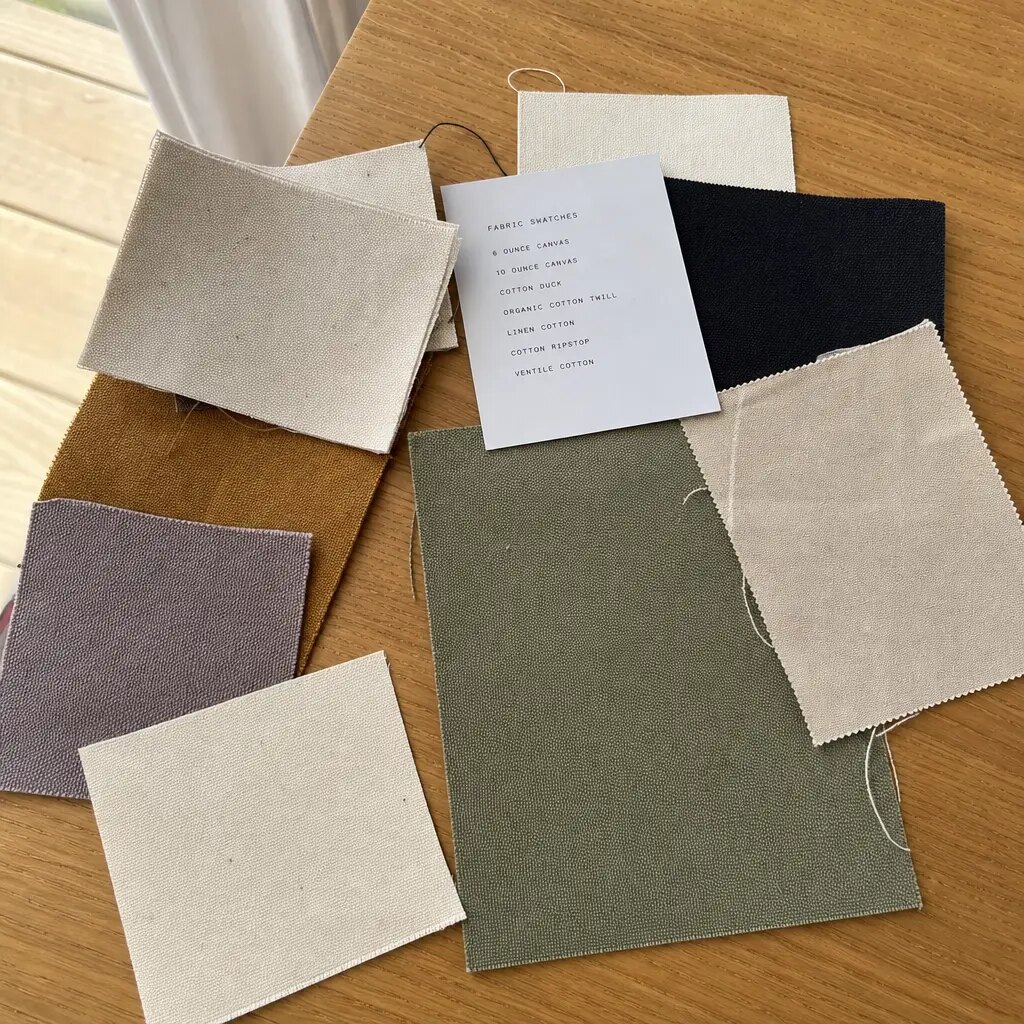
For corporate gifting, 10-12 oz cotton canvas, roughly 340-410 GSM, is often a practical range for one-bottle wine carriers. It has enough structure to feel substantial and support a clean print, while still folding and packing efficiently. Lighter canvas can reduce cost and carton weight, but it may wrinkle more, collapse around the bottle, and show less premium structure. Heavier canvas can improve body but raises material cost, sewing difficulty, fold bulk, and freight weight.
Weight is only one part of fabric performance. A tightly woven 10 oz canvas can print more sharply than a loose 12 oz cloth. Natural canvas may show cotton seed flecks, slubs, and small shade differences; this can be acceptable for an organic or craft look but not for every corporate brand. Dyed canvas can create a stronger brand backdrop, but it requires lab dip approval, shade control, and attention to lint and colorfastness.
Buyers should avoid terms such as premium canvas, medium canvas, heavy cotton, or eco canvas unless the supplier defines them with measurable details. The quote should state weight in oz and GSM, fiber content, weave type where available, color, finish, and bulk tolerance. A common commercial approach is to approve a production swatch and allow a stated fabric weight tolerance, often in a range such as +/-5% to +/-10%, depending on the fabric mill and order size.
If the carrier will sit inside a closed gift box with wine, cards, confectionery, or other premium components, odor and lint matter. Canvas finishing, dyeing, printing, and packing materials can all contribute smell or surface dust. Ask the supplier to air goods properly after printing and to check odor before sealing cartons.
- Request canvas weight in both oz and GSM where possible.
- Approve a fabric swatch or lab dip before bulk cutting, especially for dyed canvas.
- Define acceptable natural flecks, slubs, shade variation, and lint level.
- Ask whether the fabric is natural, bleached, dyed, washed, enzyme-washed, or otherwise finished.
- Include odor and surface dust in the final QC checklist for gift-box programs.
Choose the decoration method before final artwork approval
The print method determines what the logo can look like, how much it costs, and how it should be inspected. Screen printing is usually the first option for simple one-color or two-color logos on cotton canvas. It works well for bold artwork, repeat orders, and stable quantities because setup cost can be spread across the run. However, screen printing on textured canvas has limits: very fine lines, tiny type, tight reverse details, and low-contrast colors may not reproduce cleanly.
Heat transfer can be useful for detailed logos, multi-color artwork, gradients, or shorter runs where multiple screens are not economical. It can offer crisp edges, but buyers must evaluate the film edge, surface feel, adhesion, gloss level, and behavior on folds. A transfer that looks good on a flat swatch may look different on a narrow carrier panel that flexes around a bottle.
Embroidery can work for premium programs, but it is not a simple substitute for printing. Dense embroidery can pucker lighter canvas, add backing, limit placement, and alter how the front panel drapes. If embroidery is required, test it on the final fabric and panel construction before approving bulk. Ask the factory for stitch count, backing type, thread color, and pucker control method.
Color matching also needs realistic language. Pantone references are helpful, but canvas color, ink opacity, underbase, fabric absorbency, and curing can shift the result. A white logo on natural canvas is different from a white logo on black canvas. Bright reds, metallic effects, and fine gradients may need extra testing. Buyers should ask whether the supplier is committing to an exact Pantone match, a closest available ink match, or an approved visual match against the sample.
- Use screen print for bold one-color or two-color artwork and larger repeatable runs.
- Use heat transfer for fine detail, gradients, many colors, or short custom versions after checking edge and adhesion.
- Use embroidery only after testing pucker, backing, placement, and panel distortion.
- Ask for minimum line weight and minimum text height for the chosen method on the actual canvas.
- Quote setup charges separately: screens, films, plates, transfers, embroidery digitizing, artwork conversion, and revisions.
Make the print proof a measured production document
A useful print proof is not a generic mockup. It is a measured production control document showing exactly how the approved artwork will sit on the sewn carrier. The proof should include finished carrier outline, front panel dimensions, logo width and height, distance from top edge, vertical centerline, seam allowance, gusset lines, base fold, handle stitch area, closure channel, and no-print zones. On a narrow wine carrier, these details matter more than they do on a large tote.
Placement tolerance should be stated in millimeters. Many buyers use a practical tolerance such as +/-3 mm to +/-5 mm for logo placement on small sewn bags, but the exact tolerance depends on construction, printing process, jigs, and whether printing is done before or after sewing. If the supplier cannot hold the requested tolerance, it is better to know before the PO is released.
The proof should also control versioning. Record the artwork file name, proof number, date, logo size, print method, color reference, and approver. If marketing changes the logo size or if the wine bottle changes after the first proof, issue a revised proof instead of relying on email comments. This prevents the common problem of one team approving a PDF while the factory prints from a different file.
Buyers should review the proof in two states: flat and filled. A logo that appears centered on a flat panel may visually shift when the bottle rounds the front. A low logo may be interrupted by the base fold. A high logo may compete with handle stitching or a drawstring channel. The final proof should reflect the presentation position, not only the flat cutting panel.
- Require dimensions in millimeters for the bag, logo, and placement references.
- Show top edge, centerline, seams, gussets, fold lines, handle stitch zones, drawstring channel, and no-print areas.
- State logo placement tolerance and logo size tolerance before production.
- Approve proof version, artwork file name, color target, print method, and approver in one record.
- Do not approve bulk production from a visual mockup that lacks measurements and construction references.
Use samples to test fit, print, handle, and packing risk
The pre-production sample is the buyer's best opportunity to prevent bulk rework. It should use final canvas, final color, final trim, final handle material, final thread, final decoration method, final logo size, and final packing method. If the supplier substitutes any element, the sample should be labeled as reference only. A temporary logo on available cloth may help with concept discussion, but it cannot confirm production color, print clarity, handle feel, or packing performance.
Sample review should be structured. Insert the actual bottle or a weighted dummy with similar dimensions and mass. Check insertion speed, panel shape, seam strain, bottle lean, handle drop, and whether the logo still appears centered when filled. Lift the carrier repeatedly by the handle and watch whether the handle attachments pull, twist, or create stress lines in the printed panel.
Inspect the decoration under neutral light rather than only through phone photos or yellow warehouse lighting. Check color, opacity, registration, edge sharpness, pinholes, transfer edge, rub, and whether fine details remain readable. If the carrier will go into a gift box, pack the sample exactly as planned with tissue, cards, inserts, or bottle protection. Then reopen it and look for scuffed print, fold marks, lint transfer, odor, and crushed presentation.
Sampling time should be shown separately from bulk time. Artwork proofing, sample making, sample freight, internal review, revision, and second-sample approval can easily become the schedule bottleneck. Procurement should build this into the calendar instead of accepting a bulk production lead time that starts only after PP sample approval.
- Approve a sales sample as reference only unless it uses final materials and final decoration.
- Use the actual bottle or a weighted dummy during sample review.
- Check the logo after bottle insertion, not only when the carrier is empty and flat.
- Photograph the approved sample from front, side, top opening, base, handle stitch area, and packed position.
- Keep the approved PP sample available for factory comparison and final inspection.
Compare MOQ and price using the same assumptions
MOQ for wholesale canvas wine carriers is rarely just one number. It can change by fabric color, custom dyeing, print method, number of print colors, handle type, closure, hangtag, barcode, packing format, and delivery split. A natural canvas carrier with one-color screen print and bulk packing may have a very different minimum than a dyed navy carrier with two-color transfer, individual paper wrap, and branch-specific carton labels.
Low MOQ can be valuable for a pilot, executive list, regional program, or short event. The tradeoff is often higher setup cost per unit, fewer material choices, and less flexibility in packing. Larger quantities can improve unit cost because cutting, screen setup, line changeover, and packing labor are spread across more pieces. Neither path is automatically better; the quote must be compared against the same spec.
Ask suppliers to break out unit price, fabric upgrade, dye surcharge, setup charges, print run charge, sample charge, revision charge, handle upgrade, closure upgrade, label or hangtag, individual packing, carton charge, inspection, and freight assumptions if applicable. If one supplier includes individual polybags and another assumes bulk pack, the prices are not comparable. The same applies to carton strength, barcode labels, and carton sorting.
For repeat corporate gifting programs, ask about continuity. Can the same fabric be sourced next season? Will screens or digital artwork be stored? Is there a screen storage fee or expiration period? Can the same cutting pattern and packing instruction be referenced for reorder? These questions reduce variation when the program becomes annual.
- Ask for MOQ by fabric color, dyeing, decoration method, print color count, packing format, and shipment split.
- Separate setup, sample, packing, carton, and label costs from the base unit price.
- Request alternate pricing for one-color, two-color, and complex artwork if brand approval is pending.
- Ask whether screens, patterns, artwork files, and packing instructions can be reused for reorders.
- Give every supplier the same spec sheet, proof version, bottle dimensions, and packing instruction.
Plan packing, cartons, and kitting rules before production
Packing can make a good carrier look poor by the time it reaches the recipient. Canvas wine carriers are often folded, nested, or compressed. If the fold runs through the logo, the print may crease or look worn. If printed faces rub against each other, ink or transfer surfaces can scuff. If artwork versions are mixed in cartons, a 3PL may need to sort goods manually. These are preventable problems if packing is specified before production.
Choose packing based on the distribution model. Bulk flat pack is efficient when a warehouse will insert bottles and assemble gifts. Individual polybags improve count control and surface protection but add material and unpacking labor. Paper wrap or tissue can be more suitable for premium kits. Hangtags, insert cards, and barcode labels should be specified with position and attachment method, not left to the factory's default.
Carton details belong in the quote. Ask for units per carton, carton dimensions, gross weight, net weight, carton mark, and whether inner cartons are used. Warehouses may have handling limits, pallet requirements, or barcode receiving rules. A carton that is too heavy slows handling; a carton that is too light or oversized can crush or waste freight volume.
Kitting instructions should be operational. State fold direction, logo facing direction, bottle insertion orientation, card placement, tag position, barcode position, and carton sequence. If goods must be separated by office, salesperson, region, or recipient group, that sorting requirement should appear in the purchase order and carton mark proof.
- Define bulk pack, individual bag, paper wrap, hangtag, barcode, insert card, and kit-ready requirements before quoting.
- Set fold direction so the printed face is not sharply creased through the logo.
- Request carton dimensions, units per carton, net weight, gross weight, and a carton mark sample.
- Confirm artwork version separation and branch allocation rules if the order has multiple logos or destinations.
- Ask for packed sample photos or a packing trial before shipment release.
Set inspection tolerances before the PO is released
Quality control is most useful when tolerances are agreed before production. For canvas wine carriers, the main inspection areas are fabric, cutting, sewing, decoration, bottle fit, odor, and packing. If the buyer only says good quality or premium finish, the factory and inspector have too much room for interpretation. A simple tolerance table tied to the approved sample makes inspection more objective.
Incoming fabric checks should confirm weight, shade, weave consistency, holes, stains, oil marks, excessive slubs, shrinkage if relevant, and odor. For dyed canvas, shade bands should be identified before panels are cut. For natural canvas, define whether cotton flecks and slubs are acceptable. Cutting checks should confirm panel width, height, gusset depth, and handle length because small errors can move the logo visually after sewing.
Decoration QC should measure logo width, height, and placement from the agreed reference points. Check color against the approved sample or color standard under neutral light. Inspect edge sharpness, opacity, pinholes, smearing, misregistration, transfer lift, scorch marks, and rub. For small carriers, visual alignment can be affected by both printing and sewing, so check the finished product, not only the printed panel.
Sewing QC should focus on load points and presentation. Handle attachments should match the approved reinforcement method, such as bar-tack, box stitch, or box-X. Inspect skipped stitches, loose threads, uneven stitch density, weak back-tacking, crooked seams, and puckering. Test with the approved bottle or equivalent dummy weight to confirm the carrier lifts without severe twisting or seam stress.
Final inspection should verify count, packing method, fold direction, carton marks, barcode accuracy, artwork version separation, and carton condition. Odor and ink tack should be checked before cartons are sealed, especially when the carriers will be packed with wine, cards, food-adjacent gifts, or premium paper components.
- Set tolerances for fabric weight, finished dimensions, logo size, and logo placement in writing.
- Check fabric before cutting, printing during production, sewing before final trim, and packing before carton sealing.
- Use the approved PP sample as the inspection reference for fabric, print, handle, fit, and packing.
- Request inspection photos showing measurement points, print position, handle reinforcement, bottle fit, and packed cartons.
- Do not release shipment if artwork versions, carton marks, or branch allocations are mixed.
Manage lead time, revisions, and approval accountability
Lead time for branded wine carriers includes more than sewing days. A realistic schedule covers artwork preparation, measured proof, buyer review, PP sample, sample freight, internal approval, revision if needed, bulk fabric preparation, cutting, printing, sewing, trimming, packing, inspection, and dispatch. If the supplier quotes only production days after approval, procurement still needs to add the approval calendar.
Revision risk is highest when the proof lacks measurements or when too many stakeholders enter late. Marketing may change the logo size after seeing the physical sample. Sales may switch from a Bordeaux bottle to a Champagne bottle. The warehouse may request a different fold or carton count. Each change can affect pattern, print position, packing, cost, and lead time. A late bottle change should never be treated as a cosmetic adjustment.
Name final approvers for product construction, artwork, and packing. In smaller projects, this may be one person. In larger corporate programs, it may involve procurement, brand, and logistics. The important point is that approval authority is documented. After final approval, changes should trigger a revised proof, re-quote if necessary, and a lead-time review.
For urgent campaigns, discuss which stages can overlap and which carry risk. A factory may be able to reserve fabric or prepare screens while a sample is in transit. Starting bulk cutting or printing before PP sample approval can save time but exposes the buyer to cost if changes are required. This should be a conscious buyer-approved decision, not an informal shortcut.
- Ask for lead time by stage: proof, PP sample, revision, bulk material, production, packing, inspection, and dispatch.
- Name one final owner for artwork approval and one for packing approval if logistics is separate.
- Require revised proofs for changes to logo size, color, placement, construction, bottle type, or packing.
- Document whether bulk production starts only after PP sample approval or earlier at buyer-approved risk.
- Keep all approvals in one file: spec sheet, proof, sample photos, packing instruction, carton mark, and PO version.
Specification comparison for buyers
| Spec decision | Recommended option | When it fits | Buyer risk to check |
|---|---|---|---|
| Bottle size basis | Confirm actual bottle height, body diameter, shoulder width, and filled weight before pattern approval; do not rely only on 750 ml capacity | Corporate gifting programs where the final wine may be Bordeaux, Burgundy, Champagne, sparkling, or a mixed assortment | A carrier approved on a slim Bordeaux bottle can bulge, twist, or sit too low when packed with a wider Burgundy or Champagne bottle |
| Internal fit allowance | Allow enough ease around the widest bottle plus seam allowance; confirm finished inside width and gusset depth in millimeters | Programs where one carrier must fit multiple common 750 ml bottle shapes | Too little ease strains side seams and distorts the print; too much ease makes the bottle lean and weakens presentation |
| Canvas weight | 10-12 oz cotton canvas, about 340-410 GSM, with bulk tolerance agreed against the approved sample, often +/-5% to +/-10% depending on mill control | Most corporate gifting orders needing structure, printable surface, and a premium but still packable hand feel | Lighter cloth may collapse and wrinkle; heavier cloth increases unit cost, carton weight, folding bulk, and may require stronger sewing needles |
| Canvas color | Natural, black, navy, or custom dyed canvas approved by lab dip or bulk swatch under D65 or neutral daylight conditions | Programs that must coordinate with brand colors, wine labels, sleeves, or gift boxes | Dyed canvas can show shade variation between lots, lint, lower logo contrast, or crocking if colorfastness is not checked |
| Print method | 1-2 color screen print for bold marks; heat transfer for fine detail, gradients, or short custom runs; embroidery only after pucker testing | Large repeat campaigns, detailed brand marks, or premium executive programs with tighter logo requirements | Fine text can fill in on canvas, Pantone targets may be approximate, transfer edges may show, and embroidery can pucker lighter fabric |
| Logo placement tolerance | Define logo size and position from top edge and centerline; typical production tolerance should be agreed in writing, commonly +/-3 mm to +/-5 mm for placement on small sewn bags | Orders where logo alignment matters in gift photos, retail-style display, or executive presentation | A small shift is visually obvious on a narrow wine carrier; seams, gussets, and handle stitches can make the logo look off-center |
| Printable window | Mark a measured front panel print area excluding seams, base fold, boxed corners, drawstring channel, neck wrap, and handle stitch zones | Any carrier with boxed base, tapered neck, closure, or reinforced handle attachment | Artwork printed too close to construction features may crack on folds, be covered by stitching, or appear distorted after bottle insertion |
| Handle construction | Cotton webbing or self-fabric handles with box stitch, box-X, or bar-tack reinforcement; specify width, handle drop, and stitch pattern | Reusable corporate gifts, heavier bottles, courier handling, and event handouts lifted repeatedly | Weak handle attachment can fail under load; narrow or long handles may twist the bag and pull the printed panel out of shape |
| Closure style | Open top for speed; tie, drawstring, flap, or neck wrap when presentation control is more important than packing speed | Bulk branch gifting, wine club promotions, holiday kits, or executive gift sets | Drawstrings and ties slow pack-out; open tops need carton or kit structure to prevent bottle movement |
Buyer checklist before sampling
- Confirm the bottle range first. Record height, maximum body diameter, shoulder shape, neck height, and filled weight for each approved bottle type. A 750 ml Bordeaux, Burgundy, and Champagne bottle can require different ease, gusset depth, and handle clearance.
- Request finished carrier dimensions in millimeters: front panel width and height, gusset depth, base shape, opening width, handle width, handle drop, and distance from top edge to logo. State whether dimensions are measured flat, filled, or after washing if washing is part of the finish.
- Specify canvas by weight and construction, not by vague terms. Use oz and GSM where possible, such as 10 oz/340 GSM or 12 oz/410 GSM, and agree on bulk tolerance versus the approved sample. Include color, weave, finish, shrinkage expectation, and swatch reference.
- State the print method, number of colors, Pantone or brand references, acceptable visual match standard, artwork size, minimum line weight, minimum text height, and whether an underbase, extra ink pass, or transfer film is required for opacity.
- Require a measured print proof. It should show the carrier outline, front panel dimensions, printable window, logo size, centerline, distance from top edge, seam lines, gusset lines, fold lines, drawstring channel, handle stitch zones, and no-print areas.
- Confirm handle material, width, length, reinforcement, thread color, stitch density, and load expectation. Ask the supplier to test with a filled bottle or weighted dummy similar to the heaviest bottle in the program.
- Define closure and top finish early: open top, tie, drawstring, flap, neck wrap, reinforced binding, or hemmed opening. Ask how the closure affects bottle insertion speed, logo visibility, and packing.
- Define packing format before quoting: folded bulk pack, individual polybag, tissue or paper wrap, hangtag, insert card, barcode label, carton count, carton mark, office allocation, branch sorting, and pallet or 3PL requirements.
- Request a pre-production sample made with final fabric, final trim, final decoration, final logo size, and final packing method. If any element is substituted, label the sample as reference only and do not use it as the sole production standard.
- Ask for carton size, units per carton, net weight, gross weight, carton board strength if relevant, carton marking format, and pallet assumptions so logistics teams can assess storage, kitting, and freight.
Factory quote questions to send
- What exact canvas weight in oz and GSM are you quoting, what weave and finish will be used, and what bulk tolerance will you hold against the approved pre-production sample?
- Is the fabric greige, bleached, natural, dyed, or washed? For dyed canvas, can you provide a lab dip or bulk swatch and state the expected shade tolerance and colorfastness checks?
- What finished dimensions are included in the quote: front panel width, carrier height, gusset depth, opening width, handle width, and handle drop? Are these measured flat or filled?
- Which bottle shape was used to develop the pattern, and can the carrier fit our actual bottle range without seam strain, severe bulging, tipping, or handle distortion?
- Which print method is included, how many colors are priced, what ink, transfer, or thread type will be used, and what setup charge applies per screen, color, plate, transfer run, or embroidery program?
- What is the minimum printable line weight and smallest readable text height you recommend for this canvas texture and decoration method?
- Can you provide a measured print proof showing logo size, distance from top edge, centerline, seam lines, gusset edges, base fold, closure channel, handle attachment points, and no-print zones?
- What placement tolerance can you hold in production for logo position and logo size? Please state the tolerance in millimeters and explain how it will be checked during printing.
- What MOQ applies by fabric color, custom dyeing, print color count, decoration method, handle type, packing format, and delivery split?
- What is the lead time for artwork proof, PP sample, buyer revision, bulk material preparation, cutting, printing, sewing, packing, inspection, and dispatch? Which steps cannot overlap?
Quality-control points to confirm
- Fabric weight should be checked against the approved sample or stated GSM/oz target. A practical tolerance must be agreed before the PO; many buyers use a defined range such as +/-5% to +/-10% depending on fabric source and order size.
- Fabric color should be checked against the approved swatch or lab dip under neutral light. Natural canvas can include seed flecks and shade variation, so acceptable shade range and visible slub level should be agreed before cutting.
- Fabric defects should be screened before cutting: stains, holes, excessive slubs, oil marks, weaving lines, shade bands, strong odor, and inconsistent finishing. Defects are harder to control after panels are printed.
- Finished dimensions should be measured in millimeters after sewing. Check front width, total height, gusset depth, opening width, handle drop, and closure placement against the approved spec and tolerance.
- Print position should be checked from a defined top edge and vertical centerline. For narrow wine carriers, agree on placement tolerance in millimeters, commonly +/-3 mm to +/-5 mm where the construction allows it.
- Logo size and color should match the approved proof and sample. Check printed width, height, Pantone or visual color target, opacity, edge sharpness, pinholes, smearing, and registration for multi-color artwork.
- Fine details should remain readable at normal viewing distance. Inspect small text, trademark marks, counters inside letters, thin strokes, reverse text, and low-contrast areas on the actual canvas texture.
- Print rub should be checked before packing. A basic dry rub and, when relevant, a light damp rub can reveal ink transfer, tackiness, transfer lift, or color movement onto tissue, cards, or adjacent bags.
- Transfer decoration should be checked for adhesion, edge lift, scorch marks, gloss inconsistency, cracking on folds, and whether the film edge is acceptable for the brand standard.
- Embroidery, if used, should be checked for puckering, loose threads, backing visibility, thread color, registration, stitch density, and whether the panel still lays cleanly around a filled bottle.