Why coffee roasters need a tighter inspection checklist
A canvas wine carrier is not just a bag when a coffee roaster uses it for a holiday bundle, a tasting event, or a premium gift set. The buyer is usually managing a mixed product: a bottle, branded packaging, and a carry item that has to look clean on the shelf and still survive handling in a distribution flow. If the bag arrives with weak stitching, crooked print, or a loose bottle fit, the loss is not only cosmetic. It can affect retail presentation, product protection, and the perceived quality of the whole gift package.
That is why the right checklist starts with use case, not with artwork. A carrier for a single bottle in a boutique roast gift box needs different structure than a two-bottle promotional bag for a seasonal campaign. Buyers should define the bottle profile, target audience, and expected handling path before they compare quotes. If the factory quotes a generic wine bag without understanding the final bottle size, the order usually drifts into problems that show up only when the first bulk carton is opened.
- Set the bag against the actual bottle, not a generic drawing.
- Treat branding, structure, and packing as one system.
- Use the checklist to reduce avoidable rework after bulk production starts.
Choose the canvas weight before you talk about decoration
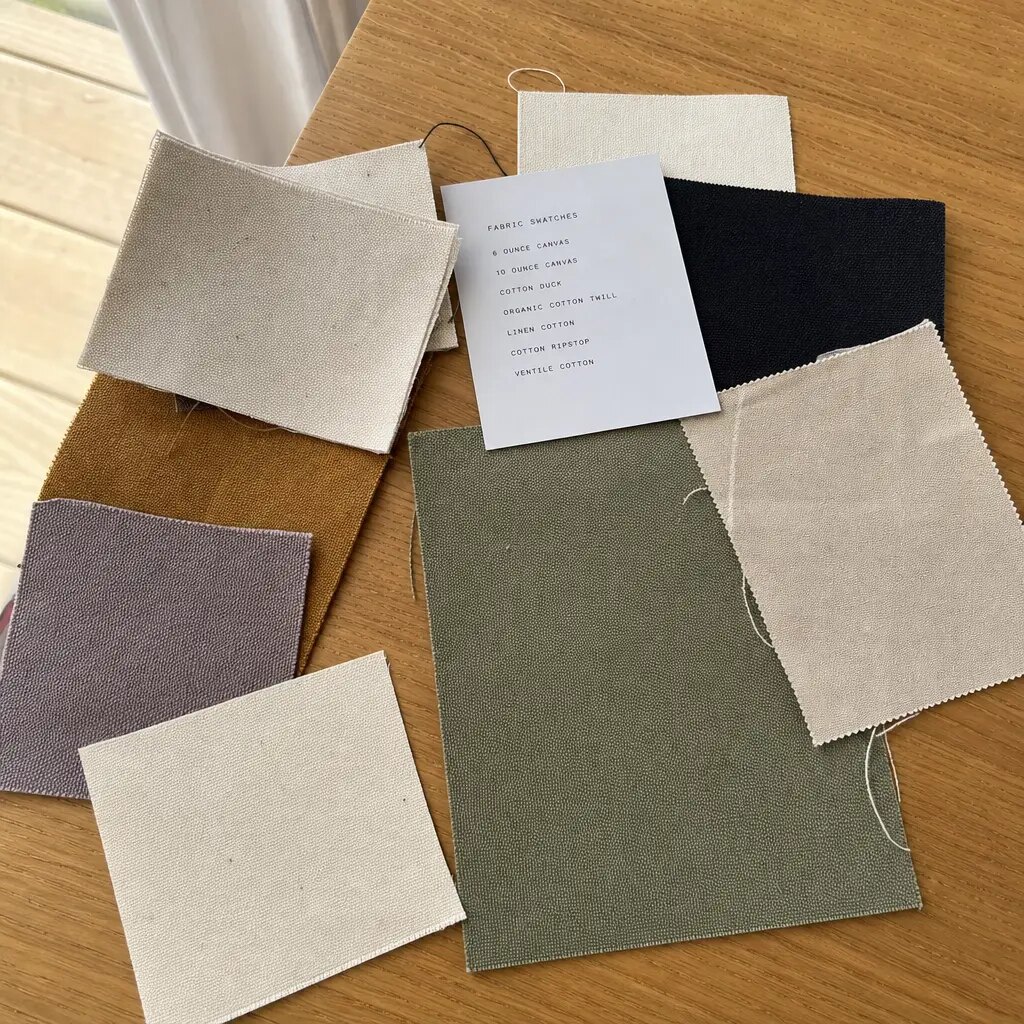
For wholesale canvas wine carriers, fabric weight is one of the fastest ways to control cost and quality risk. A 12 oz canvas, roughly 340 gsm, is a common baseline for a single-bottle carrier that needs a solid hand feel without becoming too expensive or bulky. Lighter canvas can work for short-life promotional programs, but it tends to look softer, wrinkle more, and telegraph the bottle shape. Heavier canvas, around 14 oz or above, gives a more premium feel and better structure, but it also raises the unit price and may push the bag into a stiffer, less flexible form.
Procurement teams should also separate fabric weight from fabric performance. Two suppliers can both say 12 oz and still deliver different results because weave density, finishing, and shrinkage are not the same. Ask for the measured gsm, the weave construction, and whether the canvas is bleached, natural, dyed, or pre-washed. If the carrier will sit in a retail display or be packed into a subscription box, the fabric must hold its shape after folding and shipping, not just look good on a clean sample table.
- Use 12 oz canvas as a practical default for standard single-bottle use.
- Move to 14 oz only when the buyer needs a premium retail look or extra structure.
- Request the approved fabric lot or swatch before bulk cutting starts.
Inspect the structure where load failure usually starts
Most carrier failures do not start in the middle panel. They start at the handle attachment, side seam, or bottom corner where the load transfers from the bottle to the bag. A good inspection checklist should look at stitch density, seam allowance, reinforcement, and whether the bottom board or divider is doing real work. If the bag carries a full glass bottle, the seam pattern should distribute weight evenly and resist opening when the bag is lifted repeatedly during packing, display, and customer use.
For a one-bottle carrier, the base needs enough support to stop the bottle from sagging and pulling the side panels inward. For a two-bottle version, the divider matters even more because the bottles can rub labels against each other if the slot width is too loose. Buyers should define whether they want self-fabric handles, cotton webbing handles, an internal insert, or a sewn divider. Each option changes cost, lead time, and failure risk. The factory quote should reflect the actual construction, not just the outer dimensions.
- Look for bartacks or reinforcement at every load-bearing point.
- Test the bag with the actual bottle weight and a full lift cycle.
- Make sure the divider or insert keeps labels from rubbing during transit.
Treat print and branding as a production control point
On canvas, branding quality depends on the print method as much as it depends on the artwork. A simple one-color screen print usually gives the cleanest result for a logo that will be seen from a short retail distance. It bonds well to canvas when the ink is cured correctly and the artwork does not have overly fine detail. Heat transfer can work for more complex graphics, but it can feel less integrated on textured canvas and may show edge lift if the carrier is folded hard. Woven labels, embroidery, or a sewn patch are useful when the buyer wants a premium finish and wants to avoid ink coverage problems on rough fabric.
The key inspection point is not whether the logo exists, but whether it exists in the right place, with the right sharpness, on the right substrate. Request the exact print area, minimum line width, and placement tolerance. If the logo sits too close to a seam or gusset, it can distort after sewing. If the art has small text, the supplier should tell you whether the chosen method can reproduce it cleanly. For coffee roasters using the bag as gift packaging, a crooked or washed-out logo reads as weak brand control, even if the fabric itself is acceptable.
- Use screen print for simple logos and stable repeat volume.
- Use a woven side label or sewn patch when the brand needs a premium finish.
- Reject artwork that loses legibility when reduced to the real print area.
Use a sample stage that tests fit, not just appearance
A photo of a sample is not enough for this product. The carrier needs to fit a real bottle profile, and that fit has to be tested in hand. Send the supplier the bottle diameter, shoulder shape, and height if the carrier is meant to be used with a specific wine bottle or specialty beverage bottle. Then ask for a pre-production sample built with the same fabric, print method, and reinforcement pattern that will be used in bulk. If the sample uses a different material or a simplified stitch path, it is not a reliable reference.
The sample review should include physical handling, not only visual sign-off. Insert the actual bottle, lift the carrier several times, and inspect whether the base stays flat and the handles remain level. If the bag is intended for retail merchandising, check how it looks after folding and after sitting for a day in the packed state. Buyers should keep one approved sample on file and label it clearly so that later bulk checks have a stable reference. That avoids the common problem where everyone remembers the sample differently once production starts.
- Approve the sample with the actual bottle size, not a generic bottle.
- Keep one signed reference sample for final inspection.
- Reject any sample that uses a different fabric weight or decoration method than the quote.
Set bulk inspection thresholds before cartons leave the factory
Bulk inspection should be broken into simple thresholds that the factory can understand. Start with incoming fabric, then move to in-line sewing, then to finished goods. At fabric stage, look for shade variation, weak weave points, oil stains, and inconsistent gsm. At sewing stage, inspect seam straightness, thread trimming, bartack placement, and symmetry between the two sides. At finished-goods stage, test load-bearing performance, print placement, bottle fit, and overall appearance after folding and packing. If these checks are done only at the end, the buyer is left with a larger sort-and-rework problem.
A useful rule is to compare every batch against the approved sample and the written spec, not against memory. If the factory has multiple sewing lines, ask whether the same operator and same line will handle the whole order or whether the work will be split. Mixed line work can be fine, but it increases variation if the factory does not control stitch length, trim quality, and final pressing. Buyers should also define what counts as a defect that stops shipment and what can be repaired before packing. That decision saves time when a shipment is already close to the departure date.
- Match bulk output to the approved sample, not to a verbal description.
- Separate fabric, sewing, and finished-goods inspection into distinct steps.
- Define rework versus rejection before production starts.
Review packing details as part of the product, not afterthoughts
Packing is often the part of the quote that looks harmless and later creates the largest difference in landed cost. A flat-packed canvas wine carrier saves volume, but the fold pattern can mark the canvas or weaken a printed area if the carton is overcompressed. Polybags can protect the surface but add labor, material, and disposal cost. If the bags are heading to a retail chain or a fulfillment center, the buyer should define the inner pack count, barcode labels, carton markings, and any retail-ready insert before the quote is finalized. Those details affect both handling speed and warehouse compliance.
Carton design matters as much as the bag itself because the product can be damaged in transit by moisture, compression, or stacking pressure. Ask for the carton size, gross weight, and pack configuration, then check whether the carton is efficient for export volume. If a supplier quotes a low unit price but uses oversized cartons or inconsistent pack counts, the freight cost can erase the savings. For coffee roasters buying seasonal runs, a tidy flat pack with clean labeling and consistent counts usually delivers a better end result than a cheaper quote with loose packing control.
- Specify inner pack count and carton marks in the RFQ.
- Avoid fold lines that hit the front logo or premium patch.
- Match packing style to the warehouse or retail receiving process.
Compare quotes by landed cost, not just unit price
A proper comparison starts with the same spec across every supplier route. If one supplier quotes 12 oz canvas with screen print and another silently switches to a lighter canvas or a different decoration method, the lower price is meaningless. Buyers should line up the same inputs: fabric gsm, handle material, print method, divider or insert, packing count, carton size, and incoterm. Then compare sample charge, setup charge, overage allowance, and the lead time from approval to shipment. Those line items are where quote differences usually hide.
For imported wholesale orders, landed cost also includes freight, duty, destination handling, and any inspection or consolidation expense. A direct factory may look cheaper, but a trading company can sometimes reduce risk if the buyer needs multiple product types consolidated into one shipment. A domestic decorator may be faster for a small reorder, but it often cannot match the unit economics of a factory-made canvas carrier. The right choice depends on order size, complexity, and how much quality control the buyer is willing to own.
- Compare quotes only after the spec sheet is frozen.
- Ask for a separate line on sample charge, setup charge, and packing charge.
- Use freight and duty assumptions before selecting the lowest ex-factory number.
Build an RFQ package that reduces quote noise
Suppliers quote better when the RFQ is specific enough to prevent assumptions. A strong package should include the bottle dimensions, target canvas weight, artwork file, print placement, handle preference, packing requirements, and target ship date. Add a reference photo or a physical sample if the carrier must match an existing retail look. If the bag is for coffee-roaster promotions tied to a holiday campaign, say so, because seasonal timing affects scheduling, line allocation, and the supplier's ability to hold a production window.
The buyer should also state annual demand expectations, even if the first order is small. That helps the supplier decide whether to price for a one-time run or for repeat business. Factories give tighter pricing when they can see continuity, but only if the specification is stable. If your team expects to re-order the same carrier in different colors, say that up front and keep the structural spec constant. Change only the print or the color, not the base construction, unless there is a real commercial reason to do so.
- Send one RFQ with one frozen spec and one target timeline.
- Attach bottle dimensions, artwork, packing, and destination in the same file set.
- State whether the order is a one-off promotion or a repeat program.
Specification comparison for buyers
| Spec decision | Recommended option | When it fits | Buyer risk to check |
|---|---|---|---|
| Sourcing route | Direct factory with bag experience | Repeat custom orders, controlled specs, and tighter quality ownership | Confirm who actually cuts, prints, and sews the order, not just who quotes it |
| Canvas weight | 12 oz canvas, roughly 340 gsm | Standard single-bottle carriers used for retail gifts and coffee-roaster promotions | Ask for real GSM and note shrinkage, hand feel, and fabric opacity |
| Handle construction | Cotton webbing with bartacks | Heavier bottles, premium retail presentation, and better pull strength | Check handle anchor spacing and whether bartacks are visible and even |
| Branding method | 1-color screen print or woven side label | Simple logo work, medium volumes, and a clean branded look | Test ink curing, registration, and whether the texture distorts fine type |
| Bottle retention | Sewn divider or reinforced insert base | Multi-bottle carriers and sets that travel or ship in transit boxes | Confirm the slot width works for real bottle diameters and label clearance |
| Sample approval route | Physical pre-production sample | New supplier, new size, or new bottle profile | Photo approval misses fit, seam tension, and print quality issues |
| MOQ strategy | One fabric color, one print, one carton spec | When the buyer wants stable pricing and lower changeover cost | Mixed specs can create price creep and leftover stock |
| Packing route | Flat-packed bulk cartons | Wholesale, e-commerce fulfillment, and lower freight cost | Make sure folds do not crush the print or leave permanent creases |
Buyer checklist before sampling
- Bottle dimensions in millimeters, including body diameter, shoulder shape, and bottle height
- Target fabric weight in gsm and whether the canvas should be natural, bleached, dyed, or washed
- Handle length, handle width, and whether the bag needs cotton webbing or self-fabric handles
- Print artwork in vector format, plus the exact print area and pantone or shade reference
- Expected load, such as one full glass bottle, two bottles, or a bottle plus insert card
- Need for dividers, bottom board, side gussets, or reinforced base structure
- Packing method, carton count, inner polybag requirement, and barcode or retail label needs
- Target MOQ by color and print version, not only total order quantity
- Approved sample retained on file for final inspection comparison
- Target ship date, incoterm, and destination so the factory can quote realistically
Factory quote questions to send
- What is the actual fabric weight in gsm, and can you share a swatch or test report from the approved lot?
- Which print method will you use for this artwork, and what is the setup charge if the logo needs a new screen or plate?
- What is the MOQ per color and per print version, and does the price change if we use one or two bottle sizes?
- Can you confirm handle material, stitch count, bartack placement, and any reinforcement at the top edge and base?
- Will you make a physical pre-production sample before bulk production, and what is the sample lead time?
- How will the carriers be packed, how many per carton, and what are the carton dimensions and gross weight?
- What is the normal production lead time after sample approval, and what changes if we need a rush order?
- Which incoterm is quoted, and what is excluded from the price, such as freight, duty, inspection, or local delivery?
Quality-control points to confirm
- Fabric weight matches the approved spec and does not show thin spots when held to light
- Canvas color is consistent across panels and does not have visible shade jumps between lots
- Stitching is straight, even, and free from skipped stitches, loose loops, or open seams
- Bartacks or reinforcement at handle points are complete and placed in the same position on each bag
- Handle length is uniform and the carrier hangs level when loaded with a full bottle
- Print is centered, cured, and free from smearing, pinholes, cracking, or registration drift
- Bottle compartment or divider holds the intended bottle size without scuffing labels
- Edges are trimmed cleanly with no loose thread tails, glue marks, or broken needle damage
- Packing count matches the purchase order, and each carton is labeled with the correct style and color
- Cartons are dry, clean, and odor-free, with no mildew, water damage, or crushed corners