Why this RFQ matters
A canvas wine carrier for farmers market vendors looks simple, but the buying problem is not simple at all. One supplier may quote a soft promotional bag, another may quote a reinforced retail carrier, and a third may quietly substitute a lighter fabric or cheaper handle build. If the RFQ does not define the bottle size, fabric weight, branding method, and packing format, you end up comparing unrelated products and the lowest quote is often the weakest one.
For this category, the real job of the RFQ is to make the supplier quote the same construction every time. That means the carrier must be defined from the bottle inward: what bottle it fits, how many bottles it holds, how rigid the sides should be, how the handle is sewn, and how the product is packed for resale or distribution. Once those items are locked, buyers can compare price, lead time, and risk without guessing.
- State whether the carrier is for one bottle, two bottles, or a mixed gift set.
- Define the target bottle dimensions, not just standard 750 ml language.
- Ask for unit pricing at multiple quantities so you can see the MOQ break points.
- Require a sample that matches the actual production method, not a hand-made display piece.
Start with bottle fit and carrier structure
Do not begin with print colors. Begin with the bottle. Most buyers use 750 ml wine bottles, but farmers market vendors often carry bottles with different shoulder heights, neck lengths, and diameters. If the carrier is too narrow, the bottle rides high and the top trim stretches. If it is too loose, the bottle leans, the package looks cheap, and the bottle can knock against the side during transport. Give the supplier the exact bottle dimensions or send a physical bottle for the sample stage.
The carrier structure should follow the use case. Single-bottle carriers work for simple retail gifting and event carryout. Two-bottle carriers need a divider that is sewn accurately enough to prevent bottle contact. If the buyer wants a premium retail feel, a stiff base insert and a cleaner top edge matter more than decorative extras. For market vendors who want fast handoff and easy shelving, an open-top layout with a reinforced edge usually makes more sense than closures that slow packing.
- For most 750 ml retail use, specify internal width, depth, and height, not only overall size.
- For two-bottle carriers, state whether the divider must separate bottles from shoulder to base or only at mid-body.
- If the bottles are heavy or irregular, require a bottom insert or stiffener.
- If the bag will be resold at market stalls, ask for a clean top edge and a presentation-ready silhouette.
Fabric weight and build choices that change cost
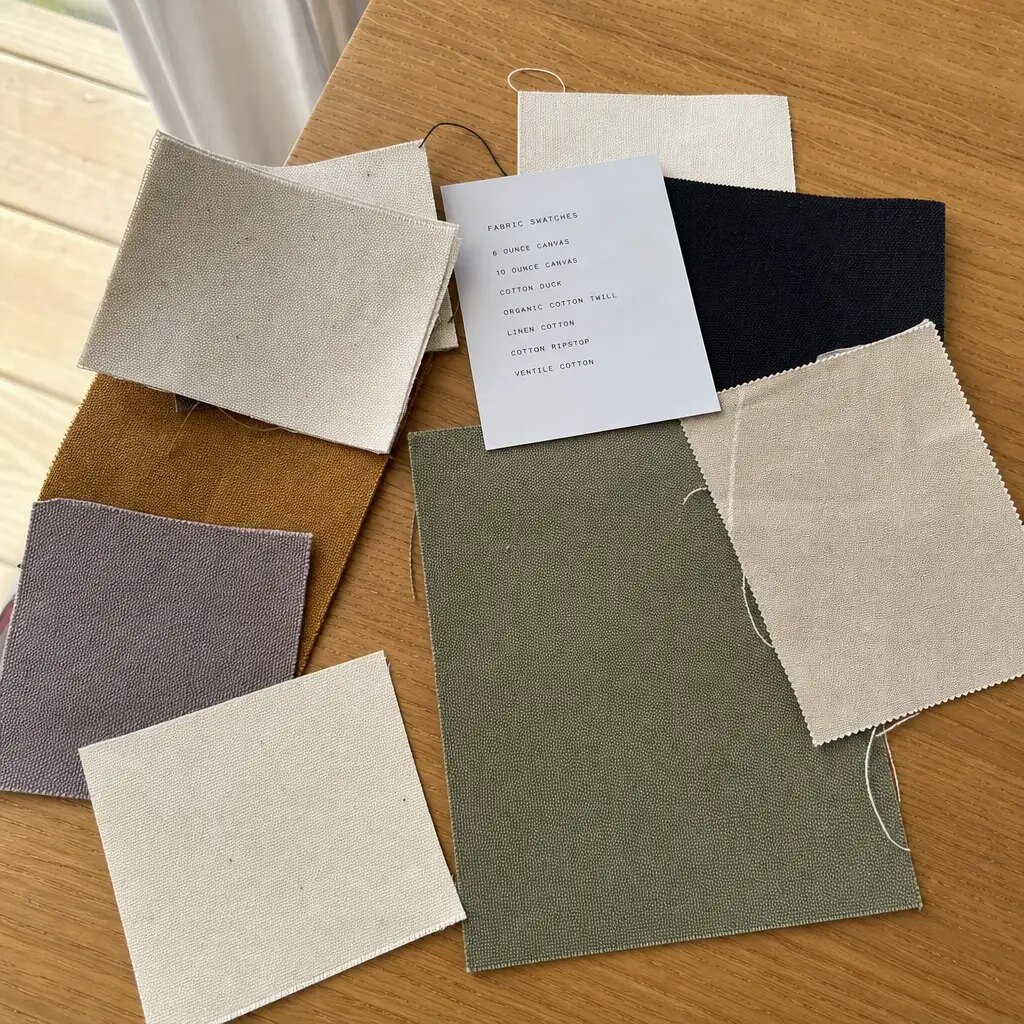
Canvas is not one material in practice. A 10 oz canvas around 340 GSM can work for a light single-bottle carrier or a promotional run, but it starts to feel thin when the bag needs to stand up on a table or carry two glass bottles. A 12 oz canvas around 407 GSM is usually the practical middle ground for wholesale retail orders. It gives enough body for printing and enough structure for a better shelf look without pushing the product into heavy-bag territory. A 16 oz canvas around 542 GSM is stronger and more premium, but the sewing cost rises and the bag can become overly stiff for some market buyers.
Reinforcement matters as much as fabric weight. A good handle can still fail if the stitch plan is weak or the seam allowance is too small. Ask for double-layer handles, crossbox reinforcement, or bartacks at the load points. If the carrier includes a divider, that divider should be sewn from the same panel logic as the main body, not simply tacked in with light stitching. Buyers often focus on the body fabric and miss the small construction points that determine return rates and customer complaints.
- 10 oz canvas is acceptable for light promotional use, but it is rarely the best retail choice.
- 12 oz canvas is the safest default for wholesale canvas wine carriers for farmers market vendors.
- 16 oz canvas makes sense for premium branding, heavy bottles, or an upscale gift presentation.
- Reinforced handles and divider seams matter more to failure risk than decorative trims.
Printing and branding without inflating the quote
For natural canvas, simple screen printing is usually the most sensible branding method. One or two solid colors hold up well, the logo reads clearly, and the pricing is easier to control at scale. Screen print is also easier to compare across suppliers because the setup cost is visible. If the logo is small and the product needs a cleaner retail look, a woven side label or a stitched patch can be a stronger long-term branding choice than a large printed graphic. Embroidery is possible, but it can punch through lighter canvas and add cost quickly.
The wrong print specification can distort the quote. A buyer asking for full-color artwork on a small canvas run often gets a price that has more to do with setup effort than the bag itself. If the brand only needs a logo, keep the artwork simple, define the exact placement in millimeters, and state whether one color or two colors are acceptable. If the buyer expects repeated orders, a durable print or woven label is usually safer than a fragile transfer that may crack during retail handling.
- Use screen print for straightforward brand marks and stable repeat orders.
- Use a woven label or stitched patch when the brand wants a more durable premium finish.
- Limit color count when comparing quotes, because every added color can add setup and risk.
- Require printed sample photos before bulk production if the logo must align to a seam or pocket edge.
How to compare supplier quotes and MOQ logic
The easiest way to waste time is to ask every supplier for a single price. A proper RFQ should force tiered pricing, because MOQ logic tells you where the real cost inflection happens. A factory may be very competitive at 1,000 pieces but poor at 300 pieces because setup and cutting labor dominate. Another supplier may look cheap at small quantity because they are quoting stock components or outsourcing the sewing. You need the quote broken out by quantity, print setup, sample fee, and packing so the comparison is real.
A good sourcing route for custom wholesale orders is usually factory-direct cut-and-sew if you are comfortable managing sample approval and lead time. Trading companies can be useful when you need speed or mixed product consolidation, but they often add margin and can blur accountability. Local decorators can be useful for tiny promotional runs, but they usually struggle with stronger seams, correct bottle fit, and carton efficiency. Your RFQ should reveal which route each supplier is actually taking.
- Ask for pricing at 300, 500, 1,000, and 3,000 units so you can see the step-down curve.
- Request separate lines for sample fee, setup, printing, packaging, and freight if applicable.
- Ask whether the price changes by color, size, or artwork revision.
- Verify whether the supplier is the actual factory, a trading company, or a decoration shop.
Sample approval should be measurement-based
The sample stage is where most carrier projects are won or lost. A good sample is not just visually close to the target; it is measurable. Measure the internal width, depth, and height, then test with the exact bottle shape you plan to ship. If the carrier is a two-bottle version, check bottle-to-bottle contact, divider alignment, and the amount of slop after the bag is lifted by the handle. The goal is a controlled fit, not a bag that only looks right in a photo.
Sample approval should also cover workmanship. Pull the handle firmly, inspect the reinforcement points, look at the stitch line on the divider, and check the print edge for blur or uneven pressure. If you can put a real bottle in the bag and shake it lightly without the base shifting or the handles twisting, you are much closer to a production-safe build. Once the sample is signed off, freeze the spec sheet so the bulk order does not drift.
- Measure dimensions against a signed spec sheet, not a verbal description.
- Test the sample with the heaviest bottle in your range, not the lightest one.
- Check print placement against the seam and handle line, because minor misalignment is obvious on canvas.
- Approve only a production-grade sample, not a one-off display sample made with different materials.
Packing, retail presentation, and carton math
Packing is not an afterthought for this product. A canvas wine carrier sold through farmers markets or retail channels must arrive flat, clean, and easy to display. Flat-packing lowers freight cost, but the folding method matters because bad folding leaves a permanent crease at the logo or distorts the bag mouth. If the carrier is meant for retail hanging or shelf display, ask for an insert card, a size sticker, or a barcode label that matches your retail system. These details can cost little individually and save time at distribution.
Carton math affects landed cost more than many buyers expect. Heavier canvas, stronger inserts, and thicker polybags all raise gross weight and cube. If you are comparing quotes, normalize the pack count per carton and the carton size. A cheap unit price can become expensive once the carton fills a container inefficiently. Ask the factory to quote the same pack configuration across suppliers so the freight comparison is fair.
- Specify whether each bag should be folded, tissue-wrapped, polybagged, or left loose in carton.
- Ask for master carton dimensions and gross weight before you accept the quote.
- If the product is retail-facing, request barcode or hang-tag placement instructions.
- Avoid packing styles that crush handles or leave hard fold lines on the logo face.
Lead time risk is usually hidden in artwork and color choices
For wholesale canvas wine carriers, a realistic lead time is often driven by sample approval, artwork lock, and material availability rather than sewing alone. A straightforward run with common canvas and a simple one-color print may move quickly after approval, but custom dyeing, special lining, or multiple print colors will extend the schedule. If the order is tied to a market season, holiday gift window, or harvest event, you should treat artwork finalization as a hard deadline, not a flexible task.
The biggest schedule mistake is changing details after the sample is approved. A small logo move, a different trim color, or a new carton mark can push the job back into retooling or reproofing. A buyer can reduce this risk by freezing the spec sheet early and asking the factory to confirm when bulk cutting begins, when printing starts, and when packed cartons are ready. For planning purposes, many teams should expect sample lead times in the 7 to 14 day range and bulk production in roughly 25 to 45 days after sample approval and deposit, depending on quantity and season.
- Lock artwork before the sample is approved whenever possible.
- Treat dyeing, special lining, and multiple print colors as schedule risks.
- Ask the factory for a step-by-step production calendar, not only a single ship date.
- If the order is seasonal, build a buffer for artwork corrections and freight delays.
Compare landed cost, not just unit price
The right decision for this product is usually the best landed cost for the target channel, not the lowest ex-factory quote. A carrier with better canvas weight, cleaner print, and stronger handle reinforcement can reduce customer complaints and return risk even if the unit price is slightly higher. That matters for retail buyers and distributors who need consistency across replenishment orders. If the supplier gives an EXW quote, add local pickup, export handling, freight, duties, and destination delivery before you compare it with an FOB or DDP offer.
When reviewing quotes, normalize the line items. Make sure every supplier is quoting the same fabric weight, same bottle capacity, same print method, same packing count, and same incoterm. If one supplier includes an insert card or a better carton and the others do not, the lowest number is not a like-for-like comparison. The best RFQ outcome is a quote set that lets procurement compare total landed cost, quality risk, and schedule risk in one pass.
- Compare prices only after confirming fabric weight, size, print method, and pack count match.
- Convert EXW, FOB, and DDP quotes into a single landed-cost view before selecting a supplier.
- Include sample fees and setup charges when evaluating a first order.
- Value consistency and fewer defects if the product will be reordered or sold through retail channels.
Specification comparison for buyers
| Spec decision | Recommended option | When it fits | Buyer risk to check |
|---|---|---|---|
| Supplier route | Factory-direct cut-and-sew with in-house print | Repeat orders, custom branding, and buyers who need tighter control over fabric and stitching | Confirm they actually sew, print, and pack in-house; otherwise you may get a middleman quote with weaker control |
| Fabric weight | 12 oz canvas, about 407 GSM | Most retail-ready single or double bottle carriers that need a balanced hand feel and acceptable cost | Too light feels flimsy; too heavy can raise sewing difficulty, cost, and carton weight |
| Handle build | Double-layer self-fabric handles with crossbox or bartack reinforcement | Carriers that will be reused at market stalls or carry heavier glass bottles | Unreinforced handles fail first; ask for stitch count and reinforcement method, not just handle length |
| Print method | 1 to 2 color screen print for simple branding | Clear logo work on natural canvas with stable repeat orders | Check print registration, ink cracking, and setup charges; small runs can become expensive fast |
| Divider structure | Sewn divider with bottom insert or stiffener | Two-bottle carriers where bottles should not knock together in transit | Divider width must match bottle diameter; loose dividers create movement and scuffing |
| Closure style | Open top with reinforced edge, or optional snap if the buyer needs retail security | Farmers market resale, tasting events, and quick bottle access | Closures add cost and can reduce fit on taller necks; check real bottle height, not just nominal size |
| Packing format | Flat-packed with tissue, size sticker, and master carton labels | Retail programs and import shipments where carton efficiency matters | Compressed packing can crease the canvas; confirm unpacked presentation and folding method |
| MOQ logic | 1,000 pieces per color and print is a practical custom target; 300 to 500 may work on stock base runs | Buyers testing a design or building a seasonal program | Watch for hidden surcharges on small runs, multiple colors, or mixed sizes |
| Sample path | Pre-production sample approved against a signed spec sheet | Any order where fit, branding, or retail presentation matters | If the sample is only a hand-made reference and not a real production sample, bulk quality can drift |
Buyer checklist before sampling
- Confirm whether the carrier is for one bottle, two bottles, or a mixed bottle set, and state the exact bottle height and diameter.
- Choose the target fabric weight in GSM or oz, and note whether you want natural, bleached, dyed, or washed canvas.
- Define the print method, artwork colors, and logo placement before asking for pricing.
- Set the expected carton pack, retail polybag needs, and whether an insert card or barcode label is required.
- Ask for tiered pricing at 300, 500, 1,000, and 3,000 units so you can see where unit cost drops.
- Request a pre-production sample and make approval dependent on measurements, seam quality, and print match.
- State the target incoterm, destination port, and whether you need FOB, EXW, or landed pricing.
- Share your target sell price or margin ceiling so the supplier can propose the right build without over-specing the carrier.
Factory quote questions to send
- What fabric weight, weave, and finishing are you quoting, and can you confirm the GSM on the sample and bulk order?
- What are the exact internal dimensions, handle length, and divider size for the bottle shape we will ship?
- Which print method will you use, how many colors are included, and what are the setup or plate charges?
- What is the minimum order quantity by color, print design, and carton configuration?
- What is included in the sample fee, and is it deductible from the bulk order if we proceed?
- How many pieces go in each inner pack and master carton, and what is the estimated gross weight and carton size?
- What is your standard production lead time after sample approval and deposit, and what happens if we change artwork late?
- What QC checkpoints do you use before shipment, and can you share photos of the first-off sample and packed cartons?
Quality-control points to confirm
- Fabric weight matches the agreed GSM or oz target within a tight internal tolerance, and the hand feel is consistent across the order.
- Finished dimensions are within the approved spec sheet so 750 ml bottles or the target bottle set fit without strain.
- Handle reinforcement is present at the same stitch location on every unit, with no skipped stitches or loose thread clusters.
- Print color, placement, and opacity match the signed sample, with no cracking, smearing, or misregistration at the edges.
- Divider stitching is centered and strong, and the bottle sections do not collapse toward each other during load testing.
- Canvas edges are cut cleanly and do not fray heavily after handling or carton packing.
- Carton count, carton marks, and barcode labels match the purchase order and retail routing instructions.
- A random packed sample opens flat, presents neatly, and shows no oil spots, dirt marks, or crushed handle areas.