Buying Problem: Fabric Weight Drives More Than Feel
For wholesale canvas wine carriers for wellness studios, fabric weight is not a cosmetic choice. It affects whether the carrier stands upright, how the logo prints, how well the handle holds a loaded bottle, how many units fit in a carton, and whether the finished item feels suitable for a studio retail shelf. A wellness buyer may describe the product as a reusable wine bag, retreat gift bag, kombucha carrier, or member gift, but the factory has to translate that into GSM, construction, print method, and packing.
The main buying problem is that many supplier quotes say only cotton canvas or heavy canvas. That is not enough for a reliable comparison. A 300 GSM carrier and a 450 GSM carrier can both be called canvas, but they will sew, fold, print, and ship very differently. A practical RFQ should tell the supplier the intended bottle, usage level, logo method, and acceptable cost band before asking for a unit price.
- Use 300-340 GSM when the program is light gifting and the carrier does not need a premium retail feel.
- Use 380-410 GSM as the default range for most custom wellness studio wine carrier orders.
- Use 450-540 GSM only when structure, shelf presence, and long reuse matter more than lowest freight cost.
- Avoid vague terms such as thick canvas, premium cotton, or durable fabric unless they are tied to GSM and construction.
Define the Bottle Before Choosing Canvas
Bottle size should be the first technical line in the RFQ. Standard 750 ml wine bottles are not all the same shape. Burgundy bottles are wider, sparkling wine bottles are heavier and taller, and wellness studios may use the same carrier for kombucha, cold-pressed juice, olive oil, herbal tonic, or corporate gift bottles. If the carrier is too narrow, the customer fights the fabric. If it is too wide, the bag looks sloppy and bottles knock against each other.
A single-bottle carrier for a standard wine bottle often needs a finished width around 10-11 cm, a depth around 9-10 cm, and height around 33-36 cm depending on whether the neck remains visible. A two-bottle version needs a wider body plus a divider that reaches high enough to keep glass from hitting glass. The divider is not just a piece of fabric; it changes sewing time, material consumption, folding method, and inspection points.
- Send bottle diameter, full height, shoulder shape, filled weight, and whether the cap or cork must be covered.
- Specify if the carrier must fit only wine or also wellness retail bottles with different labels and caps.
- For two-bottle carriers, define divider height and whether the divider is stitched into the base or only side seams.
- Request sample photos with the actual bottle inserted and lifted by the handle.
Practical GSM Ranges for Studio Wine Carriers
Fabric weight in GSM is more reliable for international sourcing than ounce descriptions alone, because ounce labels can vary by market and supplier habit. In bag manufacturing, 10 oz canvas is often roughly 300-340 GSM, 12 oz is often roughly 380-410 GSM, and 14-16 oz may sit around 450-540 GSM. These are working ranges, not universal laws, so the quote should show the exact GSM the factory will purchase or weave.
For wellness studios, the safest commercial specification is usually 12 oz canvas, around 380-410 GSM. It gives enough body for a bottle carrier, accepts screen printing well, and still folds and packs efficiently. Lighter canvas can work for event gifting, but it may show bottle corners and feel less substantial. Heavier canvas feels premium, but it increases fabric cost, sewing difficulty, and carton weight.
- 300-340 GSM: lower cost, easier folding, acceptable for short-term gifting, weaker structure when loaded.
- 380-410 GSM: balanced option for custom wholesale wine carrier programs and repeat retail use.
- 450-540 GSM: premium handfeel, stronger structure, higher sewing and shipping cost, thicker seams.
- For dyed canvas, confirm whether shrinkage after dyeing or washing changes the final weight and dimensions.
Construction Choices That Change the Quote
Two quotes can show the same GSM and still be far apart because construction details are different. A simple flat single-bottle sleeve uses less fabric and labor than a gusseted carrier with reinforced handles, internal divider, bottom support, and retail label. Procurement teams should treat construction as a cost driver, not a minor design note.
The most common mistake is approving a nice-looking sample that was made with extra reinforcement, then receiving a bulk quote based on a simplified construction. Put the construction into the RFQ and the approved sample comments. Handle style, seam type, base shape, divider, and label placement should all be fixed before the factory releases the production worksheet.
- Self-fabric handles look consistent but add cutting and sewing steps.
- Cotton webbing handles can improve strength and reduce fabric bulk at the top seam.
- Cross-stitch or bartack reinforcement is important for glass bottle loads.
- A gusseted base improves standing ability but increases fabric consumption.
- An internal divider improves protection for two-bottle carriers but adds sewing time and QC checks.
Print Method and Logo Detail on Canvas
Most wellness studio wine carriers use simple one-color or two-color logos. Screen printing is usually the best balance for cotton canvas because it gives a clean brand mark at wholesale volume. The print surface, however, is not paper. Canvas texture can break very fine lines, small type, thin icons, and pale ink colors. A logo that works on a website may need line weight adjustment for a woven fabric surface.
Heat transfer can handle gradients or more detailed artwork, but buyers should consider handfeel, edge visibility, and durability when the carrier folds around a bottle. Embroidery can look premium but may distort on narrow panels and is not ideal for large filled logos. A woven side label is often a smart option for wellness studios that want a refined retail detail without printing a large front panel.
- Screen print: best for solid logos, simple typography, repeat production, and predictable cost.
- Heat transfer: useful for multi-color artwork but requires adhesion and wash or rub checks.
- Embroidery: premium feel for small marks but higher cost and possible puckering on lighter canvas.
- Woven label: good for subtle branding, especially when the front panel must stay clean.
- Set print placement tolerance before approval, commonly plus or minus 3-5 mm depending on size.
MOQ Logic and Cost Drivers
MOQ is rarely just a number chosen by the salesperson. For canvas wine carriers, MOQ may be driven by fabric roll minimum, dye lot minimum, screen setup, cutting efficiency, label production, or carton packing. A natural undyed canvas carrier with one-color print can often start lower than a custom dyed canvas carrier with multiple print positions and retail packaging.
When buyers push for a very low MOQ, the supplier may use stock fabric, simplified packing, or a surcharge. That can be reasonable for a pilot order, but it should be visible in the quote. For larger wholesale programs, the better negotiation point is not only unit price. Buyers can negotiate shared tooling, batch shipment, repeat-order fabric reservation, or a lower reorder MOQ after the first production run.
- Fabric weight affects MOQ because heavier canvas may require separate procurement or minimum roll usage.
- Custom dyed canvas usually has higher minimums than natural canvas.
- Multi-color screen printing adds setup cost and may raise the practical production minimum.
- Retail packaging can create its own MOQ if printed belly bands, hangtags, or barcode labels are required.
- A repeat program should request first-order MOQ and reorder MOQ separately.
Sample Approval: What Must Match Bulk Production
The sample should not only prove that the product looks good. It should prove that the factory understands the production route. For a useful pre-production sample, the fabric weight, handle construction, divider method, print technique, logo size, and packing fold should match the intended bulk order as closely as possible. If the sample uses substitute fabric or temporary print, the approval should say exactly what is still pending.
A practical sample review includes loading the bag, lifting it, placing it on a flat surface, checking the logo after folding, and measuring the finished body. For a studio retail program, buyers should also view the carrier beside the bottle or gift item it will hold. A carrier that looks correct empty may become too short, too soft, or too narrow once a real bottle is inserted.
- Measure body width, body height, gusset, handle drop, divider height, and print position.
- Load the intended bottle weight and lift repeatedly to check handle deformation.
- Fold the carrier as it will be packed and inspect whether the print cracks or creases badly.
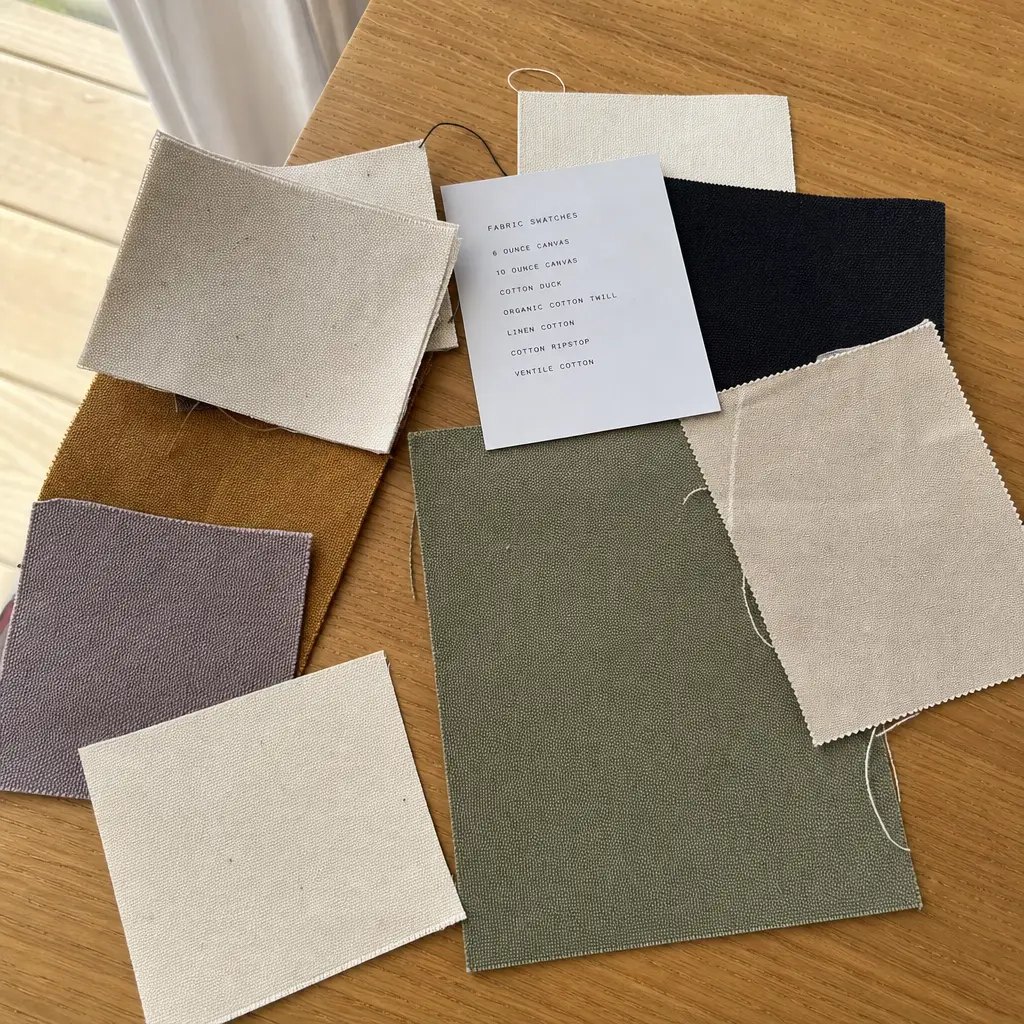
- Compare sample fabric handfeel against the quoted GSM and request a swatch card if needed.
- Record all sample comments in writing before bulk production starts.
Packing, Carton Data, and Warehouse Handling
Packing choices affect landed cost and product presentation. Bulk loose packing reduces material and labor cost, but it can cause wrinkling and inconsistent presentation at receiving. Individual polybags keep units cleaner but may conflict with sustainability messaging for wellness studios. A recycled polybag, kraft paper band, or simple belly band may be a better fit, depending on the distribution channel.
For importers and distributors, carton data should be part of the quote, not something discovered after production. Heavy canvas and glass-bottle carrier dimensions can increase carton gross weight quickly. If cartons are too heavy, warehouse handling becomes inefficient and carton damage risk rises. If cartons are too large, freight cost increases even when unit price looks attractive.
- Request units per carton, carton dimensions, gross weight, net weight, and estimated CBM.
- Keep carton gross weight practical for manual handling, especially with 14-16 oz canvas.
- Define whether bags are folded flat, folded once, or packed upright with shape protection.
- Use moisture protection for ocean freight, especially for natural cotton canvas.
- Confirm barcode labels, carton marks, and country-of-origin labeling before shipment.
Lead Time Risks in Wholesale Production
Lead time starts after the supplier has approved artwork, confirmed sample comments, received deposit if required, and locked the fabric. Many delays come from incomplete artwork, unclear bottle dimensions, late packaging decisions, or changes to logo placement after the sample. A realistic schedule separates sample development, sample transit, approval time, bulk material preparation, printing, sewing, inspection, packing, and export booking.
Canvas wine carriers are not technically complex, but peak season can create bottlenecks in printing and sewing. If a wellness studio program is tied to holiday retail, retreat dates, or membership launches, the RFQ should include the required delivery window and the latest acceptable ship date. Buyers should also decide early whether they need one consolidated shipment or split shipment for urgent launch quantities.
- Artwork confirmation should happen before sample cutting, not after the sample is sewn.
- Custom dyed fabric can add time for lab dip approval and bulk dyeing.
- Retail packaging decisions should be finalized before mass packing begins.
- Inspection should be scheduled before final carton sealing if possible.
- For fixed event dates, include buffer for sample transit, customs, and domestic delivery.
Quote Data Needed for Landed-Cost Comparison
A unit price without quote details is not enough for procurement. The same canvas wine carrier can look cheaper because the supplier excluded print setup, used lighter fabric, quoted bulk packing instead of retail packing, or used a different Incoterm. To compare suppliers fairly, buyers need a quote sheet that captures the technical specification and logistics data together.
For landed-cost review, request fabric GSM, dimensions, print method, number of print colors, MOQ, sample cost, bulk unit price, packing method, carton data, production lead time, payment terms, Incoterm, port, HS code, and quote validity. This lets importers compare actual cost per usable unit, not just the lowest factory price. It also reduces disputes when reordering the same item next season.
- Compare all suppliers using the same capacity, GSM, print method, packing, and Incoterm.
- Ask whether the unit price includes inner packing, hangtag, woven label, or only the sewn carrier.
- Record setup charges separately so repeat orders can be priced correctly.
- Use carton CBM and gross weight to estimate freight impact before selecting heavier canvas.
- Keep an approved spec sheet with the proforma invoice for reorder control.
Specification comparison for buyers
| Spec decision | Recommended option | When it fits | Buyer risk to check |
|---|---|---|---|
| Direct factory sourcing for repeated studio programs | Work with a cut-and-sew bag factory that can quote by GSM, bottle capacity, print area, and packing method | Best for distributors or brand owners ordering seasonal or replenishment runs above the factory MOQ | Make sure the quote separates fabric, print, packing, and inland freight so later reorders are comparable |
| Trading company or sourcing agent | Use only when you need multi-category consolidation with other spa, retail, or wellness merchandise | Fits buyers combining wine carriers with towels, pouches, candles, or gift packaging in one shipment | Confirm which factory makes the bags and request production photos, not only showroom samples |
| Stock blank carrier with local printing | Choose ready-made 10-12 oz canvas blanks if timing is more important than custom construction | Useful for small launch quantities, event testing, or urgent studio gift programs | Blank dimensions, shrinkage, and print surface may not match future custom bulk production |
| Custom 10 oz canvas carrier | Use 300-340 GSM canvas for light single-bottle gifting with simple branding | Works for yoga studios, retreat welcome packs, or seasonal wine and kombucha bundles | Check handle reinforcement because lighter fabric can deform around heavy glass bottles |
| Custom 12 oz canvas carrier | Use 380-410 GSM canvas for most wholesale studio retail programs | Good balance for single or two-bottle carriers where structure, print quality, and freight cost all matter | Confirm whether the quoted weight is finished GSM or nominal yarn-based weight before dyeing and washing |
| Custom 14-16 oz premium carrier | Use 450-540 GSM canvas only when the bag is sold as a reusable retail item | Fits higher-end wellness stores, winery partnerships, membership gifts, and boutique retail shelves | Higher weight increases sewing difficulty, carton weight, and unit cost; sample the folded seam thickness |
| Domestic distributor with imported inventory | Buy from inventory if you need low MOQ and do not need exact fabric, size, or print placement control | Useful for trial orders under typical factory custom MOQ | Per-unit price can hide fabric inconsistency and limited control over future batch matching |
| Certified organic or recycled canvas route | Specify certification scope early and separate certified fabric from standard cotton canvas in the quote | Suitable when wellness positioning requires documented material claims on hangtags or retail pages | Do not approve sustainability wording unless the supplier can provide traceable documents for the actual order |
Buyer checklist before sampling
- Define bottle type first: 750 ml wine, sparkling wine, kombucha, olive oil, or mixed wellness gift bottles have different diameter and height requirements.
- Specify fabric in GSM and common ounce reference, for example 380-410 GSM, about 12 oz canvas, not only light, medium, or heavy canvas.
- State capacity clearly: single bottle, two bottles with divider, four-bottle carrier, or flat-bottom gift tote with bottle insert.
- Include target finished dimensions, seam allowance expectation, handle drop, base gusset, and divider height if applicable.
- Decide whether the carrier must stand upright empty; this affects fabric weight, bottom construction, and seam reinforcement.
- Choose print method by logo style: screen print for solid studio logos, heat transfer for gradients, embroidery or woven label for premium low-detail branding.
- Set acceptance criteria for print placement tolerance, common range plus or minus 3-5 mm depending on logo size and panel shape.
- Request pre-production sample photos with a real bottle loaded, not only flat product photos.
- Require carton packing details including units per carton, carton size, gross weight, individual polybag or paper band, and moisture protection.
- Compare quotes using the same Incoterm, sample policy, artwork count, fabric weight, packing method, and production lead time.
Factory quote questions to send
- What exact canvas weight are you quoting in GSM, and is it greige fabric weight, dyed fabric weight, or finished fabric weight?
- What is the fabric composition: conventional cotton canvas, organic cotton, recycled cotton blend, recycled polyester canvas, or cotton-poly blend?
- For the target bottle size, what finished dimensions and gusset do you recommend, and can you load-test with a 750 ml glass bottle?
- Is the quoted MOQ based on fabric procurement, cutting efficiency, print setup, or carton packing minimum?
- What print method is included in the unit price, how many colors are included, and what is the maximum printable area?
- What handle construction is included: self-fabric handles, cotton webbing handles, reinforced cross-stitch, or bartack reinforcement?
- Can you provide a pre-production sample using actual fabric weight, actual logo size, and the same divider construction as bulk production?
- What packing is included: loose bulk pack, individual polybag, recycled polybag, paper belly band, inner carton, or retail-ready pack?
- What is the estimated production lead time after sample approval and deposit, and how does it change during peak season?
- What quote data will appear on the proforma invoice: HS code, carton dimensions, gross weight, net weight, CBM, Incoterm, and validity period?
Quality-control points to confirm
- Fabric weight tolerance should be defined before production; many buyers use plus or minus 5 percent as a practical commercial range.
- Finished size tolerance should be written by dimension; body width and height often need tighter control than handle drop.
- Bottle fit must be checked with the intended bottle type, including diameter, shoulder height, cap height, and label friction against the carrier.
- Handle strength should be tested with loaded bottles and repeated lift cycles, not only a static pull on empty bags.
- Divider seams on two-bottle carriers should be straight, centered, and high enough to reduce bottle collision during carrying.
- Print adhesion and color should be checked after rubbing, folding, and light handling because canvas texture can break fine logo lines.
- Stitch density should be consistent at stress points, with no skipped stitches, loose threads, broken needles, or puckering around thick seams.
- Cartons should be checked for moisture protection, compression risk, and realistic gross weight for warehouse handling.