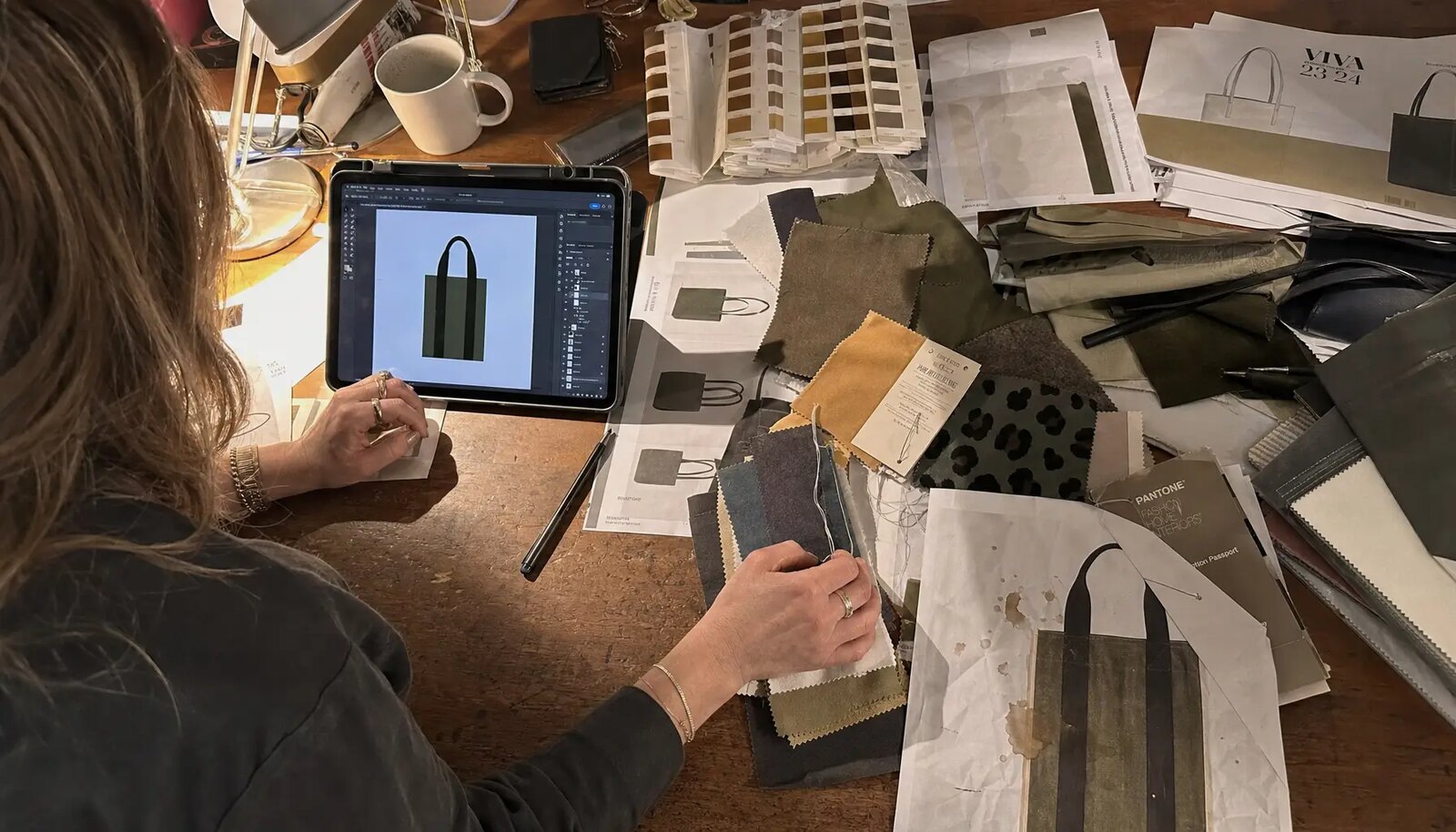
Why eco apparel brands buy canvas wine carriers differently from gift-packaging buyers
Eco apparel brands rarely buy canvas wine carriers as a one-off holiday add-on. More often, they use them as part of a broader private-label accessory program: winery collaborations, retail checkout add-ons, loyalty gifts, event merchandise, capsule drops, ecommerce bundles, or reusable packaging that needs to feel aligned with the apparel line. That means the RFQ should not read like a generic promo-bag request. It should read like a product spec for a retail accessory with clear expectations for fit, finish, decoration, and pack-out.
The most common sourcing mistake is to treat “canvas wine bag” as a single commodity. In practice, the same phrase can describe a lightweight drawstring sleeve, a stitched single-bottle carrier, a two-bottle divider carrier, or a retail-ready gift item with a woven label, barcode sticker, and folded presentation. Those versions may differ materially in fabric weight, sewing time, print method, and carton volume. If the spec is vague, quotes will not be comparable because each supplier will fill in the blanks differently.
Eco apparel buyers also tend to care about brand continuity. They already manage color standards, label systems, and fabric handfeel across garments and accessories. A wine carrier that sits beside those products needs to look intentional, not promotional. That usually means a natural cotton canvas or a controlled dyed canvas, a matte print finish, simple construction, and packaging that does not introduce excessive plastic or visual clutter. If the carrier is sold at retail, the bag should feel like a legitimate branded item, not a giveaway.
This is why supplier selection matters as much as price. A cut-and-sew factory may be perfectly capable of making a simple tote, but still struggle with repeatable fold standards, label placement, and carton consistency on a retail accessory line. Before you invite quotes, ask whether the supplier has handled lifestyle accessory programs, whether they can manage more than one artwork version without confusion, and whether they understand retail packing requirements. Those capabilities affect reorders far more than the first sample does.
The sourcing lens should also be operational. Procurement teams should think in terms of BOM control, sample gates, carton economics, and inspection checkpoints. A good RFQ helps the factory quote the right structure, pack-out, and milestone plan from the start. The more clearly you define the program, the less likely you are to discover hidden assumptions after the order is already underway.
- Retail use usually requires cleaner stitching and more consistent print placement than giveaway use.
- Apparel brands often need logo execution that matches tote bags or pouch programs already in market.
- Bottle size variation matters: standard 750 ml wine, sparkling bottles, and olive oil bottles do not share the same width and gusset needs.
- If the bag is sold as merchandise, hangtag, barcode, and fold presentation become real cost items.
- Reusable packaging programs need clearer durability expectations than a one-time promotional bag.
Build the RFQ around bottle fit and use-case before you talk about logo artwork
The first thing a factory needs is the bottle format. Many RFQs open with the logo file and target quantity, but the real pattern decision comes from bottle diameter, height, shoulder shape, neck profile, and gross weight. A carrier designed for a standard 750 ml Bordeaux bottle may be too tight for a Champagne bottle or a wider artisanal oil bottle. If your program spans mixed SKUs, say so early because it changes gusset width, opening size, divider requirements, and bottom reinforcement.
You should also define how the carrier will be used. A simple in-store takeaway carrier can use a lighter structure than a premium reusable carrier intended for repeat transport, gifting, or resale. If the bag will be displayed folded on shelf, packed with a bottle at point of sale, sold online as a standalone accessory, or used as a corporate gift, the construction and pack-out requirements change. Those are not cosmetic notes; they affect dimensions, reinforcement, freight, and unit cost.
In an RFQ template, bottle use-case should sit near the top, right after quantity and delivery term. If you have a physical reference, attach a bottle photo or a measured bottle drawing. If not, provide a dimensional profile: overall height, maximum diameter, shoulder width, neck diameter, and approximate filled weight. If the carrier must fit a sleeved bottle, a sparkling bottle with foil, or a bottle protected by tissue, say that explicitly so the factory does not undersize the opening.
This also helps the supplier recommend construction. For example, a branded retail carrier sold at checkout may need a stronger handle, a cleaner bottom shape, and a more stable silhouette so it feels giftable. A campaign mailer or promotional item may prioritize low bulk and quick folding instead. When you clarify use-case first, the quote becomes more meaningful because the supplier is no longer guessing which product you actually need.
- Include bottle height, bottle diameter, shoulder shape, and approximate filled weight.
- State single-bottle, two-bottle, or six-bottle requirement clearly.
- Mention whether the carrier must stand by itself when empty or only when a bottle is inside.
- If the bag must fit inserts or tissue wrap, allow for that in internal width.
- Define finished size tolerance, for example plus or minus 0.5 cm on width and depth, plus or minus 1.0 cm on height.
- Add a drawing or reference sample whenever possible so the supplier is not guessing fit.
Fabric and GSM choices: where cost savings help and where they create claims
For most wholesale canvas wine carriers, the practical fabric range is usually 10 oz to 12 oz canvas, with some programs moving a little lighter or heavier depending on positioning. Around 280 GSM can work for a simple one-bottle carrier if the bottle is moderate in weight and the handles are properly reinforced. Around 340 GSM, which is roughly 12 oz canvas, gives a better premium handfeel and reduces panel collapse. Many eco apparel brands prefer that heavier look because it aligns better with their tote and accessory programs.
Natural canvas is often the easiest route for water-based screen printing and lower MOQ flexibility. Dyed black or other colored canvas can look sharper for fashion-led brands, but it introduces additional shade management and crocking checks. Washed canvas gives a softer lifestyle feel, but it also changes dimensions, seam appearance, and logo crispness. If your team wants a clean graphic logo and tighter dimensional control, unwashed canvas is easier to manage. If you want a more relaxed fashion look, be prepared for wider tolerance discussions at approval stage.
It helps to separate fabric specification from finish specification in the RFQ. “Canvas” by itself is too vague. State fiber content if relevant, finished weight in ounces and GSM, whether the fabric is bleached or natural, and whether it is piece-dyed, reactive-dyed, pigment-dyed, enzyme-washed, or laminated. If you have compliance or sustainability language you plan to use in market, align it internally before asking suppliers to echo it. Do not invite unverified environmental claims into the quote or artwork brief.
For color control, ask what the factory will actually use: stock natural cloth, a standard dyed fabric, or a custom color matched to a reference. Stock natural canvas is often the least risky for speed and consistency. Custom dye or washed treatment can be appropriate, but only if the color standard is locked. If the bag needs to match an apparel line, request a physical lab dip or a confirmed swatch before bulk approval. That is a much stronger control than approving a digital render on a monitor.
The practical rule is simple: savings on fabric should not create later claims on handfeel, logo readability, or shape distortion. A lower GSM bag can be acceptable if the use case is short-term or promotional. A premium retail carrier should not be spec’d only by price. The right fabric is the one that survives handling, stays visually aligned with the brand, and packs efficiently for your route to market.
- 8 oz to 10 oz canvas: lower cost, softer structure, more suitable for promo or low-price retail.
- 10 oz to 12 oz canvas: common balance for branded retail wine carriers.
- 12 oz to 14 oz canvas: premium feel, stronger shape retention, higher freight and sewing labor.
- Natural canvas: lower dye risk, often shorter material lead time, easier eco-style branding.
- Dyed canvas: stronger visual identity, but ask about colorfastness and lot consistency.
- Lamination or coating: improves stain resistance but changes handfeel and may conflict with eco positioning.
- Ask for actual finished fabric weight, not only mill nominal weight.
Construction details that separate durable carriers from low-cost lookalikes
The most common failure point in a wine carrier is not the panel fabric. It is the handle attachment. A supplier can quote a visually strong bag in heavy canvas, but if the handles are attached only to the outer face with a short stitch run, load failure will happen at the seam. For a one-bottle carrier, cotton webbing handles caught into the side seam with box-X reinforcement are usually a safer choice than decorative tabs. For a two-bottle carrier, divider stability and bottom support become more important because the bottles shift and can strike each other during carry.
Bottom design is another cost-versus-performance decision. A sewn self-fabric bottom is efficient and works for many standard bottle programs. A separate bottom gusset can improve shape and help the bag stand more neatly, but it adds seam length and labor. Internal board inserts improve presentation, yet they also increase pack volume and can crack or deform under humidity or transit pressure. Buyers should add a board only when the retail program clearly benefits from the stiffer presentation. If the carrier is meant for repeated use, a stronger base is often more useful than decorative trim.
The top opening and side seam finish deserve attention too. If the opening is too tight, inserting the bottle becomes awkward at retail and may slow checkout. If it is too loose, the bottle can wobble during carry. Ask the factory to confirm the cut size before sewing and the finished size after seam allowance. Seaming method matters as well. Overlock, binding, and clean-finished seams each change both look and durability. If raw edges are visible where the carrier is supposed to feel refined, the product can look unfinished even when the structure is sound.
For two-bottle carriers, the divider cannot be an afterthought. It should be centered, straight, and anchored firmly at the bottom and top junctions so the bottles do not collide. If the divider is loose, the carrier may pass a visual approval but fail in actual use. Ask whether the divider uses the same body fabric or a reinforcement layer and whether it is stitched into the base seam or applied as a separate panel. Those answers affect both cost and performance.
Finally, request construction photos, not just a finished sample photo. Photos of handle stitching, inside seams, divider attachment, and bottom reinforcement help buyers compare suppliers more fairly and catch shortcuts early. A good factory should be able to show how the bag is actually built, not only how it looks from the outside.
- Preferred handle width: 25-30 mm for most single-bottle carriers.
- Handle drop should match use case: shorter for gift carry, longer if shoulder carry is intended.
- Box-X reinforcement is a practical minimum for heavier bottle loads.
- Divider panel should be stitched firmly at the bottom and side junctions for two-bottle bags.
- If using metal eyelets, note finish, corrosion expectation, and whether they contact glass necks.
- Ask for inside-seam photos to verify that reinforcement is not only cosmetic.
Print method selection: do not quote screen print, heat transfer, and embroidery as if they are equal
For eco apparel brands, the logo often needs to feel consistent with existing canvas totes, pouches, or garment accessories. Water-based screen printing is usually the most suitable option for simple one-color or two-color artwork on natural canvas. It gives a softer handfeel and a less plastic look than many transfer methods. Plastisol can improve opacity on dark fabrics, but some buyers dislike the heavier ink film. Heat transfer can work for photo-style or gradient artwork, yet on textured canvas it often looks less integrated and may age differently than print.
Embroidery or woven patches can be good options for premium carriers, but they are not interchangeable with printing. Embroidery on a single-bottle front panel can pucker lighter canvas unless stabilizer, stitch density, and tension are well controlled. Patches add labor and can interfere with folded packing. If your artwork has fine lines, small text, or strict Pantone needs, define those limits in the RFQ before sampling. Ask the supplier to state the minimum line thickness and smallest text size they can reliably execute on that fabric texture.
This is where a detailed RFQ does more work than a mood board. List the logo version, the number of colors, the target print placement measured from the top seam and side seam, and any excluded effects such as gradients, metallic ink, or puff print. If your brand system has a primary and secondary mark, identify which one must be used. Do not assume the factory will choose correctly. Their default may be whichever version is easiest to print, not the one that fits your brand architecture.
Also ask for a strike-off on the actual fabric base, not only a digital render. Canvas texture can cause small typography to fill in, and dyed or washed fabric can shift tone. On dark canvas, you may need an underbase or a different ink system to keep the logo readable. On natural canvas, the print may look softer than the artwork file. A physical strike-off lets you approve the real result before screens and bulk production are committed.
If your logo is minimal, consider whether a small woven label or side label is a better brand signal than a large front print. For some apparel brands, that approach looks cleaner and reduces the chance of registration issues. The correct answer is not “the cheapest print method.” It is the method that matches the artwork, fabric, use case, and retail expectation.
- Water-based screen print: best for matte brand look on natural canvas.
- Plastisol screen print: stronger opacity, heavier handfeel.
- Heat transfer: useful for complex artwork, but test adhesion and edge appearance on textured fabric.
- Embroidery: premium look, higher cost, possible panel puckering.
- Woven label plus small print: often a cleaner route than large complex front artwork.
- State print area measurement from seams, not only centered visually.
- Ask for the minimum line thickness and smallest text size the supplier can reliably execute.
MOQ logic and quote structure: why low opening MOQs can still be expensive
Buyers often focus on the stated MOQ and miss the real minimums behind the quote. A factory may accept 500 pieces total, but the fabric mill may require a higher minimum for dyed cloth, the printer may charge a separate screen cost for each artwork, and carton efficiency may be poor on very small runs. A low MOQ only helps if the supplier is using stock fabric, standard patterns, and simple prints. If your brand needs custom-dyed canvas plus multiple artworks, the true economic MOQ is higher even if the factory says the order is possible.
A good quote should separate fixed setup costs from repeat production cost. Sample development, print screen preparation, custom labels, barcode application, and special packing need to be visible. Otherwise buyers compare a low-looking FOB price from one supplier against a more complete price from another and make a bad choice. For reorder planning, also ask where the next price break begins. Some styles do not improve meaningfully until fabric utilization and sewing efficiency increase at a few thousand units.
MOQ should be broken down by what actually changes. For example, the bag body may share one minimum, while the print version or woven label version has another. If you are planning multiple seasonal colorways with the same construction, ask whether the supplier can keep one pattern and change only the fabric or print. That is often the difference between a workable launch test and an unnecessarily expensive pilot.
There is a second MOQ issue that procurement teams should watch: sampling and approval quantity. A supplier may offer a low PO quantity but charge several development steps separately, so the first order looks affordable and the first reorder does not. Ask whether sample charges are refundable, whether they are deducted from bulk if the order passes, and whether screen setup or plate costs are retained for the next run. That helps you evaluate the real program cost instead of only the first invoice.
When you write the RFQ, state MOQ by style, by fabric color, and by artwork version. If the supplier replies with only one total number, ask them to break it down. That one correction often removes 80 percent of quote confusion before it reaches management review.
- Lower MOQ works best with natural stock canvas and one print color.
- Custom dye adds material minimum and can extend lead time by 7-15 days depending on mill booking.
- Multiple SKUs under one PO may still face MOQ by artwork or label version.
- Screen charges, woven label setup, and barcode labor should be shown separately where possible.
- If testing is required, clarify whether cost is amortized into unit price or billed as a separate line.
- Ask what price break applies at reorder quantities, not only at the opening order.
How to compare supplier quotes without rewarding incomplete pricing
When comparing quotes, normalize the commercial basis first. Start with EXW or FOB unit price, then add the same packaging standard, the same sample path, and the same inspection assumptions. One supplier may quote without individual polybags, hangtag attachment, or export carton marks. Another may include them. If you compare only the headline unit price, the cheaper quote can become more expensive after you add what is missing. This happens often with retail-ready wine carriers because folding, labeling, and assortment control are labor-heavy compared with a simple bulk promo bag.
Landed-cost thinking matters as well. A thicker canvas, divider insert, or rigid bottom board can raise freight cost per unit because fewer pieces fit per carton and more cartons are needed for the same order quantity. That does not automatically mean the stronger spec is wrong. It means you should model total program economics. For ecommerce retail, reducing damage, returns, and poor presentation may justify a higher unit cost. For event giveaway use, it may not.
A simple internal matrix helps procurement teams compare offers: fabric spec, handle method, print method, packing method, MOQ, sample charges, lead time, carton dimensions, and payment terms. The supplier who gives the most complete answers is often the better partner even when the initial price is not the lowest. In private-label sourcing, clarity is a form of quality control. A vague quote usually signals a vague production plan.
This is also where quote assumptions should be insisted upon. If a supplier says the unit price is based on natural canvas, one-color print, flat pack, and no inspection, that can be acceptable for comparison as long as it is stated clearly. If another supplier includes recycled polybags, barcode stickers, and carton markings, the quote should say so line by line. A strong RFQ asks suppliers to list inclusions and exclusions explicitly so the buyer is not forced to reverse-engineer the offer later.
For procurement teams, the most useful quote is the one you can hand to finance, QA, and logistics without translation. If the supplier’s offer is hard to read, it will be hard to control in production.
- Normalize quote basis: EXW, FOB, CIF, or DDP should not be mixed without adjustment.
- Request carton dimensions and gross weight from every supplier for freight comparison.
- Separate development charges from repeat production price.
- State whether AQL inspection, needle detection, or third-party inspection is included or extra.
- Review payment terms because low unit price with high deposit and weak schedule control can still be higher risk.
- Ask suppliers to state inclusions and exclusions explicitly in the quotation.
Sample approval workflow that catches most production mistakes before bulk
The safest approval flow is not one sample stage but three. First, approve a blank prototype for dimensions, handle length, bottle fit, and foldability. This is where you catch a gusset that is too narrow or a handle drop that feels awkward. Second, approve a print strike-off or artwork panel to judge color, line sharpness, and handfeel on the actual fabric. Third, approve a pre-production sample made with bulk-like fabric, sewing method, and final print method. Skipping directly to a mass order after a digital layout is where trouble starts.
For eco apparel brands, physical review matters because color and texture are part of the brand expression. Natural canvas can range from warm cream to a cooler off-white. Dyed black fabric can show lint, chalk marks, or uneven coverage if the dye process is not stable. If your visual standard is strict, approve a fabric swatch, print strike-off, and final packaging components together. That avoids a common mismatch where the body, woven label, and hangtag are all individually acceptable but do not feel coherent as a retail item.
Write your sample approval rules into the RFQ. State who signs off, how many rounds are included, what can be corrected after the first sample, and what requires a new charge. That keeps development from becoming endless and protects the factory from moving targets. If they know the approval criteria in advance, they can build the right sample instead of guessing what your team will accept. The better your sample brief, the faster your bulk order moves.
For pack-out approval, do not stop at the bag itself. Ask the supplier to show the final folded size, label placement, barcode placement, and carton assortment if mixed styles are involved. The sample should represent how the item will look when it reaches your warehouse or retail team. That is the point where sourcing becomes operational, not just aesthetic.
If possible, keep one sealed golden sample with approval notes and date stamp. That sample becomes the reference for final inspection and helps resolve disputes about handle length, print position, or fold standard later in the program.
- Blank sample should be tested with the real bottle size, not a similar bottle guessed by the factory.
- Print strike-off should include the smallest text and finest line in the artwork.
- PP sample should use approved fabric lot or bulk-like fabric if lot is not yet available.
- Approve folding method if the bags will be shelf-packed or ecommerce-packed.
- Keep one sealed golden sample with dated approval notes for final inspection reference.
- Define how many correction rounds are included before extra charges apply.
Packing, barcoding, and carton planning: small details that distort total cost
Packing decisions can shift both labor cost and freight more than buyers expect. A plain flat pack by dozen is efficient and suitable for many distributors. Retail programs often need individual fold, recycled polybag or paper sleeve, barcode sticker, and hangtag placement. Each step adds handling time. If your supplier prices only the bag body and leaves packing vague, the final invoice or ship date can change once the warehouse realizes the pack-out specification is more complex than assumed.
Carton planning also matters because canvas wine carriers vary in bulk depending on handle stiffness, divider construction, and bottom insert. Overpacked cartons can crush handles or distort printed panels. Underfilled cartons waste cubic volume. Buyers should define a carton gross weight limit that fits their warehouse and retail handling systems, often around 10-15 kg depending on region and receiving practice. Ask for a packing test before bulk if the item includes internal boards, stiff handles, or premium fold presentation.
Barcoding is another area where details are often left too late. If the bag is going into retail channels, specify whether the barcode is on the polybag, hangtag, or carton only. Give the exact barcode format, label size, and location. Also state whether mixed ratios or assorted colorways are going into the same carton. A factory can pack the wrong assortment even when the bags themselves are correct if the pack matrix is unclear.
For ecommerce, packaging should also protect presentation. Canvas creases easily, and if the carrier has a printed logo, the fold line may cut across the graphic. If that matters, define the folding map. If not, accept a utilitarian fold and save cost. The key is to choose intentionally instead of letting the factory decide the presentation standard by default.
If your retail team needs a shelf-ready item, ask the factory to quote both a bulk pack version and a retail pack version. That lets procurement see the labor and freight difference immediately and choose the right route for the channel instead of assuming one packing method fits all.
- State units per inner and units per export carton.
- Specify whether individual polybag is recycled PE, biodegradable film, or no polybag.
- Give barcode format, placement, and whether sticker goes on product, polybag, or hangtag.
- Ask for carton dimensions in cm and cubic meter calculation.
- Set carton gross weight limit suitable for your receiving warehouse.
- If mixed packs are needed, define assortment ratio and carton marking format.
- Ask whether cartons are double-wall or single-wall and if drop-test expectations are met.
Lead time planning and schedule risks for launch-driven orders
Canvas wine carriers look simple, but launch timing can slip for familiar reasons: fabric shade approval, print screen remake, revised handle length, late barcode file, or carton mark changes after booking. If the order includes custom dyed fabric, the schedule should separate material readiness from sewing capacity. A factory that says 35 days total without milestone detail is not giving enough information for launch planning. Buyers need dates for fabric booking, lab dip approval if dyed, PP sample signoff, cutting start, inline inspection, and cargo-ready completion.
Schedule risk is highest when many small brand decisions are still open after the purchase order is placed. Apparel teams often finalize hangtags, barcodes, or care copy late because they are used to garment workflows. Bag factories cannot absorb endless packaging revisions without cost and delay. Treat the wine carrier like a launch item with a frozen BOM date. Once printing screens, labels, and cartons are made, late changes create waste and push the delivery window.
A practical schedule should include both a critical path and a contingency buffer. For example, if you are ordering natural canvas with one-color print, your path may be relatively short. If you are ordering dyed fabric, two artworks, and retail packaging, the buffer should be larger because there are more approval points. Ask the supplier to mark which steps depend on buyer approval and which can run in parallel. That makes delays easier to manage and exposes bottlenecks early.
It is also smart to ask for milestone reporting during production. Weekly updates on fabric status, printing status, sewing completion, and packing percentage help buyers catch problems before shipment week. If a supplier is reluctant to give milestone visibility, that is often a sign that planning is weak. For launch-driven orders, visibility is almost as important as price.
If the order is tied to a seasonal retail window, build the schedule backward from the sell date, not forward from PO issue date. That gives your team enough time to handle rework, freight delays, or inspection holds without missing the launch.
- Natural canvas with simple print usually moves faster than custom dyed canvas.
- PP sample approval delays often push the whole path because cutting cannot start safely before signoff.
- Barcode and carton mark files should be frozen early to avoid repacking.
- If booking for holiday or gifting season, add buffer for port congestion and inspection scheduling.
- Request weekly milestone updates once bulk material is booked.
- Ask which steps can run in parallel and which steps are strictly sequential.
Specification comparison for buyers
| Spec decision | Recommended option | When it fits | Buyer risk to check |
|---|---|---|---|
| Supplier route | Direct factory with in-house cut-and-sew plus print coordination | Best for private label eco apparel brands that need repeat orders, tighter spec control, and carton planning | Some traders present as factories; request workshop photos, machine list, sample timeline, and who controls cutting, printing, and final packing |
| Fabric base | 12 oz canvas, about 340 GSM, natural cotton or reactive dyed black | Works for most single-bottle retail programs balancing structure and price | Some quotes use lighter 8-10 oz fabric after approval stage; require finished GSM tolerance and fabric swatch approval |
| Bottom structure | Self-fabric bottom with an internal board only if presentation matters | Good for standard retail carry use and lower freight volume | Rigid inserts improve shape but increase packing volume, can crack in transit, and may create fit issues if bottle diameters vary |
| Handle construction | 25-30 mm cotton webbing cross-stitched into side seams with box-X reinforcement | Needed for heavier glass bottle loads and repeat-use positioning | Short handles stitched only to the outer panel can tear at the seam under 1.5-2.0 kg loads; request handle attachment photos and load-test results |
| Printing method | Water-based screen print for simple 1-2 color logo on natural canvas | Best for eco apparel brands wanting matte handfeel and lower setup cost at volume | Fine detail can blur on textured canvas; define minimum line thickness and acceptable registration shift |
| MOQ approach | Shared fabric color program with custom print and standard pattern | Useful for pilot orders, seasonal drops, and lower-risk first PO | Stock fabric shades may vary lot to lot; lock Pantone tolerance or approve a lab dip if color consistency matters |
| Packaging route | Flat packed by dozen in recycled poly or paper band, export carton with drop-test suitable board | Best for ecommerce replenishment and lower freight cost | Individually inserted tissue, hangtags, and barcode stickers add labor and create quote gaps between suppliers |
| Sampling path | Blank fit sample first, then printed pre-production sample from bulk-like fabric | Reduces waste and separates size/fit approval from print approval | Approving artwork on a digital mockup only is risky; canvas texture, shrinkage, and seam placement affect final logo position |
| Lead-time model | Material booking after PP approval with staged milestones for print, sewing, and final inspection | Best for planned launches where purchase order date is fixed but ship window is narrow | Factories quoting one total lead time without milestone dates can hide bottlenecks in dyeing, print screens, or export booking |
Buyer checklist before sampling
- State the bottle format clearly: 750 ml standard wine, champagne bottle, sparkling bottle, olive oil bottle, or mixed bottle diameters; bag width and gusset depend on this.
- Specify fabric in oz and GSM, for example 12 oz canvas about 340 GSM, and note whether tolerance is acceptable at plus or minus 5 percent on finished fabric weight.
- Define whether fabric is natural, dyed, washed, enzyme-washed, or laminated; each changes print result, shrinkage, odor risk, and lead time.
- Include finished dimensions with seam tolerance, handle length, handle width, gusset depth, divider requirement, and whether a bottom board is included.
- List print method and artwork details: Pantone references, print area, one-side or two-side print, line thickness, and acceptable registration tolerance.
- State MOQ by style, color, and print variant, not just total order quantity.
- Mention the sample sequence required: blank prototype, print strike-off, pre-production sample, and who pays courier and development cost.
- Define packing method per unit, per inner, and per export carton, including barcode label placement, carton mark content, and carton weight limit.
- Add testing or performance expectations such as colorfastness for dyed fabric, handle load test target, needle detection if required, and odor standard.
- Request quote breakout separating sample charge, printing setup, unit price, packaging add-ons, and shipping terms so suppliers cannot hide cost shifts.
Factory quote questions to send
- Is the quoted fabric the actual finished canvas weight in GSM after dyeing or washing, and what is the tolerance on the finished material?
- Are you quoting natural canvas, piece-dyed canvas, or yarn-dyed canvas, and how does that affect lead time and shade consistency?
- What is included in the unit price: print screens, divider insert, bottom board, woven label, hangtag attachment, barcode sticker, and individual polybag or paper wrap?
- What is the MOQ by colorway and by logo version if we use the same pattern across multiple artworks?
- Can you provide the exact cut size, the finished size tolerance after sewing, and any expected shrinkage after printing or washing?
- How are handles attached: stitched to the panel only, caught into the side seam, or reinforced with box-X stitching, and do you have a load-test standard?
- What print method are you recommending for our artwork on this fabric texture, and what detail limitations should we expect?
- Will you provide a pre-production sample made from bulk-like fabric and final print method before mass production starts?
- What are the milestone dates for fabric booking, print strike-off, sewing start, inline inspection, final inspection, and cargo-ready date?
- How many pieces fit per export carton, what are the carton dimensions and gross weight, and can you optimize for our freight mode?
Quality-control points to confirm
- Finished size within agreed tolerance, typically plus or minus 0.5-1.0 cm depending on bag style and gusset depth.
- Fabric GSM matches approved spec within stated tolerance; random roll checks before cutting and finished bag weight spot checks after sewing.
- Handle attachment must be symmetrical, securely stitched, and free from skipped stitches; load-test sample should hold agreed bottle weight without seam distortion.
- Print position aligned to approved measurement from top seam and side seam; registration shift, pinholes, and color variation kept within the approved limit.
- Seams straight and even, no raw edge exposure where binding or overlock was specified, no excessive thread ends or oil marks.
- Divider panel, if used, is centered and securely attached so bottle necks do not collide during carrying.
- Dyed fabric shade reasonably consistent within the production lot and free from obvious streaking, mildew odor, or moisture staining.
- Carton count, assortment, barcode labels, and pack direction match packing list and shipping marks before sealing.
- If a bottom board is specified, confirm its size, placement, and whether it remains flat after compression test or carton stacking.
- Check fold memory and surface appearance after unpacking so retail-ready presentation does not look crushed or uneven.