Start with function, not the cheapest wine bag quote
Wholesale canvas wine carriers look straightforward on a line sheet. A rectangle of fabric, two handles, a logo, maybe a divider. In use, they behave very differently from a standard promotional tote. A filled glass bottle is a dense vertical load. It presses into the base, swings when carried, and pulls hard on two small handle attachment zones.
That is why the sourcing brief matters. If an RFQ says only “canvas wine bag with logo,” suppliers can quote products that are not truly comparable: a light flat sleeve, a gusseted retail carrier, a two-bottle gift bag, or a reinforced reusable carrier. All may be described as canvas wine carriers, but they will not carry the same load or survive the same handling.
For eco apparel brands, durability is also part of the brand promise. These bags are often positioned as reusable, lower-waste alternatives to disposable gift packaging. If the handle tears, the bottom seam opens, or the print cracks after one fold, the product undermines that message. Procurement should treat strength, fit, and decoration performance as specification items, not as inspection surprises.
- Common failure points: handle tear-out, bottom corner abrasion, open base seam, divider detachment, seam fraying, print cracking, print offset, and crushed gussets.
- Most common RFQ gap: “canvas” is listed without GSM, oz weight, composition, reinforcement, or tolerances.
- Most expensive mistake: approving a nice-looking logo sample that was never tested with the actual filled bottle load.
- Better buying sequence: define load and construction first, sample for fit and strength, then approve branding and packing.
Measure the bottle before you measure the bag
The bottle is the first technical input. A 750 ml wine bottle is not a single standard shape. Bordeaux, Burgundy, Riesling, sparkling wine, spirits, olive oil, and specialty gift bottles can vary in height, base diameter, shoulder width, neck profile, and filled weight. A carrier that works for a slim bottle may strain badly around a sparkling bottle.
For accurate B2B quoting, send the supplier bottle height, base diameter, widest diameter, closure height if relevant, and maximum filled weight. If one carrier will be used across several products, build the specification around the largest and heaviest realistic bottle, not the easiest one. Many filled 750 ml wine bottles weigh roughly 1.2-1.6 kg; heavier glass, sparkling formats, and gift sets can be above that range.
Two-bottle carriers need extra care. The buyer is not only adding the weight of a second bottle. The bag also has to control movement, prevent bottle-to-bottle contact, and keep the divider from tearing out when the carrier is lifted, placed down, and picked up again.
- RFQ bottle data: height, base diameter, widest shoulder diameter, neck or closure height, and filled weight.
- Fit rule: the bottle should insert smoothly without forcing the side seams, top hem, handle area, or divider.
- Display rule: if sold upright, the loaded carrier should stand without severe leaning or bottom collapse.
- Multiple-bottle rule: specify total loaded weight and the largest bottle combination the bag must carry.
Set finished dimensions and tolerances in writing
A wine carrier can look right in a photograph and still fail at final inspection because measurement points were never defined. Finished dimensions should include body height, body width, side gusset, bottom depth, top opening, divider width, divider height, and handle drop. If the bag has a boxed base, clarify whether bottom depth is measured flat, opened, or along the sewn panel.
A practical starting tolerance for many cut-and-sew canvas bags is around +/-5 mm for key body dimensions and around +/-10 mm for handle drop. Some projects need tighter control, especially when bottles are unusually wide or retail display dimensions are fixed. The important point is not the exact tolerance number alone; it is that the buyer and supplier agree how the bag will be measured before production begins.
Undersized bags are not just inconvenient. They increase seam strain during insertion and can distort the logo panel. Oversized bags can look loose, tip on shelf, and allow bottles to shift. A written tolerance turns final QC from a debate into a measurable check.
- Include a measurement diagram or clear text notes with the RFQ and PO.
- Use wording such as: “Finished dimensions measured flat unless otherwise noted; tolerance +/-5 mm; handle drop +/-10 mm.”
- Measure the approved pre-production sample and record the actual dimensions, not only the target dimensions.
- For divider bags, measure divider height from the inside base and check that it stays centered when bottles are inserted.
Specify canvas weight, composition, and finish without shortcuts
Canvas weight drives durability, sewing difficulty, cost, and carton weight. For many standard single-bottle wholesale canvas wine carriers, 12 oz to 14 oz canvas is a useful starting range. Depending on mill conversion and finishing, that often falls broadly around 340-475 GSM. For heavier reuse expectations, premium gifting, or two-bottle carriers, buyers may consider 14 oz to 16 oz with reinforced handles and base construction.
Do not treat the ounce label as universal. Fabric may be measured before or after dyeing, washing, softening, coating, or other finishing. Natural cotton canvas, black dyed canvas, recycled cotton blends, and cotton-poly canvas can feel and perform differently even when the nominal weight looks similar on paper. Ask whether the quoted weight is greige weight or finished weight, and ask what tolerance applies in bulk.
Composition affects both sourcing claims and product behavior. Conventional cotton canvas is common and cost-effective. Recycled cotton blends can support a sustainability story but may show more shade and fiber variation depending on the source. Organic cotton may require certification documents and can involve higher MOQ or longer lead time. Cotton-poly blends may improve dimensional stability or cost, but they may not fit every eco apparel brand’s material policy.
- Single-bottle retail carrier: usually start at 12-14 oz canvas, then validate with load testing.
- Two-bottle or premium reuse carrier: consider 14-16 oz plus reinforced handle and base construction.
- Promotional short-use sleeve: 10-12 oz may be possible only with realistic use claims and appropriate reinforcement.
- Quote wording: “Finished canvas weight, composition, color, finishing process, and allowed production tolerance to be stated on quote and sample card.”
- Documentation to request when relevant: transaction certificate, scope certificate, recycled content statement, organic cotton documentation, or material declaration.
Choose a body construction that spreads the load
The lowest-cost wine carrier is often a flat sleeve. Sometimes that is enough. But a bottle has a rigid circular base, and a flat sleeve concentrates force at the lower corners and side seams. If the carrier has to stand on a retail shelf, hold a premium bottle, or be reused, a side gusset or boxed bottom usually gives a better result.
For single-bottle carriers, the main construction choices are flat sleeve versus side gusset, boxed bottom versus simple folded base, and reinforced lower panel versus no reinforcement. A boxed bottom adds sewing operations, but it helps the bottle sit more naturally. A double-layer lower patch, bound lower seam, or reinforced corners can reduce early abrasion.
For two-bottle carriers, the divider is not a decorative insert. It is part of the protection system. A loose divider may shift, bunch, or let bottles touch. A better divider is anchored into the bottom seam or lower construction and secured at side or top points. The divider height should cover the main body of the bottle, not only the base.
- Better standing stability: boxed bottom or side gusset with enough depth for the bottle diameter.
- Better abrasion resistance: reinforced lower corners, bound base seam, or double-layer base patch.
- Two-bottle divider requirement: anchored at the base and secured so bottles do not collide during carrying.
- Sampling check: insert and remove bottles several times; inspect seam strain, divider movement, and base distortion.
- Avoid hidden substitutions: state whether raw interior seams, overlock seams, bound seams, folded seams, lining, or base inserts are included.
Engineer handles like load-bearing components
Handles are where many weak canvas wine carriers fail first. A shopper does not gently test the product; they lift a filled glass bottle and expect the handle to hold. For bottle bags, handle construction should be specified in measurable terms: material, finished width, drop length, attachment depth, reinforcement method, thread, stitch type, stitch density, and back-tack method.
Self-fabric handles create a clean tonal look that many eco apparel brands prefer. They need proper folding, consistent sewing, and enough attachment depth into the body. Cotton webbing handles can be more consistent in strength and may be faster to sew, but they change the design language. The right choice depends on the target retail look, load expectation, and price point.
Avoid handles captured only inside a shallow top hem with no extra reinforcement for filled-bottle use. Stronger options include X-box stitching, bar-tacks, reinforcement patches behind the attachment point, or webbing that extends farther down the panel. After load testing, inspect not only the thread but also the fabric around the needle holes. Tearing, elongation, or puckering can signal weakness even if the stitch remains intact.
- Define handle width, for example 25-30 mm for many compact carriers, or wider if the design and cost allow.
- Define handle drop: short hand-carry drop for gift carriers, longer drop only if shoulder carry is required.
- Specify reinforcement: X-box stitch, bar-tack, internal patch, extended webbing, or an equivalent load-bearing method.
- Inspect stress points: handle base, top hem ends, stitch holes, bottom corners, gusset intersections, and divider base.
- Load test with the intended bottle weight or a heavier approved test weight before bulk approval.
Match the decoration method to textured canvas
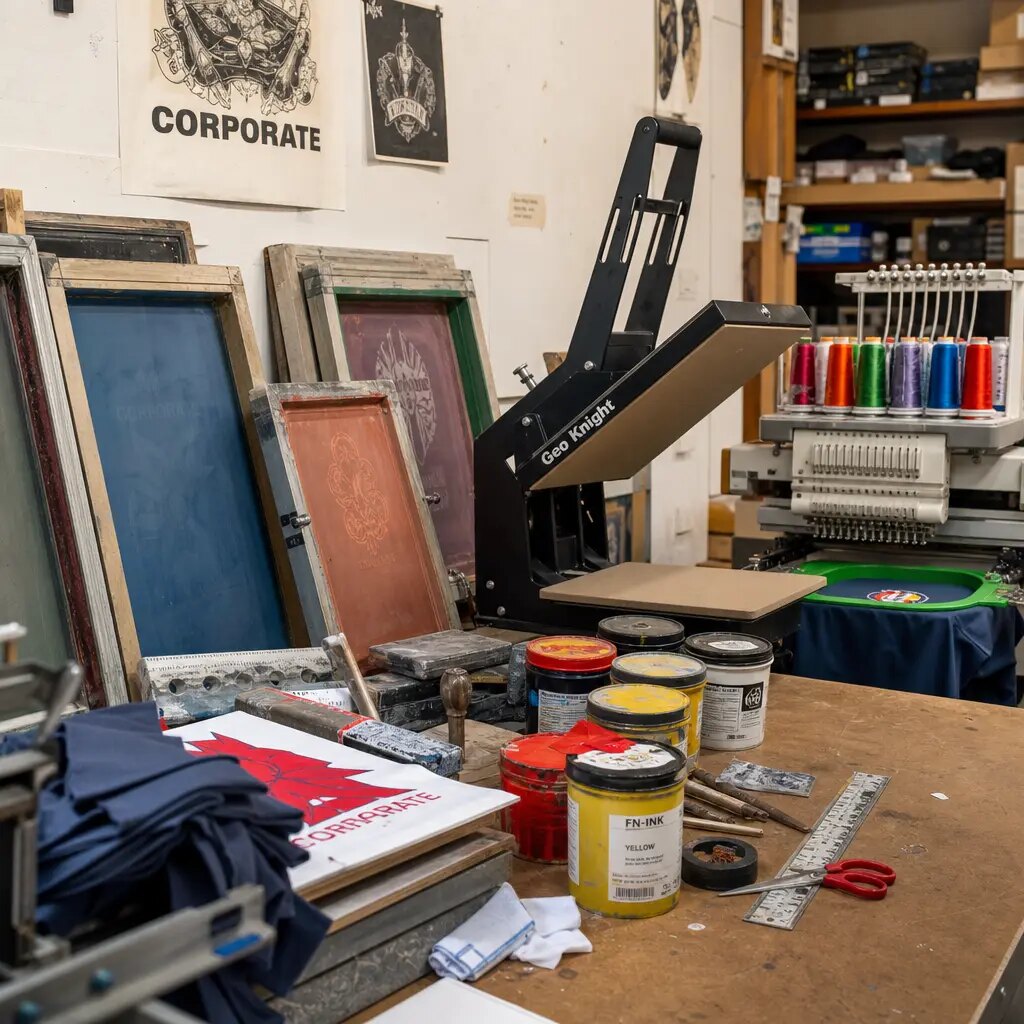
The logo often drives the commercial value of the order, but decoration should not be approved from a mockup alone. Canvas is textured and absorbent. Slubs, yarn variation, and surface unevenness can soften print edges or create small pinholes. Approve branding on the actual bulk-intent fabric whenever possible.
Water-based screen printing is often a strong route for eco apparel brands because it works well for simple one- or two-color logos and usually gives a softer hand than thick film transfers. On dark canvas, opacity may require an underbase or a different ink system. That can affect cost, handfeel, curing time, and approval schedule.
Transfers can work for detailed artwork, gradients, or lower quantities, but they need adhesion, rub, fold, and edge-lift checks. Embroidery can look premium, yet dense stitching may pucker lighter canvas or create a stiff area. Woven side labels, sewn patches, and hangtags are often useful when the brand wants an apparel-style detail without stressing the front panel print.
- Best simple-logo route: water-based screen print on natural canvas, tested for rub and fold resistance.
- Dark canvas issue: discuss underbase, opacity, ink handfeel, curing, and print tolerance before sampling.
- Transfer risk: cracking, edge lift, gloss mismatch, and poor adhesion on coarse canvas.
- Embroidery risk: puckering, stiffness, needle damage, and distortion near load or fold areas.
- Quote details: print size, placement from seams, number of colors, Pantone reference, tolerance, screens, labels, and setup charges.
Run a practical durability test before PO release
A durability checklist does not need to imitate a full lab protocol unless a retailer or market requires one. It does need to reflect real use. The buyer should test bottle fit, loaded carrying, handle attachment, base seams, divider behavior, print rub, fold resistance, and packed-carton recovery on the final pre-production sample.
Start with fit. Insert the actual bottle or a gauge matching the maximum expected dimensions. The base should seat properly, the top opening should not strain, and the body should not twist. Then test load. Use the filled bottle weight or a defined test weight at or above the retail load. Lift repeatedly, hang for an agreed period, and inspect the handle, top hem, bottom seam, gussets, divider, and fabric around stitch holes.
Next, test decoration and packing. Rub the printed area with a clean dry white cloth and check whether ink transfer is acceptable. If the product may face moisture, request a wet rub check. Fold the sample as it will be packed in bulk, apply light compression similar to carton packing, reopen it, and inspect for cracking, fold whitening, print offset, crushed gussets, twisted handles, or divider deformation.
- Fit test: bottle inserts smoothly, seats into the base, and stands acceptably for the intended display use.
- Loaded hang test: no handle tear-out, open seams, broken threads, or severe fabric distortion under agreed load and time.
- Repeated lift test: handle and base remain stable after multiple lift/carry cycles with filled weight.
- Divider test: two bottles remain separated and divider does not detach, bunch, or twist.
- Print dry rub test: no unacceptable ink transfer, smearing, or surface breakdown on approved canvas.
- Fold test: decoration and fabric surface remain acceptable after the intended packing fold.
- Carton test: packed samples show no severe compression marks, offset, moisture, or shape distortion.
Compare costs by separating the variables
MOQ for canvas wine carriers is rarely driven by sewing alone. Fabric availability, dyeing minimums, print setup, woven label MOQ, patch MOQ, trim color, carton printing, barcode labels, and retail packaging can all change the practical minimum. A factory may be able to sew a small order, while custom dyed 14 oz canvas or custom labels push the project into a higher MOQ bracket.
For trial orders, the lowest-risk setup is usually stock natural canvas, a standard body size, and one-color screen print or a small woven label. This allows the brand to test retail response without taking on custom fabric risk. Black canvas, custom brand colors, embroidery, padded dividers, base boards, and retail-ready packaging should be priced as separate options.
Ask for price breaks at realistic quantities such as 500, 1,000, 2,000, and 5,000 pieces per colorway. Also request carton dimensions and gross weight. A lower FOB unit price may be offset by greater packed volume, heavier freight, or added retail preparation work. A two-bottle carrier with reinforced divider and base will use more fabric, sewing time, inspection time, and carton space than a simple single-bottle sleeve.
- Separate MOQ lines: fabric, custom color, print, label, patch, packaging, and total order quantity.
- Trial order setup: stock natural canvas, standard size, one-color print, simple export carton packing.
- Cost jump triggers: custom dye, black heavy canvas, two-bottle divider, lining, base insert, embroidery, patch, individual polybag, barcode labeling.
- Quote comparison rule: normalize GSM, size, handle reinforcement, divider, branding, packing, and carton data before comparing FOB prices.
- Landed cost reminder: carton volume, gross weight, rework risk, and retail preparation labor matter as much as unit price.
Lock sample approval with construction and QC records
Sample approval should confirm more than logo placement. A beautiful branded sample is not enough if the production fabric, handle stitch, divider anchoring, or packing fold later changes. For wine carriers, the sample process should validate function first, then decoration, then production-ready details.
A useful sequence has three stages. First, request a blank structural sample to confirm bottle fit, base stability, handle drop, and divider position. Second, request a branded sample to approve artwork scale, print color, placement, label position, and overall retail look. Third, approve a pre-production sample made from bulk-intent fabric, trims, thread, stitching, print, and packing. That third sample should become the production control reference.
Create a sample card or approval sheet. It should list finished dimensions, tolerances, fabric weight and composition, color, handle material and reinforcement, thread color, divider construction, print method, print size, label details, packing fold, carton quantity, and any durability checks performed. Keep one approved sample with the buyer, one with the factory, and clear photos in the PO file.
- Blank structural sample: confirms construction before decoration cost is added.
- Branded sample: confirms artwork scale, print color, placement, and brand appearance.
- Pre-production sample: locks bulk-intent fabric, stitching, trims, print, and packing.
- Approval sheet: include dimensions, tolerances, GSM/oz, handle method, divider, print, labels, packing, and carton plan.
- Bulk cutting rule: do not release until load, fit, decoration, and packing behavior are approved.
Specification comparison for buyers
| Spec decision | Recommended option | When it fits | Buyer risk to check |
|---|---|---|---|
| Canvas weight | 12 oz to 14 oz canvas, approximately 340-475 GSM depending on mill conversion and finishing, for most standard 750 ml single-bottle retail programs | Reusable gift carriers, apparel brand holiday bundles, winery collaborations, and retail add-ons where the carrier must hold shape but remain cost-effective | Do not accept the word “canvas” alone. Confirm finished GSM/oz, composition, shrinkage expectation, and weight tolerance. Below about 10 oz the body may collapse; above 16 oz sewing bulk and carton weight increase. |
| Bottle load | Design around the maximum filled bottle weight, not only nominal bottle volume. A typical 750 ml wine bottle often weighs about 1.2-1.6 kg filled, while sparkling bottles can be heavier. | Any program involving glass bottles, olive oil bottles, spirits, or mixed gift sets | If the RFQ does not state filled weight and diameter, the supplier may size the bag for a slim bottle and underbuild the handle, divider, or base. |
| Finished size tolerance | Use written tolerances such as +/-5 mm for key finished dimensions and +/-10 mm for handle drop, unless the construction needs tighter control. | B2B orders where several suppliers or production lots must match the same approved sample | No tolerance means final inspection becomes subjective. Oversized bags look sloppy; undersized bags strain seams when bottles are inserted. |
| Single-bottle construction | Side gusset or boxed bottom with reinforced lower corners and enough opening clearance for the widest bottle | Retail gift shops, apparel store gifting, wine club merchandise, seasonal programs, and lower unit cost orders | A flat sleeve may be cheaper but can tip on shelf, distort around the bottle base, and concentrate load at the bottom corners. |
| Two-bottle construction | Fixed center divider, preferably anchored into the bottom seam and secured at side/top points; divider height generally should cover the main bottle body, not only the base. | Corporate gifting, premium bundles, winery retail, and higher average transaction value items | Loose dividers shift and allow bottles to touch. Poor anchoring causes divider tear-out during repeated insertion and carrying. |
| Handle material | Self-fabric folded handles for a tonal premium look; cotton webbing handles for more consistent strength and faster sewing | Self-fabric suits natural apparel branding; webbing suits heavier repeated-use claims or tighter strength consistency | Specify width, drop, attachment depth, reinforcement, and thread. Handle ends sewn only into a top hem are usually inadequate for bottle loads. |
| Handle reinforcement | X-box stitch, bar-tack, reinforcement patch, or webbing extension into the body; inspect back-tacks and stitch density at each attachment point | All filled-glass-bottle carriers, especially two-bottle styles or reusable claims | Without reinforcement, a sample may pass visual approval but fail in loaded hang, repeated lift, or customer use. |
| Branding method | Water-based screen print for simple logos; woven label or sewn patch for subtle apparel-style branding; transfer only after adhesion, rub, and fold checks | Eco apparel brands that need a soft hand and natural look on canvas | Transfers can crack or lift on textured canvas; embroidery can pucker lighter fabric; dark canvas may require underbase ink and longer approval time. |
| Bottom reinforcement | Boxed bottom, extra canvas patch, bound lower seam, or removable base insert depending on price and display need | Standing shelf display, two-bottle carriers, wide sparkling bottles, or gift sets exceeding about 1.5 kg total load | Unsupported corners abrade and distort first. Base boards add structure but can warp or crease if exposed to moisture or over-compressed packing. |
Buyer checklist before sampling
- Define the exact bottle use case in the RFQ: single bottle, two bottle, sparkling wine, olive oil, spirits, or mixed gift set. Include maximum filled bottle weight, not only volume.
- Provide bottle measurements in millimeters: height, base diameter, widest shoulder diameter, neck/cap height if relevant, and required top opening clearance.
- State target canvas specification by finished weight in GSM and ounces, fiber composition, color, weave if known, and acceptable production tolerance. Do not specify only “heavy canvas.”
- Clarify whether the weight is greige fabric weight or finished fabric weight after dyeing, washing, coating, or softening.
- Set acceptable fiber content and documentation requirements: conventional cotton, recycled cotton blend, organic cotton, cotton-poly blend, or certified material if your sales channel requires proof.
- Specify finished bag dimensions with tolerances: body height, width, side gusset, bottom depth, top opening, divider width, divider height, and handle drop.
- Require a stable construction if the carrier must stand upright: side gusset, boxed bottom, reinforced bottom patch, or internal base insert.
- For handles, define material, finished width, drop length, attachment depth, reinforcement method, stitch type, thread, and whether handle color must match the body.
- State minimum handle reinforcement: X-box stitch, bar-tack, lockstitch with secure back-tack, or internal reinforcement patch. Avoid top-hem-only attachment for filled bottle loads.
- For two-bottle carriers, define divider material, height, bottom anchoring, side/top securing method, and whether bottles must remain separated during a loaded carry test.
Factory quote questions to send
- What exact canvas are you quoting: finished GSM, oz per square yard, fiber composition, yarn/weave description if available, finished width, and color?
- Is the quoted fabric stock, greige stock, custom dyed, washed, coated, or custom woven? What are the MOQ, lab dip time, and bulk lead time implications?
- What fabric weight tolerance should we expect in bulk, and will the production fabric be tested or weighed before cutting?
- What is the finished bag weight per piece for the quoted style, and what tolerance should we allow for finished piece weight?
- What maximum filled bottle weight and bottle diameter is this construction designed to carry?
- What finished dimensions are included in the quote, and what measurement tolerances will you accept for height, width, gusset, divider, and handle drop?
- How are the handles constructed: self-fabric folded strap, cotton webbing, woven tape, or another material? What is the finished handle width and drop?
- How are handle ends secured: X-box stitch, bar-tack, reinforcement patch, extended webbing, top hem capture, or a combination?
- What stitch type, stitch density per inch or centimeter, thread type/count, needle size, and back-tack method will be used at handle and base stress points?
- What interior finishing is included: bound seams, overlock, folded seams, lining, raw seams, divider panel, padded divider, or base reinforcement?
Quality-control points to confirm
- Measure finished bag height, width, gusset depth, bottom size, top opening, divider width, divider height, and handle drop against the approved sample and written tolerance.
- Check finished canvas weight and handfeel against the approved swatch or bulk-intent sample. Escalate significant differences that affect strength, print appearance, or carton volume.
- Verify fabric composition, color, and shade consistency between front panel, back panel, gusset, handles, dividers, and production lots, especially for black or custom-dyed canvas.
- Run a fit test with the approved bottle or a gauge matching maximum bottle height and diameter. The bottle should insert without forcing seams or distorting the opening.
- Run a loaded hang or repeated lift check using the intended filled bottle weight or a defined test weight at or above the retail load.
- Inspect handle attachment stitching for X-box shape, bar-tack security, lockstitch consistency, skipped stitches, broken threads, loose thread tails, and reinforcement placement.
- Check the handle base fabric for tearing around needle holes, elongation, puckering, or distortion after load testing.
- Stress-check bottom corners, base seams, gusset intersections, and lower reinforcement patches because bottle load concentrates force in these areas.
- For two-bottle styles, verify divider height, alignment, bottom anchoring, side/top securing points, and resistance to pulling or twisting when bottles are inserted and removed.
- Check seam allowance, top hem finish, bound/overlocked/raw edge control, and thread trimming so the bag does not fray prematurely.