Why MOQ negotiation matters for roaster bottle programs
Coffee roasters buy canvas wine carriers for more than wine. The same format may support a holiday coffee-and-bottle bundle, cold brew concentrate launch, syrup set, olive oil collaboration, corporate gift, tasting-room resale item, or co-branded winery program. That mix creates a common procurement problem: the buyer needs enough units for a seasonal campaign without locking cash into slow-moving stock.
The MOQ driver is not only sewing. Fabric availability, color route, artwork versions, print setup, labels, hangtags, carton marks, and packing rules can all raise the practical minimum. A factory may accept a low headline MOQ and recover the cost through screen charges, higher unit pricing, label minimums, sample fees, or limited scheduling flexibility.
A stronger approach is to negotiate around production logic. If one base carrier can serve several campaigns, the factory can cut and sew one batch, then split decoration as separate versions. This is usually more realistic than asking for separate low MOQs for every blend, tasting room, wholesale partner, or holiday message.
- Use stock natural canvas, one shared pattern, one print location, and flat bulk packing for the lowest-risk first run.
- Separate base-bag MOQ from per-artwork setup so the cost of version variety is visible.
- Treat a pilot order differently from a repeat program; keep the pilot simple and prove sell-through first.
- For holiday bundles, confirm whether inventory can carry into the next campaign if sell-through is slower than planned.
- Ask what spec changes would lower MOQ without weakening the carrier: fewer artwork splits, longer lead time, or standard carton packing.
Start with the bottle and bundle, not the unit price
A quote is unreliable if the supplier does not know what the carrier must hold. Standard 750 ml bottles vary by diameter, shoulder shape, closure height, and filled weight. Coffee roaster programs may also use cold brew bottles, syrup bottles, cocktail mixers, oil bottles, boxed bottles, or a bottle plus a coffee pouch. A generic wine-bag pattern can look fine in a photo and still fail on a Burgundy bottle, sparkling bottle, or squat concentrate bottle.
Send measurements before asking for a final price. Include maximum diameter, total height, filled weight, closure type, shoulder profile, and photos with a ruler. If the bottle is sold in a carton, kraft sleeve, bubble wrap, or printed wrap, measure the outside package. If coffee is packed beside the bottle, provide pouch width, height, depth, and filled weight.
For one-bottle carriers, a 10-12 cm gusset and 35-39 cm finished height are common starting ranges, but they are not universal. A tight opening slows assembly at peak season. A loose carrier can let the bottle shift and weaken the retail presentation. If staff or a 3PL must pack hundreds of gift sets per day, insertion speed is part of the spec.
- Provide maximum bottle diameter, total height, filled weight, closure height, and outer packaging thickness.
- State whether the neck should be exposed, mostly covered, or easy to grasp for checkout and unboxing.
- For bottle-plus-coffee bundles, specify where the coffee pouch sits and whether a compartment is needed.
- Approve fit with a real filled bottle or weighted dummy, not only a digital mockup.
- For two-bottle carriers, decide whether a divider is required to reduce bottle-to-bottle contact.
Choose the fabric route with MOQ in mind
Terms such as heavy canvas, premium cotton, and eco canvas are not enough for a B2B RFQ. Specify fabric in ounces and GSM, then approve a physical swatch. One supplier may quote 10 oz canvas while another quotes 16 oz, and both may describe the material as heavy. Those options differ in hand feel, sewing difficulty, print surface, carton weight, cost, and MOQ.
For many roaster bottle programs, 12 oz cotton canvas, approximately 340 GSM, is a practical baseline. It has enough body for a reusable gift carrier without becoming bulky. A 10 oz canvas, approximately 280 GSM, may work for budget promotions where the bag is mainly presentation packaging. A 14-16 oz canvas, approximately 400-450 GSM, can suit premium resale or two-bottle use, but may increase seam bulk and freight weight.
Color route often affects MOQ more than the buyer expects. Natural canvas is usually the simplest option for pilot orders and repeat comparison. Stock black or other dyed canvas can work, but confirm actual availability and reorder consistency. Pantone-matched fabric requires lab dips, shade approval, fabric minimums, and lot-to-lot inspection, so it is better suited to proven programs.
- 10 oz / about 280 GSM: cost-sensitive promotion or short-duration gift presentation.
- 12 oz / about 340 GSM: balanced option for standard one-bottle branded carriers.
- 14-16 oz / about 400-450 GSM: stronger hand feel for premium retail, larger bottles, or two-bottle styles.
- Ask for composition, weave, finish, shrinkage expectation, odor standard, and fabric-weight tolerance.
- For dyed canvas, approve a physical shade sample and inspect bulk panels under consistent lighting.
Construction details that protect the brand experience
Canvas wine carriers are simple products, but small construction choices decide whether they feel reliable with a filled glass bottle inside. The main risk points are handles, base seams, gusset alignment, top opening, and divider construction. A low quote that omits these details may not be quoting the same product.
Handles should be defined by material, width, drop, insertion depth, and reinforcement. For bottle carriers, 2.5-3.5 cm handle width is a common practical range. Handles inserted into the top seam and reinforced with X-box stitching or bartacks usually provide more confidence than shallow surface stitching. The purchase order should also call for backtacking and consistent stitch density at stress points.
The base and gusset must support the loaded shape. A carrier can pass flat inspection and still twist when loaded. For two-bottle carriers or bottle-plus-coffee sets, define divider construction, base width, and whether the bag must stand upright on a retail counter. Be clear that unpadded canvas is presentation packaging and a reusable carry bag, not engineered courier protection for glass.
- State finished width, height, gusset, top opening, base shape, handle width, and handle drop.
- Require X-box or bartack reinforcement where handles carry load.
- Specify clean seam finishing and no exposed raw edges where covered seams are expected.
- Inspect base corners, gussets, side seams, top edge, and handle joins after a loaded-bottle test.
- For two-bottle styles, specify a divider or stable layout if bottle impact is a concern.
Branding choices that change MOQ and setup cost
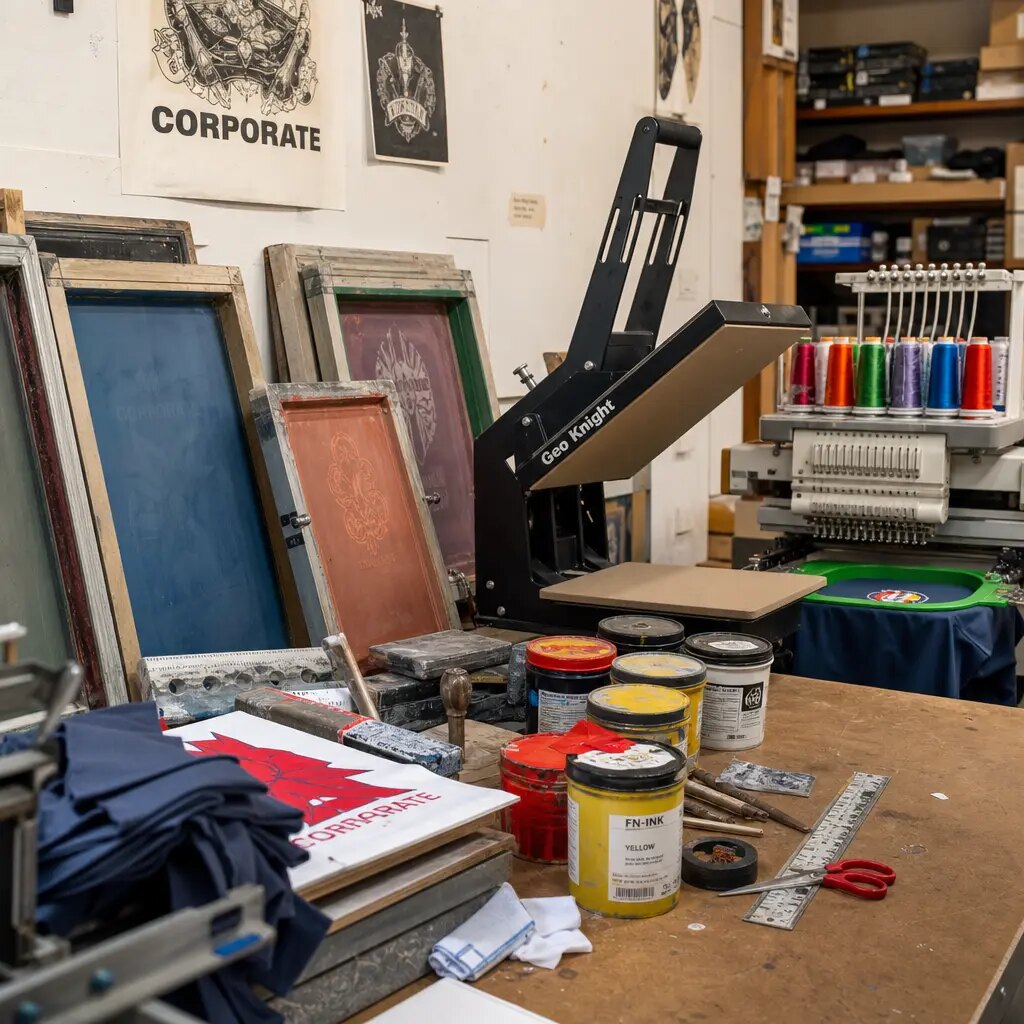
One-side, one-color screen print on natural canvas is often the cleanest baseline for coffee roasters. It works for solid logos, tasting-room marks, simple typography, and seasonal graphics. It also allows suppliers to quote consistently because print size, ink color, screen charge, curing, and placement are easy to define.
Multiple artwork versions change the production plan. A 600-unit order split across four designs is not as efficient as 600 units of one design. Each artwork may require its own screen, setup, registration check, curing control, and inspection. Ask for a version matrix showing one artwork, two artworks, and three or more artworks on the same base carrier.
Other decoration methods have trade-offs. Heat transfer can support full color but should be checked for film edge, adhesion, cracking, and rub behavior on textured canvas. Embroidery can look premium but may pucker lighter fabric. Woven labels create a retail look and keep the bag more generic, but label MOQ and placement checks matter. Hangtags are useful for seasonal storytelling without forcing a new printed bag every time.
- Use one-side, one-color screen print as the baseline unless the brand brief requires more.
- Confirm print area, placement tolerance, number of colors, ink type, screen charges, and repeat setup cost.
- Test fine lines, small text, distressed artwork, and large solid ink areas on the actual canvas.
- Allow curing time before folding to avoid tackiness or offset transfer.
- Use hangtags or insert cards for seasonal messaging when bag inventory must stay flexible.
Build an MOQ and cost matrix instead of chasing one number
Asking only for the MOQ hides the price curve. Ask suppliers to quote meaningful breaks such as 300, 500, 1000, 3000, and 5000 units. If the unit price drops sharply at 1000 pieces, setup absorption is a major factor. If the difference is small, the supplier may be using stock fabric and straightforward sewing.
Separate fixed charges from unit price. Screens, sample development, print strike-offs, woven label setup, hangtag printing, individual packing, carton artwork, barcode labels, and third-party inspection can distort small-order economics. A buyer should calculate cost per sellable SKU, not only cost per bag.
The best negotiation lever is shared construction. Keep the same fabric, dimensions, handle, seam standard, and packing rule, then split artwork separately. If every version changes fabric color, handle material, label, and carton mark, the supplier has less room to reduce MOQ.
- Request quantity breaks and artwork-split pricing in one table.
- Show unit price, setup fees, sample fees, label costs, packing costs, inspection, and carton marks separately.
- Compare low MOQ with higher unit cost against higher MOQ with dead-stock risk.
- Negotiate total base-bag quantity first, then manage artwork versions as add-ons.
- Ask which charges are one-time and which repeat on replenishment.
What a usable supplier quote should include
Canvas carrier quotes can look similar while describing different products. One supplier may include 12 oz cotton canvas, reinforced handles, one-color screen print, export cartons, and carton marks. Another may assume 10 oz fabric, narrow handles, basic stitching, and no barcode labels. Without a detailed quote, procurement cannot compare suppliers or hold the factory to the approved spec.
A usable quote should include finished size, fabric composition, fabric weight in oz and GSM, color route, handle construction, seam standard, decoration method, print size, number of colors, artwork count, packing method, carton quantity, carton dimensions, gross weight, MOQ basis, sample timeline, production timeline, Incoterm, port, payment terms, and quote validity.
The quote should also state exclusions. Third-party inspection, individual polybags, hangtags, barcode labels, palletization, desiccants, domestic freight, special carton marks, and mixed-SKU sorting can all affect landed cost. For B2B buyers, the quote is not just a price; it is the commercial baseline for the purchase order.
- Quote fabric by oz and GSM, not only by the word canvas.
- List dimensions, gusset, handle width, handle drop, and tolerances.
- Describe handle reinforcement, seam finish, stitch standard, and divider construction if used.
- State print method, print size, location, number of colors, screen charges, and curing assumptions.
- Show units per carton, carton size, gross weight, SKU labeling, and mixed-carton rules.
- Split lead time into sample, material booking, bulk production, inspection, packing, and handover.
Sample approval before bulk production
Sampling should confirm function before decoration. If the bottle or bundle format is new, start with a blank fit sample. This lets the buyer check top opening, gusset, body height, handle drop, base stability, and packing speed before spending time on print details. Test the full bundle exactly as staff or a 3PL will assemble it.
After fit approval, approve a fabric swatch and print strike-off. Canvas texture affects print clarity, especially with fine type, distressed graphics, halftones, and large ink coverage. Check color, edge sharpness, opacity, placement, tackiness, odor, and rub behavior after curing. If the design is printed on both sides, confirm that one side does not offset onto the other when folded.
The pre-production sample should match the final route as closely as practical: actual fabric weight, final color, handle construction, print method, label or hangtag, and packing fold. If substitute material is used in an early sample, it should be marked clearly so the buyer does not approve the wrong hand feel or structure.
- Approve fit with the real bottle or a weighted dummy matching dimensions and filled weight.
- Measure the sample and record actual width, height, gusset, top opening, handle width, and handle drop.
- Keep approved sample photos with ruler references, print close-ups, and inside seam details.
- Require a print strike-off for new artwork, dark ink, heat transfer, fine type, or heavy coverage.
- Ask for top-of-production photos showing loaded fit, handle reinforcement, print, seams, carton packing, and carton marks.
QC and packing details to write into the PO
Quality control belongs in the purchase order before production starts. For canvas wine carriers, inspection should cover material, dimensions, construction, loaded-use performance, print quality, cleanliness, and packing. If the PO only says good quality or same as sample, disputes become harder because acceptance points are not measurable.
Dimensional tolerance must be realistic for sewn cotton goods. Many buyers use targets such as +/-5 mm for smaller features and +/-10 mm for larger body dimensions, but the final tolerance should be agreed with the supplier. Measure width, height, gusset, top opening, handle width, handle drop, and print placement. Use the approved sample as the visual benchmark for shape.
Loaded-use inspection is essential. The inspector should insert the bottle, lift the carrier, observe handle pull, check base corners, and look for seam distortion. For two-bottle bags, the divider or anti-impact layout should be checked with two weighted bottles. Flat visual inspection alone misses many load-related defects.
Packing is part of QC. Confirm carton quantity, SKU separation, mixed-version ratios, barcode labels, carton marks, gross weight, and carton condition. If a roaster uses a 3PL, distributor, or wholesale fulfillment team, cartons should be labeled clearly enough to receive and pick without manual resorting.
- Define tolerances for critical dimensions, print placement, and carton counts before production.
- Reject skipped stitches, loose tension, weak backtacking, unraveling, strong odor, mildew, oil stains, damp cartons, and unacceptable shade variation.
- Check screen print for opacity, alignment, smearing, ghosting, tackiness, offset, and rub resistance.
- Specify flat bulk packing, inner pack quantity, units per carton, carton dimensions, and maximum carton weight.
- Avoid individual polybags unless retail protection, barcode handling, or channel compliance requires them.
- Build internal deadlines for artwork approval, deposit, sample review, packing marks, final inspection, and shipping handover.
Specification comparison for buyers
| Sourcing route | Typical MOQ pressure | Best fit for coffee roasters | Cost and risk notes |
|---|---|---|---|
| Stock natural canvas, one shared style, one-color print | Lowest practical route because fabric is usually available and setup is simple | First holiday bundle, tasting-room resale, corporate gift pilot, bottle-plus-beans launch, or wholesale partner test | Best quote comparability. Watch fabric weight, print curing, handle reinforcement, and carton packing rather than negotiating only on unit price. |
| Stock dyed canvas, one print version | Moderate; depends on whether the supplier truly holds the color in usable quantity | Black, navy, forest green, or other brand-color programs where natural canvas does not match the retail look | Confirm stock availability by lot, shade consistency, lint visibility, print contrast, and whether reorders will match the first run. |
| Pantone-matched custom dyed canvas | Higher because fabric minimums, lab dips, and shade approval add work | Mature merchandise programs, co-branded winery programs, or premium retail lines with confirmed repeat volume | Adds lab dip time, fabric MOQ, lot-to-lot shade checks, and higher dead-stock risk if sell-through is uncertain. |
| One base carrier split across 2-4 artworks | Moderate; sewing can be combined but print setup increases | Holiday blend versions, regional wholesale accounts, tasting-room and online-store variants using the same bag construction | Ask for per-artwork screen charges, minimums per design, mixed-carton rules, and print inspection controls. |
| Two-bottle carrier or bottle-plus-coffee compartment | Moderate to high because construction, fit testing, and loaded-use QC are more involved | Premium gift sets, winery-roaster collaborations, paired bottle programs, and higher-value corporate gifting | Specify divider, gusset stability, reinforced base, handle attachment, loaded-bottle checks, and carton weight limits. |
| Retail-packed carrier with hangtag, barcode, or individual bag | Higher than flat bulk packing because packing labor and components increase | Tasting-room resale, gift shops, distributor programs, and 3PL pick-pack where scannable units are required | Model landed cost and receiving labor. Confirm barcode placement, SKU labels, inner packs, carton marks, and whether polybags are actually needed. |
Buyer checklist before sampling
- Define the sales channel: tasting-room resale, holiday gift assembly, online bundle, corporate gifting, wholesale partner program, or co-branded winery launch.
- Measure the real bottle or outer carton: maximum diameter, total height, shoulder profile, cap or cork height, filled weight, and any sleeve or wrap thickness.
- State whether the bag holds one bottle, two bottles, or bottle plus coffee pouch; include pouch dimensions and filled weight if relevant.
- Specify target presentation: neck exposure, top-opening clearance, upright stability, fast warehouse insertion, divider requirement, and handle drop.
- Quote fabric in oz and GSM, such as 12 oz / about 340 GSM cotton canvas, with supplier-agreed tolerance and swatch approval.
- Confirm fabric route: stock natural, stock dyed, or custom dyed; ask how each route changes MOQ, lead time, shade approval, and reorder risk.
- Define construction: finished width, height, gusset, base shape, seam finish, handle width, handle drop, insertion depth, and reinforcement method.
- Lock decoration assumptions: print method, print side, number of colors, artwork count, label or hangtag, print size, placement tolerance, and setup charges.
- Request a matrix at relevant quantities and artwork splits instead of one MOQ number.
- Confirm packing for your warehouse or 3PL: inner pack, units per carton, carton dimensions, gross weight, SKU separation, barcodes, and carton marks.
Factory quote questions to send
- What MOQ and unit price apply to stock natural canvas, stock dyed canvas, and Pantone-matched custom dyed canvas?
- Can you quote the same construction at 300, 500, 1000, 3000, and 5000 units so we can see the price curve?
- What fabric are you quoting exactly: composition, oz weight, GSM range, weave, color route, shrinkage expectation, and finish?
- What finished dimensions, handle width, handle drop, gusset, and tolerances are included in the price?
- How are handles attached and reinforced: top-seam insertion, X-box stitching, bartacks, backtacking, stitch density, and insertion depth?
- Is the price based on one-side, one-color screen print? What are the costs for second side, extra color, heat transfer, embroidery, woven label, hangtag, or barcode label?
- Can one base sewing run be split into two, three, or four artwork versions? What are the minimums and charges per artwork?
- What sample steps do you recommend: blank fit sample, fabric swatch, print strike-off, pre-production sample, and top-of-production photos?
- How do you check loaded-use performance for handles, base seams, gussets, and two-bottle dividers?
- How many units fit per export carton, what are carton dimensions and gross weight, and can carton packing be adjusted for our 3PL or distributor rules?
Quality-control points to confirm
- Fabric weight should match the approved specification, such as 12 oz / about 340 GSM, within the supplier-agreed tolerance and against the signed swatch.
- Finished dimensions should be checked for width, height, gusset, top opening, handle width, handle drop, and print placement; agree practical soft-goods tolerances before production.
- Bottle fit should be verified with the actual filled bottle or a weighted dummy, including insertion speed, neck exposure, upright balance, and removal at retail checkout.
- Cut panels should align so the carrier does not twist, lean, form uneven gussets, or distort the front print panel after loading.
- Side seams, base corners, gusset seams, top edge, and handle joins should show even tension, no skipped stitches, no unraveling, no loose thread chains, and no exposed raw edges where covered seams were specified.
- Handle reinforcement should be inspected for insertion depth, X-box or bartack consistency, backtacking, stitch density, thread tension, and left-right symmetry.
- Loaded-bottle checks should be performed on sampled units to observe handle pull, base seam stress, divider function, and shape distortion.
- Screen print should have clean edges, acceptable opacity, correct placement, no obvious pinholes, smearing, ghosting, contamination, tackiness, or offset transfer.
- Rub resistance should be spot-checked after curing, especially for dark inks, heavy coverage, heat transfers, and prints on textured canvas.
- Packing should be verified for carton quantity, SKU separation, mixed-version ratios, barcode labels, carton marks, gross weight, cleanliness, dryness, and carton strength.