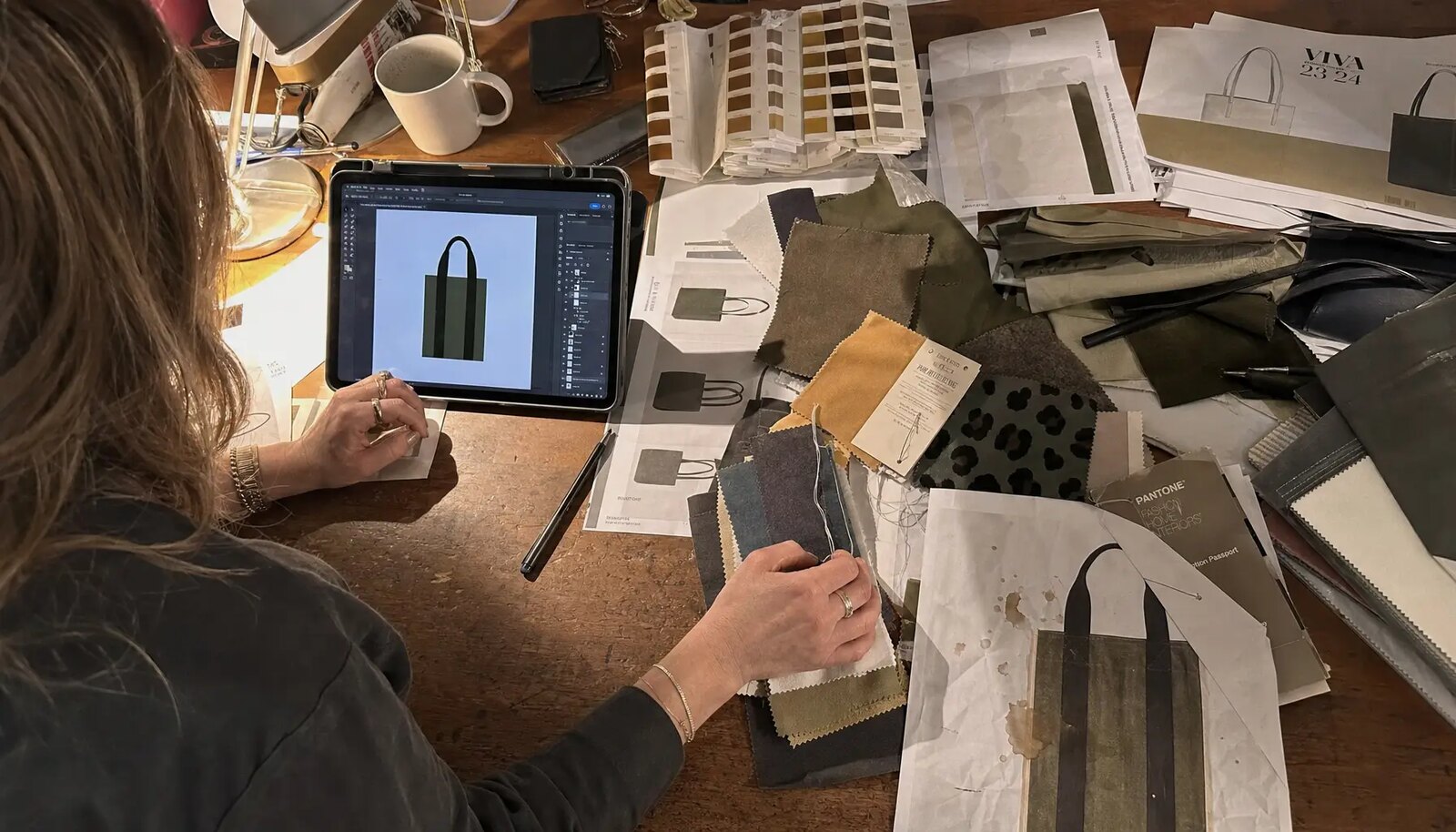
Why eco apparel brands source canvas wine carriers in bulk
Wholesale canvas wine carriers look simple, which is exactly why they are easy to under-spec. For an eco apparel brand, the item may be a retail add-on, a holiday gift carrier, a winery collaboration piece, an event giveaway, or a branded insert for a seasonal campaign. In each case, it has to do more than hold a logo. It has to present well next to apparel, feel reusable, and carry a loaded glass bottle without looking strained.
That mix puts the product in a middle ground between packaging and sewn accessory. A flat mockup can hide a weak handle angle, a loose body, or a base that only works with one bottle shape. A polished sample photo does not prove load performance. Procurement needs a written specification covering bottle fit, fabric weight, handle construction, decoration, packing, and repeat-order tolerances. Without those details, the factory fills in the blanks. Sometimes that works. Often it leads to a quote that looks attractive until the sample or shipment shows what was left out.
The best bulk pricing plan connects brand intent with production reality. A natural canvas carrier with a small woven label should not be compared directly with a dyed 420 GSM carrier that is screen printed, hangtagged, and individually packed. Both may be valid products, but they are not the same cost structure. Separate style choices from manufacturing choices first, then ask suppliers to price the same construction.
A useful rule: if the carrier will be sold, gifted, or shipped with a full bottle, write the brief like a load-bearing packaging spec, not a mood board. That single shift gives buyers cleaner pricing, faster sample decisions, and fewer disputes when bulk goods arrive.
- Treat the carrier as a load-bearing retail accessory, not a flat promo item.
- Source it with the same discipline used for apparel trims, packaging components, or private-label merchandise.
- Compare suppliers on material, construction, decoration, packing, and defect control, not unit price alone.
Start with the bottle family, not the logo
The first sourcing decision is the bottle. Not the artwork. Not the shade of canvas. A standard 750 ml wine bottle is not one fixed shape. Bordeaux-style bottles, Burgundy-style bottles, Champagne-style bottles, tall slim bottles, boxed bottles, and bundled gift sets all change the pattern. Height, shoulder curve, base diameter, and loaded weight affect whether the bag slides on easily, stands neatly, and carries without seam stress.
Put the target bottle dimensions in the RFQ in millimeters. Include height, base diameter, shoulder width if relevant, and the approximate loaded weight. Many 750 ml bottles fall roughly in the 295-315 mm height range, but the diameter and shoulder profile can vary enough to make a generic pattern risky. The carrier needs internal clearance so the bottle can be inserted without forcing the seams. It also needs enough control that the bottle does not lean, rattle, or distort the print panel.
The channel changes the fit target. A tasting-room gift bag may prioritize speed and a comfortable handle. A retail add-on may need a cleaner silhouette, a consistent front panel, and a precise label position. A DTC gift bundle may need to fold cleanly inside a shipper without crushing the print. A distributor program may care more about counted bundles and barcode placement than a premium shelf shape. Tell the supplier how the product will be used; otherwise, the sample may be designed for the wrong job.
One detail buyers often miss is whether the drawing shows finished size or cut size. A finished-size width is what the buyer measures after sewing. A cut-size width is the fabric panel before seams are turned and stitched. Confusing the two can make a small carrier too tight by several millimeters. Put the measurement method on the drawing before sampling starts.
- Record bottle height, base diameter, shoulder width, and expected loaded weight in the RFQ.
- Specify the bottle family before the supplier prices pattern, material, and sewing.
- State whether the carrier is for retail sale, event gifting, warehouse bundling, distributor programs, or direct-to-consumer fulfillment.
- Clarify whether all dimensions are finished measurements or cut-size measurements.
Fabric GSM, weave, and finish shape both cost and shelf feel
Canvas weight is one of the largest visible cost drivers. For many wholesale canvas wine carriers, 10-12 oz canvas, roughly 340-420 GSM, is the practical buying range. Around 340 GSM, the carrier is lighter, softer, and usually more cost efficient. It can also wrinkle more and may need careful sewing to keep the body from looking flimsy around a bottle. Around 380 GSM is often the balanced choice for retail programs because it gives usable structure without pushing weight too high. Around 420 GSM feels more substantial and tends to hold shape better, but material weight, freight, and sewing effort rise.
Ask for actual GSM and tolerance. Do not accept only descriptions such as heavy canvas, premium cotton, natural cotton, or eco canvas. Those phrases do not create an inspection standard. The quotation should state whether the fabric is greige, natural, dyed, washed, pre-shrunk, organic cotton, recycled cotton blend, or conventional cotton. Each option affects price, fabric availability, shade consistency, shrinkage risk, and reorder planning.
Finish changes the look as much as the number on the scale. Natural cotton canvas can show slubs, darker fibers, and small shade movement between lots. That may support an eco-positioned aesthetic, but the acceptance standard still needs to be written. Dyed canvas offers stronger brand color and a more controlled shelf appearance, yet it adds color matching and crocking checks. Washed canvas gives a softer hand and a more relaxed look, but it can change finished size if shrinkage is not controlled.
If the carrier must meet a precise height or width, ask whether the fabric is pre-shrunk and whether any washing, steaming, or pressing happens before final measurement. That question belongs in the quote stage. It is much harder to solve once the finished goods are packed.
- Use about 340 GSM for cost-sensitive programs where a softer hand is acceptable.
- Use about 380 GSM as the default balance for retail presentation and production efficiency.
- Use about 420 GSM when a more structured premium feel is worth the added weight and cost.
- Ask for swatches from current bulk stock, not only showroom samples or old strike-offs.
Construction is where a wine carrier earns trust
Graphics make the bag recognizable. Construction makes it usable. The handle material, seam allowance, stitch density, reinforcement method, and body balance decide whether the carrier can hold a loaded bottle with confidence. For single-bottle carriers, cotton webbing handles in the 20-25 mm range are common because they are consistent, comfortable, and easier to control under load. Self-fabric handles can work, but they need proper reinforcement and should be checked for stretching, edge roll, and twisting.
Write seam allowance into the spec. For canvas carriers of this size, 8-10 mm is a practical starting range. It gives the seam enough bite without creating excessive bulk. Stitch density should also be specified; 6-8 stitches per inch is a common working range for canvas, with reinforcement at stress points. Do not leave the reinforcement pattern vague. Name the method: box-X, bartack, or another approved pattern. If the factory proposes an equivalent, approve it with photos or a physical sample.
Handle drop matters more than it appears in a flat drawing. Too short, and the carrier feels awkward in the hand. Too long, and the bottle swings or the top opening collapses. Off-center stitching can pull the body sideways after loading. During sampling, insert the real bottle, lift it several times, and look at the handle angle, top edge, side seams, and base shape. A bag that looks clean on a hanger may not behave well when weighted.
For brands planning repeat collections, a stable base pattern is procurement’s friend. Keep the construction fixed and change the label, print color, or hangtag when the season changes. That approach protects fit, reduces sample churn, and makes supplier pricing easier to compare over time.
- Specify handle material, handle width, seam allowance, stitch density, and reinforcement method in the RFQ.
- Use 6-8 stitches per inch on main seams unless the supplier has a documented, approved alternative.
- Require box-X or bartack reinforcement at load points.
- Check loaded balance, handle drop, and top opening shape with the target bottle inserted.
Choose decoration before finalizing artwork
Decoration is often where two quotes that appear similar become very different. Screen printing is usually the cleanest bulk route for one-color or two-color artwork. Setup is straightforward, placement is easy to inspect, and repeat orders are manageable. It works especially well for logos, short slogans, and simple brand marks on flat canvas panels. Buyers should still define ink type, print size, artwork position, and placement tolerance.
Woven labels create a quieter apparel-style look. For eco apparel brands, this can feel more aligned than a large printed logo, especially when the product sits near garments, totes, or gifting accessories. A small woven side label or hem label can carry the brand without dominating the carrier. Embroidery can look premium, but it is not automatically the better choice. Dense stitch areas can pucker lighter canvas, and small text can lose clarity. Heat transfer may help with detailed graphics or short-run tests, but it must be checked for gloss, edge film, cracking, and fold resistance on the actual canvas.
Finalize the production method before approving artwork. A logo that looks balanced on a digital proof may become too fine on coarse canvas. Thin lines can fill in. Small type can disappear. Gradients and detailed marks may not reproduce cleanly with a basic screen print. The safer flow is decoration method first, then artwork scale, line weight, placement, and strike-off approval.
For repeat orders, keep the exact production artwork with Pantone references where relevant, label files, print position drawings, and approved strike-off photos. Treat these files as part of the product spec, not as marketing assets stored separately.
- Screen print is best for simple bulk pricing and repeatable artwork.
- Woven labels work well for quiet brand placement and private-label apparel programs.
- Embroidery should be tested for puckering, density, and small-text legibility.
- Heat transfer should be checked for gloss, cracking, edge film, and fold resistance on the actual canvas.
Build the bulk pricing plan around the real cost drivers
A serious bulk pricing plan starts with a quote structure, not a headline unit price. Ask suppliers to separate fabric, cutting, sewing, decoration, label or tag, inner packing, master carton, sample fee, screen or plate fee, and export handling if applicable. When each cost is visible, procurement can see whether the design is expensive because of fabric weight, print complexity, packing labor, MOQ pressure, or something else.
Request the same price bands from every supplier: 500, 1,000, 3,000, and 5,000 pieces per color or artwork. This shows the price curve and the supplier’s real production breakpoints. A sharp price drop may be linked to fabric purchase minimums, screen setup absorption, sewing-line efficiency, or carton-packing labor. Those are normal constraints. They just need to be named so the buyer can plan the launch order and reorder strategy properly.
Low MOQ is not automatically cheaper. Sometimes the factory moves the cost into a setup charge, sample fee, fabric waste allowance, or packing surcharge. Sometimes the unit price is high on the first order and lower only after the pattern, screens, or labels are established. Compare first-order cost and repeat-order cost separately. A procurement team planning seasonal replenishment needs both numbers.
Normalize before comparing. One quote may be for 340 GSM natural canvas, no woven label, no individual packing, and bulk cartons. Another may include 380 GSM dyed canvas, a sewn label, hangtag, barcode sticker, and individual polybag. The lower number may not be the better value; it may simply be a lighter, less complete specification. Landed cost can also shift if the heavier fabric or larger carton increases freight. Ask for carton dimensions and gross weight early, not after production.
- Request prices at 500, 1,000, 3,000, and 5,000 pcs using the same construction and packing standard.
- Ask which fees are one-time setup charges and which fees recur on every order.
- Compare first-order cost and repeat-order cost separately.
- Normalize fabric weight, decoration method, packing format, carton count, and incoterm before comparing unit prices.
Choose supplier route by accountability, not instinct
The supplier route affects how quickly problems are found and fixed. A direct factory with in-house cutting and sewing usually gives the clearest accountability for private-label canvas wine carriers. If the same production owner controls sewing, decoration coordination, packing, and final inspection, the buyer has a cleaner path when a sample needs correction or a bulk issue appears.
A trading company can still be useful. It may help consolidate categories, manage lower quantities across several SKUs, or source decoration options that a single factory does not handle. The tradeoff is visibility. If printing is subcontracted and sewing is handled by another workshop, procurement needs to know who approves final goods and who pays for rework if defects appear. Ask plainly: what is in-house, what is subcontracted, and who signs off before shipment?
Small workshops can be helpful for prototypes, influencer packs, or limited event runs where speed and flexibility matter. They are usually riskier for high-volume replenishment unless they can show repeat sample consistency, capacity planning, and written tolerances. A beautiful handmade sample is not the same as a controlled bulk production process.
The right route depends on the business goal. Use speed for testing, cost control for replenishment, and accountability for retail programs that have firm delivery windows. Procurement should choose the supplier that can own the process steps that matter most, not simply the one with the lowest opening quote.
- Use direct factories when repeatability and process accountability matter most.
- Use trading companies when category consolidation or sourcing flexibility matters more than direct process visibility.
- Use small workshops for low-volume tests only after confirming repeat sample consistency.
- Ask who performs cutting, sewing, printing, labeling, packing, and final sign-off.
Sampling should prove fit, load, decoration, and packing
A sample is not approved because it looks tidy in a photo. A canvas wine carrier needs to be tested the way the customer or recipient will use it. Insert the target bottle. Carry it. Set it down. Remove the bottle. Look at the side seams, handle angle, top opening, base width, and front panel. This simple routine exposes most practical problems: tight insertion, seam tension, twisted handles, a leaning bottle, or a print that distorts when the bag is loaded.
A strong sampling flow usually has two stages. The first prototype validates pattern, dimensions, broad construction, and decoration direction. The pre-production sample should use the final fabric weight, final decoration method, final label or tag, final handle construction, and final packing method. If any of those elements changes after approval, ask whether the previous sample still applies. In many cases, it does not.
For repeat orders, keep a golden sample and compare the new pre-production sample against it before mass cutting begins. This is especially important with natural canvas, where shade, hand feel, and slub appearance can shift by lot. If a new fabric lot looks different, document the difference before production rather than arguing after shipment.
Video can help, but it should not replace the physical sample. A short clip showing bottle insertion, loaded carry behavior, handle stitching, and packing flow is useful for remote teams. It does not fully show weight, hand feel, fold memory, or shade. If the carrier will be bundled with apparel, inserts, or gift packaging, test the full bundle in the sample stage, not only the bottle.
- Test the sample with the heaviest and widest bottle the product must carry.
- Approve the pre-production sample only after checking the final fabric, label, print, handle, and carton spec.
- Keep a sealed golden sample for repeat orders and final inspection.
- Use a sample video to support, not replace, the physical approval.
Write QC tolerances before production starts
Quality control must be measurable. A useful purchase order defines finished dimensions, fabric shade, print placement, print color, stitch quality, handle symmetry, stain limits, carton count, and packing format. If these points are not written before production, the buyer and factory may end up debating what acceptable means after the goods are already made.
Functional defects come first. Weak reinforcement, incorrect body size, seam failure, or poor bottle fit can make the carrier unusable even if the outside looks appealing. Appearance defects also matter because this item often sits beside apparel, gift packaging, or branded merchandise. Oil stains, rust marks, crooked labels, off-center printing, broken yarns, uneven hems, and loose thread tails can reduce perceived value quickly.
Separate critical, major, and minor defects. Critical defects should be zero tolerance. Major defects should be tied to the intended channel and use. Minor defects should be listed with photos where possible so the factory understands what is cosmetic and what is not. A practical inspection routine can combine measurement checks, bottle-fit checks, loaded carry tests, print rub checks, stitch inspections, and carton audits.
For many small canvas bags, a starting tolerance is +/- 3 mm on key body dimensions and +/- 5 mm on handle length. Print placement often uses a working tolerance such as +/- 5 mm from the centerline or a top-edge reference. If your team uses AQL, put the chosen level in the PO; a common retail pattern is AQL 2.5 for major defects and 4.0 for minor defects. The specific level should match your channel, but the important part is timing: agree on it before shipment.
- Define critical, major, and minor defects in the PO or quality annex.
- Use written tolerances for finished size, handle length, print position, fabric shade, and carton count.
- Check loaded carry behavior, not just empty appearance.
- Keep the golden sample, measurement sheet, packing list, carton label record, and defect photos with the shipment file.
Packing, freight, and reorder files protect landed cost
Packing is not a finishing detail. It changes product condition, receiving speed, labor, freight cube, and sometimes the buyer’s sustainability position. Canvas wine carriers can be bulk packed, counted in bundles, individually polybagged, tagged, barcode-labeled, or packed as retail-ready units. Eco apparel brands may prefer to reduce plastic, but the channel still matters. A distributor may require individual protection or barcode labels. A warehouse may prefer counted bundles that are fast to receive and unpack.
Carton design can quietly move landed cost. An oversized carton increases cube and may raise volumetric freight. A carton that is too tight can crease the print panel, compress the handles, or distort the base. Ask for units per carton, carton dimensions, net weight, gross weight, and the proposed inner packing method before approving the quote. If the goods will be shipped with apparel, make sure the packing does not transfer stains, lint, or pressure marks.
Reorder planning is where procurement gains leverage. Keep one repeat-order file with the approved artwork, pattern dimensions, fabric swatch, label spec, print placement drawing, carton layout, packing method, and golden sample reference. If the next order uses the same construction, the factory should not need to reinterpret the product. If only the label color or print artwork changes, the file should show exactly what changed and what stayed fixed.
Lead time should be broken into stages: fabric sourcing, sample approval, bulk cutting, decoration, sewing, packing, inspection, and shipment. That makes delays easier to spot. It also helps buyers decide whether to hold extra fabric, order labels earlier, or lock a standard construction for future seasons.
- Ask for carton dimensions and gross weight in the quote, not after production.
- Confirm whether individual polybags are required or whether counted bundles are acceptable.
- Check that print panels and handles will not be crushed by the proposed pack count.
- Keep the repeat-order file with artwork, swatches, dimensions, carton spec, packing method, and golden sample reference.
Specification comparison for buyers
| Buying decision | Procurement recommendation | Best fit | Cost and QC risk to control |
|---|---|---|---|
| Supplier route | Use a direct factory when cutting, sewing, decoration coordination, packing, and final inspection need one accountable owner | Repeat orders, private-label programs, seasonal launches, and tighter sample approval control | Confirm whether printing, labeling, or embroidery is subcontracted; split responsibility can slow corrections and blur rework ownership |
| Fabric weight | Quote 10-12 oz canvas, about 340-420 GSM, with the actual GSM and tolerance written into the order | Retail add-ons, reusable gift packaging, winery collaborations, and apparel-brand merchandise | A quote that says only heavy canvas can hide lighter fabric, unstable hand feel, or lot-to-lot variation |
| Fabric finish | Approve natural, dyed, washed, or pre-shrunk canvas by physical swatch from current bulk fabric stock | Eco-positioned apparel brands that need a specific shelf look and repeat-order consistency | Natural shade can vary by lot; dyed fabric adds color matching, crocking, and shade approval checks |
| Bottle fit | Build the pattern around the target bottle height, base diameter, shoulder profile, and bottle family | Standard 750 ml bottles, tall bottles, Champagne-style bottles, boxed sets, or bundled gifts | Generic samples may look fine empty but fail once the real bottle is inserted and carried |
| Handle construction | Use cotton webbing or reinforced self-fabric handles with box-X or bartack reinforcement | Reusable products, premium gifting, heavier bottles, and retail-ready accessories | Single-row stitching, narrow seam allowances, or off-center handles can fail under loaded carry tests |
| Seam allowance and stitch density | Write seam allowance, typically 8-10 mm, and 6-8 stitches per inch for canvas into the specification | Programs that need repeatable production and clear inspection rules | If seam and stitch specs are left open, construction may be simplified to save labor |
| Decoration method | Use screen print for 1-2 spot colors, woven labels for understated branding, and transfer only when artwork requires it | Stable bulk pricing, repeatable logo placement, and simple brand execution | Transfers may look glossy on coarse canvas; dense embroidery can pucker lighter panels |
| MOQ and price bands | Request price bands at 500, 1,000, 3,000, and 5,000 pcs per artwork/color, with setup charges separated | Launch planning, reorder forecasts, distributor programs, and replenishment budgeting | Low MOQ can shift cost into setup, fabric waste, sample fees, packing surcharges, or higher repeat pricing |
| Packing method | Choose bulk packing, counted bundles, individual polybags, or retail-ready packing based on the receiving channel | Warehouse receiving, retail-ready SKUs, gifting programs, distributor fulfillment, or DTC bundles | Loose packing can create count errors and stains; over-tight cartons can crease print panels and distort handles |
Buyer checklist before sampling
- Define the exact bottle family before requesting price: standard 750 ml Bordeaux, Burgundy, Champagne-style, tall slim bottle, boxed bottle, or bundled gift set.
- Set target dimensions in millimeters, including finished height, finished width, gusset or base width, top opening, handle length, and acceptable fit margin.
- Choose a fabric weight range and require the supplier to quote actual GSM with tolerance, not only a fabric description such as natural canvas or heavy cotton.
- Decide whether the brand position requires natural cotton shade, dyed canvas, washed canvas, pre-shrunk canvas, organic cotton, recycled cotton blend, or a cost-focused conventional cotton canvas option.
- Lock decoration before comparing prices: screen print, woven label, embroidery, heat transfer, hangtag, or no visible logo all change setup cost and production flow.
- Ask every supplier to quote the same price bands by color/artwork, such as 500, 1,000, 3,000, and 5,000 pcs, with setup charges separated from unit cost.
- Request an itemized quote that breaks out fabric, cutting, sewing, decoration, label or tag, inner packing, master carton, sample fee, screen or plate fee, and export handling if applicable.
- Approve a physical pre-production sample using the target bottle weight and size, not only a flat photo or digital mockup.
- Create a tolerance sheet for finished dimensions, print placement, print color, fabric shade, handle length, stitch density, stains, loose threads, and carton count.
- Confirm carton pack count, carton dimensions, gross weight, barcode or item sticker location, country-of-origin marking, and whether individual polybags are required.
Factory quote questions to send
- What exact canvas weight do you recommend for this wine carrier, and what GSM tolerance will be written on the purchase order?
- Can you price the same construction at 340 GSM, 380 GSM, and 420 GSM, including the estimated finished unit weight for each version?
- Is the canvas greige, natural, dyed, washed, pre-shrunk, organic, recycled blend, or conventional cotton, and can you provide swatches from current bulk fabric stock?
- Which bottle dimensions did you use for the pattern, and can you test our target bottle height, base diameter, shoulder shape, and bottle weight during sampling?
- Will cutting, sewing, printing, labeling, and packing be handled in-house or by subcontractors, and who signs off on final defects?
- What is your MOQ by fabric color, print artwork, and decoration method, and how does the unit price change at 500, 1,000, 3,000, and 5,000 pcs?
- For screen printing, what is the setup fee per color, what ink type do you recommend for canvas, and what curing or rub test do you perform?
- For woven labels or embroidery, what are the setup charges, placement limits, minimum label quantity, and effect on production lead time?
- What handle material, handle width, stitch density, seam allowance, and reinforcement method will you use for a loaded glass bottle?
- Can you provide a carton proposal showing units per carton, inner packing, carton dimensions, net weight, gross weight, and expected carton compression strength?
Quality-control points to confirm
- Fabric GSM is tested against the approved bulk specification and stays within the agreed tolerance band, typically within +/- 5% unless the purchase order states a tighter limit.
- Fabric shade matches the approved swatch closely enough for the sales channel, with lot variation documented before production when natural or undyed canvas is used.
- Canvas face panels are free from visible oil stains, rust marks, dark yarn contamination, broken yarns, holes, and obvious thin spots.
- Finished height, width, gusset or base width, and top opening are measured against the written tolerance sheet; a practical starting point is +/- 3 mm on key body dimensions and +/- 5 mm on the handle length for most small canvas bags.
- Bottle fit is verified with the target bottle dimensions and load weight, including insertion, standing shape, neck exposure, removal, and loaded carry behavior.
- Handle length is consistent from unit to unit, with left/right symmetry checked on loaded samples and handle drop verified against the approved drawing.
- Handle reinforcement uses the approved box-X or bartack pattern and passes a practical loaded carry test, such as repeated lifts with a fully loaded bottle for no seam slippage or thread breakage.
- Side seams and bottom seams are straight, secure, and free from skipped stitches, seam slippage, raw edge exposure, or loose thread tails longer than the written limit.
- Print placement matches the approved artwork position, with a written tolerance such as +/- 5 mm from centerline or from the top edge, and no visible distortion across seams.
- Print color density, edge sharpness, curing, and rub resistance are checked after light folding and handling on the actual canvas, not only on a flat press sheet.