Start With the Retail Job, Not the Bag Name
Artisan bakeries use canvas wine carriers in several different ways: counter add-ons, wine-and-sourdough pairings, cheese board bundles, holiday hampers, corporate gifts, and local food retail displays. Those uses do not need the same construction or price point. A carrier handed over with one bottle after a tasting event can be simpler than a two-bottle carrier displayed as part of a premium gift program. Procurement teams should define the retail job before asking factories for prices, otherwise every supplier will quote a slightly different product under the same description.
The buying goal is to protect glass, support the bakery brand, and keep the program profitable. For bakery groups, distributors, and importers, that means comparing wholesale canvas wine carriers for artisan bakeries on a controlled specification: same bottle format, same fabric tier, same print method, same packing, and same Incoterm. If the quote basis changes, the unit price becomes misleading. The lowest number may simply exclude divider sewing, stronger handles, retail packing, or freight data.
A tight bulk pricing plan should answer four questions early: what will the carrier hold, how will it be displayed, how will it be packed for distribution, and what margin does the bakery need after freight and handling? Once those answers are fixed, the RFQ becomes shorter and more useful.
- Define whether the carrier is a giveaway, paid add-on, gift set component, or reusable retail product.
- Quote single-bottle and two-bottle formats separately unless both share the same commercial plan.
- Compare suppliers only after fabric, construction, print, packing, and trade term are aligned.
- Use landed cost per usable carrier, not factory unit price alone, for final sourcing decisions.
Lock the Format and Bottle Fit
Canvas wine carriers look simple, but format changes drive both cost and performance. A flat single-bottle carrier with a basic sewn handle is efficient to cut and sew. A gusseted single-bottle carrier stands better on a shelf and feels more retail-ready. A two-bottle carrier requires more fabric, a wider bottom, and a divider that is stitched securely enough to keep bottles apart during carrying. If the carrier is meant for a bakery hamper, the design may need to hold crackers, breadsticks, jam, olive oil, or branded merchandise along with wine.
Bottle shape should be tested before sample approval. A standard 750 ml Bordeaux bottle, Burgundy bottle, champagne bottle, and olive oil bottle can have different diameters, shoulders, and center of gravity. A carrier that fits one bottle may be too tight for another or may tilt when loaded. Buyers should not approve a factory drawing that only shows flat panel width and height. Finished internal space, gusset depth, handle drop, and divider position are the practical dimensions that matter.
For bakery retail operations, shelf behavior also matters. Staff may pre-pack gift sets before peak hours, and a carrier that collapses or tips over creates extra handling. A bottom gusset or modest reinforcement can be worth the cost when the carrier is displayed full.
- Single 750 ml carrier: suitable for checkout add-ons, wine pairings, tastings, and small gift purchases.
- Two-bottle carrier: better for holiday bundles, corporate gifts, and premium bakery retail programs.
- Champagne carrier: needs wider diameter allowance and stronger handle reinforcement.
- Mixed hamper carrier: requires testing with the complete bundle, not only with bottles.
- Shelf display: use gusset and sufficient fabric body when the carrier must stand neatly in-store.
Choose Fabric With Cost and Presentation in Mind
Canvas for wine carriers is often discussed in ounces per square yard, while many international buyers also request GSM. Approximate references are useful, but they should not replace the factory's actual fabric specification. An 8 oz canvas is often discussed around the high-200 GSM range, 10 oz around the mid-300 GSM range, 12 oz around the low-400 GSM range, and 14 oz around the high-400 GSM range. Actual GSM varies by yarn, weave, finishing, moisture, and supplier, so the quote should state the measured or nominated fabric used.
Natural cotton canvas is popular for artisan bakeries because it matches bread, flour, kraft paper, and rustic retail packaging. Dyed canvas can look more premium or more seasonal, but it introduces shade approval, dye lot control, and sometimes higher MOQ. Recycled cotton blends or organic-certified cotton may support a buyer's brand positioning, but the certification scope and documentation should be verified instead of assumed from a product name.
The cheapest fabric can increase total cost if it wrinkles heavily, collapses on shelf, or creates customer complaints. Heavy fabric improves handfeel and structure, but raises fabric consumption, sewing effort, carton weight, and CBM. A practical pricing plan often compares two tiers: an economy 8-10 oz range for promotional use and a 10-12 oz range for retail gift programs.
- 8 oz range: economical for simple single-bottle promotions when reinforcement is well controlled.
- 10 oz range: balanced for many bakery wine carrier programs needing moderate structure.
- 12 oz range: stronger retail presentation for gift sets and reusable customer purchases.
- 14 oz range: durable but more costly and bulkier; use only when premium reuse is part of the brief.
- Dyed canvas: confirm shade approval, MOQ, colorfastness expectations, and lot-to-lot tolerance.
Specify Construction Details That Change Price
Most quote gaps come from construction details that are easy to omit. Handle reinforcement is the first priority because a filled wine bottle is heavy, and a two-bottle carrier can carry more than 1.5 kg before any additional packaging. The handle joint should be defined as bartack, box stitch, cross-stitch, or another agreed reinforcement. A low quote may use a basic stitch that looks acceptable in photos but fails under repeated lifting.
Divider construction is the next major cost point for two-bottle bags. A divider should not simply hang loosely from the top edge if the carrier is meant to protect glass during walking. It should be positioned and attached so the bottles remain separated when the carrier swings. Bottom construction also matters. A boxed gusset or flat base improves shelf stability, while a basic side-seam construction may be acceptable only for low-cost giveaway use.
Procurement teams should include drawings or annotated photos with the RFQ. If drawings are not available, the quote sheet should still state finished size, seam allowance expectation, handle drop, divider height, reinforcement style, and whether the carrier must stand when empty or loaded. These details make supplier prices more comparable and reduce sample revisions.
- Handle drop: define hand-carry length and confirm comfort with the intended bottle weight.
- Handle reinforcement: specify bartack, box stitch, cross-stitch, or approved equivalent at load points.
- Divider: require bottom or side attachment where bottle separation is important.
- Gusset: add bottom gusset when the carrier must stand for retail display or packing line use.
- Seam quality: set stitch density, seam allowance, raw-edge control, and loose-thread expectations.
Keep Bakery Artwork Production-Friendly
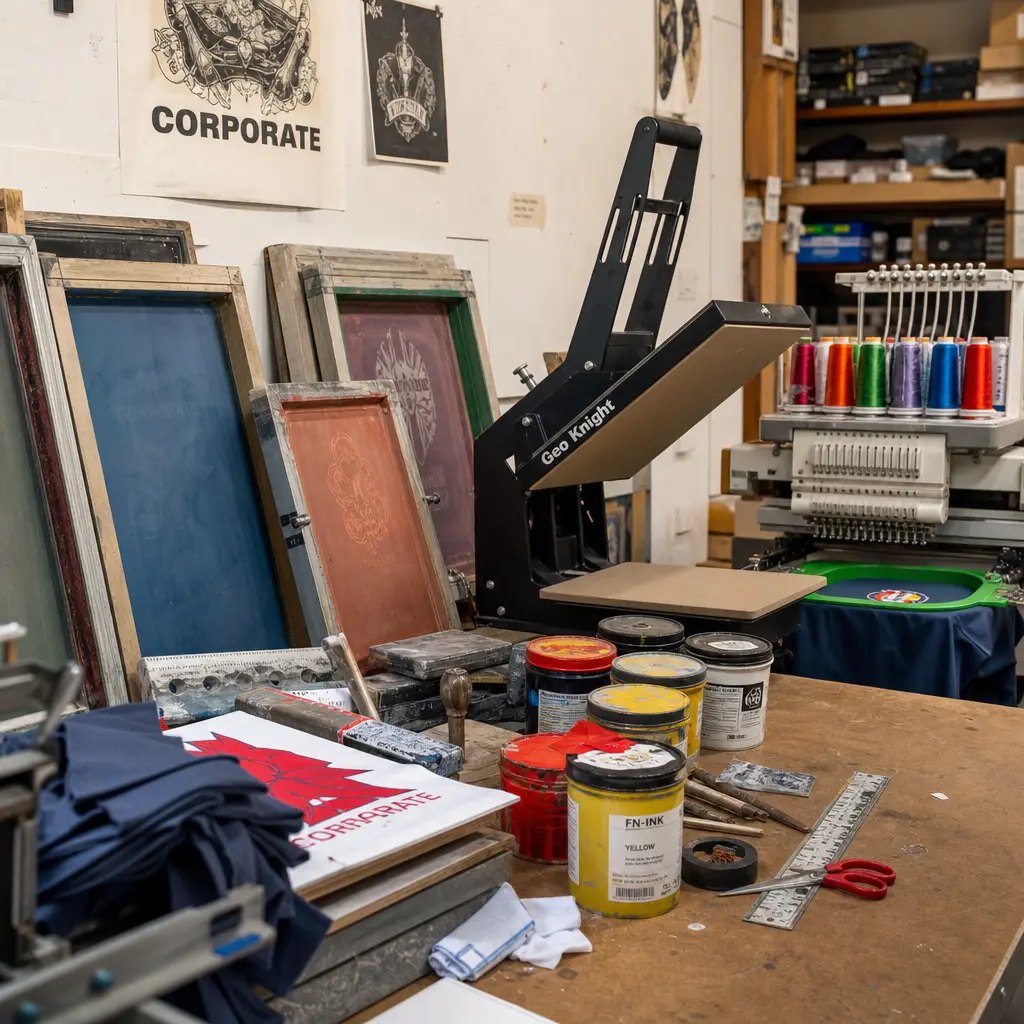
Most bakery logos, wheat illustrations, seasonal marks, and short gift messages work well with screen printing on canvas. Screen print is usually the most predictable choice for one to three solid colors, especially when the order reaches bulk quantities and setup cost can be spread across more units. On natural canvas, darker inks such as black, forest green, chocolate brown, navy, burgundy, and deep red usually give stronger contrast than pale colors.
Artwork should be adjusted for fabric texture. Very fine serif text, hairline flour-dust effects, small QR codes, gradients, and photo-style artwork may lose clarity on canvas. Heat transfer can reproduce more detail, but buyers should check handfeel, edge finish, peeling risk, and appearance on folded goods. Embroidery can look premium for a small mark, but large embroidery on a wine carrier may distort the panel or add unnecessary cost. Woven side labels are useful when the buyer wants a reusable retail look without a large front print.
For branch-specific bakery programs, one base carrier with changing tags, belly bands, or barcode labels can be more efficient than printing many small logo versions. If each branch needs its own front logo, treat each artwork as a separate setup with its own approval and packing control.
- Screen print: best starting point for solid bakery marks and predictable bulk pricing.
- Heat transfer: use for detailed color artwork only after checking handfeel, edge, and durability.
- Embroidery: limit to small premium marks, not large filled graphics on lightweight canvas.
- Woven label: good for subtle branding and lower front-panel print risk.
- Artwork control: approve final print size, ink reference, placement, and tolerance before sampling.
Build a Real Bulk Pricing Model
A useful bulk pricing plan does more than ask for a cheaper unit price at a larger quantity. It separates the base carrier cost from setup charges, print charges, packing costs, inspection, testing, freight, duty, and local handling. This is especially important for importers and distributors supplying bakeries because the buyer may pay for store allocation, warehousing, repacking, or domestic delivery after the goods arrive.
Start by asking every supplier to quote the same specification at planned order quantities, such as 500, 1,000, 3,000, and 5,000 pieces. The specific quantities should match the buyer's sales forecast, not a generic template. Then request a breakdown showing which costs are included in the unit price and which are separate. Screen charges, label setup, sample charges, courier, testing, inspection, and special packing may not scale the same way as sewing cost.
A simple landed-cost worksheet can prevent bad decisions. Use this structure: factory unit price plus print or label add-ons plus individual packing equals product cost. Add allocated setup charges, inland freight, export handling, international freight, duty, customs clearance, inspection, testing, warehousing, and local delivery. Divide the total by the number of saleable units after expected rejects or replacements. This gives a more realistic cost per usable carrier.
- Price-break template: request 500, 1,000, 3,000, and 5,000 pieces for the exact same specification.
- Unit price fields: base bag, print, label, divider, individual packing, carton packing, and any retail tag.
- One-time charges: screen, sample, label setup, artwork adjustment, testing, inspection, and courier.
- Landed-cost fields: Incoterm cost, freight, duty, clearance, warehouse handling, repacking, and local delivery.
- Decision metric: compare landed cost per saleable carrier and margin per finished bakery gift set.
Use Incoterms to Compare Quotes Fairly
A quote is not complete unless the trade term is clear. EXW means the buyer may need to arrange pickup from the factory and cover export-related steps. FOB named port includes delivery to the export port under the agreed term, but still excludes international freight, destination charges, duty, and inland delivery. CIF includes cost, insurance, and freight to the destination port, but not necessarily destination customs, terminal charges, or final delivery. DAP and DDP may be useful for buyers wanting a more complete delivered-cost view, but the supplier must state what is included.
For bulk canvas wine carriers, freight can matter even though the product is light. Folding method, individual packing, carton dimensions, and carton strength affect CBM and handling. A heavier 12 oz two-bottle carrier may still be the right choice for premium programs, but the decision should include carton volume and destination costs. A lower EXW unit price can lose its advantage if packing density is poor or if the buyer has to manage additional export charges.
Buyers should ask suppliers to provide both the trade term and the named place, such as FOB Ningbo, FOB Shanghai, CIF Los Angeles, or DDP warehouse address. Without the named place, the term is incomplete for costing.
- EXW: useful for buyers with their own export control, but not a landed-cost comparison by itself.
- FOB named port: common for importers comparing factory-side cost before ocean freight.
- CIF destination port: includes freight to port but still requires checking destination charges and duty.
- DAP or DDP: useful for delivered budgets, but require clear responsibility for duty, tax, and customs.
- Quote rule: never compare EXW from one supplier with FOB or DDP from another without adjusting costs.
Sampling and Approval Sequence
Sampling should prove the risky points in the right order. A blank fit sample confirms size, fabric handfeel, bottle fit, handle drop, divider position, bottom stability, and sewing quality. A printed sample confirms artwork scale, ink color, placement, print edge, and surface coverage. A pre-production sample is the final production standard after all fabric, print, label, and packing details are locked. Skipping the pre-production sample can save a few days, but it increases the chance of disputes if bulk production arrives with the wrong handle length, print position, or packing fold.
For bakery programs, sample testing should simulate real retail use. Load the carrier with the actual bottle type, lift it repeatedly, place it on a shelf, and check whether the logo faces correctly. If the carrier will be sold with bread, crackers, jam, or other items, test the full bundle. Fold the sample in the same way planned for mass packing and check whether the print cracks, transfers, or creases badly.
Approval records should be simple but precise. Keep one approved sample with the buyer and one with the factory. Record measurements, print placement, color references, packing method, and any approved deviations in writing.
- Blank sample: approve size, fabric, sewing, handle, divider, gusset, and bottle fit.
- Printed sample: approve artwork size, ink color, curing, placement, and print clarity.
- Pre-production sample: approve final materials, construction, print, label, and packing before mass production.
- Tolerance record: define finished size, handle drop, print placement, and shade tolerance.
- Sample control: photograph approved details and keep signed or sealed samples for inspection reference.
Inspection, AQL, and Defect Classification
Quality control should be written before production starts. For general consumer textile items, buyers often discuss inspections using sampling standards such as ANSI/ASQ Z1.4 or ISO 2859-1, but the exact inspection plan must be agreed by the buyer, supplier, and inspection party. A common starting point is general inspection level II with AQL limits set by defect severity. The numbers should match the buyer's risk tolerance and order value rather than being copied blindly.
For canvas wine carriers, critical defects are issues that could create safety or severe compliance risk, such as sharp metal contamination, mold, severe odor, broken glass contamination from testing areas, or handle failure under agreed load. Major defects are issues that make the carrier unsuitable for sale or likely to be rejected by retailers: wrong fabric, wrong size beyond tolerance, weak divider, poor handle stitching, severe stains, wrong print, major print smearing, or incorrect packing count. Minor defects are small issues that do not materially affect use, such as a short loose thread or slight wrinkle within agreed limits.
Defect classification should be included in the purchase order or inspection checklist. This avoids arguments at shipment time about whether a print shift, stain, or seam issue is acceptable. It also helps suppliers train sewing and packing teams before mass production.
- Critical examples: unsafe contamination, mold, severe odor, or handle failure during agreed load test.
- Major examples: wrong material, wrong dimensions, weak seam, wrong artwork, heavy stain, missing divider, or incorrect carton count.
- Minor examples: small loose thread, light wrinkle, or tiny printing speck within agreed tolerance.
- AQL example: define critical, major, and minor limits with the inspection company before production.
- Inspection timing: inspect before shipment, especially for seasonal bakery programs with fixed retail dates.
Packing, Carton Data, and Seasonal Timing
Canvas wine carriers are light, but packing choices can change cost and freight. Bulk packing is the lowest-cost option when an importer or distributor will repack locally. Individual recycled polybags protect against dirt and moisture but add labor and plastic. Paper belly bands improve retail presentation but can crease under carton pressure. Swing tags, barcodes, and store allocation labels are helpful for chain bakeries or e-commerce fulfillment, but every added step needs count control and inspection.
Carton data must be requested before the buyer chooses a supplier. Ask for pieces per inner bundle, pieces per export carton, carton size, net weight, gross weight, and CBM. A supplier with a slightly lower unit price may pack fewer pieces per carton or use a bulky fold that increases freight. Natural canvas also needs clean packing conditions because stains and moisture marks are visible on light fabric.
Seasonal bakery programs should be planned backward from the in-store date. Include time for artwork approval, fabric booking, sample making, sample courier, buyer review, production, inspection, export packing, shipping, customs, inland delivery, and store distribution. Late packaging can miss the holiday sales window even if the wine or bakery goods are ready. Any change after pre-production sample approval should be treated as a schedule and cost change.
- Bulk pack: lowest cost and best when local repacking capacity is available.
- Individual pack: protects goods and supports direct store delivery, but raises labor and material cost.
- Retail labels: confirm barcode, store allocation, carton marks, and count accuracy before production.
- Carton data: collect dimensions, gross weight, net weight, pieces per carton, and CBM for every quote.
- Schedule control: lock artwork, fabric, sample approval, packing labels, and inspection date before peak season.
Specification comparison for buyers
| Quote scenario | Same-basis specification | Cost drivers to compare | Buyer risk to check |
|---|---|---|---|
| Economy single-bottle carrier | Natural cotton canvas, 8-10 oz range, one 750 ml bottle, sewn handle, one-color screen print, bulk packed | Fabric consumption, handle reinforcement, screen setup, pieces per carton, EXW or FOB term | Low price may hide weak handle stitching, thin fabric, missing carton CBM, or print charge outside unit price |
| Standard retail single-bottle carrier | Natural or dyed canvas, 10-12 oz range, reinforced handle, bottom gusset, one or two print colors, individual packing optional | Heavier fabric, gusset sewing time, print color count, folded size, barcode or belly band labor | Factory may quote natural canvas while buyer expects dyed or retail-ready packing; confirm color and packing line by line |
| Two-bottle gift carrier | 12 oz range canvas, stitched center divider, reinforced bottom, two 750 ml bottles, front logo, export carton packing | Divider material, bottom reinforcement, sewing complexity, carton weight, inspection time | Divider may be lightly sewn or too low; test with actual filled bottles before approving bulk |
| Premium bakery hamper carrier | 12-14 oz range canvas or cotton blend, wider gusset, longer handle, label plus print, retail packing | Fabric weight, mixed-item fit, label MOQ, sewing time, carton volume, store allocation labels | A larger carrier can raise freight cost quickly; compare landed cost per usable gift set, not only factory unit price |
| Stock blank plus local print | Ready-made blank carrier purchased in bulk, printed near destination market | Blank price, local print setup, domestic freight, rejected blanks, speed to market | Useful for urgent runs, but blank dimensions, shrinkage, and surface texture may not match artwork needs |
| Custom factory print order | Cut-and-sew production with print completed before export | Sample cost, screen charges, fabric booking, production lead time, freight, inspection | Best for planned programs; artwork or packing changes after sample approval can reset timing |
| Retail-ready direct-to-store packing | Carrier folded individually with polybag, belly band, barcode, or store allocation label | Packing material, manual labor, carton sorting, carton count, label accuracy | More expensive than bulk pack, but may reduce distributor handling; require carton count and label audit |
| Bulk pack for local repacking | Carriers folded in inner bundles and export cartons, no individual retail pack | Lowest packing labor, fewer materials, better carton density | Works only if buyer has clean local repacking capacity and can protect natural canvas from dirt or moisture |
Buyer checklist before sampling
- Define the bottle use first: single 750 ml wine, two 750 ml bottles, champagne, olive oil, or mixed bakery hamper items.
- State finished dimensions with tolerance: width, height, gusset, handle drop, divider height, and folded packing size.
- Specify fabric by composition, color, approximate ounce weight, requested GSM confirmation, and whether cotton is conventional, recycled blend, or organic-certified.
- Clarify construction: handle type, bartack or box stitch, bottom gusset, seam allowance, divider attachment, and any bottom reinforcement.
- Choose print method by artwork reality: screen print for solid bakery marks, heat transfer for detailed color, woven label for subtle branding, embroidery only for small premium marks.
- Set MOQ by size, fabric color, artwork, print color count, label, and packing method instead of treating all versions as one order.
- Request price breaks at planned quantities such as 500, 1,000, 3,000, and 5,000 pieces using the exact same specification.
- Separate unit price from setup charges, sample charges, courier, testing, inspection, label cost, and special packing charges.
- Ask for carton length, width, height, net weight, gross weight, pieces per carton, and CBM before comparing freight cost.
- State trade term clearly, such as EXW, FOB named port, CIF destination port, DAP, or DDP, so landed-cost comparison is not distorted.
Factory quote questions to send
- What fabric composition and construction are included in the quote: natural cotton canvas, recycled cotton blend, organic cotton, or polyester-cotton canvas?
- What are the quoted fabric weights in ounces and the factory-measured GSM? Are the conversions approximate or based on a specific fabric lot?
- What MOQ applies separately to each size, fabric color, print design, print color count, woven label, and packing method?
- Does the unit price include cutting, sewing, handle reinforcement, divider, bottom gusset, printing, folding, inner packing, and export carton packing?
- Which Incoterm is quoted, what named port or destination is used, and which charges are excluded from the price?
- What are the price breaks for the exact same specification at 500, 1,000, 3,000, and 5,000 pieces?
- Which charges are one-time setup charges, and which charges repeat on every reorder?
- What sample types are available: blank fit sample, printed sample, and pre-production sample, and what are the lead times and courier costs?
- What finished size tolerance, print placement tolerance, fabric shade tolerance, and print color tolerance can be accepted in mass production?
- Can you provide carton dimensions, pieces per carton, gross weight, net weight, CBM, and recommended loading method for freight calculation?
Quality-control points to confirm
- Bottle fit test with actual filled target bottles, including Bordeaux, Burgundy, champagne, or olive oil shapes if relevant.
- Handle pull test using a load above expected carrying weight, with focus on bartack, box stitch, cross-stitch, and fabric tearing around the joint.
- Divider strength check for two-bottle carriers so glass bottles remain separated when the carrier is lifted, placed down, and moved side to side.
- Bottom and gusset stability check on a flat shelf with loaded and empty carriers to confirm retail presentation.
- Print rub test after curing, including dry rub and light damp rub, especially for dark ink on natural canvas.
- Print placement check against approved sample, with measured tolerance from top edge, side seam, and center line.
- Seam allowance and stitch density check at side seams, bottom seam, handle joint, divider attachment, and turned edges.
- Fabric shade, odor, and contamination check under neutral light; reject oil stains, mildew marks, heavy slubs, dirt, and visible shade panels beyond agreed tolerance.
- Finished size inspection after sewing and pressing, including width, height, gusset, handle drop, divider height, and folded size.
- Needle damage, skipped stitches, raw edges, loose threads, and fraying review around handles, divider edges, seams, and labels.