Why Print Proofing Matters for Campus Wine Carriers
A canvas wine carrier for a university bookstore is not just a small tote with a logo. It often carries licensed marks, graduation artwork, alumni association branding, or event-specific graphics. The selling price may be modest, but the approval chain can involve procurement, licensing, retail operations, and sometimes a brand owner or distributor. One wrong Pantone shade or a logo placed too close to the gusset can stop the order from reaching the shelf.
The main buying problem is that wine carriers are narrow, structured by seams, and tested only after a bottle is inserted. A flat digital proof can look correct while the finished carrier looks crooked when filled. Procurement teams should treat print proofing as a production control step, not as an artwork formality.
- Use a filled sample during approval, not only a flat photo.
- Control print position from the finished bag edges, not from fabric panels before sewing.
- Separate artwork approval from production sample approval.
- Keep one sealed sample as the standard for bulk inspection.
Start With the Bottle and Retail Use
The first specification is the bottle, not the logo. A standard 750 ml wine bottle, a champagne bottle, a craft cider bottle, and a tall spirits bottle do not behave the same inside a canvas carrier. If the carrier is sold in a university bookstore near graduation season, buyers may want it to work for wine, sparkling wine, or gift bundles. That broader use affects height, gusset, handle length, and divider design.
For single-bottle carriers, a common finished size may sit around 14 to 16 inches high with a 3.5 to 4 inch bottom gusset, but the exact dimension should be checked against the bottle profile. For two-bottle carriers, the divider should prevent glass-to-glass contact and keep both bottles vertical. If the divider is too low, bottles knock against each other; if it is too tight, the carrier looks stressed and the print panel pulls inward.
- Send the supplier bottle dimensions or a reference bottle photo with diameter and height.
- State whether the carrier is for one 750 ml bottle, two bottles, or mixed bottle types.
- Define handle length for hand carry, not shoulder carry, unless the retail concept requires otherwise.
- Require a standing photo and filled-bottle photo during sample review.
Choose Canvas Weight Without Overbuilding
Canvas weight is a cost and performance decision. For wholesale canvas wine carriers sold through university bookstores, 10 oz to 12 oz cotton canvas is usually a practical range. In GSM terms, that often falls around 270 to 340 GSM, depending on weaving and finishing. Lighter fabric can reduce cost and carton weight, but it may collapse around the bottle and make the carrier feel promotional rather than retail-ready.
Heavier canvas, such as 14 oz or above, can look premium but is not always better. It increases material cost, may make seams bulkier, and can affect print sharpness around folded areas. If the bookstore wants a natural cotton look, the buyer should also define whether small cotton slubs are acceptable. Natural canvas has texture; it should not be judged like coated paper.
- Request fabric weight in both oz and GSM to avoid quote confusion.
- Confirm whether the quoted fabric is washed, unwashed, dyed, or natural.
- Set an acceptable shade range for natural canvas if repeat orders are expected.
- Compare fabric hand-feel and stiffness on real samples before committing.
Match Print Method to Licensed Artwork
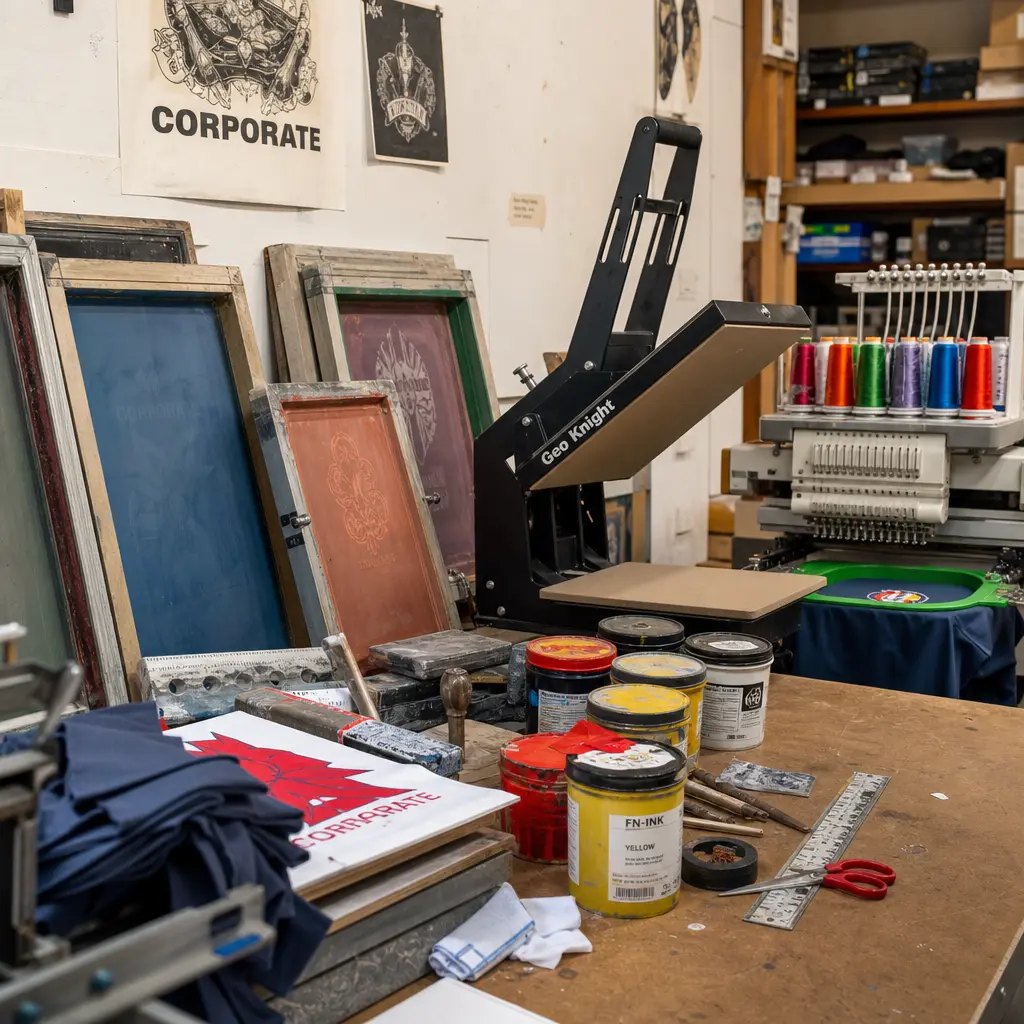
Most university bookstore wine carriers use screen printing because it gives reliable solid color, good cost control at wholesale quantities, and clean results for wordmarks, mascots, and block lettering. Spot-color screen print is usually the safest method when the artwork has specific Pantone colors. The buyer should provide vector artwork and define the approved Pantone references in the RFQ.
Heat transfer or digital transfer may be useful for gradients, full-color art, or small mixed designs, but it changes the hand-feel and durability profile. Embroidery is possible for premium programs, yet it can pull on narrow canvas panels and costs more per piece. The proofing method should match the bulk method; a digital paper proof does not prove ink penetration, edge sharpness, or color behavior on canvas.
- Use screen print for solid university marks and repeat bookstore programs.
- Use transfer print only when the artwork needs gradients or many colors.
- Avoid very fine lines if printing on heavy natural canvas texture.
- Approve print color under neutral lighting and compare with the physical standard.
Build the Proofing Sequence Into the Purchase Timeline
A strong proofing sequence prevents late-stage arguments. The supplier should first issue a digital layout showing print size, placement, bag dimensions, fabric color, and construction notes. This is useful for internal bookstore and licensing review, but it should not release bulk production. The second step is a printed strike-off on the actual canvas or the closest approved production fabric.
The final proofing step is a finished pre-production sample. This sample should include the approved fabric, final print method, actual sewing construction, handles, divider if used, labels, hangtags, and packing. It becomes the standard for production. If the university licensing office needs approval, build that review time into the calendar before fabric cutting.
- Digital layout approves position concept, not bulk quality.
- Printed strike-off approves ink color and coverage on canvas.
- Finished pre-production sample approves construction and retail presentation.
- Sealed sample controls final inspection and dispute resolution.
Use MOQ Logic That Matches Campus Assortments
University bookstores often want multiple designs: main university logo, alumni logo, graduation year, athletics mark, or department-specific artwork. A supplier may be able to cut and sew one shared body style efficiently, but printing still creates separate setup work. MOQ should be discussed by body style, fabric color, print design, and print color count.
For example, a factory may quote a better unit price when all designs use the same natural 12 oz canvas body. However, each new logo can require separate screen setup, strike-off approval, and line changeover. If the buyer only asks for a total quantity, the quote may look attractive but later add charges for each artwork version. A clean RFQ should show quantities by SKU and identify which elements are shared.
- Group designs on one fabric color when possible to improve cutting efficiency.
- List each artwork version with quantity, print colors, and placement.
- Expect separate setup charges for separate screens or logo versions.
- Avoid very small split quantities unless the retail margin can absorb surcharges.
Cost Drivers Buyers Should Separate in the Quote
Unit price alone is not enough for comparing wholesale canvas wine carrier suppliers. The major cost drivers include fabric weight, cutting complexity, single versus two-bottle structure, handle reinforcement, print color count, setup charges, labeling, packing, and carton volume. A two-bottle carrier with divider and two-sided print may not be comparable to a simple single-bottle carrier with one front logo.
The RFQ should request a quote breakdown even if the supplier ultimately provides one unit price. At minimum, buyers should isolate one-time charges from repeatable unit costs. Screen setup, sample fee, courier fee, and licensing approval rework should not be hidden inside the first order unit price if repeat orders are likely.
- Separate sample cost, screen setup, and bulk unit price.
- Request surcharge for extra print color, second-side print, or logo change.
- Compare carton CBM because freight can change the landed cost.
- Define whether hangtags, barcode labels, and retail packing are included.
Set Print and Sewing Acceptance Criteria
The buyer should define what passes and what fails before production starts. For print, practical criteria include position tolerance, color match tolerance, ink coverage, edge sharpness, and contamination. On canvas, tiny texture breaks may be acceptable, but smeared ink, wrong color, tilted placement, or missing details in the university mark should be treated as major defects.
For sewing, wine carriers need stronger control than flat gift pouches because they carry glass bottles. Handle attachment, bottom seams, divider seams, and side seams should be inspected with a filled bottle. Loose threads are a presentation issue, but skipped stitches at stress points are a functional risk. The approval sample should show the exact stitch pattern and thread color expected in bulk.
- Treat wrong logo color or unauthorized artwork change as a critical issue.
- Treat print position outside agreed tolerance as a major defect.
- Test handle and bottom seams with filled bottle weight.
- Reject obvious stains, mildew odor, oil marks, or wet cartons.
Plan Packing for Bookstore Receiving
Packing is often treated as an afterthought, but campus retail teams need clean receiving. If the order includes several bookstore SKUs, carton sorting must be clear. Mixed designs in one carton can be acceptable only if the inner packs are labeled and the packing list matches the carton marks. Otherwise, store staff spend time sorting inventory that should have been separated at the factory.
For retail display, buyers may choose individual polybags, paper bands, hangtags, or barcode labels. A sustainability-minded bookstore may prefer no individual polybag, but the supplier still needs a way to keep natural canvas clean during export. If polybags are avoided, the carton liner, bundle method, and moisture protection become more important.
- Define packing by SKU, design, and carton quantity.
- Place barcode labels where the bookstore POS team can scan without damaging the product.
- Use carton marks that show PO number, SKU, design name, quantity, and carton count.
- Confirm whether individual bags, paper bands, hangtags, or bundle packing are included.
Manage Lead Time and Approval Risk
Lead time should be counted from the right trigger. Some suppliers count from deposit; others count from final artwork approval, fabric confirmation, or sealed pre-production sample approval. For licensed university merchandise, the safest commercial timeline counts bulk production only after all sample and licensing approvals are complete. If the approval loop takes two weeks, that is not factory production time, but it still affects the delivery date.
Campus buying seasons can be unforgiving. Graduation, alumni weekend, orientation, and holiday gift periods have fixed windows. Buyers should keep the artwork proofing calendar separate from the production calendar and include buffer for color corrections, sample courier time, and final inspection. A rush order with unapproved artwork often costs more and carries higher defect risk.
- Identify the production lead time trigger in the purchase order.
- Reserve time for digital proof, strike-off, finished sample, and licensing review.
- Avoid fabric color changes after sample approval unless schedule and cost are reset.
- Book final inspection before the goods are packed for shipment when possible.
Specification comparison for buyers
| Spec decision | Recommended option | When it fits | Buyer risk to check |
|---|---|---|---|
| Fabric weight for bookstore retail sales | 10 oz to 12 oz cotton canvas, about 270 to 340 GSM, pre-shrunk if possible | Campus bookstores selling reusable carriers as alumni, graduation, or gift-shop merchandise | Too light can collapse around a full bottle; too heavy can increase freight and reduce print softness |
| Single-bottle versus two-bottle structure | Single-bottle for lower retail price points; two-bottle with divider for gift bundles | Single-bottle works for event giveaways; two-bottle works for premium wine, cider, or alumni gift sets | Divider height and bottom gusset must hold bottle weight without twisting or forcing the print off-center |
| Print method for university marks | Spot-color screen print for solid mascots and wordmarks; heat transfer only for complex gradients | Most licensed bookstore artwork with 1 to 4 colors, clear Pantone requirements, and repeat orders | Digital proofs may look clean while bulk ink coverage changes on canvas texture; require a physical strike-off |
| Logo placement on narrow wine bag panels | Front-center print with measured safe zone away from side seams, bottom fold, and handle reinforcement | Bookstore logos, alumni association marks, department crests, and graduation year artwork | Artwork too close to the gusset or seam can distort after filling; approve placement on a filled sample |
| MOQ logic for multi-design orders | Combine base fabric cutting volume, but count print colors and artwork versions separately | Same carrier body with different colleges, class years, or department logos | Supplier may quote one MOQ for sewing but charge separate screen setup and color matching for each design |
| Proof approval sequence | Digital layout, printed fabric strike-off, finished pre-production sample, then sealed production standard | Orders involving licensed university marks, strict retail presentation, or repeat campus programs | Skipping the finished sample can miss handle alignment, bottle fit, thread color, and packing presentation issues |
| Retail packing format | Flat packed in polybag or paper band, barcode label on outer bag or hangtag, carton packed by SKU | Bookstore receiving teams needing shelf-ready inventory, POS scanning, and clean stockroom handling | Mixed SKUs without carton markings cause receiving delays and wrong-store allocations |
| Quote comparison basis | Request same fabric GSM, size, print colors, sample fee, setup cost, packing, carton CBM, and lead time | Importers comparing several factories or distributors preparing landed-cost offers | Low unit price can hide higher screen charges, weaker fabric, untested bottle fit, or oversized cartons |
Buyer checklist before sampling
- Define the bottle type before sampling: standard 750 ml wine bottle, champagne bottle, cider bottle, or mixed use.
- Specify fabric construction, not only fabric name: cotton canvas, target oz or GSM, color, shrinkage expectation, and whether fabric is washed or unwashed.
- Set exact finished dimensions including height, front panel width, bottom gusset, handle length, and divider size if ordering a two-bottle carrier.
- Provide licensed artwork as vector files with Pantone colors, minimum line width, maximum print area, and clear placement measurements from bag edges.
- Approve print proof on real canvas, not only on paper or a digital layout, especially for dark ink on natural canvas or white ink on dyed canvas.
- Fill the sample with the intended bottle during approval to verify print distortion, handle comfort, bottom stability, and seam stress.
- Confirm MOQ by body style, fabric color, print design, and print color count so split campus designs do not create unexpected setup charges.
- Require a sealed pre-production sample with approved fabric, thread, print, label, packing, carton mark, and barcode placement.
- Set AQL or inspection thresholds for print position, ink coverage, seam strength, loose threads, stains, odor, and incorrect packing.
- Request carton dimensions, gross weight, packing quantity, and SKU sorting rules before confirming the purchase order.
Factory quote questions to send
- What exact canvas weight are you quoting in oz and GSM, and is the fabric greige, dyed, washed, or pre-shrunk?
- What finished size tolerance do you apply for height, width, gusset, handle length, and divider placement?
- Which print method are you quoting for this artwork, and how many screen, plate, or setup charges apply per logo version?
- Can you provide a printed strike-off on the same canvas before the finished pre-production sample?
- What is the MOQ for the sewn carrier body, and what is the MOQ or surcharge for each artwork, fabric color, or print color change?
- How do you test bottle fit and load strength, and what bottle size do you use during internal QC?
- What packing is included in the unit price: individual polybag, paper band, hangtag, barcode label, carton mark, or master carton only?
- What are the carton quantity, carton size, gross weight, and estimated CBM per 1,000 pieces?
- What production lead time starts after sample approval, deposit, fabric booking, or artwork approval?
- What defects are considered major during final inspection for printing, stitching, stains, odor, and packing errors?
Quality-control points to confirm
- Finished bag dimensions should stay within the agreed tolerance, commonly plus or minus 5 mm for main panels and plus or minus 10 mm for handles unless the buyer approves another range.
- Print placement should follow the approved sample, with a practical tolerance such as plus or minus 3 mm to 5 mm depending on panel size and sewing method.
- Ink should have even coverage on canvas texture, no obvious pinholes in solid areas, no color contamination, and no smearing after normal handling.
- University logo color should be matched against the approved Pantone or physical strike-off, not judged only from phone photos under factory lighting.
- Handle reinforcement stitching should be clean, secure, and aligned, with no skipped stitches at stress points.
- Bottom gusset and side seams should hold a filled bottle without seam opening, twisting, or visible fabric tearing.
- Fabric surface should be free from stains, oil marks, mildew odor, strong chemical odor, excessive slubs, and obvious shade variation within the same carton.
- Divider panels in two-bottle carriers should be centered, tall enough to separate bottles, and attached securely at the bottom and side seams.
- Retail labels, barcodes, hangtags, and carton marks should match the purchase order SKU list and bookstore receiving instructions.
- Final cartons should be dry, export-worthy, correctly counted, and packed by SKU or design according to the approved packing plan.