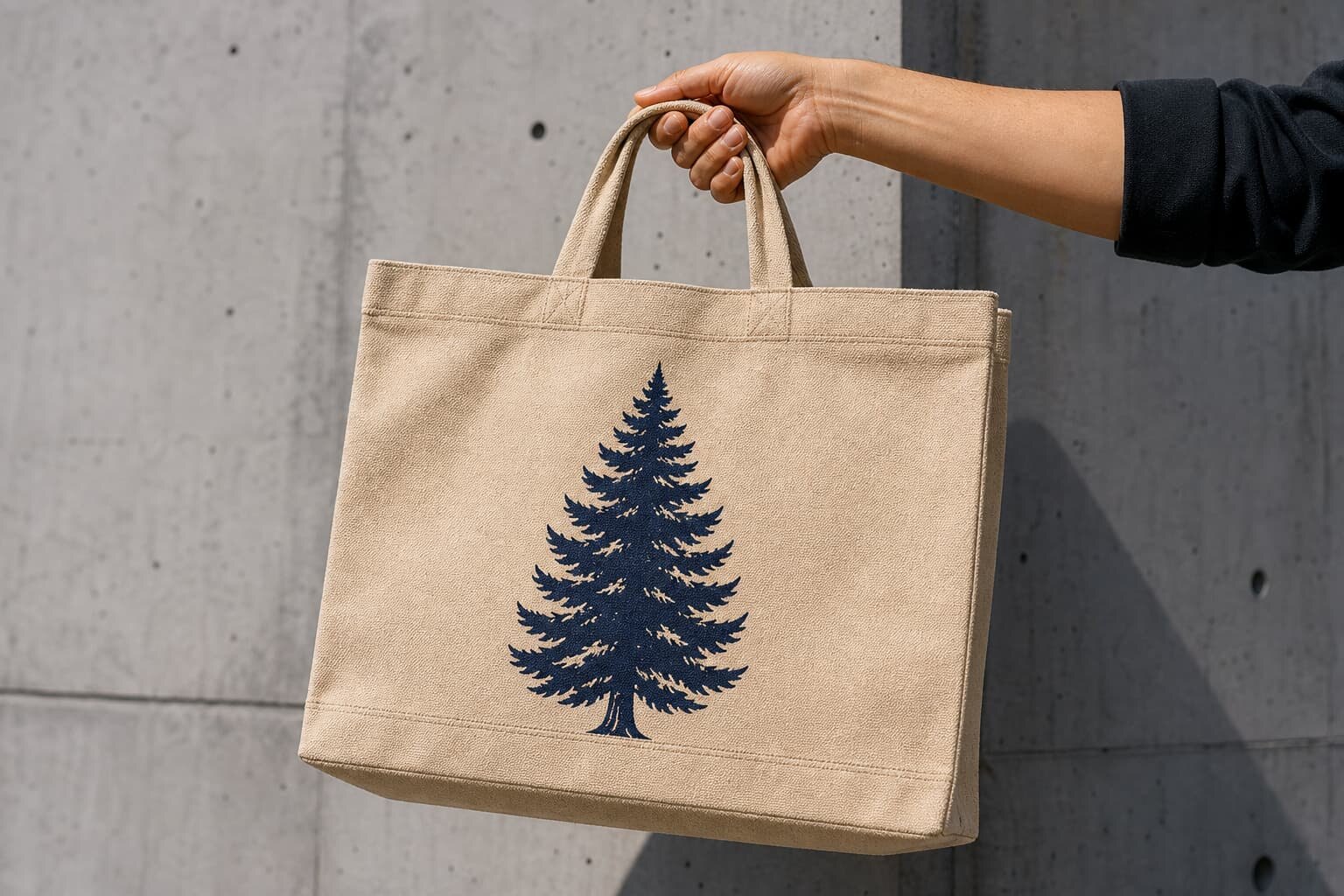
1. Why sample review matters before you quote a bulk tote order
For wholesale canvas tote bags, the sample is not just a look-and-feel check. It is the only practical way to verify whether the supplier understood your spec, whether the fabric is the right weight, and whether the decoration will survive mass production. A tote that looks acceptable in a photo can still fail on handle strength, seam balance, or print registration when you scale to several thousand pieces.
If you are comparing supplier quotes, use the sample as a pricing reference. One factory may quote a lower unit price because they are using lighter canvas, shorter handles, thinner thread, or a simpler print process. A proper sample review helps you separate real cost savings from hidden quality tradeoffs before you commit to a purchase order.
- Use the sample to confirm the spec, not just the appearance.
- Compare sample construction against the quote line by line.
- Treat any difference in fabric, print, or packing as a quote revision.
2. Start with the fabric: GSM, weave, and finish
Canvas tote bags are often discussed by ounce weight, but procurement teams should always ask for the actual GSM and the production tolerance. For a mainstream wholesale tote, 10 oz to 12 oz canvas is usually the most balanced range. It gives the bag enough body for retail display and decent print clarity without pushing the cost into heavy-duty territory. If the supplier only says “canvas” without a GSM number, the quote is incomplete.
When reviewing a sample, check whether the fabric feels balanced on both sides, whether the weave is tight enough to hold print detail, and whether the cloth shows uneven yarns or thin spots near folds. Ask if the sample is made from bleached, raw natural, dyed, or enzyme-washed fabric, because finishing changes both the visual shade and the cost structure.
- Ask for GSM, not just ounce weight.
- Confirm whether the sample and bulk order use the same fabric lot or same mill spec.
- Inspect fold lines, slubs, and transparency under light.
3. Review size, handle design, and load behavior
A canvas tote can pass a desktop inspection and still fail in actual use if the dimensions are off. For wholesale buying, the key measurements are body width, body height, gusset depth, handle length, and handle drop. These dimensions affect retail shelf appearance, carrying comfort, and carton efficiency. If your supplier does not provide a measured sample sheet, make them do it before approval.
Handle construction is one of the highest-risk areas. Self-fabric handles usually look cleaner and keep costs lower, while cotton webbing handles may feel stronger or more premium depending on the program. The sample should show even handle alignment, secure top-stitching, and a reinforcement pattern that lies flat instead of pulling the body fabric into wrinkles.
- Measure both handles from stitch point to stitch point.
- Check whether the tote stands upright or collapses too easily.
- Load-test the sample with realistic product weight, not just empty handling.
4. Compare print method and artwork risk before approval
For wholesale canvas tote bags, the print method often determines whether the final bag feels promotional or retail-grade. Screen printing is usually the best option for simple logos, bold type, and one to three colors because it gives strong opacity and predictable unit cost at scale. If your design uses gradients, fine lines, or a full-color image, the quote may shift toward digital print or heat transfer, but those methods need tighter artwork control and a clearer sample approval process.
A sample should not just show the logo in the right place. It should show ink density, edge sharpness, curing quality, and how the print behaves on folded fabric. Ask the factory to produce the sample using the intended bulk method, not a shortcut method. A digital sample can look perfect while the mass-produced screen print shows edge spread or color shift.
- Check front and back print placement against a measured spec.
- Rub the printed area after folding to see if ink cracks or transfers.
- Confirm whether the quote includes one side, two sides, or multiple print positions.
5. Use a simple comparison table to separate value from cheap pricing
When buyers receive multiple quotes, the lowest number is rarely the best number. Canvas tote pricing changes with fabric GSM, handle type, stitch count, print setup, packing method, and MOQ. That is why a sample should be reviewed alongside a comparison sheet. You want to know which supplier is pricing the same product and which one is pricing a lighter, easier, or less finished version.
The table below shows the decisions that usually matter most in a tote bag RFQ. Use it to normalize quotes before procurement approval. If one quote includes a woven side label, pre-production sample, and carton marking while another quote excludes those items, the unit price gap is not directly comparable.
- Normalize all quotes to the same fabric, decoration, and packing standard.
- Request separate pricing for base bag, print, label, and special packing.
- If a sample differs from the quote, ask for a revised quote immediately.
6. Sample checklist: what to inspect in ten minutes and what to test overnight
A buyer should inspect the sample in two stages. First, do a quick hands-on check for visible defects, measurement accuracy, and print placement. Second, run a basic performance test that reflects how the bag will be used. For example, if the tote is for groceries, books, or event kits, load it with similar weight and check whether the handles stretch, seams distort, or the bag tips sideways.
A good sample review also checks consistency with the final packing method. Some bags look fine while loose, but when folded and packed into cartons, the print area rubs against another bag and picks up scuffs. If your product is meant for retail shelves, ask for the sample packed the same way the bulk order will ship.
- Verify dimensions, stitch quality, and logo position first.
- Load-test the bag using realistic product weight.
- Inspect after folding to check rub marks, crease behavior, and deformation.
7. MOQ logic: why sample approval affects your order size and unit cost
MOQ is not just a factory policy; it is a cost structure. Canvas tote bags often have separate MOQ logic for fabric weaving, dyeing, cutting, printing, and packing. If you request a custom size, custom color, or multi-color print, the factory may need to raise the minimum quantity to absorb setup cost. A sample review helps you decide whether the spec is stable enough to order at the quoted MOQ or whether you should simplify the design first.
For procurement teams, the right question is not only “What is your MOQ?” but also “What changes when MOQ goes down?” Some suppliers lower MOQ by using stock fabric, fewer print colors, or bulk packing only. That may be fine if you understand the tradeoff. But if the sample looks premium and the quoted MOQ assumes a lighter construction, you are likely comparing different products.
- Ask for MOQ by fabric, print color count, and packaging level.
- Confirm whether sample approval locks in the quoted spec.
- Check whether smaller orders trigger higher unit cost or longer lead time.
8. Packing, carton data, and shipping damage prevention
Packing is one of the most ignored causes of tote bag complaints. Bulk-packed canvas bags can arrive with folded print rub, dust marks, or crushed corners if the carton is overloaded or the fold method is inconsistent. During sample review, ask the factory how many pieces go into one carton, how each bag is folded, and whether there is a polybag, tissue, or moisture protection layer. The sample should reflect the real packing scheme, not a one-off presentation version.
If your channel includes retail, distribution, or marketplace fulfillment, packing details become part of the product spec. Ask for carton dimensions, gross weight, inner pack count, and barcode placement. A poor carton plan can increase freight cost and warehouse labor even if the bag itself is well made.
- Confirm carton count and folding orientation.
- Check whether printed areas are protected from abrasion.
- Verify carton labels, shipping marks, and barcodes before production.
9. Production timeline: realistic lead time stages buyers should ask for
A sample review is useful only if it connects to an actual production schedule. The lead time should be broken into stages: sample development, pre-production sample, bulk material sourcing, cutting and sewing, printing or labeling, final inspection, and packing. For standard canvas tote programs, the timeline can move quickly if the fabric and print are simple, but any custom color, new decoration method, or special packaging will add time.
Buyers should ask the factory to separate sample lead time from mass production lead time. A supplier that can send a sample in a few days may still need several weeks to finish bulk production if the cloth must be dyed, the screen must be made, or the packing requirements are more complex. If the quote gives only one total lead time, it is not detailed enough for procurement approval.
- Request stage-by-stage lead time, not one combined number.
- Confirm whether approval of the sample resets the production schedule.
- Ask what happens to lead time if artwork or packing changes after approval.
10. The quote format you should request after sample approval
Once the sample passes review, the next step is to convert the sample into a quote that can be compared cleanly across suppliers. The quote should list fabric spec, bag size, handle spec, print method, number of colors, MOQ, packing method, carton data, and lead time. If the supplier sends only a single unit price, the quote is too weak to support a purchase decision. You need enough detail to compare line items, not just totals.
A good factory quote also states what is included and what is excluded. For example, it should say whether the price includes artwork setup, screen fees, woven labels, individual polybags, barcode stickers, and export cartons. That prevents later disputes and makes it easier for your team to calculate landed cost with fewer assumptions.
- Require line-item pricing for fabric, print, label, and packing.
- Ask for inclusions and exclusions in writing.
- Match the quote against the approved sample before PO release.
Specification comparison for buyers
| Spec decision | Recommended option | When it fits | Buyer risk to check |
|---|---|---|---|
| Fabric weight | 10 oz to 12 oz canvas for retail-grade tote bags | Good balance of cost, structure, and print clarity for promotional and retail programs | Check whether the mill basis weight is measured before or after finishing; confirm actual GSM tolerance |
| Handle construction | Self-fabric handles with box-X reinforcement | Best for standard shopping totes and brand programs that need a clean look | Watch handle length, stitch density, and whether the reinforcement sits flat without puckering |
| Print method | Screen print for simple 1–3 color logos | Best when the artwork is bold, flat, and quantity is high enough to spread setup cost | Check registration, ink opacity, and whether the print cracks on folded areas |
| Decoration detail | Woven label or small sewn patch | Works for premium retail, lifestyle brands, and subdued branding | Confirm label size, edge finish, placement, and whether it adds lead time |
| Bottom structure | No gusset or moderate bottom gusset | Suitable when price sensitivity matters and the bag will carry light to medium items | Verify loaded shape; too shallow can reduce usable volume and retail appeal |
| Packing method | Bulk packed with size count and carton marks | Best for importers who re-pack locally or distribute in B2B channels | Check bag compression, dust protection, carton quantity, and whether print rub can occur in transit |
| Sample approval stage | Pre-production sample plus sealed color reference | Needed for first order, new fabric, or new print method | Do not approve only by photos; verify sewn sample against real bulk materials |
Buyer checklist before sampling
- Confirm final bag size, gusset, handle drop, and usable loading weight.
- Specify fabric type, GSM/oz weight, color tolerance, and shrinkage expectations.
- Send vector artwork and define logo size, print position, and Pantone references.
- Ask for sample photos plus one physical pre-production sample before bulk approval.
- Agree carton packing, barcode or hangtag needs, and shipment marks before production.
- Record inspection checkpoints for stitching, print adhesion, stains, and quantity count.
Factory quote questions to send
- What is the exact canvas fabric specification, including GSM, yarn count if available, and whether the sample uses bleached, dyed, or unfinished cloth?
- Which print method is included in the quote, how many colors are priced, and what are the setup or plate charges?
- Is the quoted MOQ based on blank bags, printed bags, or finished packed units, and does the MOQ change by color or size?
- What are the lead times for sample development, pre-production sample, mass production, and carton-ready packing?
- Which packing method is included: bulk pack, individual polybag, barcode sticker, or retail hangtag, and what costs extra?
Quality-control points to confirm
- Fabric GSM and hand feel match the approved sample within agreed tolerance.
- Bag dimensions, seam allowance, and handle lengths stay within the buyer’s approved spec.
- Print color, placement, and edge sharpness remain consistent across front and back panels.
- Stitching is even, tight, and free from skipped stitches, broken thread, or seam distortion.
- Handles are secure under load and the reinforcement stitches are clean and symmetrical.
- No visible stains, oil marks, loose fibers, or color transfer appear on the finished sample.
- Packing count, carton labeling, and folding method match the approved shipping requirement.