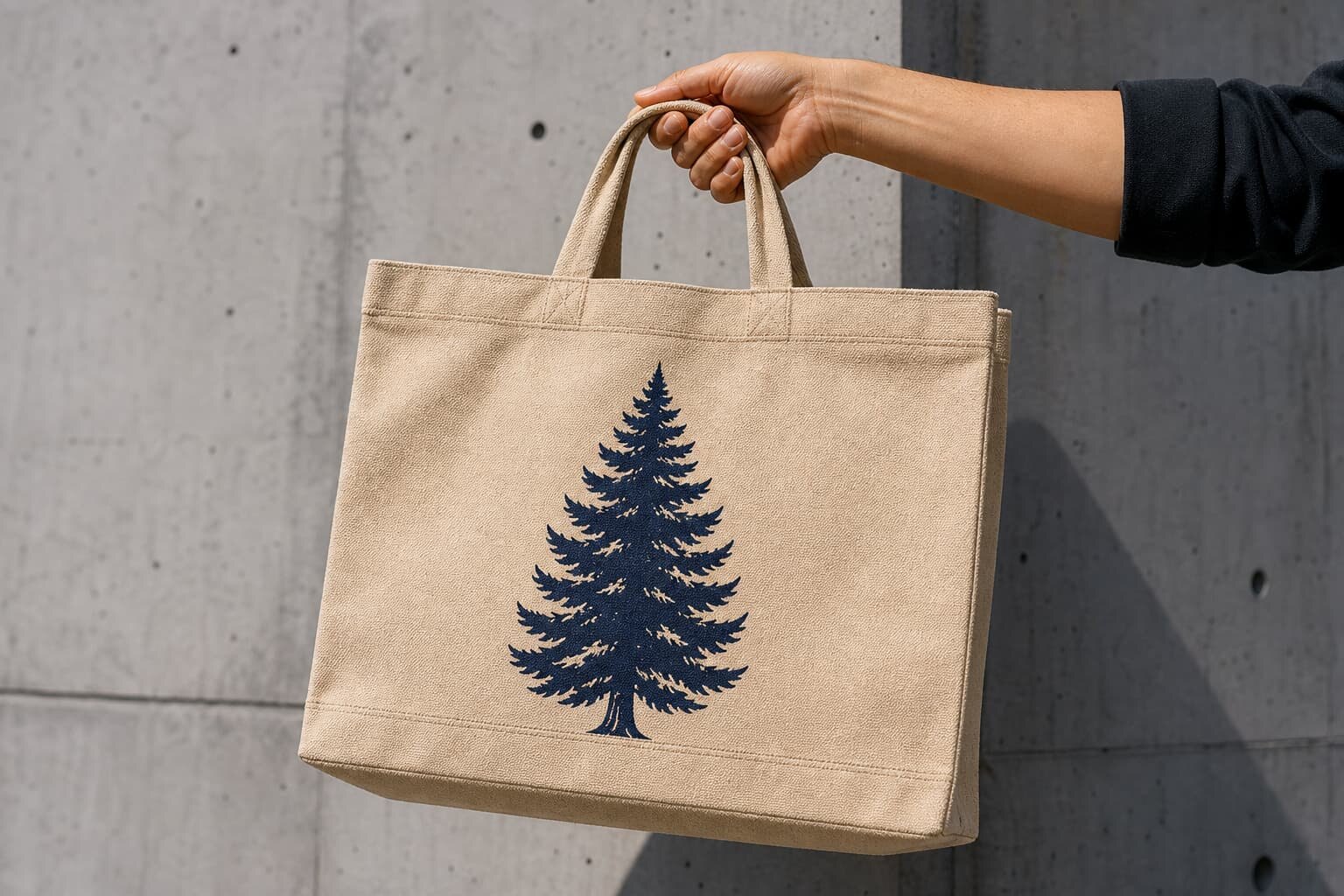
1. The real MOQ problem is not just a factory sales number
When buyers ask for wholesale canvas tote bags, MOQ is often treated as a simple number: 300 pcs, 500 pcs, 1,000 pcs, or 3,000 pcs. In actual production, that number is only the visible part of the decision. The real MOQ depends on fabric availability, dyeing batch, printing setup, cutting efficiency, sewing line planning, packing labor, and how many versions are included in the order.
A useful RFQ should not ask only, “What is your MOQ?” A better question is, “What is the MOQ for this exact fabric weight, color, print method, size, and packing method?” That gives procurement teams a fair way to compare supplier quotes. It also prevents the common mistake of receiving one attractive low MOQ quote that later changes after artwork, color, or packaging details are added.
- Low MOQ is easier when using natural stock canvas and one-color printing.
- MOQ usually increases for custom dyed fabric, multiple artwork versions, special handles, or individual retail packing.
- A quote without fabric GSM, print method, packing details, and sample conditions is not ready for purchasing approval.
- MOQ should be checked per total order, per color, per design, and sometimes per shipping mark or barcode.
2. Fabric weight changes MOQ, price, sewing speed, and perceived value
Canvas tote bag fabric is commonly described by ounce weight, but many importers also request GSM to reduce confusion. For example, 8 oz canvas is often around 230-250 GSM, 10 oz is around 280-300 GSM, and 12 oz is around 340-360 GSM, depending on weave and finishing. These ranges are practical references, not universal standards, so the approved sample and fabric swatch still matter.
For most brand and retail buyers, 10 oz canvas is the safest starting point because it feels stronger than promotional thin cotton while still being easy to cut, sew, fold, print, and ship. An 8 oz version can work for large giveaway orders, but the bag may feel less structured. A 12 oz version gives a more premium hand feel, but it can raise cost, reduce carton efficiency, and make print penetration more difficult on rougher fabric.
- 8 oz / 230-250 GSM: budget-friendly, lighter, suitable for giveaways and short-term campaigns.
- 10 oz / 280-300 GSM: balanced option for retail, events, bookshops, groceries, and branded merchandise.
- 12 oz / 340-360 GSM: heavier premium option for reusable shopping, gift packaging, and lifestyle retail.
- Ask the factory whether the quoted GSM is for finished fabric and whether shrinkage is already considered.
3. Stock natural canvas allows lower MOQ than dyed or custom fabric
Natural cotton canvas is usually the easiest fabric for low or medium MOQ because mills and bag factories often keep common weights in stock. If the buyer accepts natural color, standard width fabric, and a common tote size, the factory can cut production without waiting for a custom dye lot. This is why a natural 10 oz tote with one-color logo may have a much lower MOQ than the same bag in a custom Pantone fabric.
Dyed canvas changes the calculation. Dyeing factories often require a minimum fabric quantity per color, and the fabric loss during dyeing, washing, drying, and shade control must be included. Even if the sewing factory agrees to make 500 bags, the dyeing batch may produce enough material for more pieces, so the buyer either pays a higher unit cost or accepts a higher MOQ. For procurement teams, this is important when comparing quotes from factories that do or do not include dyeing batch reality in the first offer.
- Natural canvas: best for lower MOQ, faster sampling, and simpler shade approval.
- Bleached canvas: cleaner background for bright prints but needs stain and whiteness control.
- Dyed canvas: better brand color control but usually higher MOQ per color.
- Custom Pantone fabric: requires lab dip, shade approval, and realistic tolerance agreement.
4. Print method can raise MOQ even when the bag style is simple
Many canvas tote bag RFQs fail because the buyer specifies the bag but not the print method. A one-color screen print on natural canvas is production-friendly and normally suitable for wholesale orders. But full-color artwork, gradients, small type, large solid ink blocks, or printing across seams can change the process and the MOQ. The factory must consider screen setup, ink mixing, drying space, rejected print allowance, and inspection time.
Screen printing is usually the first choice for solid logos and simple brand artwork. Heat transfer or digital printing can support more colors and detail, but they need testing on actual canvas because rough weave, fabric thickness, and ink absorption affect the final appearance. Embroidery may be possible for premium bags, but it adds backing, thread color approval, machine time, and can distort lighter fabric if the stitch area is large.
- Screen print: good for 1-3 solid colors, lower unit cost at volume, strong for simple logos.
- Heat transfer: useful for multi-color artwork but must be checked for hand feel, cracking, and edge finish.
- Digital print: helpful for detail or short runs, but color strength may vary on natural canvas.
- Embroidery: premium look, but not ideal for very large filled artwork on lighter canvas.
- Always request a test on the actual fabric weight, not only on a random cotton panel.
5. Bag construction details affect both MOQ and quote accuracy
Two quotes for canvas tote bags can look similar but include different construction. One supplier may quote a simple flat tote with short handles, single-needle seams, and bulk packing. Another may quote a gusseted tote with shoulder handles, reinforced cross stitching, inside overlock, and individual polybags. The second quote is not necessarily expensive; it may simply include the construction the buyer actually needs.
Procurement teams should define the tote bag function before requesting MOQ. A bag for lightweight brochures does not need the same construction as a grocery tote or retail reusable shopping bag. If the bag will carry books, bottles, folded apparel, or gift sets, handle reinforcement and seam strength must be clear from the beginning. Changing handle length or adding gusset after quotation often changes fabric consumption and cutting layout.
- Flat tote: lower material use, efficient packing, good for events and documents.
- Bottom gusset: improves capacity and standing shape, increases fabric use and sewing steps.
- Side and bottom gusset: better retail function, more cutting and seam control needed.
- Self-fabric handles: clean appearance and easy color matching.
- Webbing handles: strong and consistent, but color and MOQ for webbing should be checked separately.
6. MOQ should be separated by total quantity, color, design, and packing version
A common purchasing mistake is to place one total MOQ in the RFQ while the order actually contains many variations. For example, a buyer may request 2,000 canvas totes, but the order includes four bag colors, five logo designs, two handle lengths, and three barcode labels. From a factory planning view, this is not one 2,000-piece order. It may be twenty small production combinations, each with its own cutting, printing, sewing, and packing control.
A clear RFQ should show how the total quantity is divided. If the buyer needs 500 pcs per design, write it. If the same printed bag needs different retailer labels, state whether labels are applied by carton, by polybag, or by individual unit. This helps the factory quote the true labor cost and avoids errors such as mixing barcodes, printing the wrong logo on the wrong color, or packing the right bag into the wrong carton.
- Ask for MOQ per fabric color.
- Ask for MOQ per artwork or print position.
- Ask whether different handle colors count as separate production versions.
- List each packing version, hangtag, barcode, and carton mark separately.
- If total MOQ is flexible, ask the factory which version split is most efficient.
7. Sample approval should prove production feasibility, not just appearance
A sample is not useful if it only shows a rough shape made from substitute fabric. For wholesale canvas tote bags, the pre-production sample should confirm fabric weight, color, hand feel, shrinkage behavior, print appearance, handle length, seam construction, and packing method. If the factory uses available sample-room fabric just to show dimensions, the buyer should treat it as a fit sample only, not a production approval sample.
For lower MOQ orders, some factories try to skip a full pre-production sample to save time and cost. That may be acceptable only for repeat orders using the same approved material and artwork. For a first order, especially with custom print or custom dyed fabric, the buyer should approve a sample made with actual bulk materials before mass production. This reduces later disputes about color, print sharpness, and fabric thickness.
- Check actual fabric GSM against the quoted specification.
- Measure bag width, height, gusset, handle drop, and handle width.
- Review print size, position, color, edge sharpness, and ink coverage.
- Pull the handles firmly and inspect reinforcement stitching.
- Fold the sample as it will be packed to check creasing and print transfer risk.
- Keep one sealed approved sample for buyer, factory production team, and final inspection reference.
8. Packing choices can change cost, lead time, and inspection workload
Packing is often added late, but it affects MOQ and production planning. Bulk packing is simple: bags are folded or flat packed in inner bundles and loaded into export cartons. This is efficient for distributors and event buyers. Retail packing can include individual polybags, hangtags, barcode stickers, size labels, warning labels, carton assortment, or retailer routing requirements. Each step adds labor and creates another point where mistakes can happen.
For canvas tote bags, packing must also protect the product from moisture, dirt, and print transfer. Natural cotton canvas can absorb odor and humidity if stored poorly. Heavy ink areas should be fully cured before folding. If the buyer requires individual polybags, the factory should confirm bag thickness, ventilation holes if needed, suffocation warning requirements for certain markets, and whether the packaging material must meet any buyer policy.
- Bulk pack: lower cost, faster packing, good for promotional and distributor orders.
- Individual polybag: cleaner presentation but adds cost, plastic use, and inspection points.
- Hangtag and barcode: useful for retail but must be controlled by SKU.
- Carton marks: should include item number, color, quantity, PO number, gross weight, net weight, and carton number if required.
- Ask for carton dimensions and gross weight before confirming freight estimates.
9. Lead time depends on approval speed and material readiness
Lead time for wholesale canvas tote bags should be broken into stages instead of quoted as one vague number. Sampling, sample revision, fabric preparation, printing, cutting, sewing, trimming, QC, packing, and export carton preparation all take time. If the buyer approves artwork slowly or changes the size after sampling, the production schedule moves. If fabric is custom dyed, lab dip and bulk shade approval add more time before cutting can start.
A realistic RFQ asks the factory to state lead time after final sample approval and deposit, and to identify what conditions can change that schedule. Peak season, public holidays, late packaging artwork, missing barcode files, and delayed label approval are common causes. Importers should also align factory lead time with vessel booking, inspection booking, and destination warehouse receiving windows.
- Separate sample lead time from bulk production lead time.
- Ask whether the quoted lead time assumes stock fabric or custom fabric.
- Confirm when printing begins: before or after full fabric inspection.
- Book final inspection after packing is mostly complete, not after only sewing is done.
- Include buffer for sample revision if artwork has fine detail or strict color matching.
10. Quote data must be complete enough for real comparison
A canvas tote bag quote is only useful when it contains the same data across suppliers. If one factory quotes FOB with bulk packing and another quotes EXW with individual polybags, the unit prices cannot be compared directly. If one quote includes screen setup and another lists it later as an extra charge, procurement may choose the wrong supplier based on incomplete information.
The best RFQ format gives suppliers less room to guess. Include a drawing or photo reference, finished size, fabric weight, color, handle specification, print artwork, packing method, order split, target delivery date, inspection requirement, and Incoterm. Ask suppliers to show optional costs separately, such as heavier fabric, inside pocket, zipper closure, hangtag, individual polybag, barcode sticker, and upgraded carton. This allows buyers to negotiate intelligently instead of only asking for a lower unit price.
- Request unit price by quantity tier, such as 500, 1,000, 3,000, and 5,000 pcs if your forecast is not fixed.
- Ask suppliers to list sample cost, setup cost, mold or plate cost if any, and whether they are refundable.
- Require carton quantity, carton size, gross weight, and estimated CBM for freight planning.
- Ask whether over/under shipment tolerance applies, especially for custom dyed or printed orders.
- Keep a comparison sheet that separates product cost, packing cost, inland cost, export cost, and optional upgrade cost.
Specification comparison for buyers
| Spec decision | Recommended option | When it fits | Buyer risk to check |
|---|---|---|---|
| Fabric weight | 10 oz / 280-300 GSM cotton canvas | General retail, events, bookstore, grocery, and brand merchandise orders needing a solid hand feel without excessive cost | Confirm whether supplier quotes finished fabric GSM or greige fabric before washing; lighter substitutions are common when GSM is not written clearly |
| Budget fabric option | 8 oz / 230-250 GSM canvas | Promotional campaigns, giveaways, price-sensitive distributor programs, and large orders where load weight is moderate | Check opacity, handle reinforcement, and shrinkage; thin canvas can look weak after printing if the design has large ink coverage |
| Premium fabric option | 12 oz / 340-360 GSM canvas | Retail tote bags, gift sets, reusable shopping programs, and higher perceived value brand packaging | MOQ may increase because cutting and sewing are slower; confirm needle size, seam allowance, and whether the bag can still fold flat for packing |
| Print method | Screen printing for 1-3 solid colors | Most wholesale canvas tote bag orders where logo color matching and unit cost matter | Ask if setup charge applies per color and per artwork position; confirm Pantone tolerance and test print on the actual fabric |
| Detailed artwork | Heat transfer or digital print after approval testing | Gradient artwork, photos, small text, or short runs with many colors | Check wash/rub resistance and hand feel; transfers may crack or look plastic on coarse canvas if not tested |
| Handle construction | Self-fabric canvas handles with cross-stitch reinforcement | Standard shopping totes and retail bags requiring durability and clean appearance | Specify handle length and width; factories may quote short hand-carry handles if shoulder length is not written |
| MOQ planning | Start from fabric, dyeing, printing, and sewing batch logic, not only a sales number | Buyers comparing quotes from multiple factories or planning a first production run | A low MOQ may hide higher unit cost, limited color choices, manual cutting, or no pre-production sample |
| Packing | Flat packed 25-50 pcs per inner bundle, export carton with carton marks | Most wholesale and retail distribution orders where carton efficiency and warehouse receiving matter | Confirm whether individual polybags are needed; they add labor, material cost, inspection time, and sometimes compliance requirements |
Buyer checklist before sampling
- Define the exact bag size in width x height x gusset, with measurement tolerance such as +/- 1 cm.
- State fabric as oz and GSM where possible, for example 10 oz / approximately 280-300 GSM cotton canvas.
- Confirm natural, bleached, dyed, or custom Pantone fabric before comparing MOQ and price.
- Specify handle length, handle width, and reinforcement method instead of writing only standard handle.
- Send vector artwork and state print size, number of colors, print position, and Pantone references.
- Ask whether MOQ is driven by fabric stock, dyeing, printing setup, sewing line efficiency, or packing requirements.
- Request a pre-production sample using actual bulk fabric, actual print method, and actual accessories.
- Clarify packing: bulk pack, individual polybag, hangtag, barcode sticker, carton quantity, and carton marks.
- Ask for lead time separated into sampling, material preparation, bulk production, inspection, and packing.
- Compare quotes using the same Incoterm, destination, carton data, and sample approval conditions.
Factory quote questions to send
- Is your MOQ based on ready stock fabric, custom dyed fabric, printing setup, or sewing production efficiency?
- What fabric weight are you quoting in oz and GSM, and is the weight measured before or after finishing?
- Can you quote 8 oz, 10 oz, and 12 oz canvas versions using the same bag size and artwork for comparison?
- What is the minimum quantity per fabric color and per print design?
- Which print method do you recommend for our artwork, and what are the limitations for small text, gradients, and heavy ink coverage?
- Are screen setup charges, sample charges, printing plates, color matching, labels, hangtags, and packing materials included or listed separately?
- What sample will be provided before bulk production: mock-up, printed sample, pre-production sample, or sealed approval sample?
- What is the estimated lead time after sample approval, and what could extend it during peak season?
- How many pieces per carton, what is the carton size and gross weight, and can you provide this data before order confirmation?
- What inspection standard do you use for fabric defects, print placement, seam strength, loose threads, stains, and measurement tolerance?
Quality-control points to confirm
- Check fabric weight by cutting and weighing a measured area or by comparing against approved swatch records.
- Measure finished bag width, height, gusset, handle drop, and handle width against the approved specification sheet.
- Inspect seam allowance, stitch density, bartack or cross-stitch reinforcement, and loose thread trimming.
- Review print color under consistent light and compare with Pantone or approved sample, not only with a phone photo.
- Perform dry rub and light wet rub checks on printed areas, especially dark ink on natural canvas.
- Check print placement tolerance from top edge, side edge, and center line; large totes show crooked printing easily.
- Verify packing quantity per bundle, carton quantity, carton marks, barcode labels, and any country-specific labeling requirements.
- Open random cartons during final inspection to confirm shade consistency, odor, stains, mildew risk, and mixed-size errors.
- Confirm that the production sample and bulk goods use the same fabric construction, handle material, and print process.
- Document acceptable and unacceptable defects before production starts so the factory QC team and buyer inspector use the same standard.