Buying Problem: Bags That Look Strong but Fail in Use
Wholesale canvas messenger bags for wellness studios are often purchased for practical, visible use: carrying a towel, water bottle, notebook, phone, class pass, staff uniform, sample products, or retreat materials. A bag can look sturdy in a supplier photo but still fail in daily use if the strap attachment is under-reinforced, the seam allowance is narrow, the canvas is loosely woven, or the flap print cracks where it bends. For a studio, the damage is not only a product defect. It can affect the member experience, retail returns, event presentation, and the perceived quality of the wellness brand.
B2B buyers should treat the product as a load-bearing textile item rather than a simple promotional giveaway. That means the RFQ should define use case, fabric weight, finish, reinforcement method, print position, hardware, packing, and inspection standard before suppliers quote. Without those details, one supplier may price a tight 14 oz canvas with bartacks and metal hardware, while another prices lighter fabric with decorative stitching only. The unit prices may look comparable, but the products are not equivalent.
The buying team should also separate the design brief from the durability specification. A design brief explains the brand look: natural canvas, minimalist logo, calming color, retail-ready appearance. A durability specification explains how the bag must perform: loaded weight, seam strength, rub resistance, hardware movement, acceptable measurement tolerance, and packing protection. Combining both documents gives suppliers enough information to price accurately and reduces negotiation based on assumptions.
- For retail sale, prioritize consistent shape, firm hand-feel, clean stitching, stable logo color, and packaging that protects shelf presentation.
- For member welcome kits, prioritize strap strength, controlled unit cost, simple packing, and enough durability for repeated class visits.
- For staff use, prioritize darker colors, stronger hardware, washable or easy-clean construction, and pockets sized for daily tools.
- For retreat or event gifting, prioritize delivery timing, carton labeling, easy kitting, and logo durability during transport and attendee handling.
- For distributor stock, prioritize repeatable specs, SKU clarity, reorder consistency, carton efficiency, and stable production tolerances.
Translate Wellness Use Cases Into Product Specs
The best durability checklist starts with the real load and handling environment. A yoga studio member may carry a towel, bottle, journal, wallet, and light apparel. A spa or Pilates instructor may carry schedule sheets, grip socks, keys, retail testers, and a tablet. A retreat attendee may receive the bag pre-packed with printed materials and branded products, then use it during travel. These use cases create different stress points, and they should not be forced into one vague spec.
Procurement teams can define three practical tiers. A light welcome-kit messenger bag can be built for controlled weight and short-term promotional use. A daily-use messenger bag needs stronger strap stitching, better hardware, more stable fabric, and stricter inspection. A retail-grade bag needs both durability and appearance consistency because customers will compare it to other accessories in the studio shop. The tier should be written into the RFQ so suppliers do not downgrade construction to reach a target price.
Size planning also affects durability. A larger gusset invites users to load more weight, so the strap and bottom seams must match that capacity. A long flap improves coverage but creates a folding zone where print can crack. A wide strap may improve comfort but needs proper attachment area. A narrow inside pocket may look useful but tear quickly if it is used for phones and keys. Durability is therefore not only about stronger materials; it is about matching every design choice to expected behavior.
- Define target contents: bottle size, towel size, notebook format, phone, keys, uniform, sample products, or printed materials.
- Set the load tier before pricing: light promotional, daily-use, or retail-grade construction.
- Match bag size to realistic contents so the product is not accidentally designed to carry more than it can support.
- Confirm whether the bag will be sold empty, shipped flat, pre-packed for events, or kitted by a distributor.
- Decide whether the brand prefers a structured look, soft washed look, or foldable low-bulk format before choosing canvas weight.
Fabric Weight, Canvas Finish, and Hand-Feel
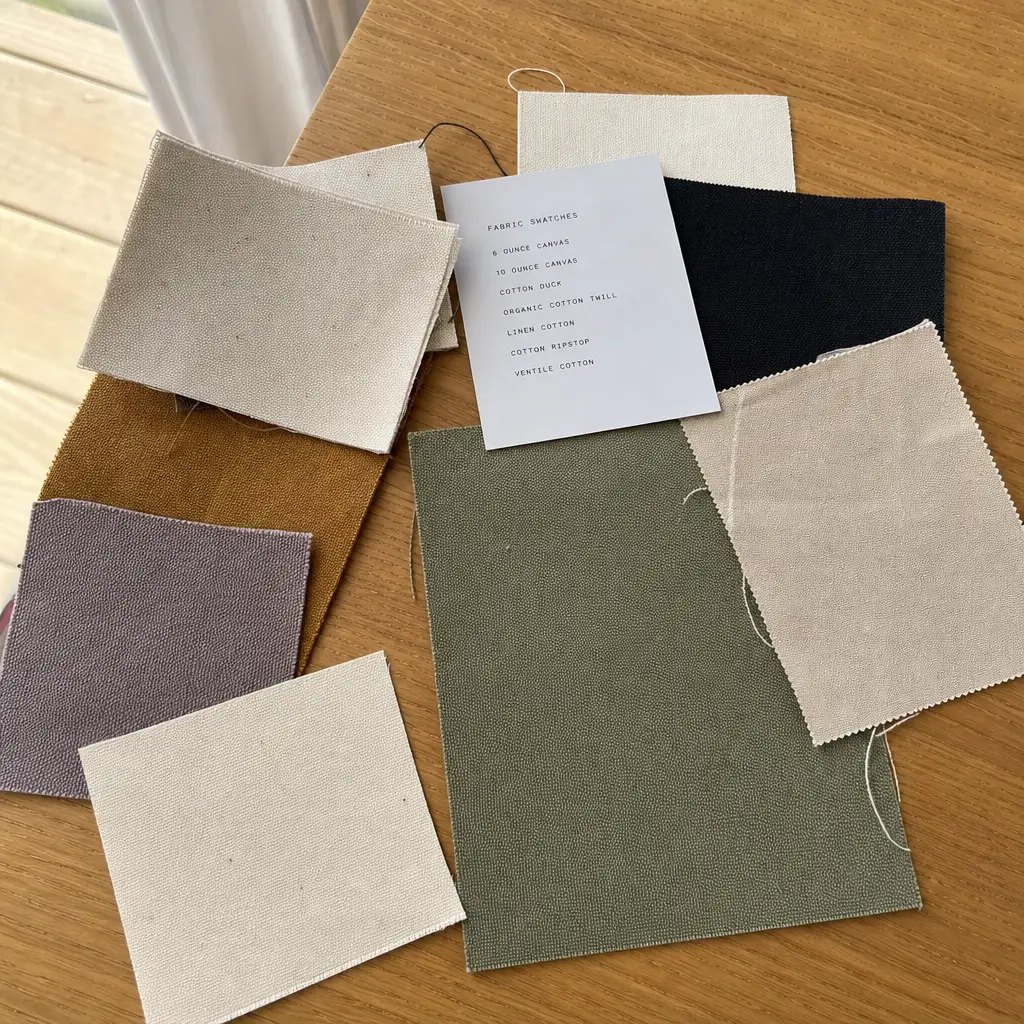
Canvas weight is one of the first durability levers, but it is often quoted too loosely. A supplier may say 12 oz canvas while another says 16 oz canvas, yet actual performance depends on GSM, weave density, yarn quality, finishing, and whether the fabric has been washed, dyed, coated, or softened. For canvas messenger bags used by wellness studios, a practical range is usually 12 oz to 16 oz, roughly 400 to 540 GSM, depending on construction and whether a lining is included.
The heaviest fabric is not automatically the best procurement choice. Heavy canvas increases material cost, sewing difficulty, carton weight, freight cost, and sometimes needle damage during production. It can also create stiff flap edges that do not sit neatly or fold comfortably. A mid-heavy tight weave with correct reinforcement at stress points may perform better than an overweight fabric with weak strap stitching. Buyers should approve hand-feel and weave density, not only the number printed on the quote.
Finish selection matters for both brand feel and technical risk. Natural canvas supports an earthy wellness aesthetic and may reduce dye complexity, but it shows dirt more easily. Black or charcoal canvas hides everyday marks but can show lint and print contrast issues. Washed canvas feels softer and more retail-like, but the washing process can alter dimensions and make shade control more complicated. A water-repellent or coated finish may help with moisture exposure, but it must be tested with the chosen print method because coatings can reduce ink or transfer adhesion.
- Specify both oz and GSM so suppliers cannot substitute a visibly thinner or looser fabric without disclosure.
- Request fabric swatches for natural, dyed, washed, and coated options if more than one finish is under consideration.
- Ask for shrinkage range if end users may wash the bag, and decide whether the care label should discourage machine washing.
- Compare stiffness after repeated flap folding because flap creasing affects both durability and retail appearance.
- Approve a bulk shade tolerance for dyed canvas, especially for multi-location studio programs that may reorder later.
- Record actual sample weight so future reorders can be compared against a physical production benchmark.
Construction Details That Decide Real Durability
The center canvas panel rarely fails first. Most failures occur where force is concentrated: shoulder strap ends, side seams, bottom corners, pocket openings, zipper ends, flap corners, and hardware loops. This is why two messenger bags made from similar canvas can perform very differently. One may use box-stitching, bartacks, proper seam allowance, and strong thread; another may use a visually similar stitch pattern without enough depth or reinforcement.
The RFQ should describe construction in operational language. For example: box-stitch with cross-stitch at each strap end, bartack at pocket openings, double-needle stitching on side seams, folded or bound raw edges, reinforced bottom corner seams, and minimum seam allowance suitable for the fabric weight. If the bag uses a continuous strap running under the base, state that clearly. If the strap is attached only at the side panels, require close-up approval and load testing because those areas carry most of the stress.
Inspection should include inside views. Many weak points are hidden inside the bag: loose thread tails, raw fraying edges, uneven seam allowance, skipped stitches under the flap, and pocket corners without bartacks. A good sample review includes turning the bag inside out where possible, measuring stitch density, pulling pocket openings by hand, and checking whether the strap stitching penetrates all necessary layers. Photos alone are not enough for this step unless they are detailed and ruler-referenced.
- Use box-stitch, cross-stitch, or bartack where straps join the bag body, and specify which method is required.
- Avoid narrow seam allowance on heavy canvas because fraying can pull out after repeated loading.
- Reinforce pocket openings if phones, keys, cards, locker tags, or small retail items will be carried.
- Check flap symmetry, side seam alignment, gusset consistency, and bottom panel shape on the physical sample.
- Define thread color and stitch density so bulk production does not look uneven across different sewing operators.
- Classify broken stitches at strap ends, bottom corners, or hardware loops as major or critical defects, not cosmetic issues.
Logo Method, Placement, and Brand Durability
Most wellness studio branding uses simple marks, short slogans, location names, or retreat artwork. Screen printing is usually efficient for solid one-color or two-color logos on cotton canvas, especially when the print sits on a flat panel. It becomes riskier when the print crosses a heavy fold line, sits on coarse fabric, or uses thick ink coverage on a flexible flap. Logo durability should therefore be tested on the exact fabric finish and placement, not on a separate smooth material.
Embroidery can give a premium effect for small marks, initials, or understated brand patches, but it adds needle holes, thread tension, backing considerations, and potential puckering. Woven labels or side tabs are useful for subtle private-label branding and easier reorder consistency because they avoid large print curing issues. Heat transfer can handle gradients or complex artwork, but it requires adhesion testing on textured canvas and may not be the best choice for flap zones that bend repeatedly.
Logo placement should be specified with measurements from fixed edges, not described as centered only. A centered print may still look inconsistent if the flap shape varies or if the bag is folded during packing. Buyers should state acceptable placement tolerance, such as plus or minus a defined number of millimeters, and request a photo with ruler before bulk production. For multi-location wellness groups, standardizing the main logo size and placement across all locations reduces screen changes, sorting errors, and inspection complexity.
- Use screen print for simple one-color or two-color logos on flat panels with enough margin from seams and folds.
- Use embroidery for small premium marks where raised texture is part of the brand look and puckering risk is acceptable.
- Use woven labels or patches when the buyer wants subtle branding, easier reorders, and fewer large-print durability concerns.
- Use heat transfer only after testing adhesion, edge lift, and flex performance on the approved canvas finish.
- Require dry rub and damp rub checks on both dark and light fabrics if the assortment includes multiple colors.
- Measure logo placement from the flap edge, side edge, or seam line, and include tolerance in the approved artwork sheet.
Durability Testing Checklist for Pre-Production Samples
A pre-production sample should be tested as a functional prototype, not treated as a beauty sample only. The purpose is to catch weak stitching, unstable print, poor hardware, and shape problems before bulk fabric is cut. The tests do not need to be complicated, but they must be consistent, written down, and applied to every supplier being compared. If one supplier is tested with a 4 kg load and another is tested only by hand-feel, the comparison is not useful.
Start with a realistic load test. A light welcome-kit bag may be tested at 4 kg, while daily-use or retail-grade messenger bags should often be checked at 6 kg to 8 kg, depending on target positioning and design. Load the bag with evenly distributed weight, hang it by the strap for a defined period such as 24 hours, then inspect strap ends, side seams, bottom corners, hardware loops, and flap distortion. After the static test, perform repeated pulls at each strap attachment to simulate sudden movement.
Testing should also cover the logo, hardware, pockets, and packing. Rub the print with a dry white cloth and a slightly damp white cloth to check ink transfer. Fold the flap repeatedly to see whether the print cracks, whitens, or lifts. Open and close zippers, snaps, magnets, or hook-and-loop closures at least 50 cycles on the sample. Place the bag in the intended carton packing format for 48 hours, then inspect whether permanent creases, print blocking, or shape distortion appear. Record results with photos so approval is not based on memory.
- Static load: hang the loaded bag for 24 hours and inspect strap seams, side seams, bottom corners, and hardware loops.
- Repeated pull: pull each strap attachment in the normal carrying direction and reject samples with stitch popping, tearing, or seam slippage.
- Print rub: rub dry and slightly damp white cloth across the logo and reject visible ink transfer beyond the agreed standard.
- Flap flex: fold and unfold the flap repeatedly, then inspect cracking, whitening, delamination, or logo distortion.
- Closure cycle: open and close zippers, snaps, magnets, or hook-and-loop closures at least 50 times if included.
- Pocket stress: load the pocket with a phone-sized object and check bartacks, seam allowance, and corner distortion.
- Packing compression: pack the sample as quoted for 48 hours and inspect permanent creasing, print blocking, and flap deformation.
MOQ, Cost Drivers, and Quote Comparability
MOQ for wholesale canvas messenger bags is driven by fabric sourcing, dyeing, cutting efficiency, printing setup, sewing line setup, label preparation, packing format, and carton sorting. Buyers sometimes treat MOQ as an arbitrary factory rule, but it is usually tied to setup waste and production efficiency. A natural canvas bag with one screen print and simple carton packing has a very different MOQ profile from a custom dyed messenger bag with three location logos, embroidered patches, hangtags, barcode stickers, and separate carton marks.
To keep cost under control without weakening the specification, consolidate variations where possible. If several wellness studio locations need separate identification, consider one shared main logo with a smaller location label, paper insert, or carton-level separation only when order volume supports it. Every additional print version requires artwork proofing, screen setup, production counting, inspection, packing separation, and risk of mixed cartons. These tasks add cost even when the bag shape stays the same.
Quote comparison should be done on a controlled spec sheet. The buyer should not compare one supplier’s FOB price for 12 oz natural canvas and no inner pocket against another supplier’s DDP price for 16 oz dyed canvas with zipper pocket and individual polybag. Request line-item assumptions: fabric, hardware, logo, label, packing, carton data, sample cost, tooling or screen cost, Incoterm, lead time, and payment terms. This helps procurement identify whether a lower price is a real efficiency or a missing requirement.
- Fabric color changes may trigger separate MOQ even when the bag shape, strap, and logo size are identical.
- Each print design can add setup cost, proofing time, screen cost, production sorting risk, and inspection workload.
- Individual polybags, hangtags, barcodes, retail stickers, or paper bands increase packing labor and material cost.
- Custom dyeing requires lab dip approval and may extend lead time before cutting can begin.
- Metal hardware, zipper pockets, lining, and reinforced bases usually add both material cost and sewing time.
- Freight cost should be compared using carton dimensions, gross weight, pieces per carton, and Incoterm, not unit price alone.
Sample Approval and Production Control
A sealed approval sample should represent the exact production standard. It should include the correct canvas, color, finish, hardware, thread, label, print, pocket layout, zipper or closure if used, and packing method. If any element is temporary, the buyer should mark it as temporary in writing and approve the final substitute separately. Otherwise, the factory may treat the temporary sample as acceptable and bulk inspection becomes a dispute rather than a quality process.
For importers, distributors, and multi-location studio buyers, keep one approved sample at the buyer office and one at the factory. The factory-retained sample becomes the line standard for sewing operators and internal QC. The buyer-retained sample becomes the standard for incoming inspection or third-party inspection. Both samples should be dated, versioned, and linked to the purchase order, artwork file, and specification sheet. This prevents confusion when a revised sample replaces an earlier prototype.
Production control should include checkpoints before final inspection. Request photos of cut panels, first printed panels, strap reinforcement, pocket construction, hardware installation, and the first packed carton. These photos do not replace inspection, but they help catch problems early. If the first printed panels show logo placement drifting or the first packed carton creates flap creases, the supplier can correct the process before hundreds or thousands of units are completed.
- Measure finished sample width, height, gusset, flap length, pocket size, strap width, and strap adjustment range.
- Photograph logo placement with a ruler from top edge, side edge, flap edge, or seam reference point.
- Record fabric GSM, actual sample weight, hardware type, thread color, and label position before approving production.
- Seal the approved sample with date, version number, buyer confirmation, and matching artwork file name.
- Request in-line production photos before full sewing continues, especially for reinforcement and print placement.
- Do not release bulk cutting until fabric color, bag dimensions, strap length, and logo placement are approved in writing.
Packing Rules That Protect Shape, Print, and Retail Presentation
Messenger bags can be damaged by poor packing even when sewing quality is acceptable. Over-compressed cartons can create flap creases, print blocking, distorted bottom panels, and bent hardware. Natural or light-colored canvas can pick up dirt during handling, while dark canvas can show lint, dust, or abrasion. Packing is therefore part of the product specification, not an afterthought after production is finished.
The buyer should define the packing format according to the sales channel. Retail-ready bags may need tissue, paper bands, hangtags, barcode stickers, or individual recycled polybags. Event giveaway bags may be bulk packed but still need clean inner cartons and consistent folding. Plastic-free packing may support wellness brand values, but it must still protect against dirt and moisture in the shipping route. If individual polybags are removed, carton liners, clean handling procedures, and dry storage become more important.
Carton data should be quoted early because it affects freight, warehouse handling, and replenishment planning. Pieces per carton, carton dimensions, gross weight, carton material, folding method, carton marks, and SKU separation should be listed in the quotation. If the bag has a large front logo, avoid folding directly across the print. If the flap must be folded, require testing on a packed sample before approving the method. A low unit price can become expensive if cartons are inefficient or if retail presentation is damaged on arrival.
- Avoid folding directly across a large screen print, embroidery area, patch, or structured flap when another packing method is possible.
- Use tissue, paper bands, recycled polybags, or carton liners according to retail needs, sustainability goals, and shipping risk.
- Limit carton weight so warehouse staff can handle cartons safely and so bottom cartons are not crushed in stacking.
- Confirm barcode, SKU, color, size, purchase order, destination, and carton sequence marks before final packing.
- Require dry cartons, clean inner protection, no mixed SKUs unless approved, and no over-compression to hit carton count.
- Ask for first-carton photos showing folding method, inner protection, carton mark, and carton closure before full packing continues.
Lead Time, Inspection, and Shipment Release
Lead time is more than sewing time. A realistic calendar includes artwork proofing, fabric availability, lab dip or stock color confirmation, sample making, sample revision, material purchase, cutting, printing, sewing, trimming, inspection, packing, documentation, and export handover. When buyers change artwork after screens are prepared or adjust bag dimensions after the first sample, the schedule can move quickly. Procurement teams should identify which approvals block production and which can run in parallel.
Wellness studios often buy messenger bags for launches, retreats, membership campaigns, corporate wellness events, or seasonal retail programs. These dates are usually fixed, so the critical path should be built backward from the required in-hands date. Custom dyed canvas, embroidery, multiple logo versions, private-label tags, or individual packing can add time. Air freight can solve some timing problems but may erase savings from wholesale pricing, especially with heavier canvas and bulky cartons.
Inspection and shipment release should be tied to written acceptance criteria. The PO should state AQL level, defect classification, measurement tolerance, load-test requirement, carton standard, and photo or document requirements before balance payment. Critical defects may include unsafe hardware, broken strap reinforcement, mold, wrong material, or incorrect branding. Major defects may include open seams, print cracking, wrong size beyond tolerance, mixed SKUs, or missing labels. Minor defects may include small loose threads or slight cosmetic marks within the agreed standard. Clear classifications help the buyer and supplier resolve issues quickly.
- Approve artwork size and placement before physical sampling so the sample reflects actual production needs.
- Lock fabric color and finish before bulk material purchase, especially for dyed, washed, or coated canvas.
- Plan inspection time before vessel closing, truck appointment, courier pickup, or event delivery deadline.
- Build a buffer for national holidays, fabric delays, sample revision rounds, inspection rework, and customs documentation.
- Require pre-shipment photos of bulk goods, defect rework if any, packed cartons, carton marks, and final carton count.
- Release shipment only after inspection status, packing list, commercial documents, and balance payment terms are aligned.
Specification comparison for buyers
| Spec decision | Recommended option | When it fits | Buyer risk to check |
|---|---|---|---|
| Main fabric weight | 12 oz to 16 oz cotton canvas, about 400 to 540 GSM depending on weave and finish | Good balance for wellness studios selling or gifting bags for towels, journals, bottles, uniforms, class cards, and light retail items | A loose weave 16 oz fabric can feel weaker than a tight 12 oz fabric; request GSM, swatch, shrinkage range, and approved hand-feel standard |
| Canvas finish | Natural greige, dyed canvas, washed canvas, or water-repellent finish if required | Natural is efficient for earthy wellness branding; black or charcoal hides use marks; washed canvas gives a softer retail hand-feel | Washed or coated finishes can change shrinkage, print adhesion, and shade consistency; test finish and logo method together |
| Bag construction | Full flap messenger with reinforced shoulder strap box-stitch, double side seams, bartack at stress points, and protected bottom corners | Best for daily member use, staff kits, retreat welcome packs, event registration, and retail shelves | Decorative stitching is not reinforcement; inspect strap ends, flap corners, side seams, pocket mouths, and bottom load points inside and outside |
| Load target | Define 4 kg, 6 kg, or 8 kg static load based on use case and price tier | 4 kg may suit welcome kits; 6 kg to 8 kg is more realistic for daily use with bottle, towel, journal, and accessories | If the PO does not state test load and duration, suppliers may test lightly or only visually inspect |
| Print method | Screen print for solid logos; embroidery or woven label for premium low-detail branding; heat transfer only after adhesion testing | Fits wellness logos, studio names, retreat slogans, location marks, membership programs, and private-label retail assortments | Heavy ink can crack on folded flap edges; require rub, flex, curing, and placement tolerance before bulk production |
| Hardware | Nickel-free metal slider and D-ring for premium programs, or high-grade plastic adjuster for cost-sensitive promotions | Metal suits retail and staff use; plastic may suit lightweight giveaway programs where corrosion and weight matter | Cheap plating can stain light canvas or feel sharp; test adjustment movement, burrs, finish consistency, and load under strap tension |
| Interior layout | One flat inside pocket plus optional zip pocket for keys, cards, or phone | Useful for studio members carrying phone, pass, wallet, notebook, locker key, or instructor schedule | Too many pockets increase sewing time and defect points; define pocket size, zipper grade, seam allowance, and stitch reinforcement |
| Color choice | Natural, black, charcoal, undyed off-white, or custom dyed canvas with lab dip approval | Natural and black are faster and usually lower risk; custom colors support brand campaigns and multi-location identity | Custom dye can shift between fabric lots; require lab dip, bulk shade band, colorfastness expectations, and shade grouping plan |
| MOQ logic | Start with factory-efficient quantities per color and print design, then consolidate artwork, labels, and packing where possible | Best when buyers need wholesale pricing without over-ordering every studio location or event version | Multiple colors, small logo changes, separate hangtags, or different carton marks can split MOQ and raise unit cost |
Buyer checklist before sampling
- Define the commercial use: retail sale, member welcome kit, teacher uniform bag, retreat gift, conference pack, influencer mailer, or distributor stock.
- Specify fabric by oz, GSM, weave feel, finish, color, and shrinkage expectation; do not approve only the word canvas.
- Set a realistic loaded weight target, such as 4 kg, 6 kg, or 8 kg, based on what wellness customers will actually carry.
- Confirm finished bag size with tolerance, including width, height, gusset, flap coverage, strap length, strap adjustment range, and pocket dimensions.
- Require reinforced strap attachment with box-stitch, cross-stitch, bartack, or equivalent construction, and inspect it on the pre-production sample.
- Define seam construction, stitch density, seam allowance, edge finishing, thread color, and loose-thread standard for visible and hidden areas.
- Choose the logo method according to artwork, fabric color, placement, and expected bending; approve color, curing, rub resistance, and placement tolerance.
- Approve one sealed pre-production sample with exact fabric, hardware, thread, lining if used, label, print, pocket layout, and packing.
- Include AQL level, critical defects, major defects, minor defects, load-test acceptance criteria, and rework rules in the purchase order.
- Request in-line production photos showing cut panels, reinforcement points, print position, hardware installation, and first packed carton.
Factory quote questions to send
- What canvas oz, GSM, weave type, yarn count if available, finish, and shrinkage range are included in your quote?
- Is the quoted price based on greige fabric, stock dyed fabric, custom dyed fabric, washed canvas, coated canvas, or buyer-nominated material?
- Can you provide a physical swatch and state the acceptable bulk tolerance for fabric weight, shade, and hand-feel?
- Which stress points will receive bartack, box-stitch, cross-stitch, double stitching, binding, or reinforcement tape, and can you show close-up sample photos?
- What is the maximum recommended load for this construction, and what static load, pull, and repeated-use tests do you perform before shipment?
- Which print method is included, what is the printable area, how many colors or screens are priced, and what curing or adhesion test is used?
- Are metal or plastic adjusters included, what plating or material is used, and what grade of zipper, snap, magnet, or hook-and-loop closure is quoted?
- What MOQ applies per color, per print design, per label version, per packing version, and per shipment destination?
- How many days are needed for artwork proof, sample making, sample revision, lab dip, bulk fabric preparation, cutting, printing, sewing, inspection, and packing?
- What carton dimensions, carton weight, pieces per carton, folding method, inner protection, and carton marks are assumed in the freight estimate?
Quality-control points to confirm
- Fabric weight should match the approved sample within the agreed tolerance, commonly plus or minus 5 percent unless the PO states a different range.
- Bulk color should match approved lab dip or swatch within the agreed shade band, with clear rules for separating acceptable shade lots if needed.
- Finished size should remain within buyer-approved tolerance, especially width, height, gusset, flap length, pocket size, and strap adjustment range.
- Strap attachment must survive the agreed static load and repeated pull test without broken stitches, fabric tearing, seam slippage, or visible distortion.
- Seams should meet the required stitch density, seam allowance, and reinforcement method, with no skipped stitches, broken thread, needle damage, or raw fraying edges.
- Print surface should show no obvious cracking, poor curing, misregistration, pinholes, color mismatch, ink transfer, or placement outside approved tolerance.
- Embroidery, woven labels, or patches should be centered, securely attached, and free from loose threads, puckering, backing irritation, or incorrect artwork.
- Flap edge, bottom corners, pocket openings, zipper ends, and hardware loops should have clean stitching and reinforcement where force is concentrated.
- Hardware should move smoothly, have no sharp burrs, show no visible plating defects, and should not stain light-colored canvas during normal handling.
- Cartons should protect bag shape and print surface, with no wet cartons, crushed corners, incorrect carton marks, mixed SKUs, or over-compressed packing.