Start With the Bookstore Selling Role
A canvas messenger bag for a university bookstore is not just a blank bag with a school logo added at the end. The same basic shape can be a low-cost admissions giveaway, a welcome-week kit item, a paid retail accessory, a laptop commuter bag, an alumni gift, a staff appreciation item, or a department-specific product. Those roles lead to different choices in canvas weight, lining, closures, pocket layout, decoration, packing, and inspection.
Before asking for prices, procurement teams should write down the commercial job of the bag. If that step is skipped, quotes become misleading. One factory may price a 10 oz unlined canvas bag with plastic hardware. Another may quote a 14 oz lined version with metal fittings and a padded sleeve. Both can be described as wholesale canvas messenger bags for university bookstores, but they are not the same product and should not be compared as if they are.
The biggest sourcing risk is choosing the lowest FOB price before testing how students will actually use the bag. A student may carry two textbooks, a laptop, a charger, a water bottle, notebooks, keys, and a hoodie. The canvas body may look fine on a table while the strap join, bottom gusset, closure, zipper, or internal pocket takes most of the stress. If the bag carries a licensed mark, a weak product also hurts the bookstore’s merchandise reputation.
A better brief starts with the target customer and sales channel. First-year students may care most about price, logo visibility, and easy access. Graduate students and faculty may prefer quieter branding, stronger organization, and hardware that feels dependable. Alumni merchandise can justify heavier canvas, woven labels, hangtags, and cleaner internal finishing. Department editions often need flexible logo placement without creating too much SKU risk.
- Orientation giveaway: 10 oz to 12 oz canvas, simple flap, limited pockets, standard print, and tight cost control.
- Standard paid retail: 12 oz to 14 oz canvas, adjustable strap, inner pocket, reinforced seams, and reliable closure.
- Premium campus retail: 14 oz to 16 oz canvas, lining, metal adjuster, branded label, and cleaner finishing.
- Laptop commuter version: padded sleeve, top zipper, stronger gusset, wider strap, and tested loaded performance.
- Alumni or department edition: improved decoration, tighter color control, retail hangtag, and repeatable SKU structure.
Choose Canvas Weight by Use, Not Habit
Canvas weight is usually the first material question, but it is also one of the easiest to oversimplify. Ounces and GSM help buyers compare options, yet they do not tell the full story. A 12 oz cotton canvas is often around 380-420 GSM, and a 16 oz canvas may be around 500-540 GSM, but the final hand feel depends on yarn count, weave density, dyeing, washing, coating, and shrinkage. A tightly woven 12 oz fabric can feel more structured than a loosely woven heavier fabric.
For most paid bookstore retail, 12 oz to 14 oz cotton canvas is the practical middle range. It gives the messenger silhouette enough body without making the bag stiff, heavy, or difficult to pack. A 10 oz canvas can work for light campus programs when the expected load is modest and stress points are reinforced. A 16 oz canvas can feel premium, but it raises fabric cost, sewing difficulty, needle-hole visibility, packed weight, and sometimes flap stiffness.
Use the fabric together with the construction, not in isolation. If the bag is meant to hold two textbooks and a 13-inch laptop, reinforced strap joins and a stable gusset may matter more than moving from 14 oz to 16 oz. If the bag needs to look good on a retail shelf, a lined 12 oz or 14 oz body may present better than a heavy unlined body. If the program ships in high volume, include the freight effect of heavier fabric in landed cost.
The RFQ should identify the canvas type: natural, dyed, washed, brushed, coated, organic cotton, recycled cotton blend, or cotton-poly blend. Natural canvas may show seed flecks and shade variation. Dyed canvas needs lab dip approval and shade control. Washed canvas can shrink and soften, changing finished dimensions. Coated canvas may add structure or water resistance, but it can affect print adhesion and the natural cotton feel.
- 10 oz canvas: suitable for light giveaways, but risky for daily book carry unless stress points are reinforced.
- 12 oz canvas: common entry retail weight when paired with good stitching, webbing, and closure quality.
- 14 oz canvas: strong bookstore option for better shelf presence, gusset shape, and perceived durability.
- 16 oz canvas: premium hand feel, but higher material cost, sewing difficulty, packed weight, and stiffness.
- Washed canvas: softer vintage look, but requires shrinkage, shade, and dimension control after finishing.
- Coated canvas: better structure or water resistance, but may affect print adhesion and natural cotton feel.
Turn Construction Into Measurable Specs
Two suppliers can quote the same canvas weight and still deliver very different bags. The difference is usually in the details buyers do not see in a short price request: seam allowance, stitch density, reinforcement method, thread type, binding, strap webbing, flap structure, and bottom shaping. Messenger bags need stronger load management than simple totes because the weight hangs from one shoulder strap and moves as the user walks.
A factory-ready specification should use measurements, not general descriptions. Finished dimensions should include body width, body height, gusset width, flap depth, strap width, adjustable strap range, pocket openings, and sleeve size. Many buyers accept commercial tolerances such as plus or minus 0.5 cm for smaller pockets and plus or minus 1 cm for larger body dimensions, but the tolerance should be written into the spec. Laptop sleeves need extra care because a sleeve that is 1 cm too narrow may be unusable.
Reinforcement should be listed on the spec sheet. Do not leave it to the factory’s usual practice. Strap joins should use bartacks, box stitching, X-box stitching, or another reinforced construction. A single straight stitch caught into a side seam is not enough for a bag expected to carry books. Flap corners need secure stitching because they are handled repeatedly. Zipper ends need clean stops. Pocket openings and laptop sleeve tops need reinforcement because users pull on them every day.
Internal finishing should match the price point. For a budget giveaway, exposed internal seams may be acceptable if they are secure and neatly trimmed. For paid retail, bound seams or full lining create a cleaner product and reduce loose-thread complaints. Customers may never ask about GSM, but they will notice a crooked flap, uneven topstitching, loose threads, or a strap that twists under load.
- Use bartacks, box stitching, or X-box stitching at strap joins and other load-bearing points.
- Specify seam allowance, stitch density, thread color, and thread quality for visible and stress areas.
- Define bottom gusset width because it controls book capacity, shape, and carton volume.
- Require pocket opening dimensions, not only pocket count, for phones, chargers, cards, and devices.
- Confirm flap depth and closure position on a loaded sample, not only on a flat pattern.
- Choose bound, turned, or lined internal seams according to target retail price and defect tolerance.
Define Lining, Padding, and Interior Layout
Lining is a major cost and quality variable. An unlined canvas body can be the right choice for a simple bookstore logo item, especially when the price point is modest and the interior seams are tidy. Still, an unlined bag can feel unfinished in paid retail if raw seams, loose threads, or rough internal edges are visible. A lined bag adds material, cutting, sewing, turning, and inspection time, but it improves the inside appearance and supports better pockets.
For university bookstore programs, 210D polyester lining is a common cost-conscious option. A 300D polyester lining gives a more substantial feel for premium bags. Cotton lining supports a natural look, but it may add cost and shrinkage concerns. Choose lining color deliberately. Light lining makes contents easier to find but shows dirt faster. Dark lining hides marks but reduces visibility. School-color lining can add appeal, though custom dyeing may raise MOQ.
Laptop protection should be written in functional language. A request for a laptop pocket can lead to a flat divider with no foam. If the bag is meant for devices, state the target device size, sleeve internal dimensions, foam thickness, sleeve closure, and whether the sleeve bottom is padded or suspended above the bag bottom. For light retail laptop padding, buyers often specify foam around 3-5 mm, then confirm the result with a sample.
Pocket layout should solve real use cases without overcomplicating the bag. Every pocket adds cutting, sewing, inspection time, and another possible defect point. A practical bookstore layout may include one padded sleeve, one slip pocket, and one zipper pocket for small items. If a water bottle pocket is required, test the side-panel strength and the bag’s balance because the bottle pulls weight to one side.
- Unlined body: lower cost and faster production, but requires clean seam trimming and realistic retail positioning.
- 210D polyester lining: economical internal finish for standard bookstore retail programs.
- 300D lining: stronger hand feel for premium bags, laptop sleeves, and higher price points.
- Foam sleeve: specify thickness, size, bottom protection, and closure rather than saying laptop pocket.
- Organizer pockets: useful for chargers and ID cards, but add labor and inspection points.
- Water bottle pocket: convenient, but changes side panel strength, balance, and silhouette.
Select Hardware and Closures for Load
Hardware should be specified by function, finish, and size. A messenger bag may use D-rings, rectangular rings, triglide adjusters, zipper sliders, magnetic snaps, and sometimes swivel hooks. For paid retail, metal hardware usually gives better shelf appeal and perceived durability than plastic. Plastic can be acceptable for lightweight promotional bags, but it should not be assumed suitable for daily textbook carry unless it is sized and tested for that load.
The shoulder strap is often the weak point. State the webbing width, fiber content, thickness, and length range. A 3.8 cm or 4 cm cotton webbing strap usually feels more comfortable than a narrow strap when the bag carries books. The adjuster and rings must match the strap width so the strap does not slip, bunch, or twist. If the strap is removable, hook strength and gate function need additional checks.
Closure choice changes both cost and user experience. Magnetic snaps under a flap are convenient for casual access, but they must align when the bag is loaded. A zipper top plus flap improves security and can support a higher retail price, but it adds cost and may restrict access if the opening is too short. Hook-and-loop closure is inexpensive and secure for some promotions, yet it collects lint, makes noise, and can lower the perceived value of a bookstore retail item.
Treat hardware finish as a quality specification, not a styling note. Nickel, antique brass, gunmetal, and matte black can all work, but the finish should be consistent across rings, adjusters, zipper sliders, and snap caps. Inspect for burrs, sharp edges, rust, plating scratches, and transfer marks. On natural canvas, dark hardware or dyed straps can leave visible marks if packed tightly without protection.
- Match D-ring, rectangular ring, and adjuster size to the exact webbing width.
- Use wider webbing for book and laptop carry rather than relying on fabric weight alone.
- Check magnetic snap alignment with the bag loaded to the intended thickness.
- Use zipper-top closure for commuter and premium versions where security supports the price.
- Avoid rough hardware edges that can cut webbing, scratch canvas, or damage printed logos.
- Protect dark hardware and dyed straps during packing to reduce transfer marks on natural canvas.
Match Decoration to Canvas and Licensing
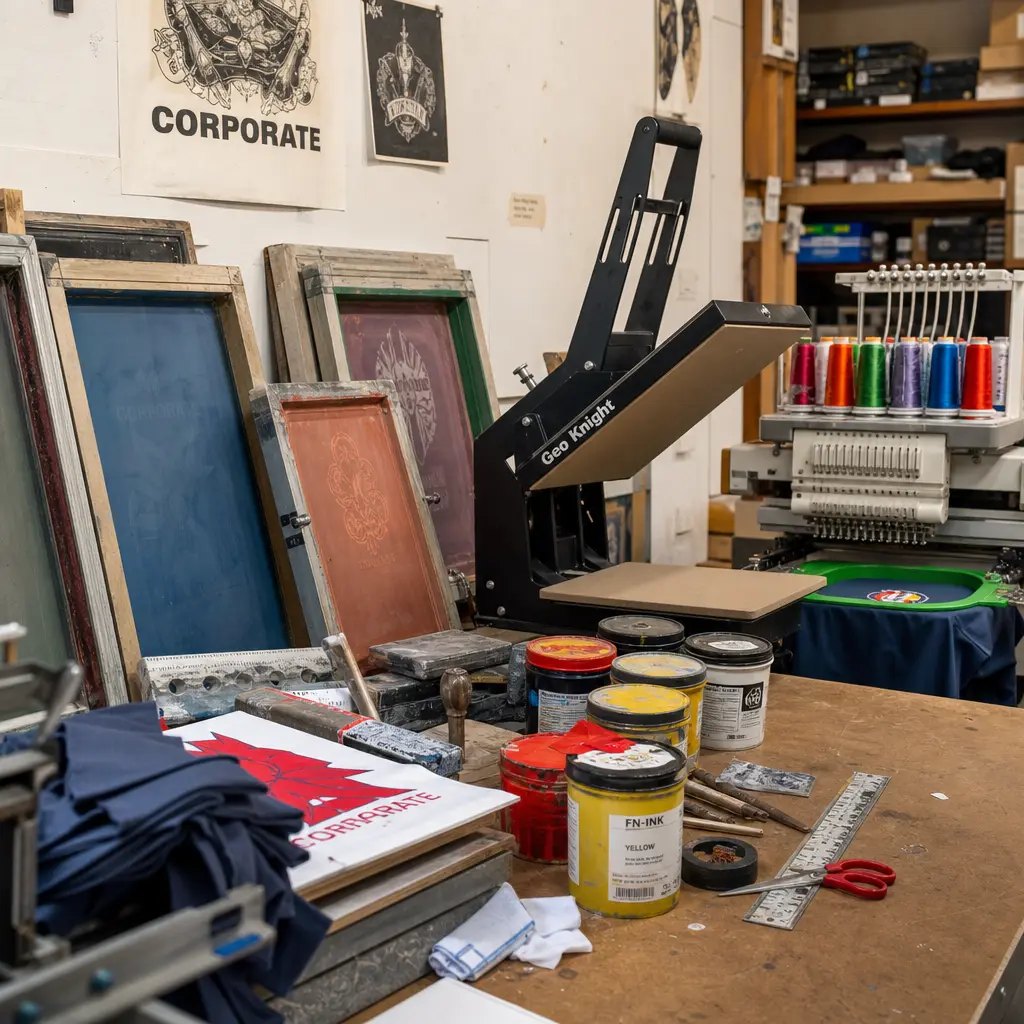
University bookstore products often carry licensed marks, department logos, mascots, slogans, and school colors. Decoration should be selected around the fabric surface, canvas color, artwork complexity, order quantity, and licensing rules. Screen print is often the practical choice for bold one-color or two-color designs on cotton canvas. It controls unit cost once screens are prepared and works well for large front-flap logos. On dark canvas, an underbase may be needed to keep the print bright.
Embroidery can make a messenger bag feel more premium, especially for smaller marks, crests, initials, or alumni editions. It is less suitable for large dense artwork on lighter canvas because stitching can pucker the panel or make the flap stiff. Fine university lettering may distort if the embroidery size is too small. Ask the supplier to review stitch count, backing, minimum text height, and placement before approving artwork.
Woven labels are useful for repeat bookstore programs. The same bag body can support different departments or collections with less risk than reprinting the full panel. A woven side label, front patch, or internal brand label can make the product feel more retail-ready. Labels have their own MOQ and setup requirements, so quote them separately. Heat transfers can reproduce detail and gradients, but they need adhesion, cracking, flexibility, and hand-feel testing on actual canvas.
Licensed colors need careful approval. Pantone references help, but matching ink on textured cotton is different from matching ink on coated paper or a digital screen. Natural flecks affect perceived color. Dyed canvas can shift the print tone. Approve a decoration strike-off on the actual production fabric, not on a smooth substitute, and check size, position, opacity, edge sharpness, and acceptable variation.
- Screen print: best for bold bookstore logos, solid artwork, and medium to large wholesale runs.
- Embroidery: best for premium small marks on heavier canvas or reinforced panels.
- Woven label: useful for multi-department programs and repeat SKUs with controlled branding.
- Heat transfer: suitable for detailed art only after adhesion, cracking, and hand-feel testing.
- Patch application: adds perceived value but requires edge, stitch, and placement control.
- Inside label: supports brand presentation, care information, fiber content, and retail compliance.
Understand MOQ and Customization Tradeoffs
MOQ is shaped by more than a factory’s preference. Fabric sourcing, dyeing minimums, cutting efficiency, hardware purchasing, print setup, label weaving, labor planning, and packing materials all influence the number. Natural canvas and black canvas may support lower minimums because suppliers often hold stock fabric. Custom school colors, special strap colors, custom lining, branded hardware, or woven labels can raise MOQ even when the bag design looks simple.
Bookstore buyers can negotiate more clearly by separating must-have customization from optional upgrades. A standard natural canvas body with front screen print and a woven side label may allow a lower opening quantity than a fully custom dyed body with matching straps, custom lining, special zipper tape, and custom metal pullers. If the goal is to launch quickly for back-to-school, stock body colors and standard hardware finishes may be the better material decision.
Discuss MOQ by component and by SKU. A supplier may accept the total order quantity while still requiring a minimum per body fabric color, strap color, print design, label design, or hardware finish. A woven label MOQ can exceed the bag order quantity, leaving extra labels unless the program repeats. If the bookstore wants versions for several colleges, clubs, or departments, ask whether designs can be combined in one production run. Combining is easier when the body fabric, hardware, lining, and packing stay the same.
Tier pricing only helps when it is tied to the same specification. A quote for 500 pieces in 12 oz unlined canvas and a quote for 1,000 pieces in 14 oz lined canvas does not show the true volume discount. Ask for tier pricing at the same material level, then request upgrade costs separately. That makes the real cost drivers easier to see.
- Stock natural canvas usually supports lower MOQ than custom dyed canvas.
- Each fabric color, strap color, lining color, or hardware finish may carry its own minimum.
- Each logo design can require separate screens, setup time, and production batching.
- Custom woven labels may have a label MOQ that exceeds the bag order quantity.
- Retail hangtags, barcode stickers, and special packing can add labor even if MOQ is unchanged.
- Combining department designs is easier when the body fabric, hardware, lining, and packing stay identical.
Build a Quote Sheet That Reveals Cost
A useful supplier quote should show why one canvas messenger bag costs more than another. A single unit price is not enough for procurement review because savings may come from lighter fabric, narrower webbing, plastic hardware, no lining, thinner thread, weaker packing, or missing inspection requirements. The quote should state material details, construction, decoration, packing, carton data, sample charges, setup charges, lead time, Incoterm, and quote validity.
Versioned quoting is one of the cleanest ways to compare material choices. Ask the supplier to quote the same bag dimensions in economy, standard, and premium versions. The economy version might use 12 oz unlined canvas and screen print. The standard version might use 14 oz canvas with lining and metal adjuster. The premium version might use 16 oz canvas, or 14 oz lined canvas with a padded sleeve and woven label. This approach shows whether each upgrade supports the intended retail price.
Ask for landed-cost inputs early. Canvas messenger bags can be bulky, especially with padding, gussets, and metal hardware. Carton CBM, units per carton, gross weight, and packing density affect freight and warehouse handling. A heavier bag with a lower FOB price may cost more after freight if it packs inefficiently. On the other hand, over-compressed packing can damage the product. The quote needs enough packing detail to model cost per sellable unit.
A detailed quote also helps internal approval. Bookstore buyers may need to explain supplier selection to licensing, finance, merchandising, or operations teams. Clear quote detail shows why a standard retail bag costs more than a giveaway and why a premium alumni edition needs a different margin target. It also reduces disputes after order placement because the approved specification is tied to the approved price.
- Quote by version: economy, standard retail, and premium retail using the same bag size.
- Separate one-time charges: sample, screen, artwork, label setup, mold, testing, and courier cost.
- List material details: canvas weight, lining fabric, padding, webbing, thread, hardware, and closure.
- List packing details: individual bag, paper band, hangtag, barcode, carton quantity, carton size, and CBM.
- State commercial terms: MOQ, tier price, lead time, payment terms, Incoterm, port, and quote validity.
- Ask suppliers to identify cost-saving alternatives that do not weaken load-bearing construction.
Approve Samples With Practical Tests
Sample approval should treat the messenger bag as a retail product, not only as a logo sample. A bag can look attractive when empty and still fail once it is filled with books, a laptop, a charger, and accessories. Load the sample, wear it, hang it, open and close it, and place it on a shelf or hook. This quickly reveals strap comfort, flap alignment, snap position, zipper access, bottom sag, and pocket usability.
When the schedule allows, use three material checkpoints. First, approve fabric and color swatches. Second, approve decoration strike-offs on the actual canvas surface. Third, approve a pre-production sample using bulk fabric, bulk hardware, production thread, final decoration, final labels, and proposed packing. If any substitute material appears in a sample, record it in writing and require correction before bulk cutting.
Measure the sample against the specification before approving appearance. Check body width, body height, gusset, flap depth, strap length range, pocket openings, and sleeve dimensions. Test the closure while the bag is loaded because books and devices change flap tension. If the bag has a zipper top, make sure it opens wide enough for textbooks and laptops. If it has magnetic snaps, the magnets should meet naturally without forcing the flap into place.
Sample comments should be specific and supported with photos. Notes such as make it stronger or improve stitching are too vague for production. Better comments identify the exact area, the required change, and the acceptable result: add bartack at upper strap join, increase flap depth by 1.5 cm, move logo 2 cm upward, reduce sleeve width by 1 cm, or change thread to tonal color. Written sample records become the reference for inspection.
- Measure every approved sample against the spec sheet before signing off.
- Load the bag with the intended campus contents and check strap pull, sag, and comfort.
- Open and close zippers, snaps, adjusters, and pockets repeatedly during approval.
- Rub printed logos dry and damp to check curing, ink transfer, and surface resistance.
- Check embroidery for puckering, small-letter distortion, loose thread, and backing residue.
- Photograph approved details so production, QC, and the buyer share one reference.
Plan Packing and QC Before Shipment
Packing affects landed cost, product condition, and receiving efficiency, so it should be decided before production starts. Canvas messenger bags are bulkier than flat totes, especially when they include lining, padding, metal hardware, or structured gussets. Flat packing can reduce carton volume, but too much compression can create permanent flap creases, distorted padding, zipper marks, or hardware impressions on the printed panel.
For campus retail, decide whether each bag needs an individual polybag, recycled polybag, paper band, hangtag, barcode sticker, or no individual packaging. Individual bags protect against dust and moisture during ocean freight and warehouse handling, but they may conflict with plastic-reduction policies. Paper bands reduce plastic and look cleaner, but they offer less moisture protection. If bags ship without individual packaging, carton lining and moisture control become more important.
Quality control should be agreed before bulk production. Canvas messenger bags combine fabric, sewing, hardware, decoration, packing, and carton accuracy, so inspection needs more than a quick visual review. Define tolerances and critical defects in the purchase order or inspection checklist. Defects that affect logo appearance, carrying safety, barcode accuracy, or retail shelf condition deserve special attention.
AQL inspection can be useful, but product-specific checks are still needed. Fabric weight should be checked against the approved swatch. Finished dimensions should be measured across a sample set. Strap attachment should be pull-tested according to intended load. Zippers, snaps, and adjusters should be operated repeatedly. Printed logos should be checked for adhesion, color, registration, cracking, and placement. Carton inspection should verify SKU separation, barcode readability, packing count, carton strength, moisture condition, and gross weight.
- Flat pack only if the flap, padding, and logo area recover without permanent creasing.
- Protect metal hardware so it does not scratch canvas, transfer marks, or dent printed panels.
- Set tolerances for fabric weight, finished dimensions, shade, logo placement, and strap length.
- Classify critical defects such as unsafe strap failure, wrong logo, wrong SKU, unreadable barcode, or severe staining.
- Inspect carton markings, carton strength, moisture protection, packing count, and SKU separation.
- Require photo records and written approval before shipment release when inspection is remote.
Specification comparison for buyers
| Spec decision | Recommended option | When it fits | Buyer risk to check |
|---|---|---|---|
| Main canvas weight | 12 oz to 16 oz cotton canvas, generally about 380-540 GSM depending on weave and finish; 12 oz to 14 oz is the practical retail middle range | Paid bookstore retail, orientation kits with better perceived value, department programs, and daily student carry where the bag should not feel flimsy or overly rigid | Do not compare ounce labels alone. Request GSM, yarn and weave description, finish, shrinkage expectation, and a swatch from the fabric type or fabric lot intended for production |
| Economy campus program | 10 oz to 12 oz canvas, usually about 300-400 GSM, with reinforced strap joins, simplified flap, minimal pockets, and standard screen print | Admissions events, welcome packs, club promotions, and short-term campus programs where the bag is not sold as a laptop commuter product | Thin fabric is not the only failure point. Weak webbing, narrow seam allowance, missing bartacks, poor thread tension, and undersized hardware can fail before the canvas body |
| Standard bookstore retail version | 12 oz to 14 oz canvas, adjustable cotton webbing strap, internal slip pocket, reinforced bottom gusset, and magnetic snap or zipper-top closure | Most campus bookstore shelves where buyers need a credible branded bag at an accessible retail price | Confirm loaded performance with books and a device. Empty samples can hide flap misalignment, snap strain, bottom sag, and strap twisting |
| Premium bookstore retail version | 14 oz to 16 oz canvas or 14 oz canvas with lining, padded sleeve, metal adjuster, branded woven label, and bound or lined internal seams | Alumni merchandise, college department editions, staff gifts, co-branded programs, and higher-priced campus retail | Heavier fabric increases sewing difficulty, needle-hole visibility, packed weight, and freight cost. Compare landed cost per sellable unit, not FOB price alone |
| Lining and laptop protection | 210D or 300D polyester lining with bound seams, foam-padded sleeve, and defined device dimensions; specify foam at 3-5 mm when light padding is required | Daily student, commuter, faculty, and alumni tech bags where the item must carry a laptop, charger, notebooks, and books | Laptop pocket wording is vague. Specify sleeve internal size, foam thickness, sleeve bottom clearance, closure, and whether the sleeve is padded on one side or both sides |
| Logo decoration | Screen print for bold school marks, embroidery for small premium marks, woven label for repeat SKUs, and heat transfer only after adhesion and flex testing | Screen print controls cost on larger runs; embroidery adds texture; labels support multi-department versions using the same bag body | Approve decoration on actual bulk canvas. Check print cracking, dye bleed, color shift, embroidery puckering, label placement, and licensed color tolerance |
| Hardware selection | Metal D-rings, rectangular rings, triglide adjusters, zipper sliders, and magnetic snaps in nickel, antique brass, gunmetal, or matte black for retail bags; plastic only for lightweight promotion | Metal hardware improves shelf appeal, strap adjustment, and perceived durability when the bag carries books or devices | Low-grade plating can scratch, oxidize, snag fabric, or transfer marks. Request finish type, hardware dimensions, and inspection for burrs, rust, sharp edges, and plating consistency |
| Closure system | Magnetic snaps under flap for quick access; zipper top plus flap for higher security; hook-and-loop only when noise, lint pickup, and lower perceived value are acceptable | Magnetic snaps suit casual retail bags; zipper tops suit commuter, faculty, travel, and higher-priced versions | Closure position must be checked on a loaded sample because textbooks and laptop thickness change flap tension, zipper access, and snap alignment |
| Packing method | Individual recycled polybag or approved paper band, flat packed without hard creasing, strap and hardware protected, desiccant as needed, export carton with clear SKU labeling | Bookstore receiving, distributor allocation, warehouse scanning, mixed campus programs, and retail shelf handling | Over-compression can create permanent flap creases and hardware dents. Confirm units per carton, carton size, gross weight, CBM, barcode placement, carton marking, and moisture-control plan |
Buyer checklist before sampling
- Define the commercial role before requesting prices: giveaway, standard retail, premium retail, alumni merchandise, department program, laptop commuter bag, or staff gift.
- State target canvas weight in both ounces and GSM, and ask whether the quoted weight is measured before dyeing, after dyeing, after washing, or after coating.
- Request swatches for natural, dyed, washed, and coated canvas if color, stiffness, shrinkage, hand feel, or logo coverage will affect approval.
- Specify finished dimensions with tolerances: body width, body height, gusset width, flap depth, strap width, adjustable strap range, pocket opening, and laptop sleeve size.
- Define the intended carry load in practical terms, such as two textbooks, 13-inch laptop, 15-inch laptop, charger, water bottle, notebook, or mixed campus use.
- Choose lining, padding, pocket count, hardware finish, closure type, thread color, seam binding, internal label, care label, hangtag, and barcode requirements before comparing unit prices.
- Provide vector artwork, Pantone references, print size, print position, logo clearance, licensed color rules, and any university trademark restrictions on scaling or placement.
- Ask for decoration tests on actual bulk canvas, including screen-print strike-off, embroidery sample, label placement sample, or heat-transfer adhesion sample as applicable.
- Require a pre-production sample using production fabric, production thread, bulk hardware, approved decoration method, final trims, and final packing before bulk cutting.
- Set QC thresholds for fabric weight, shade variance, seam strength, strap pull, print adhesion, embroidery puckering, zipper function, snap alignment, carton condition, and barcode readability.
Factory quote questions to send
- What exact canvas weight will be used in ounces and GSM, and is the weight measured before finishing, after dyeing, after washing, or on the completed fabric?
- Can you quote 10 oz, 12 oz, 14 oz, and 16 oz versions using the same dimensions, pocket layout, hardware, and decoration so we can compare true material cost differences?
- Is the proposed canvas stock fabric, custom dyed fabric, washed canvas, organic cotton canvas, recycled cotton blend, or coated canvas, and what MOQ applies to each option?
- What is the minimum order quantity by body fabric color, strap color, lining color, print design, hardware finish, woven label, hangtag, barcode, and packing method?
- Which construction points will be reinforced: strap joins, flap corners, side seams, bottom gusset, pocket openings, zipper ends, laptop sleeve top edge, and D-ring tabs?
- What webbing width, thickness, and fiber content will be used for the shoulder strap, and what adjuster size, D-ring size, and metal thickness match it?
- What print method do you recommend for our logo on this canvas color, and what are the limits for fine lines, gradients, underbase, Pantone matching, and curing?
- Can you provide a decoration strike-off on the same canvas surface that will be used in bulk production before we approve the pre-production sample?
- Can you provide a pre-production sample using bulk fabric, bulk hardware, production thread, final logo method, final labels, care label, barcode, and proposed export packing?
- What are the carton dimensions, units per carton, net weight, gross weight, estimated CBM, palletization assumptions, and carton drop or compression limits for each packing plan?
Quality-control points to confirm
- Fabric weight should match the approved specification within the agreed tolerance, commonly plus or minus 5 percent unless the buyer sets tighter control for a licensed retail program.
- Bulk fabric shade should be compared against the approved lab dip or swatch under consistent lighting, especially for school colors, dyed straps, contrast binding, and repeat replenishment programs.
- Finished bag dimensions should be measured flat and loaded, with tolerance defined for width, height, gusset, flap depth, strap range, pocket opening, and laptop sleeve internal size.
- Strap attachment should be tested with a practical load or pull method based on intended use, with bartacks, box stitching, or reinforced seams at every load-bearing point.
- Stitching should be checked for skipped stitches, broken thread, uneven tension, loose ends, seam slippage, crooked topstitching, and inconsistent stitch density on visible panels.
- Print adhesion should be tested by dry rub, damp rub, tape pull, and light folding on actual canvas after the ink has cured for the supplier's stated curing period.
- Embroidery should be checked for puckering, thread breaks, backing residue, distorted letters, sharp reverse-side edges, and placement consistency against the approved sample.
- Zippers, magnetic snaps, adjusters, sliders, and D-rings should be opened, closed, adjusted, and pulled repeatedly during inspection, not only visually checked.
- Lining should be inspected for raw edges, loose binding, trapped threads, pocket size consistency, sleeve padding placement, and seam strength at high-use openings.
- Hardware finish should be checked for burrs, plating scratches, oxidation, color mismatch, sharp edges, and marks transferred onto canvas during packing or transit.