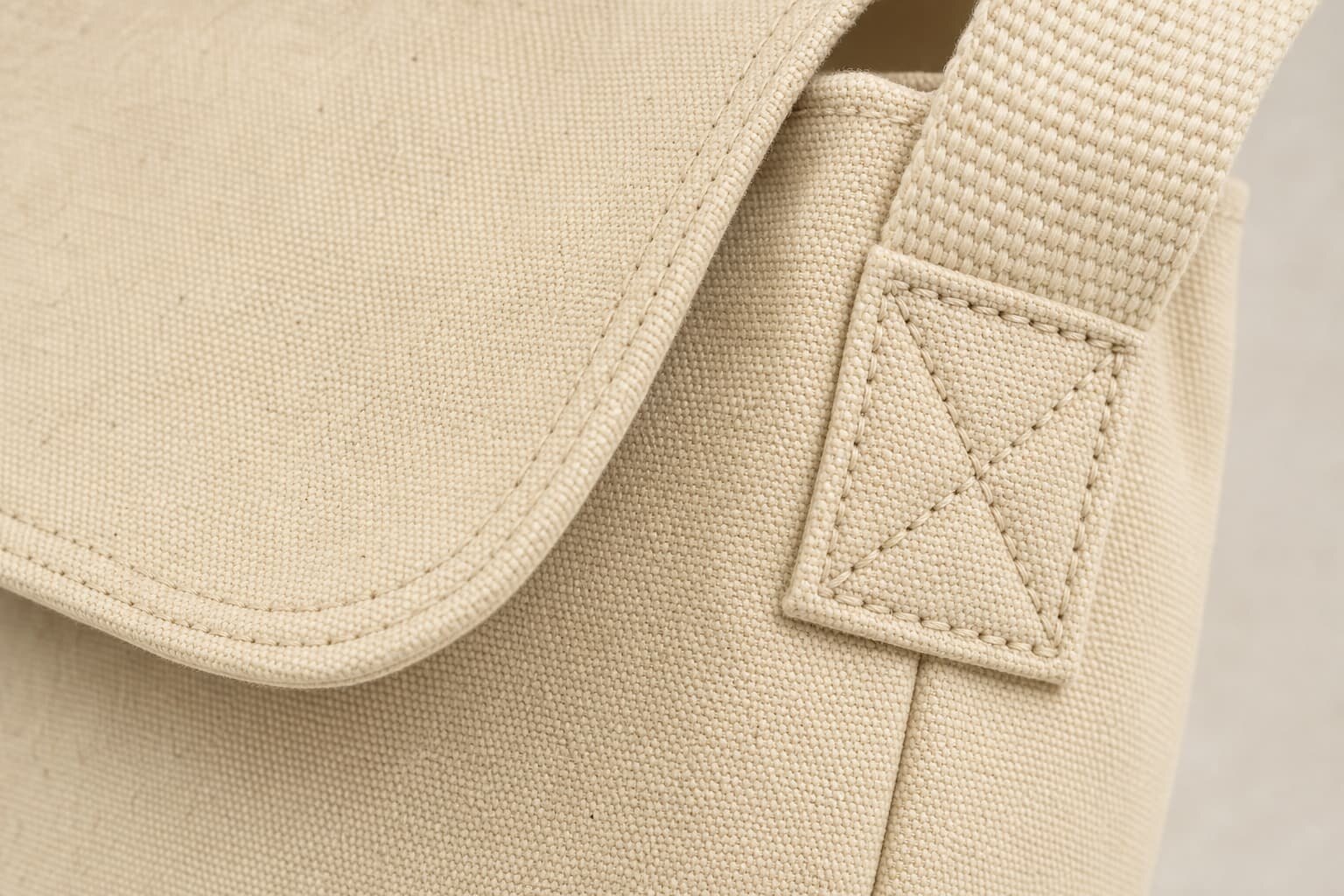
1. The shipping plan starts before the bag is quoted
For wholesale canvas messenger bags, shipping problems usually begin at the RFQ stage, not at the port. A buyer asks for a messenger bag, receives a low unit price, and only later discovers that the quote used lighter canvas, fewer compartments, thin straps, bulk packing, or no retail labels. By the time cartons are ready, the freight cost, carton volume, and warehouse receiving requirements no longer match the buyer's plan.
A practical shipping plan should connect product construction, carton packing, inspection timing, and freight handoff. Canvas messenger bags are not flat cotton totes. They often include flaps, gussets, hardware, shoulder straps, lining, inner pockets, and printed or sewn branding. Each detail affects CBM, gross weight, production speed, defect risk, and the final landed cost.
- Use the same approved sample to confirm product spec, packing style, and carton method.
- Ask for estimated CBM and gross weight before approving the order, not after goods are packed.
- Treat hardware, lining, and strap construction as shipping-related decisions because they change weight and carton size.
- Do not compare supplier quotes until fabric GSM, logo method, packing, and trade term are aligned.
2. Define the messenger bag construction that drives carton volume
The first shipping variable is the bag shape. A simple flat messenger bag with a flap can be packed tightly, while a structured bag with a wide gusset, padded laptop sleeve, thick buckle tabs, and reinforced base consumes more carton space. If the buyer only gives a front size, the factory may quote a slim version that looks correct in a photo but does not hold the intended product load.
For RFQ clarity, state the finished size in width, height, and gusset depth. Include flap height, shoulder strap width and adjustable length, inside pocket requirements, and whether the bag must stand partially filled. A 38 x 30 x 10 cm messenger bag is a different freight item from a 38 x 30 cm flat document bag, even if both are called canvas messenger bags.
- Finished size example: W38 x H30 x D10 cm, tolerance plus or minus 1 cm.
- Flap requirement: full flap, half flap, or zipper top with decorative flap.
- Strap requirement: 3.8 cm cotton webbing, adjustable from 80 to 140 cm.
- Structure requirement: soft unpadded, foam-padded laptop compartment, or reinforced base panel.
- Pocket requirement: inner zipper pocket, slip pocket, pen slots, or no inner compartments.
3. Choose fabric weight with freight, durability, and MOQ in mind
Canvas weight is one of the biggest quote and shipping variables. A 10 oz canvas messenger bag may be suitable for lightweight promotional use, but it can feel weak if the buyer expects a retail shoulder bag. A 12 oz / about 407 GSM canvas is a common middle option for branded retail and corporate programs. A 16 oz / about 542 GSM canvas gives a more substantial hand feel but increases sewing difficulty, weight, carton load, and unit cost.
Procurement teams should ask for both oz and GSM because suppliers may use local fabric descriptions differently. Also check whether the canvas is natural, dyed, washed, or brushed. Dyed dark canvas can have rubbing issues. Washed canvas may shrink and wrinkle more, changing print placement and final size. Custom-dyed canvas often has a higher MOQ than the sewing MOQ, so the color decision can control the whole order quantity.
- 10 oz / around 339 GSM: lighter programs, lower freight weight, less premium feel.
- 12 oz / around 407 GSM: balanced option for many wholesale canvas messenger bags.
- 14 oz / around 475 GSM: better body, higher sewing and material cost.
- 16 oz / around 542 GSM: heavy-duty look, larger carton weight, stronger needle and seam control needed.
- Ask for fabric shrinkage expectation if printing or washing is involved.
4. Match print method to the flap, fabric, and inspection standard
Most canvas messenger bag logos are placed on the front flap, front lower panel, side label, strap, or inside woven label. The front flap is visible but it is also a moving part. It bends, rubs against hardware, and may wrinkle during packing. A large screen print on a heavy flap needs enough curing and correct ink selection, otherwise the logo can crack or transfer inside the carton.
Screen printing is usually efficient for solid logos and medium to large quantities. Heat transfer can help with complex multi-color artwork or smaller runs, but it must be tested on textured canvas. Embroidery gives a premium appearance but adds thread density, possible puckering, and longer production time. A woven patch or sewn side label is often safer for small detailed branding, especially when the buyer wants a retail look without a very large front print.
- Screen print: best for solid logos, larger flat areas, and controlled Pantone matching.
- Heat transfer: useful for detailed artwork but requires adhesion and wash/rub testing on canvas.
- Embroidery: premium but check puckering, backing material, and needle holes.
- Woven patch: good for detailed logos, but confirm patch size, stitch border, and placement tolerance.
- Side label: economical for subtle brand identity and easier to keep consistent across colorways.
5. Understand MOQ logic before comparing supplier prices
MOQ for canvas messenger bags is not only a sewing quantity. It can be controlled by greige fabric purchase, dyeing minimum, hardware plating, webbing color, custom lining, label production, and print setup. A factory may accept 300 pieces using available fabric and standard hardware, but the same design may require 1,000 or more pieces if the buyer requests custom-dyed 16 oz canvas, matching webbing, antique brass hardware, and custom woven labels.
When comparing quotes, separate the standard MOQ from each custom component MOQ. Otherwise, one supplier may quote with stock black webbing and stock silver hardware, while another includes custom-dyed strap and branded zipper pulls. The second quote may look higher but may be more accurate for the final retail product.
- Low MOQ is easier with stock natural, black, or navy canvas.
- Custom fabric color often raises MOQ and adds dyeing lead time.
- Custom hardware color can require minimum plating quantity or surcharge.
- Printed logos have setup costs that affect small orders more strongly.
- Retail packaging, barcode labels, and hangtags can have their own MOQ.
6. Build a lead time plan with sample, material, sewing, and packing stages
A realistic lead time for wholesale canvas messenger bags should be broken into stages. Sample making with stock fabric can be quick, but a pre-production sample using actual dyed canvas, actual print, actual lining, and actual hardware takes longer. If the buyer approves a sample made from substitute material, the final production may still surprise the marketing or retail team.
For planning, separate sample lead time, bulk material preparation, cutting and printing, sewing, inline checking, final inspection, packing, and forwarder pickup. The factory cannot complete accurate final packing data until the carton plan is tested, but it should provide a reasonable estimate early. If the buyer needs a fixed delivery window, the order should include approval deadlines for artwork, sample comments, carton marks, and shipping documents.
- Sample stage: confirm size, construction, logo method, and packing idea.
- Material stage: confirm canvas, lining, webbing, hardware, labels, and print materials.
- Pre-production stage: approve one complete bag before bulk cutting or full sewing.
- Bulk stage: control printing before sewing if the logo is panel-printed.
- Packing stage: verify carton count, carton marks, and packing list before pickup.
7. Set packing rules that protect shape without wasting freight
Canvas messenger bags are usually shipped flat, folded once, or lightly shaped depending on structure. The cheapest packing method is not always the lowest landed cost if it creates crushed flaps, bent buckles, or distorted straps that the buyer must rework at the warehouse. For retail programs, the packing method should protect presentation as well as reduce CBM.
A sensible packing plan defines inner packing, strap arrangement, carton quantity, moisture protection, and carton strength. If the bag has a large flap logo, avoid folding directly through the print. If it has metal buckles, prevent hardware from pressing into printed panels. If the shipment travels by sea, include moisture control suitable for the route and season, but do not use silica gel as a substitute for dry goods and dry cartons.
- Inner packing: individual polybag, paper band, tissue wrap, or no inner bag depending on market rules.
- Strap packing: strap folded inside bag or secured under flap to avoid tangling.
- Carton quantity: commonly 20-50 pieces per carton depending on bag size and structure.
- Carton data: request L x W x H, gross weight, net weight, and CBM per carton.
- Protection: avoid direct buckle pressure on logo prints and avoid over-compression.
8. Prepare carton marks and documents before the goods are finished
Carton marks are often treated as a warehouse detail, but late changes can delay shipment. Importers and distributors should provide the factory with shipping mark format, PO number, item number, carton number sequence, destination, country-of-origin wording, and any retailer routing labels early. If barcode labels are required, the buyer should specify label size, code type, placement, and whether each bag or each carton needs scanning.
The packing list should match the physical carton plan. For mixed colors or mixed SKUs, confirm whether each carton contains one SKU only or assorted colors. Retail buyers often prefer one SKU per carton for receiving accuracy, while distributors may accept mixed cartons for smaller orders. The decision affects picking, packing labor, carton labels, and inspection sampling.
- Provide carton mark artwork before mass packing starts.
- Confirm item number, color name, quantity per carton, and carton sequence.
- State whether barcodes go on hangtags, polybags, master cartons, or all three.
- Ask for a packing list draft before final carton sealing when possible.
- Check that invoice, packing list, and carton labels use the same product description.
9. Inspect the shipment-ready goods, not only the nice sample
A messenger bag sample can look clean while bulk production has inconsistent flap length, weak strap stitching, loose threads, dirty canvas, crooked labels, or hardware scratches. The final inspection should represent packed goods from actual production cartons. If inspection happens before final packing, the buyer still needs packing photos and carton data confirmation after sealing.
Inspection criteria should include function, appearance, measurement, workmanship, print quality, and packing. For canvas bags, stains and shade variation must be checked carefully because natural fabric shows marks more easily than synthetic bags. For dyed dark canvas, rubbing and color transfer should be tested. For hardware, every sampled bag should be opened and closed, not only viewed from outside.
- Measurement: width, height, gusset, flap, strap width, and adjustable strap range.
- Workmanship: skipped stitches, broken threads, seam allowance, bar tack position, and raw edges.
- Function: zipper, magnetic snap, buckle, adjuster, Velcro, and pocket access.
- Print: placement, color, curing, cracking, rubbing, and contamination.
- Packing: piece count, carton strength, carton marks, inner packing, and deformation risk.
10. Compare quotes by landed readiness, not only unit price
A low unit price is not useful if it excludes the packing, labeling, inspection access, carton strength, or shipping data needed for import. When procurement teams compare suppliers, the quote should be normalized. Ask each factory to quote the same fabric GSM, same size, same lining, same logo method, same hardware, same inner packing, same carton plan, and same trade term. Only then does the unit price mean something.
For a shipment plan, the best supplier is usually the one who can explain the relationship between product specification and export packing. A factory that asks about carton marks, inspection timing, logo placement, fabric weight, and forwarder handoff early is helping reduce risk. A quote with missing data may still be usable, but the buyer should not place a deposit until those gaps are closed in writing.
- Normalize quotes by fabric GSM, not just bag size.
- Confirm whether the price includes print setup, labels, polybags, hangtags, and export cartons.
- Compare estimated CBM and gross weight because freight can change the landed cost ranking.
- Check whether the supplier can support third-party inspection before shipment.
- Require written confirmation of trade term, port, payment terms, production lead time, and packing details.
Specification comparison for buyers
| Spec decision | Recommended option | When it fits | Buyer risk to check |
|---|---|---|---|
| Main fabric weight | 12 oz / 407 GSM cotton canvas for standard retail; 16 oz / 542 GSM for heavier utility style | 12 oz works for promotions, campus, and lifestyle retail; 16 oz fits tool, outdoor, or premium programs | Quote may look cheaper if supplier uses lower GSM or loose-weave canvas; require fabric GSM tolerance and swatch approval |
| Lining structure | Unlined for low-cost promo; 210D/300D polyester lining for retail messenger bag | Lining improves inside finish and hides seam allowances, useful for retail shelves and laptop-style bags | Unclear lining spec changes carton volume, sewing time, and inspection criteria |
| Print method | Screen print for solid logos; heat transfer for multi-color small runs; embroidery or woven patch for premium look | Choose based on logo complexity, color count, order quantity, and wash/rub resistance expectations | Large flap prints can crack or misalign if canvas shrinkage and print placement are not controlled |
| Closure and hardware | Magnetic snap or metal buckle with reinforced stress points | Magnetic snap is faster and cleaner; buckle looks rugged but adds labor and weight | Hardware color, plating, pull strength, and rust resistance are often omitted from RFQs |
| Packing method | Each bag in recyclable polybag or paper band, then flat-packed 20-50 pcs per export carton depending on size | Flat packing reduces freight volume and flap creasing if carton height is controlled | Over-compressed cartons deform flaps, straps, and corners; request carton drop-test grade and packing photo |
| Shipping handoff | Finished goods inspection before carton sealing, then carton mark confirmation before forwarder pickup | Best for FOB, EXW, or DDP programs where buyer needs clean documentation | Late carton mark changes and missing packing list data delay customs and warehouse receiving |
Buyer checklist before sampling
- Confirm finished bag size, gusset depth, strap width, and tolerance before sample approval.
- Specify canvas weight in oz and GSM, not only fabric name.
- State whether the bag is unlined, lined, padded, or includes internal pockets.
- Lock print method, logo size, Pantone color, position from seams, and artwork file format.
- Define hardware material, color, plating, buckle type, magnetic snap size, and pull strength expectation.
- Approve a pre-production sample with actual fabric, actual logo, actual trims, and proposed packing.
- Request carton dimensions, gross weight, net weight, pieces per carton, and estimated CBM before deposit.
- Set AQL level or inspection method, including function checks for strap, zipper, snap, and stitching stress points.
- Confirm carton marks, barcode labels, polybag warning text, country-of-origin label, and retail hangtag rules.
- Ask the factory to provide a shipment-ready packing list draft before mass production is completed.
Factory quote questions to send
- What canvas weight are you quoting in oz and GSM, and what is the acceptable GSM tolerance?
- Is the quoted bag lined or unlined, and what fabric is used for the lining?
- Which print method is included in the unit price, and how many logo colors are covered?
- What MOQ applies to the fabric color, print method, hardware color, and custom label separately?
- What is the sample lead time using available fabric, and what changes if custom-dyed canvas is required?
- How many pieces per export carton are planned, and what are the estimated carton size, gross weight, and CBM?
- Are inner polybags, hangtags, barcode stickers, silica gel, or paper inserts included in the quote?
- What inspection standard do you use for stitching, print alignment, hardware function, stains, and carton damage?
- At what production stage can a buyer or third-party inspector perform DUPRO or final inspection?
- Which trade term is quoted: EXW, FOB port, CIF, DDP, or another term, and what charges are excluded?
Quality-control points to confirm
- Measure fabric GSM from production yardage, not only from sample swatch.
- Check finished bag size after sewing, including flap length, gusset depth, and strap adjustment range.
- Inspect stress points: strap anchors, buckle tabs, magnetic snap backers, zipper ends, and side seam intersections.
- Confirm print placement using a measurement from fixed seams, not visual centering only.
- Perform rub test on dark canvas and printed logos to catch color transfer before shipment.
- Open and close every inspected buckle, zipper, snap, and adjuster to confirm function.
- Check inside finishing for loose threads, skipped stitches, exposed raw seams, and needle holes.
- Review packing after cartons are filled to confirm piece count, deformation, moisture protection, and carton marks.