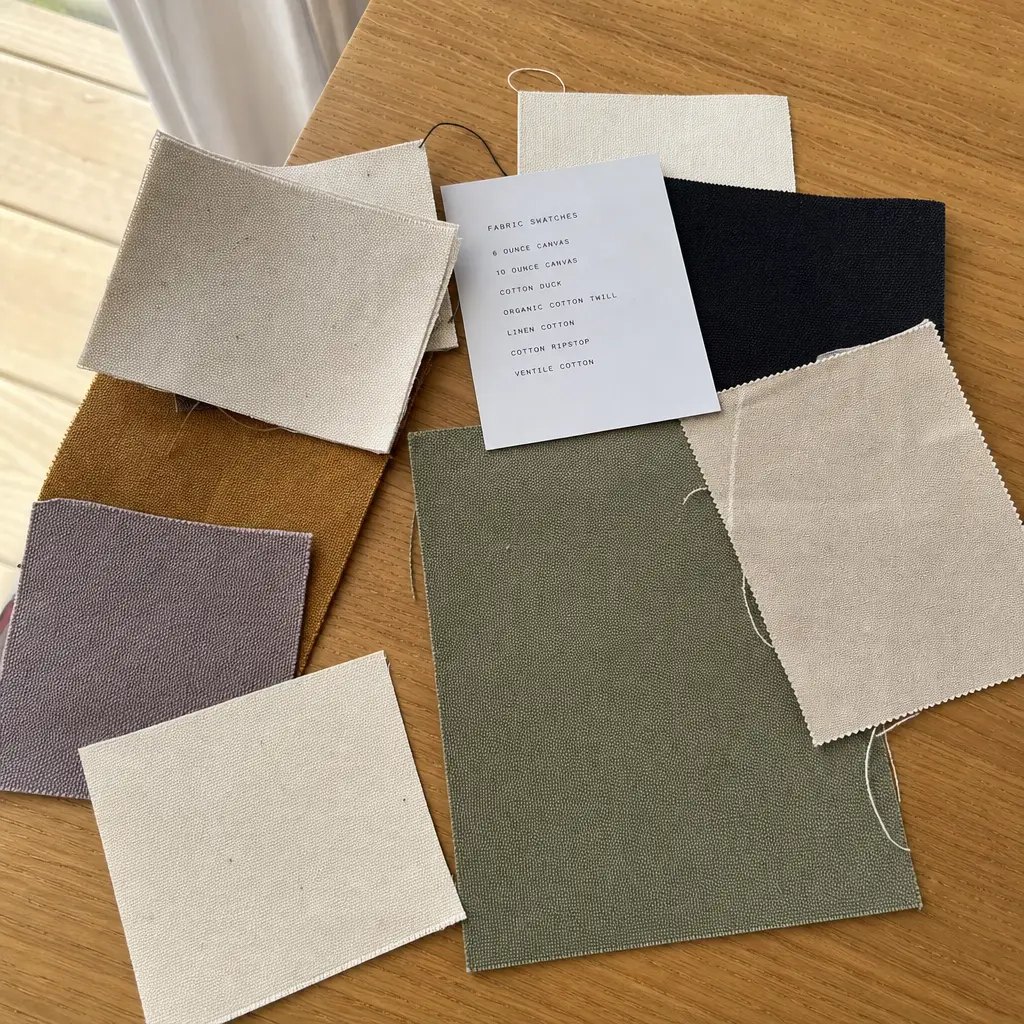
Why subscription box buyers need a tighter QC plan for canvas messenger bags
A canvas messenger bag looks simple on paper, but for subscription boxes it carries more risk than many buyers expect. The bag is usually the visible hero item, so a small problem in size, print, or packing becomes obvious as soon as the box is opened. If the bag arrives wrinkled, smells oily, or cannot fit the planned insert set, the whole box presentation suffers.
The mistake most teams make is treating the bag like a generic tote. A messenger bag has more variables: strap build, pocket structure, closure type, and the way it folds into the box. That means the RFQ and inspection plan need to be more specific than a normal canvas pouch or flat tote order.
- Define the end use: display item, carry bag, or reusable retail piece.
- Set the dimensional tolerance around what must fit inside the box, not only the bag’s flat size.
- Treat print placement as a functional requirement, not only a branding detail.
Start with the spec that drives both quality and cost
For wholesale canvas messenger bags, the base spec usually starts with fabric weight, bag shape, strap width, and whether you need lining. In practice, 12oz to 14oz cotton canvas is the most common range for subscription box programs because it balances handfeel, print clarity, and cost. Below 10oz, the body can collapse and show wrinkles quickly. Above 14oz, sewing becomes slower and cartons get heavier.
The right choice depends on how the bag is used after the box is opened. If it is meant to carry notebooks, samples, or retail inserts, a 14oz unwashed canvas with reinforcement at the strap point is safer. If it is mostly a premium giveaway and the visual appearance matters more than load, a washed 12oz canvas can look softer and more consumer-friendly.
- Canvas GSM is often easier to compare across suppliers than ounces alone; ask for both if the factory can provide it.
- If the bag has a gusset, specify the gusset depth separately because some factories quote only flat width.
- If the lining is optional, price both lined and unlined versions in the same RFQ so you can compare landed cost.
Comparison of sourcing routes and what each one hides
The right supplier route depends on whether you are building a one-time seasonal box or a repeated private-label program. A trading company may respond faster and combine product, print, and packing under one quote, but the underlying factory details can be less transparent. A direct factory usually gives better control over seams, fabric consistency, and lead time, but the buyer needs to write a tighter RFQ and manage approvals more actively.
For subscription box programs, the cheapest quote is often not the lowest risk. The real cost shows up when bags arrive with loose stitch ends, poor print registration, or inconsistent folding that breaks carton counts. Use the comparison below to sort quotes by the route that matches your order size and quality tolerance.
How to read the factory quote beyond unit price
A usable quote for wholesale canvas messenger bags should show more than a single price per piece. It should separate the bag body, printing, labels, inner packing, and outer carton work. If a supplier gives only one lump-sum number, you cannot tell whether the low price is coming from thinner canvas, reduced stitch reinforcement, or a stripped-down packing method.
The most common hidden cost drivers are print setup, extra needle time, and packing labor. Screen printing with one color is usually the safest cost-to-quality option for a repeatable logo. Embroidery adds texture and is durable, but it increases sewing time and can distort on thinner canvas. Heat transfer can be acceptable for short runs or detailed art, but it needs better testing for abrasion and bending.
- Request a quote split by bag body, logo application, packing, and carton charge.
- Ask whether screen fees are one-time or repeatable for each reorder.
- Check if the supplier includes folded size control and individual bag insertion in the price.
Print method, logo placement, and what usually goes wrong
For subscription box use, the logo has to look clean in the box and survive handling. One-color screen print is usually the most reliable choice when the artwork is simple and the quantity is stable. It gives a strong flat impression, and if the factory sets the screen correctly, it stays consistent across production. Embroidery works well when the bag should feel more premium, but it can pucker the canvas if the needle density is too high or the logo is too large.
The print issue that causes the most disputes is not the logo itself but the placement. The buyer approves a centered chest logo, and the factory shifts it 15 mm to save time or avoid seam interference. Fix this by giving a print map with measurement references from the side seam, top edge, or pocket seam. If you use a woven side label, define the exact seam position and allowable label width before approval.
- Screen print: best for simple logos, repeat orders, and strong color blocking.
- Heat transfer: acceptable for short-run, detailed artwork, but test for cracking and peeling.
- Embroidery: better for premium branding, but verify stitch density and backing so the canvas does not distort.
- Woven or sewn side label: useful when the main logo is minimal and the bag needs a retail-grade finish.
A practical QC checklist for pre-production, inline, and final inspection
QC for these bags should start before bulk cutting. The pre-production sample is the control point for fabric shade, logo position, seam structure, and closure behavior. If the sample is wrong, scaling up only multiplies the mistake. Once production starts, inspect the first ten to twenty units from the line for repeat defects before the factory completes the lot.
At final inspection, focus on what the end buyer will notice first: measurements, print quality, stitching, odor, and packing accuracy. A bag can technically pass if it is 5 mm off in a hidden seam, but if the logo sits too high or the strap lengths differ visibly, the box opening experience will look inconsistent.
- Measure finished size on at least three points per sample lot.
- Pull on strap attachment points and inspect bartacks for thread breaks.
- Check for visible oil, dust, dye marks, and odor before packing approval.
- Verify that each carton count matches the PO and the outer marks match the SKU.
Sample approval: what the golden sample must lock down
Do not approve a sample as a general reference. Approve it as the production standard. The sealed golden sample should capture the exact canvas, stitching color, print finish, strap width, closure type, label style, and fold method. If the bag has multiple components, store one sample for the factory and one for the buyer team so there is no argument later about what was accepted.
The sample should also prove that the bag fits the planned box configuration. Put the real insert set, card, or promotional items into the bag before approval. If the bag becomes too bulky to close or folds too tightly for the carton, the production sample will reveal that early. This is more useful than approving an empty bag on a table.
- Seal the approved sample and label the date, PO number, and version.
- Include artwork size, Pantone reference if relevant, and placement measurements in the sample record.
- Test repeated opening, strap adjustment, and fold-back behavior before releasing bulk production.
Packing decisions that affect damage rates and inbound receiving
Packing is not a minor detail on a subscription box program. A canvas messenger bag can pick up lint, scuff the print, or arrive out of shape if it is packed loosely. If the order will be stored in a 3PL or handled by a retailer, individual polybags and clean carton marks reduce receiving errors and make counting faster. If the product is sold as a premium eco-friendly item, you may want a low-plastic packing method, but that still needs fold control and carton protection.
Tell the factory whether the bag should be flat folded, half folded, or stuffed lightly to retain shape. The wrong fold can create hard crease lines across the logo panel or make the strap coil in a way that wrinkles the canvas. If you use inserts, such as paper boards or tissue, specify them in the PO because they change both cost and carton count.
- Use individual polybags when the bags move through multiple handling points.
- Specify bag fold direction so the logo panel is visible and protected.
- Require outer carton marks with SKU, color, quantity, and gross/net weight.
- Keep carton pack counts simple unless the program has mixed variants.
Lead time, MOQ logic, and where schedules usually slip
Factories quote lead time from a clean sample approval, not from the first inquiry. For a standard canvas messenger bag with one-color print, the production timeline is often driven by fabric availability, screen preparation, and packing labor. Add lining, custom dye, or a complex closure and the timeline stretches. Buyers should assume that the first sample round can take longer than bulk production if the artwork needs correction.
MOQ should be tied to the production logic, not only to sales targets. A factory may accept 500 pieces on a standard blank or one-color print, but require a higher minimum for custom dyed canvas, embroidered logos, or multiple colorways. If your subscription program launches in smaller batches, it may be smarter to simplify the spec rather than force a low MOQ that pushes the supplier into inefficient batching.
- Ask the factory to separate sample time, material prep time, sewing time, and packing time.
- Treat custom dye, special washing, and multi-pocket construction as schedule risk items.
- Build buffer time around pre-shipment inspection and any corrective rework.
Landed-cost comparison: what changes the final number
Two quotes can look close on unit price and still land very differently. Freight weight, carton volume, packing format, and defect rework all change the effective cost. A heavier 14oz canvas may only add a small amount at the factory, but it can increase cubic weight and handling fees. Likewise, a cheap quote that excludes polybags or carton reinforcement can produce more damage and more receiving issues once the shipment hits your warehouse.
When comparing suppliers, look at the full route from raw bag to warehouse shelf. Include sample fees, logo setup, packing materials, inspection costs, and any extra charge for split shipments or mixed SKU cartons. A more stable supplier is often cheaper over the season because you lose less time on corrections and fewer units end up held back in QC.
- Compare quotes on the same fabric weight, print method, and pack format.
- Normalize costs by freight volume and carton count, not just factory unit price.
- Add the expected cost of rejected units, rework, and delayed launch when making the decision.
Specification comparison for buyers
| Spec decision | Recommended option | When it fits | Buyer risk to check |
|---|---|---|---|
| Fabric weight | 12oz to 14oz washed cotton canvas, or 14oz unwashed if structure matters | Subscription boxes that need a premium handfeel and enough body for books, samples, or promo kits | Too light causes collapse and wrinkling; too heavy can raise freight, slow sewing, and increase carton weight |
| Bag construction route | Cut-and-sew with reinforced seams, separate lining only if contents need higher protection | Programs needing brand-controlled dimensions, print placement, or custom pockets | Lining adds cost, extra lead time, and more stitching points to inspect |
| Print method | Screen print for 1-2 spot colors; heat transfer only for short runs or complex art | When the logo must be bold and repeatable across many units | Transfers can crack or lift under abrasion; screen print can drift if the art proof is not locked |
| Supplier route | Direct factory with inspection photos and pre-production sample approval | Larger recurring box programs and private label buyers | Factories may quote low on sampling but hide packing or stitching upgrades unless RFQ is specific |
| MOQ logic | 500-1,000 pcs per color/design for standard specs; higher for custom dye or multi-pocket builds | Subscription brands testing a new offer or seasonal insert | Low MOQs can mean higher unit price or mixed quality if the factory batches your order with others |
| Closure choice | Open top with top stitch reinforcement or simple zipper closure if product retention is critical | Box inserts that should stay flat and easy to pack | Zippers add failure points, more QC time, and potential snag issues with canvas seams |
| Strap spec | 25-38 mm webbing with bartacks at load points and adjustable slider if wearability matters | When the bag may be reused outside the box and carried daily | Thin straps cut into the shoulder and may fail at the stitch points under load |
| Packing route | Individual polybag with size sticker, then master carton with clear carton mark | When retailers or 3PLs need fast receiving and clean counts | Loose packing increases scuffs, dirt, and count errors during inbound inspection |
| Supplier proof | Sealed golden sample, inline photos, and final AQL inspection report | Brands that want predictable reorders and fewer chargebacks | Without a referenced sample, dimensions and print color can drift between lots |
Buyer checklist before sampling
- Lock the finished size, canvas weight in oz/GSM, strap width, and whether the bag is lined or unlined before quoting.
- Approve one sealed golden sample that covers fabric shade, print placement, seam density, label style, and carton pack pattern.
- State the acceptable print method in the RFQ and define whether slight variation in ink density is acceptable or not.
- Require stitch reinforcement at handles, strap attachment points, pocket corners, and the top opening.
- Specify packing method, polybag thickness if used, carton count, outer carton mark format, and whether silica gel or inserts are needed.
- Set the inspection standard for measurements, appearance, functional use, odor, and carton damage before production starts.
Factory quote questions to send
- What exact canvas weight, weave type, and finishing do you quote, and can you show a swatch or material code?
- Is the quoted price based on one-color screen print, heat transfer, embroidery, woven label, or blank bags?
- What is included in the unit price: sampling, plate/screen fees, inner packing, polybag, barcode sticker, and master carton?
- What minimum order quantity applies per color, per logo, and per size, and how does price change at 500, 1,000, and 3,000 pieces?
- How many production days are needed after sample approval, and what factors would extend the schedule?
- What inspection photos or reports can you provide before shipment, and who signs off on the final packed carton count?
Quality-control points to confirm
- Canvas weight and handfeel match the approved swatch or sealed sample within the agreed tolerance.
- Finished dimensions are within the accepted measurement range, especially width, height, gusset depth, and strap length.
- Print placement is centered or positioned to the approved artwork map, with no visible smearing, double-hit, or color shift beyond tolerance.
- Stitching is straight and secure, with no skipped stitches, loose threads longer than the buyer limit, or weak bartacks at stress points.
- Hardware, zipper sliders, sliders stops, and label attachment are fixed firmly and do not deform under normal handling.
- No stains, oil marks, broken fibers, odor issues, or visible canvas defects such as holes, slubs that affect appearance, or edge fray beyond tolerance.
- Cartons are correctly labeled, packed to count, and closed so units do not shift or crush during transit.
- The final packed goods match the approved pack pattern, SKU split, and master carton count stated in the PO.