Start With the Campaign Job, Not the Cheapest Bag
A nonprofit campaign messenger bag can be a donor gift, volunteer field bag, conference welcome kit, retail fundraising item, or sponsor-branded pack. Each use changes the right specification. A volunteer bag may need to carry folders, badge lanyards, a water bottle, and a tablet for several outdoor events. A donor thank-you bag may need better fabric hand feel, cleaner printing, and more controlled packing because it represents the organization to supporters.
The buying mistake is treating every messenger bag as the same canvas item and collecting unit prices only. Suppliers then quote different fabric weights, different strap widths, different print methods, and different carton plans. A lower price may simply mean the supplier removed structure, used thinner canvas, or quoted a smaller bag. Procurement teams should lock the campaign job first, then request price breaks against one controlled specification.
- For volunteer field use, prioritize strap strength, darker colors, secure flap closure, and easy carton allocation by region.
- For donor gifts, prioritize cleaner sewing, smoother fabric, better print registration, and individual presentation packing if needed.
- For retail fundraising, prioritize hangtag, barcode label, consistent dimensions, and carton packing by SKU.
- For sponsor campaigns, prioritize artwork approval workflow and clear rules for multiple logo placement.
Build the Base Specification Before Requesting Bulk Prices
A useful RFQ for wholesale canvas messenger bags should define the finished size, gusset, flap style, strap system, fabric weight, color, pockets, closure, logo method, and packing. The supplier cannot give a stable bulk pricing plan if the bag size is still described as medium or standard. Even a 2 cm increase in width and a deeper gusset can increase fabric consumption enough to affect the unit price at 5,000 pieces.
For nonprofit campaigns, a practical starting point is a cotton canvas body around 34-38 cm wide, 26-30 cm high, with a 7-10 cm gusset if the bag needs to hold brochures, event materials, or a light tablet. For a flat document bag, a smaller gusset or no gusset can save cost and reduce carton volume. The flap should be deep enough to protect contents, but not so long that it consumes fabric and creates a large print distortion zone.
- State dimensions as finished size after sewing, not fabric panel size before sewing.
- Include strap width and length range; a 3 cm strap and a 5 cm strap do not feel like the same product.
- Define whether the flap closes with Velcro, snap button, magnetic button, buckle, or no closure.
- List pocket requirements separately: inner pocket, back slip pocket, pen slot, zipper pocket, or no pocket.
- Attach a simple technical sketch if the campaign has sponsor logo placement or regional labeling requirements.
Choose Fabric Weight With Cost and Use in Mind
Canvas messenger bags are often quoted by ounce weight, but many buyers compare suppliers using only words such as natural canvas or heavy canvas. That is not enough. A typical nonprofit campaign bag may use 10 oz to 12 oz cotton canvas, roughly around 340-410 GSM depending on construction and finishing. Lighter 8 oz canvas can work for a simple document bag, but it will feel softer, show less structure, and may not support heavy contents well.
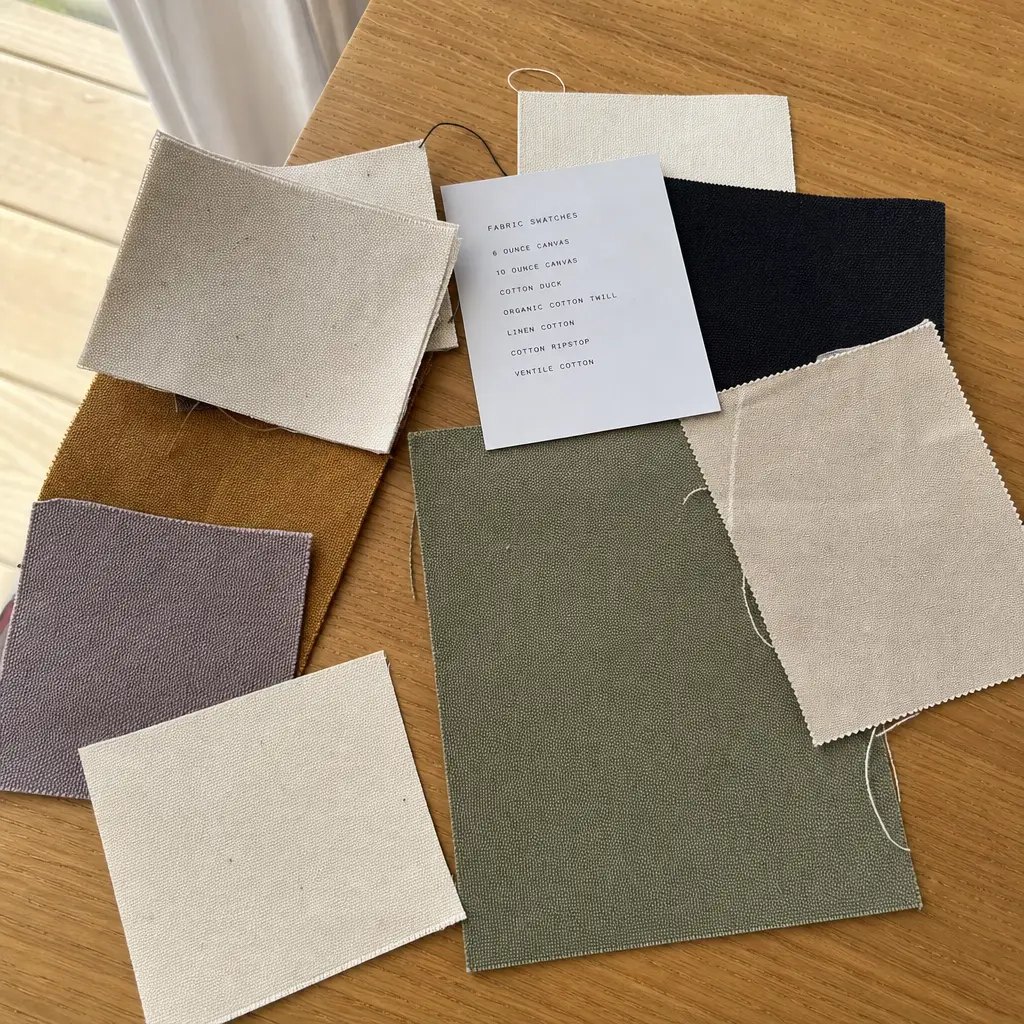
Fabric finish also matters. Natural unbleached canvas gives an eco-oriented look and is usually cost-efficient, but cottonseed flecks and shade variation are normal unless the buyer specifies a cleaner bleached or dyed finish. Dyed canvas adds color control work and can increase MOQ, especially for custom campaign colors. Washed canvas has a softer hand feel but may shrink and distort print placement if not controlled before cutting.
- 8 oz canvas can fit low-cost conference literature bags where durability is not the main value.
- 10 oz canvas is a balanced choice for large nonprofit events needing useful quality without premium cost.
- 12 oz canvas is better for repeat-use volunteer bags, retail fundraising, and higher-perceived-value donor gifts.
- 14 oz canvas adds structure but increases weight, sewing difficulty, freight cost, and carton weight.
- Custom dyed fabric should be quoted with MOQ, lab dip timing, color tolerance, and shrinkage handling.
Use MOQ Breaks to Expose the Real Bulk Pricing Plan
A proper bulk pricing plan should show how cost changes at different quantities. For canvas messenger bags, the first MOQ threshold is often driven by material purchasing and cutting efficiency. The next price drop may come from print setup spreading across more pieces. Higher quantities improve labor planning, but the cost reduction is not unlimited because fabric, sewing time, and packing remain real costs.
Nonprofit buyers should request consistent price breaks at the same specification, not allow each supplier to change the bag to hit a lower tier. Practical breakpoints are 500, 1,000, 2,500, 5,000, and 10,000 pieces. If a supplier gives a dramatic price reduction at one level, procurement should identify what changed: fabric lot purchase, carton quantity, printing method, payment terms, or a switch from custom production to available stock.
- At 500 pieces, expect sample, setup, and handling costs to carry more weight in the unit price.
- At 1,000-2,500 pieces, custom cutting and screen printing usually become more efficient.
- At 5,000 pieces and above, fabric purchasing and production line scheduling become the main pricing levers.
- If custom dyed canvas is required, the fabric mill MOQ may be higher than the bag sewing MOQ.
- If multiple artwork versions are needed, quote each version quantity because print setup may repeat.
Select the Print Method Around Artwork and Durability
Screen printing is usually the most practical method for wholesale canvas messenger bags with nonprofit logos, sponsor marks, and campaign slogans. It works well for solid spot colors, has predictable cost at bulk quantity, and can be placed on the flap or front body panel. For best results, artwork should be vector format with Pantone references, exact print dimensions, and a clear placement measurement from the flap edge or seam.
Digital print can handle gradients and full-color artwork but may cost more and behave differently on textured cotton canvas. Heat transfer can produce detailed graphics but may feel less natural on a canvas bag and needs testing for cracking or peeling. Embroidery gives a durable premium look but is not ideal for very large filled designs on thick flap areas because it can pucker the fabric and increase sewing tension.
- Use screen print for one to four solid colors and repeatable campaign logos.
- Use woven labels when the nonprofit wants a smaller brand mark that does not dominate sponsor artwork.
- Use embroidery for small premium marks, not large slogan blocks.
- Avoid printing across thick seams, folded flap edges, or heavy pocket intersections.
- Approve the print on the actual fabric color, not only on a paper proof or digital layout.
Compare Sourcing Routes Before Choosing the Supplier
The right sourcing route depends on quantity, customization, timing, and internal control requirements. A direct factory is usually stronger for a controlled bulk order because the same team can coordinate fabric, cutting, printing, sewing, inspection, and packing. This is useful when the nonprofit has chapter allocations, donor-level packaging, or annual repeat campaigns. The quote should be transparent enough to show what is included.
A promotional distributor or trading company can be useful when the buyer needs local service, short domestic lead time, or mixed campaign items in one invoice. The tradeoff is that the buyer may have less visibility into the actual production line and material substitutions. For a serious bulk program, procurement teams should compare not only unit price but also sample accuracy, response quality, packing support, and the supplier's ability to hold the same spec over repeat orders.
- Direct factory route: better control for custom dimensions, bulk packing rules, and repeat specifications.
- Distributor route: useful for small urgent campaigns and local fulfillment, but stock substitutions need attention.
- Stock bag route: faster but limited in color, size, fabric weight, pocket layout, and print area.
- Custom route: slower but gives better control over donor-facing quality and sponsor requirements.
- Hybrid route: use stock for emergency quantities and custom production for the main campaign if timing is tight.
Approve Samples With Measurable Acceptance Criteria
The sample stage should not be a casual photo approval. For nonprofit campaign bags, a pre-production sample should use the correct canvas weight, final strap width, confirmed closure, approved artwork size, and intended packing method. A sample made from substitute fabric is acceptable only for construction review, not for final bulk approval. The buyer should label approvals clearly: construction sample, print strike-off, pre-production sample, and sealed approved sample.
Procurement teams should measure the sample and record acceptance criteria before mass cutting starts. This prevents disputes when the bulk bag is slightly smaller, the strap is narrower, or the print shifts after sewing. The approved sample should stay with the buyer or inspection agent, while the factory keeps a matching sealed sample on the production floor. Both sides should work from the same technical sheet.
- Measure finished width, height, gusset, flap depth, strap width, and strap length adjustment range.
- Check the bag loaded with realistic campaign contents instead of evaluating it empty.
- Review stitch density, seam allowance, flap alignment, and strap reinforcement.
- Test closure strength and ease of opening if Velcro, snap, magnet, or buckle is used.
- Rub the print with dry and slightly damp white cloth after curing to catch weak ink adhesion.
Control Packing Before It Becomes a Distribution Cost
Packing is often treated as an afterthought, but nonprofit campaign distribution can be more complex than a simple warehouse delivery. Bags may need to ship to field offices, event venues, retail partners, fundraising teams, or sponsor locations. If cartons are packed randomly, the buyer may pay local labor to sort and relabel goods after arrival. The packing plan should be part of the quote, not a last-minute request after production.
A good packing specification includes pieces per carton, carton dimensions, gross weight, carton mark format, inner polybag policy, moisture protection, and whether each carton contains one artwork version or mixed versions. For canvas messenger bags, over-compression can create deep creases on the flap and print area. Too many pieces per carton may save carton cost but can create heavy cartons that are difficult for event teams to move safely.
- Use carton quantities that field teams can lift and count easily, not only the lowest freight volume.
- Mark cartons by event, chapter, SKU, color, artwork version, or donor tier when required.
- Avoid mixed artwork cartons unless the receiving warehouse has a sorting process.
- Confirm whether each bag is bulk packed, individually polybagged, paper wrapped, or tagged.
- Keep a carton packing photo and carton mark sample in the approval file.
Plan Lead Time Around Approvals, Not Only Production Days
Many canvas bag quotes show production time after sample approval, but the campaign calendar starts earlier. Artwork cleanup, fabric confirmation, lab dip approval, sample making, sample shipping, internal nonprofit approval, deposit processing, and export booking can all add days. If the campaign has a fixed event date, the procurement plan should count backward from required delivery, not forward from purchase order release.
For a straightforward natural canvas messenger bag with screen print, the process may move faster than a custom dyed multi-logo bag with special packing. However, buyers should avoid relying on optimistic lead times without understanding the trigger date. Production normally starts after all details are approved and commercial terms are settled. If the nonprofit has board approval or sponsor sign-off delays, that risk belongs in the schedule.
- Separate artwork proof time from physical sample time.
- Add buffer if sponsor logos require multiple approvals.
- Add time for custom dyed fabric, lab dips, or special webbing colors.
- Confirm whether production time starts after deposit, final artwork, or pre-production sample approval.
- Reserve time for final inspection, carton correction, export documents, and freight booking.
Compare Quotes by Total Landed Campaign Cost
The lowest unit price can become expensive if it creates rework, repacking, poor donor perception, or late delivery. Procurement teams should compare quotes using total landed campaign cost. That includes bag unit price, print setup, sample fees, packaging, carton labeling, inspection, inland transport, ocean or air freight, duty, customs handling, warehousing, and domestic distribution. Canvas fabric weight also affects freight because heavier bags increase carton gross weight.
A useful quote sheet should show the commercial assumptions behind the price. If Supplier A quotes 10 oz canvas, bulk cartons, one-color screen print, and no individual packing, while Supplier B quotes 12 oz canvas, two-color print, reinforced strap, and cartons by chapter, the unit prices are not comparable. Normalize the specification first, then compare supplier evidence, lead time, and service fit.
- Compare same fabric weight, same finished size, same artwork, and same packing method.
- Record sample cost and whether it is refundable after bulk order placement.
- Include inspection cost if the order is donor-facing or retail fundraising merchandise.
- Calculate freight impact using carton dimensions and gross weight, not only piece count.
- Keep quote validity dates because cotton, exchange rate, and freight can shift before deposit.
Specification comparison for buyers
| Spec decision | Recommended option | When it fits | Buyer risk to check |
|---|---|---|---|
| Direct factory bulk order | Use a cut-and-sew factory that controls fabric sourcing, printing, sewing, and packing under one production plan | Best for 1,000+ pieces, repeat nonprofit campaigns, custom dimensions, controlled logo placement, and carton packing by event or chapter | Verify the quote separates fabric GSM, print setup, packing, sampling, and inland freight instead of hiding all cost in one unit price |
| Trading company or local promotional distributor | Use for small rush orders or when the buyer needs local billing, warehousing, or mixed product kits | Fits 100-500 pieces, simple stock bags, and campaigns where fast domestic delivery matters more than exact construction | Check whether the bag is existing inventory; substitutions in fabric weight, strap width, and print area can change after approval |
| Stock messenger bag with logo print | Choose if campaign timing is tight and the nonprofit accepts standard size, color, flap shape, and pocket layout | Works for volunteer onboarding, conference giveaways, and donor packs where the artwork is simple and the bag is not a premium reward | Confirm inventory lot consistency because stock bags may come from different dye lots or factories with different stitching standards |
| Fully custom canvas messenger bag | Specify dimensions, flap length, gusset, strap type, pocket layout, fabric GSM, trims, and packing method before quoting | Best for sponsor merchandise, membership gifts, retail fundraising, and long-term brand programs | Longer sampling and fabric preparation can affect delivery; require a pre-production sample before bulk cutting |
| 10-12 oz canvas body | Use 340-410 GSM cotton canvas for a durable but still foldable nonprofit campaign messenger bag | Good balance for event bags, laptop-light documents, brochures, water bottle, and volunteer field use | If the buyer only states 'canvas bag,' suppliers may quote 8 oz fabric and win on price while reducing structure |
| Screen print logo | Use spot-color screen printing for clear nonprofit logos, sponsor marks, and campaign slogans on natural or dyed canvas | Best for one to four solid colors, repeat orders, and cost-controlled bulk pricing | Require print size, Pantone references, ink type, and rubbing test expectations; large ink coverage can stiffen the flap |
| Cotton webbing shoulder strap | Use 3.8-5 cm cotton webbing with reinforced box stitching at stress points | Fits eco-focused campaigns and gives a softer hand feel than cheap polyester tape | Test strap strength and colorfastness; dark dyed webbing can bleed onto natural canvas if finishing is poor |
| Event-based carton packing | Pack by chapter, event date, store, or kit quantity instead of mixed bulk cartons | Useful when nonprofit distribution goes to several field offices or campaign venues | Carton-level labeling must match the PO; wrong mix packing creates labor cost after arrival |
Buyer checklist before sampling
- Define the campaign use: donor gift, volunteer field bag, retail fundraiser, conference kit, or sponsor package.
- Set the target bag size in centimeters, including width, height, gusset, flap depth, and strap length range.
- Specify fabric as cotton canvas by oz or GSM, not only by the word canvas.
- Decide whether the bag must hold documents, a tablet, a light laptop, or only campaign literature.
- Send vector artwork with Pantone colors, print size, print position, and tolerance from seam or flap edge.
- State whether the logo can print over seams, pockets, or flap curves; avoid approving artwork without the actual sewing pattern.
- Request MOQ breaks at practical quantities such as 500, 1,000, 2,500, and 5,000 pieces.
- Separate the quote into bag cost, print setup, sample cost, packing, carton marks, inland freight, and export documents.
- Require a pre-production sample using correct fabric weight, strap width, hardware, print method, and packing format.
- Approve carton size, carton weight, master carton quantity, inner polybag policy, and shipping marks before mass packing.
Factory quote questions to send
- What fabric weight are you quoting in oz and GSM, and is it greige, bleached, dyed, or washed canvas?
- Is the quoted canvas 100% cotton, recycled cotton blend, or cotton-poly blend, and how does that affect shrinkage and print result?
- What MOQ applies to the bag body, custom dyed fabric, custom webbing, and each print color?
- Can you quote price breaks for 500, 1,000, 2,500, 5,000, and 10,000 pieces with the same specification?
- Which print method is included: screen print, heat transfer, digital print, embroidery, woven label, or combined branding?
- What print setup charges, screen charges, sample charges, and revision charges are separate from unit price?
- What is the maximum safe print area on the flap after sewing, and what placement tolerance can you hold in bulk production?
- How many pieces per carton, what carton dimensions, and what estimated gross weight per carton are used in your quote?
- What lead time starts after artwork approval, sample approval, deposit, or fabric arrival?
- Which quality checks are performed before packing, and can you provide an AQL inspection plan with major and minor defect definitions?
Quality-control points to confirm
- Fabric weight tolerance should be documented, for example quoted 12 oz canvas with an agreed GSM range rather than an open-ended fabric description.
- Finished bag dimensions should stay within agreed tolerance, commonly plus or minus 0.5 cm for small panels and plus or minus 1 cm for larger body width or height.
- Print placement should be measured from fixed reference points such as flap edge or side seam, not judged only by eye.
- Logo color should match approved Pantone or signed sample under consistent light, with acceptable variation stated before production.
- Ink adhesion and rubbing resistance should be tested after curing, especially on dyed canvas and heavy ink coverage.
- Strap attachment should use reinforced stitching, with no skipped stitches, loose threads, broken needles, or seam slippage at stress points.
- Metal hardware, snaps, buckles, and sliders should be checked for rust, sharp edges, smooth movement, and secure attachment.
- Cartons should meet the approved packing plan, shipping marks, quantity per carton, and gross weight limit.
- Random final inspection should compare bulk goods to the signed pre-production sample and approved technical sheet.
- Nonconforming goods should be sorted by defect type before shipment instead of negotiated after arrival.