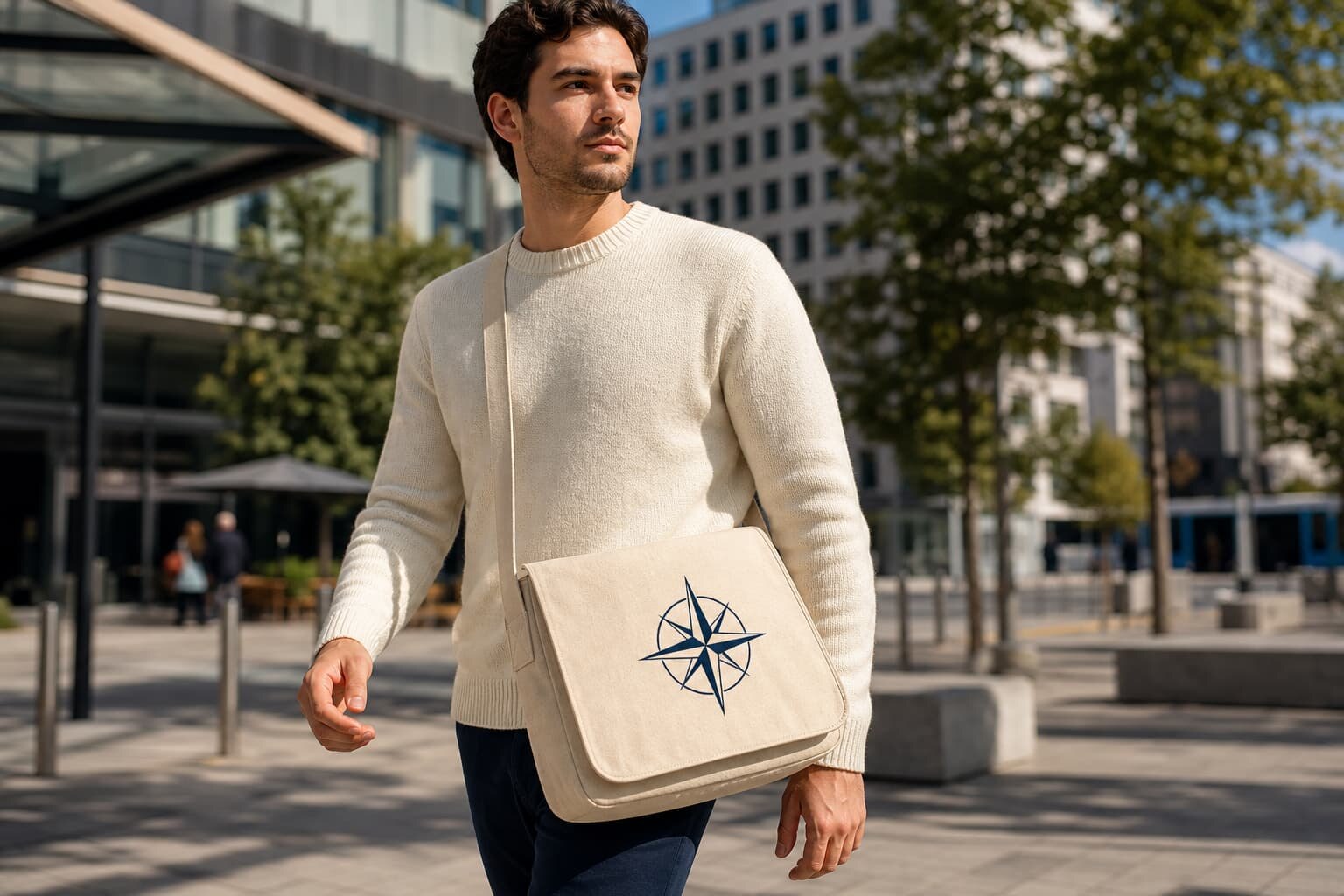
1. Why canvas messenger bag MOQ is rarely one fixed number
For wholesale canvas messenger bags, MOQ is usually tied to how the bag is built, not just how many units you want. A simple open-top bag in 10 oz canvas with one print color is a very different production job from a lined messenger bag with zipper closure, multiple pockets, and custom metal parts. The sewing time, material sourcing steps, and setup load all change the factory's minimum. If you ask for one quote without a full spec, you are likely to receive one of two bad outcomes: a low number that is not realistic in bulk, or a high number that looks inflated because the supplier had to guess the build.
Buyers should treat MOQ as a production logic question. The first question is not how low can the supplier go, but what must be fixed before a stable quote is possible. Size, canvas weight, closure type, strap construction, print method, and packing method all influence the minimum. If you understand which choices raise setup time or waste fabric, you can decide where to simplify the first order and where to keep the premium features. That gives you a cleaner RFQ and a quote set that can actually be compared.
- A true MOQ depends on fabric, construction, decoration, and packing.
- The same supplier may quote a lower MOQ for a simpler build and a higher MOQ for a more complex one.
- The best RFQ states the bag as a finished product spec, not only a size and logo.
2. Define the bag before you ask for MOQ
The fastest way to get mismatched quotes is to leave the bag definition open. A buyer might say messenger bag, but the factory still needs to know whether this means a document carrier, commuter crossbody, retail fashion bag, or promo item. Each use case changes the structure. A document bag may need a rigid front panel and simple pocket layout. A retail commuter bag may need lining, zipper top, reinforced strap, and better finishing. If you do not define the use case, a supplier will fill the gaps with its own assumptions and the MOQ will be based on that assumption, not your target product.
Start your RFQ with the core build first, then decoration and packing. Bag size should be stated in finished dimensions, not only approximate measurements. Canvas should be identified by oz or GSM, with the preferred hand feel if possible, such as medium body or firm body. Then list lining, pocket count, closure type, strap width, strap adjuster, and whether the bag must stand upright. These details are not cosmetic. They tell the factory how much cutting, stitching, and material handling the order will require, which is what shapes the MOQ.
- State finished size, not only panel size.
- Describe the bag's end use: promo, retail, commuter, document, or trade show.
- Lock down closure, pockets, strap, and lining before requesting MOQ.
3. Fabric weight and construction drive the minimum order
Canvas weight is one of the biggest MOQ drivers because it affects cost, cutting efficiency, and sewing behavior. Lighter canvas, such as 10 oz, is easier to source and handle, so it usually supports lower minimums. Medium canvas, around 12 oz, is common for retail quality and still manageable for many factories. Heavier canvas, such as 16 oz, looks more premium and holds shape better, but it can increase material waste, needle wear, and sewing time. If the bag also needs a lining or structured base, the production line becomes more complex and the minimum often rises with it.
Construction details matter just as much as fabric weight. A bag with self-fabric straps is simpler than one with thick cotton webbing, metal sliders, and reinforced bar-tacks. An open top is easier than a zipper top. One small pocket is easier than multiple internal compartments. Buyers often ask for a lower MOQ on a fully featured bag without realizing they are specifying a more labor-intensive style. If the first order is a trial, it is usually smarter to simplify the construction and protect the print and logo first.
- 10 oz canvas often supports simpler trial orders.
- 12 oz canvas is the most common middle ground for everyday wholesale programs.
- 16 oz canvas usually makes sense when structure and retail value matter more than the lowest MOQ.
- More pockets, lining, and hardware generally increase the minimum.
4. Decoration choice can change MOQ more than buyers expect
Logo decoration is not just a branding decision; it is a production decision. One-color screen print is usually the easiest starting point for a wholesale canvas messenger bag because the setup is straightforward and repeatability is good. More print colors mean more screens, more registration control, and more rejection risk. Embroidery can look strong on a canvas bag, but it adds machine time and can distort light fabric if the backing is not handled correctly. Woven labels, side labels, and sewn patches often work well for lower-risk branding because they do not depend on perfect print curing.
The best decoration method depends on the art and the bag panel, not on preference alone. Large logos on a soft bag panel need more control than a small chest-style mark on a flat pocket area. Ask the factory how the logo will behave on the actual canvas weight you choose. A design that looks clean on screen may crack, sink, or shift once the bag is sewn and folded. For RFQ purposes, always state the print size, position, number of colors, and whether the artwork must sit on one panel or wrap across seams.
- One-color screen print is usually the simplest quote path.
- Embroidery and multi-color print can push MOQ higher.
- Woven labels and sewn patches are useful when you want lower decoration risk.
- Always specify logo size and placement in millimeters or inches.
5. How factories build quote tiers and what to request in the data
Most factories do not calculate MOQ from a single factor. They look at fabric purchase volume, cutting yield, sewing time, decoration setup, and packing labor. That is why two suppliers can quote different minimums for what looks like the same messenger bag. One may have canvas in stock, another may need to source it. One may run a simple sewing line, another may need a separate line for lining and hardware. If you want a quote you can compare, ask for the same data from each supplier, then line up their assumptions before discussing price.
A good quote request should include enough detail to let the factory price the bag without guessing. Ask for the unit price by volume tier, the MOQ by color, the MOQ by artwork, and any extra cost for custom accessories or packing changes. Also ask for whether the quote includes print plates, sampling, carton marks, and inner polybags. Many disputes start because one quote includes these items and another excludes them. When you compare quote data properly, you can see whether the supplier is truly cheaper or just leaving out parts of the real cost.
- Request quote tiers by quantity, not a single flat number.
- Ask what is included and excluded in the unit price.
- Separate the cost of sample development from bulk production.
- Ask whether the MOQ changes if the order is split by color or logo version.
6. Sample checks should focus on build risk, not just appearance
A sample is useful only if it proves the production risk is under control. For canvas messenger bags, buyers should check the sample as a construction reference, not as a display item. Measure the finished size after the bag is assembled and pressed. Check whether the strap falls in the right position on the body and whether the bag closes cleanly with the intended load. If the sample has a printed logo, confirm the ink density, alignment, and edge sharpness on the actual canvas surface. If there is lining, open the bag and inspect inside corners, stitch ends, and pocket depth.
This is also the stage to catch the small issues that become big problems in bulk. A label that is 10 mm too low on the sample will often drift further in production. A pocket that feels acceptable in one sample may be too shallow for retail use. Ask the factory for a pre-production sample if the order includes several risks at once, such as new fabric, new print, and new hardware. One approved sample should become the master against which bulk goods are measured.
- Measure finished size after assembly, not before.
- Check strap position, pocket depth, and closure function.
- Verify logo placement and print quality on the actual fabric.
- Keep the approved sample as the master reference.
7. Packing details can quietly raise or lower the MOQ
Packing is often ignored until the quote comes back and the numbers do not match. A simple bulk packed bag in a standard carton is easier to produce than one with individual polybags, inserts, barcode stickers, hanging cards, and retail-ready folding instructions. Each extra packing step adds labor and can slow the line if the supplier must coordinate multiple materials. If your retail channel needs shelf-ready presentation, include that requirement from the start. Otherwise the factory may quote a bag-only MOQ and later add packing minimums that change the economics of the order.
Carton loading matters too. Messenger bags can be bulky depending on lining, foam, and strap type. A higher-volume bag may fit fewer units per carton, which affects freight efficiency and can change the packing plan. Ask for carton dimensions, gross weight, net weight, and the planned units per carton at the quoted spec. If the supplier cannot give those numbers early, the packing plan is not stable yet. For importers, this is not a small detail; it affects freight estimates, warehousing, and the risk of carton damage in transit.
- State whether the order is bulk packed or retail packed.
- Ask for carton size, gross weight, and units per carton.
- Confirm whether inserts, hangtags, or barcode stickers are included.
- Make packing part of the MOQ discussion, not an afterthought.
8. A practical acceptance plan for the first order
For a first wholesale order, the acceptance plan should be simple and measurable. Do not rely on general approval language like looks fine or same as sample. Define acceptable tolerance for size, seam accuracy, logo position, color variation, and packing count. If the bag is intended for retail, include basic appearance checks such as surface cleanliness, thread trimming, and label alignment. If the bag will carry weight, add stress-sensitive checks at the strap anchors and top opening. The goal is not to create a full laboratory test plan, but to make sure the supplier knows what will trigger a rework or claim.
Buyers should also decide which defects are critical and which are acceptable within reason. A small thread tail may be acceptable if trimmed, but a misaligned logo or weak strap reinforcement is not. For canvas messenger bags, the most common first-order problems are uneven panel size, print shift, weak stitching near the strap, and carton inconsistency. Tell the factory how you want those issues handled before production starts. A clear acceptance plan protects both sides because it reduces arguments after shipment and gives the supplier a target that matches the order value.
- Set size and logo tolerances before bulk production starts.
- Define critical defects versus minor defects.
- Use the approved sample as the acceptance reference.
- Include packing count and carton condition in the final check.
9. How to write an RFQ that gets comparable canvas messenger bag quotes
A strong RFQ does more than ask for a price. It makes every supplier quote the same bag. Start with a one-page spec summary that includes finished size, canvas weight, lining, closure, strap, pocket layout, logo method, packing method, target quantity, and destination market. Attach artwork in a usable format and mark where the logo sits on the bag. Then add the commercial data the factory needs to quote responsibly: target order quantity, expected repeat volume, sample timeline, and whether you need one color or several. The more exact the RFQ, the easier it is to compare suppliers on value instead of on assumptions.
It also helps to ask suppliers to break down the quote by material, decoration, packing, and any one-time setup cost. That way you can see where the money goes and whether a lower MOQ is hiding a higher setup charge. If you plan to reorder, ask for repeat order conditions as well. Many buyers only discover these details after the first shipment, when it is already too late to fix the structure. A good RFQ should help you decide not just who is cheapest, but which supplier can repeat the same bag without spec drift.
- Use one signed spec sheet for every supplier.
- Attach artwork and placement dimensions.
- Ask for a cost breakdown, not only a single unit price.
- Request repeat-order conditions if you expect reorders.
Specification comparison for buyers
| Spec decision | Recommended option | When it fits | Buyer risk to check |
|---|---|---|---|
| Fabric weight | 10 oz canvas | Light promotional use, price-sensitive programs, simple one-color decoration | Can feel thin, show seam distortion, or lose shape if the bag is oversized |
| Fabric weight | 12 oz canvas | Most retail and corporate programs, better hand feel and structure | Confirm actual GSM or oz basis, since suppliers may quote different fabric standards |
| Fabric weight | 16 oz canvas | Premium retail, heavier carry loads, bags with lining and hardware | Higher cut waste, longer sewing time, and a higher MOQ than buyers expect |
| Build level | Unlined, open top, basic internal pocket | Fastest path for early-stage trials or giveaway use | Watch for raw edge finish, lower perceived value, and less protection for printed areas |
| Build level | Partial lining, zipper top, one inner pocket | Mid-market retail and everyday commuter use | Check zipper quality, pocket placement, and whether lining color is approved before bulk |
| Decoration | One-color screen print or woven label | Best when you need a lower setup load and stable repeat ordering | Verify print size, registration tolerance, and artwork position on the actual bag panel |
Buyer checklist before sampling
- Confirm bag size, fabric weight, lining, closure, and strap spec before asking for MOQ.
- State whether the quote is for sample order, first bulk order, or annual repeat volume.
- Request the supplier's MOQ by color, by print design, and by total order, not only one headline number.
- Ask for fabric basis, weave type, and finishing method so quotes are comparable.
- Approve artwork placement with a measured template, not only a flat digital file.
- Specify packing method, inner polybag if any, carton count, and master carton mark format.
- Request the lead time split: sample time, material sourcing time, production time, and packing time.
- Ask what changes will raise MOQ, such as extra print colors, custom zipper pulls, or full lining.
- Confirm inspection standard for seam strength, print quality, color variation, and carton drops.
- Keep one signed spec sheet for every quote round so suppliers cannot quote different builds.
Factory quote questions to send
- What is your MOQ for this exact build, and how does it change if I change fabric weight, print colors, or lining?
- Is the MOQ based on total pieces, per color, per artwork, or per size?
- What canvas weight do you quote in oz or GSM, and what tolerance do you allow?
- Which decoration method gives the most stable result at this quantity: screen print, embroidery, woven label, or heat transfer?
- What is the standard seam allowance, strap width, and reinforcement method on the sample you are quoting?
- Are zipper, snap, buckle, and lining colors standard or custom for this quote?
- What is included in the unit price: bag, print, packing, carton, and outer marks, or are these separate?
- How many sample rounds are included before bulk approval?
- What is your lead time for material confirmation, sample approval, and finished goods production?
- If I increase volume later, which parts of the price or MOQ can be reduced on repeat orders?
Quality-control points to confirm
- Fabric weight matches the approved spec and does not feel lighter than the sample.
- Canvas weave is even, with no obvious streaks, thin spots, or shade mismatch between panels.
- Stitching is straight and secure at the strap anchors, stress points, pocket edges, and top opening.
- Print placement matches the approved template and does not shift across left and right panels.
- Print surface is cured or fixed properly, with no cracking, smearing, or color rub-off.
- Zipper runs smoothly, sits level, and does not catch on the lining or seam allowance.
- Lining, if used, is cleanly attached with no twisting, puckering, or loose thread buildup.
- Carton packing count, inner protection, and master marks match the RFQ and shipping label instructions.
- Finished bag dimensions are within the buyer's allowed tolerance after pressing and packing.
- Sample approval, pre-production sample, and bulk photos all match the same signed reference.