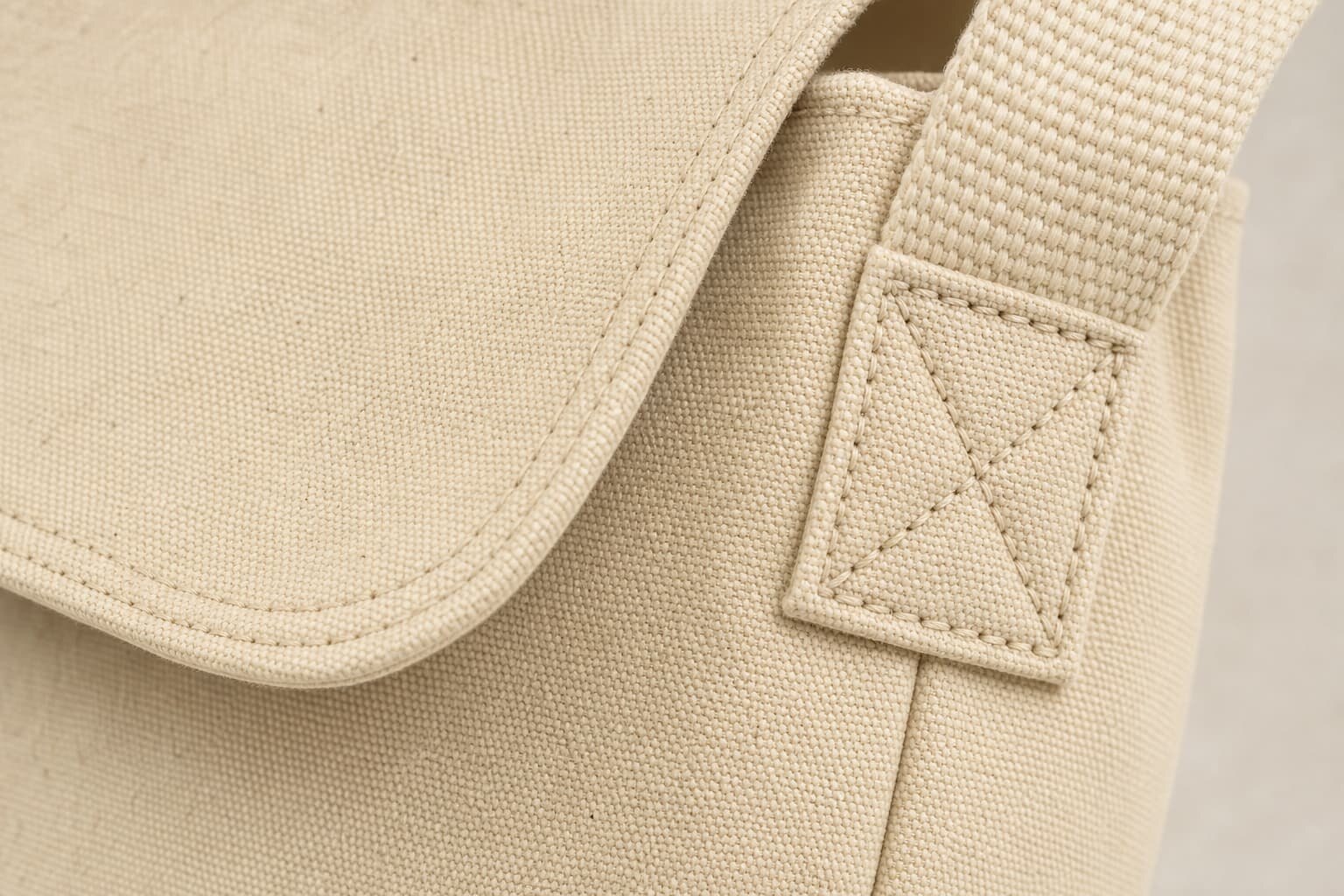
1. Why MOQ Is Usually Misunderstood on Canvas Messenger Bags
For wholesale canvas messenger bags, MOQ is not only a number the factory chooses. It is the point where fabric sourcing, cutting efficiency, print setup, hardware purchase, sewing line arrangement, and packing labor become workable. A buyer may ask for 300 pieces and receive one quote, then ask for 1,000 pieces and receive a much lower unit price. The difference is not magic volume discount. It usually comes from how many fixed costs can be spread across the order.
The problem starts when an RFQ says only: canvas messenger bag, logo printed, quote 500 pieces. That is not enough for a factory to calculate properly. A 10 oz promotional bag with a simple flap and one-color print is a different production job from a 16 oz washed canvas bag with zipper pocket, adjustable strap, metal hardware, and two-position branding. If both suppliers reply with one unit price, the cheaper quote may simply be based on a thinner product.
- MOQ may apply separately to fabric color, logo design, print color, hardware finish, and packing style.
- Stock fabric can support lower MOQ, but color choice and fabric weight may be limited.
- Custom dyed canvas usually requires higher MOQ because the dyeing mill has its own minimum batch.
- Complex construction raises sample and production setup time, even when the order quantity is small.
2. Start the RFQ by Defining the Bag Construction
A canvas messenger bag has more variables than a flat tote. The flap, strap, closure, gusset, pocket structure, and hardware all affect sewing time and MOQ logic. Before asking for a price, decide whether the bag is a simple promotional messenger, a retail-style daily carry bag, or a heavier work bag. Factories can quote faster when the construction level is clear.
For most wholesale projects, a practical starting specification is a rectangular messenger bag with a front flap, one main compartment, one inner slip pocket, adjustable cotton webbing shoulder strap, and either Velcro or magnetic closure. If you need a laptop compartment, zipper top, padded panel, or multiple internal dividers, say this early. These features may require different sewing operators, thicker needles, additional binding, or extra pattern work.
- Basic structure: flap, main compartment, fixed or adjustable strap, simple closure.
- Mid-level structure: inner pocket, reinforced bottom, metal strap adjuster, branded label.
- Premium structure: zipper top, lining, padding, laptop sleeve, embroidery, custom hardware.
- Common buyer mistake: approving a photo reference but not confirming the internal pocket and closure details.
3. Fabric Weight and GSM: The Specification That Changes the Quote
Canvas messenger bags are commonly quoted by ounce weight, but buyers should also ask for GSM. In daily factory discussion, 10 oz, 12 oz, 14 oz, and 16 oz canvas are familiar terms. However, ounce values can be understood differently depending on market and fabric construction. GSM gives procurement teams a more stable comparison point, especially when comparing suppliers from different regions.
As a working range, light promotional messenger bags may use around 10 oz canvas, roughly 280-340 GSM depending on weave. Standard retail or corporate bags often use 12 oz to 14 oz canvas, around 340-475 GSM. Heavier messenger bags may use 16 oz or above, often above 500 GSM. Heavier fabric improves perceived value and durability, but it also increases material cost, carton weight, cutting difficulty, and freight cost.
- Ask for both oz and GSM on the quotation sheet.
- Confirm whether the canvas is natural, bleached, dyed, washed, or pigment finished.
- For printed flap designs, test the print on the actual fabric texture before bulk production.
- If the bag must hold books or light electronics, avoid choosing fabric only by lowest price.
- For dark dyed canvas, check rubbing fastness because color transfer is a real complaint risk.
4. MOQ Logic by Fabric, Color, Hardware, and Artwork
A factory may say the MOQ is 500 pieces, but that statement needs context. Is it 500 pieces per style, per color, or per logo? If you order 500 total across five fabric colors, the factory may treat it as five small production lots of 100 pieces each. That changes cutting efficiency, print setup, thread matching, packing separation, and quality control workload.
The lowest practical MOQ usually comes from using stock natural canvas, standard shoulder webbing, standard metal hardware, and one print position. MOQ increases when the order uses custom dyed fabric, non-standard strap color, custom metal finish, special zipper color, woven labels, or multiple artwork versions. Buyers should not only ask: what is your MOQ? They should ask: what specification is your MOQ based on?
- Lowest MOQ path: stock natural canvas, standard size, one-color screen print, standard packing.
- Medium MOQ path: dyed stock canvas, two-color print, inner pocket, adjustable metal slider.
- Higher MOQ path: custom dyed canvas, custom hardware finish, woven label, retail packaging.
- MOQ split issue: 1,000 pieces in one logo is easier than 1,000 pieces split into ten logos.
- Quote comparison tip: ask each supplier to list which components are stock and which are custom.
5. Print Method Decisions That Affect MOQ and Approval Risk
Most canvas messenger bag orders use screen printing because it is stable, economical, and suitable for flat logo areas on the flap or body panel. For a simple brand logo in one to three solid colors, screen printing is usually the cleanest choice. The factory must know print size, print position, Pantone colors, and whether the print crosses seams or folds. Printing over thick seam areas is a common cause of uneven ink coverage.
Heat transfer can handle gradients, small details, or full-color artwork, but it may not match the handfeel expected for a natural canvas product. Embroidery gives a premium look, but it can distort lighter canvas and adds cost. Woven labels are useful when buyers want consistent brand presentation across multiple bag colors. For RFQs, do not just write logo printing. State the preferred method or ask the supplier to recommend the method based on the artwork file.
- Screen print: best for solid logos, larger quantities, and strong cost control.
- Heat transfer: useful for gradients, photos, or detailed multi-color marks.
- Embroidery: premium look, but check puckering and backing on lighter canvas.
- Woven label: good for small branding and repeated use across bag styles.
- Acceptance check: print should be centered, cured, rub-resistant, and not cracked on flap folds.
6. Sample Approval: What Must Match Bulk Production
A sample is not only for appearance. It is the buyer’s chance to lock the technical standard before the factory buys materials and cuts bulk fabric. For canvas messenger bags, the approved sample should match bulk fabric weight, color, print method, strap material, hardware finish, closure, pocket structure, label position, and packing fold. If the sample uses substitute fabric or temporary hardware, note clearly that it is a construction sample only.
Buyers often approve a good-looking sample and later find that the bulk shipment feels thinner, the flap sits differently, or the strap hardware is not the same. This usually happens because the sample was not built from actual production materials. When MOQ is tight, some factories may use available sample room materials to save time. That can be acceptable for early development, but not for final approval.
- Check finished measurements, not only paper pattern dimensions.
- Load the bag with realistic weight and inspect strap attachment points.
- Fold the flap several times and check whether print cracks or sticks.
- Open and close the magnetic snap, Velcro, or zipper repeatedly.
- Compare fabric color under natural light and indoor light.
- Approve one signed reference sample or sealed sample before bulk production.
7. Cost Breakdown: Where the Quote Moves
A canvas messenger bag quote is built from material, accessories, printing, cutting, sewing, finishing, packing, overhead, and margin. When buyers negotiate only the final unit price, they may push the factory to reduce hidden specifications. A better method is to ask which line items drive the price and where alternatives are possible without damaging the product.
For example, moving from 16 oz to 12 oz canvas may reduce cost and carton weight, but the bag may lose its retail feel. Changing from custom dyed fabric to stock natural canvas can reduce MOQ and lead time. Removing an inner zipper pocket may save sewing time, while changing from magnetic snap to Velcro may reduce hardware cost but affect perceived value. The right decision depends on the sales channel, not only the target price.
- Fabric: usually the largest variable after construction complexity.
- Sewing: increases with pockets, lining, zipper, binding, and reinforcement.
- Print: affected by color count, print size, positions, and curing requirements.
- Hardware: affected by metal finish, buckle type, zipper grade, and custom color.
- Packing: affected by individual polybags, hangtags, barcode labels, and carton strength.
- Freight: affected by folded size, carton CBM, and fabric weight.
8. Packing and Carton Details Buyers Should Request Early
Canvas messenger bags are bulkier than flat cotton tote bags because of the flap, gusset, strap, and hardware. Packing method affects carton volume, wrinkle level, print protection, and freight cost. If the factory quotes without carton size and pieces per carton, your landed cost estimate is incomplete. This matters especially for distributors and retail buyers who compare FOB price but later pay the freight bill.
Flat packing is common, but the fold line should not damage the printed flap. Individual polybags may be required for retail or marketplace distribution, but they add labor, material cost, and carton volume. If sustainability claims matter to your brand, discuss alternatives such as paper belly bands or bulk packing, but make sure the bags are still protected from moisture and dirt during export handling.
- Ask for packing method in the first quotation, not after production.
- Confirm pieces per carton, carton dimensions, gross weight, and net weight.
- Check whether shoulder straps are folded inside the bag or wrapped separately.
- Avoid tight packing that bends metal sliders or creates permanent flap creases.
- For light natural canvas, request moisture control and clean carton handling.
- If barcodes are needed, confirm label position and scan quality before bulk packing.
9. Lead Time Planning from RFQ to Shipment
Lead time for wholesale canvas messenger bags depends on sampling, material sourcing, printing approval, sewing capacity, inspection, and packing. A simple stock-fabric order may move faster than a custom dyed or custom hardware order, but procurement teams should still build time for artwork proofing and sample review. Rushing the sample stage is one of the easiest ways to create bulk defects.
A practical workflow is to separate development time from production time. First, confirm the technical spec and quotation. Second, approve artwork and sample. Third, release bulk materials. Fourth, inspect during production and before packing. The supplier’s quoted production days should start after sample approval and deposit, not from the first RFQ email. During peak seasons, capacity for cutting, printing, and sewing may be booked earlier than expected.
- RFQ clarification: 1-3 business days if the specification is complete.
- Prototype sample: timing depends on material availability and artwork complexity.
- Pre-production sample: should use actual fabric, hardware, and print method.
- Bulk production: starts only after approval, deposit, and material confirmation.
- Final inspection: schedule before final balance payment and shipment booking.
- Shipment planning: use carton CBM and weight for freight estimate before production ends.
10. How to Compare Supplier Quotes Without Choosing the Wrong Bag
When three suppliers quote different prices for what seems to be the same canvas messenger bag, compare the quote sheet line by line. Check fabric weight, finished size, seam allowance, print method, number of print colors, hardware material, pocket structure, packing, and lead time. If one quote is much lower, ask what has been simplified. The answer may be acceptable, but it should be visible before you issue the purchase order.
A strong RFQ gives suppliers less room to guess. Include target quantity, size, fabric weight, color, logo file, print position, strap requirement, hardware finish, pocket details, packing request, inspection standard, and delivery term. If you are not sure about a specification, ask the factory to offer two options. For example: 12 oz stock natural canvas for lower MOQ, and 16 oz dyed canvas for a more retail-grade version.
- Reject quotes that do not state fabric weight and packing details.
- Do not compare a stock natural canvas quote with a custom dyed canvas quote as equal.
- Ask whether the sample fee is refundable or credited, but do not make this the main decision factor.
- Confirm whether artwork setup cost, screen cost, label cost, and carton marking are included.
- Require written approval for any substitute material before bulk production.
- Keep one approved sample and one signed specification sheet as the production reference.
Specification comparison for buyers
| Spec decision | Recommended option | When it fits | Buyer risk to check |
|---|---|---|---|
| Canvas fabric weight | 12 oz to 16 oz cotton canvas, approx. 340-545 GSM depending on weave | Retail, corporate gifting, book bags, conference bags, light laptop carry | Do not compare only by oz; confirm GSM, yarn density, finishing, and whether fabric is pre-shrunk or washed |
| Bag structure | Flap messenger with main compartment, inner pocket, and adjustable shoulder strap | Most brand programs needing a reusable everyday bag with enough decoration area | If the flap is too short, contents may show; if the strap is thin, heavy loading causes customer complaints |
| Printing method | Screen print for solid logos; heat transfer for gradients; embroidery or woven label for premium branding | Screen print works best for 1-3 color artwork on flat flap panels | Artwork near seams, heavy ink coverage, or unwashed pigment canvas can cause cracking or poor registration |
| MOQ level | Start from fabric color, print method, and hardware availability instead of one fixed number | Best for importers comparing several factories on the same technical base | A low MOQ may hide surcharge, stock fabric limitation, mixed hardware, or longer consolidation time |
| Hardware | Standard metal slider, rectangular ring, magnetic snap or Velcro depending on price tier | Useful when the bag must adjust for different users and look more retail-ready | Different metal finishes require MOQ; cheap plating may tarnish or stain light canvas |
| Packing | Flat packed in export carton, individual polybag only if required by retailer | Keeps freight volume under control for bulky canvas messenger bags | Overpacking raises cost and carton volume; underpacking can wrinkle flap printing or deform hardware |
| Sample approval | Pre-production sample with exact fabric, print, strap, hardware, and packing method | Required before cutting bulk fabric or confirming shipment schedule | A prototype made from substitute canvas is not enough for final approval |
Buyer checklist before sampling
- State the required order quantity by design, color, size, and print version, not only total pieces.
- Specify canvas weight in oz and GSM, and ask whether the fabric is greige, dyed, washed, or finished.
- Confirm bag dimensions after sewing, including flap length, gusset depth, strap width, and strap adjustable range.
- Attach artwork in vector format and define print size, position, Pantone colors, and tolerance.
- Decide whether the bag needs an inner pocket, zipper pocket, pen slot, label, care tag, or barcode sticker.
- Confirm hardware material, finish, color, and whether the same hardware is available at the requested MOQ.
- Ask for carton dimensions, pieces per carton, gross weight, net weight, and packing method before freight quoting.
- Request a sample using actual materials if the bulk order will use custom dyed canvas or custom hardware.
- Define acceptance criteria for print, stitching, shade variation, measurement tolerance, and loose threads.
- Ask whether MOQ changes if you split the order into multiple colors, logos, or delivery schedules.
Factory quote questions to send
- What is the MOQ per fabric color, per print design, and per bag size for this canvas messenger bag?
- Is the quoted fabric stock canvas or custom dyed canvas, and what is the exact weight in oz and GSM?
- Does the price include adjustable shoulder strap, metal slider, inner pocket, flap closure, labels, and export carton?
- Which print method is included in the quote, and how many print colors or positions are covered?
- What sample type will be provided first: material swatch, digital proof, prototype, or pre-production sample?
- What is the sample fee and sample lead time if exact fabric, exact hardware, and exact print are required?
- How many production days are needed after sample approval and deposit, and does that change during peak season?
- Can you provide carton size, carton weight, and estimated CBM for 500, 1,000, and 3,000 pieces?
- What inspection standard do you recommend for this order, and what are the common defects for this bag style?
- If the order quantity is below standard MOQ, what parts will change: unit price, available colors, print method, or delivery date?
Quality-control points to confirm
- Check fabric weight, handfeel, shrinkage, and color against the approved swatch before bulk cutting.
- Measure finished bag width, height, gusset, flap drop, strap width, and strap extension range on random samples.
- Inspect flap alignment, side seam symmetry, bottom corner reinforcement, and inner pocket position.
- Test strap stitching by pull force appropriate to the intended loading, especially at the side attachment points.
- Check print color, opacity, registration, curing, rubbing resistance, and cracking on folded flap areas.
- Inspect hardware function, plating consistency, magnet strength or Velcro grip, and sharp edges.
- Review labels, care tags, barcode stickers, and country-of-origin markings before final packing.
- Confirm packing count, carton marking, moisture protection, and whether bags are folded consistently.