Define the hotel retail job before choosing the bag
A canvas messenger bag for hotel retail is not the same product as a low-cost giveaway tote. The buyer is usually trying to balance shelf appeal, practical travel use, and a wholesale cost that still leaves margin for the hotel shop or distributor. Before sending an RFQ, define whether the bag will be sold as a souvenir, packed as part of a guest welcome program, offered in a conference store, or used as branded staff merchandise. Each use changes the fabric weight, strap strength, packaging, logo method, and acceptable price level.
For hotel retail, the bag often needs to look better than a basic promotional item while staying simple enough for repeat production. A realistic target is a messenger shape with a front flap, adjustable strap, one inside pocket, and reinforced strap anchors. If the buyer expects guests to carry a tablet, guidebook, water bottle, or shopping items, the RFQ should include a load expectation. If the bag is mainly a light souvenir, the construction can be simpler, but it still needs clean sewing and a retail-ready finish.
- For boutique hotel shops, prioritize fabric hand feel, label finish, and neat inside seams.
- For resort or beach retail, consider darker canvas, washable lining options, and stronger closure.
- For conference retail, check whether the bag must fit A4 documents, a tablet, or badge materials.
- For distributor catalog programs, keep the base construction standardized so reorder pricing remains stable.
Write dimensions and capacity in a way factories can quote
Many RFQs fail because the buyer sends only a photo and says 'standard messenger bag.' Factories then quote different sizes, different flap depths, and different strap widths, so the lowest price is not really comparable. A better RFQ gives finished dimensions and tells the supplier what the bag must carry. For example, a hotel retail messenger bag may be 34 cm wide by 28 cm high with a 7 cm gusset, a flap overlap of 18 cm, and an adjustable strap length of 75-135 cm.
The dimension tolerance should be practical, not unrealistically tight. Cotton canvas can shrink and move during cutting, sewing, and pressing. For most wholesale canvas messenger bags, a tolerance of plus or minus 1 cm on body dimensions is workable, while strap length and flap position need their own tolerance. If a tablet fit is important, measure the actual device plus cover and specify the minimum usable pocket size, not only the outside bag dimensions.
- State finished size as width x height x gusset, with measurement points shown on a simple spec sheet.
- Define flap length from top seam to finished edge, and state the intended overlap after closure.
- For tablet or document use, specify minimum internal opening and pocket size.
- Include strap width, strap length range, and whether the strap must be adjustable or fixed.
Choose canvas weight by retail position, not by habit
Canvas weight is one of the largest cost and quality drivers. For hotel retail messenger bags, 10 oz canvas can work for lightweight souvenir bags, but it may feel too soft if the bag is sold as a durable travel accessory. A more common commercial range is 12 oz to 16 oz cotton canvas, roughly about 400-540 GSM depending on the weave and finishing. Heavier fabric gives better structure and perceived value, but it increases material cost, sewing difficulty, carton weight, and freight volume.
Do not compare supplier quotes only by 'oz' because different suppliers may use different fabric references. The RFQ should request both ounce weight and GSM, plus whether the fabric is natural, bleached, dyed, washed, or laminated. Natural canvas usually supports a casual hotel retail look and can reduce dye risk. Dyed canvas offers stronger brand alignment but requires color approval, crocking review, and more MOQ discipline. Washed canvas can look premium, but it may change dimensions and requires more sample control.
- 10 oz to 12 oz: lighter, more economical, suitable for simple souvenir retail or low-load use.
- 12 oz to 14 oz: balanced option for most hotel gift shop messenger bags.
- 14 oz to 16 oz: more structured and premium, but higher unit cost and freight impact.
- Dyed canvas: better brand color control, but requires lab dip or strike-off approval before bulk.
- Natural canvas: easier for repeat orders, but slubs and shade variation should be accepted within a defined limit.
Select construction details that prevent returns
The highest-risk areas on a canvas messenger bag are the strap anchors, flap corners, closure points, and inside seams. A bag can look fine in photos but fail after guests load it with a bottle, brochure, and purchases. For wholesale hotel retail, the RFQ should state whether strap ends need box stitching, cross stitching, bartacks, or added fabric reinforcement. If the bag has a gusset, the bottom corners should be reviewed carefully because thick canvas can create bulky seams and uneven shape.
Inside finishing also affects retail perception. Raw edges may be acceptable on very low-cost promotional bags, but they are not ideal for hotel shops where guests handle the product before buying. Overlocked seams are common and efficient. Bound seams look cleaner and reduce fraying, but add labor. A cotton or polyester lining can improve finish, but it adds cost, changes sewing complexity, and may trap moisture if not packed correctly. For most hotel retail messenger bags, clean overlocking with trimmed threads is a practical standard.
- Use bartacks or box-X stitching at strap anchor points for bags expected to carry daily items.
- Avoid placing a heavy print directly across thick flap seams unless the artwork is designed for it.
- Specify stitch density, such as 7-9 stitches per inch, if you need a consistent retail appearance.
- For premium programs, consider bound inner seams or a simple lining, but quote them as separate options.
- If the bag includes an inner pocket, state pocket size, opening direction, and whether it needs closure.
Match print method to logo, fabric, and order volume
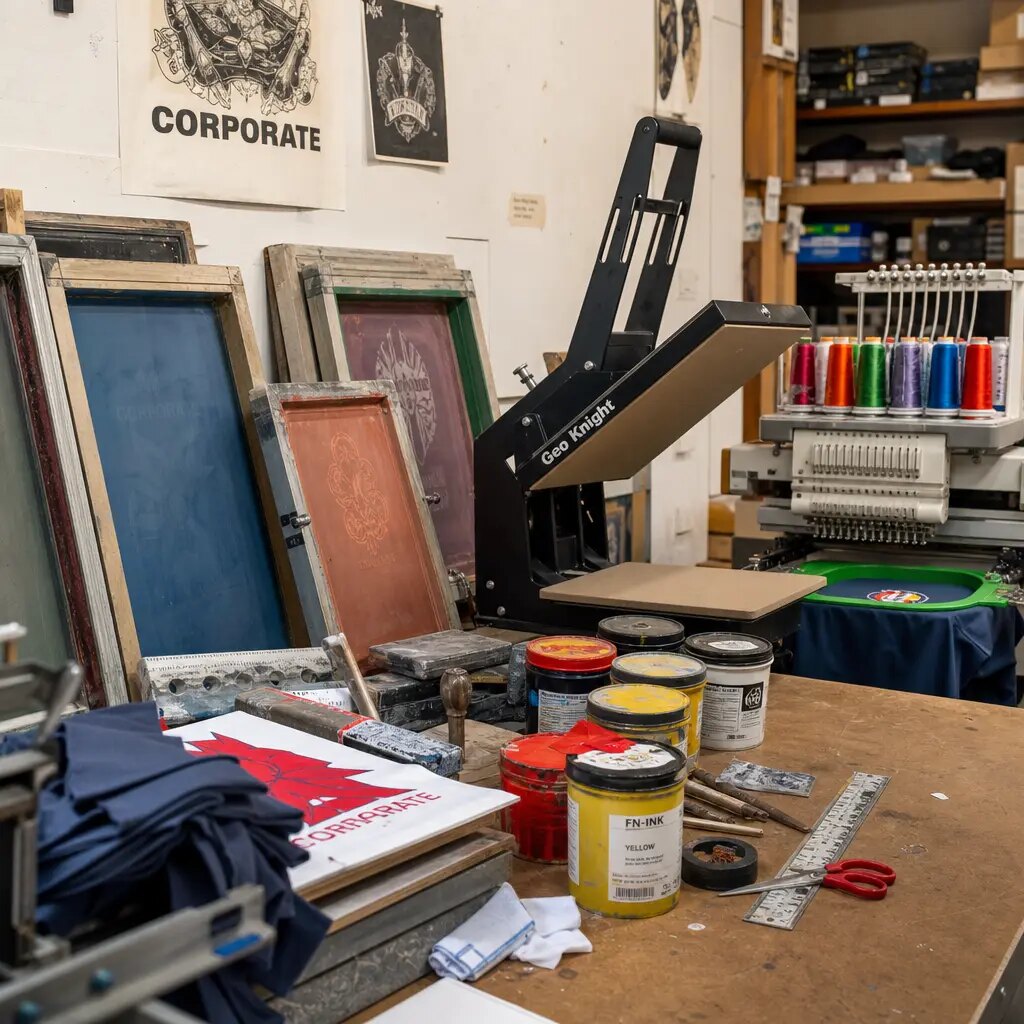
Screen printing remains the most practical branding method for many wholesale canvas messenger bags. It works well for one to three color logos, solid hotel marks, destination graphics, and simple retail artwork. On natural canvas, ink coverage and edge sharpness are usually good if the surface is not too coarse. On dark or dyed canvas, an underbase layer may be needed, which can increase cost and slightly change hand feel. Large prints on flap panels should be tested for cracking at fold points.
Other branding methods may be better for premium hotel retail. A woven side label gives a merchandise feel without making the bag look like a giveaway. Embroidery can look strong on heavier canvas but may distort thin fabric or pucker around dense logo areas. PU or leather-look patches can raise perceived value, but they require stitch placement and material compliance review. The RFQ should let suppliers quote the base branding method and optional upgrades separately so procurement can compare landed margin, not only unit price.
- Screen print: best for clean logos, larger graphics, and controlled cost at mid-volume quantities.
- Heat transfer: useful for detailed multicolor artwork, but test adhesion and hand feel on canvas.
- Embroidery: strong premium look for small marks, less ideal for large dense artwork.
- Woven label: good retail finish and repeat consistency across colorways.
- Patch branding: suitable for boutique or resort retail, but confirm patch material, stitch color, and edge durability.
Understand MOQ logic before judging the unit price
MOQ is not only a sales rule; it is tied to fabric purchasing, dye lot size, label production, printing setup, labor planning, and packing material. A factory may support 300 pieces for a standard natural canvas messenger bag with one-color print because the fabric and webbing are available. The same factory may need 800 or 1000 pieces for custom dyed canvas, custom woven label, special hardware finish, or retail carton packaging because each component has its own minimum.
When comparing quotes, separate the base bag MOQ from the customization MOQ. A low MOQ quote can be useful for a hotel pilot order, but the unit price may be high and the supplier may rely on stock fabric with limited shade control. For a chain-wide retail rollout, a higher MOQ may reduce unit cost and improve consistency. Procurement should request price breaks at realistic quantities, such as 300, 500, 1000, and 3000 pieces, with the same exact specification. Otherwise, suppliers may quietly simplify the bag to hit a lower tier.
- Standard natural canvas and stock webbing usually allow lower MOQ.
- Custom dyed fabric often requires higher MOQ and longer approval time.
- Woven labels, patches, and custom hardware may each have separate minimums.
- Retail packaging can change MOQ if printed bands, hangtags, or barcode labels are customized.
- Price breaks should show the same specification, not a cheaper construction at higher volume.
Build the RFQ around quote data, not just a target price
A useful RFQ should force comparable quote data. The supplier should provide unit price, sample cost, tooling or screen charge, packaging cost, carton data, lead time, payment terms, and validity period. For importers and distributors, carton volume can change the landed cost enough to affect supplier selection. A bag that is ten cents cheaper but packs inefficiently may cost more after ocean or air freight. For hotel retail programs with multiple delivery locations, carton labeling and packing sequence also matter.
Request optional cost lines instead of mixing every upgrade into one number. For example, quote the base bag with 12 oz natural canvas and one-color screen print, then show add-ons for 14 oz canvas, woven label, magnetic snap, inner zipper pocket, individual paper belly band, and hangtag. This format helps brand owners decide where retail value is worth the extra cost. It also prevents the common mistake of rejecting a good supplier because their quote includes details another supplier left out.
- Base unit price with clear Incoterm, such as EXW, FOB, CIF, or DDP if applicable.
- Fabric specification, bag size, branding method, hardware, and packing included in the price.
- Separate cost for sample, screen, label mold, patch mold, hangtag, barcode sticker, and carton mark.
- Carton dimensions, pieces per carton, gross weight, net weight, and total CBM.
- Price validity period and exchange rate assumptions if the quote is not in local factory currency.
Use samples to approve production, not to collect pretty photos
The sample stage should remove uncertainty before bulk cutting starts. For canvas messenger bags, approve more than the front appearance. Measure the bag flat and filled, test the closure, check strap adjustment, review inside seams, and compare the fabric hand feel against the intended retail price. If the logo is printed on the flap, bend the flap several times and rub the print after it is fully cured. A sample that looks acceptable for a photo may still fail daily handling.
For hotel retail buyers, one approved pre-production sample should become the production standard. Sign or seal the sample, or at least keep a complete photo record with measurements and material notes. If revisions are needed, list them clearly and require the supplier to confirm whether a revised sample is needed before bulk. Small changes, such as moving a snap by 1 cm or widening a strap, can affect cutting patterns, print placement, and cost. Sample approval should be tied to a date because late comments are a common cause of missed launch windows.
- Approve fabric swatch, bag body, strap, hardware, print, labels, and packing together when possible.
- Check whether the sample uses production fabric or substitute fabric, and record the difference.
- Measure flap alignment from both side edges; uneven flap shape is visible on retail shelves.
- Test closure placement with the bag lightly filled, not only empty.
- Do not approve bulk production from a digital artwork proof alone if print size and placement are critical.
Set QC thresholds that match wholesale retail risk
Quality control should focus on defects that create returns, chargebacks, or brand complaints. For canvas messenger bags, critical defects include broken needles, unsafe metal edges, mold, severe odor, wrong logo, missing label, and non-functioning closure. Major defects include open seams, weak strap attachment, crooked flap, heavy stains, wrong size beyond tolerance, print peeling, and missing inner pocket. Minor defects include small thread ends, slight shade variation within tolerance, and minor slubs in natural canvas if previously accepted.
AQL inspection can be used, but the defect list must be product-specific. If the buyer only states 'standard AQL,' the inspector may not load-test straps or compare flap symmetry. Procurement should define sample size, acceptable quality level, measurement tolerance, and functional tests. For retail programs, it is sensible to inspect when production is finished and at least 80% packed, with access to loose samples from different cartons. If the order is large or timing is tight, an inline check can catch sewing or print issues before the full lot is packed.
- Finished body dimension tolerance: commonly plus or minus 1 cm unless a tighter fit is required.
- Print position tolerance: define acceptable movement, such as plus or minus 5 mm for centered logos.
- Strap pull review: test representative samples with the intended carrying load and safety margin.
- Closure function: snaps, magnets, zippers, or hook-and-loop must open and close smoothly without fabric tearing.
- Carton audit: quantity, carton mark, barcode, moisture control, and export carton condition must match shipping documents.
Plan packing for shelf presentation and freight reality
Packing affects both retail presentation and landed cost. Canvas messenger bags can be bulk packed, individually polybagged, wrapped with a paper band, or packed with hangtags and barcode labels. Hotel retail shops often prefer bags that arrive clean and easy to display, but excessive packaging increases labor and volume. Natural canvas also attracts dust, so completely unprotected bulk packing may create cleaning work at destination. The right solution depends on whether the product goes directly to hotel shops, a distributor warehouse, or a fulfillment center.
Carton size should be controlled because messenger bags with straps and flaps do not always stack efficiently. Over-compression may create hard creases on the flap, while loose packing can cause shifting and dirty corners. Request a packing photo from the pre-production sample stage or first carton. If the order ships by air, volume weight may be more important than gross weight. If it ships by sea, moisture protection and carton strength become more important, especially for natural cotton canvas.
- Bulk pack: lowest cost, suitable when distributor will rework or tag goods locally.
- Individual polybag: keeps bags clean, but buyers may request recyclable or reduced-plastic options.
- Paper belly band: more retail-friendly, but it must hold shape during carton transit.
- Hangtag and barcode: useful for hotel retail inventory, but placement should not damage the bag.
- Carton limit: keep carton weight manageable for warehouse handling, often below local manual-handling limits.
Specification comparison for buyers
| Spec decision | Recommended option | When it fits | Buyer risk to check |
|---|---|---|---|
| Sourcing route | Factory-direct OEM with in-house cutting, sewing, and printing coordination | Best for hotel retail buyers needing repeat orders, controlled specs, and branded packaging | Trading quotes may look cheaper but hide fabric substitution, unclear inspection access, or weak remake responsibility |
| Canvas fabric weight | 12 oz to 16 oz cotton canvas, about 400-540 GSM depending on weave | Works for gift shop retail, welcome packs, resort stores, conference add-ons, and premium room packages | Supplier may quote '12 oz' using different testing standards; request GSM, weave photo, and weight tolerance |
| Bag construction | Flap messenger with reinforced stress points, inner pocket, and adjustable cotton webbing strap | Good balance for tourist shopping, tablet carry, travel documents, and daily use | Thin straps, weak bartacks, and narrow flap overlap cause returns even when fabric looks acceptable |
| Branding method | Screen print for flat logos; woven label or PU patch for a more retail finish | Screen print fits mid-volume hotel retail; labels fit premium boutique or resort positioning | Large prints across seams, textured canvas, and dark fabric can reduce logo sharpness or require extra ink layers |
| Closure system | Metal snap, magnetic snap, or hook-and-loop depending on retail positioning | Metal snap feels durable; magnetic snap is cleaner; hook-and-loop is economical for casual programs | Magnets increase cost and must be aligned; hook-and-loop can feel noisy and low-end for luxury hotel shops |
| MOQ logic | 300-500 pieces for standard canvas colors and simple print; 800-1000 pieces for dyed fabric or custom hardware | Useful when comparing quote tiers and avoiding false low prices on custom components | Low MOQ offers may use stock fabric, limited colors, higher unit cost, or simplified packing |
| Packing format | Individual recyclable polybag or paper band, then export carton with size and weight limits | Retail-ready programs need clean presentation; distributor programs may prefer bulk pack to reduce cost | Overpacked bags increase freight volume; underpacked canvas can arrive creased, dirty, or damp |
| Inspection scope | AQL inspection with measurements, seam strength review, print adhesion, color check, and carton audit | Important for hotel chains, distributors, and importers selling into multiple retail locations | A visual-only inspection may miss strap strength, flap alignment, and carton quantity problems |
| Lead time planning | Pre-production sample approval plus 25-40 days bulk production for common specs | Realistic for normal wholesale orders after artwork, fabric, and packing are approved | Peak season, dyed fabric, custom labels, and delayed sample comments can add one to three weeks |
Buyer checklist before sampling
- Define the retail use case: hotel gift shop, resort welcome kit, conference retail, staff merchandise, or distributor catalog item.
- Specify finished bag dimensions with acceptable tolerance, not only a reference photo.
- State canvas weight in oz and GSM, and require supplier confirmation of fabric composition and shrinkage control.
- Decide whether the bag needs to carry a tablet, water bottle, room directory, brochure pack, or only light souvenirs.
- Choose closure type, strap width, strap adjustability, and reinforcement method before requesting final pricing.
- Provide logo artwork in vector format and indicate exact print size, placement, color reference, and approval standard.
- Separate must-have specifications from optional upgrades so suppliers can quote clear base and add-on prices.
- Request sample photos of stitching, bartacks, inside seams, pocket construction, label placement, and packing.
- Require carton dimensions, gross weight, net weight, pieces per carton, and estimated CBM in the quotation.
- Confirm whether the quote includes sampling cost, mold or screen charge, export carton marks, labels, and retail packaging.
Factory quote questions to send
- What exact canvas weight are you quoting in oz and GSM, and what is the normal tolerance per production batch?
- Is the fabric greige, dyed, washed, or pre-shrunk, and can you provide a cutting swatch with the sample?
- What is the finished bag size tolerance for width, height, gusset, flap length, and strap length?
- Which seams will be single stitched, double stitched, overlocked, bound, or reinforced with bartacks?
- What strap material, strap width, adjuster type, and hardware finish are included in the quoted price?
- Which print method is included, and what is the maximum print area before the price changes?
- Are woven labels, hangtags, care labels, barcode stickers, and retail packaging included or quoted separately?
- What MOQ applies to the base bag, custom fabric color, custom label, custom hardware, and custom carton mark?
- How many days are needed for artwork proof, sample making, sample revision, material purchasing, bulk production, inspection, and shipment booking?
- What carton size, pieces per carton, gross weight, and total CBM apply for the quoted quantity?
Quality-control points to confirm
- Measure finished width, height, gusset, flap length, strap length, and pocket size against approved sample tolerance.
- Check canvas GSM, hand feel, color, odor, stains, slubs, and excessive weaving defects before cutting and after sewing.
- Review seam allowance, stitch density, skipped stitches, loose threads, and reinforcement at strap anchors and flap corners.
- Test strap attachment by steady pull and normal carrying simulation using the intended load weight.
- Check print position, ink coverage, color consistency, curing, rub resistance, and cracking on folded canvas areas.
- Confirm snap, magnet, zipper, buckle, or adjuster function across random samples from different cartons.
- Inspect inside finishing for raw edges, thread nests, broken needles, dust, and fabric debris.
- Verify label placement, hangtag content, barcode readability, care instruction, and country-of-origin marking.
- Audit individual packing, carton strength, carton marks, quantity per carton, moisture protection, and pallet suitability if required.
- Compare bulk goods with the signed pre-production sample before approving shipment.