1. Start with the bag’s job, not the quote
A wholesale canvas messenger bag can serve several very different startup uses: onboarding kits, laptop carry, event handouts, sales samples, customer gifts, or retail resale. Those use cases do not need the same construction or inspection standard. A bag that only needs to hold brochures can tolerate a simpler build than one meant to carry a 13-inch laptop, charger, notebook, and daily commute items.
That is why the first procurement step is to write the use case into the brief. State what the bag must carry, how often it will be used, whether it needs to look premium on arrival, and whether it will be folded, stored, or shipped in quantity. If the buyer only says “good quality canvas messenger bag,” the supplier will fill in the gaps with its own assumptions about fabric weight, lining, and reinforcement.
For tech startups, the brand context matters too. Bags used as onboarding gifts or conference kits should feel clean, consistent, and easy to unpack. Bags used for employee commuting need more functional durability. Bags sold in retail channels may need tighter cosmetic tolerances because the customer will compare them with a broader market standard.
Turn that use case into measurable requirements: target device size, target load, strap range, logo placement, packing method, and the inspection threshold for appearance and function. That produces a checklist the supplier can actually build to and the buyer can actually enforce.
- State the real use case: event, onboarding, retail, employee use, or customer gifting.
- List the actual contents: laptop size, charger, notebook, bottle, documents, or merch kit.
- Set a target load for functional checks instead of asking for “strong straps.”
- Decide whether appearance, daily durability, or lowest cost is the top priority.
2. Write the construction spec around failure points
Most messenger bag failures happen in a few predictable places: strap anchors, zipper ends, flap corners, base seams, pocket openings, and hardware connections. The sourcing spec should name those areas directly. If it does not, the factory may save cost where the buyer is least likely to notice it during a photo review, but most likely to notice it after use.
Canvas weight is the simplest starting point, but it should be written in numbers. Buyers often specify 12 oz, 14 oz, or 16 oz canvas, or a GSM equivalent, then confirm whether the fabric is greige, dyed, washed, coated, or pre-shrunk. That matters because the same “canvas” description can hide meaningful differences in hand-feel, shrinkage, and repeatability. If the supplier uses a different process in bulk than in sample, the approved sample loses value.
The construction spec should also identify the bag structure. Define whether the bag is unlined, lined, padded, zippered, flap-covered, open-top, or has a laptop sleeve. If there is a sleeve, give the maximum device size and whether it must be padded on one side or all around. Define strap width, adjustment range, hardware type, reinforcement method, and the exact closures to be included. Small omissions here create the most common quote disputes later.
If the brand wants a relaxed, soft canvas look, say so. If the bag needs a flatter base and more structure for corporate gifting, say that instead. The inspection standard should match the approved design intent, not a different product category the factory prefers to make.
- Specify canvas in oz and/or GSM; avoid “heavy canvas” without numbers.
- Mark stress points that require bartack, box-X, or reinforced stitching.
- Define zipper, flap, snap, buckle, pocket, lining, and padding in the BOM.
- State whether natural canvas slubs are acceptable or rejectable for the brand look.
3. Normalize supplier quotes before comparing price
A low unit price is not enough to compare suppliers fairly. Two quotes for wholesale canvas messenger bags can look similar while hiding different canvas weights, zipper quality, strap widths, print methods, lining choices, packing formats, and lead times. Procurement teams should normalize the quote basis before internal comparison, otherwise the cheapest line item may become the most expensive landed purchase.
The comparison should cover the full bill of materials and the supplier’s control of the process. Can they explain where cutting, sewing, printing, and final packing happen? Do they own rework if inspection fails? Do they treat substitutions as standard practice or as written exceptions? These details are more useful than generic claims like “factory direct” or “high quality.”
Direct factories are often easier to control for repeat orders when the buyer wants the same construction, same hardware finish, and same packing from one PO to the next. Trading companies and sourcing agents can still be valuable when the order needs consolidation across styles, smaller pilot runs, or broader supplier access. But whoever manages the order should be able to state exactly what is included, what can vary, and who is accountable when the shipment misses the spec.
For buyer-side comparison, ask every supplier to quote the same reference package: same canvas weight, same logo method, same packing, same MOQ basis, same Incoterms, same sample stage, and same inspection expectation. That makes the evaluation defensible and removes a lot of back-and-forth later.
- Reject quote comparisons where fabric weight, logo method, or packing differs.
- Ask whether cutting, printing, sewing, and packing are controlled by the same supplier.
- Confirm who owns rework and replacement if defects exceed agreed limits.
- Compare landed cost and inspection risk, not just the lowest factory price.
4. Set defect thresholds before sample approval
A good inspection checklist is built around decisions, not opinions. Before production starts, define which defects are critical, major, and minor. Without that hierarchy, the final inspection often turns into a debate about whether a flaw is acceptable “for this price.” A B2B buyer needs clearer rules than that.
Critical defects are the ones that make the bag unsafe, unusable, or brand-damaging enough that shipment should stop. Examples include broken strap anchors, sharp exposed hardware, non-functioning closures, severe mold or odor, wrong logo artwork, or the wrong bag style entirely. Major defects affect function or presentation, such as zipper jamming, large stains, missing bartacks, crooked flap construction, incorrect fabric weight, or dimensions outside the approved tolerance. Minor defects are visible but do not impair normal use, such as an isolated thread end inside the bag or a slight internal sewing irregularity.
The thresholds should be written into the purchase order or quality agreement before the factory starts cutting. If the buyer uses AQL, state the inspection level and acceptance numbers. If the buyer uses a custom sample-size rule, document that instead. Either approach works; what matters is that the supplier cannot substitute its own undocumented standard during final inspection.
Also define the action for a failed lot. Options can include factory sorting, repair, replacement, reinspection, partial release, discount, or shipment hold. A clear remedy path prevents delay when the production window is already tight.
- Critical: unsafe hardware, wrong logo, broken strap, non-functioning closure, mold or severe odor.
- Major: zipper failure, major stain, wrong dimension, logo shift, missing bartack, wrong material.
- Minor: small internal thread, slight natural slub, minor fold wrinkle within approved limit.
- Write rework, reinspection, and shipment-hold rules into the PO.
5. Inspect fabric, color, and surface condition with a real tolerance standard
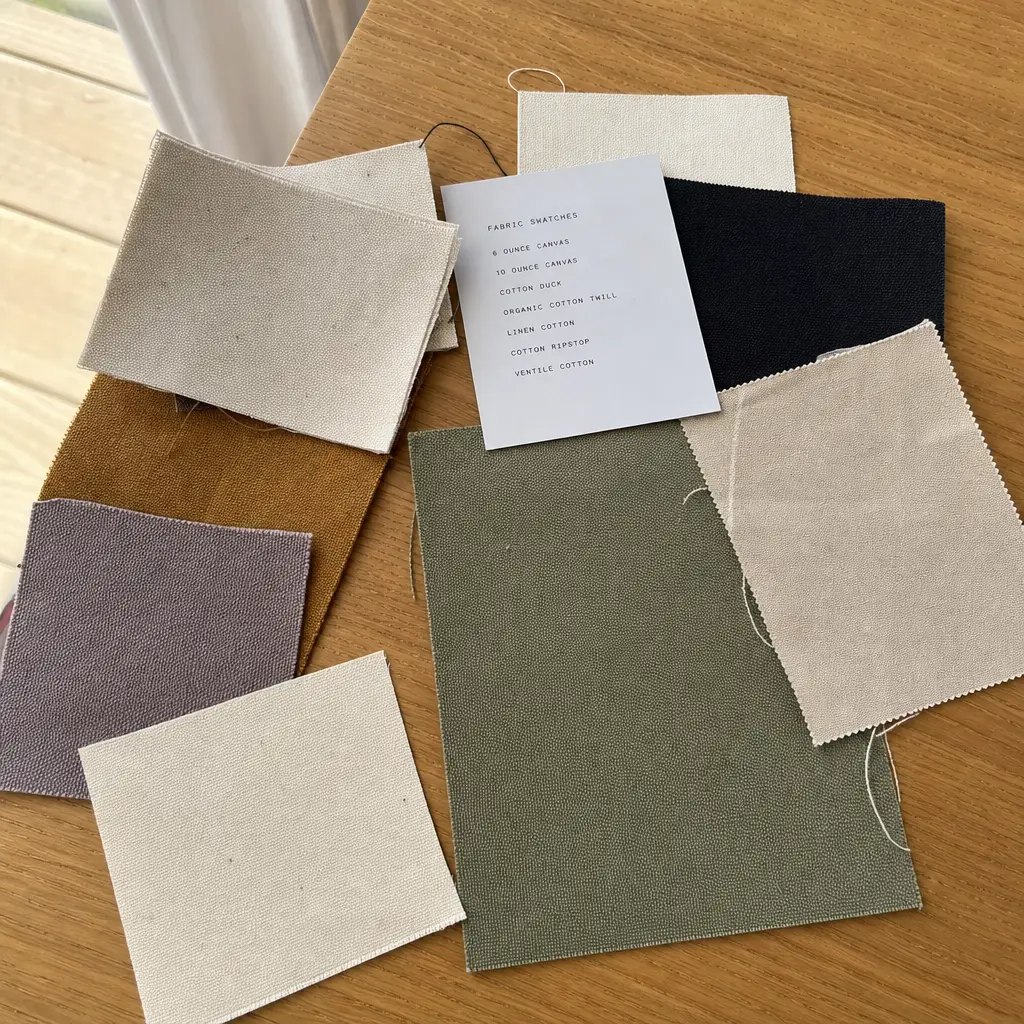
Canvas often looks straightforward until the bulk order arrives. Fabric variation is one of the most common reasons messenger bags feel inconsistent from unit to unit. A useful QC process checks color, hand-feel, weight, weave, and surface condition against the approved swatch or gold sample. If the production lot does not resemble the approved reference under the same light, it should not pass on appearance alone.
For dyed canvas, shade variation should be defined in advance. For natural canvas, buyers should decide whether visible slubs, seed specks, and tonal variation are acceptable or should be treated as defects. That decision depends on the brand look. A rugged lifestyle look may tolerate more character; a premium onboarding gift may not.
Surface issues matter even more when the logo is printed directly onto the fabric. Oil marks, water stains, loose fibers, lint, and uneven weave can distort the logo or make the bag look used before the customer opens the carton. Coated canvas should be checked for cracking, tackiness, rough spots, or color transfer at folds. If the fabric is pre-washed or pre-shrunk, that should be written down because it affects size, color, and reorder consistency.
When comparing colors, inspect each shade separately. Dark colors can hide weave variation but show lint; light colors can show marks and contamination more easily. The buyer should always approve the fabric style and color under one consistent lighting condition and keep that reference for the final inspection.
- Check fabric against approved swatch, lab dip, or gold sample under consistent light.
- Reject visible oil stains, water marks, mold, strong odor, large weave gaps, and severe shade mismatch.
- Define whether natural slubs are acceptable for the brand style.
- Measure finished dimensions after sewing, not just cut panels.
6. Treat logo quality as a production control item
For startup buyers, logo execution is often the most visible quality issue. A clean mark in the artwork file does not guarantee a clean result on canvas. The fabric texture can break fine lines, fill in small text, blur edges, or create embroidery puckering. That is why the buyer should review the logo method before the order is released, not after the first bulk print run.
Screen print works well for bold shapes and simple one- or two-color artwork. Embroidery can look more premium, but it may distort small letters or thin strokes on softer canvas. Woven labels are useful when the buyer wants repeatable branding without printing directly onto the bag. Heat transfer can capture more detail, but adhesion, rub performance, and visual finish still need verification on the actual fabric.
The QC sheet should define placement by fixed reference points such as top edge, side seam, flap edge, or pocket seam. It should also define acceptable movement from those points. The exact placement tolerance depends on the bag size and design, so the buyer should approve it rather than leaving it open-ended. Front-facing logos usually need tighter control than internal labels or hangtags.
Always request a strike-off or decorated panel on the actual canvas before approving the full pre-production sample when branding matters. Keep photos of the approved decoration under good light, including close-ups of opacity, edge sharpness, color match, and any stitch or print boundary. That record prevents disputes later.
- Provide vector artwork, logo dimensions, placement reference points, and color targets.
- Request a strike-off on actual canvas before approving bulk production.
- Reject smearing, uncured ink, flaking, severe embroidery puckering, and visible misregistration.
- Set different tolerances for front logo, side label, internal label, and hangtag if needed.
7. Inspect the load-bearing and moving parts as working components
Messenger bags are not static products. They are opened, closed, carried, swung, set down, and adjusted. Inspection should therefore include working checks, not just a visual review. The strap anchor is one of the highest-risk areas because it carries the load and is often stressed at an angle during use.
Check the stitching at strap anchors, flap corners, pocket openings, zipper ends, side seams, base corners, and handle joins. Look for skipped stitches, broken threads, loose tension, needle cuts, missing bartacks, or seam distortion. A bag can look acceptable in a flat photo and still fail when loaded because the reinforcement is too light or the stitch line is too close to the edge.
Zippers should be tested on sampled units from different cartons. Open and close them repeatedly with normal hand force. Reject catching teeth, twisted tape, weak sliders, poor end stops, or pullers that detach easily. If the bag uses snaps, buckles, magnets, or hook-and-loop closures, they should be checked in the same way a user would use them, including when the bag is partially loaded.
Hardware should also be checked for burrs, sharp edges, rust, plating defects, and deformation. If metal components touch the canvas during packing or use, they can scratch or stain the fabric. For a laptop-style or commuter-style bag, a simple load check against the buyer’s expected contents is useful for catching obvious weakness before shipment, even if it is not a substitute for lab testing when certification is required.
- Inspect strap anchors, flap corners, zipper ends, side seams, and base corners as critical stress areas.
- Cycle zippers, snaps, buckles, and adjusters on sampled units.
- Reject broken bartacks, skipped stitches at stress points, sharp hardware, rust, and zipper jamming.
- Use a buyer-defined load check that matches the intended contents.
8. Make the sample the production standard, not a preview
A sample only helps if it reflects the bulk order. Many sourcing problems start when the sample uses upgraded fabric, a better zipper, a different print method, or hand-finishing that the bulk run will not receive. The pre-production sample should match the intended BOM as closely as possible, and any deliberate deviation should be written down.
Review the sample the same way the bulk shipment will be inspected. Measure it, load it, open and close it, inspect the logo, verify the fold method, and photograph the details. If the sample is approved only from photos, the buyer can easily miss pocket placement, internal seam finishing, weak reinforcement, or rough zipper travel.
Once approved, the sample becomes the gold standard. Keep a physical sample when possible and pair it with a photo record for the procurement file. Capture the front, back, inside, logo, strap anchor, zipper, side seam, base, label, and packing format. This is especially useful for reorders and for teams that review purchases across locations.
If there are multiple colorways, logo versions, or packing versions, approve each version or document the differences clearly. A black embroidered version and a natural screen-printed version should not be treated as interchangeable inspection references.
- Approve a pre-production sample made with bulk-intended materials.
- Record approved dimensions, logo position, fabric, hardware, stitching, and packing.
- Keep a gold sample for final inspection and future reorders.
- Require written approval for all changes after sample sign-off.
9. Put packing controls into the inspection checklist
Packing is part of product quality because it affects how the bag arrives. Canvas bags can crease, absorb odor, collect dust, or lose shape if packing is loose or inconsistent. A useful checklist includes fold method, strap placement, polybag requirement, carton count, carton strength, and moisture-control requirements.
The fold method matters most for branded messenger bags. If the logo panel is folded sharply or placed against hardware, the customer may see a crease, abrasion mark, or print damage as soon as the carton is opened. Straps should be folded consistently and not twisted. Flaps should sit flat, and any insert board or padding should not be crushed before arrival.
Carton marking is also a procurement control, not just a logistics detail. Each carton should match the packing list by style, color, quantity, and PO number. Mixed cartons may be acceptable only if the buyer approves the logic in advance. Clear carton marks make receiving faster and reduce inbound miscounts.
Moisture and odor need explicit attention for canvas. If the goods will be stored in humid conditions or travel long distances, buyers may require dry cartons, desiccants, and odor-free packaging materials. Do not assume these are included; specify them if they matter to your storage or distribution plan.
- Define fold method, strap position, polybag requirement, and label placement.
- Keep logo panels away from sharp folds and exposed hardware.
- Verify carton marks, carton count, PO number, style, color, and quantity.
- Check cartons from different pallet or stack positions for moisture, odor, and compression damage.
10. Use the checklist to protect landed cost and reorder consistency
The value of a QC checklist is not the checklist itself; it is the risk it removes. A cheaper bag that fails inspection, needs sorting, or creates customer complaints can cost more than a slightly higher-priced bag made to a controlled standard. For tech startup buyers, the hidden costs include missed event dates, employee dissatisfaction, replacement shipments, reprints, and a brand image that looks inconsistent across teams or offices.
When comparing offers, use landed-cost thinking. Put each supplier on the same Incoterms, packing standard, sample stage, and inspection assumption. Then compare the full picture: unit price, sample cost, freight, duty, labeling, rework risk, and reorder stability. That makes the sourcing decision easier to explain internally and less vulnerable to hidden additions later.
Reorders deserve the same discipline as the first order. Keep the approved BOM, gold sample, artwork file, packing standard, and inspection checklist. Ask the supplier to flag any component change before production, including fabric lot, zipper supplier, hardware finish, lining, thread, label, or carton size. Even small substitutions can affect fit, color, or brand consistency.
A strong checklist also helps internal stakeholders work together. Marketing gets consistent branding, operations gets cleaner receiving, finance gets fewer surprises, and procurement gets a clear basis for accepting or rejecting the shipment. That is the practical reason to keep the quality standard specific and measurable.
- Compare total landed cost, not just unit price.
- Preserve approved specs for reorders and future colorways.
- Require written notice before any component or packing substitution.
- Use inspection results to improve the next RFQ, not only to accept or reject one shipment.
Specification comparison for buyers
| Supplier comparison point | Stronger buyer signal | Weaker buyer signal | How to verify before PO |
|---|---|---|---|
| Quote basis | Supplier confirms canvas weight or GSM, lining, zipper gauge, strap width, logo method, unit pack, carton pack, and Incoterms in one written quote. | Supplier gives a single unit price with “standard quality” or “as sample” but no bill of materials. | Ask for a BOM-based quote and require the supplier to mark any item that is optional, substituted, or not included. |
| Factory transparency | Supplier identifies whether production is direct factory, subcontracted sewing, or trading-company managed, and states who owns rework. | Supplier cannot explain where cutting, printing, sewing, and final packing happen. | Ask for process flow, factory name or role, sample room photos, and written responsibility for failed inspection. |
| Material control | Supplier confirms fabric lot control, shade tolerance, shrinkage expectation, and whether canvas is pre-shrunk or washed. | Supplier quotes “12 oz canvas” or “heavy canvas” without GSM, lot control, or shrinkage statement. | Request fabric swatch or lab dip approval and require the same approved canvas in the pre-production sample and bulk. |
| Construction proof | Supplier provides stitch density target, reinforcement method, bartack locations, strap attachment detail, and closure specification. | Supplier relies on product photos and does not define stress-point construction. | Inspect the pre-production sample under load and photograph approved stitch, bartack, zipper, and strap details. |
| Logo readiness | Supplier reviews vector artwork and confirms logo size, placement tolerance, minimum line thickness, color reference, and print/embroidery limits. | Supplier accepts artwork without checking whether fine lines, small text, or gradients will work on canvas. | Request a strike-off or logo sample on actual canvas before approving the final sample. |
| Inspection standard | Supplier accepts an AQL or buyer-defined sampling plan, major/minor/critical defect definitions, and rework rules before production. | Supplier says final inspection is included but cannot define defect categories or pass/fail limits. | Attach the inspection checklist to the PO and require written agreement on defect limits and sampling method. |
| Reorder reliability | Supplier can repeat BOM, packing, label, and hardware finish, while flagging items that may vary by dye lot or component batch. | Supplier treats each order as a new sourcing project with no record of approved components. | Keep a sealed gold sample, approved BOM, and photo record for future orders. |
| MOQ logic | Supplier separates MOQ by color, logo version, fabric dye lot, hardware finish, and packing version. | Supplier quotes one low MOQ but later adds charges for each color, logo, or trim variation. | Ask whether MOQ applies per total order, per color, per artwork, per fabric, or per shipment. |
| Commercial risk | Supplier states quote validity, payment terms, sample fees, lead time after approval, excluded costs, and inspection/rework responsibility. | Supplier offers a very low unit price but leaves out cartons, inner bags, labels, sample revisions, or inspection support. | Compare landed cost using the same Incoterms, packing, sample stage, and inspection assumption. |
Buyer checklist before sampling
- Define the use case first: laptop carry, onboarding kit, event giveaway, commuter bag, customer gift, or retail resale.
- Set target dimensions, gusset depth, strap length range, handle drop, pocket layout, and load weight before requesting quotes.
- Specify canvas weight in oz and/or GSM, finish, color reference, shrinkage allowance, lining, padding, and seam finishing requirement.
- Lock the BOM: canvas, lining, zipper, puller, webbing, buckle, D-ring, thread, label, logo method, foam, insert board, and packaging.
- Send vector artwork with Pantone or color references, logo size, placement, minimum line thickness, and minimum text height.
- Approve a pre-production sample made from bulk-intended materials, not just a photo sample or mockup.
- Create pass/fail criteria for stains, shade mismatch, skipped stitches, broken bartacks, zipper jamming, logo shift, dimension drift, and packing errors.
- Define defect categories and thresholds: critical, major, and minor, plus the action required for each.
- Agree on sampling method, AQL or buyer-set sample size, rework process, and who pays for reinspection if the lot fails.
- Confirm unit packing, fold method, carton quantity, carton marks, barcode or hangtag requirements, and moisture-control needs before production starts.
Factory quote questions to send
- What exact canvas weight did you quote in oz and GSM, and is the fabric greige, dyed, washed, pre-shrunk, coated, or finished after dyeing?
- What shrinkage and shade variation should we specify, and can bulk production use one controlled dye lot per color?
- Which construction is included in the base price: unlined, lined, padded laptop sleeve, inner pocket, zipper closure, flap closure, bottom board, or reinforced base?
- What zipper gauge, slider type, puller material, strap webbing width, buckle type, D-ring grade, and thread type are included in the base price?
- Which logo method is quoted, and what limits apply to minimum line thickness, small text, ink opacity, embroidery density, and placement tolerance?
- Can you provide a logo strike-off or printed/embroidered panel on the actual canvas before the full pre-production sample?
- What MOQ applies per color, per artwork, per logo size, per hardware finish, and per packing version?
- What sample stages are included: fabric swatch, strike-off, reference sample, pre-production sample, gold sample, and revision sample?
- What buyer-set tolerances will you accept for finished dimensions, strap length, flap alignment, pocket position, logo placement, and zipper alignment?
- What sampling plan, AQL level, or buyer-defined inspection method is included, and what happens if the lot exceeds the agreed defect limit?
Quality-control points to confirm
- Use a buyer-approved sampling plan. If using AQL, define inspection level and acceptable limits in the PO; do not rely on the factory’s default unless it is written and accepted.
- Classify unsafe sharp hardware, broken strap anchors, non-functioning closure, severe mold or odor, and wrong logo as critical defects requiring rejection or full sorting.
- Treat zipper jamming, broken bartacks, major stains, wrong fabric weight, large shade mismatch, incorrect dimensions, crooked flap, and obvious logo misplacement as major defects.
- Treat isolated loose thread ends, slight natural canvas slubs, small internal sewing irregularities, and minor packing wrinkles as minor defects only if they do not affect appearance or use.
- Measure finished width, height, gusset, flap, handle drop, strap length, pocket position, and logo position against the approved spec; set tolerances in writing, such as ±0.5 cm for small details and ±1.0 cm for larger body dimensions when suitable for the design.
- Check fabric under consistent light for stains, oil marks, water marks, shade panels, weave gaps, loose fibers, coating cracks, and visible contamination.
- Inspect stitching at strap anchors, flap corners, pocket openings, zipper ends, side seams, base corners, and handle joins for skipped stitches, broken threads, needle cuts, loose tension, and missing bartacks.
- Perform an agreed functional cycle check on sampled units: open and close zippers, operate snaps or buckles, adjust straps, and carry the loaded bag for a short handling test.
- Check logo placement, registration, opacity, edge sharpness, color, adhesion, embroidery puckering, label straightness, and whether artwork matches the approved strike-off.
- Perform dry rub checks on printed areas where appropriate and buyer-specified; reject smearing, flaking, uncured ink, or obvious color transfer beyond the agreed standard.