1. Define the coffee roaster use case before sending the RFQ
Wholesale canvas messenger bags for coffee roasters are often quoted too broadly. A supplier may price a light promotional shoulder bag while the buyer expects a lined, zipper-top, retail-ready messenger bag with a woven label, barcode, hangtag, and clean carton presentation. Both may be described as a canvas messenger bag with logo, but they are not the same product.
Start with the selling or distribution channel. A café retail bag needs shelf appeal, consistent folding, odor control, clean canvas, and readable hangtags. A wholesale account gift may need stronger straps and room for catalogs, roasted coffee bags, or sample kits. A brew-kit bundle may need exact packing dimensions and SKU labels. A trade-show giveaway may prioritize unit cost, lead time, and a simple logo method.
- Name the channel: café retail, wholesale account gift, brew-kit bundle, subscription incentive, event giveaway, employee use, or distributor merchandise.
- List likely contents: retail coffee bags, brew tools, cupping notes, catalogs, tablets, sample boxes, or light daily-carry items.
- Decide whether the bag should stand neatly on display or look soft and casual as washed canvas merchandise.
- Tie each quote to one spec version, one artwork set, one packing instruction, and one target ship window.
- Avoid vague terms such as premium, eco, heavy-duty, or retail-ready unless each is backed by measurable requirements.
2. Lock the core bag specification: fabric, pattern, and trims
A reference photo helps communicate style, but it is not a production specification. Buyers should state finished dimensions, canvas weight, composition, construction, and trims before comparing prices. Otherwise one quote may include 12 oz cotton canvas and another may use lighter fabric, narrow webbing, a cheaper zipper, or fewer reinforcements.
For many branded merchandise programs, 12 oz canvas, often roughly 400 to 420 GSM depending on weave and finishing, is a practical starting point. It balances structure, printability, sewing cost, and freight weight. A 14 oz or 16 oz canvas can feel more substantial, but it may raise material cost, machine strain, carton weight, and shipping cost. Washed canvas can look more retail-oriented, but it requires control over shrinkage, shade variation, and odor.
- Specify body width, height, gusset depth, flap drop, zipper opening, pocket depth, strap width, adjustable strap range, and handle drop if included.
- State finished canvas weight in GSM and oz, plus whether it is natural, dyed, pigment-dyed, washed, coated, softened, or unwashed.
- List trims: zipper size, puller style, webbing width, D-ring, buckle, snap, rivet, lining, thread, label, patch, hangtag, and packing material.
- Identify reinforcement points: strap anchors, gusset corners, zipper ends, flap corners, handle bases, pocket openings, and laptop sleeve seams.
- Ask suppliers to quote controlled options such as 12 oz, 14 oz, and 16 oz rather than letting each supplier choose its own fabric.
3. Add compliance language before claims reach the product page
Compliance is not only a legal department issue. It affects artwork, labels, hangtags, packaging, product descriptions, and receiving requirements. Coffee roaster brands often want terms such as natural canvas, organic cotton, recycled cotton, rPET, low-impact, plastic-free, or sustainable. Those claims should not be used externally unless the supplier can support them for the actual production order.
Market requirements vary, so buyers should confirm rules with their own compliance team or importer. Common review points include fiber content labeling, country of origin, care information, retailer labels, barcode format, restricted substances, and packaging warnings. If selling into the United States, Prop 65 may be relevant depending on materials and exposure. For the EU or UK, buyers may ask suppliers to align with REACH or a restricted substance list. Recycled-content or organic claims need documentation that matches the ordered material, not a generic certificate from another program.
- Request order-specific material declarations for fabric, lining, webbing, labels, patches, coating, ink, hardware, and packaging.
- Clarify whether any restricted-substance standard, retailer RSL, REACH expectation, Prop 65 review, or children’s product rule applies to the order.
- Confirm label needs: fiber content, country of origin, care label, SKU label, barcode, hangtag, warning label, and carton mark.
- Do not use recycled, organic, compostable, biodegradable, or plastic-free claims without claim-support documents and approval from the responsible compliance owner.
- Keep certificates, lab dips, trim cards, test reports, artwork approvals, and packing instructions linked to the PO and spec version.
4. Compare suppliers with the same evidence standard
A direct factory, trading company, promotional supplier, local decorator, or specialized bag workshop can all be valid options. The key is to verify who controls the work that creates risk: fabric buying, cutting, sewing, printing, embroidery, washing, final inspection, packing, and export documentation.
Do not compare suppliers only by unit price. A low-price quote may exclude hangtags, barcode labels, carton marks, export cartons, inspection support, or logo setup charges. It may also assume lighter canvas or weaker construction. Ask each supplier for the same evidence: trim card, sample measurements, reinforcement close-ups, packing photos, and a process map showing which steps are in-house or outsourced.
- Send the same spec sheet, artwork, MOQ target, packing rule, incoterm, compliance requirement, and inspection standard to every supplier.
- Ask for the bulk production address, not only the sales office location.
- Record who pays for rework if the defect comes from sewing, printing, trims, labels, packing, or an undocumented substitution.
- Require first-piece production photos for logo placement, strap anchors, zipper installation, flap shape, and unit packing.
- Reject vague substitution language unless the buyer approves substitute fabric, trims, labels, or packing before production.
5. Build a quote that reveals the real cost
A useful quote explains the product behind the price. The supplier should state bag measurements, canvas composition and weight, lining, zipper details, webbing width, hardware finish, logo method, label type, unit packing, carton packing, MOQ, lead time, payment terms, incoterm, shipment port, and quote validity.
MOQ should be broken down by the variable that drives production. A supplier may accept 1,000 pieces total but require 500 pieces per body color, 300 pieces per strap color, or a separate setup for every café logo. For coffee roasters with multiple locations, seasonal artwork, wholesale account editions, or bundle-specific SKUs, per-version MOQ matters more than the headline total.
- Separate product cost from one-time charges: sample fee, screen setup, embroidery digitizing, woven label setup, patch mold, artwork adjustment, and special packing setup.
- Separate recurring charges: fabric, lining, webbing, zipper, hardware, thread, logo application, hangtags, labels, sewing, unit packing, carton packing, and inspection handling.
- Ask what is excluded: sample freight, barcode application, desiccants, export cartons, inland transport, customs documents, duty, or delivery to warehouse.
- State the incoterm clearly, such as EXW factory, FOB port, CIF destination port, or DDP destination if applicable.
- Require quote options to be line-by-line: for example, 12 oz natural canvas with screen print versus 16 oz washed canvas with woven label and retail packing.
6. Control branding for coffee roaster artwork
Coffee roaster logos often include small typography, circular marks, origin graphics, café names, or limited-edition art. Canvas texture can interrupt fine detail, especially on natural or washed fabric. Approving a digital mockup is not enough for a retail or repeat program.
Screen printing is usually efficient for bold one-color or two-color designs. Embroidery can feel more premium for compact marks, but it may pucker lighter canvas or lose small text. Woven labels are often reliable when detail is difficult to print on textured fabric. Patches and heat transfers can work, but they need material and durability review.
- Provide vector artwork, Pantone references where relevant, final logo size in millimeters, and placement measured from fixed seams or edges.
- Approve a strike-off on the actual canvas for screen print, heat transfer, or direct print.
- For embroidery, check thread color, stitch density, backing visibility, distortion, and legibility of small lettering.
- For woven labels, confirm label size, fold type, edge finish, orientation, attachment seam, and placement tolerance.
- Set inspection rules for logo size, position, color, registration, label angle, ink cracking, loose threads, and acceptable variation.
7. Use a short sample sequence that prevents bulk disputes
Sampling should convert assumptions into signed standards. A practical sequence is fabric swatch or lab dip, trim card, prototype, corrected sample if needed, pre-production sample, and first-piece production confirmation. Smaller orders may skip steps, but the buyer should knowingly accept that risk.
The pre-production sample should use final canvas, final lining, final webbing, final zipper, final hardware, final logo method, final labels, and the intended packing approach. Measure it, photograph it, sign it, date it, and reference it in the purchase order. Photo approval alone cannot verify fabric weight, hand feel, odor, zipper smoothness, strap strength, or print thickness.
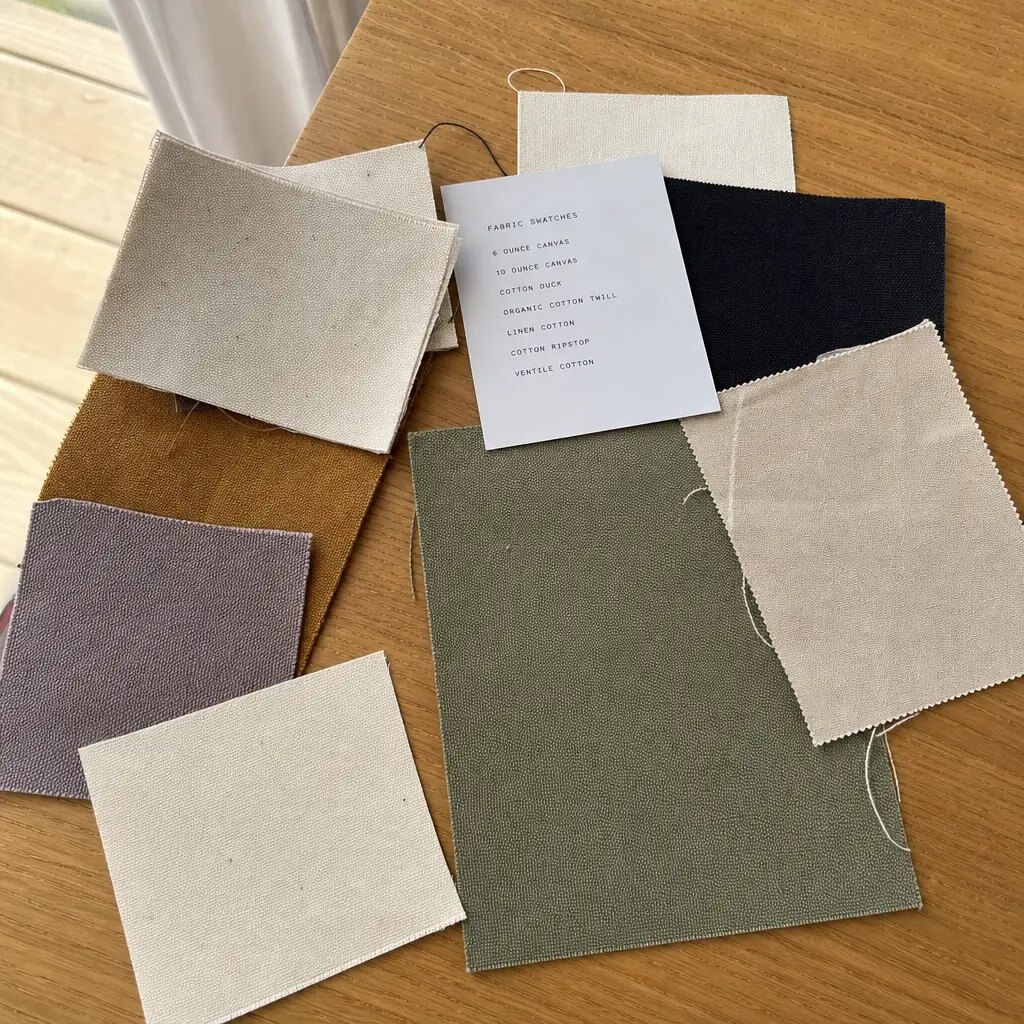
- Approve fabric swatches before full sampling when color, hand feel, wash effect, or print appearance matters.
- Request a trim card showing zipper, puller, webbing, buckle, D-ring, lining, thread, label, patch, hangtag, and hardware finish.
- Measure the sample against the spec sheet and record approved deviations in writing.
- Keep one approved sample with the buyer and one with the factory for production and inspection reference.
- Require first-piece photos before mass sewing continues, especially for logo placement, strap anchors, zipper ends, flap shape, and packing.
8. Write QC standards that are measurable, not subjective
Quality control should cover fabric, measurements, workmanship, function, branding, odor, packing, and carton marks. A bag can look acceptable in a quick photo and still fail because the strap anchor is weak, the zipper catches the lining, the logo rubs off, or the carton labels are wrong.
Define defect categories before production. Critical defects may include unsafe sharp hardware, mildew odor, wrong logo, wrong SKU, contamination, or prohibited material substitution. Major defects may include open seams, broken bartacks, zipper failure, severe logo misplacement, incorrect pack count, wrong canvas weight beyond tolerance, or unreadable barcode. Minor defects may include small loose threads, slight wrinkles, or shade variation within the approved sample range.
- Check fabric weight, shade, stains, odor, surface defects, and lot consistency before cutting.
- Measure sampled units for body size, gusset, flap drop, strap length, zipper opening, pocket depth, and logo placement.
- Inspect stitching, seam allowance, bartacks, binding, raw-edge control, lining attachment, zipper ends, and reinforcement patches.
- Test zipper movement, buckle adjustment, strap anchors, snaps or magnets if used, pocket access, and handle comfort.
- If AQL inspection is used, define inspection level, acceptable quality limits, sample size, and defect classifications before production starts.
9. Make packing suitable for café retail and warehouse receiving
Packing can protect margin or create hidden labor. Poor folding can crease the bag, hardware can mark natural canvas, SKUs can mix inside cartons, and missing barcode labels can delay distributor receiving. These are commercial problems, not just warehouse inconveniences.
Coffee roasters should choose packing based on channel. Café retail may need clean folding, hangtag visibility, barcode labels, and minimal wrinkles. Wholesale account gifts may need carton separation by recipient or location. Brew-kit bundles may need exact unit dimensions and scan-ready SKUs. Internal giveaways may allow simpler packing if presentation is less critical.
- Specify fold method: flat pack, single fold, double fold, strap tucked, strap banded, or structured packing with shape support.
- Define unit packaging: no individual pack, paper band, tissue wrap, recycled polybag, standard polybag, hangtag only, or retail sleeve.
- Protect buckles, D-rings, zipper pullers, snaps, and rivets so they do not leave pressure marks on the canvas.
- Approve carton quantity, SKU separation, carton dimensions, gross weight, net weight, carton numbering, and carton strength.
- Define carton marks: buyer name, PO number, SKU, color, quantity, country of origin if required, destination, carton number, and barcode if needed.
10. Manage lead time with milestones, not vague updates
Lead time starts only when the right approvals are complete. Ask what triggers the production clock: deposit receipt, artwork approval, fabric confirmation, signed pre-production sample, or final packing files. A quoted 35 days means little if labels, barcodes, or trim approvals are still open.
Schedule risk increases with custom-dyed canvas, washed finishing, special hardware, woven labels, multiple artwork versions, barcode packing, or retailer-specific carton rules. Repeat orders should be easier if the first order was documented with a signed sample, trim card, fabric record, artwork file, packing instruction, and inspection report. For reorders, confirm whether the same fabric lot, mill, zipper, webbing, hardware, and label supplier are still available.
- Build a timeline for artwork approval, swatch approval, trim approval, prototype, pre-production sample, material booking, bulk start, inspection, packing, and shipment.
- Freeze artwork before pre-production approval to avoid new screens, embroidery file changes, placement disputes, and rework.
- Confirm long-lead trims early: zippers, webbing, buckles, D-rings, labels, patches, hangtags, and special packing materials.
- Set deadlines for barcode files, carton marks, destination labels, and retailer instructions before packing begins.
- For reorders, approve any material, trim, label, or packing change before production, not at final inspection.
Specification comparison for buyers
| Supplier option | What to verify | Commercial advantage | Buyer risk to control |
|---|---|---|---|
| Direct sewing factory | hardware trim card, strap-load photo, lining close-up, approved flap sample, and first-piece production photos | Better sample-to-bulk control and faster production feedback | May be weaker on export paperwork or branded packing unless checked early |
| Trading company | Factory name, production photos, trim-source proof, and who owns QC decisions | Can coordinate small mixed orders and extra services | Markup can hide real factory capability and slow defect decisions |
| Specialized bag workshop | flap shape, strap webbing, buckle, D-ring, inner pocket, zipper pocket, seam allowance, and load path | More practical for detailed construction, trims, and repeat programs | Capacity may be limited during peak seasons |
| Low-price general supplier | 10-16 oz canvas, washed canvas, rPET canvas, lining fabric, interfacing, and hardware finish | Useful for simple promotional runs with loose specs | Material downgrades, weak packing, and vague inspection scope can erase savings |
| Retail-ready supplier | shape support, strap folding, hardware protection, individual bag, carton drop expectation, and retailer hangtag placement | Can handle labels, SKU separation, carton marks, and receiving rules | Higher unit cost must be compared against reduced warehouse work |
| Compliance-focused supplier | Fabric records, labeling review, test plan, and production traceability | Safer for retail programs and repeat brand orders | Documentation claims need evidence, not only sales language |
| Local sample room plus bulk factory | Signed sample, bulk factory handoff, first-piece photos, and deviation owner | Good for complex branding before large production | Sample room quality may not match bulk line unless handoff is controlled |
Buyer checklist before sampling
- Define the bag’s channel before quoting: café retail shelf, wholesale account gift, brew-kit bundle, trade-show giveaway, subscription reward, employee bag, or distributor merchandise.
- Lock the finished bag specification: width, height, gusset, flap drop, zipper opening, pocket depth, strap width, adjustable strap range, lining, laptop sleeve size if any, and tolerances.
- State finished canvas weight in both GSM and oz, plus whether it is measured after dyeing, washing, coating, softening, or other finishing. Use a written tolerance such as +/-5% unless your standard differs.
- Identify composition and finish: 100% cotton, cotton-poly blend, recycled cotton blend, rPET canvas, natural, dyed, pigment-dyed, washed, coated, water-repellent, softened, or untreated.
- Specify construction details: seam allowance, stitch density, bartack locations, binding, lining attachment, zipper end reinforcement, strap anchor method, and whether rivets are decorative or load-bearing.
- Control branding in writing: artwork file type, Pantone or thread color, logo size in millimeters, decoration method, label fold type, reference point for placement, and placement tolerance.
- Ask which steps are in-house and which are outsourced: fabric sourcing, cutting, sewing, screen printing, embroidery, woven label production, washing, final inspection, and packing.
- Break MOQ down by body color, canvas weight, artwork version, strap color, lining color, label version, packing configuration, and destination if cartons must be separated.
- Request a quote that separates product cost, setup charges, sample fees, logo application, labels, hangtags, unit packing, carton packing, inland handling, and export preparation.
- Confirm compliance needs early: fiber labeling, country of origin, care label, restricted substances, Prop 65 if applicable, REACH/RSL expectations, recycled-content documentation, and claim substantiation.
Factory quote questions to send
- What is the finished canvas weight in GSM and oz, and is it measured before or after dyeing, washing, coating, or softening?
- Can you quote the same bag in 12 oz, 14 oz, and 16 oz canvas so we can compare structure, cost, sewing difficulty, and freight impact?
- What is the actual fabric composition for this order, and what documentation can you provide if we request cotton, recycled cotton, rPET, or organic material?
- Which market labeling elements can you support: fiber content, country of origin, care label, SKU label, barcode, hangtag, warning label, or retail carton mark?
- What restricted-substance, REACH/RSL, CPSIA, Prop 65, or retailer-specific testing expectations have you supported for similar textile bag orders?
- Which processes are in-house and which are subcontracted: cutting, sewing, screen printing, embroidery, woven label attachment, washing, final inspection, and packing?
- What is the MOQ by body color, artwork version, strap color, lining color, label version, and packing configuration?
- What setup charges apply per screen color, embroidery file, woven label, patch mold, heat-transfer plate, or logo position?
- What sample stages do you recommend, what does each cost, and how many working days are needed after artwork, fabric, and trim approval?
- Who pays for rework or replacement if logo placement, print durability, stitching, seam strength, zipper function, label accuracy, or packing format fails the approved standard?
Quality-control points to confirm
- Finished fabric weight should remain within the agreed tolerance, commonly around +/-5% of the approved finished specification unless the purchase order states another rule.
- Finished measurements should be checked against the approved spec. For soft canvas bags, common working tolerances may be around +/-10 mm on major body dimensions and tighter limits for logo placement or small features.
- Canvas panels should be free from oil spots, dye streaks, mildew odor, water marks, excessive slubs, sharp shade mismatch, contamination, visible weave gaps, and defects that affect branding or retail presentation.
- Fabric color should be compared with an approved swatch or lab dip under consistent lighting, not only against a photo or digital mockup.
- Logo placement should remain within the approved tolerance, such as +/-5 mm for small labels or +/-10 mm for larger front prints, unless artwork sensitivity requires a stricter standard.
- Screen print, heat transfer, or direct print should show clean edges, acceptable registration, no heavy ink bleeding, no blocking, no obvious cracking at fold points, and no major color mismatch against the approved strike-off.
- Embroidery and woven labels should have correct color, clean stitching, secure attachment, no distorted canvas panel, no loose backing visible from the front, and correct orientation.
- Stitching should be even and secure, with no skipped stitches, broken threads, open seams, exposed raw edges where binding is specified, loose thread clusters, severe seam puckering, or needle damage.
- Stress points, including strap anchors, handle bases, D-rings, buckles, gusset corners, zipper ends, flap corners, and laptop sleeve seams, should match the approved reinforcement method and pass the agreed pull or load check.
- Packing inspection should confirm unit fold, hardware protection, SKU separation, barcode readability, carton quantity, carton marks, gross weight, carton dimensions, and carton condition.