Start With the Event Job
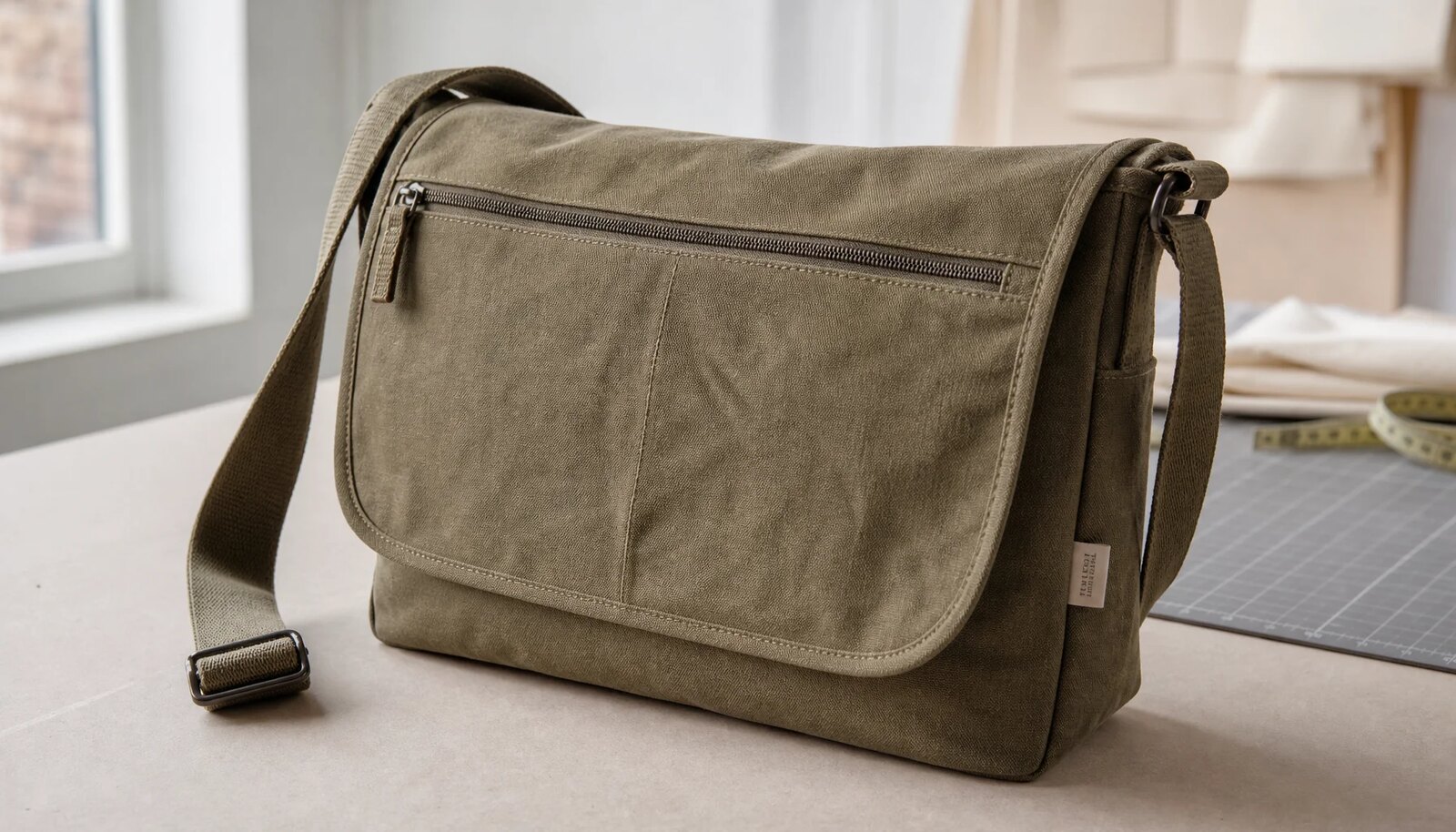
A canvas messenger bag can look right in a sample photo and still fail the event. Procurement should first define the job the bag must perform: registration handout, speaker kit, sponsor gift, VIP merchandise, staff utility bag, press kit, retail item, or distributor stock. Each use changes the required size, fabric, strap strength, logo placement, packing method, and receiving plan.
A light attendee bag may only hold an agenda, badge pack, notebook, and sponsor inserts. A speaker or VIP bag may need a tablet sleeve, inner zipper pocket, stronger strap anchors, better shape retention, and a finish that feels useful after the event. A staff utility bag may prioritize function and load strength over decoration.
Give the supplier real contents and handoff details before asking for price. State the largest item, approximate loaded weight, whether the bag must sit upright on a registration table, fit under a chair, hang from a display hook, or ship to multiple venues. This prevents one supplier from quoting a flat unlined satchel while another quotes a lined gusseted messenger bag.
- Define the role: giveaway, staff bag, speaker kit, sponsor pack, VIP gift, press kit, retail item, or resale stock.
- List contents: badge, agenda, brochure stack, notebook, tablet, bottle, apparel, charger, samples, or sponsor inserts.
- Give largest item dimensions and approximate loaded weight when known.
- State the distribution plan: registration table, seat drop, sponsor-sorted cartons, fulfillment center, merchandise shelf, or multi-venue shipment.
- Decide whether the target impression is budget promotional, premium corporate, rugged daily-use, or retail-ready.
Build a Quote-Ready Specification
The product name is not enough. A request for wholesale canvas messenger bags can produce quotes for flat envelope bags, flap satchels, lined shoulder bags, laptop-style conference bags, or structured retail items. A quote-ready specification should define the size, gusset, flap, top opening, closure, lining, reinforcement, strap, pocket layout, logo method, packing, and delivery term.
Put every cost-driving feature into the RFQ. A zipper closure adds trim, sewing time, and inspection points. Magnetic snaps require placement control and reinforcement. A 38 mm cotton strap feels different from a 25 mm polyester strap. A lined bag with an inner zipper pocket is not commercially comparable with an unlined promotional bag.
Tolerances make the quote enforceable. For many soft sewn bags, finished dimensions may be controlled around plus or minus 10 mm, while visible logo placement often needs a tighter rule such as plus or minus 3 to 5 mm. The exact tolerance depends on construction and decoration method, but it should be written before production starts.
- Specify finished size as width x height x gusset, and clarify external versus usable internal dimensions.
- Confirm flap shape, top zipper, magnetic snap, buckle, hook-and-loop closure, button, or open-top construction.
- Define strap width, material, adjustability, hardware finish, load path, and anchor reinforcement.
- List every pocket: front slip pocket, back pocket, inner zipper pocket, divider, tablet sleeve, pen loop, bottle sleeve, or key clip.
- Record tolerances for bag size, gusset, strap length, pocket position, logo placement, color, carton quantity, and version separation.
Control Canvas Material Risk
Canvas needs more detail than the word itself. Specify weight, weave, finish, color, shrinkage expectation, and documentation requirements. A 10 oz canvas, 12 oz canvas, 14 oz canvas, 16 oz canvas, washed canvas, rPET canvas, recycled cotton blend, and coated canvas can behave differently in cutting, sewing, printing, packing, and use.
As a sourcing reference, 10 oz canvas is roughly 280 gsm, 12 oz is roughly 340 gsm, 14 oz is roughly 400 gsm, and 16 oz is often around 450 to 500 gsm, depending on the mill and conversion method. These numbers are guides, not substitutes for swatches and material cards. A 12 oz canvas may work for light conference kits. A 14 oz canvas is often a practical middle range for reusable branded event bags. A 16 oz canvas can improve structure but may raise cost, sewing difficulty, and freight weight.
Finish also changes risk. Dyed canvas needs shade approval and may carry dye-lot minimums. Washed canvas feels softer but can affect shrinkage and final dimensions. Coated or water-resistant finishes may affect print adhesion. Recycled or specialty fabrics may support buyer policies, but the supplier should provide relevant material evidence before the buyer makes external claims.
- 10 oz or about 280 gsm: suitable for very light handouts where packability and price matter most.
- 12 oz or about 340 gsm: practical for light conference kits and simple promotional messenger bags.
- 14 oz or about 400 gsm: useful middle range for reusable branded event bags with better body.
- 16 oz or about 450 to 500 gsm: suitable for premium gifts, heavier inserts, or retail-style presentation.
- Washed canvas: approve shade, shrinkage, print result, odor, and final dimensions.
- Recycled or specialty canvas: request material scope, test reports where needed, and labeling rules before using sustainability language.
Engineer the Failure Points
Fabric weight alone does not make a durable messenger bag. Most functional failures happen along the load path: base seam, side seams, strap anchors, D-ring tabs, pocket corners, handle attachments, flap closures, and hardware points. A heavy canvas bag with weak strap stitching can fail faster than a lighter bag with proper reinforcement.
Ask the supplier to show how weight moves from the contents through the base and strap system. Strap anchors should use an approved reinforcement method such as bartacks, box stitching, or box-and-cross stitching. Pocket corners need reinforcement if they will hold chargers, bottles, or thick printed materials. Flap corners and curved seams should be checked for puckering.
Thread, webbing, and hardware deserve their own approval. A wider strap, often 38 mm or 50 mm for heavier kits, spreads weight better than a narrow strap. Cotton webbing gives a natural look; polyester webbing can offer consistency depending on grade. Hardware should be checked for sharp edges, plating defects, rust risk, and smooth operation.
- Request strap-anchor photos showing reinforcement type and stitch density before bulk production.
- Define strap width, length range, adjuster type, webbing material, and hardware finish.
- Require reinforcement at strap anchors, pocket corners, handle attachments, closure points, and high-stress seams.
- Check zippers, sliders, snaps, buckles, and magnetic closures on the approved sample.
- Add no-substitution language for fabric, lining, webbing, thread, zippers, buckles, labels, and hardware after approval.
Choose Branding With Tolerances
Logo application is a common source of event-bag disputes. Buyers may approve a digital mockup but leave out the production method, placement tolerance, color reference, edge clearance, and version-control rules. For sponsor-funded events, a few millimeters of drift may matter because the sponsor is reviewing the finished product, not the factory file.
Screen printing is usually efficient for simple logos, solid colors, and medium to larger runs. Embroidery can look more premium, but it adds cost, needle penetration, backing, and possible distortion on small text. Heat transfer or digital transfer can help with gradients, many colors, and short versioned runs, but hand feel and edge finish must be approved.
Messenger bags offer several branding zones: flap center, lower flap corner, front pocket, woven side label, sewn patch, shoulder-strap label, or internal label. Treat each sponsor logo, event track, region, or VIP version as a controlled SKU with its own artwork version, quantity, carton rule, and approval owner.
- Screen print: useful for simple artwork, solid colors, larger orders, and clear sponsor visibility.
- Embroidery: suitable for premium positioning; check stitch density, small text, backing, puckering, and needle marks.
- Heat or digital transfer: useful for gradients, many colors, and short versioned runs; approve hand feel and edge finish.
- Woven label or patch: better for retail-style branding, repeat programs, or discreet marks.
- Require approval for logo size, Pantone target, opacity, registration, placement, edge clearance, orientation, and version quantity.
Verify Supplier Compliance Evidence
A supplier compliance checklist should connect documents to the actual factory making the order. Compliance is not just a certificate in a sales email. For procurement, it means the supplier can identify the legal seller, production site, process ownership, documentation scope, QC authority, and traceability for fabric, trims, logos, and packing.
Document needs vary by buyer. A small internal event may only require factory profile, production photos, inspection records, and packing accuracy. A retailer-linked, public-sector, or large brand program may require a factory audit scope, material test reports, labeling review, restricted-substance controls, inspection report, corrective action record, and a traceability format. Each document should show the site name, date, scope, and relevance to sewn canvas bags.
Compliance also includes decision speed. The supplier should state who approves incoming fabric, who accepts or rejects shade variation, who controls logo strike-offs, who authorizes rework, and who signs the final packing list. Event timelines leave little room for unclear ownership.
- Confirm legal seller, actual factory name, production address, and whether that site will handle bulk production.
- Request a factory profile with process list, production capacity range, contact owner, and major outsourced steps.
- Check audit scope, date, site name, and product relevance when an audit is required.
- Request material test reports when the buyer has chemical, labeling, recycled-content, or retailer requirements.
- Ask for inspection report format, corrective action record format, and traceability format for fabric lots, trim lots, logo batches, rejected units, and replacement units.
- Record who can approve deviations from the signed sample and who pays for correction when the supplier is at fault.
Read the Quote Commercially
A useful quote separates product specification from commercial terms. It should show fabric weight, lining, hardware, logo method, size, pocket layout, packing, MOQ, sample charges, setup charges, Incoterm, payment term, lead time, inspection plan, and quote validity. A unit price attached to a product photo is not enough for supplier comparison.
MOQ language deserves close reading. A supplier may advertise a low MOQ, while the practical minimum depends on canvas color, logo version, hardware finish, lining color, packing format, or carton label. Event planners often need sponsor versions, track colors, regional versions, VIP quantities, or destination labels. Ask for MOQ by total order and by each variable.
Ask for three price bands using the same specification: trial quantity, standard MOQ, and repeat-event quantity. Keep screen charges, embroidery digitizing, woven-label setup, artwork conversion, inspection, courier, and freight separate where possible. This makes landed cost per usable bag easier to compare.
- Compare the same canvas weight, size, lining, closure, strap, hardware, logo method, packing, carton marks, inspection scope, Incoterm, and deadline.
- Separate unit price from sample fees, screen charges, digitizing, patch development, label setup, artwork conversion, inspection, and courier cost.
- Ask for MOQ by total order, canvas color, logo version, bag size, hardware color, lining color, and packing format.
- Request price bands for trial quantity, normal MOQ, and repeat volume using the same specification.
- Confirm quote validity, payment term, sample lead time, production lead time, inspection date, ship date, and delivery responsibility.
Approve Samples Before Bulk
A sample is a control document, not only a preview. For custom event messenger bags, the approved pre-production sample should confirm material, dimensions, construction, logo execution, hardware, lining, packing direction, and hand feel. Keep one signed golden sample and a photo record showing front, back, inside, strap anchors, hardware, logo close-up, label, and packing method.
Sampling can be staged by risk. A fabric swatch confirms color and hand feel. A trim card confirms zipper, slider, buckle, D-ring, webbing, thread, lining, label, and packing material. A logo strike-off confirms print color, opacity, embroidery scale, patch quality, or transfer hand feel. A prototype confirms size and structure. A pre-production sample should use final materials and final production methods.
Approval should include actual measurements from defined reference points. If the sample has weak stitching, uneven flap shape, poor print opacity, rough hardware, odor, or shade panels, do not approve it hoping bulk will improve. Bulk production usually repeats the process that made the sample.
- Approve swatch, trim card, logo strike-off, prototype, and pre-production sample when the order is custom or event-critical.
- Keep a signed golden sample with date, PO number, artwork version, material description, tolerance sheet, and approval owner.
- Measure width, height, gusset, flap length, pocket opening, strap width, strap length range, and logo position.
- Check print opacity, embroidery backing, label placement, zipper operation, hardware finish, closure alignment, lining, and reinforcement.
- Reject samples with oil marks, odor, crooked stitch lines, loose threads, weak strap anchors, poor registration, sharp hardware, or inconsistent shade panels.
Set Inspection and Defect Rules
Quality control should focus on where canvas messenger bags actually fail: fabric downgrade, shade variation, weak strap anchors, skipped stitches, crooked flaps, misaligned pockets, poor logo placement, zipper problems, dirty handling, odor, and inaccurate carton counts. For event orders, inspection should also confirm sponsor-version separation.
Incoming inspection should happen before cutting. The factory should check canvas weight, defects, shade, lining, zipper function, buckle finish, webbing, thread, labels, odor, and packing materials. In-line inspection should happen after cutting, early sewing, logo application, and first finished pieces. Final inspection confirms measurements, function, cleanliness, carton marks, version separation, and packed quantity.
For higher-risk orders, procurement can use a recognized sampling approach such as ANSI/ASQ Z1.4 or ISO 2859-1 with agreed AQL levels. Defects should be classified before production. Critical defects involve safety, contamination, or legal issues. Major defects affect function, appearance, saleability, or event usability. Minor defects are small appearance issues within agreed limits.
- Incoming checks: canvas weight, fabric defects, shade, lining, webbing, hardware, zipper, thread, labels, odor, and packing materials.
- In-line checks: cutting accuracy, flap shape, pocket placement, strap reinforcement, bartacks, logo placement, and first finished pieces.
- Final checks: measurements, stitching, print quality, hardware function, cleanliness, odor, carton quantity, carton marks, and version separation.
- Critical defects: broken needle, sharp metal, contamination, mold, prohibited labeling issue, or safety risk.
- Major defects: detached strap, broken zipper, wrong logo, wrong color, missing pocket, open seam, severe stain, or incorrect carton contents.
- Minor defects: small loose thread, slight wrinkle, removable chalk mark, or minor measurement variance within tolerance.
Lock Packing and Receiving Rules
Packing is part of the product for event buyers. A bag that arrives crushed, dusty, damp, mislabeled, or mixed across sponsor versions creates labor when the event team has the least time. Define whether each bag is unpacked, polybagged, paper-wrapped, tissue-protected, lightly stuffed, fitted with a hangtag, barcode-labeled, or grouped by track.
Carton design affects freight cost, damage risk, and warehouse labor. Overfilled cartons can crush flaps and bend hardware. Underfilled cartons waste space and may collapse. Request carton dimensions, gross weight, pack count, carton material, and whether inner bags, dividers, desiccants, or moisture barriers are required. Cotton canvas can absorb odor and humidity in poor storage conditions.
Receiving rules should match the event plan. Carton marks should align with the purchase order, packing list, and warehouse instructions. Useful marks include PO number, item code, color, logo version, quantity, carton number, destination, and event code. Ask for packed-carton photos, carton-label photos, and a packing-list preview before shipment.
- Define individual packing: no bag, polybag, paper wrap, hangtag, barcode label, warning label, recycled packing, or plastic-free packing.
- Confirm carton pack count, carton dimensions, gross weight, carton material, and whether bags are folded, flat packed, or shape supported.
- Use carton marks with PO number, item name, color, logo version, quantity, carton number, destination, and event code when needed.
- Separate sponsor versions, colorways, regional versions, or attendee groups by carton unless the receiving plan allows mixed cartons.
- Ask for packed-carton photos, carton-label photos, and final packing-list confirmation before shipment.
Specification comparison for buyers
| Supplier option | What to verify | Commercial advantage | Buyer risk to control |
|---|---|---|---|
| Direct sewing factory | hardware trim card, strap-load photo, lining close-up, approved flap sample, and first-piece production photos | Better sample-to-bulk control and faster production feedback | May be weaker on export paperwork or branded packing unless checked early |
| Trading company | Factory name, production photos, trim-source proof, and who owns QC decisions | Can coordinate small mixed orders and extra services | Markup can hide real factory capability and slow defect decisions |
| Specialized bag workshop | flap shape, strap webbing, buckle, D-ring, inner pocket, zipper pocket, seam allowance, and load path | More practical for detailed construction, trims, and repeat programs | Capacity may be limited during peak seasons |
| Low-price general supplier | 10-16 oz canvas, washed canvas, rPET canvas, lining fabric, interfacing, and hardware finish | Useful for simple promotional runs with loose specs | Material downgrades, weak packing, and vague inspection scope can erase savings |
| Retail-ready supplier | shape support, strap folding, hardware protection, individual bag, carton drop expectation, and retailer hangtag placement | Can handle labels, SKU separation, carton marks, and receiving rules | Higher unit cost must be compared against reduced warehouse work |
| Compliance-focused supplier | Fabric records, labeling review, test plan, and production traceability | Safer for retail programs and repeat brand orders | Documentation claims need evidence, not only sales language |
| Local sample room plus bulk factory | Signed sample, bulk factory handoff, first-piece photos, and deviation owner | Good for complex branding before large production | Sample room quality may not match bulk line unless handoff is controlled |
Buyer checklist before sampling
- Define the event role: attendee registration bag, speaker kit, sponsor gift, VIP item, staff utility bag, press kit, retail merchandise, or distributor stock.
- List contents and approximate loaded weight: agenda, notebook, tablet, bottle, charger, apparel, sample product, sponsor inserts, or printed-material stack.
- Specify finished size as width x height x gusset, and state whether measurements are external finished dimensions or usable internal space.
- Define canvas weight in oz and GSM, weave, color, finish, lining, interfacing, reinforcement panels, and any recycled or organic-content documentation required.
- State strap width, strap length range, webbing material, adjuster type, hardware finish, and reinforcement method at strap anchors.
- List pocket count and placement: front pocket, back slip pocket, internal zipper pocket, tablet sleeve, divider, pen loop, bottle sleeve, or key clip.
- Set tolerances for finished dimensions, strap length, pocket placement, logo placement, logo color, print registration, and carton quantity.
- Define logo method, artwork file type, Pantone references, color count, print area, placement tolerance, edge clearance, and sponsor-version approvals.
- Ask which steps are in-house and which are outsourced: fabric sourcing, cutting, sewing, screen printing, embroidery, washing, inspection, and packing.
- Request material swatch, trim card, logo strike-off, and pre-production sample for any custom, sponsor-funded, retail-ready, or event-critical order.
Factory quote questions to send
- What exact canvas weight in oz and GSM, weave, finish, dye method, shrinkage expectation, and color-control process are included in this price?
- Is the fabric stock canvas, dyed-to-order canvas, washed canvas, recycled cotton canvas, rPET canvas, blended canvas, or coated canvas?
- If a Pantone target is required, what dye-lot minimum applies, and what approved-swatch or color-tolerance rule will be used?
- What finished dimensions, gusset depth, flap length, pocket dimensions, strap width, strap length range, and hardware finish are quoted?
- Which production steps are in-house, and which steps such as printing, embroidery, washing, zipper sourcing, label making, or final packing are outsourced?
- What is the MOQ by total order, canvas color, logo version, bag size, hardware color, lining color, and packing format?
- Do sponsor logos, event tracks, regional versions, or separate carton labels change the unit price, setup charge, MOQ, or lead time?
- Which logo method is included in the base quote, and what are the setup charges for extra print colors, embroidery digitizing, patches, heat transfers, or multiple placements?
- Can you quote trial quantity, standard MOQ, and repeat-order volume using the same specification and separate any setup charges?
- What sample stages do you provide: swatch, trim card, logo strike-off, prototype, pre-production sample, first-piece production sample, or sealed golden sample?
Quality-control points to confirm
- Canvas weight, weave, color, finish, hand feel, shrinkage expectation, and shade match the approved material card, with no unapproved downgrade hidden by lining, coating, washing, or soft finishing.
- Finished width, height, gusset depth, flap length, pocket size, strap width, strap length, and adjuster range stay within written tolerances agreed before production.
- Stitching is straight and consistent, with no skipped stitches, open seams, broken thread, thread nests, uneven seam allowance, or puckering at flap curves.
- Stress points are reinforced with bartacks, box stitching, cross stitching, or another approved method at strap anchors, pocket corners, handles, D-rings, buckles, adjusters, and closures.
- Logo size, placement, color, opacity, registration, edge clearance, orientation, and version match the approved artwork proof and signed sample.
- Zippers, sliders, snaps, magnetic closures, buckles, adjusters, and D-rings operate smoothly, align correctly, and do not snag, stain, rust, or damage the fabric.
- Lining, internal dividers, tablet sleeves, zipper pockets, label placement, and binding are sewn cleanly and do not twist, sag, fray, block the opening, or catch in the zipper.
- Bags are free of oil marks, glue marks, chalk marks, needle damage, odor, mildew, shade panels, rust, sharp hardware edges, broken needles, loose metal fragments, and visible contamination.
- Individual packing protects the logo surface, hardware, and bag shape; cartons are not overfilled, underfilled, crushed, wet, weak, or mislabeled.
- Packed quantity, carton labels, color separation, sponsor version, SKU code, shipping marks, barcode labels, destination marks, and packing list match the purchase order exactly.