Why carton planning belongs in the sourcing brief, not the shipping department
Most buyers sourcing wholesale canvas messenger bags for coffee roasters start with the visible decisions: canvas color, flap shape, logo size, pocket layout, and unit price. The carton often arrives later as a factory default. That is risky. A messenger bag is not a flat tote. It has a flap, strap, gusset, hardware, seams, and sometimes lining, bottom reinforcement, inner pockets, zipper compartments, or a shoulder pad. Those details decide how the bag folds, stacks, and survives compression.
Carton planning affects landed cost, defect risk, warehouse labor, and the way the product looks when a cafe, ecommerce team, or distributor opens the box. A carton with too much empty space wastes freight and allows bags to shift. A carton packed too tightly can crush the lower layers, create flap memory lines, and press trims into visible panels. If a slider, buckle, magnetic snap, or zipper puller sits against the logo, the front flap may arrive marked even though the sewing passed inspection.
Coffee roaster merchandise has its own presentation issues. Natural canvas shows rub marks, lint, and grey hardware transfer more easily than many synthetic fabrics. Black canvas can show dust, lint, and shiny abrasion. A large screen-printed flap logo can offset or block if the ink is packed before full cure. For procurement teams, a supplier quote is not complete until it includes pieces per carton, carton dimensions, net weight, gross weight, estimated CBM, inner packing, and the folding method.
- Ask for carton dimensions, pcs/carton, gross weight, net weight, and CBM with the first serious quote.
- Treat the folding method as part of the approved product specification, especially when the logo is on the flap.
- Compare freight impact before choosing the lowest ex-works or FOB unit price.
- Document carton requirements in the PO so packing cannot drift from the approved plan.
- Require updated carton data if canvas weight, lining, strap, hardware, or inner packing changes.
Match the carton plan to the roaster’s sales channel
The best packing plan depends on what happens after import. A coffee roaster might use the same canvas messenger bag for cafe retail, online merchandise, staff issue, event gifting, wholesale distributor inventory, subscription loyalty gifts, or a bundle with coffee equipment. Each channel has a different balance between carton density, presentation, labeling, and receiving speed.
Cafe retail usually needs cleaner folding, stronger protection for the decorated panel, and cartons labeled by SKU or color so staff can stock shelves without sorting through mixed cartons. Ecommerce programs may need individual polybags, barcode labels, or a fold that fits downstream pick-and-pack processes. Staff-use bags may tolerate denser packing if cartons will be opened quickly and the appearance standard is less retail-facing. Distributor inventory often needs stricter carton marks, carton numbering, pallet labels, and no mixed cartons unless the packing list is very clear.
Storage time should also shape the carton plan. If bags land months before a holiday merchandise launch or a seasonal roast release, long compression can make flap edges, gusset corners, and straps hold set lines. Cotton canvas can also absorb warehouse humidity and odor. Tell the supplier how long goods may stay packed, whether cartons will be palletized, how high they may be stacked, and whether the receiving team has manual lifting limits.
- Cafe retail: use moderate compression, clean folding, SKU labels, and protection for visible flap logos.
- Online merchandise: consider individual polybags or barcode labels if the bag ships directly from a fulfillment center.
- Staff issue: denser packing may be acceptable if appearance standards are lower and cartons are opened quickly.
- Events: plan carton numbering by venue, city, or launch wave to reduce sorting work.
- Distributor stock: avoid mixed cartons unless color, SKU, and quantity per carton are clearly shown.
- Long storage: avoid aggressive folding and request moisture-control procedures appropriate to the route and warehouse.
Specify canvas and construction in terms the factory can quote accurately
A factory can only quote accurately when the specification is measurable. Fabric weight should be stated in GSM and/or ounces per square yard, with an agreed production tolerance. A 12 oz cotton canvas is commonly around 340 GSM, and a 14 oz canvas is commonly around 400 GSM, but conversion varies by supplier, yarn, weave, and finishing. Avoid vague language such as “heavy canvas” unless it is backed by a confirmed weight and tolerance.
For coffee roaster merchandise, 12 oz to 14 oz cotton canvas is often a practical range. It gives the bag enough body for retail use while keeping folded thickness, gross carton weight, and CBM under control. Lighter canvas may lower the unit price but can collapse, wrinkle, and show hard fold marks. Heavier 16 oz canvas and above can feel premium, but buyers should check sewing feasibility, needle marks, seam bulk, carton weight, and the real packed volume before approving it.
Construction choices can change carton volume as much as fabric weight. A soft-body messenger bag with reinforced stress points and an optional bottom panel usually packs better than a style built with full foam padding or rigid board. A simple internal pocket can be useful for cupping notes, order sheets, catalogs, or a small tablet. Thick laptop padding, oversized shoulder pads, and structured panels may be right for a premium product, but they require lower pack counts and better hardware isolation.
- Define finished width, height, gusset depth, flap drop, and usable opening, not only the flat pattern size.
- State whether dimensions are measured empty, laid flat, after pressing, or after final finishing.
- Specify fabric weight and tolerance, such as 400 GSM ±5 percent if that is the approved range.
- Clarify whether body, flap, gusset, pockets, and lining use the same canvas or different materials.
- Identify reinforcement locations: strap anchor, bottom panel, flap edge, zipper ends, and pocket openings.
- Ask the factory to revise carton data if any padding, lining, or reinforcement changes after sampling.
Plan print, logo placement, and hardware as one system
Coffee roaster brands often want the logo on the front flap because that is the most visible area in cafe displays and ecommerce photos. The same placement also exposes defects. A flap logo can sit on a fold line, touch a strap slider, rub against a buckle, or press against another bag inside the carton. Print, trim, and folding cannot be approved separately; they need to work as one packing system.
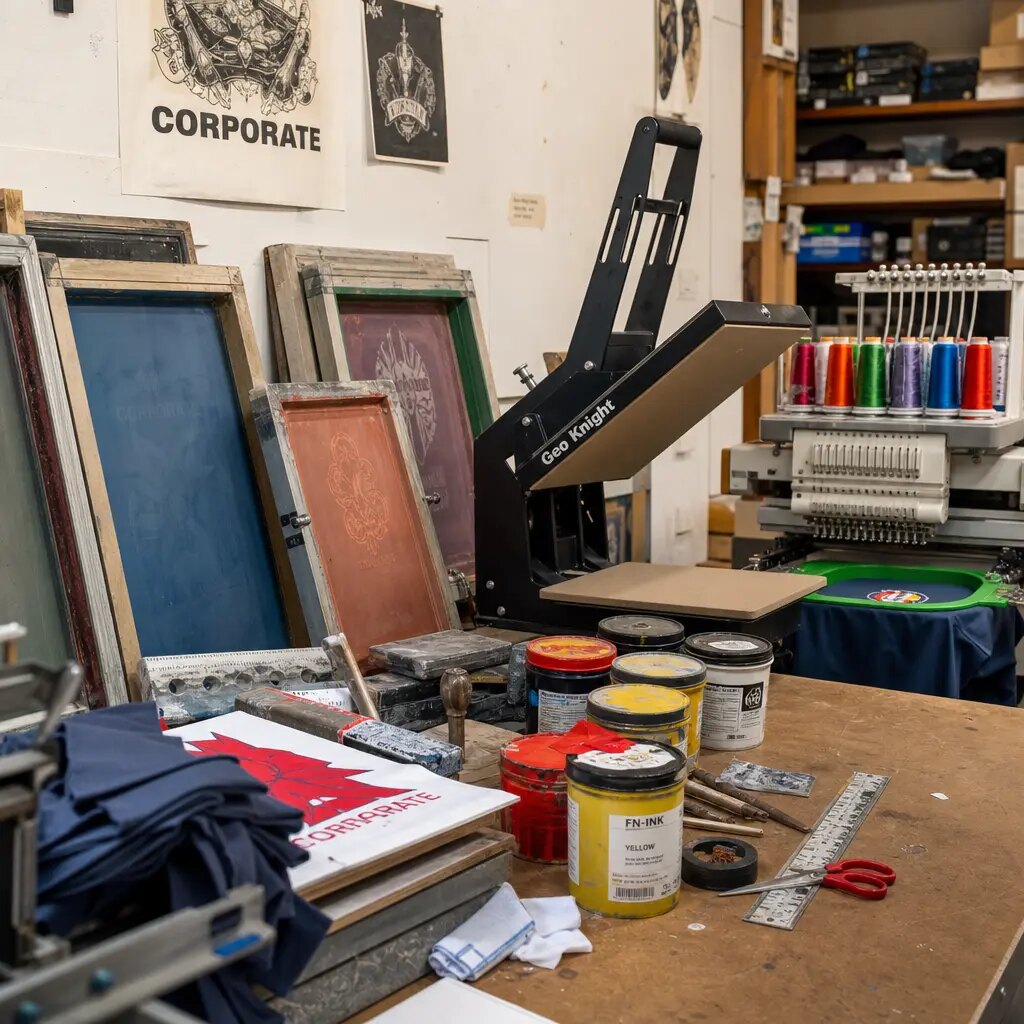
Screen printing is usually the practical choice for simple one- to three-color logos on cotton canvas. It works well at volume when mesh, ink deposit, placement fixtures, and curing are controlled. Embroidery gives a more textured retail look and can be durable, but it adds thread and backing thickness. Woven patches add a separate component and stitching step. Heat transfer or digital print can handle detailed artwork, but buyers should ask for compression checks because film layers and heavy ink deposits can block, crack, or mark under pressure.
Logo placement should be written as a print box with reference points. Instead of saying “logo on flap,” define the distance from the top flap edge, side seam, snap, or flap centerline. Keep clearance from seam bulk, magnetic snaps, buckles, and intended fold lines. Once the folding method is approved, the decorated surface should not touch hard trims or another uncured printed surface.
- Request print strike-off approval before bulk printing, using the actual canvas color and weight.
- Define logo size, placement tolerance, color target, and acceptable hand feel.
- For screen print, confirm cure process and test for tackiness, cracking, rub, and blocking after compression.
- For embroidery or patches, inspect backing bulk and whether it imprints adjacent bags.
- Position sliders, D-rings, zipper pullers, and snaps away from the printed panel in the approved fold.
- Use interleaf or localized wrap where trim contact cannot be avoided.
Build carton calculations around pack count, weight, and CBM
A useful carton plan starts with four numbers: pieces per carton, carton dimensions, gross weight, and CBM. CBM is calculated from carton length x width x height in meters. For example, a carton measuring 0.60 m x 0.40 m x 0.35 m equals 0.084 CBM. If it holds 24 bags, the shipment uses about 3.5 CBM per 1,000 pieces before pallet effects. That quick calculation helps procurement compare suppliers beyond unit price.
For many medium soft canvas messenger bags, 20 to 30 pieces per export carton is a practical starting range. The final count depends on finished size, canvas weight, gusset depth, lining, strap hardware, decoration, and inner packing. A supplier may suggest 40 pieces to reduce carton count, but the lower layers may show more compression and the gross weight may exceed manual-handling limits.
Gross carton weight should match the buyer’s receiving rules. Many operations prefer cartons below about 18 kg for manual lifting, while some palletized warehouses allow 20 kg or more. Heavier cartons are not automatically wrong, but they should be approved by the warehouse and freight team. A carton that bulges or must be forced shut is overpacked or inconsistently folded. A carton with too much headspace may crush, shift, or arrive out of square.
- Request L x W x H, pcs/carton, net weight, gross weight, and CBM for every quote.
- Ask whether carton data is based on a real packed sample, a similar previous item, or calculation only.
- Set a maximum gross carton weight, commonly under 18 to 20 kg unless your warehouse approves more.
- Compare CBM per 1,000 pieces, not only carton count.
- Recalculate freight if changing from bulk pack to individual polybag or adding shoulder pads.
- Confirm final carton data before freight booking and packing list preparation.
Use inner packing where it solves a real risk
More packaging is not automatically better. Individual polybags can protect against dust, moisture exposure, and surface rub, and they can be useful when bags move through ecommerce fulfillment or need barcode labels. They also add labor, plastic, dead space, and sometimes moisture risk if the canvas or ink is sealed before it is fully dry. For many coffee roaster programs, targeted protection is better than bagging every unit by default.
Paper interleaf can reduce surface rub between layers. Localized wrap around sliders, buckles, D-rings, magnetic snaps, or zipper pullers can prevent hard pressure marks. A thin protective sheet over a front-flap logo may be enough when the printed panel faces another bag. These details should be quoted and written into the PO. If they are only discussed verbally, they may disappear during production packing.
Moisture control needs practical discipline. Cotton canvas can absorb humidity during sea freight and storage, but desiccant does not fix damp goods. If bags are dyed, washed, printed, steamed, or pressed, they should be allowed to dry and condition before packing. Sealing damp canvas inside a polybag can create odor, mildew risk, or dye transfer concerns. Ask the factory how it checks moisture before final packing, especially for washed or dyed styles.
- Use individual polybags when retail cleanliness, barcode labeling, or fulfillment handling justifies them.
- Use kraft or tissue interleaf when the main risk is surface rub between layers.
- Use localized hardware wrap when metal or plastic trims create pressure points.
- Use desiccant only as part of a defined moisture-control plan.
- Avoid sealing bags before print, dyeing, or washing moisture has stabilized.
- Write inner packing materials and placement into the PO and inspection checklist.
Specify export carton strength, marks, and pallet logic
The outer carton is part of the product delivery system, not a disposable afterthought. A 5-ply export carton is a common baseline for canvas bags, but it is not universal. Heavy canvas, high pack counts, long sea routes, humid conditions, mixed container loading, or tall warehouse stacking may require stronger board, better sealing, edge protection, or palletization controls. Once approved, the supplier should not substitute a weaker carton to save cost.
Cartons should be filled firmly without bulging. Bulging cartons are more likely to burst, deform, and create uneven stack pressure. Underfilled cartons can collapse at the corners and allow bags to shift. Sealing should be consistent, commonly with adequate-width tape on center seams and reinforcement where needed. If cartons are heavy, discuss strapping, pallet pattern, and handling method with the freight forwarder and receiving warehouse before bulk packing begins.
Carton marks should help receiving teams, not only freight handlers. At minimum, marks should identify supplier, PO, style, color or SKU, quantity, carton number, gross weight, net weight, carton dimensions, and destination if required. If the shipment includes natural and black canvas, multiple roaster locations, or store allocations, avoid mixed cartons unless the packing list is exact and easy to audit.
- Confirm carton board grade and dimensions before bulk packing.
- Check no bulging, crushed corners, burst seams, weak tape, or excessive headspace.
- Use carton numbering such as 1/120, 2/120, and so on for receiving control.
- Separate cartons by SKU, color, or destination where warehouse accuracy matters.
- Make sure carton marks match the commercial invoice, packing list, and freight booking.
- If palletized, confirm pallet height, overhang, stretch wrap, corner protection, and label placement.
Write an RFQ that prevents non-comparable supplier quotes
Supplier comparisons often fail because the quotes are built on different assumptions. One factory may include lining while another quotes an unlined body. One may quote 12 oz canvas with a wide tolerance, while another uses a heavier cloth. One supplier may include individual polybags and interleaf; another may assume bulk packing. The lowest price may simply be the least complete specification.
A strong RFQ defines the product, decoration, packing, carton targets, and quality expectations. It should also ask for MOQ by style, fabric color, webbing color, lining color, hardware finish, and artwork. Coffee roasters often want natural, black, and seasonal colorways in one program, but factories may price those splits differently because dyeing, cutting, printing, webbing, and packing setups all change.
Packaging should be part of the quote from the start. If you need recycled polybags, no polybags, tissue interleaf, barcode stickers, stronger cartons, color-separated cartons, pallet labels, or store allocation marks, say so before price comparison. That gives procurement, freight, and warehouse teams a quote they can actually use for landed-cost planning.
- Attach a spec sheet with finished dimensions, construction drawing, fabric weight, lining, pockets, strap, and trim.
- Attach logo artwork with size, placement, color count, and required decoration method.
- Ask for price breaks by quantity and by color/artwork split.
- Require carton dimensions, pcs/carton, net weight, gross weight, and CBM in the quotation.
- Ask for adders for stronger carton, individual polybag, interleaf, hardware wrap, barcode, and palletization.
- Ask the supplier to list assumptions that could change price, MOQ, carton size, or lead time.
Approve samples and packing before bulk production locks in
A seal sample confirms appearance and construction, but it does not prove the goods will arrive in saleable condition. For canvas messenger bags, the packing method can matter as much as the sewing sample. A bag may look right on a sample table and still arrive with flap creases, strap marks, print offset, or hardware impressions after weeks in a carton.
The approval package should include fabric swatches, trim samples, print strike-off or embroidery sample, pre-production bag, measurement report, folding photo set, and packed-carton photos. For large or presentation-sensitive orders, a pilot packed carton is useful. If shipping a full carton is not practical, request photos showing the fold sequence, layer arrangement, inner protection, carton fill, carton dimensions, scale weight, and shipping marks.
A simple packing simulation can reveal problems early. Fold several bags according to the proposed method, stack them under light pressure overnight or for a defined trial period, then reopen and inspect the flap, logo, gusset corners, strap path, hardware contact points, and fabric face. If marks appear quickly, they may worsen during ocean transit and warehouse storage. Adjust the fold, interleaf, hardware position, or pack count before mass packing.
- Approve final fabric, trim, logo, stitching, and dimensions before bulk cutting.
- Approve print strike-off on actual canvas, not only on paper or digital mockup.
- Approve the folding method with step-by-step photos attached to the PO.
- Confirm hardware wrap, interleaf, polybag, and carton count before mass packing.
- Do not allow production packing to start until carton size and pack quantity are confirmed.
- Require notice if the supplier changes pack count, carton size, or inner packing after approval.
Inspect both the product and the packed carton before shipment
Final inspection should cover more than the bag laid on a table. For wholesale canvas messenger bags, inspection needs to verify fabric, dimensions, sewing, decoration, trim function, folding, carton count, carton dimensions, and gross weight. A defect that appears only after packing is still a sourcing defect if it affects resale presentation, fulfillment accuracy, or receiving efficiency.
Measurement should be consistent with the approved sample method. Inspectors should measure finished width, height, gusset, flap drop, strap width, and adjustable strap range. Soft canvas construction naturally has small variation, but the acceptable tolerance should be written in the PO. Logo position should be measured from fixed points, and print appearance should be checked after folding or rubbing when blocking and abrasion are risks.
Packed cartons should be opened during inspection, not only counted from the outside. Check whether the fold matches the approved photos, hardware is isolated, labels are correct, cartons are not overfilled, and goods are not mixed incorrectly. Weigh selected cartons and compare them with the packing list. Measure carton dimensions and recalculate CBM if freight cost is sensitive. Photos of opened cartons, carton marks, and scale weights give buyers useful evidence before shipment release.
- Check fabric weight, color, odor, stains, shade variation, and major weaving defects.
- Check dimensions against approved tolerances and measure flap drop separately.
- Check stitch density, seam strength, bartacks, box-X reinforcement, and thread trimming.
- Check print cure, color, placement, edge quality, rub resistance, and blocking risk.
- Check zipper, snap, buckle, D-ring, slider, and strap adjustment function.
- Open packed cartons to verify fold method, inner protection, count, SKU, and carton fill.
- Compare physical carton data to packing list, shipping marks, and freight booking details.
Specification comparison for buyers
| Spec decision | Recommended option | When it fits | Buyer risk to check |
|---|---|---|---|
| Canvas weight | 12 oz to 14 oz cotton canvas, approximately 340 to 400 GSM, with bulk tolerance stated in the PO | Coffee retail merchandise, roaster staff bags, wholesale resale, loyalty gifts, and distributor programs needing a sturdy but packable messenger bag | Below about 10 oz may collapse and show hard creases; above 16 oz increases folded thickness, gross carton weight, sewing difficulty, and freight CBM |
| Finished size and gusset | Define W x H x D, flap drop, and usable opening; avoid oversized gussets unless the use case requires them | Bags intended to hold coffee retail items, cupping notes, catalogs, tablets, or small work essentials | A deep gusset improves capacity but increases carton height and compression risk; inconsistent gusset sewing can change pack count |
| Bag structure | Soft body with reinforced stress points and optional bottom panel, rather than full rigid board or thick foam throughout | Programs needing useful durability while still folding efficiently for export cartons | Rigid board, thick laptop padding, or oversized shoulder pads can double folded volume and create hard crush points |
| Strap and hardware | Adjustable cotton webbing strap, usually 30 to 38 mm wide, with hardware isolated from printed panels during packing | Coffee roaster merchandise where comfort and practical daily use matter | Metal sliders, D-rings, buckles, zipper pullers, and magnetic snaps can mark natural canvas or imprint logos if packed against the flap |
| Logo method | Screen print for simple one- to three-color roaster logos; embroidery, woven patch, or heat transfer only when artwork or retail positioning requires it | Screen print is efficient for volume orders and consistent front-flap placement on cotton canvas | Poor ink cure, thick ink deposit, or unstable transfer film can block, crack, offset, or abrade after compressed export packing |
| Logo placement | Front flap or lower front panel with a defined print box and clearance from seams, snaps, buckles, and folds | Retail-facing coffee brand bags where shelf and online product visibility are important | If the fold line crosses the logo or the strap slider rests on the artwork, defects may appear after transit even when the print passed initial inspection |
| Inner packing | Layer interleaf, localized hardware wrap, or individual polybag depending on presentation, moisture, and compliance needs | Balanced export packing for roasters that want clean goods without unnecessary plastic and dead space | Unnecessary polybags add labor and volume; sealed bags can trap moisture if canvas, ink, or washing process is not fully dry |
| Export carton pack count | Often 20 to 30 pcs per carton for medium soft canvas messenger bags; confirm by packed trial | Manual warehouse handling, palletized import shipments, mixed SKU programs, and lower deformation risk | 40 pcs may reduce carton count but can exceed 18 to 20 kg gross weight, compress lower layers, and increase flap memory lines |
| Carton board and sealing | 5-ply export carton as a common baseline; stronger board, edge protection, or moisture-resistant options for heavy or long sea routes | Standard B2B import shipments, wholesale distributor stock, and roaster ecommerce inventory | Weak board can burst at hardware pressure points, soften in humidity, or collapse under stack load; overfilled cartons can bulge and fail |
Buyer checklist before sampling
- Define the commercial use before requesting price: cafe retail resale, staff issue, event gifting, coffee subscription merchandising, wholesale distributor inventory, cafe uniform program, or equipment bundle. Presentation standard and carton density should match the channel.
- State finished bag width, height, gusset depth, flap drop, flap shape, opening style, strap width, strap length range, and whether the strap is fixed, adjustable, detachable, or includes a shoulder pad.
- Specify cotton canvas weight in GSM and/or oz, bulk tolerance, fabric color, washing or dyeing requirement, and whether the body, flap, lining, bottom reinforcement, pockets, and binding use the same material.
- List every trim that can change folded thickness or create pressure marks: zipper size, puller type, magnetic snap size, button, buckle, D-ring, slider, webbing width, woven label, internal divider, key clip, and shoulder pad.
- Confirm logo method, artwork size, color count, Pantone or brand color target where applicable, exact placement, print box clearance from seams and folds, and whether the decorated surface may touch straps or hardware inside the carton.
- Set finished dimension tolerances, commonly around ±10 mm on width and height and ±5 to ±10 mm on gusset depending on construction, with flap drop and strap length checked separately.
- Set your maximum acceptable gross carton weight, commonly under 18 kg for manual handling unless your warehouse allows heavier palletized cartons and mechanical handling.
- Request proposed export carton dimensions, pieces per carton, net weight, gross weight, and estimated CBM before approving the final sample or awarding the PO.
- Decide whether individual polybags are required, or whether tissue, kraft paper interleaf, localized hardware wrap, recycled polybag, bulk pack, or no inner packing is acceptable.
- Approve a folding method with step-by-step photos showing strap placement, flap position, hardware isolation, printed-panel protection, layer arrangement, and carton fill height.
Factory quote questions to send
- What canvas weight are you quoting in both GSM and oz, and what tolerance range do you allow in bulk production?
- Is the quoted canvas greige, bleached, dyed, washed, enzyme-washed, or finished in any way that changes shrinkage, hand feel, color variation, or carton moisture risk?
- What shrinkage or dimensional change should we expect after dyeing, washing, steaming, or pressing, and are finished dimensions measured after final finishing?
- Does the quoted bag include lining, base reinforcement, internal pocket, zipper pocket, shoulder pad, woven label, care label, barcode label, or only the outer shell and strap?
- Which print method is included, what ink, thread, patch, or transfer type is used, and what curing or drying process prevents blocking during compressed carton packing?
- Can you quote screen print, embroidery, woven patch, and heat transfer separately if we are comparing retail appearance, durability, decoration thickness, and carton efficiency?
- What is your MOQ by style, fabric color, webbing color, lining color, hardware finish, and print artwork, and how does price change if one PO is split into several coffee roaster store colors?
- What export carton size and pack quantity are you proposing for this exact finished bag size, canvas weight, lining, gusset, strap, hardware, and inner packing configuration?
- What are the estimated net weight, gross weight, and CBM per carton, and are these figures from a real packed sample, a similar previous bag, or calculation only?
- What gross carton weight do you recommend for safe manual handling, and what happens to unit price, carton count, and CBM if we reduce the pack count?
Quality-control points to confirm
- Fabric weight should stay within the agreed tolerance, commonly around ±5 percent for bulk cotton canvas unless a different range is approved, because lighter fabric changes body strength while heavier fabric changes folded thickness and carton weight.
- Finished bag dimensions should meet the approved tolerance, often around ±10 mm on width and height and ±5 to ±10 mm on gusset for soft canvas construction; flap drop, pocket opening, strap width, and strap length range should be measured separately.
- Color consistency should be checked between body canvas, flap, webbing, binding, lining, zipper tape, labels, and thread, especially for natural, black, and dyed coffee-brand colorways.
- Fabric defects should be screened before cutting, including slubs outside approved character, oil marks, stains, weaving lines, shade bands, needle damage, excessive lint, and odor.
- Print registration, edge sharpness, color density, hand feel, and cure should be checked after drying and again after folded packing simulation to confirm no ink offset, blocking, cracking, tackiness, or abrasion.
- Embroidery, woven labels, patches, or leather-look trims should be reviewed for placement accuracy, backing bulk, loose threads, sharp edges, color bleeding, and whether the decoration creates an impression on adjacent bags in the carton.
- Strap stitch reinforcement at stress points should be reviewed for stitch count, back tack security, box-X or bartack placement, seam allowance, thread trimming, and clean alignment on both sides.
- Hardware function should be checked: sliders adjust smoothly, snaps align and hold, zippers open and close cleanly, D-rings are not deformed, and metal finishes do not stain or scratch light canvas.
- Metal trims, sliders, zipper pullers, and magnetic snaps must not rub printed panels, stain natural canvas, or leave pressure marks on neighboring bags inside the carton after packing simulation.
- Approved folding method should be followed consistently so flap edge, logo area, gusset corners, strap webbing, and shoulder pad do not develop permanent set lines during storage.