Start With the Bakery Use Case
A canvas messenger bag for an artisan bakery is not the same product as a flat cotton tote with a long strap. The buyer usually wants a bag that can carry bread club paperwork, small packaged goods, staff tools, recipe cards, or branded retail items while still looking suitable for a premium bakery counter. The first sourcing mistake is treating it as a generic promotional bag and requesting only size, logo, and quantity.
Before sending an RFQ, separate the buying purpose from the visual idea. A retail resale bag needs better structure, cleaner finishing, and more consistent folding than a one-day event giveaway. A staff delivery or market vendor bag needs stronger strap reinforcement and easier access. A gift bundle bag may need a stable base and a flap that does not crush printed packaging inside.
- For retail resale, prioritize finished appearance, label placement, print consistency, and carton cleanliness.
- For staff or vendor use, prioritize strap strength, closure durability, pockets, and darker color options.
- For gift bundles, prioritize gusset size, boxed bottom, crease control, and whether the flap closes over loaded contents.
- For distributor programs, prioritize repeatable specifications so future replenishment orders match the first shipment.
Choose Canvas Weight by Load and Shape
Canvas weight is one of the biggest drivers of price and perceived quality. For wholesale canvas messenger bags used by bakeries, 12 oz to 16 oz cotton canvas is a practical range. A lighter 10 oz canvas can work for a soft merchandise bag, but it may collapse under boxed cookies, jars, small flour bags, aprons, or catalog inserts. At the other end, very heavy canvas can look premium but increases sewing difficulty, carton volume, and freight weight.
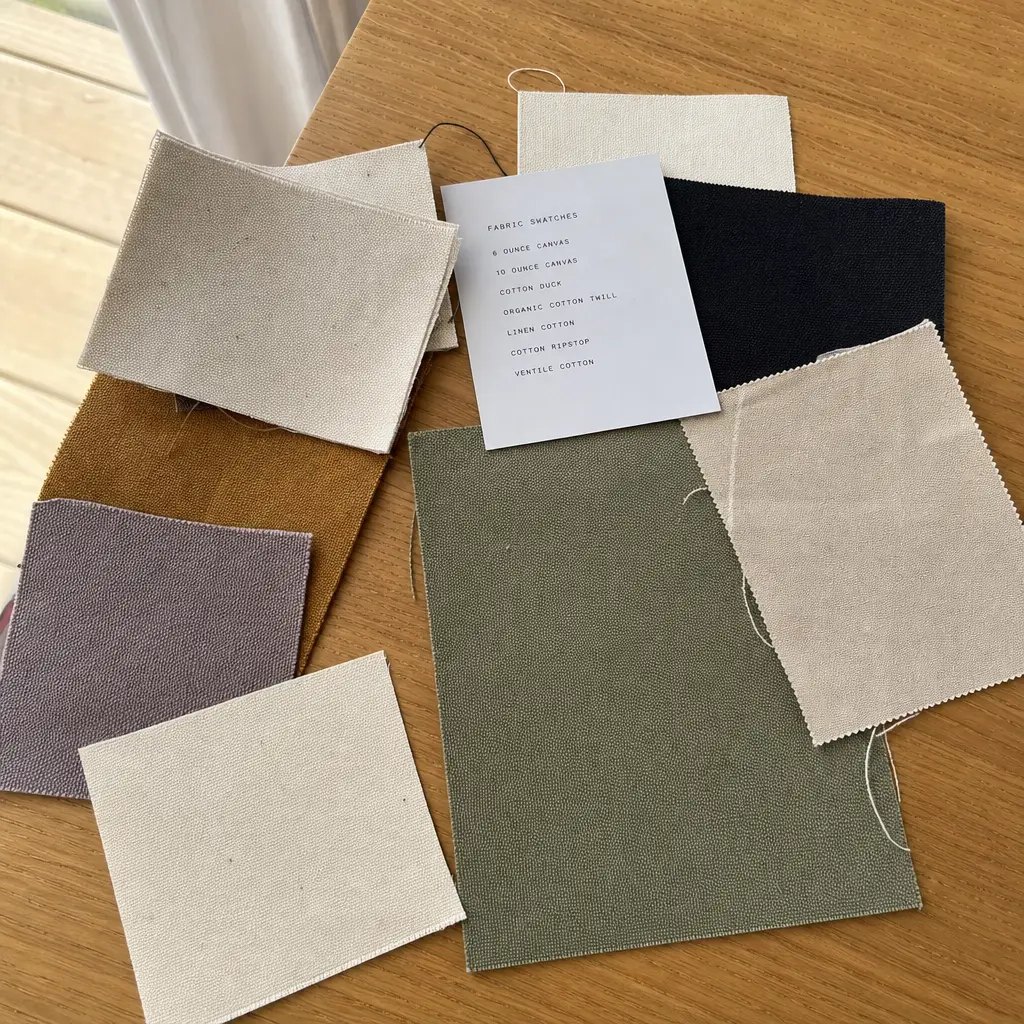
Use both oz and GSM in the RFQ because suppliers may interpret fabric weight differently. A practical specification is 12 oz cotton canvas, approximately 340 GSM, or 16 oz cotton canvas, approximately 450 GSM, with final confirmation from a fabric swatch. Clarify whether the number refers to greige fabric, dyed fabric, or finished fabric after washing, because dyeing and finishing can change handfeel and shrinkage.
- 10 oz canvas is suitable only for light merchandise or low-cost promotional programs.
- 12 oz canvas balances cost, sewability, structure, and freight efficiency for many bakery retail bags.
- 14 oz to 16 oz canvas gives a stronger handfeel for resale or staff use but raises unit price and shipping weight.
- Dyed dark canvas may feel slightly different from natural canvas and should be approved as a bulk fabric swatch.
Specify the Messenger Construction Clearly
A buyer guide for messenger bags should go beyond the front dimensions. The real usable capacity depends on gusset depth, boxed bottom construction, flap length, strap attachment, and whether the opening remains accessible when the bag is loaded. If the bag is intended for bakery customers carrying irregular items, a 6 cm to 10 cm gusset is often more useful than a larger flat panel with no depth.
Factories quote more accurately when the construction is described as a finished product, not a rough sketch. State the body size, flap depth, gusset, pocket type, closure type, and strap construction. If you want the bag to stand upright on a retail shelf or on a market table, mention this goal. The factory can then adjust bottom structure, seam allowance, and folding method before sample making.
- Use finished size format: width x height x gusset, plus flap depth.
- Define whether the bottom is boxed, rounded, or flat without gusset.
- Mark the strap attachment position from the top edge or side seam.
- State whether the flap should cover the full opening when the bag is lightly loaded.
Match Print Method to Bakery Artwork
Most artisan bakery logos work well with one-color or two-color screen printing. Screen print is usually the best balance for wholesale quantities because it gives good opacity on natural canvas, stable unit cost, and a clean handmade appearance. It is also easier to inspect than complex all-over artwork. For dark canvas, the quote may need an underbase or thicker ink layer to keep light logo colors visible.
Heat transfer can be useful for lower MOQ multi-color artwork, but buyers should test handfeel, edge durability, and heat mark risk on canvas. Embroidery can look premium for a small logo or side badge, but large embroidered bakery names on the flap add cost, weight, and puckering risk. Woven labels are a good option when the brand wants subtle identification without a large printed panel.
- Screen print fits solid logos, bakery names, simple illustrations, and repeat wholesale orders.
- Heat transfer fits short runs with multiple colors, but requires peel and rub testing on canvas.
- Embroidery fits compact marks, not large flap graphics with fine lettering.
- Woven labels fit premium retail bags where understated branding is preferred.
Understand MOQ and Cost Drivers
MOQ is not only a factory policy. It comes from fabric purchasing, dye lot minimums, hardware sourcing, printing setup, cutting efficiency, and production line changeover. A natural canvas messenger bag with one-color print usually has a lower practical MOQ than a dyed bag with custom hardware, multiple pockets, and individual retail packaging. If the buyer requests too many custom details at a small quantity, the factory has to spread setup time across fewer units.
The best way to compare quotes is to ask suppliers to show price breaks by quantity and identify what changes at each tier. For example, the price may improve when fabric can be purchased as a full roll, when printing setup is spread over more units, or when carton packing becomes more efficient. A low MOQ can be useful for testing retail demand, but it may come with limited color choices, stock hardware, and higher unit cost.
- Lower MOQ is easier with natural canvas, stock webbing, stock hardware, and one-color print.
- Dyed canvas raises MOQ because shade consistency depends on dye lot control.
- Custom zipper pulls, buckles, labels, and retail packaging create separate minimums.
- A quote at 300 pieces and a quote at 3,000 pieces should not be evaluated with the same cost expectations.
Build an RFQ That Suppliers Can Price
A strong RFQ reduces guesswork and prevents suppliers from quoting different bags under the same description. Include a simple technical sheet with finished dimensions, fabric weight, color, print size, print method, strap construction, pocket details, closure, label requirements, packing, target quantity, and destination port or delivery term. If you have a reference sample, provide photos and measurements instead of only a lifestyle image.
Do not hide the target use. If the bag will be sold in bakery shops, the factory should know that visible finishing matters. If it will be used by staff, strength matters more than retail folding. If it will be shipped to multiple distributors, carton labeling and consistency become more important. These details help the factory recommend the right balance rather than simply quote the cheapest version.
- Attach vector logo files and specify exact print dimensions in centimeters.
- Provide Pantone references but allow physical approval because canvas absorbs ink differently than paper.
- State Incoterm preference, destination, required documents, and any inner labeling needs.
- Ask suppliers to quote the same construction at two or three quantity levels for realistic MOQ planning.
Approve Samples With Measurable Criteria
Sample approval should not be limited to whether the bag looks good in a photo. A messenger bag has multiple functional points that must be checked before bulk production: flap alignment, closure position, strap length, pocket placement, seam strength, print sharpness, and whether the bag folds without damaging the printed area. If any of these are vague at sample stage, they can become costly disputes after mass production.
A pre-production sample should use the actual bulk fabric or a fabric that the factory declares as equivalent. It should also use the same print method and hardware planned for the order. If the first sample is made from available substitute materials, label it as a construction sample only and require a second approval sample before cutting bulk fabric. This is especially important for dyed canvas and magnetic closures.
- Measure body width, body height, gusset, flap depth, strap width, and maximum strap length.
- Load the sample with the intended bakery items and observe flap closure and strap comfort.
- Rub the printed logo with a dry white cloth and inspect ink transfer or cracking.
- Photograph approved seam details and use them as the reference for inline and final inspection.
Set Quality Thresholds Before Production
Quality control for wholesale canvas messenger bags should focus on defects that affect retail value, durability, and repeat orders. Minor cotton seed specks on natural canvas may be acceptable for a rustic bakery look, but oil stains, dirty fold marks, broken stitches, misaligned flaps, and weak straps are not. Decide what is acceptable before production, not when cartons arrive at the warehouse.
For a bakery brand, the front flap is the selling face of the bag. Print defects, crooked labels, and heavy creases in that area should have tighter limits than hidden inside seams. Stress points should receive stronger inspection because customers will carry uneven loads. A simple pull test on straps and closure points can prevent many complaints even when the bag looks fine visually.
- Reject front-facing stains, print smears, misregistered logos, and visible needle damage on the flap.
- Set dimensional tolerance such as plus or minus 1 cm for body size and plus or minus 2 cm for strap length.
- Require bartack reinforcement or box stitching at strap ends and pocket corners.
- Separate natural fabric character from defects by approving a swatch range before bulk cutting.
Plan Packing for Freight and Retail Handling
Packing affects both landed cost and final presentation. Canvas messenger bags are bulkier than flat totes because of the flap, gusset, strap hardware, and possible pockets. If the factory folds them too tightly, the flap may arrive with a permanent crease through the logo. If the cartons are too weak or overpacked, corners crush and retail teams spend time reshaping or repacking bags.
Decide whether each bag needs an individual polybag. Retail resale may require cleaner individual protection, while sustainability-focused bakery programs may prefer bulk packing with paper bands or no individual bag. The packing choice should be quoted clearly because it changes labor, material cost, carton size, and waste handling at destination.
- Request carton dimensions, gross weight, net weight, and units per carton with the quote.
- Keep printed flaps away from metal sliders or magnetic snaps during packing to prevent rubbing.
- Use desiccant for sea freight when bags are packed in humid conditions or dyed canvas is used.
- Confirm whether carton labels include SKU, color, quantity, PO number, and country of origin marking.
Control Lead Time and Schedule Risk
Lead time starts after artwork, sample, fabric, and deposit are approved. A quoted production time that begins before these approvals is not a real production schedule. For canvas messenger bags, the main schedule risks are fabric availability, dyeing, hardware sourcing, sample revisions, print strike-off approval, and factory capacity during seasonal export peaks.
Build a timeline that includes sample making, sample shipping, buyer review, material booking, bulk production, inline inspection, final inspection, packing, and export handover. If the bakery program is tied to a holiday launch, subscription cycle, trade show, or retail reset, work backward from the in-warehouse date rather than the factory shipment date.
- Natural canvas with stock hardware usually moves faster than dyed canvas with custom accessories.
- Artwork changes after sample approval can restart print setup and delay bulk production.
- Peak-season capacity should be reserved with clear approval deadlines, not verbal assumptions.
- Final inspection should happen before final balance payment and before cartons leave the factory.
Specification comparison for buyers
| Spec decision | Recommended option | When it fits | Buyer risk to check |
|---|---|---|---|
| Body fabric weight | 12 oz to 16 oz cotton canvas, roughly 340 to 450 GSM before washing | Bakery retail merchandise, staff delivery bags, market-day customer gifts, and reusable loyalty program bags | A quoted low price may use 10 oz fabric that collapses when loaded with bread boxes, jars, or folded aprons |
| Bag structure | Messenger flap with boxed bottom, side gusset, and reinforced stress points | Programs where buyers expect the bag to sit upright and carry bakery items without looking like a flat promo pouch | Flat un-gusseted construction saves cost but reduces usable capacity and makes packing display cartons less predictable |
| Closure method | Magnetic snap or hook-and-loop under flap, with placement approved on sample | Retail bags that need easy access but should not fall open during carrying or shelf handling | Weak magnets, noisy hook-and-loop, or poor alignment can make the bag feel cheap even if fabric is acceptable |
| Shoulder strap | 38 mm to 50 mm cotton webbing with bartack reinforcement and adjustable metal slider | Bakery staff, market vendors, and customers carrying heavier daily-use loads | Thin webbing, plastic sliders, or single-line stitching can fail before the canvas body shows wear |
| Print position | One-color screen print on front flap, 25 cm to 32 cm wide depending on bag size | Clean bakery branding, simple logos, loyalty gifts, and wholesale resale with consistent unit cost | Large prints crossing seams or flap curves may distort; fine flour-dust texture effects may fill in on canvas |
| Inside organization | One internal slip pocket or zip pocket, specified by finished size and stitch position | Higher-value retail items, staff use, or distributor samples where function supports a higher selling price | Unspecified pockets are often resized by the factory to save labor, causing mismatch between sample and bulk |
| Color and finishing | Natural, black, or dyed canvas with color tolerance agreed before bulk cutting | Bakery branding that needs a warm handmade look or a clean neutral retail shelf presentation | Dyed canvas can show shade variation between lots; natural canvas may include cotton seed specks that must be accepted or rejected upfront |
| Packing method | Individual polybag only when needed, otherwise folded bulk pack with desiccant and export carton strength confirmed | Importers balancing shelf cleanliness, plastic reduction goals, and sea freight compression resistance | Over-tight folding can crease printed flaps; weak cartons crush bag corners and make retail repacking expensive |
Buyer checklist before sampling
- Define the use case before costing: retail resale, staff delivery, gift-with-purchase, bakery subscription packaging, or wholesale distributor sample kit.
- State finished bag dimensions as width x height x gusset, not only flat size; include allowed tolerance such as plus or minus 1 cm.
- Specify canvas by oz and GSM range, and clarify whether weight is before washing, after dyeing, or finished fabric.
- Lock the strap width, strap length range, slider material, and bartack locations because strap construction drives both durability and labor cost.
- Provide logo artwork in vector format and mark exact print size, Pantone reference, and placement from flap edges or seam lines.
- Choose the print method based on artwork and order size: screen print for solid bakery marks, heat transfer for small multi-color runs, embroidery only for compact logos.
- Request a pre-production sample using bulk fabric, bulk hardware, and the approved print method before authorizing mass cutting.
- Set acceptance criteria for seam strength, flap alignment, print color, handle pull test, shade variation, metal hardware finish, and carton condition.
- Require the quote to separate bag unit price, setup charges, sample cost, inner packing, export carton, inspection, and any document or labeling cost.
- Confirm carton dimensions, units per carton, gross weight, volume, and whether the packing plan supports your warehouse pallet limits.
Factory quote questions to send
- What exact fabric weight are you quoting in oz and GSM, and is it greige, dyed, washed, or finished canvas?
- Is the quoted price based on cotton canvas, recycled cotton canvas, blended canvas, or polyester-cotton canvas?
- What finished size tolerance will you accept for width, height, gusset, flap depth, and strap length?
- Which seams receive bartack reinforcement, and how many stitches or bartacks are included in the quoted construction?
- Which print method is included in the price, and what is the maximum print size before an extra screen, plate, or handling charge applies?
- Are magnetic snaps, sliders, buckles, zippers, and labels included in the unit price or quoted as add-ons?
- How many pieces are packed per carton, what are the carton dimensions and gross weight, and can the carton pass normal export handling?
- What is the realistic sample lead time and bulk lead time after artwork approval, deposit, and material confirmation?
- At what order quantity does the unit price change because fabric, hardware, printing, or carton purchasing reaches a better production tier?
- Can you provide photos of bulk fabric, hardware, stitching points, print strike-off, and packed carton before shipment?
Quality-control points to confirm
- Fabric weight within agreed GSM range, measured from bulk fabric before cutting and compared with approved sample.
- Finished dimensions within tolerance for body width, height, gusset, flap depth, strap width, and strap length adjustment range.
- Seam allowance consistent at stress areas, with no skipped stitches, loose threads, broken needles, or puckering around the flap.
- Bartack or box-stitch reinforcement present at both strap ends, flap stress points, pocket corners, and closure attachment points.
- Print color, opacity, registration, edge sharpness, and rub resistance match the approved strike-off under normal daylight.
- Hardware opens and closes smoothly without sharp edges, weak magnet force, rust spots, plating scratches, or misalignment.
- Inner pocket size and position match the signed sample and do not interfere with folding, flap closure, or packing.
- Cartons are dry, correctly labeled, not overfilled, and packed to prevent printed flaps from rubbing against metal hardware.