Start the pricing plan with the craft fair selling role
Wholesale canvas messenger bags for craft fairs are usually bought for one of three jobs: resale merchandise, exhibitor or maker kits, or brand giveaways with higher perceived value than a basic tote. The same bag cannot be priced correctly until this role is clear. A resale bag needs better hand feel, straighter sewing, retail packing, and more reliable print placement. A giveaway bag can accept simpler construction if the brand still wants a durable reusable item.
Procurement teams often lose money by requesting a bag that is too premium for a low retail price, or too basic for a paid craft fair audience. The buying problem is not only the unit price. It is matching construction, fabric, printing, packing, and MOQ to the way the bag will be sold or distributed. A good RFQ should tell the factory what load the bag must carry, how it will be displayed, and whether the customer will inspect it like a retail product.
- For paid retail resale, prioritize fabric body, stitching consistency, flap shape, and strap comfort.
- For exhibitor kits, prioritize capacity, carton efficiency, schedule reliability, and readable branding.
- For giveaways, keep the design simple and avoid expensive hardware unless it clearly supports the campaign.
- For distributor stock, choose a standard natural or black canvas base that can accept repeat print designs.
Set fabric weight before comparing supplier quotes
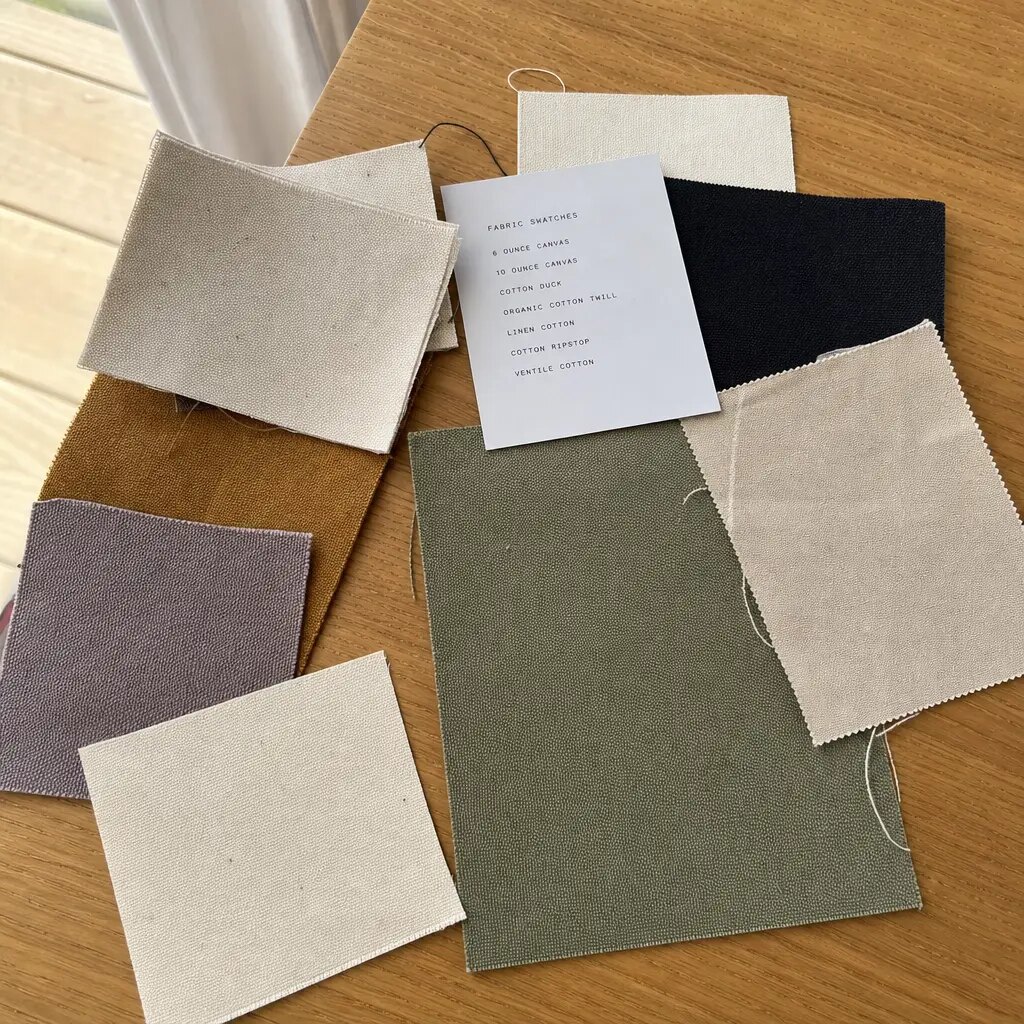
Canvas messenger bag quotes can look very different because suppliers may quote different fabric weights while using the same product photo. A 10oz canvas bag and a 14oz canvas bag are not the same product, even if the dimensions match. For craft fair use, 12oz to 14oz cotton canvas is a common practical range because it gives enough structure for books, small tools, stationery, samples, or catalogs without making the bag too heavy or costly.
When comparing prices, request both the oz description and approximate GSM. A practical reference is that 12oz canvas is often around 400 GSM and 14oz may be around 450-475 GSM, depending on weave and finishing. If the fabric is dyed, washed, or heavily finished, the final hand feel can change. Natural unbleached canvas usually gives better cost control, while custom dyed canvas improves branding but adds MOQ, lab dip approval, and shade risk.
- 10oz canvas: lower cost, lighter hand, suitable for simple promotional messenger bags but less structured.
- 12oz canvas: balanced option for craft fair resale and event merchandise.
- 14oz canvas: stronger retail feel, better for heavier contents, but higher material and freight cost.
- 16oz canvas and above: premium look, but may be too stiff for some flap designs and increases sewing difficulty.
- Recycled or organic cotton canvas: useful for brand positioning, but requires early confirmation of availability, certification scope, and MOQ.
Choose construction details that affect real carrying performance
The construction of a canvas messenger bag matters more than small differences in logo size. For craft fair buyers, the bag should sit cleanly on a booth table, open without fighting the flap, and hold common fair purchases such as notebooks, packaged goods, fabric bundles, prints, or small tools. A boxed bottom or gusset helps capacity, while a flat envelope body reduces cost but limits usefulness.
Strap attachment is a frequent weak point. A wide cotton webbing strap, usually 3.2 cm to 5 cm, feels more stable than a thin strap when the bag carries weight. The strap joint should be reinforced with bartack, box stitch, or cross stitch. If hardware is included, the fabric behind the D-ring or slider needs enough layers to prevent tearing. If the buyer wants a clean natural canvas look, hidden reinforcement is better than simply adding visible thick patches.
- Use a flap length that covers the opening but does not curl excessively after packing.
- Specify whether the shoulder strap is fixed length or adjustable with triglide hardware.
- Add an inner slip pocket only if the pocket depth is useful for phone, receipt book, tablet, or event badge.
- Avoid oversized magnetic snaps on light canvas unless backing is covered and tested for marking.
- For retail resale, request trimmed thread ends and consistent topstitch distance on visible flap edges.
Build the bulk pricing plan around MOQ, not only unit cost
Bulk pricing for canvas messenger bags is usually driven by fabric utilization, setup time, print setup, packing labor, and how many variations the order contains. A single natural canvas body with one print design will price much better than three dyed body colors with four print designs each. For craft fair distributors, the smartest pricing plan is often to standardize the base bag and rotate artwork by event, region, or retail collection.
MOQ should be discussed in layers. There may be one MOQ for the bag style, another MOQ per body color, another per print design, and another for custom woven labels or dyed straps. A supplier may accept 500 pieces total, but not 100 pieces each across five colors with different prints. If the buying team needs variety, it may be cheaper to use the same blank bag and vary hangtags, belly bands, or small one-color prints.
- Best cost control: one natural canvas body, one strap color, one print position, one carton packing method.
- Moderate variety: one base bag with two to three screen print artworks at economical quantities.
- Higher complexity: dyed canvas body, custom label, hardware finish selection, and retail packing.
- Cost warning: many small artwork splits can make the setup charge per piece higher than the sewing cost difference.
- Inventory strategy: hold blank stock only if the buyer accepts later print scheduling and shade matching limits.
Understand the cost drivers behind a supplier's quote
A useful quote should show enough detail for the buyer to understand why one supplier is cheaper or more expensive. The largest cost driver is usually fabric consumption, followed by sewing complexity and printing. Hardware, labels, and packing can become important when the bag moves from promotional use to retail resale. If the quote only says 'canvas messenger bag, logo printed,' it is not detailed enough for procurement comparison.
Importers should also compare how the supplier has treated waste, inspection, and packing. A very low quote may be based on thinner fabric, fewer stitches per inch, no reinforcement, cheaper cartons, or no pre-production sample. It may also assume EXW pricing while another supplier quotes FOB. For a craft fair program with fixed dates, a slightly higher quote with clearer production control can be cheaper than urgent rework or air freight.
- Fabric: weight, width, dyeing, shrinkage, and cutting efficiency all change cost.
- Sewing: boxed bottom, pockets, flap binding, reinforced strap joints, and hardware slow production.
- Printing: number of colors, print area, print positions, ink type, and registration difficulty affect setup and reject rate.
- Trims: D-rings, sliders, snaps, zippers, woven labels, hangtags, and care labels add both material and labor.
- Packing: individual polybags, barcode labels, carton dividers, and event kit packing add handling time.
- Trade terms: EXW, FOB, CIF, and DDP quotes cannot be compared without freight and local handling assumptions.
Select the print method based on artwork and canvas texture
For most canvas messenger bags used at craft fairs, screen printing is the practical default. It handles solid logos, event names, simple illustration, and bold brand marks well. It is also easier to cost at volume because setup is predictable. The buyer should provide vector artwork, Pantone references, final print size, and print position measured from seams or flap edges.
Heat transfer can reproduce gradients or detailed full-color artwork, but it may not be the best choice on heavy textured canvas if the buyer wants a natural hand feel. Digital printing can work for low volume or complex artwork, but color consistency and cost must be discussed carefully. Embroidery gives a premium look on some messenger bags, yet it can distort light canvas or make the flap stiff if the design is large.
- Screen print: best for one to three solid colors, strong unit cost, and repeat craft fair logos.
- Heat transfer: useful for complex full-color art, but test cracking, edge lift, and hand feel.
- Digital print: flexible for short runs, but confirm color fastness and fabric pretreatment.
- Embroidery: premium for small chest-style logos or patches, not ideal for large flap graphics.
- Woven label: good for subtle branding and repeat stock, but needs MOQ and label approval.
- Print placement tolerance: define acceptable movement, often plus or minus 5 mm to 10 mm depending on panel and print size.
Approve samples with the same details planned for production
A pre-production sample is not a decoration sample. It should represent the actual bag that will be cut and sewn in bulk. That means the same canvas weight, same thread color, same strap width, same hardware finish, same print method, and same folding method. If the sample uses substitute fabric or temporary hardware, mark it clearly and do not approve bulk production until the final details are confirmed.
Sample review should include more than appearance. Load the bag with the kind of items used at craft fairs, such as catalogs, notebooks, packaged products, or a tablet. Wear it over the shoulder for a few minutes and check whether the strap twists, the flap sits flat, and the hardware catches on clothing. Open and close the flap repeatedly if snaps or Velcro are used. If the bag will be sold at retail, inspect it under bright light because customers will notice dirty marks, uneven stitches, and crooked labels.
- Measure finished width, height, gusset, flap length, strap length, and pocket depth.
- Rub the printed area lightly with dry and damp white cloth to identify obvious ink transfer risk.
- Check whether the flap print is distorted when the bag is filled.
- Review thread trimming and inside seam finishing, not only the front panel.
- Photograph approved sample details and send annotated approval notes to avoid later interpretation disputes.
- Seal one approved sample at the factory and keep one with the buyer or inspection team.
Use QC thresholds that match a retail craft fair environment
Craft fair buyers often handle products directly, so cosmetic and tactile defects matter. A bag may pass basic promotional standards but still fail as paid merchandise. Common defects include crooked flap alignment, skipped stitches at strap joints, dirty natural canvas, print pinholes, loose thread ends, mismatched hardware, and carton compression creases. The inspection standard should state which defects are critical, major, and minor before production starts.
For functional testing, the factory and inspection team can use simple but useful checks. A reasonable internal load test may use a weight appropriate to the bag size and intended contents, held for a set time to inspect strap joints and seams. The exact weight should be agreed in the purchase order. Print adhesion and rub resistance should be reviewed against the approved sample. Dimension tolerance should be practical; too tight a tolerance on sewn cotton bags increases reject rate and cost.
- Critical defects: broken strap joint, sharp hardware, mold, severe stains, wrong logo, wrong material, or unsafe metal parts.
- Major defects: crooked flap, badly off-center print, visible ink smearing, open seam, missing pocket, wrong carton label, or hardware failure.
- Minor defects: small thread tails, slight shade variation within approved range, or minor crease that relaxes after unpacking.
- Common dimension tolerance: plus or minus 1 cm for body width and height, unless the design requires tighter control.
- Stitching review: no skipped stitches at load points and no loose backstitching at strap attachment.
- Packing inspection: cartons should protect the print and avoid permanent folding across the main logo.
Plan packing for event distribution and landed cost
Packing choices change both the product presentation and landed cost. Individual polybags protect natural canvas and help retail handling, but they increase material use, labor, and unpacking time at craft fair booths. Bulk packing reduces cost and waste, but bags can rub against hardware or pick up carton dust. For many craft fair programs, a practical compromise is bulk packing in clean inner bags by 25 pieces, with retail hangtags packed separately or attached only when required.
Carton size and weight should be part of the quote, not an afterthought. Messenger bags with flap and hardware do not pack as flat as basic totes. Over-compression can create flap creases that look like defects at the booth. If goods ship to a distributor warehouse or event venue, carton marks must match the receiving process. Poor carton labeling can delay allocation even when the bags arrive on time.
- Bulk event packing: lower cost, faster booth distribution, less plastic, but requires clean cartons and careful folding.
- Individual polybag: better for retail shelves and online fulfillment, but more labor and material cost.
- Kraft belly band: good retail look for natural canvas, but test whether it marks or dents the flap.
- Barcode sticker: place on polybag or hangtag, not directly on unprotected natural canvas unless adhesive is approved.
- Carton limit: state maximum gross weight if warehouse handling rules apply, often 15 kg to 20 kg depending on buyer policy.
- Folding method: avoid folding directly through the printed logo or across rigid hardware.
Control lead time risk before the craft fair calendar closes
Canvas messenger bag production lead time is affected by fabric availability, dyeing, sample approval, printing, sewing, inspection, and export booking. A normal sample may take about 7 to 10 days after artwork and material details are clear. Bulk production for common quantities can often require 25 to 40 days after pre-production sample approval, but this depends on order size, seasonal capacity, and material readiness. These numbers should be treated as planning examples, not automatic promises.
The biggest schedule delays usually come from buyer-side changes: late artwork, new logo size, unclear Pantone selection, changing from screen print to transfer, adding a pocket, or revising packing after cartons are ordered. For craft fair buyers with fixed event dates, the purchase order should include approval deadlines and a last acceptable ship date. If goods are needed for multiple fairs, split shipment planning may be safer than waiting for the entire order to be completed.
- Artwork deadline: final vector file and Pantone references should be released before sample production starts.
- Material deadline: body canvas, strap, hardware, and labels should be confirmed before bulk cutting.
- Approval deadline: PP sample comments should be returned quickly and in one consolidated revision.
- Inspection window: reserve time for final inspection and possible sorting or rework.
- Freight decision: compare sea, rail, truck, or air options early if the event date is fixed.
- Buffer stock: consider extra pieces for replacements, display samples, sales reps, or event damages.
Specification comparison for buyers
| Spec decision | Recommended option | When it fits | Buyer risk to check |
|---|---|---|---|
| Fabric weight | 12oz to 14oz cotton canvas, about 400-475 GSM before washing | Craft fair merchandise, maker kits, books, small tools, catalogs, and medium retail loads | Very low quotes may use 10oz canvas or loose weave fabric that collapses after printing and feels too promotional |
| Bag construction | Flap messenger body with boxed bottom, inner slip pocket, reinforced stress points, and adjustable cotton webbing strap | Retail resale and booth inventory where buyers compare hand feel and stitching at close range | Flat envelope construction saves cost but reduces capacity and can wrinkle badly in carton packing |
| Print method | Screen print for one to three solid colors; heat transfer only for gradients or small photographic artwork | Logo-driven craft fair programs with repeated designs and predictable color matching | Cheap transfer prints can crack on textured canvas; screen print needs artwork trapped for fabric movement |
| Hardware | Antique brass or nickel D-rings, triglide adjuster, and magnetic snap only if the retail price supports it | Higher perceived value, bookstore merchandise, festival staff bags, or reusable exhibitor bags | Thin zinc alloy hardware may bend; magnetic snaps can mark light canvas if backing washers are not covered |
| MOQ logic | 300-500 pcs per color for standard natural canvas; 800-1000 pcs for custom dyed body or custom woven label | Bulk craft fair planning where one base bag can carry multiple printed designs | Splitting too many colors or prints below MOQ raises setup cost per unit and may create shade inconsistency |
| Packing | Individual polybag only for retail shelves; bulk pack 25-50 pcs per export carton for booth distribution | Distributors shipping to event venues, pop-up stores, or regional craft markets | Over-compression creates flap creases; no carton marks should transfer onto natural canvas |
| Sampling | Pre-production sample using actual canvas, print ink, strap width, hardware, and packed folding method | Any order with resale value, retail barcode labels, or brand color requirements | Approval from a digital mockup alone misses shrinkage, print hand feel, pocket depth, and strap comfort |
| Lead time buffer | 7-10 days for sample after artwork approval; 25-40 days bulk after PP sample approval for normal quantities | Seasonal craft fair calendars with fixed booth dates and distributor receiving windows | Late artwork, slow lab dip decisions, and carton label changes often create more delay than sewing capacity |
Buyer checklist before sampling
- Define the selling use first: giveaway, paid retail item, exhibitor kit, staff bag, or distributor stock item.
- Lock the bag size in finished dimensions, not cutting dimensions, and state the tolerance you will accept.
- Specify canvas weight in oz and approximate GSM; require supplier to declare finished fabric weight after any washing or dyeing.
- Decide whether the bag must stand with a light load, carry catalogs, hold a tablet, or pack flat for event transport.
- Limit body color choices unless the order volume supports separate dye lots and inventory separation.
- Provide vector artwork with Pantone references and state whether slight texture gaps in screen printing are acceptable.
- Require one approved physical pre-production sample before bulk cutting, especially for custom print, dyed canvas, or hardware.
- Define packing by final distribution route: individual retail polybag, kraft belly band, bulk carton, or event kit packing.
- State carton weight limits and carton marks before production starts to avoid repacking charges.
- List required quote data: fabric GSM, bag dimensions, strap width, print method, setup charge, MOQ, sample charge, lead time, packing, carton size, and Incoterms.
Factory quote questions to send
- What is the actual canvas specification: oz, approximate GSM, yarn count if available, and whether the fabric is greige, bleached, dyed, washed, or pre-shrunk?
- Is the quoted size the finished bag size after sewing, and what tolerance will you hold for width, height, gusset, flap length, and strap length?
- Which parts are reinforced: strap joints, flap corners, pocket opening, bottom corners, and hardware attachment points?
- What print method is included in the quoted price, how many colors are included, and what is the setup charge for additional print positions?
- Will the pre-production sample use the same production fabric, ink, hardware, label, thread color, and packing method as bulk production?
- What MOQ applies per bag color, per print design, per fabric dye lot, and per label style?
- What is the estimated bulk lead time after PP sample approval, and what buyer approvals can delay the schedule?
- How many pieces per carton, what is the estimated carton size and gross weight, and can the carton weight stay within the buyer's warehouse limit?
- Are spare pieces, replacement allowance, or AQL inspection standards included in the quote, or are they handled separately?
- Which Incoterms are quoted, what port is used, and what quote validity period applies if cotton fabric or freight cost changes?
Quality-control points to confirm
- Fabric weight should match the approved specification within an agreed tolerance, commonly plus or minus 5 percent unless otherwise negotiated.
- Finished bag dimensions should remain within the approved tolerance, commonly plus or minus 1 cm for body width and height and plus or minus 1.5 cm for strap length.
- Screen print should be positioned consistently, with no major pinholes, smearing, ink bleeding, or unacceptable color shift against the approved sample.
- Strap joints and stress points should use reinforced stitching, bartacks, or cross stitching with no skipped stitches or loose thread tails on visible areas.
- Hardware should open, close, and adjust smoothly, with no sharp edges, rust, plating peel, or deformation under normal manual pull.
- Flap alignment should sit evenly when the bag is lightly loaded; obvious twisting or skewing should be treated as a workmanship defect.
- Inner pockets, labels, and seams should be cleanly sewn without catching the opposite panel or reducing usable internal space.
- Cartons should be clean, dry, correctly marked, and not overfilled to the point that flaps crease permanently or print areas rub against hardware.