Start With the Use Case, Not the Bag Name
For boutique wineries, a canvas messenger bag is rarely just a carry bag. It may serve as a retail gift item, a tasting-room upsell, a bottle-and-brochure carrier, or a seasonal package for club shipments. Those uses are not interchangeable. A bag that looks good empty can fail once a bottle, insert card, corkscrew, and tissue are loaded into it. Start the RFQ with the actual payload and the shelf environment, then work backward to size and structure.
The fastest way to get distorted quotes is to ask for a generic messenger bag and assume the supplier knows how a winery will use it. Give the supplier the bottle count, bottle size, whether the bag needs to carry printed collateral, and whether the buyer wants the bag to stand upright in a tasting-room display. A clear use case narrows the design, reduces sample revisions, and makes the unit price comparable across vendors.
- Single-bottle retail carry bags need different seam support than event giveaway bags.
- If the bag is sold with wine, define the internal clearance around the neck and base of the bottle.
- If the bag is only for merchandising, a lighter canvas may be acceptable, but it still needs a neat silhouette on shelf.
Choose Size, Canvas Weight, and Structure Together
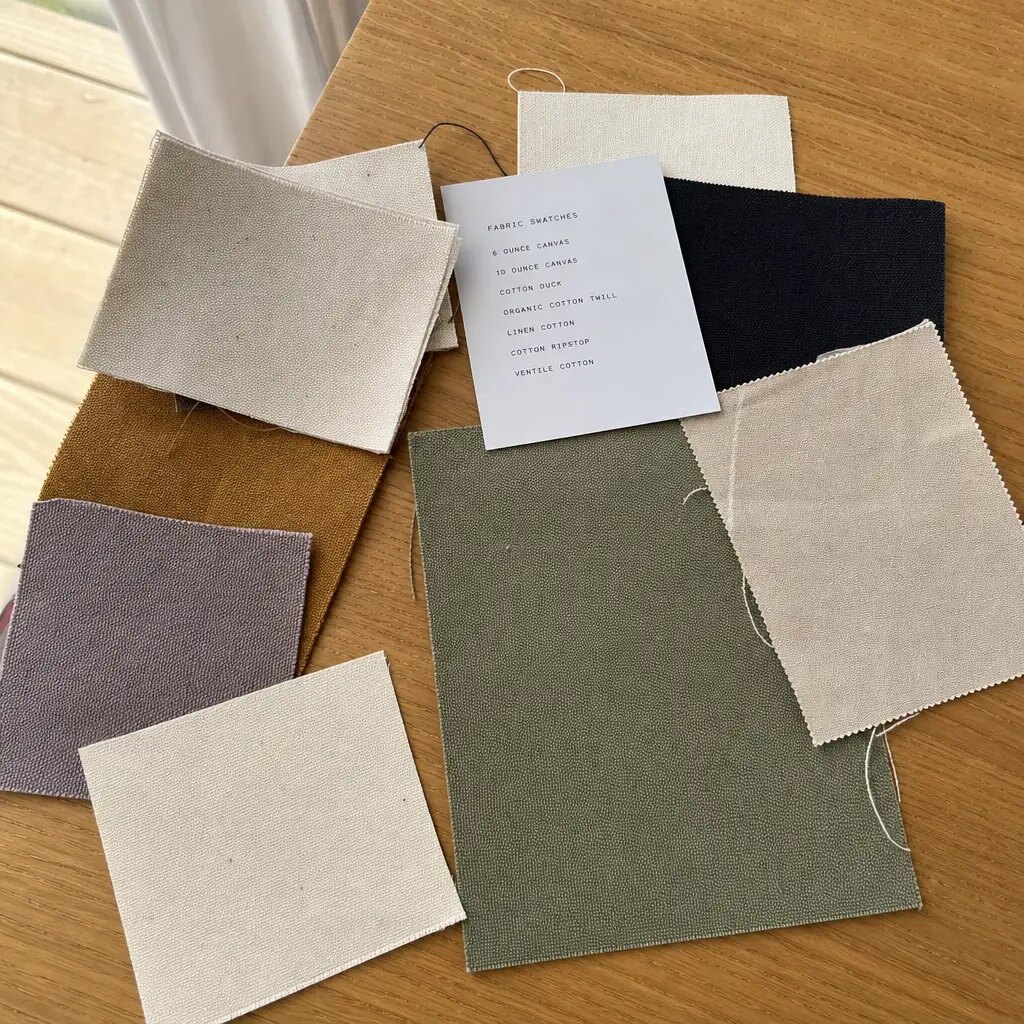
Canvas weight is one of the first cost and quality decisions. For many winery programs, 10 oz to 12 oz canvas is enough for a lightweight retail bag, but 14 oz to 16 oz canvas gives a firmer body, better strap support, and a more premium handfeel. If the bag needs to hold a bottle and keep its shape after repeated use, the extra weight is usually worth it. Ask for weight in both oz and GSM if possible, because suppliers sometimes describe the same fabric differently.
Structure matters as much as fabric. A lined or partially lined bag will hold print cleaner and resist internal abrasion from bottle glass and corkscrew edges. A simple interfacing layer can stop the bag from collapsing on shelf. Baseboard reinforcement is useful when the bag must stand upright for retail display or gift packing. For messenger styles, the flap should overlap far enough to cover the opening without making the bag awkward to access.
- 10 oz to 12 oz canvas: lighter retail use, lower cost, less body.
- 14 oz to 16 oz canvas: better for structure, gift sets, and repeated carry.
- Add lining or interfacing if the program cares about shape retention more than the lowest unit cost.
Branding Method Drives Both Cost and Reorder Risk
Canvas gives you several branding choices, but not all of them are equal for wholesale buying. Screen printing is usually the most economical option for simple logos and larger volumes, especially when the artwork uses one or two colors. Embroidery can look more premium, but on heavy canvas it adds cost, time, and needle-hole risk near edges. Sewn labels and woven patches are often the safest path when you want a durable logo without relying on print registration. Heat transfer can work for short runs, but it is usually the least robust choice for a bag that will be handled often.
The right method depends on how often the bag will be used, how close the logo sits to a seam, and how much texture the buyer wants on shelf. For winery programs, a restrained front logo and a small woven side label often look better than a large full-panel print. Keep artwork simple if the bag will be reordered. More print colors mean more setup and more chance of mismatch between runs.
- Screen print suits clean logos and repeat orders with stable artwork.
- Embroidery suits premium positioning but can distort on lighter canvas or near seams.
- Woven labels and sewn patches are good for long-term repeatability and cleaner QC.
Compare Sourcing Routes Before You Compare Unit Price
Two quotes with the same price can hide very different supply chains. A factory-direct offer may include stronger control over fabric weight, stitching, and carton packing, while a trading company may bundle multiple steps and make coordination easier. A stock importer may look cheaper at first but can limit your size, strap length, or branding area. The correct comparison is not just unit price; it is the cost of getting the exact bag you can reorder without rework.
This is where many winery buyers lose time. They compare a decorated stock bag against a custom-made bag as if they were equivalent. They are not. One route buys speed, another buys control, and another buys volume efficiency. Make the supplier describe the source body, the decoration process, the packaging method, and the reordering logic. If that information is not in the quote, the quote is incomplete.
- Ask whether the quoted body is custom-made or pulled from stock.
- Separate factory cost from decoration cost and packing cost.
- Require the supplier to state any minimums by color, logo version, or carton mix.
Set MOQ and Lead Time Around Production Reality
MOQ should follow the number of material setups, not a round number someone picked for convenience. If you change canvas color, print color, label type, or lining, the supplier may need separate setup or separate material allocation. That is why a single design can have one MOQ at 500 pieces and a much higher effective MOQ once you add multiple colors or mixed packing. A useful quote shows where the breakpoints are, so the buyer can decide whether to simplify the spec or pay for variety.
Lead time should be measured from approved sample, not from first inquiry. A typical flow is sample development, strike-off or pre-production sample, bulk production, then packing and dispatch. For a straightforward custom canvas messenger bag, sample approval can take 7 to 15 days and bulk production 30 to 45 days after approval, but custom dyeing, busy season load, or carton complexity can extend that. If the winery launch is tied to a harvest date or holiday release, build in cushion.
- One artwork version usually keeps MOQ lower than multiple versions.
- Custom dyeing, special lining, or unusual hardware adds time.
- Do not schedule retail launch dates off the PO date alone; use approval-to-ship timing.
Use the Sample to Prove Construction, Not Just Appearance
A sales sample that looks attractive but hides weak stitching is a bad approval. The pre-production sample should prove the bag's actual build: fabric weight, handle attachment, seam allowance, print accuracy, and closure alignment. Open and close the flap several times, load the bag with the intended bottle weight, and inspect how the body distorts. If the sample cannot survive normal handling, the bulk order will not improve itself later.
For winery buyers, the sample also needs to prove retail presentation. That means the logo is centered, the strap drop feels balanced, the bag sits upright when displayed, and the label is placed where staff can explain it quickly at the counter. If you are comparing vendors, use the same sample checklist on every candidate. That keeps the approval process objective and makes it easier to reject a bag that looks good but does not match the spec.
- Approve the sample only after a loaded-handling test, not just a visual review.
- Check logo placement, strap symmetry, seam finish, and flap coverage.
- Keep a signed or photographed reference sample for reorder comparison.
Set QC Thresholds That Fit Retail and Tasting-Room Use
Quality control for canvas messenger bags should focus on the failures a buyer will actually see: crooked print, weak strap anchors, poor seam finishing, and size drift. Cosmetic defects matter because these bags are often sold on shelf or handed over across a tasting-room counter. A loose thread may be small, but it signals weak control and can become a wholesale rejection if the buyer is receiving several hundred units for a seasonal release.
Define acceptance criteria before production starts. State allowable size tolerance, logo placement tolerance, thread cleanup requirements, and packing counts. If the bag is heavy enough for a bottle, ask for pull strength or load testing on the strap attachment zone. If it is retail-facing, require daylight inspection of the first-bulk pieces so the supplier does not hide shade or print problems under warehouse lighting.
- Size and placement tolerances should be written into the PO or approval sheet.
- Reinforced strap anchors need visible bar-tacks or equivalent reinforcement.
- Carton labels must match the packing list exactly to prevent warehouse receiving delays.
Pack for Warehousing, Shelf Display, and Reorder Efficiency
Packing affects damage rate and receiving speed more than many buyers expect. If the bag will be sold direct to consumers, it may need a simple individual polybag or tissue wrap to protect the print. If it will go into club shipment kits, the supplier should pack it in a way that avoids crushing the flap or creasing the logo area. For winery retail, neat folding and consistent carton count matter because the receiving team may be the same staff that puts the bags on display.
Ask for the carton dimensions, gross weight, and pack method before you approve the order. That data helps with warehouse slotting, freight comparison, and pallet planning. It also exposes hidden cost. A low unit price can disappear if the carton is oversized, the gross weight is inefficient, or the supplier has packed the bags in a way that increases inbound labor. Good packing is part of the product, not an afterthought.
- Request the fold method and photo of the packed bag before bulk shipment.
- Confirm whether inner bags are needed to protect print or woven labels.
- Use carton data to compare freight impact across suppliers, not just FOB pricing.
Compare Landed Cost, Not Just FOB
FOB is only one piece of the buying decision. For canvas messenger bags, the landed cost can change materially once you add samples, setup charges, packing, inland freight, ocean or air freight, duty, and destination handling. A supplier with a slightly higher ex-factory price may still win if the carton pack is tighter, the sample process is cleaner, and the lead time reduces the need for expensive air freight. That is especially true for boutique wineries that buy in campaign-based batches rather than in constant replenishment.
The best quote lets you compare apples to apples. Ask for pricing at your target volume and at the next volume break, with the same fabric weight, same branding method, and same packing specification. If one vendor is quoting a stock body and another is quoting custom manufacture, you need to separate those routes before comparing cost. The goal is not the cheapest quote on paper; it is the lowest-risk quote that can be reordered without spec drift.
- Compare at least two volume tiers so you can see the real scale benefit.
- Separate one-time setup charges from recurring unit cost.
- Treat freight and packing as part of the product economics, not incidental extras.
Specification comparison for buyers
| Sourcing route | Best fit for winery programs | Quote shape to expect | Buyer risk to check |
|---|---|---|---|
| Factory-direct custom | Private-label winery programs that need a specific size, canvas weight, lining, and branded label | Itemized pricing for fabric, print, trim, packing, and cartonization with sample and setup costs separated | Minimums may apply per color or artwork variant; verify that the quoted fabric lot and print method match the approved sample |
| Trading company or buying agent | Multi-item programs where the buyer wants one contact for bag, insert, and packing coordination | A consolidated quote that may include factory costs, sourcing fees, and export handling | Confirm who owns QC responsibility and whether the real factory is disclosed before order placement |
| Stock importer with decoration | Fast replenishment for tasting-room retail or seasonal promotions | Lower MOQ and shorter lead time, usually with decoration added to an existing bag body | Stock sizes may not fit the intended bottle set or brochure insert; decoration space can be limited |
| Local decorator or domestic converter | Small rush orders, event programs, or pilot runs that need quick proofing | Simple decoration quote with fewer freight and import variables | Unit cost is usually higher and fabric control may be weaker if the base bag is not made to spec |
| Hybrid supplier with stock body plus custom branding | Buyers who need speed but still want a distinct winery identity | A split quote for stock body, logo application, label, and packing | Make sure the stock body color, GSM, and strap construction stay constant across reorders |
| Direct import from an overseas factory | Volume programs with stable artwork and forecasted demand | Lower unit cost at scale with more control over construction and packaging details | Lead time must include sampling, bulk production, transit, and customs; do not treat ship date as delivery date |
| Regional sourcing hub | Buyers consolidating several accessory SKUs into one shipment | Convenient mixed-SKU documentation and pallet planning | Check whether the hub is quoting from a real manufacturer or simply relaying a margin-added offer |
| Gift-packer or kitting supplier | Programs that ship with wine accessories, inserts, or POS materials | One quote can include assembly, bag filling, sealing, and carton packing | Inspect assembly steps carefully; damage often happens during kitting rather than during sewing |
Buyer checklist before sampling
- Define the end use first: single bottle, bottle plus brochure, gift set, or tasting-room retail carry bag.
- Lock finished dimensions in writing, including strap drop, flap overlap, and any internal pocket size.
- Choose canvas weight by use case, usually 10 oz to 12 oz for lighter retail use and 14 oz to 16 oz for heavier carry and better shape retention.
- Specify whether the bag needs lining, interfacing, a baseboard, or reinforced side gussets.
- State the branding method, artwork colors, and logo placement before asking for unit pricing.
- Request quote separation for sample cost, setup charge, print plates or screens, packing, and carton fee.
- Ask for a physical pre-production sample or strike-off before bulk approval.
- Confirm carton pack count, master carton size, gross weight, and whether inner polybags are required.
- Get lead time measured from sample approval and deposit, not from the purchase order date alone.
- Require one quoted price at your target volume and one at the next volume break so you can compare scale economics.
Factory quote questions to send
- What finished size will you produce, and what tolerance do you hold on length, height, and gusset depth?
- What canvas weight or GSM will you use, and is it one lot per order or mixed lots across the run?
- Will the bag be unlined, lined, or interfaced, and what reinforcement is included at the strap anchor points?
- Which branding method is quoted: screen print, embroidery, woven label, sewn patch, or heat transfer?
- How many print colors are included, and what setup charges apply per design or per color?
- What is the MOQ per color, per artwork version, and per order if I need mixed packing?
- What is the sample cost, sample lead time, and whether that sample cost is refundable after bulk placement?
- What is the bulk production lead time after sample approval, and what capacity limits affect peak season orders?
- How will the bags be packed per inner pack and master carton, and can you quote carton dimensions and gross weight?
- What Incoterm is included in the quote, and which costs are excluded such as testing, duty, inland freight, or destination handling?
Quality-control points to confirm
- Fabric weight should match the approved swatch within a narrow tolerance, ideally within 5 percent of the quoted GSM or oz weight.
- Finished dimensions should stay within the agreed tolerance, typically plus or minus 1 cm for small bags and plus or minus 0.5 inch for larger retail bags.
- Strap anchors should use bar-tack or equivalent reinforcement, with no skipped stitches, loose thread, or seam distortion under load.
- Print registration should be clean and aligned, with no obvious shift between logo layers, no bleeding, and no cracked edges on the first handling test.
- If the bag is dyed or piece-dyed, front and back panels should be from the same shade band, with no visible color jump under daylight.
- Lining and internal seams should be trimmed cleanly, with no raw-edge fray that can shed fibers into bottles or gift inserts.
- Closure alignment should be consistent, especially on flap-and-hook or flap-and-magnet styles where poor placement affects retail appearance.
- Label placement should be repeatable across the run, centered or placed to the approved spec so the bag does not look off-line on shelf.
- Carton counts should be exact, with carton markings matching the packing list and no mixed variants unless the buyer approved mixed packing.
- Load testing should reflect the real use case; a bag sold for wine gifting should survive repeated carry of the intended bottle or gift-set weight without strap failure.