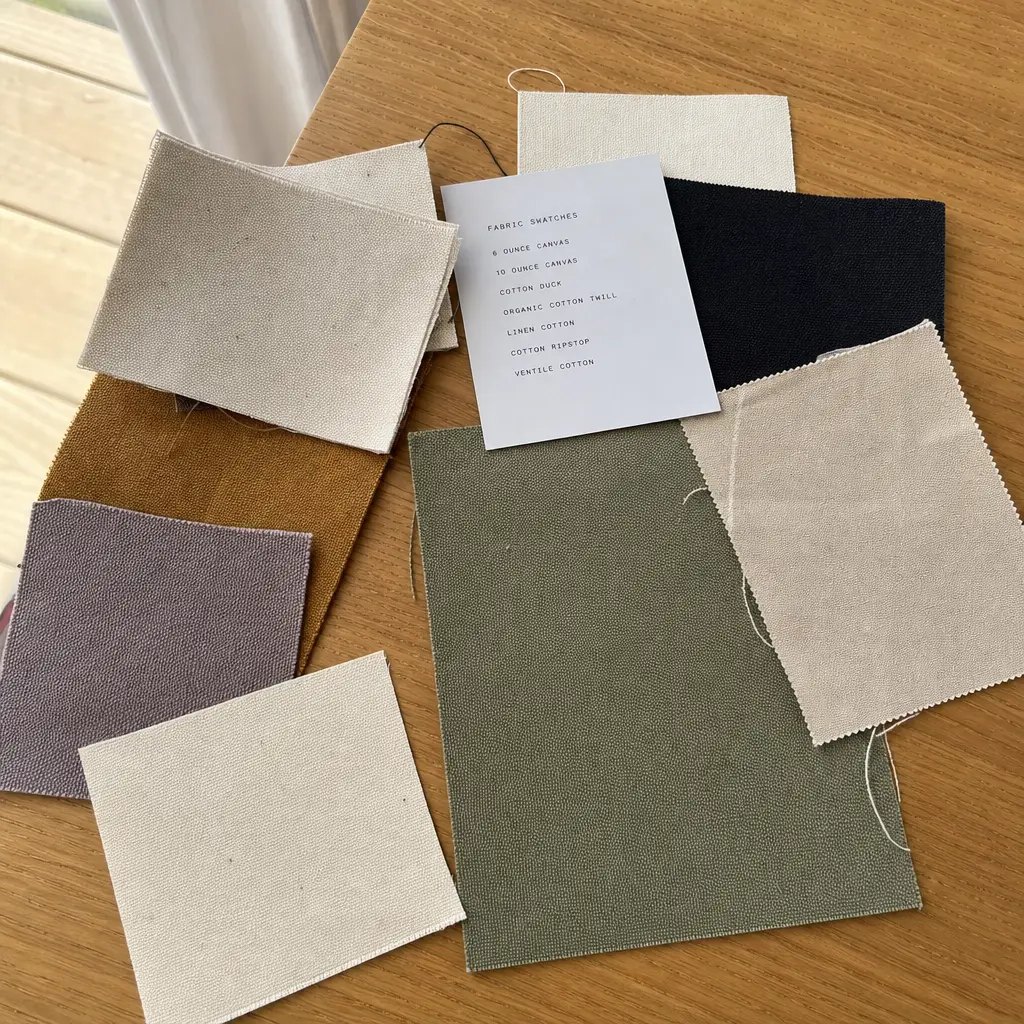
Start With the Campus Use Case
A canvas messenger bag for a university bookstore is judged in two places: on the retail fixture and in daily campus use. It must look clean beside apparel and gifts, but it also has to handle notebooks, a charger, a bottle, a sweatshirt, and sometimes a textbook or laptop accessory. Procurement should begin with the expected use, not only a front-view product photo.
The same silhouette can be built as a light event giveaway, a standard bookstore retail item, a laptop-friendly campus bag, or a premium alumni product. Those versions may share the same size and logo placement while using different canvas weights, strap widths, hardware, lining, closure reinforcement, packing, and inspection requirements.
A useful RFQ tells the supplier what the bag is expected to carry and how it will be sold. If the product is a low-cost orientation piece, a lighter specification may be acceptable. If it is sold as a daily carry item at retail, the quote should include stronger strap anchors, better hardware control, clearer logo testing, and finished-bag load checks.
For many standard campus carry programs, a buyer-defined 4-6 kg load reference is a practical commercial starting point. That is not a universal standard. A laptop-focused design, a premium alumni bag, or an internal compliance program may require a different target. The important step is to define the reference before quotation so reinforcement and inspection are priced into the product.
- Define the tier: event giveaway, standard bookstore retail, daily campus carry, laptop-friendly messenger, or premium alumni merchandise.
- State likely contents such as notebooks, one medium textbook, 13-15 inch laptop, charger, water bottle, apparel, or gift merchandise.
- Name the failure zones in the RFQ: strap anchors, side seams, flap corners, closure attachments, zipper ends, pocket openings, print folds, and bottom corners.
- Ask each supplier to quote construction details, not just size, color, logo, quantity, and FOB price.
- Keep one written spec sheet so every supplier quotes the same product assumptions.
Specify Canvas Clearly
Canvas weight must be measurable. Buyers often describe canvas in ounces, while factories may quote grams per square meter. Using the common oz/yd2 conversion, 12 oz is about 407 g/m2, 14 oz is about 475 g/m2, and 16 oz is about 542 g/m2. Because terminology can vary, the RFQ should state the nominal weight, measurement basis, and acceptable bulk tolerance.
For bookstore retail, 12 oz to 14 oz canvas is often a practical starting range. Around 10 oz may fit a lighter event or value program. Around 16 oz can add structure and perceived durability, but it also increases material cost, freight weight, seam bulk, and sewing difficulty. Heavier fabric does not compensate for weak strap anchors or poor hardware.
Weave and finish matter as much as headline weight. A tight 12 oz canvas can hold stitches and print edges better than a loose 14 oz cloth. Loose weave can fray at seam allowances, distort around snaps or rivets, and make printed edges look fuzzy. If the bag is unlined, the inside face of the fabric also affects the customer experience.
Finish choices should be fixed before sampling. Natural canvas has a familiar campus look but can soil during cutting and packing. Dyed canvas supports school colors but needs shade and rubbing checks. Washed canvas can feel more retail-ready but may shrink, pucker, or change finished dimensions. Recycled cotton blends and organic cotton still need the same strength and colorfastness controls as conventional cotton.
- Light value option: around 10 oz, roughly 339 g/m2, for modest loads and promotional use.
- Standard bookstore option: around 12-14 oz, roughly 407-475 g/m2, for most retail assortments.
- Heavy retail option: around 16 oz, roughly 542 g/m2, when structure and handfeel justify higher cost and freight.
- For dyed canvas, define color standard, shade tolerance, dry rubbing, wet rubbing, and swatch approval process.
- For washed canvas, confirm shrinkage, final dimensions, seam puckering limits, and whether the approved sample reflects final washing conditions.
Engineer the Strap System
Messenger bag failures often start where load concentrates. The strap anchor carries the weight, the side seam transfers it into the body, the slider holds the adjustment, and the hardware moves every time the wearer shifts the bag. If one part is weak, the carrying system is weak. A wide strap with poor anchoring is only a stronger-looking failure point.
For many campus messenger bags, a 38-50 mm cotton webbing strap is a practical choice. Narrower straps can dig into the shoulder when loaded. Much wider straps may look bulky and add cost. Self-fabric straps can look cohesive, but buyers should confirm folded construction, stitch density, edge finishing, and reinforcement.
Webbing quality should not be assumed from width alone. Two straps with the same width can perform differently if one has a loose weave, lower thickness, or poor slider grip. The quote should state strap material, color, width, thickness or weight if available, adjustment range, hardware size, and whether a shoulder pad is included.
The RFQ should explain how load moves from the strap into the bag body. Ask whether D-ring tabs are folded canvas, webbing tabs, or side-panel extensions. Ask whether they include backing patches, whether bartacks sit at the top and bottom of the anchor, and whether stitch lines sit far enough from cut edges to reduce tear-out risk. For lined bags, hidden reinforcement should be documented before the lining is closed.
- Match sliders, D-rings, and triglides to strap width so webbing does not fold, twist, or creep.
- Require box-x stitching, bartacks, reinforced tabs, or backing patches at stress points.
- Review both outside and inside construction at strap anchors on the pre-production sample.
- Reject samples where stress stitches sit too close to fabric edges, tabs twist under load, or reinforcement appears on one side only.
- Run load checks on finished bags after sewing and hardware installation, not only on raw webbing or fabric strips.
Treat Closures as Durability Parts
Closures are not minor trim. Magnetic snaps look clean but can pull through unsupported canvas after repeated opening. Metal snaps feel secure but can distort thin or loose fabric if the setting pressure or backing is wrong. Hook-and-loop is economical and simple, but the perimeter should be stitched and the buyer should decide whether noise and lint pickup fit the retail tier.
Buckles can give a traditional messenger look, but they add labor and need alignment checks. Zippers improve security for electronics, commuting, or travel use, but they require sewing control. Zipper ends should be backtacked or otherwise secured, pullers should run smoothly, and zipper tape should not be forced around bulky corners without enough allowance.
If a design has both a top zipper and a flap, review the sample like a customer would. Open the flap, unzip, load the bag, close it, adjust the strap, carry it, and repeat. This catches issues that a flat table review misses, including hard-to-reach zippers, misaligned flaps, stiff buckle tabs, and pullers that snag lining.
Lining is also a specification choice. An unlined canvas messenger can be durable when seams are bound or neatly finished. A lined bag feels more finished and can support internal pockets, but lining can sag, twist, catch in zippers, or tear at pocket openings when it is not anchored correctly. Laptop-friendly styles should define internal dimensions, padding thickness if any, sleeve opening, and closure clearance.
- Use reinforcement patches behind magnetic snaps, metal snaps, rivets, buckle tabs, and any closure that pulls on canvas.
- For hook-and-loop, specify stitched perimeter, corner reinforcement, hook/pile placement, and flap/body alignment.
- For zippers, define size or grade, puller type, end reinforcement, tape color, and cycling requirement.
- For pockets, specify intended contents instead of only pocket count.
- For lined bags, inspect lining anchoring, pocket stress points, inside loose threads, zipper clearance, and twisting after loading.
Control University Logos
University bookstore orders often involve licensed marks, department logos, alumni graphics, event names, or private-label branding. Decoration should be chosen from the artwork, canvas surface, placement, and quantity. A bold one-color school mark on natural canvas often works well as screen print. Fine multi-color graphics may suit heat transfer. Small premium marks may suit embroidery, woven labels, or patches.
Logo placement is a durability decision. A print that crosses a flap fold, sits too close to a snap, lands over a thick seam, or overlaps a bartack may look acceptable in a digital proof and fail after flexing. Ink can crack, transfer edges can lift, embroidery can pucker, and marks can sit unevenly over seam bulk.
Ask the supplier to mark the safe decoration area on the pattern or physical sample. As a buyer-defined rule of thumb, keep logos at least 10-15 mm away from seams, fold lines, snaps, rivets, zipper areas, and bartacks unless the factory proves the placement on a physical sample.
Licensed artwork also needs version control. File names, logo versions, color references, approval authority, and placement measurements should be fixed before bulk production. For multiple campuses, departments, or events, use a SKU map connecting each logo to body color, strap color, lining, hangtag, barcode, carton mark, and quantity.
- Use screen print for bold university marks with limited colors and a stable flat print area.
- Use heat transfer for fine detail or multi-color graphics, with adhesion and edge-lift checks on the actual canvas.
- Use embroidery for small premium marks, with backing, puckering, and thread-trim checks.
- Use woven labels, patches, or side labels when the flap surface is too textured or flexible for clean print.
- Require a signed artwork layout with logo size, position, color references, version number, decoration method, and approval authority.
Make Quotes Comparable
MOQ is rarely just the number of finished bags. It may be driven by fabric dyeing, webbing color, lining material, hardware finish, print setup, woven labels, carton printing, and sewing-line efficiency. A supplier may support a lower quantity when the buyer uses stock natural canvas, stock webbing, standard hardware, and one-color print.
The same style with custom dyed canvas, matching webbing, branded lining, antique hardware, and custom labels can require a higher MOQ or a higher unit price. Procurement teams should ask suppliers to separate standard components from custom components so the real cost and lead-time drivers are visible.
Price comparison should happen only after construction is aligned. Two quotes for the same drawing may represent different products if one includes 50 mm webbing, bartacks, backing patches, lined pockets, tissue protection, and testing while another uses a narrower strap, single stitch, no reinforcement, and bulk packing.
Ask suppliers to quote alternatives in a controlled way. For example, request the same pattern in 12 oz, 14 oz, and 16 oz canvas, with the same strap, logo, packing, and inspection requirement. That isolates the cost impact of fabric weight instead of mixing several design changes into one price.
- Ask which components are stock and which require custom MOQ: fabric, webbing, lining, label, hardware, print, hangtag, and carton.
- Separate sample cost, print screen cost, label cost, packing cost, testing cost, inspection cost, and freight assumptions.
- Confirm whether price includes logo application, hangtag attachment, barcode labeling, care label, country-of-origin label, and export carton marks.
- Compare landed cost and risk, not only FOB unit price.
- Treat a lower-spec quote as a different product tier, not an equivalent retail construction.
Use Samples as Control Tools
A showroom sample or photo sample is not enough for a bookstore order. It may prove that the factory understands the general shape, but it does not prove that final fabric, strap, hardware, logo, lining, and packing will perform. The pre-production sample should represent the construction that bulk production will follow.
If substitute materials are used, label the sample clearly as a fit sample, color reference, print trial, or construction sample. Do not treat it as full approval. A sample made with different canvas or hardware can be useful, but it should not control durability decisions.
Sample comments need to become production instructions. Instead of writing that the strap feels weak, say that the strap anchor must use box-x stitching plus bartack, with the stitch line moved inward and a hidden reinforcement patch added. Instead of saying the print is poor, identify opacity, curing, edge bleeding, registration, cracking, rough handfeel, wrong placement, or color mismatch.
Buyers should keep control samples. One signed sample can stay with the factory, one with the buyer or buying office, and the inspection team should receive photos plus key measurements. Sample-stage checks should include loading the bag, cycling the closure, rubbing the print, adjusting the strap, inspecting lining, and reviewing trial packing.
- Approve finished dimensions with tolerance, not only general appearance.
- Photograph strap anchors, bottom corners, flap edges, closure backs, zipper ends, lining seams, pocket openings, logo placement, and carton packing.
- Confirm whether the sample uses final fabric, color, logo, strap, closure, lining, hardware, label, and packing method.
- Freeze artwork size, logo position, print color, label position, and licensed mark approval before bulk cutting.
- Record allowed material substitutions in writing, including exact component, reason, and approval status.
Build a Practical Testing Checklist
Durability testing for campus messenger bags should match real use. Formal lab reports may be needed for fiber content, colorfastness, restricted substances, or internal compliance. Many practical failures, however, are caught through finished-product checks: loaded hanging, repeated lifting, closure cycling, zipper cycling, strap slippage, print rubbing, seam inspection after load, and carton review.
The test level should match the selling position. A premium retail messenger bag needs stricter expectations than a low-cost event bag, but even a budget product should not fail during ordinary carrying. Define how many pieces will be tested during inspection and what happens after a failure.
The durability testing checklist should appear in the RFQ, sample approval sheet, and final inspection plan. It should not be introduced for the first time when the inspector arrives. Suppliers need to know expected checks so they can price reinforcement, plan production, and allow inspection time.
AQL should also be agreed in advance if the buyer uses sampling inspection. Many procurement teams reference ANSI/ASQ Z1.4 or ISO 2859-1, but the exact plan is a buyer decision. Defect classification must be clear. Strap failure, snap pull-through, severe print error, wrong licensed logo, sharp hardware, and barcode mismatch may require major or critical treatment depending on the program.
- Loaded hanging test: load finished bags with the agreed weight and inspect strap anchors, seams, hardware, and fabric distortion.
- Dynamic lift test: lift and lower the loaded bag repeatedly to stress strap joints, sliders, D-rings, side tabs, and bottom seams.
- Strap slippage check: adjust the strap, load the bag, and confirm the slider holds position without creeping or folding the webbing.
- Closure cycling: open and close snaps, magnets, hook-and-loop, buckles, or zippers enough times to reveal weak setting, poor alignment, or rough operation.
- Print adhesion check: perform tape pull, scratch, or dry rub based on decoration method and agreed curing time.
- Color rubbing check: rub dark dyed canvas against light cloth in dry and wet conditions when school-color fabrics may contact clothing.
- Lining and pocket test: load inner pockets with intended items and inspect tearing, sagging, seam distortion, and zipper catching.
- Carton review: inspect bottom-layer bags after trial packing for creases, pressure marks, bent hardware, and print transfer.
Protect Packing and Timing
Packing can damage canvas messenger bags before they reach the bookstore. Heavy bags packed too tightly may arrive with crushed flaps, bent snaps, distorted buckles, deep creases, or pressure marks from hardware. Printed flaps can scuff if they rub against another bag, zipper puller, rivet, or carton wall. Natural canvas can also pick up dirt during finishing and packing.
The packing method should match freight and retail handling. Sea shipments may use larger cartons if gross weight and compression are controlled. Courier shipments often need stronger cartons and lower carton weights because handling is less predictable. If bags are folded, the fold line should not run through the logo, closure, or stiff reinforcement.
Labeling matters for receiving speed. A bookstore order may include multiple school marks, departments, colors, or event versions. Carton marks, SKU labels, hangtags, price tickets, and packing lists should match the SKU map. The receiving team should be able to identify contents without opening every carton, especially near orientation, homecoming, graduation, or back-to-school windows.
Lead time should be broken into material sourcing, sample development, sample shipping, review, revised sample if needed, bulk material preparation, decoration, sewing, finishing, inspection, packing, freight handover, transit, customs, and receiving. Custom dyed fabric, washed canvas, late artwork approval, failed print trials, hardware shortages, and inspection rework are common schedule risks. Approval gates protect both quality and the seasonal sales window.
- Define whether bags are flat packed, folded once, individually polybagged, bundled, paper-banded, or separated with tissue.
- Use tissue or protective sheets between printed flaps when ink scuffing, transfer, or hardware pressure is possible.
- Control carton gross weight so handling does not crush lower layers or corners.
- Confirm carton size, net weight, gross weight, carton strength, carton marks, and quantity per carton before shipment.
- Specify hangtag, barcode, price ticket, country-of-origin label, care label, and suffocation warning requirements where applicable.
- Request a production calendar with dates for material approval, sample approval, cutting, decoration, sewing, inspection, packing, and shipment handover.
Specification comparison for buyers
| Spec decision | Recommended option | When it fits | Buyer risk to check |
|---|---|---|---|
| Main fabric weight | Define nominal weight and measurement basis. Common bookstore options are 12 oz to 16 oz canvas, approximately 407-542 g/m2 when using the usual oz/yd2 conversion; set a buyer-approved bulk tolerance such as +/-5% if appropriate. | Retail bags expected to carry notebooks, a laptop accessory pouch, water bottle, apparel add-ons, or one medium textbook. | A quote may list nominal weight while bulk fabric is lighter, looser, or finished differently. Check measured weight and handfeel before cutting. |
| Canvas construction and finish | Plain weave cotton canvas or cotton-blend canvas with finish stated: natural, dyed, washed, enzyme washed, recycled cotton blend, organic cotton, pre-shrunk, or coated if used. | Programs where school color, sustainability positioning, shrinkage, surface texture, or print quality affects retail acceptance. | Dyed and washed fabrics can shift shade, shrink, crock onto light clothing, or change finished dimensions unless approval and testing are defined. |
| Shoulder strap system | 38-50 mm cotton webbing or reinforced self-fabric strap, matched slider and D-rings, reinforced tabs, box-x stitching, and bartacks at load points. | Most campus messenger bags where students carry uneven loads and adjust the strap repeatedly. | A wide strap alone does not prove strength. Thin webbing, weak sliders, short seam allowance, or poor side tabs can cause early failure. |
| Stress-point sewing | Consistent stitch density, secured thread ends, bartacks at strap tabs and pocket openings, and reinforcement patches where hardware pulls on fabric. | Styles with flaps, pockets, zippers, snaps, buckles, or straps attached to the main body. | Decorative stitch rows can hide weak load transfer. Missing bartacks, skipped stitches, loose tension, or stitches too close to cut edges are functional defects. |
| Flap closure | Metal snap, magnetic snap with backing patch, stitched hook-and-loop, buckle with reinforced tab, or zipper with secure ends. | Different bookstore price points balancing access, security, noise, cost, and perceived retail quality. | Unreinforced snaps can pull through canvas; hook-and-loop corners can peel; zipper ends can fail; buckle tabs can distort under repeated pull. |
| Logo method | Screen print for bold marks, transfer for fine multi-color art, embroidery for small premium logos, woven label or patch for repeat programs. | Licensed university artwork, alumni campaigns, department logos, orientation programs, and bookstore private-label assortments. | Large marks over flap folds, snaps, seams, or bartacks may crack, scuff, misregister, lose opacity, pucker, or lift at edges. |
| Lining and internal organization | Unlined with bound seams for value styles; 210D or 300D polyester lining and anchored pockets for higher price points; padded sleeve only when dimensions and padding are specified. | Laptop-oriented styles, alumni merchandise, giftable retail products, or bags with internal organization. | Loose lining can twist, pockets can tear, and a sleeve label can overpromise if padding thickness and internal dimensions are not specified. |
| Hardware | Metal D-rings, triglides, snaps, pullers, rivets, and buckles sized to strap width and checked for plating, edges, deformation, and slippage. | Styles positioned above basic promotional bags and expected to feel retail-ready in store. | Thin hardware may bend, discolor, snag fabric, rust, squeak, or allow strap creep under load. |
| Carton packing | Flat pack or controlled fold, protect printed flaps with tissue or interleaving, control carton gross weight, and approve SKU/carton mapping. | Orders shipping by sea, courier, or consolidated freight into campus receiving teams. | Overpacked cartons can crease flaps, deform closures, transfer ink, soil natural canvas, bend hardware, and complicate receiving counts. |
Buyer checklist before sampling
- Classify the product tier before requesting price: orientation giveaway, standard bookstore retail, daily campus carry, laptop-friendly style, or premium alumni merchandise.
- State intended contents in the RFQ: notebooks, one medium textbook, charger, water bottle, apparel, tablet, or 13-15 inch laptop.
- Use a buyer-defined loaded-use reference. For many standard campus bags, 4-6 kg is a useful commercial check; laptop or premium styles may need a different target.
- Specify canvas by nominal weight, metric equivalent where useful, fiber content, weave, finish, color standard, and acceptable bulk tolerance.
- Ask whether fabric weight is measured as oz/yd2, g/m2, or another local convention, and require measured bulk fabric confirmation before cutting.
- For dyed or washed canvas, define shade approval, shrinkage expectation, dry rubbing, wet rubbing, and whether approval is based on lab dip, swatch, yardage, or pre-production sample.
- Require reinforced strap joints using box-x stitching, bartacks, reinforcement patches, folded tabs, or other approved load-path construction.
- Confirm strap width, strap material, webbing thickness or weight, slider size, D-ring size, adjustment range, and whether the strap slips when the finished bag is loaded.
- Choose closures by use case. Magnetic snaps, metal snaps, hook-and-loop, buckles, and zippers need different backing, cycling checks, and defect definitions.
- Place licensed logos away from fold lines, seams, snaps, rivets, zipper teeth, and bartacks unless a physical sample proves the placement works.
Factory quote questions to send
- What canvas weight, weave, and finish do you recommend for our target retail tier, and can you quote the same pattern in 12 oz, 14 oz, and 16 oz options?
- Is the quoted fabric weight measured as oz/yd2, g/m2, or another convention, and what bulk fabric tolerance can you control before cutting?
- Is the canvas natural, dyed, washed, recycled cotton blend, organic cotton, pre-shrunk, or blended with polyester, and what shrinkage and shade tolerance should we expect?
- Can you provide fabric composition, measured fabric weight, colorfastness to rubbing, and restricted substance documentation if our compliance team requires it?
- What strap width, webbing construction, webbing thickness or weight, slider size, D-ring size, tab construction, and reinforcement stitch pattern are included?
- Will strap anchors include box-x stitching, bartacks, inside backing patches, rivets, folded side tabs, or body-panel reinforcement, and which are standard rather than optional?
- What finished-bag load test do you recommend for this construction, and what failure criteria will you use for seam opening, stitch popping, pull-through, fabric tearing, hardware deformation, and strap slippage?
- Can you share photos or records from strap pull, loaded hanging, seam strength, zipper cycling, closure cycling, print adhesion, or rubbing checks performed on similar canvas bags?
- Which closure do you recommend for our target price point: snap, magnet, hook-and-loop, buckle, top zipper, or flap plus zipper, and how will it be reinforced?
- Which logo method do you recommend for our artwork and canvas color, and what risks should we expect for opacity, curing, adhesion, registration, cracking, migration, handfeel, or edge lift?
Quality-control points to confirm
- Check main fabric weight against the RFQ tolerance and approved material swatch. Do not rely only on the supplier quote sheet or showroom sample.
- Review canvas handfeel, weave tightness, shade, washing effect, visible slubs, and surface contamination before bulk cutting.
- Use buyer-approved finished-bag dimensional tolerances. Around +/-1 cm is a common commercial example for soft canvas bags, but laptop sleeves, fixtures, or inserts may require tighter control.
- Test strap joints on finished bags using the agreed load, then inspect for seam opening, fabric tearing, stitch popping, rivet pull-through, hardware deformation, and strap slippage.
- Check box-x stitching, bartacks, reinforcement patches, and stress-point sewing on both sides of the bag, including hidden areas where possible.
- Cycle snaps, magnetic buttons, hook-and-loop, buckles, and zippers during inspection to catch weak attachment, poor alignment, rough operation, and loose pullers.
- Check zipper ends for backtacking or other end security because many zipper failures begin where the slider is forced against an unfinished stop.
- Test print adhesion by tape pull, scratch check, or rubbing method suited to the ink or transfer, and only after the required curing time.
- Check dark dyed canvas for dry and wet rubbing transfer, especially navy, black, maroon, forest green, charcoal, and other school-color fabrics.
- Judge needle holes, skipped stitches, broken threads, puckering, and loose thread trimming more strictly around flap edges, strap anchors, zipper ends, pocket openings, and bottom corners.