The compliance problem bookstore buyers need to solve
Wholesale canvas messenger bags for university bookstores look simple on the shelf, but the purchase touches several risk areas at the same time: licensed logo use, student-facing product durability, retail barcode handling, import compliance, and seasonal delivery. The supplier compliance checklist should not be a paperwork exercise added after the quote. It should drive how the RFQ is written, how the sample is approved, and how the final goods are inspected.
The most common sourcing mistake is to compare messenger bag suppliers only by unit price and a catalogue photo. A low quote may be based on lighter canvas, a shorter strap, unreinforced flap seams, cheaper hardware, bulk packing when retail polybags were required, or no allowance for testing documents. For a bookstore program, a useful quote must show what the factory is actually building and what evidence it can provide before shipment.
- Treat the compliance checklist as part of the commercial RFQ, not as an afterthought after price negotiation.
- Require suppliers to quote the same bag dimensions, fabric weight, logo method, packing, and Incoterm.
- Separate product compliance, university brand compliance, and logistics compliance because each creates different approval steps.
- Do not release bulk production until the approved sample and quote assumptions match the purchase order.
Define the messenger bag construction before requesting prices
A canvas messenger bag can range from a flat promotional document bag to a structured retail shoulder bag with gusset, lining, zipper pocket, and reinforced strap. If the RFQ only says “canvas messenger bag with logo,” suppliers will fill the gaps in different ways. That creates quotes that cannot be compared and samples that miss the buyer’s intended retail quality.
For university bookstores, the practical starting point is the carrying use. A bag intended for notebooks and campus apparel can use a lighter body than a bag expected to carry textbooks, a laptop sleeve, or course packs. The construction should specify finished dimensions, gusset depth, flap length, strap type, closure, internal pocket, and whether the bag needs to stand with some shape or remain soft and foldable.
- Budget campus event bag: 12 oz canvas, simple flap, no lining, 3-5 cm gusset, cotton webbing strap, screen print logo.
- Retail bookstore bag: 14 oz canvas, reinforced flap, inner slip pocket, adjustable strap, snap or magnetic closure, woven label or screen print.
- Premium program bag: 16 oz canvas, lining, zipper top or secure inner pocket, metal adjuster, reinforced stress points, embroidery or woven patch.
- Write strap width and drop length clearly; a 3.8 cm strap feels different from a 5 cm strap when carrying books.
Fabric weight, GSM, and finish affect both cost and complaints
Canvas weight is one of the largest cost drivers, but it is also one of the easiest places for misunderstandings. Buyers often specify ounces while factories and mills may reference GSM. As a working range, 12 oz canvas is commonly around 340-400 GSM, 14 oz around 400-475 GSM, and 16 oz around 475-540 GSM, depending on weave, yarn, finishing, and whether the fabric is bleached, dyed, or washed. The exact value should be confirmed by swatch and supplier data, not assumed from the ounce label alone.
Natural canvas is usually more forgiving for cost and lead time than custom dyed canvas. Dyed canvas gives better school color alignment, but it brings shade-lot risk and usually higher MOQ. Washed canvas gives a softer hand feel but can change dimensions and make logo placement less predictable. For bookstore retail, the buyer should define the target hand feel and accepted shade tolerance because students and alumni will compare bags directly on the shelf.
- Use 12 oz when low cost and light carry are more important than structure.
- Use 14 oz when the product needs a retail hand feel without becoming too heavy.
- Use 16 oz when durability and shape are priorities, but review freight weight and needle performance.
- For dark dyed canvas, confirm colorfastness and the logo print method before approving bulk fabric.
- For natural canvas, define acceptable specks and cotton seed marks so QC does not reject normal raw cotton character.
Logo method and licensed artwork controls
University bookstore orders often involve licensed marks, department identities, alumni designs, or event artwork. The factory needs production artwork, not a low-resolution image copied from a website. Vector files, Pantone references, logo size, placement from bag edges, and clear-space rules should be included in the RFQ or provided before sampling. If the bookstore uses a licensing agency, build that approval into the schedule.
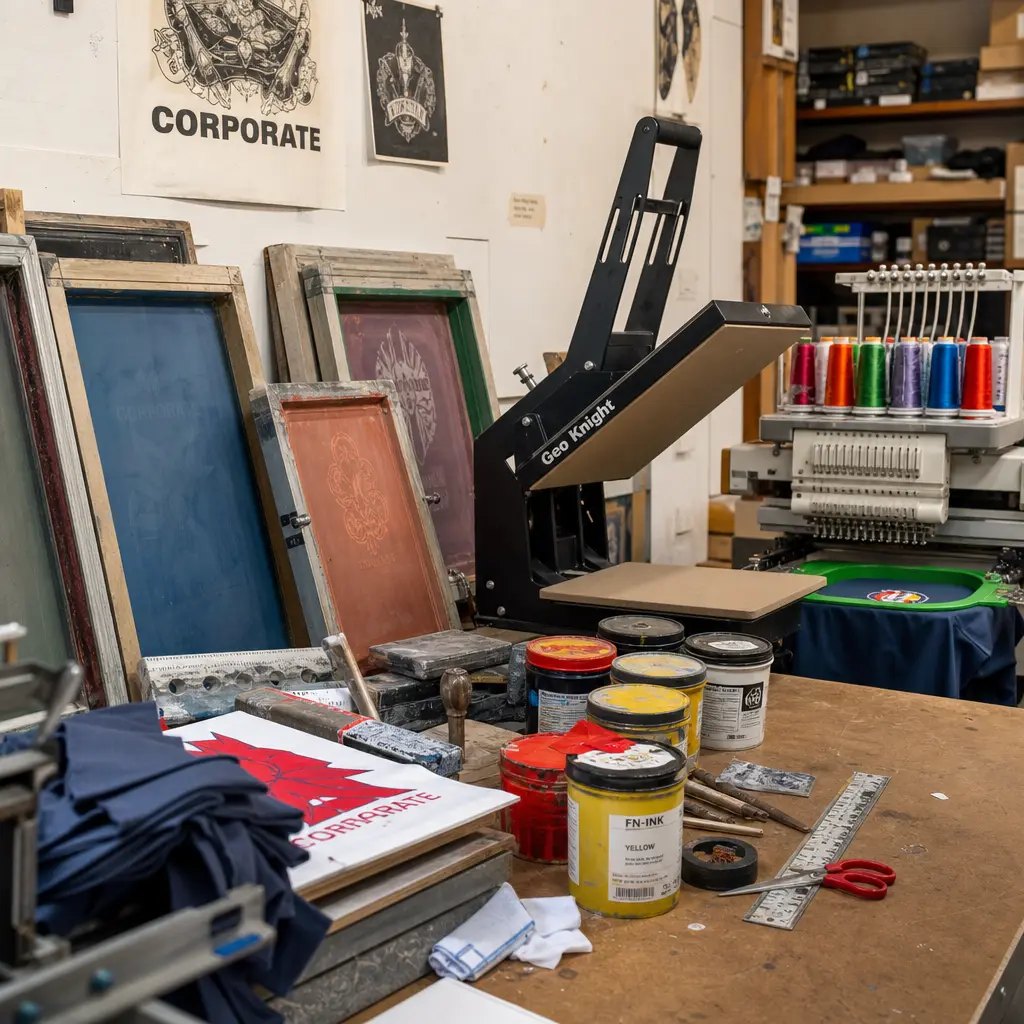
Screen printing is usually the most efficient option for canvas messenger bags with flat logos and medium to large quantities. Embroidery gives a higher perceived value but can distort thinner flaps and costs more for large fill areas. Woven labels and patches are useful when the same label can be applied across multiple bag styles. Heat transfer is less common for a traditional canvas look and must be tested carefully for adhesion on textured fabric.
- Screen print: best for clear graphic logos, slogans, orientation designs, and one to four spot colors.
- Embroidery: best for small crests or premium marks, but avoid oversized filled artwork on soft flap panels.
- Woven label: good for ongoing bookstore private label ranges and consistent brand presentation.
- Patch application: useful for heritage styling, but define edge finish, stitch color, and placement tolerance.
- Approval standard should include Pantone reference, print position tolerance, and a rub or tape test.
MOQ logic: why low quantity quotes change the product
MOQ for canvas messenger bags is not only a sales rule. It comes from fabric sourcing, cutting efficiency, print setup, trim purchasing, and packing labor. A factory may accept 300 pieces if natural canvas is in stock and the logo is a simple one-color print. The same factory may require 1,000 pieces or more for custom dyed canvas, a special strap color, lining, metal trim, or multiple artwork versions.
Procurement teams should avoid forcing an artificially low MOQ without understanding what changes. The supplier may switch to stock fabric, reduce fabric weight, remove reinforcement, or raise the setup cost. A better approach is to ask for price breaks at realistic quantities and state which elements must not change across those breaks.
- Request quote breaks at 300, 500, 1,000, and 2,000 pieces if the program volume is uncertain.
- Separate MOQ per fabric color from MOQ per logo design; they are not always the same.
- If several campus departments need the same bag with different logos, ask whether blank bag production can be shared.
- Keep one common bag body and vary the label or print only when trying to control cost.
- For first orders, pay more attention to sample accuracy and inspection terms than squeezing the last few cents from MOQ.
Supplier compliance evidence that is worth reviewing
A supplier compliance checklist for canvas messenger bags should focus on evidence that actually relates to the finished product. A general company profile is not enough. Buyers may need material declarations, restricted substance statements, ink safety information, and test reports depending on destination market, product claims, and bookstore policy. If the bag is sold to consumers, importers should also consider labeling, country of origin, and any retail packaging requirements.
Not every order needs the same testing package, but every supplier should be able to explain what materials are used and where the risk points are. Cotton canvas, dyed fabric, printed ink, metal snaps, magnetic closures, zipper sliders, plastic buckles, and packaging may all have different documentation. Reports should be current, readable, and connected to the same material or process used for the order.
- Factory business license and export capability, where relevant to your sourcing policy.
- Material composition declaration for cotton canvas, lining, webbing, labels, and trims.
- Azo-free or restricted substance statement for dyed fabric and printed components when required.
- Ink or print material information for screen print, transfer, or coating.
- Previous test reports may be acceptable for screening, but final compliance should match the actual order materials.
- Social or security audit documents should be requested early if your retailer onboarding process requires them.
Sample approval should close technical risk, not only show appearance
A good pre-production sample proves that the factory understands the construction and that the buyer’s artwork, fabric, trims, and packing assumptions are workable. For a new canvas messenger bag style, a photo sample is not enough. The procurement team should handle the bag, test the strap length, put typical books or a laptop-sized object inside, and check how the flap sits when the bag is lightly loaded.
If bulk fabric is not ready, the factory may make a proto sample using substitute fabric. That is acceptable only if the differences are documented. Before mass production, the sealed sample should use approved bulk fabric or an agreed equivalent, actual logo method, final trims, and final dimensions. The sealed sample then becomes the reference for QC, not the catalogue image.
- Measure finished width, height, gusset, flap length, pocket size, strap width, and strap adjustment range.
- Load the sample with realistic campus items and review seam stress at strap points.
- Check whether the flap covers the opening properly after the bag has contents inside.
- Review stitch density, loose threads, back side of embroidery, and reinforcement at stress areas.
- Approve logo position with a ruler from fixed seams, not by visual center alone.
- Keep one signed or sealed sample with the buyer and one with the factory.
QC thresholds for defects buyers should define in advance
Canvas messenger bags have visible textile defects, functional defects, and packing defects. A buyer-friendly QC standard should define what is acceptable before production begins. Without this, the inspection discussion becomes subjective: the factory may consider minor cotton specks normal, while the bookstore buyer may reject the same mark if it appears across the printed logo area.
For most retail canvas bags, major defects include broken seams, failed closures, wrong logo, severe stains, incorrect size, missing labels, or unsafe trim edges. Minor defects may include small loose threads, slight shade variation within tolerance, or small natural cotton flecks outside the logo area. The important point is to write acceptance criteria that reflect retail reality and the agreed fabric type.
- Main body size tolerance: commonly +/-1 cm unless otherwise agreed for large or washed styles.
- Logo placement tolerance: define horizontal and vertical allowance, often within +/-5 mm to +/-10 mm depending on artwork size.
- Stitching: no open seams, skipped stitch runs, broken bar tacks, or loose strap anchors.
- Print: no obvious smearing, pinholes in key logo areas, wrong Pantone, or ink transfer after reasonable drying.
- Hardware: snaps, zippers, adjusters, and magnetic closures must function smoothly for repeated opening and closing during inspection.
- Cleanliness: reject oil marks, mildew odor, heavy dust, or stains visible on the retail-facing surface.
Packing and bookstore receiving requirements
Packing is often under-specified because the product itself receives all the attention. For bookstore distribution, packing affects receiving speed, shelf condition, sustainability goals, and landed cost. A canvas messenger bag shipped loose in an overfilled carton may arrive with crushed flaps and dirty fabric. A bag packed in unnecessary individual plastic may conflict with campus sustainability guidelines or add avoidable cost.
The right packing method depends on the selling channel. If bags go directly to retail shelves or online fulfillment, individual polybags, hangtags, SKU stickers, and barcode labels may be needed. If bags go to a campus event team or backroom stock, bulk packing with neat folding, tissue separation for light colors, and correct carton labels may be better. Define this in the RFQ so all supplier quotes include the same labor and material.
- State whether individual polybag is required, optional, or prohibited.
- Confirm folded size because flap crease marks can affect shelf presentation.
- Require carton marks with PO number, SKU, color, quantity, gross weight, net weight, and carton number.
- Keep carton gross weight practical for warehouse handling; heavy canvas bags can exceed safe limits quickly.
- For light natural canvas, consider inner liner bags or carton protection against moisture and dust.
- Request packing photos before shipment if third-party inspection is not scheduled.
Lead time planning for academic retail calendars
Back-to-school, orientation, homecoming, graduation, and holiday shopping periods are fixed dates. Canvas messenger bag production can be straightforward, but approvals are rarely instant. Artwork licensing, Pantone sign-off, fabric availability, sample courier time, internal buyer meetings, and inspection booking all consume calendar days before the goods ever leave the factory.
A practical schedule starts with the retail needed-in-warehouse date and works backward. Include time for ocean freight, customs clearance, domestic delivery, and receiving. Then add final inspection, packing, bulk production, sample approval, and artwork approval. If a bookstore buyer changes logo size or fabric color after sampling, the timeline should be recalculated rather than absorbed silently by the factory.
- Fastest route: stock natural canvas, one-color screen print, no complex trim, standard export carton.
- Higher risk route: custom dyed canvas, licensed multi-color artwork, lining, special hardware, and retail barcode packing.
- Do not count production lead time from PO date unless deposit, artwork, fabric approval, and sample status are also clear.
- Peak season capacity should be reserved early; print queues can become the bottleneck even when stitching capacity is available.
- Build a decision deadline for sample approval so the order does not miss the vessel or campus receiving window.
Specification comparison for buyers
| Supplier option | What to verify | Commercial advantage | Buyer risk to control |
|---|---|---|---|
| Direct sewing factory | hardware trim card, strap-load photo, lining close-up, approved flap sample, and first-piece production photos | Better sample-to-bulk control and faster production feedback | May be weaker on export paperwork or branded packing unless checked early |
| Trading company | Factory name, production photos, trim-source proof, and who owns QC decisions | Can coordinate small mixed orders and extra services | Markup can hide real factory capability and slow defect decisions |
| Specialized bag workshop | flap shape, strap webbing, buckle, D-ring, inner pocket, zipper pocket, seam allowance, and load path | More practical for detailed construction, trims, and repeat programs | Capacity may be limited during peak seasons |
| Low-price general supplier | 10-16 oz canvas, washed canvas, rPET canvas, lining fabric, interfacing, and hardware finish | Useful for simple promotional runs with loose specs | Material downgrades, weak packing, and vague inspection scope can erase savings |
| Retail-ready supplier | shape support, strap folding, hardware protection, individual bag, carton drop expectation, and retailer hangtag placement | Can handle labels, SKU separation, carton marks, and receiving rules | Higher unit cost must be compared against reduced warehouse work |
| Compliance-focused supplier | Fabric records, labeling review, test plan, and production traceability | Safer for retail programs and repeat brand orders | Documentation claims need evidence, not only sales language |
| Local sample room plus bulk factory | Signed sample, bulk factory handoff, first-piece photos, and deviation owner | Good for complex branding before large production | Sample room quality may not match bulk line unless handoff is controlled |
Buyer checklist before sampling
- Define finished bag size, gusset, flap depth, strap width, and internal pocket layout in centimeters or inches, not only by reference photo.
- Specify canvas weight by oz and approximate GSM, plus accepted tolerance for finished bag weight and fabric shade.
- Separate required compliance documents into mandatory-before-sample, mandatory-before-production, and mandatory-before-shipment items.
- Confirm whether the logo is licensed university artwork and whether supplier must follow brand color, clear-space, and placement rules.
- Approve one sealed pre-production sample including fabric, print, trims, strap, packing method, and carton label format.
- State inspection level, AQL or defect threshold, and who pays for rework if finished goods fail agreed acceptance criteria.
- Request carton dimensions, gross weight, units per carton, and packing photos before shipment booking.
- Build the PO schedule around artwork approval, fabric purchase, sample sign-off, bulk production, inspection, and freight cutoff dates.
- Keep each quote comparable by requiring the same Incoterm, currency, validity period, payment term, and included testing or labeling costs.
- Avoid approving production based only on supplier catalogue photos; require a physical or video-reviewed sample for any new construction.
Factory quote questions to send
- Are you the direct manufacturer for the canvas messenger bags, and which processes are in-house versus outsourced?
- What fabric options can you quote for 12 oz, 14 oz, and 16 oz canvas, including GSM, shrinkage expectation, and available stock colors?
- What MOQ applies per fabric color, per logo design, and per packing style?
- Can you provide a pre-production sample using bulk fabric, bulk trims, and the intended logo method before cutting all goods?
- Which print methods do you recommend for our artwork, and what are the limits for line thickness, Pantone matching, and print area?
- What compliance documents can you provide for fabric, dyeing, printing ink, metal trims, and finished goods?
- What inspection standard do you use for seam strength, skipped stitches, stains, print defects, zipper function, and packing accuracy?
- What are the carton dimensions, units per carton, carton weight, and barcode or shipping mark options?
- Which costs are included in the unit price: sample, mold or screen, label, hangtag, testing, inner packing, export carton, and documentation?
- What production lead time starts after which event: deposit, artwork approval, fabric approval, sample approval, or receipt of license files?
Quality-control points to confirm
- Finished size tolerance should normally stay within +/-1 cm for main body dimensions unless the bag is very large or heavily washed.
- Fabric weight should match approved swatch and quoted range; large variation changes hand feel and retail value.
- Shoulder strap attachment points need reinforced stitching, such as box stitch or bar tack, with no loose thread nests.
- Flap alignment should be visually centered when the bag is filled lightly, not only when laid flat.
- Screen print should pass basic rub and tape checks without obvious ink lift, cracking, or color contamination.
- Embroidery should not distort the flap, and backing should be trimmed cleanly if visible inside.
- Zippers, snaps, and magnetic closures should open and close smoothly without sharp edges or weak setting.
- Light canvas must be inspected for oil spots, dust, needle marks, and color stains before packing.
- Carton packing should prevent crushed corners, bent flaps, and moisture exposure during ocean freight or warehouse storage.
- Final inspection should include assortment, logo placement, packing count, carton mark, and barcode scan verification where applicable.