Define the bakery use case before asking for price
A canvas messenger bag for an artisan bakery is not the same buying problem as a grocery tote or a drawstring pouch. The messenger format has a flap, strap, closure, and more sewing time. It is often used as a staff bag, retail merchandise item, trade show sample bag, delivery paperwork bag, or premium gift for loyalty programs. If the RFQ only says wholesale canvas messenger bags for bakeries, suppliers will quote different structures and the price comparison will not be meaningful.
Start the RFQ with the actual carrying job. A bag intended for bakery uniforms and order forms can be lighter and unlined. A bag sold at retail beside coffee beans, bread knives, or baking kits needs cleaner finishing, better shape, barcode packing, and a more controlled logo result. A bag carrying sample packs at a distributor event needs reinforced strap points and a reliable closure more than decorative lining.
- For staff use, prioritize strap comfort, document size, and washable natural canvas.
- For retail sale, prioritize consistent shape, neat seam finishing, hangtag or barcode packing, and stronger visual QC.
- For promotional giveaways, prioritize MOQ efficiency, simple screen print, and carton packing that keeps freight cost under control.
- For distributor sales kits, prioritize bottom gusset, load test, flap security, and stronger strap reinforcement.
Set the canvas weight and hand feel in the RFQ
Canvas weight is one of the biggest reasons quotes vary. A supplier quoting 8 oz canvas and another quoting 12 oz canvas may both call the product a canvas messenger bag, but the finished item will feel completely different. For most bakery programs, 12 oz canvas, around 400 GSM, is a practical middle point. It gives enough body for a flap bag, prints cleanly, and does not push freight cost as much as heavy 16 oz canvas.
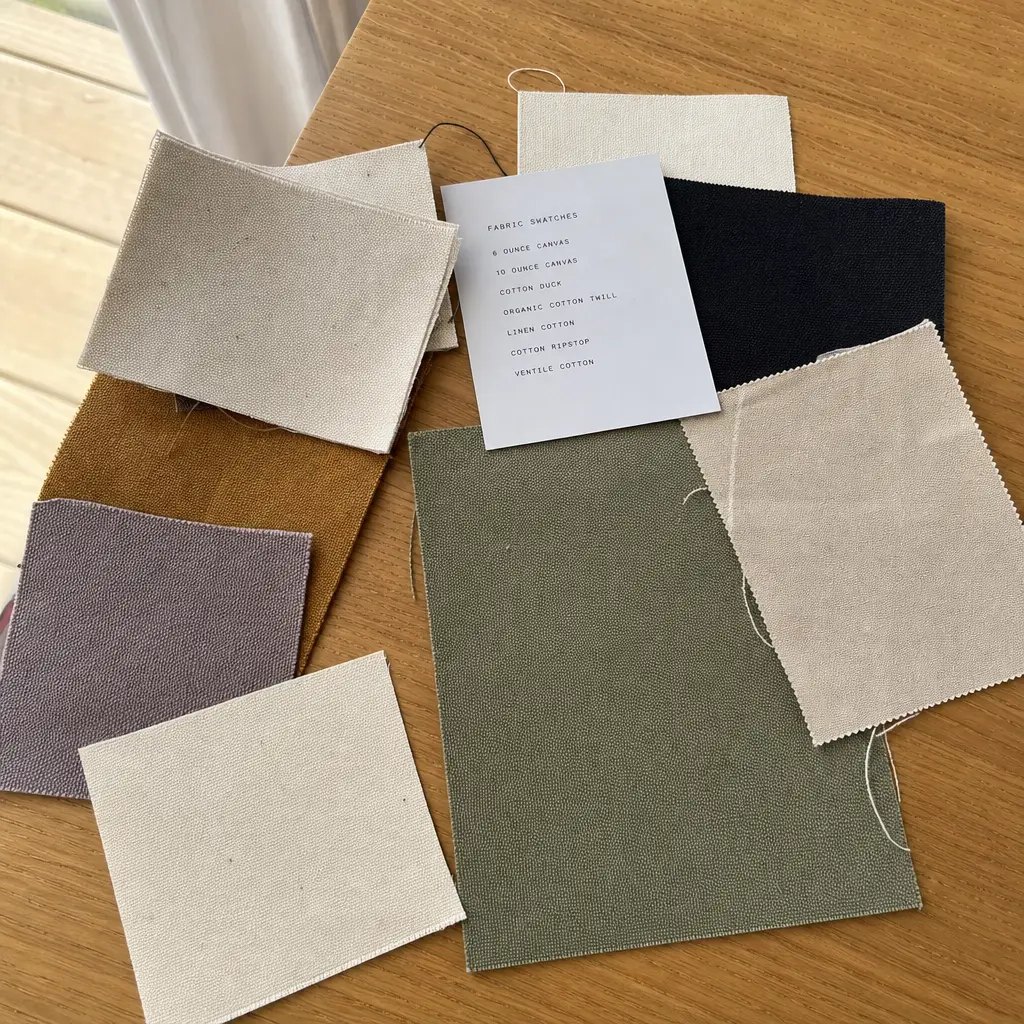
Natural canvas normally fits bakery branding because it has a flour sack, craft, and ingredient-led look. However, natural canvas can contain cotton seed specks and shade variation. If the bakery brand requires a very clean cream or white surface, write bleached canvas or dyed canvas into the RFQ and expect a different price. If the bag must be washable, avoid untreated fabric claims and request shrinkage information from the factory.
- 8 oz / about 270 GSM: lower cost, softer body, better for giveaways than retail messenger bags.
- 10 oz / about 340 GSM: useful for lighter programs where the buyer wants structure without much weight.
- 12 oz / about 400 GSM: common balanced choice for wholesale bakery messenger bags.
- 14-16 oz / about 475-540 GSM: stronger hand feel but higher sewing difficulty, freight weight, and sample approval risk.
- Washed canvas: softer and premium looking, but size shrinkage and color variation need written tolerances.
Specify the messenger structure, not only the size
Messenger bags have more failure points than flat totes. The buyer needs to specify width, height, bottom gusset, flap depth, strap width, strap length, and closure type. A small change in flap depth can affect print placement and carton packing. A wide strap improves carrying comfort but increases webbing cost and may require stronger stitch reinforcement.
For bakery buyers, the common mistake is choosing a nice front view without checking what the bag must actually hold. If the bag will carry A4 catalogs, order forms, menus, or bakery class booklets, the internal usable size matters more than the outside dimension. A flap bag with a thick seam allowance or narrow opening can fail the real-use test even if the quoted size looks correct on paper.
- State finished size as width x height x gusset, and define whether measurements are external or usable internal dimensions.
- Give the flap height and tell the factory whether the print sits on the flap center or lower body panel.
- Specify strap width, total length, and whether an adjustable slider is required.
- Define reinforcement at strap joints, such as X-stitch, bartack, rivet, or hidden fabric patch.
- If the bag must stand partially filled, include a boxed bottom or gusseted bottom in the drawing.
Choose print method based on bakery artwork
Most artisan bakery graphics use simple line logos, ingredient illustrations, wheat icons, stamps, or one-color typography. Water-based screen print is usually the best match on natural canvas because it keeps the textile hand feel and looks less plastic. It also handles larger flap prints efficiently when the artwork is one to three solid colors.
Heat transfer can work when the logo has gradients or very small detail, but buyers should test the finish on folded areas. Messenger bag flaps bend during packing and use. A transfer that looks sharp on a flat sample can crack at the flap edge if the material is too thick or the bonding is weak. Embroidery gives a premium look but may distort lighter canvas and add cost, especially on large front flaps.
- Use screen print for simple logos, large flap graphics, and cost-efficient wholesale quantities.
- Use heat transfer for photographic or gradient artwork only after fold and rub testing.
- Use embroidery for small chest-style logos or side labels, not oversized flap coverage.
- Use woven labels when the bakery wants a retail brand detail without printing the main panel.
- Set print position tolerance, commonly within 0.5-1 cm depending on bag size and print area.
Build a quote sheet that exposes cost drivers
A useful RFQ should force every supplier to quote the same cost basis. The main cost drivers are fabric weight, cutting complexity, number of print colors, print size, hardware, lining, label type, packing, and MOQ. If these are not separated, a low price may simply mean the supplier removed reinforcement, used lighter canvas, or quoted bulk packing when the buyer needs retail packing.
For comparison, request a unit price and a cost breakdown. The breakdown does not need to reveal the factory’s full margin, but it should identify chargeable items: sample fee, screen charge, mold or cutting charge, woven label cost, individual polybag cost, hangtag cost, and carton data. Importers and distributors also need carton dimensions and gross weight to compare landed cost, not just FOB unit price.
- Request price at two or three quantity levels, such as 500, 1,000, and 3,000 pcs.
- Separate base bag price from logo printing, label, hardware, and retail packing.
- Ask whether the price includes export carton, inner packing, and carton marks.
- Require estimated carton size, pieces per carton, gross weight, net weight, and CBM.
- State incoterm clearly, such as EXW, FOB port, CIF destination port, or DDP only if the supplier can support it.
Use MOQ logic instead of chasing the lowest number
Custom messenger bags do not scale like simple stock totes. The factory must prepare pattern, cutting, sewing line setup, print screen, print table alignment, and packing instructions. For a custom size with custom print, 500-1,000 pcs per design is a more realistic starting point than 100 pcs. Small orders can still be possible, but they often rely on stock bag shapes and limited artwork options.
If the bakery group has multiple store brands, do not split the order too early. A smarter RFQ may use one shared bag size and fabric, then change only the printed logo by store or region. This keeps cutting and sewing efficient while giving the buyer branded versions. The supplier should quote the extra screen or print setup charge per artwork so the importer can calculate whether multiple designs are worth it.
- One size, one fabric color, one print: easiest MOQ and most stable price.
- One size, one fabric color, multiple logos: possible if print setup charges are accepted.
- Multiple sizes and multiple colors: higher MOQ pressure and greater shade control risk.
- Dyed canvas below efficient dye lot quantity may cause surcharge or shade inconsistency.
- Retail packing at small quantity can add more cost than expected because packing is labor-heavy.
Approve samples in stages, not from photos alone
Sample approval should move from structure to artwork to production control. An existing sample is useful for judging factory workmanship, but it does not approve your size. A blank custom sample confirms pattern, flap drop, strap length, closure placement, and interior finishing. Only after that should the buyer approve the printed pre-production sample.
Photos are not enough for messenger bags because fabric weight, strap comfort, magnet strength, and print hand feel must be touched. If timing is tight, the buyer can approve dimensions by video and courier the final printed sample to the brand owner, but the production sample should still be sealed. That sealed sample becomes the reference for inspection and dispute handling.
- Existing sample: checks supplier capability and general workmanship.
- Blank custom sample: checks size, structure, strap, closure, and seam construction.
- Printed pre-production sample: checks artwork size, color, print curing, and placement.
- Sealed sample: kept by factory and buyer as the production standard.
- Sample report: should record fabric GSM, measurements, print method, hardware, and packing.
Write measurable QC thresholds into the order
Quality control for canvas messenger bags should include more than visual defects. The common problems are weak strap joints, uneven flap shape, twisted straps, print misplacement, fabric stains, raw seam fraying, and inconsistent magnet position. If the purchase order only says good quality, the inspection team has no firm basis to reject borderline production.
A practical inspection plan can use AQL 2.5 for major defects and 4.0 for minor defects, plus product-specific tests. For bakery retail or distributor programs, add a load test, print rub test, measurement check, and carton drop or compression awareness. The goal is not to make the bag over-engineered; it is to stop preventable claims after the bags are already in the importer’s warehouse.
- Load test: define test weight, hang time, and failure criteria before production.
- Print rub test: check dry rub and, if relevant, damp rub on dark print areas.
- Measurement tolerance: define acceptable variance for width, height, gusset, flap, and strap.
- Stitching: classify broken stitches, skipped stitches, loose bartacks, and seam slippage as major defects.
- Appearance: classify oil marks, mildew smell, heavy shade panels, and visible print smears as rejectable.
Plan packing around freight and retail handling
Packing method can change both unit cost and landed cost. Individual polybags protect natural canvas from carton dust and moisture, but they add labor, material, and plastic use. Paper bands or bulk inner cartons may fit a bakery sustainability message, but they need clean carton liners and tighter warehouse handling. The RFQ should state which option is required, not leave packing to supplier habit.
Messenger bags also have a shape issue. If the flap is folded badly or the strap is compressed into the print area, the buyer may receive creased fronts even when sewing quality is acceptable. Ask the factory to define folding method, pieces per inner pack, pieces per master carton, carton size, gross weight, and whether straps are tucked behind the body or placed inside the bag.
- Retail packing: individual polybag or paper band, hangtag, barcode, and clean fold standard.
- Distributor bulk packing: fewer individual bags, lower labor cost, but more attention to dust protection.
- Natural canvas protection: use a clean liner bag inside the export carton if avoiding individual polybags.
- Carton strength: specify export carton suitable for stacking and sea freight handling.
- Carton marks: include PO number, SKU, color, quantity, gross weight, net weight, carton size, and destination.
Protect the lead time with material and approval control
Lead time risk usually comes from unclear approval steps, fabric availability, dyed canvas, hardware delays, and artwork changes. A realistic timeline separates sampling, sample courier time, buyer approval, material booking, production, inspection, and shipment. If the buyer asks for a delivery date but spends two weeks revising artwork after the pre-production sample, the factory schedule will move.
For natural canvas with a standard screen print, production is usually more predictable than dyed or washed canvas. Dyed fabric needs lab dip approval and bulk shade control. Washed canvas can change measurements after finishing. Hardware such as custom buckles, special magnetic snaps, or branded metal labels can add a separate sourcing timeline. The RFQ should identify any fixed launch date and the latest acceptable ex-factory date.
- Separate sample lead time from bulk production lead time in the quote form.
- State who approves artwork, fabric shade, print color, and packing layout.
- Freeze artwork before pre-production sample approval to avoid screen remake charges.
- Book inspection date based on actual production completion, not only the original plan.
- Add buffer if the order uses dyed canvas, washed finishing, custom hardware, or multiple SKUs.
Specification comparison for buyers
| Spec decision | Recommended option | When it fits | Buyer risk to check |
|---|---|---|---|
| Canvas fabric weight | 12 oz / about 400 GSM cotton canvas for most bakery retail programs | Good balance of structure, printable surface, and freight weight for branded merchandise or staff bags | Light 8 oz canvas can collapse under catalog photos; heavy 16 oz canvas raises sewing cost and carton CBM |
| Bag construction | Flap messenger with bound seams, reinforced strap points, and boxed bottom if carrying samples | Useful for bakery staff kits, trade fair giveaways, subscription paperwork, and local delivery documents | Unreinforced strap joints may pass visual inspection but fail after repeated load testing |
| Lining choice | Unlined for lower cost; cotton lining only when buyer needs a cleaner interior finish | Unlined works for promotional bakery bags; lined works for retail shelves or higher perceived value | Cheap polyester lining can make a natural bakery product look inconsistent with brand positioning |
| Print method | Water-based screen print for simple bakery logos; heat transfer only for fine gradients | Best for 1-3 color logos, flour sack style artwork, and natural canvas texture | Thick plastisol or poor curing may crack on folded flaps or smell strong in cartons |
| Closure | Magnetic snap or cotton tie depending on target use and metal policy | Magnetic snap suits retail messenger bags; tie closure suits rustic bakery branding | Low-grade magnets can rust; poorly placed snaps can distort the printed flap |
| MOQ logic | Start RFQ at 500-1,000 pcs per color/print for custom size and logo | Enough quantity to spread pattern, screen, cutting, and packing setup costs | Very small trial orders often use stock sizing and cannot represent true bulk pricing |
| Sampling route | Blank size sample first, then printed pre-production sample after artwork and fabric approval | Prevents approving a nice logo on a bag shape that does not fit real contents | Skipping the blank sample can hide strap length, flap drop, and bottom gusset problems |
| Packing format | Individual polybag only for retail distribution; bulk inner packing for B2B giveaways | Retail buyers need clean shelf handling; importers doing event kits may prefer reduced plastic | Overpacked bags increase cost and CBM; underpacked natural canvas can absorb carton dust |
| Inspection threshold | AQL 2.5 major / 4.0 minor with added pull, print rub, and measurement checks | Suitable for wholesale programs where appearance and strap strength both matter | Standard visual AQL alone may not catch weak bartacks or print crocking on dark ink |
Buyer checklist before sampling
- Define the intended use: retail sale, staff uniform bag, event giveaway, or bakery subscription collateral bag.
- Specify finished bag size, flap depth, bottom gusset, strap width, strap length range, and closure position in centimeters.
- State canvas weight in oz or GSM and whether fabric must be natural, bleached, dyed, washed, or laminated.
- Provide artwork files with Pantone references, print size, print location, and acceptable logo position tolerance.
- Set load requirement, such as 5 kg static hanging test for 30 minutes, if the bag may carry catalogs, samples, or food packaging.
- Clarify whether individual polybag, paper band, hangtag, barcode label, master carton marks, or plastic-free packing is required.
- Request sample stages separately: existing reference sample, blank custom sample, printed pre-production sample, and sealed production sample.
- Require quote data by line item: fabric, printing, hardware, label, packing, sample fee, tooling or screen charge, carton CBM, and lead time.
- Confirm inspection standard, defect classification, measurement tolerance, and whether third-party inspection is allowed before shipment.
- Include incoterm, destination port or warehouse, required delivery window, and whether pricing should include export carton palletization.
Factory quote questions to send
- What canvas weight and yarn construction are you quoting, and can you provide GSM tolerance after finishing?
- Is the quoted price based on natural canvas, dyed canvas, washed canvas, or coated canvas?
- What is the minimum order quantity per size, per fabric color, and per printed artwork?
- Which print method is included, how many colors are included, and what is the maximum print area on the flap?
- Are screen charges, cutting mold charges, label charges, and sample charges included or listed separately?
- What reinforcement is included at the shoulder strap joints: X-stitch, bartack, rivet, or added internal patch?
- What load test standard do you use for messenger bags, and can it be included in the inspection report?
- What are the finished bag measurement tolerances for width, height, gusset, flap length, and strap length?
- What packing method is quoted, how many pieces per carton, and what are the estimated carton size, gross weight, and CBM?
- What is the realistic lead time after pre-production sample approval, and what materials can delay production?
Quality-control points to confirm
- Canvas GSM within agreed tolerance, commonly plus or minus 5 percent unless a tighter requirement is written into the PO.
- Finished bag measurements within agreed tolerance, typically plus or minus 0.5 cm for small panels and plus or minus 1 cm for main dimensions.
- Strap attachment reinforced consistently on both sides with no skipped stitches, loose threads, broken needles marks, or seam slippage.
- Printed logo positioned within approved tolerance and checked for color, registration, curing, rub resistance, and cracking after flap folding.
- Closure aligned with flap and body; magnetic snaps, buttons, or ties must function without pulling the fabric out of shape.
- Interior seams cleanly bound or overlocked according to approved sample, with no raw edges likely to fray during use.
- Cartons dry, clean, correctly marked, and strong enough for export handling without crushing the flap shape.
- Random load test performed from production pieces, not only from the approved sample.
- Needle detection or metal contamination control applied when requested for retail or food-adjacent distribution.