Start carton planning before the bag is quoted
Wholesale canvas messenger bags for artisan bakeries are often treated as a simple merchandise item until freight quotes arrive. The bag looks flat on the artwork sheet, but the real landed cost depends on fabric thickness, strap bulk, gusset depth, hardware, folding method, and carton count. If carton planning is left until final packing, buyers may discover that a bag quoted cheaply uses too many cartons, exceeds warehouse weight limits, or arrives with pressure marks across the printed bakery logo.
For bakery buyers, the bag usually supports a retail or gifting program rather than a one-time giveaway. That means the carton plan must protect appearance, keep units clean, and still make sense for distributors, store teams, and e-commerce fulfillment. A good RFQ should request the bag price and the packing data together. Without carton dimensions, gross weight, and pieces per carton, the quote is not ready for landed-cost comparison.
- Plan the bag specification, print position, and carton pack as one system.
- Set a target carton gross weight before approving the final bag size.
- Request CBM per carton and estimated cartons per 1,000 pieces in the first quote.
- Avoid approving a sample folded one way if bulk cartons will use a different fold.
Choose canvas weight with freight in mind
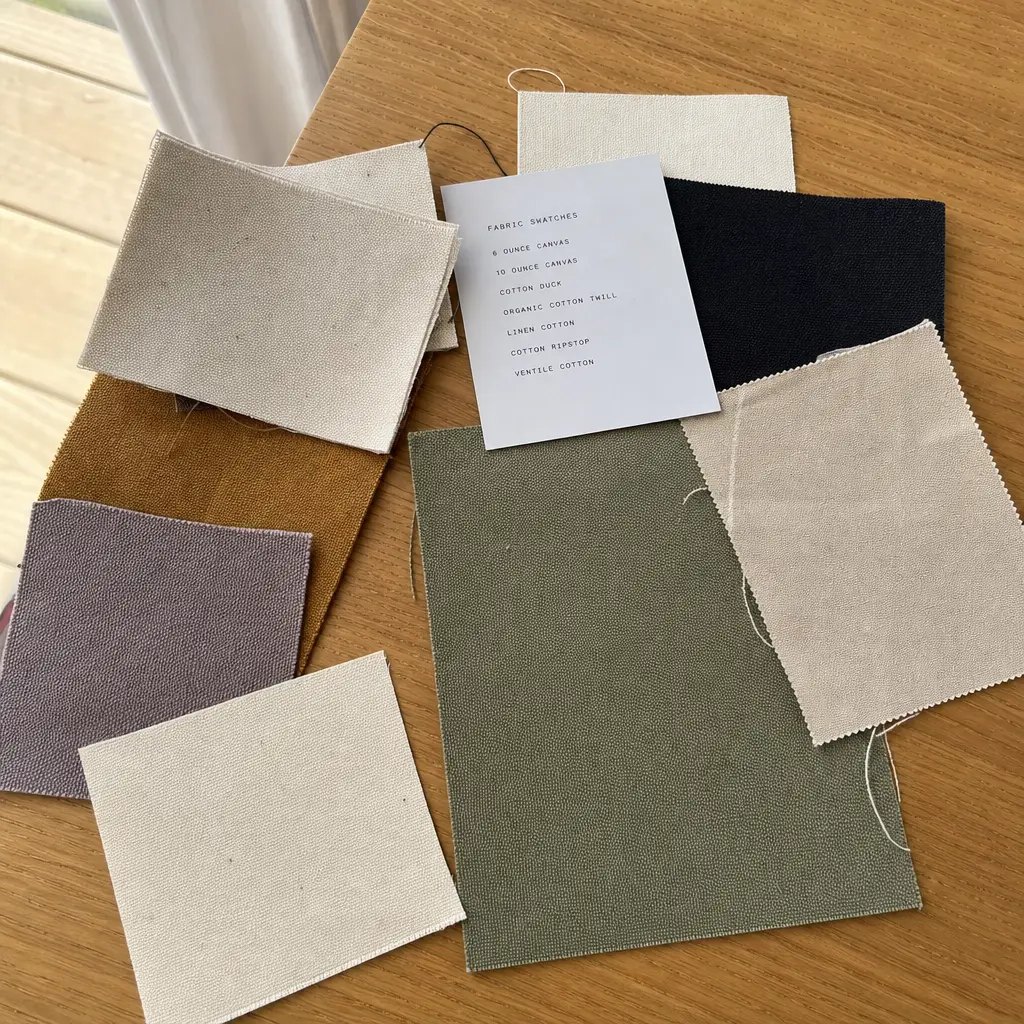
For bakery messenger bags, 10 oz to 12 oz cotton canvas is usually the practical range for retail merchandise, staff welcome kits, and gift-bundle programs. A 10 oz fabric, roughly 320-350 GSM depending on yarn and finish, keeps the bag easier to fold and pack. A 12 oz fabric, roughly 380-410 GSM, gives a more durable hand feel and better structure for a messenger shape. Going to 14 oz or 16 oz may look premium on a spec sheet, but the added weight affects carton gross weight, sewing thickness, and freight efficiency.
Natural canvas is common for bakery brands because it matches kraft packaging and food-oriented retail displays. However, natural fabric also shows oil marks, moisture stains, and shade variation more easily than dark dyed canvas. If the order uses natural cotton, the factory should control fabric storage, cutting-table cleanliness, and carton moisture. If the brand needs dyed canvas, MOQ may increase because the dye lot has to be booked in one shade.
- Common practical spec: 12 oz cotton canvas for the body with reinforced webbing strap.
- Lower-cost spec: 10 oz canvas when the bag is mainly for light retail merchandise.
- Premium spec: 14 oz canvas only when the buyer accepts higher freight and sewing cost.
- RFQ detail to include: fabric oz, approximate GSM, color, finish, and shrinkage expectation.
Size the messenger bag around use and carton cube
A bakery messenger bag does not need to be the same size as a school or laptop messenger bag unless the program requires it. Many bakery retail programs need space for loyalty material, recipe cards, small packaged goods, branded apparel, or a pastry box add-on. Oversizing the bag increases fabric consumption and carton volume even if customers rarely use the extra capacity. A practical starting point is a medium body size with a modest gusset, then adjust after checking the folded carton layout.
The gusset is the dimension that buyers often underestimate. A 3 cm gusset packs very differently from an 8 cm gusset, especially when combined with a thick flap and shoulder strap. Large gussets may force the factory to pack fewer units per carton or compress bags too tightly. Compression can create permanent creases, hardware dents, and print transfer marks. The best sample approval includes a packed carton sample or at least a photographed packing trial using the same fold.
- Define width, height, gusset, flap depth, strap width, and strap drop in the RFQ.
- Keep gusset depth modest if the bag is mainly a retail brand item.
- Use larger gussets only when the bag must carry boxed bakery products.
- Test carton packing before freezing the final size and strap length.
Select print placement that survives folding
Bakery branding often uses fine line art, hand-drawn logos, small type, or single-color illustrations. Screen printing is normally the most stable method for canvas messenger bags when artwork is one to three solid colors. It gives better cost control at wholesale quantities than embroidery and handles natural canvas texture better than many transfer options. The cleanest result usually comes from printing flat panels before sewing, especially when the print sits on the front flap or main body panel.
Print placement should be reviewed together with the folding plan. A large logo across the exact fold line may look fine on the counter sample but crack, mark, or shine after carton compression. If the design must sit on the flap, leave safe space from flap edges, magnetic snaps, and seam allowances. If the logo is small and premium positioning matters, a woven side label or cotton patch may be a better choice than forcing a detailed print onto rough canvas.
- Use screen print for solid bakery logos, simple illustrations, and repeatable bulk production.
- Use woven label when the logo is small or color matching is difficult on natural canvas.
- Avoid detailed halftones on coarse canvas unless a strike-off proves the effect.
- Approve print rub, fold, and color before bulk cutting begins.
Understand MOQ beyond the bag quantity
MOQ is not only the number of finished messenger bags. It can be driven by fabric dyeing, webbing color, metal hardware finish, woven labels, printed hangtags, carton marks, and the number of artwork versions. A buyer may request 500 pieces per bakery location across several logos, but the factory has to manage separate screens, print setups, label changes, and packing labels. The unit price will change if the order is split into many small logo batches.
For importers and distributors, the cleanest MOQ discussion separates the base bag from customization. One base construction in natural canvas can often support several bakery artwork versions more efficiently than changing fabric color, strap color, and hardware on every SKU. If the buyer needs multiple retail accounts under one program, consolidate fabric and construction first, then vary the printed logo or hangtag. This keeps material purchasing simpler and reduces production-line errors.
- Clarify MOQ for finished bags, fabric color, strap color, print color, and label type.
- Group small bakery logos under one base bag spec where possible.
- Expect extra cost for each artwork setup, screen, hangtag version, or carton mark.
- Avoid changing too many components when the order volume is still low.
Build the quote around landed cost, not FOB only
A low FOB price can lose its advantage if the carton cube is poor. Messenger bags include straps and flaps that do not always compress neatly. Two suppliers may quote the same bag size and fabric weight, but one may pack 40 pieces per carton while another can safely pack 60 pieces because the fold and strap layout are better controlled. For sea freight, CBM per 1,000 pieces can matter more than a small difference in unit price.
A complete quote should show unit price, sample cost, mold or screen cost if any, carton dimensions, pieces per carton, net weight, gross weight, and total CBM for the order quantity. Buyers comparing suppliers should build a simple landed-cost sheet that includes local trucking, ocean or air freight, duty assumptions, inspection, and warehouse handling. For bakery distributors shipping to many stores, carton size also affects pallet building and store-level handling.
- Compare FOB price and CBM per 1,000 pieces side by side.
- Estimate cartons per SKU, not only total cartons for the order.
- Include inspection cost and repacking risk in supplier comparison.
- Treat missing carton data as an incomplete quote, not a final offer.
Set carton packing rules before bulk production
Packing should be written as a production requirement, not decided by the packing team on the last day. For canvas messenger bags, common options include flat folding with strap tucked inside, flap protected with tissue, individual polybag, recycled polybag, paper belly band, or bulk pack by layer. The right choice depends on retail presentation, market packaging rules, moisture risk, and how the bags will be distributed after import.
Carton strength matters because canvas is heavy. A thin single-wall carton may look acceptable when packed, then bulge during stacking or fail during warehouse handling. For heavier 12 oz and 14 oz bags, double-wall export cartons are safer, especially for sea shipments and mixed handling. The carton should not be so large that workers overfill it to save freight. A practical gross weight target, often around 12-18 kg, helps prevent carton failure and handling complaints.
- Define pieces per carton and maximum gross weight in the purchase order.
- Use tissue or protective facing when print surfaces touch folded fabric.
- Avoid placing metal hardware directly against printed panels.
- Request carton photos and packed-carton weight before shipment.
Approve samples with production acceptance criteria
A nice-looking sample is not enough for a wholesale bakery program. The sample approval should confirm the exact fabric weight, hand feel, color, strap width, stitching method, print position, print color, closure type, pocket details, folding method, and carton pack. If the sample uses substitute fabric or temporary hardware, it should not be treated as final approval for bulk. Substitute components are acceptable during early development only when clearly documented.
The pre-production sample is the main control point. It should be made with bulk fabric and real production trims, then reviewed against measurable criteria. Buyers should measure finished dimensions, pull the strap by hand and ideally by test method, rub the print surface, inspect the flap alignment, and open the bag to review inner seams. For natural canvas, inspect both sides under good light because stains and weaving slubs are easier to miss in photos.
- Approve a print strike-off before bulk screen printing begins.
- Measure the sample flat and loaded to understand real bag shape.
- Review stitching density and reinforcement at all strap stress points.
- Keep one signed approval sample with the factory and one with the buyer.
Control schedule risk from artwork to shipment
Lead time for canvas messenger bags depends on material availability, printing complexity, sewing capacity, inspection timing, and packing requirements. A simple natural canvas bag with one-color print is faster than a dyed canvas bag with custom webbing, hardware, woven label, barcode labels, and retail paper packaging. The highest schedule risk usually comes from late artwork changes, delayed sample comments, fabric dye-lot approval, and packaging details added after production starts.
A realistic sourcing calendar separates sample development from bulk production. Buyers should allow time for artwork review, sample making, courier transit, buyer comments, strike-off approval, material booking, cutting, printing, sewing, final inspection, packing, and vessel or air booking. If the bakery launch date is fixed, the purchase order should freeze the specification early. Small changes such as moving the logo, changing carton marks, or adding hangtags can affect both cost and schedule.
- Freeze artwork before the print screen is made.
- Confirm bulk fabric availability before promising retail launch dates.
- Book inspection before packing is fully completed when possible.
- Leave buffer for carton label changes and forwarder document requests.
Use supplier evidence to prevent production surprises
Supplier selection should not rely only on a low messenger bag quote. Buyers should request evidence that the factory can handle canvas cutting, screen printing, reinforced sewing, and export packing. Useful evidence includes photos of similar messenger bag production, close-up seam images, print samples on the same canvas weight, packing photos, carton markings, and QC records. The goal is not to collect paperwork; it is to confirm that the quoted supplier understands the product type and carton constraints.
Importers should also compare how suppliers respond to specification gaps. A strong factory will flag risks such as oversized print areas, weak strap attachment, heavy carton weight, or unrealistic MOQ splits. A weak supplier may accept every request and then solve problems during production. For bakery programs where visual presentation matters, early technical feedback is often worth more than a slightly lower unit price.
- Request production photos of similar canvas messenger bags, not unrelated tote bags only.
- Review print samples on canvas, not only digital artwork previews.
- Ask for carton packing photos from previous comparable orders where available.
- Prefer suppliers who challenge risky specs before the deposit is paid.
Specification comparison for buyers
| Spec decision | Recommended option | When it fits | Buyer risk to check |
|---|---|---|---|
| Fabric weight | 12 oz cotton canvas, about 380-410 GSM, pre-shrunk if possible | Good balance for bakery retail merch, gift programs, and staff carry bags without making cartons too heavy | Very heavy 16 oz canvas can raise freight cost and create thick seams that affect flap alignment |
| Bag structure | Flat messenger body with gusseted bottom, front flap, and internal pocket | Fits bakery catalogs, small packaged goods, loyalty kits, or retail lifestyle merchandise | Oversized gussets can cube out cartons before reaching acceptable carton weight |
| Strap construction | 38-50 mm cotton webbing or poly-cotton webbing with box-X reinforcement | Needed when buyers expect customers to carry books, packaged bread mixes, or bakery merchandise | Thin straps may pass visual approval but fail loaded pull tests after retail use |
| Print method | 1-3 color screen print on flap or body panel before sewing | Best for bakery logos, line art, and moderate order quantities | Printing after sewing can distort around seams and flap folds; full-coverage prints need wider tolerance |
| Lining choice | Unlined or light cotton lining only when needed for premium retail positioning | Unlined keeps cost, lead time, carton volume, and inspection simpler | Lining adds hidden stitching defects and makes moisture control more important in packing |
| Closure | Magnetic snap or hook-and-loop depending on brand feel and safety requirements | Magnetic snap gives cleaner retail presentation; hook-and-loop is lower cost and lighter | Metal hardware needs rust checks and can dent adjacent bags if packing is too tight |
| Inner packing | Flat folded with tissue at print face, one polybag or paper band per piece depending on market rules | Protects print surface and keeps retail-ready units clean inside master cartons | Tight folding across wet or thick ink can leave pressure marks and cracking |
| Master carton plan | Double-wall export carton for heavy specs; target about 12-18 kg gross weight | Suitable for sea freight, mixed SKU programs, and distributor warehouse handling | Cartons planned only by piece count may exceed manual handling limits or crush lower layers |
| Quote basis | Request FOB unit price plus carton dimensions, gross weight, net weight, packing method, and sample cost | Allows importers to compare true landed cost instead of only bag price | A low unit price can be cancelled out by poor carton utilization and repacking charges |
Buyer checklist before sampling
- Define final bag size in width, height, gusset, flap depth, and strap drop instead of sending only a reference photo.
- State fabric weight in oz or GSM and clarify whether natural, dyed, washed, or organic cotton canvas is required.
- Place the print area on a flat panel and confirm whether printing happens before sewing or after sewing.
- Limit carton gross weight to a warehouse-friendly target, commonly about 12-18 kg unless your forwarder allows more.
- Request carton length, width, height, pieces per carton, net weight, gross weight, and CBM in every quote.
- Approve a pre-production sample with the exact fabric, strap, hardware, print color, folding method, and carton pack.
- Set acceptance criteria for stitch strength, print rub resistance, flap symmetry, strap pull, stains, odor, and moisture.
- Decide whether each bag needs an individual polybag, paper belly band, hangtag, barcode label, or retail carton label.
- Build lead time from artwork approval, material booking, sample approval, bulk cutting, printing, sewing, inspection, and packing.
- Compare supplier quotes by landed cost per sellable bag, not only by FOB price per piece.
Factory quote questions to send
- What exact canvas weight and GSM are quoted, and is the fabric greige, dyed, washed, or pre-shrunk?
- What are the finished bag dimensions, strap width, strap length, gusset depth, flap depth, and tolerance for each?
- Will the logo be screen printed, heat transferred, embroidered, or applied as a woven label, and at which production stage?
- What is the MOQ for the bag body, dyed fabric, print color, hardware color, woven label, and carton marking?
- How many pieces are packed per inner pack and master carton, and what are the final carton dimensions and gross weight?
- Can the factory provide a loaded strap pull test, print rub test, seam inspection standard, and moisture-control process?
- What sample types are included before bulk production: proto sample, print strike-off, pre-production sample, or packed carton sample?
- What is the estimated lead time after deposit and artwork approval, and which materials are the longest-lead items?
- Are carton marks, barcode labels, hangtags, silica gel, recycled polybags, or paper packaging included in the unit price?
- What quote validity, payment terms, Incoterm, port, and packing assumptions are used for the price?
Quality-control points to confirm
- Finished dimensions should match the approved sample within practical tolerance, commonly about ±0.5 cm for small panels and ±1 cm for larger body dimensions.
- Canvas weight should be verified against the quoted GSM or oz specification before cutting, not only after the bags are sewn.
- Flap edges should sit evenly across the bag opening with no twisting caused by uneven sewing tension or fabric shrinkage.
- Strap attachment should use reinforced stitching, with box-X or equivalent bar-tack reinforcement at both stress points.
- Print color should match the approved strike-off under consistent light, with no pinholes, smearing, ghosting, or ink cracking at the fold line.
- Metal parts should be checked for rust, sharp edges, weak magnetic hold, and staining risk against natural cotton canvas.
- Bags should be free from oil marks, needle stains, loose threads, heavy odor, and visible shade variation within the same carton.
- Cartons should pass basic handling checks with no bulging, crushed corners, loose tape, or incorrect carton marks.
- Packed cartons should meet the approved pieces-per-carton plan and stay within the agreed gross weight range.
- Moisture readings and desiccant use should be controlled for sea shipments, especially with natural canvas and paper packaging.