Buying Problem: Bakery Bags Fail in Use, Not in Photos
Wholesale canvas messenger bags for artisan bakeries are usually bought for a visible, customer-facing purpose: paid retail merchandise, loyalty gifts, market-day staff bags, pickup order programs, corporate bakery gifts, or distributor resale. The product has to feel consistent with bread, coffee, flour sacks, kraft packaging, and hand-finished retail displays. A beautiful sample photo is not enough. Procurement teams need to know whether bulk bags will arrive with the same canvas body, clean logo placement, reliable strap strength, consistent flap shape, and carton packing that can survive import handling.
The risk is higher than with a flat tote because a messenger bag has more parts and more moving points. The flap can sit crooked, the strap can twist, the print can crack where the flap bends, the closure can pull through the fabric, the boxed bottom can collapse, and a magnetic snap can leave a pressure mark on the logo area. These failures often appear only after production, packing, or customer use. For a bakery, that turns a sourcing issue into a brand issue because the bag may be sold at the counter or given to loyal customers.
A stronger RFQ should therefore control the product before the buyer compares price. It should define use case, load expectation, fabric weight, dimensions, reinforcement, print method, packing, inspection criteria, and claim handling. The best supplier is not always the one with the lowest unit price; it is the one quoting the same bag the buyer actually expects to receive.
- Treat the bag as a functional soft-goods product with load points, not only as a printed promotional item.
- Approve one physical reference sample and keep it available for production comparison, inspection, and claim handling.
- Require quote comparisons to use the same artwork file, fabric weight, closure, webbing, lining, and packing method.
- Flag critical defects in advance, especially wrong logo, broken strap attachment, mildew smell, unsafe hardware, and mixed-logo cartons.
Define the Use Case, Load, and Size Standard
The correct specification starts with how the bag will be used. A paid retail messenger bag may carry a notebook, wallet, small packaged goods, coffee pouch, jam jar, or a wrapped loaf carried separately. A staff bag may carry an apron, order book, small tools, uniform pieces, lunch, or delivery paperwork. A loyalty gift bag may only need to carry lightweight bakery merchandise for a short period. Each use case changes the recommended fabric weight, strap width, closure strength, lining, and inspection strictness.
Procurement teams should write the expected load into the RFQ instead of using vague wording such as durable or strong. A bag intended for light promotional use may be acceptable at a lower fabric weight and simpler construction. A bag expected to be sold as merchandise should have a higher perceived value, cleaner sewing, stronger stress points, and better packing. If the bag may hold a laptop or glass packaged products, the buyer should say so directly because it affects reinforcement, padding expectations, and potential liability.
For many bakery programs, a medium messenger size works better than a large courier size. A body around 34-38 cm wide, 26-30 cm high, and 8-10 cm gusset is often practical for bakery merchandise and staff use, but buyers should validate the size against actual products and carton efficiency. If the bag will be displayed near a bakery counter, excessive bulk can reduce shelf appeal and increase freight cost. If it will be used by staff, comfort and strap adjustment matter more than compact folding.
- Light retail gift: 10 oz to 12 oz natural canvas, simple flap, basic closure, and limited load promise.
- Paid merchandise: 12 oz to 16 oz canvas, reinforced strap joins, cleaner sewing, stronger closure, and neater packing.
- Staff utility: heavier canvas or lined construction, darker colors, wider strap, practical pockets, and stronger seam specification.
- Distributor resale: tighter measurement control, barcode packing, consistent shade, carton separation, and clearer defect classification.
- Laptop or heavy-use program: written load requirement, reinforced strap attachment, lining or padding discussion, and careful closure testing.
Fabric Weight, GSM, Shrinkage, and Hand Feel
Canvas weight should be written in both ounces and GSM because mills, trading companies, and factories do not always use the same reference. As a rough guide, 10 oz canvas is about 339 GSM, 12 oz is about 407 GSM, 14 oz is about 475 GSM, and 16 oz is about 542 GSM. Actual results vary by yarn count, weave density, moisture content, dyeing, washing, finishing, and whether the weight is measured before or after treatment. A quotation that says only 14 oz canvas is not precise enough for a controlled wholesale order.
For artisan bakery branding, 12 oz to 14 oz natural cotton canvas is often a practical starting point. It gives a substantial hand feel without making the flap too stiff or the carton weight too high. A 16 oz bag can look premium and hold shape better, but it increases fabric cost, sewing difficulty, needle wear, carton weight, and folding-crease risk. Very light canvas can reduce unit price, but it may make the messenger bag feel like a low-cost promotion rather than retail merchandise.
Buyers should also control color, shrinkage, and finish. Natural canvas can vary from warm cream to greyish beige depending on cotton source and processing. Dyed canvas may need colorfastness testing, especially if the bag is dark and the print is light. Washed canvas may feel softer but can create more shade variation and measurement variation. If the buyer wants an unbleached, slightly rustic look, the acceptable level of slubs, seed flecks, and weaving irregularities should be discussed before sampling.
- Set GSM tolerance, such as plus or minus 5 percent, when fabric body is important to retail value.
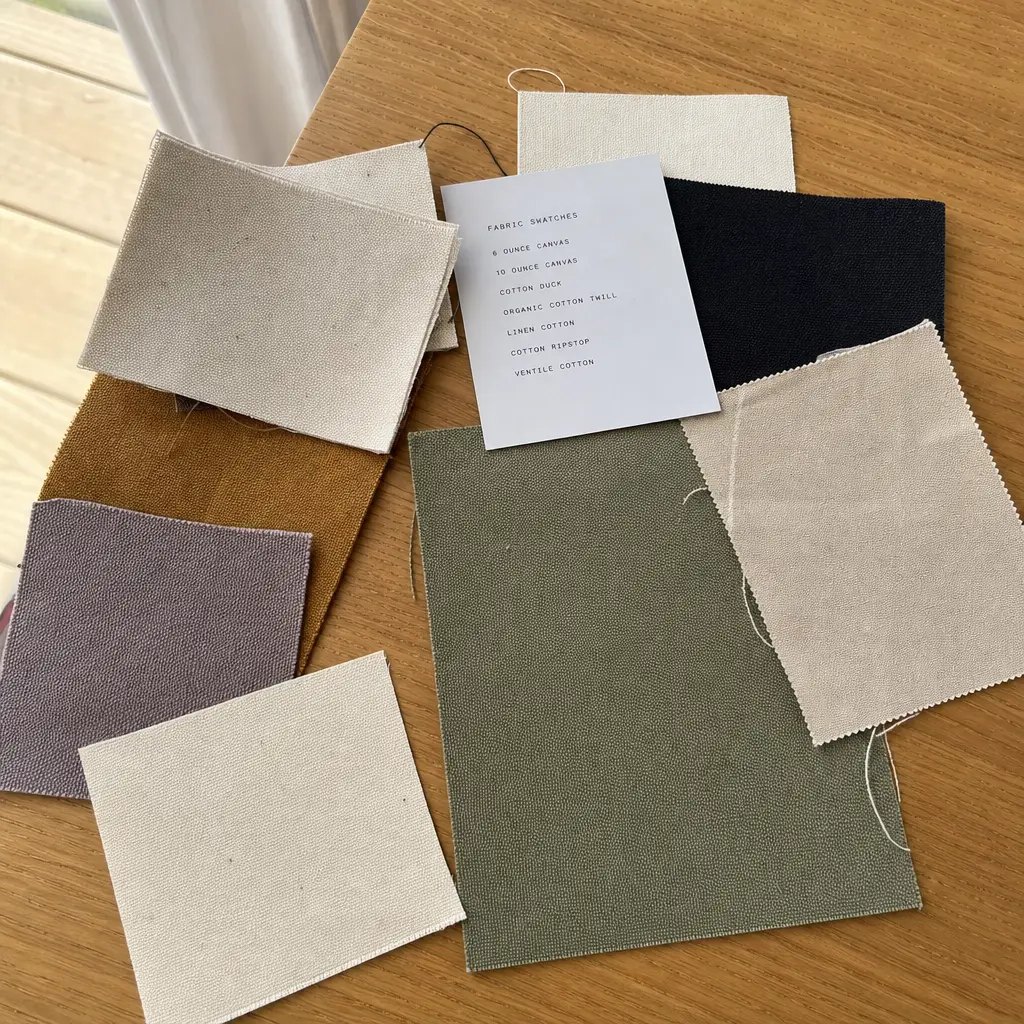
- Request fabric swatches before sample making when color, stiffness, weave texture, or natural fleck level matters.
- Confirm whether fabric weight is measured before dyeing, after dyeing, after washing, or after finishing.
- Ask for shrinkage expectations if the bag may be washed, steamed, or exposed to humid storage conditions.
- Do not compare natural, dyed, washed, and laminated canvas as equal materials without noting cost and performance differences.
Construction Details That Control Durability
Messenger bag durability is mostly controlled by stress-point engineering. The strap joins, side seams, flap corners, pocket openings, closure backing, and boxed bottom receive repeated pulling and bending. A supplier may use acceptable fabric but reduce cost by narrowing seam allowance, omitting reinforcement patches, using fewer bartacks, selecting thinner webbing, or leaving inner seams roughly finished. These shortcuts may not show in a product photo, but they can cause failures during staff use or customer daily carry.
The flap deserves special attention because it is both a functional part and the main branding surface. A thin or poorly cut flap may curl after packing. A flap with uneven side drops will make the logo look crooked even if the print was placed correctly. A snap placed too close to the logo can distort the print area when the bag is opened. A bulky seam near the fold can create a permanent ridge across the artwork after cartons are stacked.
The RFQ should include a simple construction drawing, annotated sample photo, or written specification that defines reinforcement locations. If the buyer cannot provide a technical drawing, a marked-up sample photo is still better than leaving construction to factory interpretation. The purchase order should name strap width, stitch type, thread color, seam finishing, bartack positions, closure location, and whether the inner seams are bound, overlocked, or left raw.
- Use 3 cm to 4 cm cotton webbing for better comfort when the bag may carry heavier goods or staff items.
- Require bartacks at strap joins and pocket corners, or specify an approved box-stitch reinforcement alternative.
- Define seam allowance and inner seam finish because raw edges can reduce perceived quality in paid merchandise.
- Place magnetic snaps, buckles, and rivets with backing reinforcement so fabric does not tear under repeated opening.
- Check flap symmetry by measuring both side drop lengths with the bag flat and lightly filled.
- Specify thread color and stitch density if contrast stitching is part of the bakery brand aesthetic.
Artwork, Labels, and Print Testing
Most artisan bakery logos work well with screen printing because they often use one to three colors, line drawings, vintage typography, wheat icons, oven marks, or simple store names. Water-based screen print can give a softer hand on natural canvas and often fits the bakery aesthetic. Plastisol may offer stronger opacity on darker canvas but can feel heavier. Heat transfer can reproduce complex full-color artwork, but it may look less integrated with canvas and must be tested for adhesion on textured fabric.
The artwork position should be a measurable specification, not a visual preference. On a messenger bag, the print is often placed on the front flap, which bends during opening and closing. If the artwork sits too close to the fold line, cracking and distortion are more likely. If it is too close to the edge, normal sewing tolerance can make it look off-center. The RFQ should state print size, distance from top or bottom flap edge, centerline alignment, Pantone references, registration tolerance, and acceptable print variation.
Labels need the same discipline. A woven side label, inner care label, hangtag, or barcode sticker can create mistakes when several bakery logos share one production run. Label size, fold type, stitch location, orientation, and language should be confirmed before bulk production. If the bag is sold in retail, barcode readability and hangtag placement should be checked during inspection, not left to warehouse discovery after arrival.
- For one-color bakery logos, request a screen print strike-off on the actual canvas and on the actual flap construction if possible.
- For dyed canvas, test light ink opacity because cream, white, or pale yellow may look weak on dark or uneven fabric.
- For small typography, inspect line fill-in, broken strokes, registration, and readability at normal viewing distance.
- For heat transfer, test adhesion around flap bends, seam ridges, and carton compression points.
- For woven labels, confirm size, fold type, stitch placement, orientation, colorfastness, and whether the label can tolerate ironing or steaming.
- For multiple logos, approve separate print strike-offs and separate carton marking instructions for each artwork.
MOQ Logic and Quote Comparison
MOQ for wholesale canvas messenger bags is not only a factory preference. It is usually driven by fabric availability, dyeing minimums, cutting efficiency, hardware purchase minimums, print setup, sewing line setup, label minimums, and packing format. A natural canvas bag with one-color print may support a lower MOQ than a dyed canvas bag with custom lining, metal hardware, inner label, hangtag, and retail barcode. When a quote seems unusually low, the buyer should ask whether the supplier changed fabric weight, construction, hardware, or packing assumptions.
Cost comparison should separate the base bag from variable add-ons. Fabric weight affects material cost and freight weight. Lining adds material, cutting, sewing, inspection, and potential defect risk. Magnetic snaps, buckles, sliders, rivets, and zippers add hardware cost and functional testing. Multi-color printing adds screens, setup time, registration risk, and possible rejections. Individual polybags, hangtags, barcode stickers, carton assortments, and store-level packing add labor and documentation control.
A clean quote sheet prevents two suppliers from appearing comparable when they are not. Procurement buyers should ask each factory to quote the same specification line by line. If the supplier recommends a change, it should be quoted as an option, not quietly substituted into the base price. This is especially important for bakery groups that need several store logos on one base bag because the base MOQ and artwork MOQ may be different.
- Quote line one: base unlined messenger bag in natural canvas with standard strap, standard closure, and no retail extras.
- Quote line two: upgrade from 12 oz to 14 oz or 16 oz canvas, showing the unit price and carton weight impact.
- Quote line three: print cost by color count, print position, and setup charge, including screen or strike-off fees.
- Quote line four: lining, inner pocket, woven label, hangtag, barcode, and individual packing costs as separate add-ons.
- Quote line five: carton data, estimated CBM, gross weight, Incoterms, sample fee, payment terms, and production lead time.
- Quote line six: mixed-logo surcharge or minimum quantity per artwork when several bakery branches share the same bag style.
Sample Approval Before Bulk Production
A bakery buyer should not approve bulk production from a digital mockup alone. The pre-production sample should use production fabric, production webbing, production hardware, actual print method, correct thread color, final label placement, and intended packing fold. If the supplier uses substitute fabric or temporary hardware, the buyer should mark the sample as a layout reference only, not as final production approval. Otherwise, the factory may treat the temporary sample as permission to proceed.
Sample review should include both appearance and function. Load the bag with a realistic weight for the intended use, open and close the flap repeatedly, adjust the strap, and inspect the print after bending the flap. Measure the bag flat and lightly filled because boxed bottoms can change apparent dimensions. Check whether the strap feels comfortable, whether the slider holds position, whether the closure aligns naturally, and whether the flap returns to a clean shape after opening.
Documentation is part of sample approval. The buyer should photograph the approved sample from the front, back, sides, inside, strap join, closure, bottom, print close-up, label close-up, and packing view. The approved sample should be signed, dated, and tied to the purchase order, artwork version, and spec sheet version. Any accepted deviation, such as a slightly warmer canvas shade or revised strap length, should be recorded in writing.
- Approve sample dimensions with written tolerance instead of saying the size is acceptable by sight.
- Keep the signed sample sealed, tagged, or clearly labeled so it is not confused with earlier development samples.
- Record approved deviations on the purchase order and inspection checklist, not only in email conversation.
- Do not release bulk production approval until artwork, print position, construction, closure, and packing are frozen.
- If multiple bakery logos share one bag style, approve one base sample plus separate print strike-offs for each logo.
- Request a packed sample or folding photo if flap creasing, hangtag protection, or retail presentation matters.
Quality Inspection Checklist and Defect Classification
AQL inspection is useful, but generic soft-goods checklists often miss messenger-bag-specific failures. The inspection plan should include measurement checks, fabric appearance, sewing quality, print quality, hardware function, load-related stress points, odor, cleanliness, packing, carton strength, and carton markings. For critical issues such as wrong artwork, wrong logo color, mildew smell, mold, broken strap attachment, sharp hardware, unsafe closure, or mixed customer cartons, the acceptance threshold should normally be zero because these defects are difficult to rework after import.
Major and minor defects should be defined before production. Major defects may include open seams, missing bartacks, loose snaps, severe print misalignment, visible stains on the front panel, wrong dimensions outside tolerance, zipper malfunction, or strap slider failure. Minor defects may include small thread ends, light creasing, minor shade variation within an approved range, or tiny print specks away from the logo. The buyer should send this classification to the factory before production so the factory can build internal QC around the same standard.
Inspection should also include practical functional checks. The inspector can open and close snaps several times, pull the strap attachment with reasonable hand force, adjust the strap from shortest to longest setting, inspect the flap alignment while the bag is lightly filled, and rub the print with a dry white cloth to check obvious ink transfer. For higher-risk orders, the buyer may add seam strength or colorfastness testing through a lab, but even a standard pre-shipment inspection should include messenger-specific checks.
- Measurement: check body width, height, gusset, flap depth, pocket size, handle drop if any, and strap adjustment range.
- Fabric: inspect shade consistency, holes, oil marks, slubs on logo area, weaving defects, mildew smell, mold, and excessive creasing.
- Sewing: inspect skipped stitches, broken thread, loose ends, seam slippage, open seams, puckering, uneven flap, and missing reinforcement.
- Print: inspect color, opacity, position, registration, cracking, pinholes, smudges, ghosting, ink contamination, and rub-off.
- Hardware: test snap pull, buckle function, zipper movement, slider grip, rivet security, rust, sharp edges, and backing strength.
- Packing: verify units per carton, folding method, polybag or paper protection, barcode, hangtag, shipping mark, assortment, and gross weight.
Packing, Cartons, and Import Handling
Packing affects landed cost, warehouse handling, and retail presentation. Canvas messenger bags are bulkier than flat totes because of the flap, gusset, strap, closure, and hardware. If folded too tightly, the front flap can develop hard creases across the logo. If packed too loosely, cartons can collapse or chargeable volume can increase. A buyer should review carton quantity, folding method, carton dimensions, and gross weight before finalizing the order.
The packing method should match the sales channel. Paid retail merchandise may need individual polybags, hangtags, barcodes, and cleaner folding. A sustainability-focused bakery may prefer paper interleaving or paper bands if the shipping route and storage conditions allow it. Staff bags may be bulk packed if warehouse handling is simple. Distributor resale may require item labels, carton separation by customer, and pallet or master carton rules. The key is to specify the method instead of letting the factory choose the cheapest option.
Moisture control is important because cotton canvas can absorb odor and humidity. For ocean freight, humid routes, or long warehouse storage, buyers should discuss carton lining, desiccant use, container condition, and storage timing. Carton markings should be precise and uncreative: item number, color, logo version, quantity, carton number, gross weight, net weight, dimensions, destination, country of origin marking if required, and any barcode or warehouse label required by the buyer.
- Limit carton gross weight to a practical handling range, often around 15 kg to 20 kg unless the buyer specifies otherwise.
- Protect printed flaps from direct hardware pressure by controlling fold direction, strap placement, and interleaving where needed.
- Use export cartons strong enough for stacking, especially for ocean freight, consolidated cargo, and distributor storage.
- Separate mixed colors, mixed logos, and destination assortments clearly to avoid warehouse receiving errors.
- Confirm whether individual polybags are required, optional, prohibited, recycled-content specified, or replaced by paper protection.
- Request pre-shipment carton photos and one open-carton packing photo if no third-party inspection is planned.
Lead Time, Milestones, and Schedule Risk
Lead time should be discussed by milestone, not as one vague production number. A realistic schedule includes fabric confirmation, artwork confirmation, sample making, sample approval, bulk fabric purchasing or dyeing, cutting, printing, sewing, trimming, internal QC, inspection, packing, carton marking, and shipment booking. Any delay in artwork approval, Pantone matching, hardware selection, barcode data, or deposit payment can push the line later even if the original quote showed a short production time.
Bakery buyers often work around seasonal promotions, store openings, market events, holiday gift sets, franchise launches, or distributor delivery windows. Missing the date can turn useful merchandise into dead stock. The purchase order should show the required delivery date, latest acceptable inspection date, and latest ex-factory date. If the timing is tight, simplify the specification rather than relying on optimistic promises. Natural canvas, standard hardware, one-color print, and standard carton packing usually move faster than dyed fabric, custom lining, custom webbing, and complex retail packing.
Inspection timing also matters. A pre-shipment inspection is most useful when 100 percent of goods are produced and a high percentage is packed, commonly at least 80 percent. If inspection happens too early, packing defects and carton assortment errors may be missed. If it happens too late, there may not be enough time to rework defects before the vessel booking or delivery deadline. Procurement should reserve time for corrective action, especially for first-time suppliers or new bag constructions.
- Sample lead time starts after artwork, fabric, hardware, closure, label, and construction details are complete.
- Bulk lead time should start after deposit and signed pre-production sample approval, not after the first inquiry.
- Dyed fabric, custom webbing, metal logo hardware, special labels, and multi-color artwork can create upstream delays.
- Inspection should be scheduled when all goods are produced and most cartons are packed, with time left for rework.
- Build buffer time for correction when the order supports a launch, holiday gift set, trade event, or distributor delivery window.
- Ask the supplier to identify the latest change date after which artwork, packing, or construction changes will affect delivery.
Specification comparison for buyers
| Spec decision | Recommended option | When it fits | Buyer risk to check |
|---|---|---|---|
| Main fabric weight | 12 oz to 16 oz cotton canvas, roughly 407-542 GSM depending on yarn, weave, dyeing, and finishing | Bakery merchandise, staff bags, pickup-order carriers, and reusable retail bags needing structure without becoming rigid | Do not compare ounces only; request actual GSM, composition, shrinkage, colorfastness, and whether weight is measured before or after finishing |
| Bag construction | Messenger flap with boxed bottom, reinforced strap joins, clean seam finishing, and adjustable cotton webbing strap | Useful when customers carry bread-adjacent merchandise, coffee packs, notebooks, small pantry goods, catalogs, or POS material | Weak bartacks, narrow seam allowance, and unsupported closure backing can fail before the canvas itself fails |
| Lining choice | Unlined for cost control, cotton lining for premium retail, or wipeable lining for staff and delivery support | Unlined works for promotions; lined bags fit paid merchandise, gift sets, and staff programs with repeated use | Lining adds sewing operations and inspection points; confirm pocket construction, seam binding, and raw-edge control |
| Print method | Water-based or plastisol screen print for most bakery logos; heat transfer only for complex full-color artwork | Screen print suits wheat icons, oven marks, heritage typography, and one-to-three-color branding | Ink opacity, edge sharpness, cracking on flap bends, and rub resistance must be tested on production canvas |
| Closure system | Magnetic snap, metal buckle look with hidden snap, zipper under flap, or hook-and-loop depending on use and price target | Magnetic snaps suit retail merchandise; hook-and-loop suits staff utility; zipper adds security but cost and sewing complexity | Magnets need backing reinforcement and consistent pull force; hook-and-loop can catch lint; zippers require smooth operation checks |
| Strap specification | 3 cm to 4 cm cotton webbing with adjustable slider and reinforced attachment points | Best for bags expected to carry packaged goods, staff items, or customer daily-use loads | Thin webbing reduces cost but hurts comfort; twisted straps and weak slider grip are common bulk defects |
| MOQ logic | Build MOQ from fabric color, dyeing, print color count, hardware finish, lining, and packing format | Best for bakery chains, distributors, and importers consolidating multiple store logos into one base production run | Low quoted MOQ may rely on stock fabric, mixed dye lots, substitute hardware, or construction changes not shown in the price |
| Packing method | Controlled folding with flap protection, carton moisture planning, and individual packing only when retail or warehouse handling requires it | Bakery merchandise benefits from neat presentation, hangtag protection, barcode control, and clean cartons | Over-compression creates permanent flap creases; loose packing raises freight cost and carton collapse risk |
| Inspection level | Pre-shipment inspection using AQL plus product-specific functional checks for strap, print, closure, odor, and carton accuracy | Appropriate for importers and retail buyers who cannot rework bags after arrival | Generic soft-goods inspection may miss strap twist, flap skew, weak snap backing, ink rub-off, and mixed-logo cartons |
Buyer checklist before sampling
- Define the buying purpose: paid retail merchandise, bakery staff kit, loyalty gift, delivery support, market stall use, corporate gifting, or distributor resale.
- State the expected load in kilograms and the likely contents, such as packaged coffee, jam jars, notebooks, uniforms, POS materials, or lightweight customer gifts.
- Specify finished dimensions with width, height, gusset, flap depth, strap length range, inner pocket size, and tolerance for each measurement.
- State target fabric weight in both ounces and GSM, plus fiber composition, acceptable tolerance, color, dyeing method, finishing, and shrinkage expectation.
- Define construction details: boxed bottom, flap shape, seam allowance, seam binding, lining, pocket structure, bartack positions, closure type, and strap webbing width.
- Provide vector artwork with Pantone or brand color references, print size, print position from bag edges, registration tolerance, and centerline alignment requirement.
- Approve a physical pre-production sample made with production fabric, hardware, webbing, thread, print method, closure, labels, and intended packing fold.
- Set acceptance thresholds for measurement, fabric defects, print defects, seam defects, odor, color difference, hardware function, carton packing, and shipping marks.
- Confirm carton size, units per carton, gross weight limit, folding method, moisture protection, barcode placement, assortment rules, and shipping mark format.
- Request quote data in a comparable format: unit price, MOQ, sample fee, screen or setup charge, carton CBM, lead time, payment terms, and Incoterms.
Factory quote questions to send
- What canvas weight do you recommend for this messenger bag, and can you quote the same style in 12 oz, 14 oz, and 16 oz with actual GSM shown?
- Is the fabric greige, natural, dyed, washed, laminated, or otherwise treated, and what shrinkage and colorfastness results can you provide from similar production?
- Is the quoted fabric stock fabric or newly purchased fabric, and can you confirm whether all bulk panels will come from the same dye lot or fabric batch?
- Which print method will you use on this exact fabric, and can you produce a strike-off showing ink opacity, rub resistance, edge sharpness, and bend performance on the flap?
- What is the true MOQ for the selected fabric color, hardware finish, lining option, print color count, woven label, hangtag, and individual packing format?
- Which parts of the bag receive reinforcement, and can you provide photos or diagrams of bartacks, strap joins, flap corners, snap backing, and bottom seam construction?
- Can the pre-production sample be made with all bulk materials, and what sample lead time applies after artwork, fabric, hardware, and specification approval?
- What measurement tolerances do you normally apply for messenger bags of this size, and can those tolerances be written into the proforma invoice and inspection checklist?
- How many bags are packed per carton, what are the estimated carton dimensions, gross weight, and CBM, and how will the flap and printed area be protected?
- Will mixed logos, colors, or store assortments be packed in separate cartons, and can each carton carry the correct barcode, item number, quantity, and destination mark?
Quality-control points to confirm
- Fabric GSM must match the approved sample and purchase order tolerance; compare cut swatches or supplier test data rather than relying only on verbal declaration.
- Fabric color, texture, slub level, weave density, and hand feel should be consistent with the approved sample, especially on the front flap and logo area.
- Finished dimensions must stay within agreed tolerance for body width, body height, gusset, flap depth, pocket size, and strap adjustment range.
- Print position should be centered to the approved artwork layout, with no obvious skew, pinholes, cracking, ghosting, poor opacity, contamination, or incorrect Pantone direction.
- Print adhesion and rub resistance should be checked on the production fabric, with extra attention to the flap fold, carton pressure points, and dark dyed canvas.
- Seams should be straight, secure, and free from skipped stitches, broken thread, loose ends, puckering, uneven stitch density, open seams, and seam slippage.
- Stress points at strap joins, flap corners, pocket edges, closure backing, and boxed bottom should include bartacks, box stitches, reinforcement patches, or another approved method.
- Hardware should open and close smoothly, resist reasonable pulling, and show no sharp edges, rust, plating peel, weak rivets, loose snaps, or slider slippage.
- Bag appearance should be free from oil marks, mildew smell, mold, heavy creasing, mixed shade panels, fabric holes, visible weaving defects, and dirt on retail-facing surfaces.
- Packing should match the approved folding method, units per carton, polybag or paper protection, barcode rules, assortment plan, carton marks, carton strength, and gross weight limits.