Start With the Load, Not the Fabric Name
The buying problem with wholesale canvas grocery totes for wellness studios is not whether the bag is called canvas. The problem is whether the fabric weight, handle construction, print method, and packing match the way the tote will be used. A yoga studio selling a reusable shopping tote near the front desk has different requirements from a nutrition brand giving away a light tote at a weekend event. If both are quoted as a generic canvas tote, the cheaper offer often wins on paper and fails in handling, print quality, or retail presentation.
For a useful RFQ, describe the load and sales channel first. A wellness studio tote may carry folded apparel, a water bottle, supplements, skincare, towels, fresh produce, or class materials. Grocery use needs better handle reinforcement and more body than a flat promotional tote. Retail use also needs consistent shade, cleaner sewing, and better fold presentation. Once the load and channel are clear, the fabric weight decision becomes practical instead of subjective.
- For event giveaways, start with 8 oz canvas only if the expected load is light and the tote is not positioned as premium retail.
- For daily grocery or studio merchandise, 10 oz canvas is often the safest middle specification.
- For paid premium retail, 12 oz canvas may justify the cost when the tote needs body, structure, and longer service life.
- For heavier loads, handle tape width and reinforcement matter as much as GSM.
- For natural wellness branding, shade consistency and weave appearance should be treated as quality points, not afterthoughts.
How Canvas Weight Translates Into Buyer Decisions
Canvas weight is commonly quoted in ounces per square yard, while many factories and importers also discuss GSM. Both units should appear in the RFQ because a quote that says 10 oz without GSM can hide different fabric constructions. As a practical reference, 8 oz canvas is often around 270 GSM, 10 oz around 340 GSM, and 12 oz around 400 GSM. Exact conversion depends on yarn, weave density, finishing, and moisture content, so the purchase order should include a tolerance instead of treating one number as absolute.
Heavier fabric usually gives better structure, opacity, and perceived value, but it also increases unit cost, carton weight, and freight cost. A 12 oz grocery tote may look more premium in a studio retail display, but it can reduce landed margin if the buyer has not calculated shipping. A 10 oz tote with good sewing can outperform a poorly made 12 oz tote. Procurement teams should compare the whole product specification, not fabric weight alone.
- 8 oz / about 270 GSM: suitable for lower-cost campaigns, light goods, and short-term promotions.
- 10 oz / about 340 GSM: strong general choice for reusable grocery totes and wellness studio merchandise.
- 12 oz / about 400 GSM: better for premium retail, heavier carry loads, and structured display.
- 14 oz and above: usually unnecessary for normal grocery totes unless the brand intentionally wants a heavy canvas product.
- Always request GSM tolerance, such as plus or minus 5 percent, and confirm whether the quoted value is finished fabric weight.
Match Structure to Grocery Use
A grocery tote is not only a rectangle with handles. The structure controls usable capacity, shelf appearance, sewing time, and packing volume. A flat tote is cheaper and folds neatly, but it does not hold boxed goods or produce as well. A side gusset or bottom gusset increases capacity without making the front print area too large. A boxed bottom gives a more retail-ready shape and makes the bag easier to load, but it requires more sewing accuracy and slightly higher labor cost.
For wellness studios, the most common mistake is choosing a fabric weight but leaving the structure vague. Suppliers may quote a simple flat tote because it is cheaper and easier to sew. If the buyer expected a grocery-style bag, the first sample can look too promotional. The RFQ should state finished width, height, gusset depth, handle drop, handle tape width, and reinforcement style. This prevents suppliers from filling gaps with their default construction.
- Flat tote: lowest cost, best for flyers, light apparel, and simple giveaways.
- Side gusset tote: useful for retail bundles and better capacity without a complex bottom.
- Bottom gusset tote: more grocery-friendly and easier to load than a flat tote.
- Boxed bottom tote: better retail presence, higher sewing labor, and more dimensional control needed.
- Handle drop of about 25-30 cm works for shoulder carry, but confirm based on target market and bag height.
Print Method Changes With Fabric Weight
Most wellness studio canvas grocery totes use screen printing because it is reliable for solid logos, class graphics, and simple brand messages. On natural canvas, the weave and fiber shade affect ink appearance. A thin water-based ink can look soft and natural, but it may not cover strongly on darker natural cotton. A pigment or plastisol-style effect can improve opacity, but the hand-feel may be heavier. If the tote is sold as eco-conscious merchandise, the brand may prefer a softer ink even if the color is less sharp.
Fabric weight also affects print behavior. An 8 oz canvas may absorb ink differently and show more panel movement during printing. A 12 oz canvas can hold a stronger print surface but may require higher pressure and careful curing. Buyers should approve the print on the actual nominated fabric weight, not on a substitute sample. A digital artwork proof is useful for layout, but it does not prove ink opacity, edge sharpness, hand-feel, or wash resistance.
- Use screen print for 1-3 solid logo colors and repeatable bulk production.
- Use heat transfer only when artwork complexity justifies it and the hand-feel is acceptable.
- Use embroidery sparingly on grocery totes because it adds cost and can pucker lighter canvas.
- Set print position tolerance, such as plus or minus 5 mm, measured from the top edge or side seam.
- Require a rub test and basic adhesion check for darker inks on natural canvas.
MOQ Logic Behind Supplier Quotes
MOQ for canvas grocery totes is not a single factory rule. It may come from fabric sourcing, dyeing, cutting efficiency, print setup, label production, carton packing, or the number of artwork versions. A supplier may accept a low total order if the fabric is stock natural canvas and the print is one color. The same supplier may require a higher MOQ for custom dyed canvas, special handle tape, multiple studio locations, or separate barcode packing.
For distributors and retail buyers serving several wellness studios, the smartest route is often a shared base specification with different print runs. This allows the factory to cut and sew one bag construction while printing different logos by batch. The buyer should still calculate setup charges, color matching time, and carton sorting. A low per-design quantity can become expensive if every location needs its own label, carton mark, hangtag, and delivery split.
- Stock natural canvas usually supports lower MOQ than custom dyed canvas.
- One shared tote body with multiple prints can reduce sewing cost but increase print administration.
- Custom woven labels or special hangtags often have their own MOQ separate from the bag.
- Changing handle color can create extra material MOQ even if the bag body stays the same.
- MOQ should be confirmed by total order, per fabric color, per print design, and per packing style.
Cost Drivers Buyers Should Separate
A clean quote should separate the cost drivers enough for a buyer to compare suppliers without forcing every factory into the same internal costing format. The main drivers are fabric weight, bag dimensions, gusset construction, handle material, print method, number of print colors, labels, packing, sample charges, and freight assumptions. When a quote is unusually low, one of these elements is often missing or downgraded.
Fabric weight is visible in unit price, but freight impact is often missed. A heavier tote may increase carton gross weight and reduce pieces per carton. If the buyer is importing by air for a launch, the extra weight can matter more than the fabric price difference. For ocean freight, carton cube and pallet efficiency may become more important. A buyer comparing only EXW or FOB unit price can choose a tote that looks cheap at the factory and expensive after landed-cost calculation.
- Compare FOB unit price together with pieces per carton, carton size, and gross weight.
- Separate print setup charges from unit price when ordering multiple logo versions.
- Request the cost difference between 8 oz, 10 oz, and 12 oz using the same size and construction.
- Identify whether labels, hangtags, barcode stickers, and inner packing are included.
- Calculate landed cost per usable tote, not only supplier unit price.
Sample Approval That Prevents Bulk Disputes
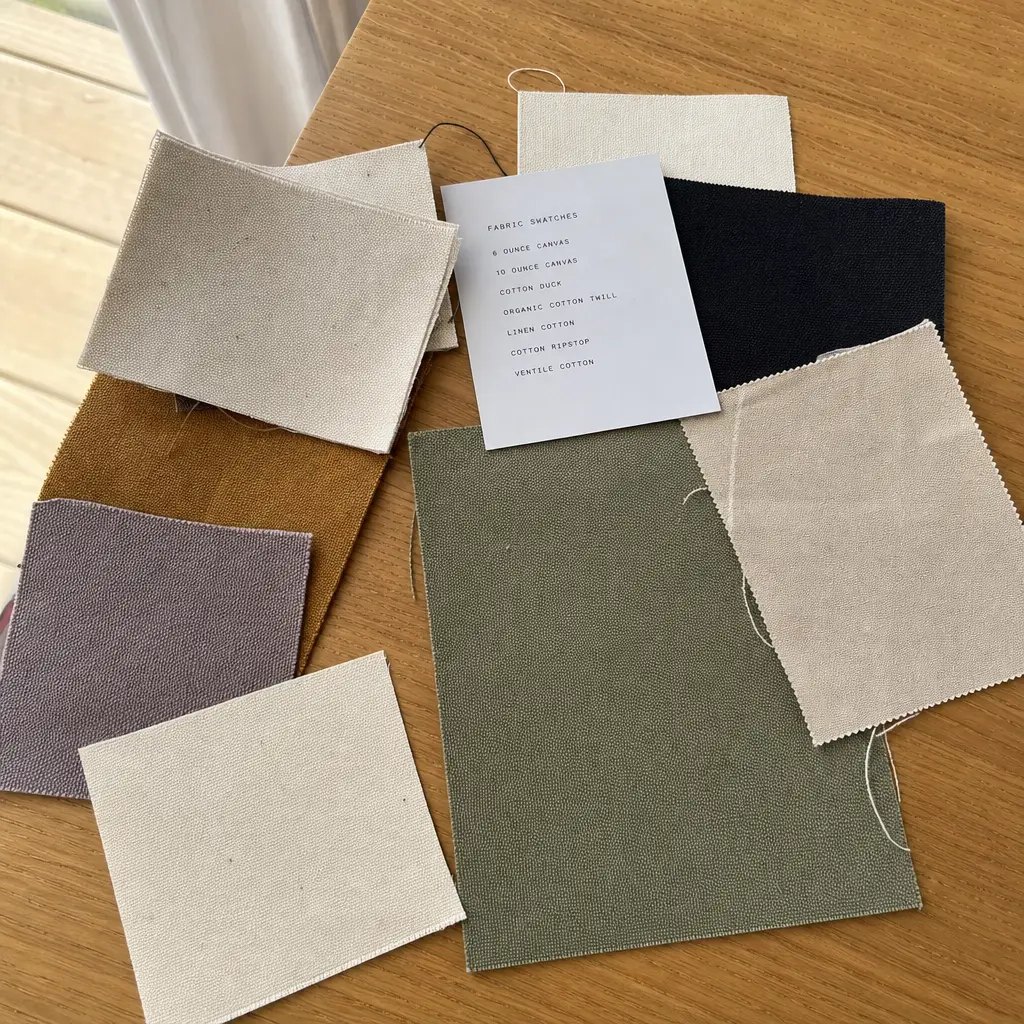
A sample is only useful if it represents the approved bulk specification. For canvas grocery totes, a buyer may need three stages: fabric swatch, blank construction sample, and printed pre-production sample. The swatch confirms GSM, color, texture, and hand-feel. The blank sample confirms size, gusset, handle length, and sewing. The printed sample confirms logo scale, ink behavior, placement, and final retail appearance.
The approval record should be specific. Write down the actual measured finished size, fabric weight, print position, handle length, and any accepted shade variation. Photos are helpful but not enough. For natural cotton canvas, buyers should keep a physical approved sample or sealed reference because screen color and phone lighting can mislead both sides. If the order repeats later, the approved sample becomes the fastest way to control consistency.
- Measure the sample after pressing and resting, not while it is distorted from shipping.
- Weigh or verify fabric weight from a swatch rather than trusting a verbal claim.
- Load-test handles using a realistic weight for the intended grocery use.
- Review print sharpness near weave slubs and seam areas.
- Approve carton folding method if creases would affect retail presentation.
QC Thresholds for Bulk Production
Quality control should be written in terms the factory and inspector can measure. For a canvas grocery tote, the most important thresholds are fabric GSM, finished dimensions, stitch density, handle strength, print placement, print color, shade consistency, and packing accuracy. If the buyer only writes acceptable quality must be good, the factory has no clear production target and the inspector has no objective basis for rejection.
Natural canvas has normal variation, but that does not mean all variation is acceptable. A wellness studio retail program usually needs a clean, consistent look on display. Heavy slubs, stains, oil marks, broken yarns, and mixed fabric shades in one carton can damage perceived value. The purchase order should define major and minor defects, especially for front-panel marks near the logo area. This is where paid retail totes need stricter standards than free event totes.
- Finished size tolerance should usually be tighter on retail totes than on giveaways.
- Print placement should be measured from fixed seams or bag edges, not by visual judgment.
- Handle reinforcement should show consistent stitching with no skipped stitches at stress points.
- Front panel stains, oil marks, and obvious weaving defects should be treated as major defects.
- Carton assortment errors should be controlled when multiple studio logos ship together.
Packing and Receiving Details Matter
Packing choices influence cost, sustainability claims, retail readiness, and warehouse receiving. Individual polybags protect the tote and keep barcode labels clean, but many wellness brands try to reduce plastic. Bulk folding reduces packaging waste and cost, but it increases the risk of dust, creasing, and mixed designs if carton control is weak. The right answer depends on the retail channel and distribution model.
For wholesale distributors, carton marks and inner sorting are as important as the bag itself. Each carton should identify item code, fabric weight or style, print design, quantity, carton number, and destination if split shipments are required. If a studio chain orders five location logos, the factory should not mix designs loosely inside one carton unless the buyer has approved that method. Receiving errors create hidden labor cost and can delay store allocation.
- Use bulk folded packing for backroom distribution when plastic reduction matters and receiving can handle it.
- Use individual bags when barcode scanning, retail cleanliness, or direct-to-store handling requires protection.
- Specify carton quantity and maximum gross weight to protect warehouse staff and reduce carton damage.
- Require moisture protection for long ocean transit, especially for natural cotton canvas.
- Define carton marks before production so printed labels match the buyer receiving system.
Lead Time Risks in Fabric and Printing
Lead time for wholesale canvas grocery totes is usually driven by fabric availability, sample approval speed, print screens, production queue, packing materials, and inspection booking. Stock natural canvas is faster than custom dyed fabric. A simple one-color screen print is faster than multiple artwork versions with separate approvals. Lead time also stretches when buyers change artwork after the print screen is made or add labels after the sample is approved.
A practical schedule should count backwards from the retail launch or studio campaign date. Include time for RFQ clarification, sample shipping, sample review, artwork correction, production, final inspection, export documents, freight, customs, and local delivery. Buyers often plan only factory production days and forget decision time. A week lost during artwork approval can create air freight pressure later, which may cost more than choosing the better fabric at the start.
- Use stock fabric when the launch date is fixed and close.
- Freeze artwork before print screen preparation to avoid rework charges.
- Book inspection before the planned packing completion date when the order is time-sensitive.
- Confirm whether packing materials and labels are available before sewing is finished.
- Add buffer for holidays, port congestion, and split shipments to multiple studio locations.
Specification comparison for buyers
| Spec decision | Recommended option | When it fits | Buyer risk to check |
|---|---|---|---|
| Fabric weight for light retail giveaways | 8 oz cotton canvas, about 270 GSM, with basic cross-stitch handles | Introductory wellness studio campaigns, event gifts, and low-weight retail items such as towels, tea, skincare samples, or flyers | May feel too soft for paid merchandise; confirm shrinkage, opacity, and handle pull strength before approving bulk |
| Fabric weight for everyday grocery use | 10 oz cotton canvas, about 340 GSM, with reinforced handle stitching | Most wholesale canvas grocery totes for studio retail shelves, farmers market partnerships, and member welcome kits | Quotes may vary if one supplier uses true canvas and another uses duck fabric or lower yarn density |
| Fabric weight for premium paid retail | 12 oz canvas, about 400 GSM, with boxed bottom and heavier handle tape | Boutique wellness studios selling the tote as a branded reusable shopping bag rather than giving it away | Higher fabric cost, heavier carton weight, and increased freight cost can reduce margin if retail price is not planned |
| Fabric finish for natural look | Unbleached natural cotton canvas with controlled slub and minimal chemical finish | Yoga, Pilates, spa, nutrition, and holistic wellness brands wanting an earthy retail presentation | Natural shade varies by batch; require approved shade tolerance and avoid mixing different dye lots in one PO |
| Print method for studio logo | Screen print for solid logos up to 3 colors; water-based or pigment ink depending on shade | Clean brand marks, class schedule graphics, wellness slogans, or retail artwork with large flat color areas | Ink hand-feel and opacity change by fabric weight; approve print on actual bulk fabric, not only on paper or digital proof |
| Construction for groceries | Boxed bottom or 8-12 cm gusset with bartack or box-X handle reinforcement | Reusable grocery shopping, studio retail bundles, local market campaigns, and heavier gift sets | Flat totes look cheaper in quotes but carry less volume; compare finished dimensions and usable capacity, not only panel size |
| MOQ route for mixed studio locations | One base tote with shared fabric and construction, separate logo print runs by location | Distributors or franchise buyers ordering multiple studio names under one shipment | Print setup charges, color matching, and carton sorting can erase savings if location quantities are too small |
| Packing for retail-ready delivery | Individual polybag only when required; otherwise folded bulk pack with barcode label or carton mark | Wholesale distribution, studio backroom storage, and retail buyers balancing presentation with waste rules | Over-packing increases cost and plastic use; under-packing causes creasing, dust, or carton mix-ups at receiving |
Buyer checklist before sampling
- State the fabric as oz and GSM together, such as 10 oz / about 340 GSM cotton canvas, because suppliers may use different conversion assumptions.
- Define the tote structure: flat, side gusset, bottom gusset, boxed bottom, handle length, and reinforcement type.
- Request the same print method on the actual nominated fabric weight before approving the pre-production sample.
- Set measurable tolerances for finished size, GSM, print position, print color, handle strength, and carton packing.
- Separate paid retail totes from giveaway totes in the RFQ; they should not use the same cost target or quality threshold.
- Ask for carton dimensions, gross weight, folded packing method, and units per carton before comparing landed cost.
- Confirm whether the MOQ is based on fabric dyeing, cutting quantity, print setup, or total shipment quantity.
- Require a production sample or sealed pre-production sample when the order uses a new fabric weight, new logo ink, or new handle construction.
- Include barcode, hangtag, care label, warning label, and carton mark requirements at quotation stage, not after order placement.
- Compare suppliers using finished capacity, fabric weight, stitching reinforcement, defect standards, and freight impact, not only unit price.
Factory quote questions to send
- What fabric construction are you quoting: plain canvas, cotton duck, recycled cotton blend, or other material, and what is the actual GSM tolerance?
- Is the quoted weight measured before washing, after finishing, or from the greige fabric before final processing?
- Can you provide a swatch card covering 8 oz, 10 oz, and 12 oz canvas from current stock or regular production?
- What is the minimum order quantity for the chosen fabric weight before printing, and what is the minimum per print design?
- Which print method do you recommend for this artwork on natural canvas, and what are the setup charges by color?
- What handle material, width, length, and reinforcement stitch are included in the quoted unit price?
- What finished size tolerance, GSM tolerance, and print placement tolerance can your factory maintain in bulk production?
- How many pieces per export carton, what are the carton dimensions, and what is the estimated gross weight per carton?
- What sample types are included before mass production: blank sample, printed sample, pre-production sample, or shipment sample?
- What lead time applies after artwork approval and deposit, and which steps are on the critical path?
Quality-control points to confirm
- Fabric GSM should be checked from bulk fabric using a cutter or reliable weighing method, with tolerance agreed in the purchase order.
- Finished bag dimensions should be measured after sewing and pressing, not from the cutting panel dimensions.
- Handle attachment should pass a reasonable pull test based on the expected load, especially for grocery totes carrying bottles or food items.
- Print color should be compared under consistent light against approved Pantone or physical standard, not only by phone photos.
- Print placement should be measured from fixed seams or bag edges; visual centering alone causes dispute on gusseted totes.
- Seams should be inspected for skipped stitches, loose threads, broken needle marks, and inconsistent stitch density.
- Natural canvas shade variation should be controlled by batch segregation and recorded before printing starts.
- Carton packing should protect against dust, moisture, crushing, and mixed designs, with clear carton marks for receiving teams.
- Metal-free or safety-sensitive retail requirements should be stated early if the tote will be sold in wellness, spa, or food-adjacent channels.
- Final inspection should include assortment count, label verification, barcode scan test if applicable, and carton drop condition review.