Start With the Bookstore Job the Tote Must Do
Wholesale canvas grocery totes for university bookstores live in a tricky middle ground. They are not disposable promo bags, but they are not always premium fashion merchandise either. The same tote might sit beside the register, carry snacks from a campus convenience store, hold a sweatshirt during move-in week, or become an alumni gift. Those uses call for different choices in fabric weight, gusset depth, handle drop, reinforcement, print method, and packing.
Before collecting prices, write a simple operating brief. A paid retail tote needs enough structure and finish quality to justify the shelf price. A welcome-week giveaway may need clean branding and dependable sewing, but not premium fabric. A grocery-style checkout tote needs real carrying capacity: bottles, boxed snacks, notebooks, folded apparel, and other bulky purchases should sit inside without the bag collapsing awkwardly.
A useful RFQ sounds specific, not decorative. For example: reusable campus bookstore grocery tote for paid checkout resale, 12 oz natural cotton canvas, 38 cm wide by 40 cm high with 10 cm bottom gusset, 28 cm handle drop, X-box handle reinforcement, one-color front screen print, expected 8 kg use load, bulk flat packed 50 pieces per carton. With that level of detail, suppliers are far less likely to quote different bags under the same product name.
- Retail resale tote: prioritize 12 oz or 14 oz canvas, consistent sewing, controlled print placement, and clean shelf presentation.
- Bookstore grocery tote: require a real gusset, shoulder-usable handle drop, and stated target load instead of flat event-bag construction.
- Orientation giveaway: consider 10 oz or 12 oz canvas, one-color print, and simple bulk packing when budget and delivery speed matter most.
- Alumni merchandise: consider heavier canvas, custom label, hangtag, barcode, and tighter cosmetic standards for a higher retail price point.
- Department event tote: keep the spec simple because artwork approval, licensing review, and campus deadlines often create more schedule risk than sewing.
Choose Canvas Weight by Number, Not by Adjective
Terms like heavy canvas, premium canvas, and thick cotton are too loose for procurement. Ask for both ounces per square yard and grams per square meter. As practical sourcing ranges, 10 oz canvas is often about 320 to 340 GSM, 12 oz canvas is often about 390 to 410 GSM, and 14 oz canvas is often about 450 to 480 GSM. These are working ranges, not universal rules, because yarn size, weave density, dyeing, washing, calendaring, and finishing can all change the measured result.
For many university bookstore grocery tote programs, 12 oz cotton canvas is the safest starting point. It normally gives enough body for reusable retail presentation while keeping unit cost, sewing difficulty, carton weight, and freight cost below many 14 oz choices. A 10 oz canvas can be right for orientation kits and light promotional use, but it may feel underbuilt if the bookstore markets the item as a repeated-use grocery tote. A 14 oz canvas can make sense for premium alumni merchandise or a higher retail price point, as long as the budget absorbs the added material and shipping weight.
Clarify when the fabric weight is measured. Greige fabric weight, finished fabric weight, dyed fabric weight, and washed fabric weight may not match. For fair supplier comparison, request finished fabric weight for the production lot and keep the approved swatch as the reference. If one price is much lower than the rest, look closely. The difference may be fabric weight, but it may also be smaller dimensions, shallower gusset, narrower handles, weaker reinforcement, or fewer print operations.
- 10 oz canvas: suitable for light-use giveaways and budget programs, but may feel too limp for paid grocery-style bookstore totes.
- 12 oz canvas: a practical default for reusable checkout totes, bookstore resale, and mixed campus use.
- 14 oz canvas: suitable for premium merchandise when stronger hand feel and retail presentation justify higher cost and freight weight.
- Finished GSM: confirm from the production-quality fabric, not only from a generic showroom swatch.
- Quote comparison: align finished size, fabric GSM, gusset, handle width, reinforcement, print count, and packing before comparing unit prices.
Check Fiber Content, Claims, and Finish Early
Most canvas bookstore totes use conventional cotton canvas because it balances price, availability, sewing performance, and print compatibility. Still, cotton canvas is not a single specification. Ask for composition in percentage terms: 100% cotton, cotton-polyester blend, recycled cotton blend, certified organic cotton, or another construction. If the bookstore plans to make a sustainability claim on a hangtag, product page, campus email, or purchase order, the paperwork must support that exact order.
Organic cotton, recycled cotton, and recycled-content blends can be good choices, but they should be treated as documented specifications rather than marketing language. Ask whether certification applies to the mill, the fabric, or the transaction. For recycled content, ask whether it is pre-consumer, post-consumer, or blended, and confirm the percentage. Recycled cotton can vary in staple length and strength depending on source and blend, so judge it by swatch review, sample performance, and documentation together.
The finish changes the tote as much as the fiber does. A firm plain weave usually gives better structure and cleaner print edges than a loose, soft fabric. Singeing can reduce surface fuzz. Washing or softening can improve hand feel, but it may reduce stiffness. Dyeing can strengthen the brand story, yet it introduces shade-control and print-opacity risk. Natural canvas is often faster and easier to source, but seed flecks, slubs, and mild shade variation need to be defined before inspection so normal texture does not become a late-stage dispute.
- Conventional cotton: best for standard bookstore programs where cost, availability, strength, and print reliability are priorities.
- Organic cotton: use only when certification and transaction documentation support the product claim being made.
- Recycled cotton: confirm recycled percentage, blend composition, strength expectations, and claim documentation before approving marketing language.
- Natural canvas: inspect seed marks, stains, odor, panel shade, slubs, and surface cleanliness before approving retail presentation.
- Dyed canvas: require lab dips, bulk shade approval, and print opacity testing for school colors and licensed merchandise.
Lock Construction Details Before Price Negotiation
Two totes made from the same 12 oz canvas can perform very differently. Construction decides how the bag carries weight, how comfortable it feels, and how it looks on a shelf. A complete spec should include finished width, height, bottom gusset, side gusset if used, top hem depth, handle drop, handle width, handle material, seam type, reinforcement, stitch length, and tolerances. If those points are missing, the factory has room to reduce sewing time or materials to hit a lower price.
Gusset design is especially important for a grocery-style tote. A flat tote costs less and is easier to print, but it will not hold boxed snacks, bottles, folded apparel, notebooks, and checkout merchandise as well. A 10 to 12 cm bottom gusset is a practical range for many bookstore programs. A side gusset or boxed base helps the tote open and load more like a shopping bag, though it also demands better sewing control at corners and folds.
Handles deserve close attention because they are a common failure point. For bookstore use, a 2.5 to 3.5 cm handle width usually feels more comfortable than narrow promotional straps. A handle drop around 25 to 30 cm supports shoulder carry for many users, while shorter drops are better for hand-carry checkout bags. Name the reinforcement method in the RFQ: X-box stitching, bartack, double-row stitching, or another approved method. The reinforcement should bite securely into the bag body, not sit as decorative stitching near the fabric edge.
- Finished dimensions: state width, height, bottom gusset, side gusset, and top hem depth after sewing and pressing.
- Handle drop: measure from the top edge of the bag to the inside top of the handle, not by total strap length.
- Handle width: specify final sewn width because comfort and perceived strength change significantly with strap width.
- Reinforcement: define X-box, bartack, double row, or approved equivalent at each handle end.
- Gusset corners: inspect for puckering, skipped stitches, weak folds, and distortion that prevents the tote from standing cleanly.
Use Tolerances and Load Tests Buyers Can Enforce
Canvas totes are cut-and-sewn products, so small variation is normal. The problem is not variation itself; it is undefined variation. A workable starting point for many bookstore totes is width and height within ±1 cm, gusset depth within ±0.5 to 1 cm, handle drop within ±1 cm, handle width within ±0.3 cm, and logo placement within ±0.5 to 1 cm. Adjust those figures for the design, factory method, and order size, but put them in writing before bulk cutting.
Load testing should match the intended use. A light orientation bag does not need the same test as a repeated-use grocery tote. Practical targets include 5 kg for light event use, 8 kg for standard bookstore basket use, and 10 kg for repeated grocery-style use. Define the test weight, duration, sample count, and pass criteria. A clear pass result might mean no handle detachment, no seam opening, no fabric tearing, no stitch popping, and no severe distortion after the stated load is held for the agreed time.
Ask what the factory can check during production and at final inspection. A simple static hanging test is not a lab certification, but it is much better than a broad claim that the tote is strong. For licensed retail programs or higher-value merchandise, a third-party inspection can use the signed sample and written tolerances as references. The checks should focus on real failure points: handle attachments, bottom seams, gusset corners, and any fabric or print areas affected by curing, dyeing, or cutting defects.
- Dimensional tolerance: agree numeric tolerances for width, height, gusset, handle drop, handle width, and logo position.
- Static load: define weight, duration, sample count, and failure criteria before production starts.
- Handle failure: reject tearing, stitch popping, seam opening, or visible reinforcement distortion beyond the approved sample.
- Seam failure: inspect bottom seams and gusset corners because they carry concentrated load when the bag is full.
- Inspection reference: use the signed pre-production sample plus the written spec, not a digital mockup alone.
Match the Print Method to Campus Artwork
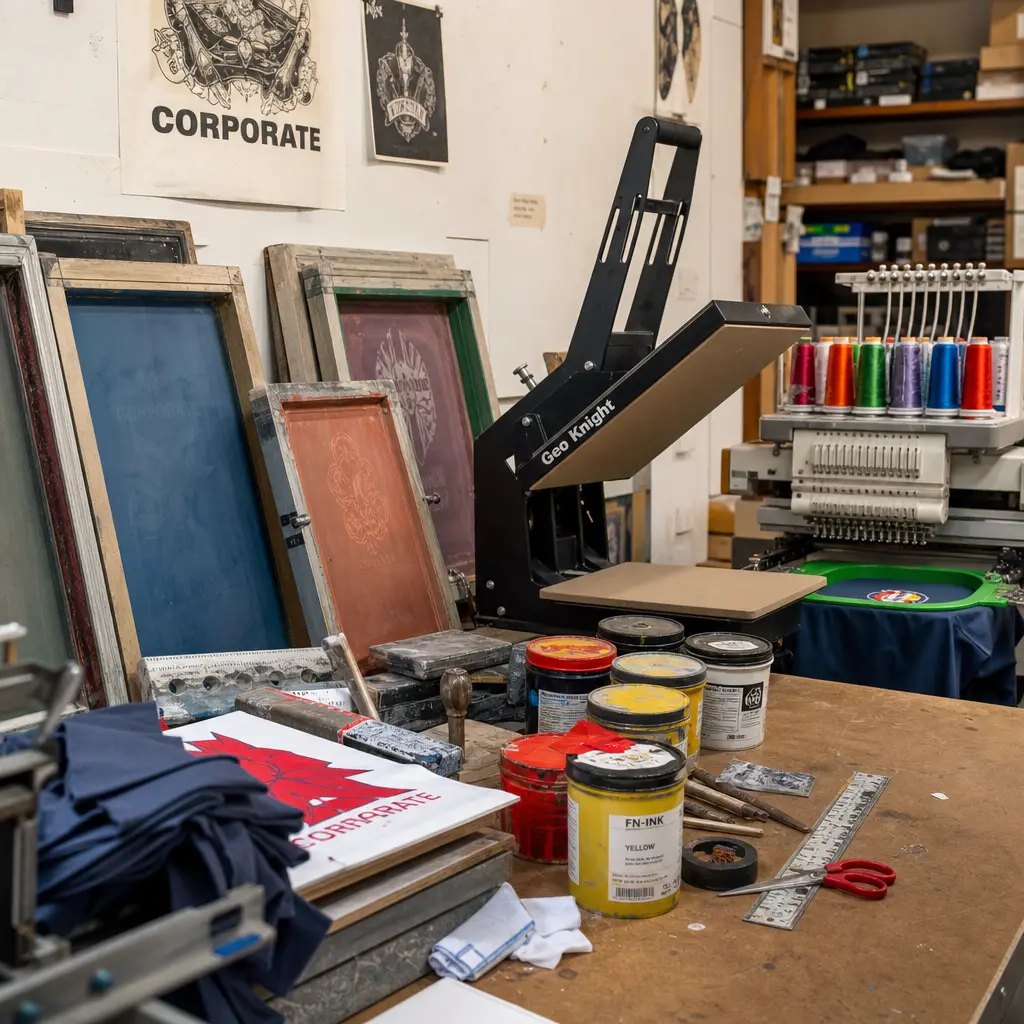
Screen printing is the common choice for canvas bookstore totes because it suits campus wordmarks, bookstore logos, department marks, slogans, and repeat reorder quantities. Water-based screen printing often works well for 1 to 3 spot colors on natural canvas because it has a softer hand and sits comfortably with the fabric texture. Dark dyed canvas changes the equation. White, cream, gold, yellow, and light school colors may need a higher-opacity ink system or underbase, which can raise cost and change the print feel.
Artwork should be judged on actual canvas, not only on a PDF. Fine serif text, small trademark symbols, mascot line art, distressed effects, halftones, and tight multi-color registration can fill in or shift on a coarse weave. For licensed marks, small type, dark fabric, heavy ink coverage, or any design that must pass campus brand review, request a physical print strike-off. It is not the final production sample, but it catches print problems before the full sample is built.
Print placement belongs in the technical drawing. State the print size, print side, distance from top edge, distance from side seam, center line, and relationship to gusset folds. If the tote has a deep gusset, keep the logo away from folds that distort when the bag opens. For two-sided printing, confirm whether each side uses the same artwork, whether extra screens apply, and whether front/back orientation matters when the tote is folded for retail display.
- Natural canvas: water-based screen print is often appropriate for soft-hand, limited-color university artwork.
- Dark dyed canvas: test opacity for white, cream, yellow, gold, and light blue prints before bulk approval.
- Small details: avoid type and trademark marks too small for the weave; request strike-offs for fine lines and official marks.
- Placement: measure from top edge, side seams, center line, or gusset folds according to the drawing.
- Charges: confirm screens, PMS matching, second-side print, underbase, strike-off, and artwork revision fees.
Separate MOQ Drivers From Real Product Needs
MOQ is not just a sewing number. It can come from stock fabric availability, dye-lot minimums, cutting efficiency, screen setup, label production, hangtag production, barcode stickers, carton printing, or packing labor. Natural canvas usually supports lower MOQ because fabric is more readily available. Custom dyed canvas often requires lab dips, higher fabric minimums, and more shade-control work before bulk production can begin.
Ask suppliers to break MOQ down by component. A factory may accept 500 natural canvas totes with a one-color screen print, but require 1,000 pieces for dyed fabric, 2,000 pieces for custom webbing, or 3,000 pieces for woven labels. Once the MOQ driver is visible, buyers can negotiate intelligently without weakening the bag. For a first campus bookstore test, natural canvas, standard handles, a strong one-color print, and bulk packing may be the better move than forcing custom labels and dyed fabric too early.
Cost reduction should protect function. Reducing fabric weight, narrowing handles, removing reinforcement, or shrinking the gusset can create a cheaper quote, but it may also create a bag students and alumni do not want to reuse. Safer cost levers include simplifying artwork, reducing print colors, using one print position, choosing stock natural canvas, standardizing carton quantities, and postponing custom hangtags until demand is proven. Lead time should include artwork review, strike-off, lab dip if applicable, sample approval, fabric procurement, production, inspection, and shipment handover.
- Natural canvas: usually the lowest MOQ and fastest path for pilot or reorder programs.
- Dyed canvas: adds lab dip approval, dye-lot minimum, shade risk, and longer material lead time.
- Print colors: each additional screen can add setup cost, registration risk, and production time.
- Custom retail elements: labels, hangtags, barcodes, belly bands, and individual packing can each add MOQ and lead time.
- Cost discipline: simplify print and packing before cutting handle reinforcement or reducing fabric below the stated use case.
Read Every Quote Like a Spec Sheet
A useful B2B quote should tell the buyer exactly what is included in the price. If one supplier quotes 12 oz finished cotton canvas, 10 cm gusset, X-box handles, and one-color screen print while another quotes 10 oz canvas, flat construction, and single-row handle stitching, those are not comparable products. The cheaper quote may simply remove material, labor, or quality controls.
The quote should list fabric composition, fabric weight in oz and GSM, finished bag dimensions, gusset, handle drop, handle width, top hem, reinforcement, seam construction, print method, print colors, print positions, label details, packing format, pieces per carton, carton dimensions, net weight, gross weight, estimated CBM, sample cost, lab dip cost, screen cost, production lead time, and inspection timing. Commercial terms should also be clear: Incoterm, port, payment terms, deposit, balance timing, quote validity, and change-order rules.
University bookstore approvals often involve more than the buyer. Merchandising, licensing, auxiliary services, sustainability, finance, receiving, and sometimes athletics or brand management may all need input. A complete quote makes those approvals faster. Carton data helps receiving plan storage. Barcode and hangtag details help retail operations. Claim documentation supports sustainability review. Print strike-offs and color references help licensing decide with fewer surprises.
- Specification: tie unit price to exact fabric, dimensions, gusset, handle, reinforcement, print, label, and packing.
- Setup charges: separate sample, lab dip, screen, PMS matching, artwork, label, hangtag, barcode, and carton charges.
- Logistics: list pieces per carton, carton size, net weight, gross weight, total cartons, and estimated CBM.
- Terms: state Incoterm, port, payment schedule, quote validity, approval milestones, and lead time after approval.
- Comparison: normalize all supplier quotes to the same fabric weight, finished size, print count, reinforcement, and packing method.
Approve Samples With Measurements, Not Just Photos
Samples should be used as production control tools. The first prototype can help confirm shape and general size, but the pre-production sample should use the actual production fabric, approved color, production handle material, final reinforcement, final print method, correct logo size, label or hangtag if used, and intended packing style. If substitute fabric is used for an early sample, label it as a construction sample and do not approve it as the bulk material standard.
Measure the sample and record the results. Check width, height, bottom gusset, side gusset, handle drop, handle width, top hem, and logo placement. Compare canvas hand feel, surface texture, shade, and stiffness against the approved swatch. Look inside the tote, not only at the front panel. Handle attachments, stitch density, stitch box size, bartack position, thread security, and seam closures are often easier to judge from the inside.
Print approval should go beyond whether the logo looks right at first glance. Check opacity, edge definition, registration, pinholes, curing, odor, cracking, rub resistance, and tape pull. On natural canvas, mild texture variation can be normal. Stains, oil marks, severe slubs in the print area, and crooked placement should not be waved through. Keep one signed sample with the buyer and one with the factory. That physical sample becomes the reference for fabric hand, print appearance, folding, and workmanship.
- Measure first: record actual dimensions instead of approving by appearance or photo.
- Load sample: test with the agreed 5 kg, 8 kg, or 10 kg target load and document the result.
- Inspect inside: weak backstitching, loose threads, and poor bartacks are often easier to see inside the bag.
- Test print: use rub and tape-pull checks after curing, especially for heavy coverage or dark fabric.
- Sign control sample: retain matching approved samples with the buyer and factory before bulk cutting.
Define Bulk QC Defects Before Inspection
Bulk QC should focus on defects that create returns, complaints, licensing issues, or receiving problems. For reusable canvas grocery totes, major defects usually include wrong fabric weight, wrong material composition, wrong color, incorrect artwork, weak handle reinforcement, open seams, holes, oil stains, severe shade mismatch, wet cartons, missing labels, or incorrect packing count. Minor defects may include trimable loose threads, light removable dust, slight creasing, or natural-canvas speckling within the agreed standard.
Inspection works best when it happens at more than one point. Before cutting, check fabric roll weight, shade, defects, skew, stains, odor, and roll consistency. During printing, check artwork, position, color, opacity, registration, curing, and drying. During sewing, check stitch length, handle placement, X-box or bartack security, gusset corners, top hem, and seam closures. Final inspection should confirm finished dimensions, load test result, print quality, label accuracy, carton count, SKU mix, carton marks, carton condition, and packing list accuracy.
The approved sample and written specification should guide the inspector. Digital renderings cannot show fabric hand, ink opacity, stitch quality, or acceptable natural-canvas variation. Buyers should set sample size and acceptance approach according to their internal quality policy or third-party inspection provider. The important part is alignment: the factory, buyer, and inspector should all know which defects are critical, major, or minor before the goods are packed and shipped.
- Critical defects: unsafe construction, contaminated goods, mold, severe odor, wrong licensed artwork, or wet cartons.
- Major defects: wrong fabric, wrong size, weak handles, open seams, visible stains, severe shade mismatch, or incorrect print.
- Minor defects: small loose threads, slight creasing, mild natural speckling, or light dust within agreed limits.
- Process checks: inspect fabric, cutting, printing, sewing, packing, and carton marking instead of relying only on final photos.
- Reference standard: use the approved physical sample, technical sheet, and tolerance list together.
Specification comparison for buyers
| Spec decision | Recommended option | When it fits | Buyer risk to check |
|---|---|---|---|
| Standard bookstore fabric | 12 oz cotton canvas, typically about 390 to 410 GSM after finishing | Paid checkout totes, bookstore grocery bags, campus convenience purchases, apparel add-ons, and repeat-use retail programs | Confirm whether the quoted weight is finished fabric weight; some low quotes use lighter greige fabric or substitute 10 oz canvas |
| Premium merchandise fabric | 14 oz cotton canvas, typically about 450 to 480 GSM after finishing | Alumni merchandise, graduation gifts, premium lifestyle totes, higher retail price points, and heavier shelf presentation | Higher fabric weight increases unit cost, carton gross weight, freight cost, needle resistance, drying time after print, and possible seam bulk |
| Value/event fabric | 10 oz cotton canvas, typically about 320 to 340 GSM after finishing | Orientation giveaways, department events, light welcome kits, and lower-price promotional distributions | May not feel appropriate if marketed as a grocery tote for repeated book, bottle, and apparel loads |
| Fiber composition | Conventional cotton canvas unless certified organic, recycled cotton, or a blend is specified and documented | Standard procurement where cost, strength, lead time, and print compatibility are primary | Do not approve sustainability claims without certificates, composition records, or supplier documentation matched to the order |
| Weave and finish | Plain-weave canvas with firm hand, clean surface, controlled shrinkage, and low skew | Reusable totes needing structure, print clarity, dimensional consistency, and stable sewing performance | Loose weave, excessive softening, or poor shrinkage control can distort panels, prints, and finished dimensions |
| Finished size tolerance | Width and height normally ±1 cm; gusset ±0.5 to 1 cm; handle drop ±1 cm; logo placement ±0.5 to 1 cm | Most bulk bookstore tote orders where manual cutting and sewing are used | Tolerance must be agreed in writing; otherwise factories may treat visible variation as normal handmade variation |
| Handle construction | Self-fabric or cotton webbing handles, 2.5 to 3.5 cm wide, X-box stitched or bar-tacked at each attachment | Bookstore baskets, grocery-style carry, shoulder use, and heavier student purchases | Single-line stitching, narrow straps, or short stitch bites are common failure points under static load |
| Gusset design | 10 to 12 cm bottom gusset with side gusset or boxed base construction | Totes that need to hold folded apparel, boxed snacks, bottles, notebooks, and checkout merchandise | Flat totes reduce cost but do not perform like grocery totes and may look like basic event bags |
| Print method | Water-based screen print for 1 to 3 spot colors on natural canvas; higher-opacity ink for dark dyed canvas | Campus wordmarks, bookstore logos, department marks, mascot graphics, and repeat reorder programs | Fine serifs, trademark symbols, small type under about 5 mm high, and tight registration require a physical strike-off |
Buyer checklist before sampling
- Define the tote’s commercial role first: paid retail resale item, reusable checkout grocery bag, orientation giveaway, alumni merchandise, department event tote, or bundled gift-with-purchase.
- State the target load in the RFQ, such as 5 kg for light event use, 8 kg for standard bookstore use, or 10 kg for repeated grocery-style use, and ask how the supplier will test it.
- Specify canvas weight in both oz per square yard and GSM, and confirm whether the stated weight is greige, finished, dyed, washed, or measured from the actual bulk lot.
- List finished dimensions: width, height, bottom gusset, side gusset if used, handle drop, handle width, top hem depth, seam allowance, and reinforcement type.
- Choose a material tier before comparing quotes: 10 oz value/event, 12 oz standard bookstore, 14 oz premium retail, or certified claim-based organic/recycled canvas.
- Require fabric composition in percentage terms, such as 100% cotton, cotton-poly blend, recycled cotton blend, or certified organic cotton, and require documents for any claim used in marketing.
- Send vector artwork with Pantone or university brand references, number of print colors, print size, placement dimensions, minimum distance from seams, and print side count.
- Request a strike-off for licensed logos, dark dyed canvas, white ink, small text, heavy ink coverage, halftones, multi-color registration, or any artwork requiring brand approval.
- Approve a pre-production sample made with production fabric, production handles, final reinforcement, production print method, approved label, and intended packing format.
- Agree written tolerances for finished size, handle drop, handle placement, logo placement, fabric weight, shade, and acceptable natural-canvas speckling before bulk production.
Factory quote questions to send
- What exact canvas weight is included in the price in oz per square yard and GSM, and will the bulk lot be tested after finishing or dyeing?
- What is the fabric composition by percentage, and is it conventional cotton, certified organic cotton, recycled cotton, recycled-content blend, cotton-poly blend, or another construction?
- If organic or recycled content is proposed, what certificates, transaction records, recycled-content statements, or chain-of-custody documents can be supplied for this specific order?
- What yarn count, weave type, finish, shrinkage expectation, and colorfastness level are included, and can you send a bulk-quality swatch before sample approval?
- What are the finished size tolerances for width, height, bottom gusset, side gusset, handle drop, handle width, top hem depth, and logo placement?
- What handle material, handle width, handle drop, stitch pattern, stitch length, thread type, and reinforcement method are included at each attachment point?
- What seam construction is used for body seams, top hem, gusset corners, and bottom seams, and are seams lockstitched, overlocked, bound, or double-stitched?
- What static load test can you perform, at what weight and duration, and what failure criteria will be used for handle tearing, seam opening, or panel distortion?
- What print method is included, how many colors and positions are included, and what separate charges apply for screens, setup, artwork changes, second-side printing, or PMS matching?
- Can you provide a print strike-off on the selected canvas before making the full pre-production sample, especially for licensed logos and dark fabric?
Quality-control points to confirm
- Fabric weight should be verified by a GSM cutter test from the bulk lot or by an agreed mill certificate plus spot check; define acceptable variance before production, commonly within about ±5% unless otherwise negotiated.
- Fabric composition should match the purchase order and any hangtag or product-page claims; organic or recycled claims should not be released without order-specific documentation.
- Finished dimensions should be measured on a sample set from bulk production, with typical tolerances such as width/height ±1 cm, gusset ±0.5 to 1 cm, handle drop ±1 cm, and handle width ±0.3 cm when agreed.
- Handle strength should be checked using a defined static load, such as the agreed 8 kg or 10 kg target load held for a set duration, with no seam opening, fabric tearing, stitch popping, or excessive handle distortion.
- Handle placement should be symmetrical, untwisted, and measured from side seams and top edge; left and right handle ends should align within the agreed visual and dimensional tolerance.
- Body seams should have even stitch length, secure backstitching or bartacks where required, no skipped stitches, no broken thread, no open seams, no fraying at gusset corners, and no loose reinforcement tails.
- Print quality should be checked for correct artwork, correct color target, opacity, registration, edge sharpness, curing, crocking risk, pinholes, cracking, and adhesion using dry rub and tape-pull checks suitable for the ink system.
- Logo placement should be measured from the approved reference points, such as top edge, side seam, center line, or gusset fold, rather than approved by eye only.
- Dyed canvas should be checked for shade consistency across panels, handles, gussets, replacement rolls, and production batches, especially for navy, black, burgundy, royal blue, forest green, and maroon.
- Natural canvas should be checked for excessive seed marks, stains, oil marks, odor, weaving defects, slubs that affect printing, panel mismatch, or dirty handling marks that reduce retail presentation.