Start with the receiving dock, not the mockup
Wholesale canvas grocery totes for university bookstores often look simple at the artwork stage. A buyer sees a sturdy natural canvas sample, a clean bookstore logo, and a unit price that fits the retail margin. The harder problems usually appear later, when cartons arrive at a campus receiving dock, bookstore backroom, or third-party warehouse. Cartons may be too heavy for safe manual lifting, too wide for shelving, too tightly packed for printed panels, or mixed in a way that slows SKU intake during a busy semester launch.
For procurement teams, the tote and the carton packing plan should be treated as one specification. A 12 oz gusseted canvas grocery tote is not a logistics equivalent to an 8 oz flat promotional tote. It folds thicker, builds bulk at the handle attachment, traps air around the gusset, and creates more pressure points inside the carton. If a supplier copies the carton count from a lighter flat tote, the result can be bulging cartons, crushed corners, distorted handles, print offset, and extra receiving labor.
Write the packing plan into the RFQ before chasing the lowest unit price. Ask for carton quantity, carton dimensions, gross weight, net weight, CBM, inner bundle count, folding direction, carton label format, assortment rules, and maximum carton weight. These details affect sewing, print curing, freight cost, warehouse counting, and how quickly bookstore staff can move seasonal product onto the floor.
- Set a maximum carton gross weight, commonly 15-18 kg unless your receiving team approves heavier cartons.
- Request open-sample, folded-sample, and packed-carton photos before bulk shipment.
- Confirm whether each carton is single-SKU or an approved mixed assortment.
- Use inner bundles only when they improve counting, allocation, or replenishment.
- Require carton measurements, gross weight, and label photos before shipment release.
Match canvas weight to bookstore use
A university bookstore grocery tote may carry textbooks one day and boxed mugs, sweatshirts, snacks, or orientation kits the next. That mixed load matters. A tote made for a light campus giveaway does not need the same fabric, handle reinforcement, or bottom structure as a retail tote sold near checkout and expected to hold books.
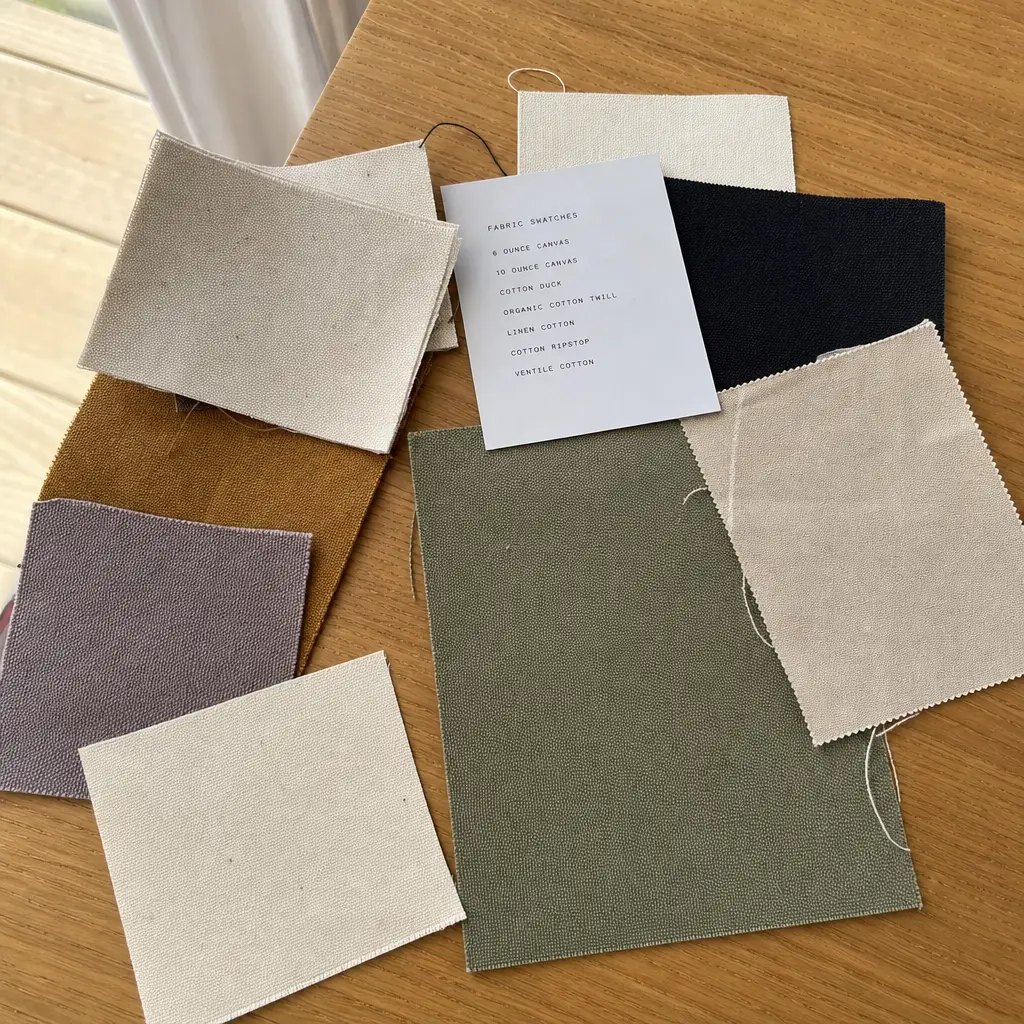
For many campus retail programs, 10 oz to 12 oz cotton canvas is the practical range. In metric terms, that is approximately 340-400 GSM, though conversion varies by weave and finishing. Buyers should ask whether the quoted weight is greige, finished, dyed, bleached, washed, or softened. Fabric weight can change after processing, and a sample from one mill may not behave the same as bulk fabric from another.
An 8 oz tote can work for budget events, orientation giveaways, or low-load promotional use. It will usually feel softer and lighter, but it may sag more, show more transparency, and stand poorly on display. A 14 oz tote can feel premium, yet it increases sewing difficulty, folded thickness, carton volume, and freight weight. The best specification is not the heaviest fabric. It is the fabric that supports the intended load, target retail price, display plan, and carton packing limit.
- Use 8 oz canvas for light promotional programs, not heavy book-carry positioning.
- Use 10 oz canvas for balanced cost, structure, and general bookstore use.
- Use 12 oz canvas when the tote is sold as durable reusable merchandise.
- Use 14 oz only after checking sewing capability, fold thickness, CBM, and carton weight.
- Document expected load so handle pull checks match real campus use.
Describe the grocery tote shape precisely
The phrase grocery tote is not enough for a factory quote. One supplier may price a flat tote with a bottom fold. Another may price a side-gusset bag. A third may quote a true boxed-bottom construction. These versions consume different fabric, require different sewing operations, display differently, and pack differently. For a fair quote comparison, define finished height, width, side gusset, bottom gusset, top hem width, handle width, and handle drop.
Common bookstore grocery tote dimensions include approximately 38 x 35 x 12 cm or 40 x 36 x 15 cm. The right size depends on target retail price, table display space, shelf storage, average merchandise size, and whether the tote should stand when filled. A wider gusset helps with boxed mugs, folded apparel, snack items, and course materials, but it also increases fabric consumption and folded bulk. A boxed bottom improves standing behavior but usually costs more than a simple flat body.
The measurement method needs to be written into the tech pack. Factories may measure the body laid flat after pressing, while buyers may think in opened capacity. Handles can be quoted by total length or by drop from the top edge to the handle apex. A few centimeters can change shoulder comfort, hand carry, and folded packing behavior. The approved sample and final inspection should use the same diagram.
- State whether dimensions are measured laid flat, opened, pressed, or after washing.
- Define side gusset, bottom gusset, and boxed-bottom construction separately.
- Specify handle drop from the top edge, not only total handle length.
- Include top hem width and construction: single fold, double fold, reinforced fold, or bound finish.
- Attach a measurement diagram with tolerances before approving the pre-production sample.
Engineer handles before approving price
Most tote failures start at the handle attachment, not in the middle of the canvas panel. A heavy canvas body can still fail if the top hem is weak, stitch density is low, or the reinforcement box is too small. For bookstore grocery totes, handles should be reinforced with box-X stitching, dense bartacks, or another approved cross-stitch pattern that spreads load into the top hem. Inspect all four attachment points, including the two that do not show in standard front-view sample photos.
Handle material changes both cost and performance. Folded self-fabric handles create a continuous canvas look and can be strong when properly stitched, but they add thickness where the handle meets the bag. Cotton webbing handles are efficient and consistent, yet the buyer still needs to approve width, color, texture, and stiffness. A typical webbing width for a retail tote is around 2.5-3.8 cm. Narrow handles can feel uncomfortable under book loads. Very soft handles may twist. Very stiff handles can make cartons bulge.
Seam finishing deserves the same attention. Overlocked inner seams are common for cost-controlled wholesale tote production. Bound seams create a cleaner premium interior, but they add labor and material. Boxed bottom corners should be checked for skipped stitches, loose threads, uneven seam allowance, and stress points because rectangular merchandise pushes hard into these areas.
- Request close-up photos of handle attachments, inner seams, and boxed-bottom corners.
- Define reinforcement box size, stitch density, bartack length, thread color, and thread type.
- Confirm whether handle drop is for hand carry, shoulder carry, or dual use.
- Require handle pull testing against the intended bookstore load, not a vague durability claim.
- Check left and right handle attachments for symmetry and consistent reinforcement.
Control logo printing on actual canvas
Most canvas grocery totes for university bookstores use screen printing because it suits solid bookstore marks, mascots, alumni graphics, orientation designs, and one-to-three-color slogans. Water-based ink can give a softer handfeel on natural canvas. Plastisol can provide stronger opacity, especially on darker fabric or saturated school colors. Heat transfer may be useful for gradients, photo-style artwork, or small runs, but it changes the surface feel and should be tested on the actual canvas texture.
Licensed university artwork often includes strict rules for color, clear space, mark size, and placement. The RFQ should include vector artwork, Pantone references, print dimensions, and print location measured from fixed points such as the top edge, side seam, or center line. Avoid approving from a digital mockup alone. Natural unbleached canvas can make navy, crimson, green, gold, and black appear warmer or duller than they look on a white screen proof.
Printing also affects packing. Large ink coverage on heavy canvas needs adequate curing, cooling, and handling time before folding. If bags are packed too soon, cartons may arrive with blocking, tackiness, ink odor, rub marks, or print offset. Folding should avoid heavy pressure directly on fresh printed surfaces where possible. Inspection should include print color, placement, curing, rubbing, odor, and blocking checks.
- Use screen print for repeat one-to-three-color graphics and solid university marks.
- Use water-based ink when soft handfeel is more important than maximum opacity.
- Use plastisol when opacity and color strength are priorities, subject to curing checks.
- Use heat transfer only when artwork complexity justifies the different surface feel.
- Write print placement tolerance, commonly +/- 5 mm to +/- 10 mm, into the PO.
Clarify MOQ, assortments, and SKU rules
University bookstore programs often include several designs in one buy: a main bookstore logo, athletics mark, alumni graphic, orientation message, city-campus design, or department artwork. Buyers may hope to combine these designs to reach a better price, but factory MOQ is not based only on total pieces. Fabric purchase, cutting efficiency, print screens, ink changes, labels, hangtags, carton marks, and packing segregation all affect the real minimum.
If every version uses the same fabric, color, size, handle construction, label, and packing method, a supplier may treat the order as one base product with multiple prints. Cutting and sewing can be shared, while screen charges or setup charges apply by design and color. If fabric color, size, label, hangtag, destination, or carton mark changes, each version becomes a separate SKU with separate controls.
Over/under tolerance also needs attention. Factories may request tolerance due to cutting loss, print spoilage, or packing reconciliation. The buyer should decide whether tolerance applies by SKU or only to the total PO. For bookstore retail, an overage in one licensed design may not solve a shortage in another. Single-SKU cartons are usually easier for receiving unless mixed cartons are clearly approved and labeled.
- Clarify MOQ by fabric color, size, print design, label, hangtag, shipping mark, and destination.
- Separate unit price from screen charges, setup charges, sample charges, and special packing labor.
- Define over/under tolerance by SKU so design shortages are not hidden in the total quantity.
- Avoid mixed cartons unless receiving systems and carton labels support them.
- Require a packing list that maps carton numbers to SKU, design, color, and quantity.
Build the carton packing plan early
A good carton packing plan balances protection, count speed, storage space, freight cost, and manual handling. For many 10 oz to 12 oz gusseted canvas grocery totes, 40-60 pieces per export carton is a practical starting trial range. Fifty pieces per carton can be a useful planning estimate, but it is not a rule. Larger gussets, longer handles, individual polybags, hangtags, belly bands, or heavy print coverage may reduce the right carton count.
Ask the supplier for carton dimensions, net weight, gross weight, CBM, board strength, packing sequence, and closure method before final PO approval. A carton that looks efficient on a freight quote can still be wrong for campus operations if staff cannot lift it, count it, or store it safely. A carton that is too loose can collapse under stacking and waste freight volume. A carton that is too tight can crease prints, crush handles, or deform gusset corners.
Folding direction matters more than many buyers expect. Printed faces should be oriented consistently and protected from heavy rubbing. Handles should be laid the same way in each bag so bulk does not build up on one carton side. Inner bundles of 10 or 25 pieces can speed counting and allocation, but they add handling and sometimes packaging. Individual polybags protect against dust and handling marks, yet they increase plastic use, labor, carton volume, and unpacking time.
- Start carton trials at 40-60 pieces for many 10-12 oz gusseted totes, then finalize by packed weight and CBM.
- Set a carton gross weight limit such as 15 kg or 18 kg if your receiving team requires it.
- Use inner bundles of 10 or 25 when fast count verification matters.
- Keep print orientation and handle placement consistent inside every carton.
- Reject bulging, damp, crushed, or under-filled cartons before shipment release.
- Add carton liners or moisture protection for ocean freight when natural cotton canvas faces humidity risk.
Design carton labels for receiving speed
Carton labels are part of the product specification, especially for university bookstores handling multiple designs near a semester opening. A clear carton mark reduces intake time, prevents avoidable mis-shelving, and helps staff find the correct design without opening every carton. At minimum, labels should show PO number, item name, SKU, design name, color, quantity, carton number, total cartons, gross weight, net weight, carton dimensions, country of origin if required, and any campus or 3PL reference code.
If cartons are mixed, the label should state the assortment breakdown in plain language. Do not rely only on factory abbreviations or artwork nicknames. A receiving team may not know that BK-NAT-ALM means natural canvas alumni tote. For licensed university graphics, design names should match the buyer’s PO and packing list. The carton number sequence should also match the final packing list, so shortages, damages, or inspection findings can be traced quickly.
Barcode or QR requirements should be confirmed before packing starts, not after cartons are sealed. Some bookstores or 3PLs need scannable carton IDs. Others only need readable shipping marks. If cartons will be split between a main bookstore, satellite store, event location, or e-commerce warehouse, destination marks should be visible on at least two carton sides.
- Include PO number, SKU, design name, color, quantity, carton count, gross weight, net weight, and carton dimensions.
- Match carton labels to the final packing list and buyer SKU names.
- State mixed-carton assortments clearly when mixed packing is approved.
- Confirm barcode, QR, or 3PL label requirements before carton sealing.
- Place destination marks on visible carton sides for campus allocation or multi-location delivery.
Approve samples in open, folded, and packed condition
A loose sample on a desk does not show how the bulk order will arrive. Sample approval should include an open sample for product review, a folded sample for packing behavior, and a packed-carton or packed-bundle demonstration for logistics review. This process reveals whether the logo creases in an unacceptable area, whether ink transfers under pressure, whether handle reinforcement creates bulky corners, and whether the carton closes without crushing the bags.
The pre-production sample should use actual bulk fabric, final thread, final handle construction, final print method, final label or hangtag, and intended folding method. A substitute-fabric sample can help with early size review, and a digital proof can help with artwork alignment, but neither is enough for final approval of handfeel, opacity, shrinkage, rub resistance, or carton behavior. If university mark approval is required, review color on the actual canvas base under consistent lighting.
Documentation makes inspection enforceable. Record finished dimensions, gusset size, handle drop, handle reinforcement, print placement, fabric weight, seam finish, folding method, inner packing, carton quantity, and carton label layout. Keep one approved sample with the factory and one with the buyer or third-party inspector. If the supplier changes webbing, thread, fabric lot, carton count, or folding method after approval, require written confirmation and updated photos.
- Approve fabric handfeel, shade, and GSM before final logo approval.
- Measure the sewn sample using the same method planned for final inspection.
- Record print placement from top edge, side seam, center line, or gusset line.
- Review folded condition for logo creasing, handle bulk, and carton fit.
- Keep signed or sealed samples with both factory and inspection contact.
Set inspection rules before deposit
Vague quality language creates disputes. A PO that says good stitching or correct size is not enough for B2B sourcing. The buyer should specify tolerances, defect categories, sample references, and inspection method before production begins. Common working tolerances for tote production include fabric GSM within +/- 5%, body dimensions within +/- 1 cm, handle drop within +/- 1 cm to +/- 1.5 cm, and print placement within +/- 5 mm to +/- 10 mm depending on artwork size. Confirm these figures with the supplier for the exact construction.
Inspection should classify defects as critical, major, or minor. Critical defects may include metal contamination, severe mildew, wrong licensed mark, unsafe broken needle evidence, or cartons packed with the wrong SKU. Major defects may include handle failure, wrong fabric weight beyond tolerance, major print defects, severe stains, wrong size, wrong carton quantity, poor print curing, or wrong label. Minor defects may include trim threads, slight shade variation within the approved range, or small cosmetic issues that do not affect saleability.
Many wholesale orders use an AQL-based final inspection, with the exact level agreed before production. The inspection plan should include carton checks, not just tote checks. A tote can pass visual inspection and still create receiving problems if assortments, labels, bundle counts, carton dimensions, or gross weights are wrong. Plan time for rework and reinspection before shipment booking, especially around orientation, homecoming, commencement, and semester launch windows.
- Write tolerances for GSM, body size, gusset, handle drop, print placement, and carton weight.
- Define critical defects such as wrong logo, contamination, mildew, or unsafe metal fragments.
- Define major defects such as handle failure, wrong SKU, severe stains, poor print curing, or incorrect dimensions.
- Define minor defects such as trim threads or small cosmetic variation within the approved standard.
- Agree on AQL level, sample reference, rework rules, and reinspection responsibility before deposit.
Specification comparison for buyers
| Spec decision | Recommended option | When it fits | Buyer risk to check |
|---|---|---|---|
| Fabric weight for bookstore grocery totes | 10 oz to 12 oz cotton canvas, approximately 340-400 GSM; state whether weight is greige, finished, washed, dyed, or bleached | Campus retail use where shoppers carry books, apparel, drinkware, snacks, boxed gifts, orientation kits, or convenience items | An 8 oz quote may look cheaper but can sag, feel promotional, show more transparency, and stress handle seams under textbook loads |
| Body construction | Gusseted grocery tote with side gusset and boxed bottom; common finished ranges include 38 x 35 x 12 cm or 40 x 36 x 15 cm | Checkout retail, table display, campus convenience programs, and bags intended to stand better than flat totes | A supplier may quote a flat tote unless the RFQ defines side gusset, bottom gusset, boxed bottom, and measurement method |
| Handle specification | Cotton webbing or folded self-fabric handles, typically 2.5-3.8 cm wide, with 25-30 cm handle drop for shoulder carry or shorter drop for hand carry | Reusable campus totes carrying books, bottles, folded apparel, and mixed retail merchandise | Weak top hem, narrow webbing, low stitch density, or small reinforcement boxes can fail even when fabric GSM is correct |
| Handle reinforcement | Box-X, dense bartack, or reinforced cross-stitch at all four handle attachment points; define box size and stitches per cm | Programs positioned as retail merchandise rather than single-use promotion | Photos may show the front logo only; request inside close-ups and pull-test evidence for both handles |
| Logo method | Screen print for 1-3 spot colors; water-based for softer handfeel, plastisol for stronger opacity; heat transfer only when gradients or photo detail require it | University marks, bookstore logos, alumni graphics, orientation designs, and school-color slogans | Ink must be cured before folding; poor curing can cause blocking, odor, rubbing, or print offset inside cartons |
| Print tolerance | Placement tolerance commonly +/- 5 mm to +/- 10 mm depending on artwork size; color checked against Pantone target on actual canvas | Licensed marks where scale, clear space, and school colors are controlled | Digital mockups are not enough because natural canvas shade changes perceived navy, crimson, green, gold, and black tones |
| Inside finishing | Overlocked inner seams plus folded top hem for standard wholesale; bound seams for premium clean interior | Most university bookstore wholesale programs balancing durability and cost | Raw edges, loose overlock tails, skipped stitches, and fraying are often hidden in front-view sample photos |
| Carton quantity | Start testing at 40-60 pieces per export carton for 10-12 oz gusseted totes; finalize by gross weight, folded bulk, and carton strength | Ocean, air, truck, and campus receiving shipments where handling and storage matter | A fixed 100-piece carton copied from flat tote production may create bulging cartons, crushed handles, print pressure marks, or unsafe lift weight |
| Carton weight limit | Target manageable gross weight, commonly under 15-18 kg per carton unless the buyer approves otherwise | Campus receiving docks, bookstore backrooms, third-party warehouses, and manual handling environments | Freight-efficient cartons can still fail operationally if staff cannot lift, count, or store them safely |
Buyer checklist before sampling
- Define the intended load: textbooks, trade books, notebooks, drinkware, boxed mugs, folded apparel, grocery items, graduation gifts, or mixed campus retail merchandise.
- State target use: checkout bag, retail resale tote, orientation kit bag, alumni event item, e-commerce shipper insert, or premium bookstore merchandise.
- Specify canvas weight in oz and GSM, and state whether the quoted weight is greige, finished, washed, dyed, bleached, or after any softening finish.
- Confirm fabric composition: 100% cotton canvas, cotton-poly blend, recycled cotton blend, or certified material if required by the university purchasing policy.
- Lock finished dimensions: height, width, side gusset, bottom gusset, top opening, boxed-bottom structure, handle width, handle length, and handle drop from top edge.
- Define tolerances in writing: fabric GSM, finished dimensions, handle drop, print placement, print color, carton quantity, and carton gross weight.
- Choose the handle type: self-fabric, cotton webbing, dyed webbing, natural webbing, shoulder carry, hand carry, or dual-use length.
- Specify reinforcement: box-X size, bartack count, stitch density, thread color, thread strength, and whether the handle is attached into or below the top hem.
- Confirm seam construction: overlocked inner seams, bound seams, double-fold top hem, bottom corner stitching, and acceptable loose-thread standard.
- Lock artwork requirements: vector file, Pantone references, print size, print position, number of colors, ink type, print handfeel, and whether printing over seams or gussets is allowed.
Factory quote questions to send
- What canvas weight are you quoting in oz and GSM, and is that weight measured before or after dyeing, bleaching, washing, softening, or finishing?
- What is the fabric composition, yarn construction if available, and source status: stock fabric, made-to-order fabric, greige fabric to be dyed, or custom-milled fabric?
- For natural canvas, what shade variation should we expect between bales or lots, and what approved sample or shade band will production follow?
- For dyed canvas, what color standard will be used, and what tolerance or lab dip approval process is included before bulk cutting?
- What finished dimensions are included in the unit price: height, width, side gusset, bottom gusset, handle width, handle drop, top hem width, and seam allowance?
- How do you measure the tote for inspection: laid flat, opened, after pressing, or after washing; and what dimensional tolerance do you recommend for this construction?
- What handle material is included: self-fabric or cotton webbing; what width, length, drop, color, and reinforcement method are quoted?
- What stitch pattern is included at the handle attachment, and can you confirm reinforcement box size, bartack length, stitch density, thread type, and thread color?
- What top hem, side seam, bottom seam, boxed-bottom construction, and inner seam finish are included in the base price?
- Which print method are you quoting, what ink type is included, and what setup charges apply per design, screen, color, or artwork revision?
Quality-control points to confirm
- Fabric GSM checked against approved standard, commonly within +/- 5% unless the PO specifies a tighter tolerance for retail consistency.
- Fabric composition, weave appearance, handfeel, and shade checked against approved bulk sample, especially for natural unbleached canvas where bale variation is visible.
- Finished body dimensions checked using the agreed measurement method, commonly within +/- 1 cm for height and width on standard tote production.
- Gusset and boxed-bottom measurements checked separately, commonly within +/- 0.5 cm to +/- 1 cm depending on construction and pressing method.
- Handle width, total length, and handle drop checked, commonly within +/- 1 cm to +/- 1.5 cm; both handles must match visually and functionally.
- Handle attachment inspected at all four points for box-X or bartack accuracy, reinforcement size, stitch density, broken stitches, skipped stitches, and thread tension.
- Handle pull check performed against the agreed load requirement, with no tearing at the top hem, fabric splitting, broken stitches, or deformation beyond the accepted limit.
- Top hem, side seams, bottom seams, gusset corners, and overlock finishing checked for loose threads, raw edges, fraying, holes, seam slippage, and uneven seam allowance.
- Print color checked against Pantone or approved physical sample on the actual fabric base, not against a screen proof alone.
- Print placement checked from defined reference points, with common tolerance of +/- 5 mm to +/- 10 mm depending on artwork size and buyer requirement.