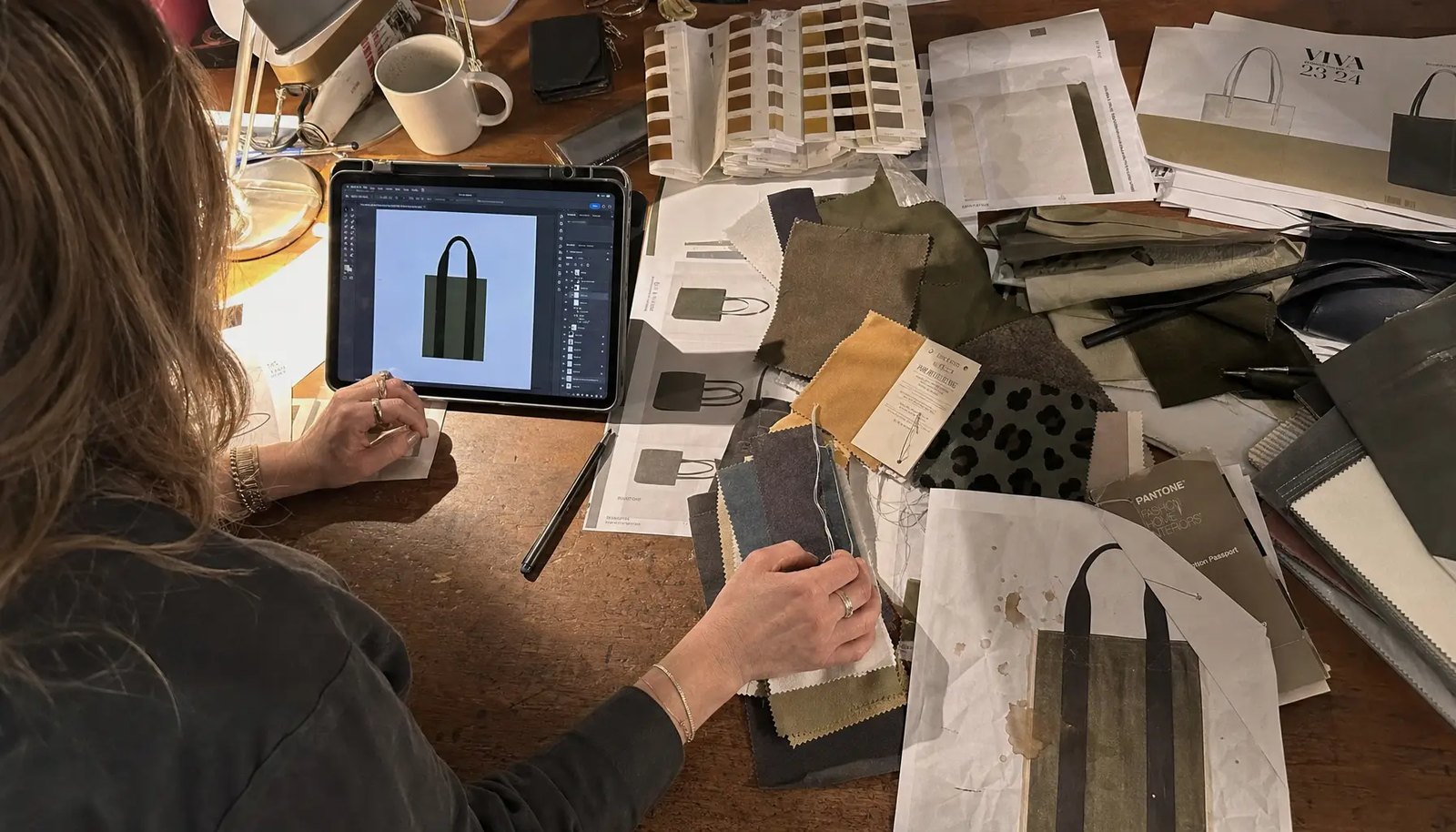
Proofing Is a Production Gate
Trade show totes do more than carry a logo. They hold catalogs, drinkware, samples, apparel, sponsor inserts, and sometimes retail purchases while moving through a crowded public aisle. A print error, weak handle, muddy color, or mixed carton is visible immediately and usually cannot be corrected once the freight reaches the event warehouse.
For procurement teams, proofing is the point where artwork, canvas texture, ink behavior, sewing sequence, packing, and delivery rules become one controlled specification. A digital proof can confirm copy, scale, and placement direction. It cannot show how ink absorbs into natural canvas, whether a transfer film edge is acceptable, or whether a QR code scans after the bag has been folded.
The goal is not to remove every natural feature from cotton canvas. Slight slubs, shade character, and hand-feel variation may be acceptable when they are defined in advance. The real goal is to prevent avoidable surprises that affect brand presentation, carrying function, receiving accuracy, or show setup.
- Use proof approval as the release point for bulk production.
- Approve print behavior on the selected canvas, not only on a white artboard.
- Name the controlling color reference before production starts.
- Tie each proof to an artwork code, revision date, bag size, and PO.
- Include packing marks when several designs or destinations ship together.
Write the Tote Spec as a Finished Product
A useful RFQ starts with the finished tote, not a loose phrase such as natural canvas shopper. State the intended use first: booth giveaway, sponsor bag, conference kit, retail merchandise, or reusable grocery-style carrier. The contents determine body size, gusset depth, handle drop, reinforcement, canvas weight, and carton packing.
Finished dimensions need a measurement method. One supplier may measure a bag flat; another may measure it expanded. A dyed or washed canvas tote may shift after finishing, while pressing can change how the gusset sits. Write the final width, height, side or bottom gusset, and tolerance in millimeters, and state whether the bag must stand open, fold flat, or fit inside a kit carton.
Fabric should be specified in both oz rating and finished GSM because suppliers may use weight terms differently. Many exhibitor grocery totes use 10 oz to 12 oz canvas as a practical starting range, but the right weight depends on load, desired feel, print method, and freight cost. Lighter canvas may suit budget handouts; heavier canvas can feel more premium but increases bulk and carton weight.
Composition matters too. Conventional cotton, organic cotton, recycled cotton blend, recycled polyester blend, and cotton-poly canvas can differ in strength, stiffness, linting, shade, and print response. Natural canvas changes the appearance of light ink colors, while dyed canvas adds dye-lot control and may require higher minimums.
- Specify finished width, height, gusset depth, handle drop, handle width, and reinforcement.
- Request finished GSM and oz rating after finishing.
- Identify fabric color, composition, weave character, and finishing method.
- Confirm whether size is measured flat, expanded, before wash, after wash, or after pressing.
- Attach the approved swatch reference to the quote and purchase order.
Match Print Method to Artwork Risk
Screen printing is often efficient for one to three solid logo colors at trade show volumes. It can deliver strong opacity and repeatable color, but fine lines, tight reversed text, small legal copy, and delicate halftones may fill in on textured canvas. Ask the supplier to mark risk areas before screens are made.
Heat transfer can be practical for full-color graphics, gradients, shadows, or sponsor artwork that would be expensive to separate. The tradeoff is hand feel and aging behavior. Transfers may show a film edge, feel heavier, crack through folds, or block when packed tightly before fully stable. The proof should be folded and stacked, not only photographed flat.
Digital print can work when the supplier has a tested fabric preparation, ink system, and curing process for the selected canvas. It should not be assumed to behave like printing on paper, coated nonwoven, or polyester. Ask about pretreatment, rub resistance, color control, and whether the supplier has printed the same canvas weight and color before.
Artwork may need practical adjustments. Large solid ink areas can feel stiff or show uneven coverage. Sponsor lockups may need more spacing. QR codes should be high contrast, large enough for the fabric texture, and tested after printing and folding.
- Use screen print for bold solid-color marks and event logos.
- Use heat transfer for complex color only after checking film edge, hand feel, cracking, and blocking.
- Use digital print after confirming pretreatment, curing, rub resistance, and color on the chosen canvas.
- Ask whether a white underbase is needed on natural, dark, or dyed canvas.
- Document screen count, print area, ink colors, transfer materials, and setup charges.
Make the Artwork Proof Measurable
A polished front-view mockup is not enough for production. The proof should tell the print room exactly what to print and tell inspection exactly what to measure. Include finished bag size, panel orientation, print width and height in millimeters, distance from the top edge, side reference or centerline, color references, print method, and whether the artwork appears on one side or both sides.
If the factory prints on cut panels before sewing, the proof must allow for seam allowance, gusset folding, and final centering after assembly. If the factory prints on finished bags, the proof should note limitations from handles, seams, folds, and the bag opening. A design that appears centered on a flat panel may shift visually when the gusset opens.
File control is equally important. Logos and text should be supplied as AI, EPS, or editable PDF files where possible. Fonts should be outlined, strokes expanded, and placed images linked or embedded correctly. A low-resolution image from a presentation can force redrawing and invite interpretation errors.
Multi-exhibitor programs need version discipline. Booth numbers, sponsor tiers, distributor names, co-branded panels, language versions, and regional marks should each carry a unique artwork code. That code should appear on the proof, quote, PO, sample tag, carton mark, and inspection sheet.
- State print size in millimeters, not only visual scale.
- Reference placement from top edge, side seam, centerline, bottom fold, or handle stitch points.
- Assign an artwork code and revision date to every design.
- Confirm one-side print, two-side same print, or two-side different print.
- Require a revised proof after artwork, size, fabric color, placement, or print method changes.
Approve Samples That Prove Real Variables
A physical sample is the strongest control when brand presentation and event function matter. The preferred pre-production sample uses the intended canvas, fabric color, print method, ink or transfer system, curing process, handle construction, and sewing details. If timing requires a substitute material, label that sample as a shape sample only and do not use it to approve color, print edge, or hand feel.
Sample review should be measured, loaded, folded, and handled. Record finished width, height, gusset depth, handle drop, handle width, print size, and print placement from fixed references. Look at the bag flat and with expected contents inside. A logo may seem centered on an empty tote but appear low, stretched, or distorted when the gusset expands.
Simple handling checks catch problems early. Fold the tote the way it will be packed. Stack printed faces if that is part of the carton plan. Look for blocking, transfer, cracking, pressure marks, or rub-off. Scan any QR code after printing and again after folding.
Control samples need clear labels. The buyer should keep one approved sample, and the factory should keep one sealed reference sample. Each should list artwork code, fabric reference, print method, sample date, approval date, and approver.
- Use a full pre-production tote when placement, handles, gusset, and print all matter.
- Use a strike-off when the main question is color, edge quality, coverage, or transfer behavior.
- Measure the sample before approving it.
- Load the tote with expected show contents and check handle comfort.
- Fold, stack, rub, and scan before release.
- Seal and label the approved reference sample for inspection.
Set Tolerances Before Production Starts
Canvas totes are sewn textile products, so some variation is normal. The procurement task is to define where acceptable variation ends. Tolerances should be approved before bulk printing because printed panels, sewn bodies, and packed cartons are difficult to correct once production is moving.
For many standard front-panel prints, buyers may use supplier-dependent starting points such as about +/-5 mm for placement and about +/-3 mm for print size, then adjust for artwork detail, bag size, fabric behavior, sewing sequence, and print process. Finished bag dimensions may need a different range because cutting, sewing, dyeing, washing, humidity, and pressing all affect the final shape.
Handle drop deserves its own tolerance. Even a small mismatch between paired handles can make the tote look uneven and feel awkward. If the bag is intended for shoulder carry, the approved drop should be checked over a jacket or event uniform, not only by hand.
Color tolerance should rely on a named physical reference. Pantone books are printed on controlled paper, while canvas is textured and absorbent. Natural canvas has a warm base shade, and dyed canvas can vary by lot. For strict brand colors, a printed strike-off or approved finished sample is often the better control.
- Define tolerances for bag size, gusset depth, print size, placement, handle drop, and paired-handle difference.
- State the measurement method for every dimension.
- Name the controlling color reference and lighting condition.
- Classify wrong artwork, inverted print, broken handle, open seam, and unusable QR code as major defects.
- Define acceptable natural canvas slubs, shade character, and small thread ends.
Inspect Function, Not Only Appearance
A tote can photograph well and still fail at the show. Exhibitor grocery totes are loaded quickly, passed between staff and visitors, and often carry more than a light flat giveaway bag. Handle attachment, seam strength, bottom shape, and print durability need written QC attention in the RFQ and PO.
Load testing should match expected use. The buyer and supplier should agree on weight, duration, lifting method, and failure criteria. Failure may include broken stitches, seam opening, handle tearing, fabric distortion, or stress that affects normal carrying. Do not rely on a vague statement that the bag is strong enough.
Print durability checks are simple but valuable. Dry rub can show excess pigment or weak curing. A light scratch check can reveal poor adhesion. Folding through the print can expose cracking. Stacking checks can reveal blocking where printed surfaces stick to adjacent bags, especially when cartons are tight or shipping conditions are warm.
Sewing inspection should cover skipped stitches, broken threads, loose handle ends, inconsistent handle drop, raw edges where not approved, uneven gussets, and needle damage. If bar tacks, box stitching, or cross stitching are specified at handle attachments, inspectors should confirm that reinforcement is present and consistent.
- Run load or handle pull checks using defined weight, duration, and pass/fail rules.
- Inspect reinforcement, stitch density, thread color, and handle balance.
- Check bottom seams and gusset corners because they carry loaded weight.
- Perform dry rub, fold, scratch, and stacking checks on the print.
- Verify labels, hangtags, side tabs, stickers, and barcodes against the approved sample.
Read MOQ and Quote Lines Closely
MOQ is shaped by fabric sourcing, dyeing, cutting yield, print setup, sewing line changeover, packing labor, and shipment splits. A simple natural canvas tote with one black print may price very differently from the same total quantity divided across several fabric colors, sponsor artworks, and destinations.
Ask how MOQ applies at each level: blank bag, bag size, fabric color, artwork, print method, and destination split. A supplier may be able to produce one common blank bag and then print several designs, but each artwork may still need a minimum quantity or setup charge.
A clear quote separates base bag cost from variable costs. Base cost includes fabric weight, body size, gusset, handle material, reinforcement, labels, thread, and sewing complexity. Print cost includes screens, separations, underbase, inks, transfer materials, print area, curing, and reject allowance. Packing cost may include inner bundles, individual polybags, hangtags, barcode stickers, carton labels, palletization, and sorting.
Freight should be discussed during quoting. Heavier canvas, deeper gussets, individual polybags, and flat packing can increase carton volume. Ask for carton quantity, dimensions, and gross weight before approving the order, especially if the event date may force air freight or expedited domestic delivery.
- Request MOQ by total order, size, fabric color, artwork, print method, and destination.
- Ask for price breaks at practical quantities such as 500, 1000, 3000, 5000, and 10000 pieces.
- Separate base bag price, setup, sample fee, packing, sorting, and split-shipment charges.
- Confirm whether dyed fabric has fabric MOQ or dye-lot minimums.
- Compare carton dimensions and gross weight as part of landed cost.
Plan Packing Around Event Receiving
Trade show tote programs often fail at receiving because packing was treated as an afterthought. Cartons may ship to a decorator warehouse, hotel, distributor, booth builder, brand office, or multiple exhibitor locations. If designs are mixed without clear labels, staff may lose valuable setup time opening cartons and sorting bags by hand.
Packing method affects presentation, cost, sustainability, and inspection. Flat packing can keep bags neater and easier to count, but it increases carton size. Folding reduces volume but may crease the logo or stress transfer prints. Individual polybags protect each tote and help with kit assembly, but they add cost, plastic, labor, and carton bulk. Counted inner bundles are often practical for booth handouts.
The packing approval should state units per bundle, bundles per carton, total cartons, carton dimensions, gross weight, folding method, mixed-carton rules, and exact carton mark wording. For multi-design orders, carton marks should include artwork code, bag color, quantity, PO, carton number, and destination.
Carton weight needs a practical check. Canvas totes can make cartons heavy, especially with 12 oz or 14 oz fabric. Overloaded cartons can burst, slow handling, or create receiving problems. For palletized shipments, confirm pallet height, stretch wrap, corner protection, and label visibility.
- Approve folding direction and avoid folds through heavy ink where possible.
- Use counted inner bundles for faster booth counting.
- Keep different artworks or destinations in separate cartons unless mixed packing is approved.
- Require carton marks with artwork code, item name, quantity, carton number, PO, and destination.
- Check warehouse labels, barcodes, pallet marks, and delivery appointment requirements.
Protect the Timeline From Late Changes
A printed canvas tote order moves through RFQ review, artwork check, digital proof, sample making, sample transit, buyer approval, fabric preparation, cutting, printing, sewing, finishing, inspection, packing, and shipment. Several steps cannot start cleanly until the previous approval is complete. For event orders, approval deadlines are nearly as important as arrival deadlines.
The PO should define when bulk lead time starts. Some suppliers count from deposit, others from artwork approval, and others from physical sample approval. For printed exhibitor totes, the cleanest release point is written approval of the final proof or pre-production sample with fabric, artwork, print method, quantity, packing, and shipment details complete.
Work backward from the required arrival date, not only the show opening date. Include event warehouse receiving cutoffs, domestic trucking, customs clearance, freight booking, final inspection, packing correction time, and sample transit. Rush freight may solve some transportation problems, but it cannot replace curing time, fabric availability, dyeing capacity, or sewing line space.
Change control should be direct. Any change to fabric color, bag size, print size, placement, artwork version, handle length, packing method, or destination split should trigger a revised proof and schedule check. That is how a small creative update stays from becoming a production or delivery issue.
- Set approval deadlines for artwork, color, sample, packing, and shipment release.
- Define the bulk lead time start point in writing.
- Allow time for sample transit, review, and one possible revision.
- Reserve final inspection time before shipment.
- Require revised proofs for artwork, size, color, placement, packing, or destination changes.
- Name the approver authorized to release bulk production.
Specification comparison for buyers
| Sourcing decision | Procurement control | Typical buyer starting point | Verify before PO |
|---|---|---|---|
| Canvas weight and fabric | State oz rating, finished GSM, composition, color, finishing, and approved swatch reference. | Many exhibitor totes use supplier-dependent 10 oz to 12 oz canvas; lighter or heavier fabric should be chosen by load, budget, and freight plan. | Confirm whether weight is measured before or after dyeing, washing, coating, pressing, or other finishing. |
| Finished size and gusset | Quote width, height, side or bottom gusset, measurement method, and tolerance in millimeters. | Grocery-style totes often need a gusset deep enough for catalogs, bottles, samples, or boxed items. | Check whether dimensions are measured flat, expanded, pre-wash, post-wash, or after final pressing. |
| Handle construction | Specify handle material, width, finished drop, reinforcement, stitch pattern, and paired-handle tolerance. | Handle drop is buyer-specific: hand-carry, shoulder-carry, and over-jacket carry need different targets. | Require a load or pull check based on expected event contents, not an empty-bag review. |
| Print method | Match process to artwork detail, print area, fabric color, opacity needs, and quantity. | Screen print suits solid logo colors; transfers suit complex art; digital print needs proofing on the chosen canvas. | Confirm minimum line width, reversed text height, underbase, curing, film edge, and rub performance. |
| Artwork proof | Use a measured proof with artwork code, revision date, print size, placement references, and color standard. | Digital proof controls layout; physical strike-off or pre-production sample controls print behavior. | Do not approve color, edge quality, QR readability, or hand feel from a monitor proof alone. |
| Placement tolerance | Define fixed measurement points on the bag and acceptable variation. | Supplier-dependent starting points may be around +/-5 mm for placement and +/-3 mm for print size on standard front prints. | Reference top edge, side seam, centerline, gusset fold, or handle stitch points to avoid subjective disputes. |
| MOQ and quote breaks | Separate MOQ by blank bag, fabric color, artwork, print process, and destination split. | Useful RFQ breaks often include 500, 1000, 3000, 5000, and 10000 pieces when relevant. | Watch for hidden setup, screen, sample, packing, sorting, and split-shipment charges. |
| Packing | Approve folding, bundle count, carton quantity, carton marks, gross weight, and destination labels. | For multi-design programs, keep one artwork or destination per carton unless mixed cartons are listed clearly. | Check event warehouse labels, barcodes, advance receiving rules, pallet marks, and delivery appointment needs. |
| Final inspection | Inspect against approved sample, PO, artwork proof, packing plan, and AQL-style defect classes. | Add functional checks for load, handle pull, rub, folding, QR scan, carton count, and label accuracy. | Visual inspection alone can miss weak curing, mixed cartons, handle imbalance, and wrong receiving marks. |
Buyer checklist before sampling
- Define finished width, height, gusset depth, handle drop, handle width, fabric color, composition, canvas weight, finished GSM, and measurement method.
- State the intended use: booth giveaway, sponsor bag, conference kit, retail merchandise, grocery-style reusable bag, or sample carrier.
- Send vector artwork in AI, EPS, or editable PDF format with outlined fonts, expanded strokes, Pantone references, print size, and fixed placement points.
- Confirm whether printing occurs on cut panels before sewing or on finished bags after sewing.
- Set tolerances for finished bag size, gusset depth, handle drop, handle length difference, print size, print placement, color, and natural canvas variation.
- Request a strike-off or full pre-production tote using the intended canvas, fabric color, print method, ink or transfer system, curing method, and handle construction.
- Approve color against a named physical reference under consistent lighting, not against phone photos or compressed image files.
- Require quote lines for base bag price, setup charges, sample charges, per-artwork MOQ, price breaks, production lead time, carton quantity, carton size, gross weight, and incoterm.
- Ask for minimum line width, minimum reversed text height, QR code size recommendation, underbase need, and expected registration tolerance on the selected canvas.
- Test load performance with realistic event contents such as catalogs, bottles, samples, apparel, or boxed promotional items.
Factory quote questions to send
- What are the finished GSM and oz rating after dyeing, washing, shrinking, coating, pressing, or other finishing?
- Is the quoted canvas natural, bleached, dyed, organic cotton, recycled cotton blend, recycled polyester blend, cotton-poly blend, or conventional cotton?
- Will bulk fabric match the submitted swatch for shade, stiffness, weave character, and hand feel?
- What is the MOQ per bag size, fabric color, artwork, print method, shipment, and destination split?
- Which print method do you recommend for this exact artwork on this canvas, and what risks should be proofed?
- How many screens, separations, transfer films, digital setup steps, or underbase passes are included?
- What minimum line width, reversed text height, halftone detail, registration tolerance, and QR code size can you hold on this fabric?
- Can you provide a strike-off or full tote pre-production sample using actual bulk fabric, ink or transfer system, and curing or pressing process?
- What are your standard tolerances for bag size, gusset depth, print placement, print size, handle drop, handle width, and handle length difference?
- What load or handle pull test do you normally run, and what weight, duration, and pass/fail criteria are used?
Quality-control points to confirm
- Fabric should match the approved swatch, stated composition, and agreed finished GSM tolerance, with no unapproved shade break, holes, severe slubs, oil marks, stains, or panel mismatch.
- Finished dimensions should be measured by the agreed method, such as laid flat and smoothed without stretching, with width, height, gusset depth, and handle drop within tolerance.
- Gusset shape, boxed bottom, side seams, and bottom fold should match the approved sample so the tote opens and carries like a grocery bag.
- Print placement should be measured from fixed reference points such as top edge, side seam, centerline, bottom gusset fold, or handle attachment points.
- Print size should match the approved proof within tolerance, with no unintended scaling, stretching, rotation, or distortion.
- Logo color should be compared under consistent lighting against the named controlling reference, such as Pantone, strike-off, fabric swatch, or approved finished sample.
- Print edges, small text, reversed areas, halftones, QR codes, and multi-color registration should match the approved sample within confirmed supplier capability.
- Print surface should pass agreed dry rub, light scratch, fold, and stacking checks without obvious flaking, powdering, cracking, blocking, ghosting, or transfer.
- Handles should be even, comfortable for the intended carry style, and attached with approved reinforcement, stitch density, thread color, and placement.
- Handle attachment should pass the agreed load or pull test without seam opening, broken stitching, fabric tearing, or visible stress that affects normal use.