Start with landed cost, not just the tote unit price
When tech startups source wholesale canvas grocery totes, the first quote often looks simple: a tote price, a logo price, and a shipping line. That simplicity is misleading. Canvas totes are bulky soft goods, so the way they are sewn, folded, packed, and cartonized can change freight cube, warehouse labor, and receiving time as much as the factory price does.
A useful RFQ asks for the full shipping unit. The buyer should request finished tote dimensions, canvas weight basis, print method, handle build, fold method, carton pack count, carton dimensions, carton gross weight, carton material, and lead time after sample approval. Those details let procurement compare landed cost instead of comparing incomplete quotes with different assumptions.
This matters especially for startup programs that ship to offices, 3PLs, retail pop-ups, or event warehouses. A carton that is too heavy to hand-manage or too large to stack efficiently can create hidden costs after arrival. If the warehouse has to recount loose bags, split cartons, or re-bundle mixed packing, the “cheap” quote becomes expensive very quickly.
Carton planning should happen before final artwork approval. Tote size, fabric weight, handle thickness, gusset depth, polybag use, and fold count all affect carton cube. If any of those change later, the original freight estimate may no longer be accurate. Buyers should lock the product spec and the packing spec together before production starts.
- Compare quotes on packed carton cost, not only unit price.
- Ask for carton dimensions, gross weight, and pack count in the first RFQ.
- Treat fold method, bundle count, and carton label placement as controlled specs.
- Confirm whether cartons are designed for hand loading, palletization, or container loading.
- Require actual packed measurements before freight booking, not only quotation estimates.
Define the canvas in terms the factory can measure
The word “canvas” is broad. It can refer to natural cotton canvas, dyed canvas, washed canvas, or blends with different surface behavior and sewing performance. For reusable grocery totes, a practical starting point is 10 oz to 12 oz cotton canvas, roughly 280 to 340 GSM finished weight. That range usually gives a structured feel without driving unnecessary sewing difficulty or freight weight.
The key word is finished. Some suppliers quote greige weight, some quote dyed weight, and some quote fabric after washing, printing, or finishing. Those values are not always the same. Dyeing, washing, and finishing can change weight, shrinkage, and print performance, so buyers should always ask which basis is being used. Two quotes can look equal on paper while describing different fabric states.
Tolerances should be written into the PO, not assumed. Many buyers use around ±5% for fabric weight where the supplier and mill can support it, and around ±10 mm for cut-and-sew dimensions such as width, height, gusset, and handle drop. The exact number depends on the bag design, but the principle is the same: measure the target and the tolerance before bulk cutting begins.
Heavier is not automatically better. A 14 oz canvas tote can feel premium, but it also increases fabric usage, sewing time, carton weight, and shipping cube. For a tote meant to carry groceries, onboarding gifts, or event merchandise, 10 to 12 oz is often the more balanced sourcing range. It is usually strong enough for repeated use without creating unnecessary freight friction.
- Specify cotton canvas by finished GSM or oz/yd², not by the word “canvas” alone.
- Ask whether the fabric is natural, dyed, washed, bleached, organic, recycled blend, or treated.
- Require swatches when handfeel, shade, or print absorption matters.
- State acceptable fabric weight and dimensional tolerances in the PO.
- Avoid comparing quotes until each supplier confirms the same fabric basis.
Lock the tote construction before asking for final pricing
Small construction changes create meaningful cost changes. A tote with a gusset uses more fabric than a flat bag. A wider handle uses more material and changes fold thickness. A turned hem, reinforced handle join, or inside binding can improve durability, but each one affects labor and sometimes carton bulk. If the RFQ says only “standard canvas grocery tote,” suppliers will fill in the blanks differently and the quotes will not be comparable.
A serious spec should include finished width, finished height, gusset depth, handle length or handle drop, handle width, handle material, seam type, top edge finish, reinforcement method, print area, label placement, and packing method. If the tote needs to stand upright when loaded, carry boxed items, or survive repeated use, say so. Those use cases often require a stronger gusset and more robust seams than a giveaway tote.
Handle construction is one of the most important durability choices. Cotton webbing handles or self-fabric handles can work well, but the join should be reinforced with a box-x, cross-stitch, or bar tack pattern appropriate to the design. Handle width is often 25 to 38 mm. Narrower handles may cut into the hand or shoulder, while wider handles add bulk and can affect carton count. Handle drop for shoulder carry is often around 230 to 280 mm, but it should match the tote height and use case.
Buyers should also ask about thread, stitch density, and seam allowance. Not every factory will list those details in a first-pass quote, but it should be able to explain how the bag is reinforced and how the sample will be tested. A tote intended for groceries or mixed retail items should not be built like a light conference giveaway.
- Prepare a one-page spec sheet before sending artwork.
- Include width, height, gusset, handle drop, handle width, seam type, and reinforcement method.
- Use box-x, cross-stitch, or buyer-approved reinforcement at handle joins.
- Define whether the top hem is turned, bound, or otherwise finished.
- Confirm if the design is flat, gusseted, or intended to stand when filled.
Choose branding based on artwork, not habit
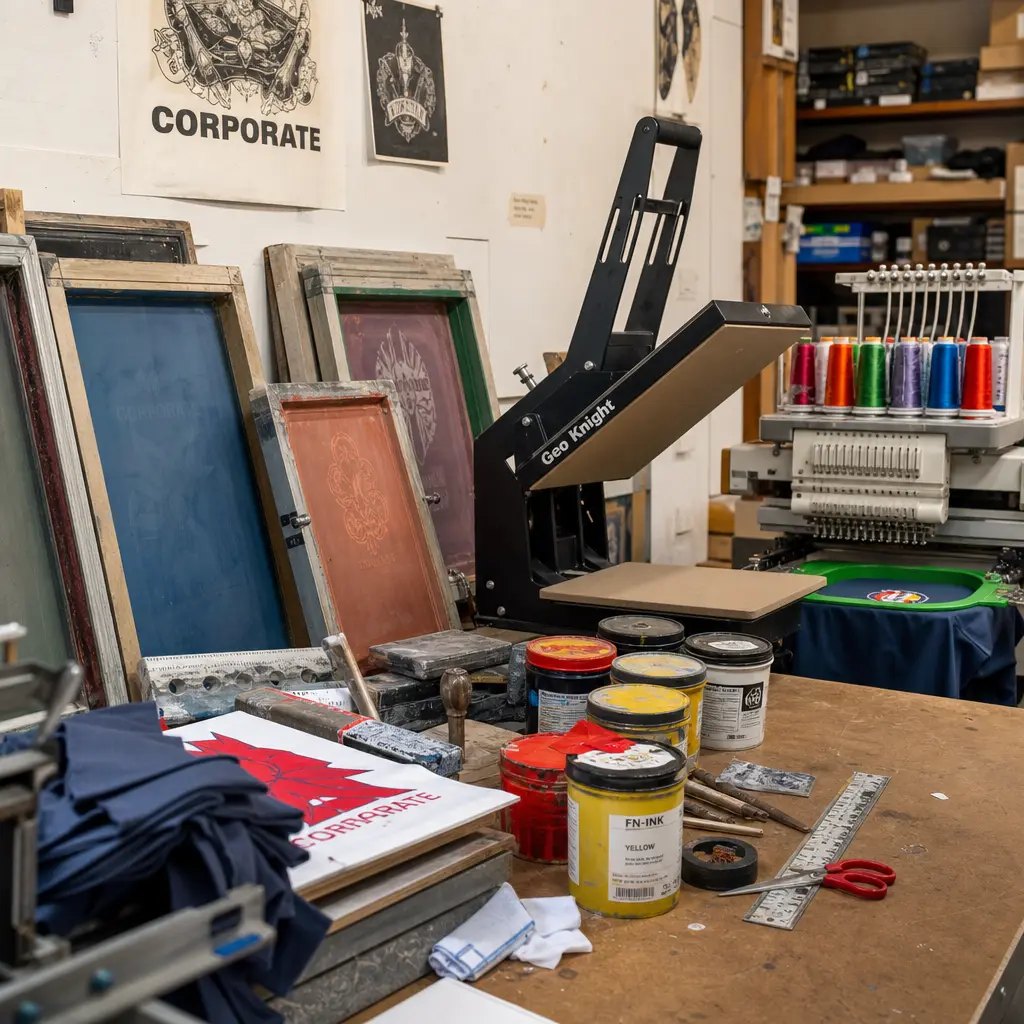
For most startup logos on canvas grocery totes, screen printing is the practical default. It handles bold graphics, flat color, and repeat programs well. A simple 1-color or 2-color screen print is usually easier to control than a complex full-color design on textured canvas. The limitation is that the fabric texture can break up small type, thin lines, gradients, and tight registration, so the supplier should review the art before screens are made.
A strike-off on actual canvas is more useful than a digital mockup. A mockup helps with placement, but it does not show ink absorption, opacity, edge sharpness, or how the design sits on textured fabric. If color matters, the buyer should provide a Pantone reference and approve a physical sample under daylight or D65-type lighting. On natural canvas, the background tone affects the perceived color, so the approved physical sample is more reliable than a screen image.
Heat transfer can work for short runs or changing artwork, but it should not be chosen only because it looks clean in a mockup. Transfers can crack, lift, or show edge film if the material or pressing conditions are poor, especially after folding and use. If heat transfer is selected, the buyer should inspect folded samples and rub-tested samples, not just freshly pressed pieces.
Embroidery and woven labels are also valid options. Embroidery can look premium for small logos, but dense stitching may pucker canvas or make the panel stiff. Woven labels are useful when the brand wants a subtle, durable identifier without a large printed graphic. The right branding method is the one that matches the artwork, order size, durability target, and packing behavior.
- Use screen print for bold 1-color or 2-color logos and repeat orders.
- Request a strike-off on actual canvas for color and edge approval.
- Set print placement tolerance, such as ±5 mm unless the design requires tighter control.
- Test heat transfer after folding, rubbing, and light abrasion.
- Consider woven labels for minimal branding and consistent repeat appearance.
Build carton planning into the quote math
Carton planning starts with a simple question: what is the shipping unit? For canvas grocery totes, the shipping unit is usually a master carton with a fixed number of folded bags. Buyers need the pack count, carton dimensions, gross weight, net weight, carton material, closure method, and carton marking. Without those details, freight estimates remain guesses and supplier comparisons stay incomplete.
A typical carton may hold 50 to 150 totes depending on tote size, fabric weight, gusset, handle bulk, fold method, and whether each bag is polybagged. There is no universal best pack count. A large pack count may reduce the number of cartons, but it can create overweight boxes or crushed corners. A smaller pack count may improve handling but increase the total carton count. The right balance depends on freight route, receiving process, and storage constraints.
Gross weight should be controlled, not accepted passively. In many warehouse environments, buyers try to keep cartons in a range that one person can manage safely, often around 18 to 22 kg where possible. That is not a universal legal limit, but it is a useful planning target. If the tote carton will exceed the receiving team’s handling preference, the pack count should be reduced or the goods should be palletized differently.
Carton dimensions should also be checked against pallet patterns and storage. A carton that looks efficient by itself may create overhang or poor layer utilization on a pallet. If the shipment goes to a 3PL, ask for its receiving rules: maximum carton weight, label location, barcode format, pallet height, pallet type, and whether mixed SKUs are allowed. A carton plan only works if it functions after arrival.
- Request pack count, carton L×W×H, gross weight, net weight, and carton material.
- Calculate cube per carton and total shipment cube before confirming the PO.
- Avoid overweight cartons that slow receiving or increase damage risk.
- Check whether carton size works on the intended pallet size.
- Confirm carton labels and markings required by the warehouse or 3PL.
Use fold method, bundling, and polybags to control cube
Fold method affects cube, presentation, and print behavior. A flat-folded tote often packs neatly and protects the front graphic, but too much compression can create visible creases. A half-fold may reduce carton length but add thickness. Rolling can look attractive for retail presentation, yet it is usually inefficient for bulk freight. The fold method should be chosen deliberately and documented with photos or a packed sample.
Individual polybags are another decision point. They can protect light-colored canvas, keep barcode labels attached, and support retail-ready distribution. But they add labor, material, and carton volume. If the tote goes into a corporate event kit or a retail shelf, polybags may be justified. If the order is bulk stock for internal distribution, bundled packing is usually more efficient if it does not damage the print or crease the bag too much.
Inner bundles can make receiving faster. Many buyers use bundle counts such as 10, 20, or 25 pieces depending on tote size and warehouse preference. That helps the receiving team count by bundle instead of bag by bag. However, a tight bundle can mark the fabric or crack ink if curing is weak, so the bundle method should be tested during sample approval or early production.
The carton contents list should cover more than the tote itself. Are hangtags included? Is each tote barcoded? Are desiccants needed because of ocean transit or humid storage? Are recycled polybags required? Are carton marks printed or labeled? Every added item can have its own MOQ, lead time, and defect risk. A clean contents list reduces the chance of a late dispute.
- Approve fold direction and fold count with the sample or packed reference photo.
- Use individual polybags only when protection, scanning, or retail presentation requires them.
- Consider bundle counts such as 10, 20, or 25 pieces for easier receiving.
- Confirm whether inserts, hangtags, barcode labels, and desiccants are included.
- Check that folding and bundling do not crack, transfer, or crease the print.
Compare MOQ and sourcing route against the real cost stack
MOQ is rarely one number. For canvas grocery totes, there may be separate minimums for stock fabric, custom dyed fabric, custom woven labels, print setup, special thread, hangtags, polybags, and printed cartons. A supplier may agree to sew 300 totes from stock natural canvas, but custom dyed fabric may require a much larger booking. A woven label supplier may also have a minimum that does not match the tote factory’s minimum.
For tech startups, stock natural canvas with custom screen print is usually the lowest-risk launch path. It keeps sampling faster, reduces color-development risk, and avoids committing too early to a custom fabric. Once the program proves demand, the buyer can consider dyed canvas, custom webbing, private labels, or more elaborate packaging. The best sourcing route is the one that matches the order’s maturity.
Factory-direct sourcing can improve control when the factory handles cutting, sewing, printing, and packing in-house or through stable partners. Trading routes are not automatically wrong, but the buyer needs to know who controls each step. If printing is subcontracted and packing is done elsewhere, the carton plan may be harder to keep consistent across reorders. Buyers should ask exactly where each step happens.
When comparing quotes, separate product cost from setup cost. A low unit price may exclude screen charges, sample fees, courier charges, carton labels, palletization, inspection support, or export paperwork. Procurement should ask for a line-by-line quote so each supplier is judged on the same scope. This is especially important for shipping carton planning, because the carton is part of the costed product, not an afterthought.
- Ask for separate MOQ by fabric, print, label, trim, and carton component.
- Use stock canvas for launch tests and custom fabric for stable repeat programs.
- Clarify whether production is factory-direct or includes trading and subcontracting layers.
- Compare setup fees, sample fees, packing costs, and carton costs separately.
- Do not accept a low MOQ until lead time and component availability are confirmed.
Treat sample approval as the control point
A pre-production sample is not just a pretty approval piece. It is the control standard for fabric handfeel, finished size, handle drop, stitching, print quality, label placement, and fold behavior. If the approved sample is not tied to a measured spec sheet, the factory may treat it as visual guidance rather than a binding reference.
The most useful sample package includes a fabric swatch or fabric record, one completed tote, a print strike-off if branding matters, and a packing reference. For carton-sensitive programs, the buyer should request a packed carton sample when practical, or at least photos showing the fold method, bundle count, carton label, and closure method. A tote approved loose on a table can behave differently when folded under pressure with 100 other bags.
Sample comments should be measurable. Instead of saying “make the logo a bit higher,” say “move the logo center 20 mm upward from the current sample” or “place logo center 150 mm below the top edge.” Instead of saying “the handle feels short,” state the required handle drop. Those comments should become the revised spec sheet, and the supplier should confirm the version before bulk cutting.
For time-sensitive launches, teams often want to skip sample revisions. That is risky when the tote is branded and the carton plan affects freight. If the sample is wrong, production usually repeats the same wrong assumption at scale. A few days spent clarifying the sample can prevent weeks of sorting, rework, or warehouse issues after arrival.
- Approve a physical tote sample before mass production for important orders.
- Tie sample approval to a dated spec sheet and artwork file version.
- Use measured comments, not vague visual feedback.
- Request a packed carton sample or packed-photo reference when freight cube matters.
- Do not release bulk production until fabric, print, and packing assumptions match the PO.
Set inspection criteria before the goods are packed
Quality control for canvas grocery totes should cover three areas: construction, branding, and packed carton accuracy. If inspection focuses only on the front logo, it may miss weak handles or the wrong carton count. If it focuses only on sewing, it may miss color drift or misaligned print. A useful QC checklist follows the way the bag will be used and received.
For construction, inspectors should measure finished size, gusset, handle drop, and handle width on a representative sample. They should check handle reinforcement, side seams, top hem, skipped stitches, loose threads, open seams, needle damage, and fabric defects. A load test should be agreed in advance. For example, the buyer may require the tote to hold 8 to 12 kg for a defined time without popped stitches or tearing, depending on the intended use. The standard should be buyer-approved, not assumed by the factory.
For branding, print placement and color must be checked against the approved sample. A practical placement tolerance may be around ±5 mm from the approved center point, though some artwork needs tighter control. Color should be viewed under daylight or D65-type lighting when possible. On natural canvas, slight background variation can change how ink color looks, so the approved physical sample is often more reliable than a screen display.
For packing, inspectors should open at least one sealed production carton, count the units, verify bundle count and fold direction, inspect carton label placement, and repack it. They should also measure actual carton dimensions and gross weight. These numbers should be sent to the buyer before freight booking. If the actual carton cube differs from the quote, freight cost and pallet planning may need to change before pickup.
- Inspect construction, branding, and packed carton accuracy together.
- Agree major, minor, and critical defect definitions before production.
- Use AQL only if the buyer and supplier agree the levels and defect classes.
- Open a sealed carton during final inspection to verify count and fold method.
- Record actual carton dimensions and gross weight before shipment release.
Plan lead time around approvals, not a factory slogan
A realistic lead time for standard wholesale canvas grocery totes is often 25 to 40 production days after sample approval, depending on fabric availability, order quantity, print complexity, and packing requirements. That does not include artwork prep, sample making, sample courier transit, revision time, material booking, final inspection, export packing, and freight booking. Those steps can add meaningful calendar time before the shipment actually leaves the factory.
Custom dyed canvas, washed finishes, special labels, embroidery, retail packaging, or printed cartons can extend the schedule. The delay may come from a component supplier rather than the sewing factory. The factory may be ready to cut fabric, but woven labels or custom polybags may still be in transit. Procurement should ask for a staged timeline: sample, materials, bulk production, packing, final inspection, and shipment readiness.
Startup launch dates are often fixed: a conference, investor event, product release, onboarding wave, or retail drop. Working backward from that date is safer than asking for the fastest possible shipment. Buyers should leave buffer for sample revisions and inspection. If air freight becomes the fallback, carton cube and gross weight matter even more because chargeable weight can be driven by volume, not only actual weight.
Repeat orders move faster only when the spec stays stable. Changing a fold method, carton size, logo position, label type, or fabric shade can reset approvals and disrupt the packing math. For replenishment programs, keep a master spec file with approved sample photos, measurements, artwork, carton plan, and inspection notes. That file is the best defense against drift across reorders.
- Separate sample time, production time, packing time, inspection time, and freight booking time.
- Plan 25 to 40 production days after sample approval for many standard canvas programs.
- Add buffer for custom fabric, dyeing, labels, embroidery, or retail packaging.
- Do not commit to a launch date until sample and carton assumptions are approved.
- Use the same master spec file for reorders to protect consistency.
Specification comparison for buyers
| Spec decision | Procurement-grade target | When it fits | Quote or QC risk to control |
|---|---|---|---|
| Fabric weight | 10 oz to 12 oz cotton canvas, roughly 280 to 340 GSM finished weight; agree a tolerance such as ±5% if the supplier can hold it | Reusable grocery, employee store, event shop, and merch programs that need structure without excessive freight cube | Confirm whether the number is greige, dyed, washed, printed, or finished weight; compare quotes only on the same basis |
| Finished tote dimensions | Typical grocery range: 380 to 420 mm wide, 380 to 450 mm high, 80 to 150 mm gusset; dimensional tolerance often around ±10 mm on cut-and-sew goods | Programs carrying groceries, boxed accessories, notebooks, and mixed retail purchases | Approving only a mockup can miss real size shifts that affect fabric usage, fold size, and carton count |
| Handle construction | Cotton webbing or self-fabric handles, usually 25 to 38 mm wide, with a handle drop around 230 to 280 mm for shoulder carry; box-x, bar tack, or cross-stitch reinforcement | Bags expected to carry heavier loads or be used repeatedly | Handle joins fail first; require a load or hanging test that matches the buyer’s use case |
| Print method | 1 to 2 color screen print for simple startup logos; water-based or plastisol ink depending on handfeel and supplier capability; approve a strike-off on actual canvas | Repeat orders, clean logos, and artwork where durability matters | Set print position tolerance, color reference, and curing method before bulk production |
| Alternative branding | Woven side label, small embroidery, or heat transfer when the artwork and volume justify it | Minimal branding, short pilots, or premium presentation | Heat transfers need folding and rub testing; embroidery can pucker canvas if stitch density is wrong |
| Fold and packing method | Flat fold or controlled bundle fold; avoid individual polybags unless retail display, barcode scanning, or moisture control requires them | Ocean freight, warehouse storage, and replenishment programs where cube and receiving speed matter | Different folds change carton dimensions and crease risk; include fold direction and bundle count in the approved packing spec |
| Carton pack count | Commonly 50 to 150 pcs per export carton depending on size, GSM, and fold; keep manual-handling cartons near 18 to 22 kg where possible | B2B shipments to 3PLs, offices, event warehouses, and retail distribution points | More pieces per carton can lower carton count but create overweight boxes or crushed corners |
| Carton material | Export-grade corrugated carton; double-wall for heavier cartons, long transit, or high stacking | International freight, warehouse stacking, or mixed freight routes | Single-wall cartons may be fine for light domestic moves but can deform under long ocean or warehouse stacking |
| MOQ route | Stock natural canvas with custom print for lower MOQ; custom dyed canvas, woven labels, or special packaging for higher planned volumes | Launch tests, employee kits, event drops, and repeat merchandising programs | Separate MOQ for fabric, sewing, printing, labels, and carton printing; one low MOQ may not apply to every component |
Buyer checklist before sampling
- Define finished tote size, gusset depth, handle drop, handle width, seam construction, and reinforcement style before asking for pricing.
- Confirm finished canvas weight in GSM or oz/yd² and state whether it is greige, dyed, washed, printed, or finished weight.
- Set tolerances in the PO for dimensions, fabric weight, print placement, color, carton count, and visible defects.
- Specify print method, number of colors, Pantone reference, logo position, and whether a strike-off is mandatory.
- Require the supplier to quote carton pack count, carton dimensions, gross weight, carton material, label position, and pallet pattern if palletized.
- Calculate carton cubic volume from supplier dimensions before comparing quotes; do not wait until freight booking to discover the cube.
- Confirm whether totes are flat-folded, half-folded, bundled, individually polybagged, or packed loose, and make that method part of sample approval.
- Ask whether polybags, desiccants, inserts, hangtags, barcodes, master carton labels, and carton marks are included, optional, or excluded.
- Separate MOQ for stock canvas, custom dyed canvas, printing, labels, trims, and carton printing so launch quantities stay realistic.
- Request a pre-production sample plus a fabric swatch or print strike-off before bulk cutting whenever artwork, color, or handfeel matters.
Factory quote questions to send
- What is the finished canvas GSM or oz/yd², and is it measured before or after dyeing, washing, printing, and final finishing?
- What fabric construction are you quoting: natural canvas, dyed canvas, washed canvas, organic cotton if requested, recycled cotton blend if requested, or another blend?
- What dimensional tolerance do you apply to the finished bag, gusset, and handle drop for bulk cut-and-sew production?
- What handle material, handle width, handle drop, thread type, stitch density, and reinforcement pattern are included in the quoted price?
- What load test do you recommend for this construction, and can you document a sample test with the approved tote?
- Which print method is included, how many colors, what maximum print area, and what surcharge applies for additional screens or larger artwork?
- Can you provide a print strike-off on the actual canvas, not only a paper proof or digital mockup?
- What print placement tolerance and color matching method will you use against Pantone, artwork file, or approved physical sample?
- What is the carton pack count, carton size, gross weight, net weight, carton material grade, and carton closure method?
- How many cartons fit per pallet, what pallet size did you assume, and what is the estimated pallet height and gross pallet weight?
Quality-control points to confirm
- Verify fabric weight against the approved specification, with an agreed tolerance such as ±5% where suitable; measure finished fabric basis, not an undefined greige value.
- Check finished dimensions on a representative sample from the production lot, including width, height, gusset, handle drop, handle width, and print location.
- Inspect canvas for oil marks, stains, mold odor, broken yarns, severe slubs, weak weave lines, uneven dyeing, needle damage, or unacceptable shade variation.
- Test handle attachment by a load or pull method agreed before production; reject popped stitches, fabric tearing, webbing splitting, or severe puckering at the join.
- Check stitching for even seam lines, no skipped stitches, loose thread nests, open seams, crooked top hem, sharp needle fragments, or seam allowance outside the approved construction.
- Measure print registration and placement against artwork; use an agreed tolerance such as ±5 mm unless the artwork requires tighter control.
- Check print color against the approved physical sample or Pantone reference under D65/daylight-type lighting, not only under warm factory floor lighting.
- Test ink curing or bonding with rub, fold, and light scratch checks appropriate to the print method; reject tacky, cracking, lifting, or transferring prints.
- Check woven labels, side labels, or hangtags for correct placement, readable artwork, clean edges, secure stitching, and no twisting after folding.
- Verify carton count against the packing list exactly; open at least one sealed production carton and confirm count, fold method, bundle count, and repacking quality.