Start With the Retail Route
A canvas grocery tote for hotel retail is a store SKU, a brand touchpoint, and a logistics unit. It may be sold in a lobby market, resort boutique, beach shop, spa store, pantry, conference store, or property gift shop. It may also be used in a welcome package or bundled with in-room retail items. Procurement should look beyond the pressed sample: the tote needs to feel good, carry real merchandise, scan correctly, arrive clean, and unpack without creating extra work for hotel teams.
The bag specification and carton packing plan should be developed together. A tote can look strong when empty and photographed, yet perform poorly if export packing crushes the print, bends the gusset, traps moisture, or creates cartons that are too heavy for property receiving. A supplier may also improve pieces per carton by compressing goods too aggressively, which can increase creased, stained, or misshapen units at destination.
Map the route before approving the design. Will the tote hang from a peg, sit folded on a shelf, stack beside the cashier, or stay in a back room for replenishment? Will cartons move through a central warehouse, ship directly to properties, or pass through a distributor? Does each property need its own logo, barcode, hangtag, price ticket, or carton mark? These answers affect size, folding, bundle count, carton dimensions, and landed cost.
- Treat carton packing as part of the product specification, not a warehouse detail added after production.
- State whether the tote will be sold folded, hung, stacked, bundled, or used as an amenity pack.
- Ask suppliers to quote FOB unit price and CBM per 1,000 pcs so freight impact is visible.
- Require folded size, inner bundle method, and packing photo before approving carton quantity.
- Confirm whether cartons will be opened centrally or shipped unopened to individual properties.
Specify Canvas the Factory Can Control
For hotel retail grocery totes, many buyers start with 10 oz to 12 oz cotton canvas, often about 340-410 GSM before washing or special finishing. This range usually feels more substantial than a light promotional tote while keeping sewing, folding, carton volume, and freight practical. An 8 oz canvas can work for a lower-price souvenir tote but may collapse on display. A 14 oz or heavier canvas supports a more premium resort feel, but it increases fabric consumption, fold bulk, CBM, sewing time, and sometimes needle-mark visibility.
Do not let the word canvas carry the specification. In supplier quotes, canvas may mean cotton duck, plain weave cotton, recycled cotton blend, cotton-poly blend, brushed cotton, or another heavy woven fabric. Ounce weight also needs cross-checking because suppliers may use square-yard convention, local shorthand, or marketing language. Request composition, GSM, ounce weight, weave type, finish, and whether the fabric is stock or made to order. Tie bulk production to the approved swatch and pre-production sample.
Natural canvas requires acceptance rules. Seed flecks, small slubs, and light shade movement may fit the intended look. Excessive dark flecks on the sellable front panel can make a hotel retail tote look stained. Bleached canvas looks cleaner but can show dirt, yellowing, and storage marks quickly. Dyed canvas needs lab dip approval, shade tolerance, and rubbing fastness checks, especially for black, navy, green, burgundy, and red.
- Budget retail tote: 8 oz cotton canvas, easier to fold but less structured.
- Standard hotel grocery tote: 10 oz to 12 oz canvas, about 340-410 GSM, balanced for handfeel and packing.
- Premium resort tote: 14 oz canvas or above, stronger body but higher CBM and slower sewing.
- Common GSM tolerance: +/- 5% when confirmed by the supplier; tighter control must be negotiated before quoting.
- Natural finish: define acceptable seed flecks, shade variation, odor, and front-panel cleanliness.
- Dyed finish: require lab dip approval, shade tolerance, rubbing fastness, and lot control.
Engineer Capacity and Handles
A grocery tote needs usable volume, not only a large front panel for a logo. A flat tote can quote cheaply and pack efficiently, but it behaves more like a document carrier than a grocery bag. For hotel markets and resort stores, a full side-and-bottom gusset usually gives better capacity, stronger shelf presence, and easier loading of boxed snacks, bottled drinks, folded apparel, spa items, and small gifts.
Finished size should be specified with tolerances. A common starting range is 35-45 cm wide, 30-40 cm high, and 10-15 cm deep at the gusset. Larger bags consume more fabric and increase carton CBM. Smaller bags may look economical but fail to support the intended retail price. Ask the supplier to measure the sample after pressing and show the tote lightly filled and folded.
Handles deserve early attention. A handle drop around 20-25 cm is common for hand carry or light shoulder carry, but the right drop depends on bag height, merchandise weight, and guest use. Self-fabric handles create a coordinated look. Cotton webbing handles can improve grip and durability, but they may create separate material MOQ, shade matching, and extra carton thickness. For grocery use, specify box-stitch, cross-stitch, bartack, or another approved reinforcement method.
- Use a full side-and-bottom gusset when the tote must stand, carry groceries, or look substantial on display.
- Agree finished-size tolerance, such as +/- 1 cm for body and gusset if realistic for the construction.
- Specify handle width, handle length, handle drop, material, stitch pattern, and reinforcement size in the RFQ.
- Define handle drop tolerance, commonly +/- 1-1.5 cm depending on construction and pressing.
- Ask for a practical load test using an agreed weight and time, then record the result against the approved sample.
Make Sewing Quality Measurable
Hotel retail buyers need a clean consumer product, not a rough utility sack. Common construction issues include uneven top hems, loose threads, skipped stitches, crooked handles, narrow seam allowance, inconsistent gussets, fraying internal seams, and weak reinforcement at stress points. These should be converted into measurable requirements before production begins.
Stitch density can be stated in stitches per inch or stitches per centimeter. The right number depends on fabric weight, thread, needle, and seam type, so procurement should avoid forcing an arbitrary figure without factory confirmation. Still, the purchase order should require the supplier to state the stitch density used on the approved sample and keep bulk production consistent. Seam allowance should also be defined, especially around gussets and handle insertion points.
Tolerances matter because canvas is cut, sewn, pressed, folded, and packed. Many tote programs use practical tolerances such as +/- 1 cm on body width, height, and gusset; +/- 1-1.5 cm on handle drop; and +/- 0.5-1 cm on print placement depending on artwork and production method. The exact tolerances should be agreed with the supplier and referenced in the inspection checklist.
- Record stitch density and seam allowance from the approved pre-production sample.
- Require reinforced handle joints and define whether box-stitch, cross-stitch, bartack, or a combined method is used.
- Set visual standards for skipped stitches, broken threads, loose threads, uneven hems, and puckering.
- Check gusset corners for clean turning and consistent shape after pressing.
- Separate critical safety defects, major functional defects, and minor cosmetic issues in the QC standard.
Match Print Method to Artwork
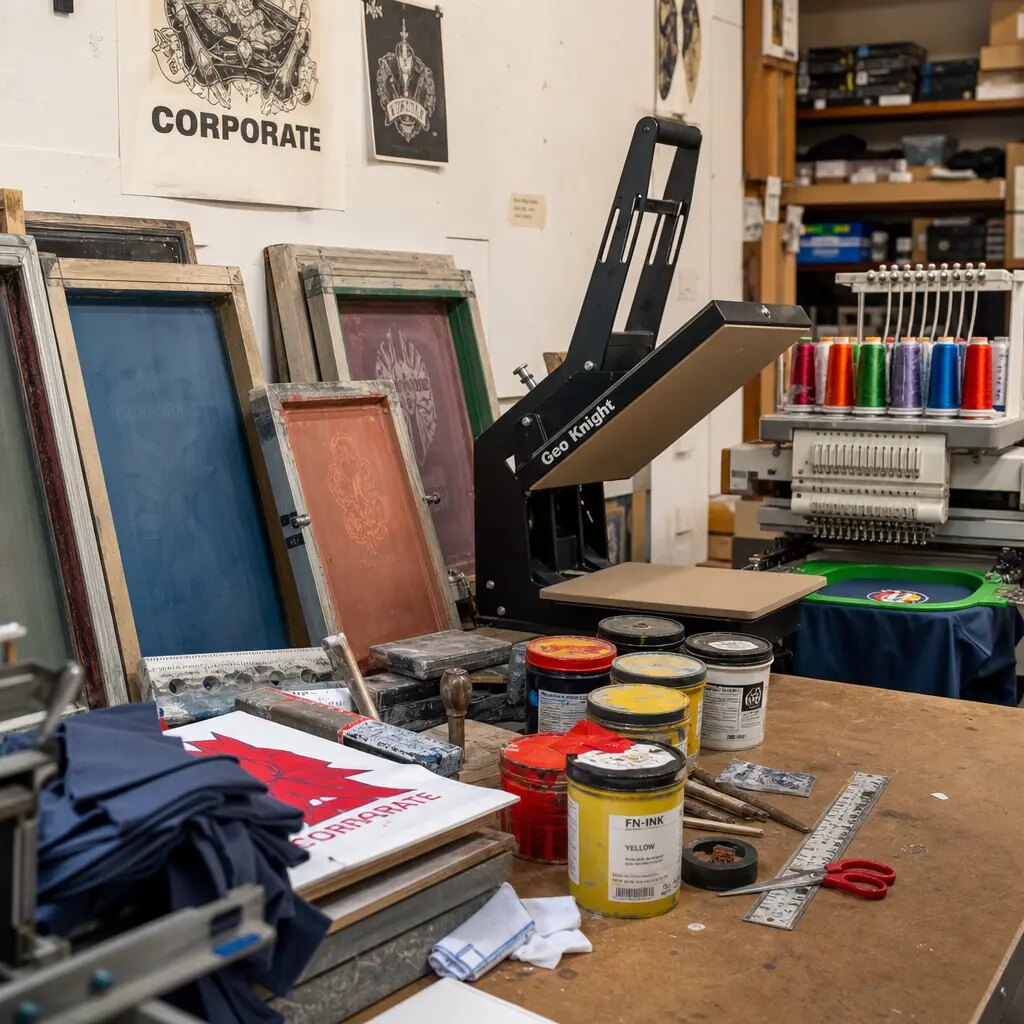
Most hotel retail canvas grocery totes use screen printing because artwork is often a property logo, destination name, line drawing, slogan, or one to three spot colors. Screen printing is cost-efficient for wholesale quantities and can look crisp on natural canvas when artwork is prepared correctly. A professional RFQ should define print size, placement from seams, number of colors, color references where required, ink type if known, and acceptable print texture.
Print placement must be checked with the folding plan. A large front graphic can look perfect flat but fail after packing if the fold crosses the main mark, if thick ink sticks under carton compression, or if handles rub against the print during transit. Before bulk printing, approve a strike-off on the actual canvas, then fold the sample exactly as planned for export packing. Inspect for cracking, ink transfer, scuffing, pressure marks, and any loss of retail appearance.
Heat transfer, digital print, and embroidery each have a place. Heat transfer can handle detailed multicolor artwork or smaller runs, but buyers should test edge adhesion and pressure marks. Digital print can reproduce illustrations, although canvas texture may reduce fine detail and color intensity. Embroidery can support a premium resort look for small logos, but large embroidery can pucker canvas, raise cost, and slow production.
- Screen print: best for solid logos, destination graphics, repeat orders, and controlled wholesale pricing.
- Heat transfer: useful for detailed multicolor art, but test adhesion, edge lift, handfeel, and compression marks.
- Digital print: suitable for illustrated artwork, but approve color on the actual canvas, not only on a proof.
- Embroidery: attractive for small premium marks, usually less suitable for large grocery tote graphics.
- Agree print placement tolerance, such as +/- 0.5-1 cm depending on method and artwork.
- Approve a print strike-off and folded sample before bulk printing starts.
Control MOQ Through SKU Discipline
MOQ is driven by fabric purchasing, dyeing, cutting efficiency, screen setup, thread changes, label preparation, sewing line organization, and packing labor. A buyer may request 300 pcs each for six hotel properties, but the factory may treat the order as six separate small productions if each property has a different fabric color, handle type, print placement, woven label, barcode format, or carton mark. That structure raises cost and increases the chance of mixed cartons, wrong labels, and delayed approvals.
For a first wholesale order, the cleanest route is often one blank tote specification with one fabric color, one finished size, one handle construction, and multiple property-specific prints. If the supplier can cut and sew the blank tote in one batch and then print by design, the buyer may get more consistent construction and simpler QC. Separate screen charges or smaller print-run costs may still apply, but the production route is easier to manage than multiple body specifications.
Custom dyed canvas is a major MOQ trigger. Dyeing requires lab dips, fabric-lot planning, shade approval, possible shrinkage checks, and colorfastness attention. Other MOQ triggers include custom webbing, special zippers, internal pockets, metal hardware, woven labels, washed finishes, contrast stitching, and unusual dimensions. Decide which details are retail-critical and which can be standardized.
- Lower-risk pilot: 500-1,000 pcs per design using stock natural canvas and standard construction.
- Better cost tier: 3,000-5,000 pcs total with shared blank bag specifications and consistent packing.
- Higher MOQ triggers: custom dyed fabric, custom handle material, woven labels, hardware, washing, pockets, or unusual dimensions.
- Multi-property program: consolidate the tote body and vary only the artwork where possible.
- Ask for MOQ per size, fabric color, handle color, print design, label type, and carton mark.
- Keep a SKU matrix separating shared blank specs from property-specific artwork and retail labels.
Build the Carton Packing Plan Early
Canvas grocery totes are bulky because fabric, gussets, hems, seams, tags, and handles do not compress evenly. A carton plan that looks efficient in a spreadsheet can crush lower layers, crease printed panels, distort gussets, or make cartons difficult to close without excessive force. The packing plan should be developed from the approved sample, not estimated from a different tote. Ask the factory to fold the finished tote in the intended method, pack a trial carton, and report carton dimensions, pieces per carton, gross weight, net weight, and CBM.
Export packing may be 50 pcs per carton for heavier structured totes and 100 pcs per carton for lighter or flatter totes, but there is no universal rule. The right count depends on GSM, finished size, gusset depth, handle thickness, print coverage, hangtags, barcode labels, inner bundle method, and whether individual polybags are used. For hotel retail, inner bundles of 10 or 20 pcs usually make receiving and shelf replenishment easier.
Carton protection should be specified before cartons are purchased. If individual polybags are avoided, a master carton liner can protect against dust and light moisture. Desiccant may be appropriate for long sea freight routes, humid seasons, or non-climate-controlled storage. Printed panels should be folded so the main artwork is not on a sharp pressure line. Carton marks should show PO number, SKU, design or property name, color, quantity, carton number, destination, gross weight, net weight, and carton dimensions.
- Require carton size in centimeters, not only pieces per carton.
- Ask for gross weight, net weight, and CBM by SKU and by total order quantity.
- Keep carton gross weight practical for manual handling; many buyers avoid cartons over about 18-22 kg where possible.
- Approve inner bundle quantity, such as 10 or 20 pcs, before cartons and labels are purchased.
- Use carton liners when totes are not individually polybagged.
- Confirm that the approved fold does not crease the logo, barcode, hangtag, or visible retail face.
Compare Landed Cost, Not Unit Price
A canvas tote quote can look attractive until freight and retail packing are modeled. Two suppliers may quote what appears to be the same 12 oz tote, but one may use a smaller gusset, lighter GSM, weaker carton, or aggressive compression to claim a better carton count. Another supplier may quote a slightly higher FOB price but include better inner bundles, carton liners, barcode placement, and lower damage risk. Compare landed cost per sellable bag, not only unit price per produced bag.
A complete quote sheet should include base unit price, quantity tiers, screen or setup charges, sample charge, hangtag cost, barcode label cost, woven label cost, price ticket cost, special carton mark cost, carton dimensions, pieces per carton, gross weight, net weight, total CBM, payment terms, sample lead time, bulk lead time, and inspection availability. If one supplier omits retail packing or carton data, that quote is not equivalent to a supplier who includes it.
CBM per 1,000 pcs is one of the most useful comparison metrics for importers, distributors, and hotel procurement teams. It shows whether a carton plan is efficient enough for ocean freight, warehouse handling, and property-level distribution. Buyers should also consider sellable yield. A low unit price is not cheaper if the goods need repacking, sorting, airing out, relabeling, or discounting because of stains, odor, creased prints, distorted gussets, or incorrect barcode labels.
- Compare FOB unit price together with CBM per 1,000 pcs.
- Request add-on costs separately: hangtag, barcode, woven label, inner bundle, desiccant, carton liner, and special marks.
- Ask whether sample charges or screen charges are refundable after bulk order confirmation.
- Model freight using actual carton dimensions, not estimated carton counts.
- Include expected inspection cost and potential repacking cost in the procurement comparison.
- Reject incomplete quotes or mark them as assumptions until the supplier confirms missing data.
Use Sample Approval Gates
A sample is not approved just because it looks good in a photo. Procurement should approve handfeel, fabric weight, finished dimensions, gusset depth, handle drop, print color, print position, label placement, stitch reinforcement, odor, fold method, and retail presentation. The strongest approval sample is a complete pre-production sample made with final fabric, final construction, final print method, final label or hangtag, final barcode placement, and the actual folding method planned for export cartons.
If the factory cannot make a full pre-production sample immediately, split approvals into controlled gates. First approve the fabric swatch for GSM, composition, finish, shade, and handfeel. Then approve a construction sample for size, gusset, handle, seam, and reinforcement. Next approve a print strike-off on the actual canvas. Finally approve a packing trial photo or packed carton sample. Each approval should be dated, named, and linked to the purchase order.
Simple physical checks prevent expensive disputes. Weighing a sample can flag whether the quoted fabric is plausible, although it does not replace GSM testing. Measuring handle drop and gusset after pressing catches sewing variation. Folding the sample as packed reveals whether the logo crosses a pressure line. A practical load test with realistic merchandise weight can expose weak handle stitching before bulk production.
- Measure finished width, height, side gusset, bottom gusset, handle length, and handle drop.
- Weigh the sample and compare it with expected canvas weight and bag size.
- Rub the print with a dry white cloth and a slightly damp white cloth to screen for curing problems.
- Fold the tote exactly as packed and inspect logo creasing, ink transfer, and gusset distortion.
- Scan barcode samples if retail labels are included.
- Approve at least one packing photo showing fold method, inner bundle, liner, carton fill, and carton marks.
Define QC and Defect Categories
Hotel retail buyers need clean, sellable product. Stains, oil marks, mildew odor, crooked logos, inconsistent handles, loose threads, yellowing, and poor folding can make a tote unsellable even if it technically holds weight. Natural canvas may include seed flecks and mild slub texture, but the buyer should define what is acceptable on the front panel, back panel, handles, and internal seams. If the front panel is the display face, defects there should be judged more strictly than small internal marks.
A practical inspection plan can follow general AQL sampling, but the defect definitions must be specific to canvas tote bags. Critical defects may include unsafe contamination, sharp metal, needle fragments, severe mold, or anything that could harm a user. Major defects may include wrong fabric, wrong size outside tolerance, wrong logo, severe print cracking, broken handle reinforcement, stains on the main panel, unreadable barcode, wrong carton count, or wet cartons. Minor defects may include small internal marks, light trim threads, or slight shade variation within the approved standard.
In-process QC is useful because tote defects are easier to fix before final packing. Fabric inspection can catch shade, odor, GSM, and weaving issues before cutting. Print checks can catch color, placement, opacity, and curing issues before final packing. Sewing checks can catch handle reinforcement and seam defects while the line is running. Final inspection should confirm finished goods against the approved sample and packing list, including SKU mix, labels, inner bundles, carton marks, carton condition, and total quantity.
- Fabric QC: GSM, composition, shade, finish, odor, stains, weaving defects, slubs, and front-panel cleanliness.
- Cutting QC: panel size, grain direction where relevant, gusset consistency, and fabric lot separation.
- Sewing QC: stitch density, seam allowance, skipped stitches, loose threads, handle reinforcement, and corner finishing.
- Print QC: color, registration, opacity, placement tolerance, curing, rub resistance, cracking, and scuffing after folding.
- Label QC: correct barcode, care label, hangtag, price ticket, property name, language, and SKU placement.
- Packing QC: correct quantity, inner bundle count, dry cartons, readable marks, liner use, carton condition, and packing list match.
Specification comparison for buyers
| Spec decision | Recommended option | When it fits | Buyer risk to check |
|---|---|---|---|
| Canvas weight | 10 oz to 12 oz cotton canvas, often about 340-410 GSM before washing or special finishing; confirm GSM tolerance in writing | Lobby markets, resort shops, pantry stores, spa retail, and reusable grocery positioning where the bag should feel retail-grade | The same ounce name may hide different fabric routes; require composition, GSM, weave, finish, color standard, and approved swatch tied to bulk |
| Finished size and gusset | Common starting range: 35-45 cm width, 30-40 cm height, 10-15 cm side/bottom gusset; agree finished tolerance such as +/- 1 cm where feasible | Hotel markets, beach shops, conference stores, and property merchandise where capacity and shelf presence both matter | Oversized bags raise fabric use and CBM; undersized or flat bags may look cheap; approve a lightly filled sample, not only a flat photo |
| Handle construction | Self-fabric or cotton webbing handles, 2.5-3.5 cm wide, with box-stitch, cross-stitch, or bartack reinforcement | Guests carrying snacks, bottles, towels, apparel, amenity items, or purchases around the property | Narrow handles, single-line stitching, or uneven handle drop create complaints; specify width, drop, stitch pattern, thread, and load test |
| Print method | Screen print for 1-3 spot colors; digital print, heat transfer, or embroidery only when artwork or positioning justifies it | Hotel logos, destination graphics, event marks, resort slogans, and repeat retail SKUs | Heavy ink can crack or transfer under carton pressure; approve strike-off, curing, rub check, placement tolerance, and folded trial |
| MOQ route | Use stock natural canvas and shared blank construction at 500-1,000 pcs per design where possible; better cost often appears at 3,000-5,000 pcs total | Hotel groups, distributors, and resort chains testing a retail SKU while keeping construction consistent | Different body colors, handle colors, labels, hangtags, carton marks, and print positions can create separate MOQs |
| Retail presentation | Carton liner plus inner bundles of 10 or 20 pcs; individual polybag only when required by channel, humidity risk, or storage route | Sustainability-sensitive hotel retail teams that need clean goods and fast counting | Unbagged natural canvas can pick up dust, odor, or moisture marks; specify clean handling, liner, desiccant rules, and dry storage |
| Carton packing | Flat fold or controlled half fold, typically 50-100 pcs per carton depending on GSM, gusset, handles, tags, and print position | Import programs where freight CBM and property receiving both affect landed cost | Over-tight cartons crease prints, distort gussets, and complicate receiving; approve carton dimensions, bundle count, fold direction, and packing photos |
| Carton specification | Export master carton with liner bag, readable marks, suitable board strength, and sealing method matched to route; 5-ply corrugated is often used for heavier tote cartons | Hotel groups and distributors shipping through warehouses before property-level delivery | Weak cartons, poor tape, wet cartons, missing marks, or mixed SKUs cause avoidable loss; require carton numbering and packing list format |
Buyer checklist before sampling
- Define finished bag size with tolerances for width, height, side gusset, bottom gusset, handle length, handle drop, print placement, and folded size.
- Specify canvas by composition, ounce weight, GSM, weave type, finish, color standard, shrinkage expectation if washed, and acceptable natural seed-fleck level.
- Confirm whether the tote must stand when lightly filled, hang on a peg, sit folded on a shelf, ship as back-room replenishment stock, or support a welcome amenity program.
- Choose handle type by use case: hand carry, shoulder carry, grocery weight, beach merchandise, conference materials, or light souvenir use.
- Select print method based on artwork detail, number of colors, ink coverage, fabric texture, fold line, and required durability.
- Consolidate fabric color, body size, handle type, label type, and print placement across properties whenever possible.
- Require one pre-production sample using final fabric, construction, print, label or hangtag, barcode placement, and folding method.
- Ask for quote tiers at 500, 1,000, 3,000, and 5,000 pcs, with per-design MOQ, per-color MOQ, screen charges, and label charges separated.
- Require carton data in every quote: pieces per carton, carton size in cm, gross weight, net weight, CBM, inner bundle quantity, and cartons per SKU.
- Set carton strength, liner, tape, master carton marks, desiccant rules, moisture-control expectations, and stacking requirements before cartons are ordered.
Factory quote questions to send
- What exact canvas fabric are you quoting: composition, ounce weight, GSM, weave type, yarn count if available, and natural, bleached, dyed, washed, or enzyme finish?
- Is the quoted fabric stock fabric or custom production, and can bulk use the same fabric route as the approved swatch and pre-production sample?
- What GSM tolerance do you control in bulk fabric, and how will GSM be checked before cutting?
- What finished bag size tolerance do you apply for cutting, sewing, pressing, and packing?
- What handle material, width, length, drop, stitch pattern, reinforcement size, thread type, and bartack or box-stitch method are included?
- What stitch density, seam allowance, thread color, and loose-thread trimming standard are included for retail-quality production?
- Which print method is included, how many colors are covered, what print area is allowed, what color standard will be matched, and how will ink be cured?
- What print placement tolerance do you propose from the top edge, side seam, and center line, and will you check ink rub or cracking after folding?
- What is the MOQ per size, fabric color, handle color, print design, label type, and carton mark at 500, 1,000, 3,000, and 5,000 pcs?
- Can multiple hotel property logos share one blank tote production if size, fabric, construction, handle, and print placement remain the same?
Quality-control points to confirm
- Fabric GSM within agreed tolerance, commonly +/- 5% unless the buyer requests tighter control and the supplier confirms feasibility.
- Fabric composition, weave, color, finish, shade lot, seed-fleck level, slub level, odor, and handfeel checked against the approved swatch.
- Finished dimensions within approved tolerance after pressing and after the packing trial, including width, height, gusset, handle length, and handle drop.
- Handle reinforcement consistent across the shipment, with box-stitch, cross-stitch, or bartack positioned cleanly and sewn without broken stitches or loose ends.
- Seam allowance, stitch density, skipped-stitch rate, thread tension, loose-thread trimming, and corner finishing suitable for intended grocery or retail load.
- Print registration, color, placement, curing, rub resistance, edge quality, opacity, and cracking checked against the approved production sample.
- Print and label placement checked to agreed tolerance, especially distance from top edge, side seam, center line, fold line, and gusset edge.
- No visible oil marks, mildew odor, yellowing, dirt, water marks, sharp needle damage, or unacceptable weaving defects on sellable panels.
- Labels, hangtags, barcode stickers, care labels, and price tickets checked for correct content, placement, scanability, language, and SKU match.
- Carton count, SKU marks, inner bundle quantity, carton numbering, packing list, and purchase order references matched before shipment.