Start MOQ Negotiation From the Real Buying Problem
For wholesale canvas grocery totes, MOQ negotiation is not just a request for a lower number. A natural grocer usually needs a bag that can carry meaningful weight, look clean beside produce and shelf goods, and repeat consistently across stores. If the MOQ is pushed down without controlling fabric, print, handle reinforcement, and packing, the buyer may save on the first purchase order and lose money through returns, weak handles, or unusable store inventory.
The practical goal is to identify which part of the order actually drives the minimum. Sometimes the minimum comes from greige canvas fabric. Sometimes it comes from dyed fabric, screen setup, cutting efficiency, or carton packing labor. When a buyer understands that logic, the negotiation becomes more specific: keep one fabric and one bag construction, reduce logo versions, accept stock natural canvas, or combine several store drops into one production lot.
- Use one shared bag size across programs when order volume is uncertain.
- Negotiate lower initial quantity only after locking fabric weight and handle construction.
- Avoid vague RFQ wording such as standard canvas tote because it gives suppliers room to quote different products.
- Treat MOQ as a production structure issue, not only a sales policy.
Define the Grocery Tote Before Discussing Quantity
A grocery tote has different requirements from a light event tote. It should hold shape well enough for checkout loading, carry dense items without handle distortion, and survive repeated customer use. For most natural grocery programs, a finished size around 38 x 40 cm with a 10 to 15 cm bottom gusset is more useful than a flat promotional tote. A wider base lets the bag stand better and improves perceived retail value.
Fabric should be specified by weight and structure. A 10 oz canvas, roughly 340 GSM, is a common starting point for reusable grocery bags. A 12 oz canvas, roughly 407 GSM, gives a stronger hand feel and better durability but increases cost, carton weight, and sewing difficulty. If the bag will be sold at checkout rather than given away, the heavier option often protects the retail impression.
- Common grocery size: about 38 x 40 x 12 cm, adjusted to local checkout or display requirements.
- Handle drop: about 24 to 30 cm for shoulder carry; shorter handles may suit hand-carry promotional bags.
- Fabric: 10 oz for balanced cost and strength; 12 oz for premium reusable retail bags.
- Construction: bottom gusset, double-fold top hem, reinforced handle stitching, and neat inside seam finishing.
Separate Fabric MOQ From Bag MOQ
Many MOQ disputes happen because the buyer and factory are talking about different minimums. The buyer wants 500 finished bags. The factory is calculating fabric roll usage, cutting table efficiency, screen preparation, and packing labor. Natural color cotton canvas may be available from stock, so the finished bag MOQ can be lower. Custom dyed canvas, organic certified cotton, recycled cotton blends, or unusual fabric widths can push the minimum higher.
For natural grocers, natural cotton canvas is often the most flexible route. It avoids dye lot risk, looks appropriate for the category, and can usually be produced from available fabric. If the buyer needs a specific off-white tone, colored handles, or dyed canvas matching a brand palette, the MOQ may move from a sewing minimum to a textile minimum. That change should be visible in the quote, not discovered after artwork approval.
- Stock natural canvas can support lower trial MOQs than custom dyed canvas.
- Custom color fabric may require a separate fabric minimum before cutting begins.
- Organic or recycled claims should be handled as compliance requirements, not just color or texture choices.
- One fabric lot for multiple print versions is easier to negotiate than multiple fabric colors.
Use Print Method as a Negotiation Lever
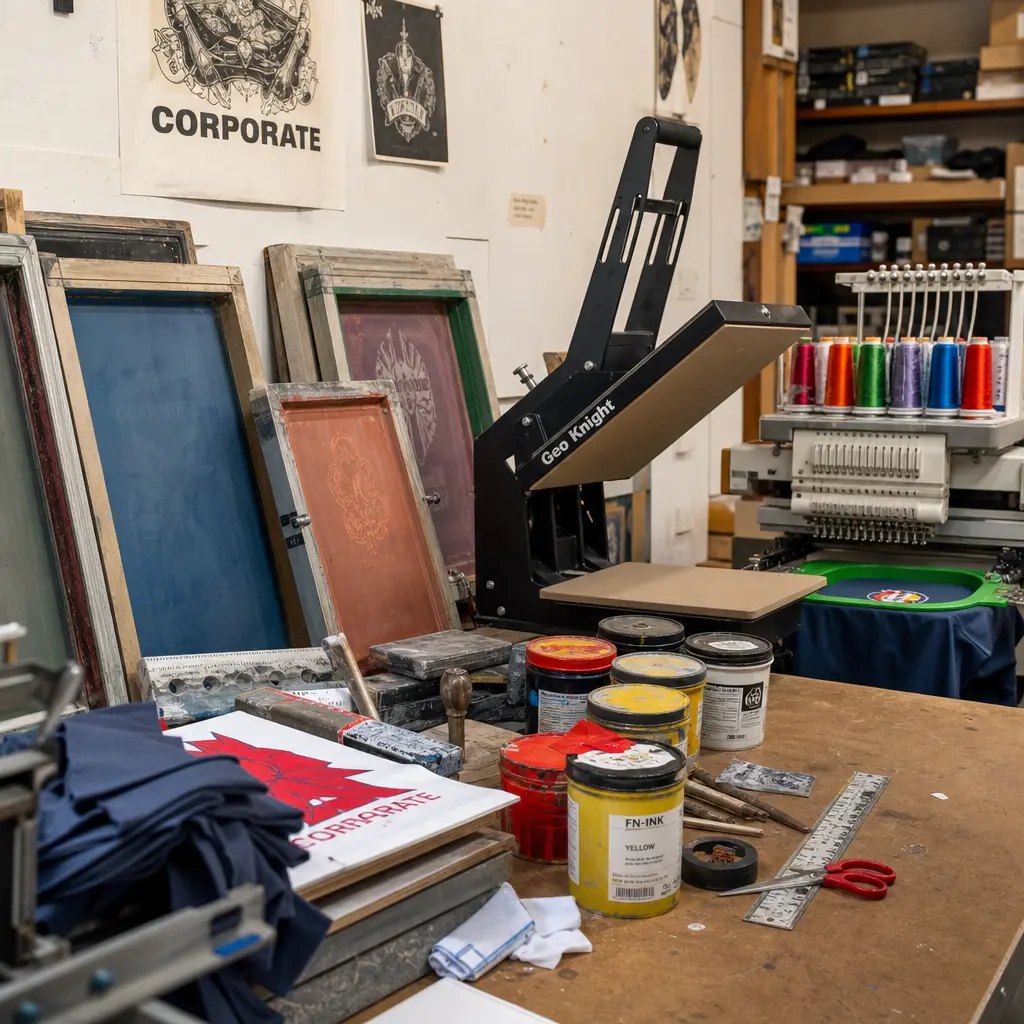
Print setup affects MOQ because each color and position requires labor, screens, color matching, and approval time. For solid natural grocer logos, water-based screen print is usually the best balance of durability, hand feel, and cost. It sits well on cotton canvas and does not make the front panel feel overly plastic. Pigment printing can also work for simple spot colors. Heat transfer may help on very small trial quantities or detailed artwork, but it should be tested carefully on heavier canvas.
The cleanest negotiation route is to reduce the number of print variables, not to weaken the bag. One front logo in one or two colors is easier to quote than multiple store names, side prints, bottom prints, or full-panel artwork. If different store branches need their own imprint, group them under one shared canvas body and one production schedule. The factory can then change screens or print batches without resetting the whole bag specification.
- Best for most grocery totes: water-based screen print with one front placement.
- Cost driver: each extra print color can add screen cost and slow approval.
- Risk point: fine lines may fill in on coarse canvas if artwork is not adjusted.
- Approval point: compare print color on real canvas, not only on paper or screen.
Build an MOQ Offer That a Factory Can Actually Accept
A strong MOQ negotiation gives the factory options. Instead of only asking for 300 pieces at the 1,000 piece price, present a structure that protects production efficiency. For example, keep the same fabric, same size, same handle, same carton packing, and one print position. Offer to accept a slightly higher unit price for the first run, with a price break at 1,000 or 3,000 pieces after the product is approved. This is more workable than demanding a full-volume price on a low-volume trial.
Buyers can also negotiate through staged orders. A first production run of 500 pieces can validate retail sell-through and store handling, while the factory prepares costing for a repeat order. The purchase order should state whether the second order will reuse the same screens, labels, and packing artwork. Reusing approved materials reduces setup risk and gives the buyer a stronger argument for better pricing later.
- Offer a first-run MOQ with a separate repeat-order price tier.
- Keep all construction details identical between trial and repeat order.
- Allow reasonable setup charges to be shown separately instead of hidden in the unit price.
- Do not negotiate MOQ and change five specifications at the same time.
Know the Cost Drivers Behind the Quote
A quote for canvas grocery totes should not arrive as one unexplained unit price. The buyer needs enough data to compare suppliers fairly and to understand why one offer is cheaper. Fabric weight, fabric width, wastage from gusset cutting, handle material, stitch reinforcement, print colors, sample charges, inner packing, carton size, and inland transport all affect the number. A very low price can be real if the specification is lighter, flatter, or packed more simply.
The quote should also show volume breaks that match production reality. A price break at 500, 1,000, 3,000, and 5,000 pieces is more useful than a single MOQ. For landed-cost comparison, carton CBM and gross weight matter because canvas bags are heavy and bulky. A heavier 12 oz tote may look only slightly more expensive at FOB level, but it can increase freight cost enough to change the buying decision.
- Quote data to require: fabric weight, finished size, print method, packing method, carton quantity, carton size, gross weight, and CBM.
- Common hidden costs: screen charge, sample courier, hangtag, barcode label, individual polybag, and extra carton marks.
- Comparison method: calculate cost per usable bag landed at warehouse, not only FOB unit price.
- Red flag: supplier cannot state fabric GSM or carton data before sample approval.
Sample Approval Should Simulate Real Grocery Use
A canvas tote sample should be judged as a product, not just as a printed surface. Put typical grocery weight into the bag, including dense items such as jars, cans, and boxed goods. Watch the handle attachment, side seam strain, bottom gusset shape, and top hem distortion. If the bag folds inward too much or the handles feel narrow and sharp under load, the sample may not be suitable for weekly customer use.
Print approval needs the same discipline. Natural canvas is not a smooth white paper surface. Slubs, weave texture, and natural color variation affect how logos appear. A dark green or black brand mark may print cleanly, while pale ink can look uneven. Approval should include print placement measured from the top edge and side seam, not only visual centering when the bag lies flat.
- Load test sample with an agreed weight for a short carry test, such as 8 to 10 kg depending on intended use.
- Measure finished size after the sample is flattened and squared, not while hanging.
- Review print rub resistance after light handling and folding.
- Keep one signed physical sample or sealed reference sample for production inspection.
Set QC Thresholds Before Bulk Production
Canvas grocery totes can fail in ways that are visible immediately at store level: crooked logos, stained natural fabric, loose threads, uneven handles, or cartons mixed by SKU. Quality control should focus on the defects that affect retail acceptance and reuse. The factory should know the acceptable tolerance before cutting begins, especially for size, print placement, handle drop, and fabric shade.
Inspection standards do not need to be complicated, but they need to be measurable. A buyer can set size tolerance at plus or minus 1 cm for body width and height, print placement tolerance at plus or minus 0.5 to 1 cm depending on artwork, and zero tolerance for oil stains, mildew odor, broken handles, or severe print smearing. For stitch quality, skipped stitches in high-stress handle areas should be treated as major defects.
- Major defects: broken handle reinforcement, open seams, severe stains, wrong logo, wrong color, incorrect carton label.
- Minor defects: small loose thread, slight natural slub, small crease from packing if removable.
- Measurement points: body width, body height, gusset, handle drop, logo distance from top edge.
- Inspection timing: pre-production sample approval, inline check during sewing, final random inspection before shipment.
Packing Choices Affect MOQ and Store Handling
Packing is often treated as an afterthought, but it can change both MOQ and cost. Individual polybags protect each tote and make distribution cleaner, but they add material cost, labor, and plastic waste. Bulk packing in cartons is cheaper and often enough for warehouse receiving, but natural canvas can collect dust or crease if not bundled properly. Paper banding or bundle packing can be a practical middle option for natural grocers with plastic reduction policies.
Carton planning also matters for retail buyers and distributors. The carton should not be so heavy that warehouse teams dislike handling it, especially with 12 oz canvas. Carton quantity should match store allocation where possible, such as 50 or 100 pieces per carton depending on bag size and weight. Carton marks should identify PO number, SKU, quantity, color, print version, and destination if split shipments are planned.
- Low-cost packing: bulk packed by fixed quantity per export carton.
- Cleaner handling: inner bundles of 10 or 25 pieces with paper band or recyclable bag.
- Retail-ready option: hangtag, barcode label, and folded presentation, with higher labor cost.
- Warehouse risk: mixed print versions in one carton without clear inner labeling.
Plan Lead Time Around Approvals, Not Inquiry Date
Production lead time starts after the buyer approves artwork, material, sample, packing, and payment terms. A realistic first order timeline includes quotation, artwork adjustment, blank sample if needed, printed sample, sample review, bulk fabric preparation, cutting, printing, sewing, trimming, inspection, packing, and export booking. For a regular canvas grocery tote, 25 to 40 days after sample approval can be a reasonable planning range, but custom fabric, testing, or peak season workload can extend it.
MOQ negotiation can affect lead time in both directions. A low MOQ using stock canvas may move quickly. A low MOQ requiring special fabric may move slowly because the factory must wait for fabric consolidation or charge a higher fabric cost. If the tote is needed for a store opening, Earth Month campaign, holiday merchandising, or membership drive, the RFQ should include the required arrival date and the latest acceptable ship date.
- Schedule risk: artwork changes after screen preparation create delays and extra charges.
- Fabric risk: natural canvas stock may vary in shade if orders are split across different lots.
- Inspection risk: late discovery of packing errors can delay container loading or courier pickup.
- Buyer control point: approve one final artwork file and one final physical sample before bulk production.
Specification comparison for buyers
| Spec decision | Recommended option | When it fits | Buyer risk to check |
|---|---|---|---|
| Fabric weight for grocery load | 10 oz to 12 oz cotton canvas, roughly 340 to 407 GSM before washing | Reusable grocery totes carrying jars, produce, dry goods, and boxed items | Very low quotes may use lighter cotton duck or loose weave fabric that looks similar in photos but collapses under load |
| MOQ negotiation base | Negotiate by fabric color and print setup, not only total bag quantity | Multiple store locations or seasonal programs needing one bag structure with several logo versions | A supplier may quote a low combined MOQ but charge separate dye, cutting, or screen setup costs later |
| Handle construction | Self-fabric canvas handles with cross-stitch reinforcement or webbing handles for heavier use | Natural grocers where customers reuse the tote weekly and carry dense products | Handle drop length, bartack size, and stitch density must be specified or samples may feel weak despite acceptable fabric |
| Print method | Water-based screen print for solid logos; pigment print for economical spot colors; heat transfer only for complex short-run artwork | Brand marks, produce graphics, store slogans, and member event totes | Low MOQ heat transfer can reduce setup cost but may crack or feel plastic on heavy canvas if not tested |
| Bag structure | Bottom gusset 10 to 15 cm with side seams overlocked and top hem folded twice | Checkout totes that need to stand open enough for packing groceries | Flat totes are cheaper but harder for cashiers to load and less useful for grocery customers |
| Sample approval route | Blank size sample plus printed pre-production sample before bulk cutting | New size, new logo placement, new fabric weight, or first order with a supplier | Approving only a digital mockup leaves fabric shrinkage, print hand feel, and handle balance unresolved |
| Packing format | Bulk carton packing with inner polybag bundles or paper banding depending on retail handling requirements | Wholesale distribution to grocery warehouses, store launches, and in-store merchandising | Individual polybags increase labor and material cost; loose bulk packing can cause dust, creasing, and mixed SKU errors |
| Lead time assumption | Plan 25 to 40 days after sample approval for regular production, longer for dyed fabric or strict testing | Repeat orders using existing fabric and artwork can often be faster than first-time programs | MOQ discounts tied to consolidated fabric production can extend schedule if the supplier waits for other orders |
Buyer checklist before sampling
- Define the tote purpose: checkout resale bag, loyalty giveaway, event merchandise, or private label grocery accessory.
- State finished size, gusset depth, handle drop, fabric weight in oz or GSM, and whether shrinkage tolerance applies after washing.
- Clarify whether natural canvas must be unbleached, organic, recycled, or simply conventional cotton canvas in natural color.
- Separate the MOQ discussion into fabric MOQ, cutting MOQ, print setup MOQ, packing MOQ, and carton mark requirements.
- Request a quotation showing unit price, sample fee, screen or plate charge, packing cost, carton CBM, and estimated gross weight.
- Approve a physical printed sample for size, stitch quality, print color, print placement, handle strength, and fabric hand feel.
- Set inspection points for fabric flaws, seam strength, print defects, size tolerance, needle damage, stains, and carton labeling.
- Confirm whether excess production, short shipment tolerance, or overrun percentage is allowed before issuing the purchase order.
- Match inner packing to warehouse receiving needs, store distribution method, and any plastic reduction policy.
- Build lead time from artwork approval, not from initial inquiry, and reserve buffer for lab testing or packaging changes.
Factory quote questions to send
- What is your MOQ for this exact canvas grocery tote by fabric color, bag size, and print design?
- Which canvas weight are you quoting, and can you state both oz and GSM with fabric width?
- Is the fabric stock available, or does the MOQ depend on new weaving, dyeing, or finishing?
- What stitch construction is included for handles, top hem, side seams, bottom gusset, and reinforcement points?
- Which print method is included in the price, and how many colors, screens, and print positions are included?
- What is the sample charge and lead time for a blank sample and a printed pre-production sample?
- What are the allowed tolerances for finished size, fabric weight, print placement, color difference, and carton quantity?
- How many pieces are packed per carton, what is the carton size, and what are the estimated gross weight and CBM?
- Does the quoted price include inner packing, hangtag, barcode label, carton mark, or retail-ready packaging?
- What production lead time applies after sample approval, and what conditions could change that schedule?
Quality-control points to confirm
- Finished size tolerance within plus or minus 1 cm for width and height, and plus or minus 0.5 cm for handle drop unless otherwise agreed.
- Fabric weight checked against the approved sample and declared GSM, with no obvious thin panels mixed into production.
- Handle attachment reinforced with cross-stitch, bartack, or equivalent construction capable of passing agreed load testing.
- Top hem folded evenly without raw edges, skipped stitches, needle holes, loose thread chains, or seam twisting.
- Print color matched to approved sample under consistent lighting, with acceptable registration and no smearing, pinholes, or heavy cracking.
- Print placement measured from bag edges and handle line, not judged only by eye on folded bags.
- Canvas surface free from oil marks, heavy slubs, mildew smell, colored yarn contamination, and visible weaving defects.
- Carton count, SKU separation, barcode labels, and shipping marks verified against the packing list before final shipment.