Start With the Carrying Use, Not the Logo
For wholesale canvas grocery totes for tech startups, logo placement only makes sense after the buyer defines what the tote will carry. A bag used for a SaaS conference kit has different stress points from a grocery tote sold in a company store or packed with employee onboarding products. The logo can look correct on a flat sample and still sit in the wrong place once the bag is loaded, folded, or carried under the arm.
A good RFQ should state the use case in plain production language: reusable grocery tote, event giveaway bag, retail merchandise tote, welcome kit carrier, or distributor promo bag. That single line helps the factory recommend fabric weight, gusset size, handle length, print method, and packing. Without it, suppliers may quote the cheapest canvas structure that matches the artwork, not the structure that protects the brand in use.
- For grocery use, prioritize gusset depth, handle reinforcement, and fabric body.
- For event kits, prioritize clean logo visibility, flat packing, and fast carton handling.
- For retail resale, prioritize consistent stitching, labels, color control, and presentation packing.
- For onboarding kits, prioritize load strength and a premium hand-feel over the lowest unit price.
Choose a Canvas Weight That Supports the Brand
Canvas grocery totes are commonly quoted by ounce weight or GSM. Many importers compare only the unit price and miss the fabric difference behind the quote. A 10 oz canvas is not the same product as a 12 oz canvas, even when the finished dimensions match. The heavier fabric usually stands better, carries more confidently, and makes a printed tech logo look more stable, but it also increases material cost, sewing resistance, carton weight, and freight cost.
For most startup branding programs, 10-12 oz cotton canvas, roughly 340-410 GSM, is a practical range. Below that, the tote may fold too easily and feel closer to a thin promotional bag. Above that, the tote can become expensive, heavier to ship, and slower to sew, especially with reinforced handles and a box-bottom structure. If the bag will hold groceries, books, drinkware, devices, or boxed merchandise, the RFQ should not leave fabric weight open to supplier interpretation.
- 8 oz canvas: lower cost, suitable for light event handouts, weaker shelf presence.
- 10 oz canvas: balanced option for many wholesale grocery tote programs.
- 12 oz canvas: stronger hand-feel for premium tech branding and heavier loads.
- 14 oz canvas and above: durable but heavier, with higher sewing and freight cost.
Set the Logo Position From Sewing Reference Points
Logo placement should be measured from physical sewing points, not from a loose visual mockup. The safest reference is the finished top opening seam, the vertical center line of the front panel, and the bottom seam or gusset fold. For a common canvas grocery tote body around 380-420 mm wide and 360-420 mm high, a front logo width of 180-240 mm is usually readable without dominating the bag.
For grocery totes with a bottom gusset, avoid placing the logo too close to the lower fold. Once the bag is filled, the lower panel curves forward and the gusset expands, which can bend the artwork. For tech startup logos with fine typography, icon marks, or small registration symbols, the placement needs a clean flat zone. The RFQ should include both artwork size and placement distance, for example: front center, logo 220 mm wide, top of logo 110 mm below finished top opening.
- Keep a no-print margin from side seams, bottom folds, and handle stitch boxes.
- Use the finished bag measurement, not the cut panel measurement, for placement.
- Center the logo on the usable front panel, excluding side gusset folds.
- Review placement with the tote filled, not only laid flat on a table.
Match Print Method to Artwork and Canvas Texture
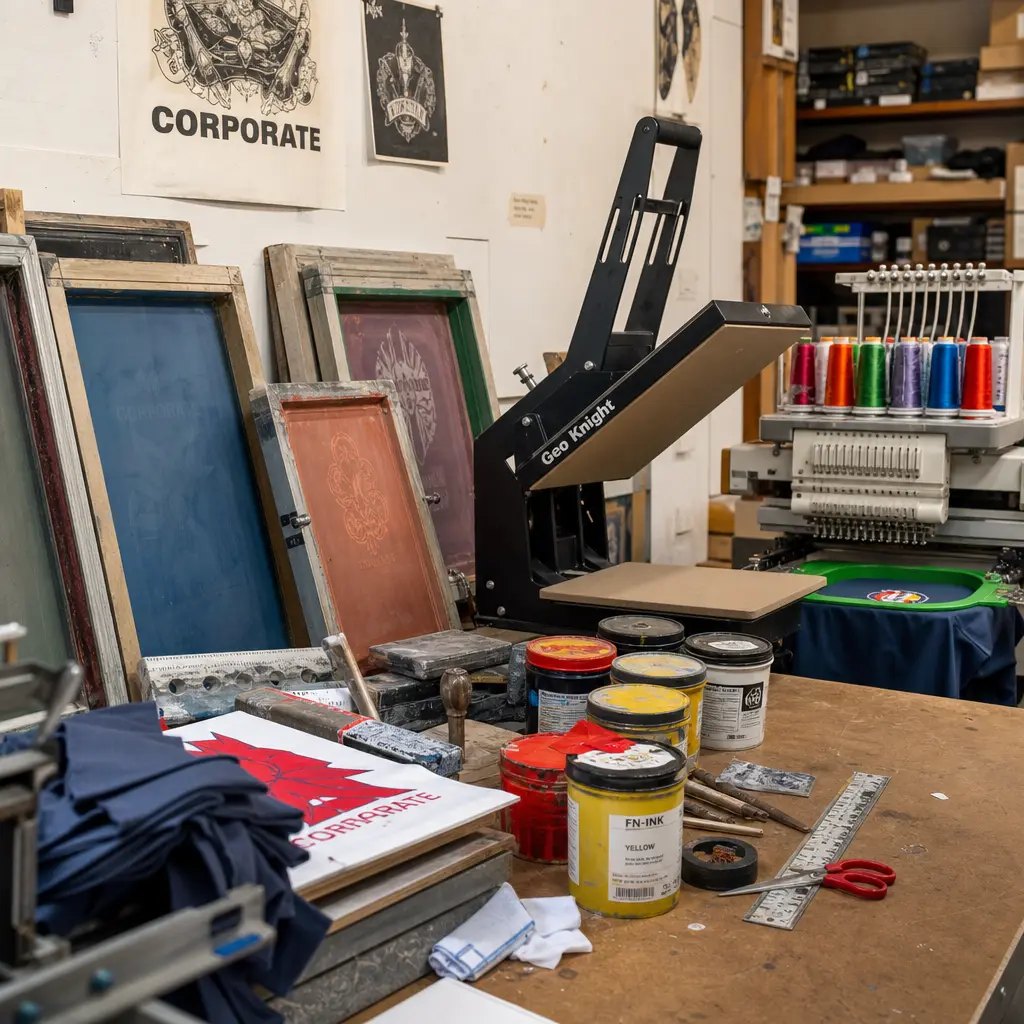
Screen printing is usually the most reliable option for simple tech startup logos on canvas grocery totes. It handles solid marks, wordmarks, and one- to three-color designs well, with stable cost at wholesale quantities. The factory needs vector artwork, color references, and the intended print size. Natural canvas has texture, slubs, and absorbency, so ink coverage will not look like printing on coated paper.
Heat transfer can be useful for gradients, small test runs, or full-color artwork, but it should be approved carefully on canvas. A transfer film may sit on top of the fabric and create a different hand-feel from the rest of the bag. Embroidery gives a premium look, but on a grocery tote it can add cost, cause puckering, and limit fine detail. For a clean startup identity, the lowest-risk route is often a properly cured screen print with enough ink opacity and a print area that avoids heavy folds.
- Use screen print for solid logos, high repeat orders, and clean cost control.
- Use transfer only when full-color artwork justifies the hand-feel tradeoff.
- Use embroidery for small premium marks, not large front-panel blocks.
- Test rub resistance and fold resistance before approving any print method.
Understand MOQ Before Comparing Supplier Quotes
MOQ is not one number. A canvas grocery tote quote may have separate minimums for fabric color, fabric weight, bag cutting, print setup, woven labels, hangtags, and individual packing. Natural canvas normally gives more flexibility because factories may hold stock fabric. Custom-dyed canvas, custom-width webbing, special labels, or multi-color printing can raise MOQ even if the buyer only wants a small pilot order.
When comparing suppliers, separate the real production MOQ from the commercial MOQ. A factory may accept a lower order quantity by using stock fabric and charging setup costs across fewer pieces. That is not wrong, but it changes the unit price and repeat-order pricing. Procurement teams should request a price ladder, such as 500, 1,000, 3,000, and 5,000 pieces, using the same fabric and logo specification. This shows whether the quote is scalable or only attractive at one quantity.
- Natural canvas usually supports lower MOQ than custom-dyed canvas.
- One-color screen print has simpler setup than multi-color registration.
- Private labels and retail packaging can create hidden minimums.
- Price ladders expose whether a supplier is suitable for repeat programs.
Build the RFQ Around Quote Data You Can Compare
A useful RFQ for wholesale canvas grocery totes should produce comparable quotes, not just a price list. Every supplier should quote the same finished size, canvas GSM, handle length, gusset structure, logo method, print size, label position, packing method, carton quantity, and delivery term. If one quote includes individual polybags and another quote uses bulk flat packing, the lower unit price may not be lower after repacking, warehouse handling, or retailer compliance work.
The quote should also state what is excluded. Common missing items include screen setup, sample freight, color matching charge, testing charge, hangtags, barcode labels, palletization, export carton marks, and inspection support. A buyer does not need every possible accessory, but the RFQ must force the supplier to reveal the cost structure. This is especially important for distributors quoting downstream clients, because a missing packing or label cost can erase margin after the order is confirmed.
- Require unit price and setup charges as separate lines.
- Request carton dimensions, gross weight, net weight, and CBM.
- State Incoterms clearly, such as EXW, FOB, CIF, or DDP if available.
- Ask how long the quote remains valid for fabric and freight assumptions.
Approve Samples With Measurable Criteria
A sample is not approved because it looks nice in a photo. For logo placement, the buyer should measure the print size, distance from top seam, horizontal centering, and the clear margin from folds or seams. The sample should be made from the intended fabric weight and use the final print method. If the supplier sends a lighter canvas or a substitute print process, the approval does not protect the bulk order.
For tech startups, color accuracy often matters because the logo is tied to brand guidelines. Cotton canvas can shift color perception because the base fabric is warm, off-white, dyed, or textured. Instead of demanding impossible paper-like accuracy, set a practical tolerance and approve a physical strike-off or pre-production sample under normal light. Keep one signed sample at the factory and one with the buyer or inspection team so bulk production has a real reference.
- Measure finished tote size after sewing, not only the panel before stitching.
- Compare logo color against an approved swatch under consistent light.
- Load the sample to see whether the logo bends or hides under the arm.
- Approve the final packing fold because folds can mark the print surface.
Control Quality Where Grocery Totes Actually Fail
Canvas grocery totes usually fail at stress points before they fail at the logo. Handle joints, top hem, side seams, bottom gusset, and stitch back-tacking need inspection. A good-looking logo cannot compensate for handles pulling loose during use. The RFQ should define the expected load or at least the intended contents, because a tote for snacks and brochures is different from one carrying bottles, books, or retail products.
Logo quality still needs strict control. Screen print defects include uneven ink coverage, misregistration, crooked placement, pinholes, dirty edges, and poor curing. On textured canvas, small irregularities are normal, but obvious holes or fuzzy edges on a clean tech wordmark are not acceptable. Agree on inspection distance and tolerance before bulk production. Otherwise the buyer and factory may argue after the goods are packed, when rework is slow and expensive.
- Handle stitching: box-X or reinforced stitch pattern for grocery loads.
- Logo placement: tolerance agreed from top seam and center line.
- Print curing: no tackiness, smearing, or transfer to adjacent folded bags.
- Fabric defects: reject major stains, holes, heavy weaving faults, and color panels.
Plan Packing to Protect the Logo and Reduce Freight Issues
Packing is part of the product, especially when the logo is printed on a large flat canvas panel. Over-tight folding can press creases across the artwork, while rough bulk packing can abrade the print face. For many wholesale orders, flat packing in master cartons is efficient, but the factory should align folds away from the main logo area whenever possible. If the bag is retail-ready, individual polybags, paper bands, hangtags, or barcode labels may be needed.
Procurement teams should request packing details before final quote approval: pieces per carton, carton size, gross weight, net weight, export marks, moisture protection, and whether cartons are suitable for palletizing. Canvas absorbs humidity, and long ocean shipments can expose cartons to condensation. A simple inner poly liner or moisture-control plan may be worthwhile for natural canvas, especially when the goods will be stored before distribution.
- Avoid carton compression that creates permanent logo creases.
- Use clean dividers or controlled stacking if dark print may rub.
- Confirm carton weight is manageable for warehouse handling.
- Request packing photos from the pre-shipment inspection.
Protect the Schedule Around Artwork, Sampling, and Materials
Lead time should be counted from the last required approval, not from the first email. A realistic schedule includes artwork checking, sample making, sample review, bulk material preparation, printing, sewing, trimming, packing, inspection, and export handling. Natural stock canvas can shorten the schedule, while custom-dyed fabric, special labels, retail packaging, or multi-location shipment plans add risk.
Tech startup orders often connect to launch dates, conferences, fundraising events, employee onboarding waves, or partner campaigns. Missing the date can make the goods less useful even if the product quality is acceptable. Build a decision calendar into the RFQ: artwork approval deadline, sample approval deadline, bulk start date, inspection window, shipment booking date, and required arrival date. This prevents a supplier from giving a short production lead time while ignoring buyer-side approval delays.
- Artwork revisions can delay screen making and sample production.
- Custom fabric color adds material lead time before cutting starts.
- Peak season can affect sewing capacity and inspection booking.
- Final packing approval should happen before cartons are produced.
Specification comparison for buyers
| Spec decision | Recommended option | When it fits | Buyer risk to check |
|---|---|---|---|
| Front logo size | 180-240 mm wide on a 380-420 mm tote body | Best for startup event giveaways, onboarding bags, and investor day merchandise where the logo must be readable from normal walking distance | Oversized artwork can distort across seams, look cheap, or crack faster if printed over heavy fabric folds |
| Logo position | Centered 90-120 mm below the top opening, or lower-center if the tote is carried at hip height | Works for most grocery tote silhouettes because the logo remains visible when filled with laptops, packaging, or snacks | Too high can hide under the user's arm; too low can disappear when the gusset expands |
| Fabric weight | 10-12 oz cotton canvas, roughly 340-410 GSM | Good balance for reusable grocery loads, conference kits, and premium tech branding without making freight weight excessive | Quotes using lighter 8 oz fabric may look cheaper but lose shape and reduce perceived brand value |
| Print method | Screen print for solid one- to three-color logos; heat transfer only for gradients or short runs | Screen print gives stable cost and sharp edges for simple startup logos, especially on natural canvas | Transfers can feel plasticky on canvas and may fail wash or fold tests if the adhesive is not matched to fabric texture |
| Handle construction | Self-fabric handles with box-X or cross reinforcement | Suitable for grocery weight, sample kits, books, and retail packaging inserts | Plain line stitching at handle joints can pull out during load testing, especially with wide gusset bags |
| Gusset choice | Side and bottom gusset of 80-120 mm | Useful when the tote must stand better and hold boxed products, apparel, swag, or office pantry items | Logo artwork placed too close to the side gusset may bend when the bag is filled |
| MOQ logic | Factory MOQ based on fabric dyeing, cutting efficiency, and print setup; commonly lower for natural canvas than custom-dyed canvas | Natural or stock-color canvas supports startup pilot orders before a larger campaign rollout | A very low MOQ quote may use mixed fabric lots, manual print alignment, or higher unit cost hidden in setup charges |
| Packing format | Flat packed 50-100 pcs per export carton with moisture protection | Reduces creasing on the print face and supports distributor handling or direct-to-office delivery | Over-compressed cartons can leave deep fold marks across the logo and increase rejection at receiving |
| Approval sample | Pre-production sample with final fabric, final logo size, final ink, and final packing fold | Needed before bulk cutting when the tote is for a launch date, retail bundle, or high-visibility tech event | A digital mockup alone does not prove print hand-feel, handle strength, shrinkage, or logo visibility when carried |
Buyer checklist before sampling
- Define the tote use case first: grocery load, event kit, employee onboarding, retail insert, or partner gift.
- Specify finished bag dimensions, gusset depth, handle length, fabric weight in oz or GSM, and whether shrinkage tolerance is required.
- Provide logo artwork in vector format with Pantone or CMYK references, target print width, and preferred logo position from the top seam.
- State whether the logo may cross fabric folds, pockets, gussets, or stitch lines; if not, set a clear no-print safety margin.
- Request a pre-production sample made with bulk fabric, final ink or transfer film, final stitching, and final fold packing.
- Set acceptance criteria for print registration, ink coverage, color tolerance, handle pull strength, seam allowance, and carton packing.
- Ask for unit price, setup cost, sample charge, carton dimensions, gross weight, estimated CBM, production lead time, and validity period.
- Confirm whether the quote includes labels, hangtags, individual polybags, master cartons, export marks, and pallet requirements.
Factory quote questions to send
- What exact canvas weight will be used, stated in oz and GSM, and is it stock fabric or woven/dyed to order?
- What is the finished tote size after sewing, including body width, height, bottom gusset, side gusset, and handle drop?
- Which print method do you recommend for this logo on canvas, and what is the maximum clean print area before distortion risk?
- What are the setup charges for screen, plate, transfer, or embroidery, and are they included in the quoted unit price?
- What MOQ applies to the bag body, fabric color, print color count, labels, and packaging separately?
- Can the pre-production sample use bulk fabric and final ink, and how many working days are needed after artwork approval?
- What are the standard tolerances for bag size, logo placement, fabric weight, print color, and carton quantity?
- What load test, seam inspection, rub test, and packing inspection can be documented before shipment?
- What are the carton dimensions, gross weight, net weight, CBM, and pieces per carton for the quoted packing method?
- What production lead time starts after which approval: deposit, artwork, sample approval, label approval, or material arrival?
Quality-control points to confirm
- Fabric weight should be verified against the approved sample, with acceptable tolerance agreed before bulk cutting.
- Finished tote dimensions should be measured flat, including gusset depth and handle drop, not only the cut panel size.
- Logo placement should be checked from the top opening seam and center line, with tolerance normally kept within a few millimeters for screen print.
- Print surface should show even ink coverage, clean edges, no pinholes visible at normal inspection distance, and no ink bleeding into canvas slubs.
- Handle joints should pass a load or pull test suitable for the intended contents, especially for grocery totes with wide gussets.
- Seams should have consistent stitch density, back-tacking at stress points, no skipped stitches, and no loose threads around the logo panel.
- Packed cartons should protect the print face from abrasion, moisture, crushing, and excessive folding pressure during export handling.