Start With the Hotel Retail Job, Not a Generic Tote Name
A wholesale canvas grocery tote for hotel retail is not the same product as a low-cost event giveaway. It may sit in a resort market, hang in a lobby shop, carry bottled drinks and snacks, bundle spa products, or serve as reusable checkout packaging. That job changes the specification. The tote has to look clean on shelf, feel good enough for a guest to buy or reuse, protect the hotel brand after checkout, and arrive sorted so property teams can receive it without extra handling.
Open the RFQ with the use case. Say where the tote will be sold or used, what it will carry, how it will be displayed, and whether it is a paid retail item, a packaging component, an amenity, or distributor stock. A bag used for folded T-shirts and sunscreen can be built differently from one expected to carry glass bottles, boxed food, and beach items. The supplier needs that context before quoting fabric weight, gusset depth, handle reinforcement, print method, and carton packing.
Avoid asking only for a “natural canvas grocery tote with hotel logo.” That phrase sounds clear, but it leaves too much room. One supplier may quote an 8 oz flat cotton tote with short handles. Another may quote a 12 oz boxed-bottom grocery tote with reinforced cotton webbing. Both can call the product a canvas grocery tote. Procurement then sees a wide price spread without knowing which quote reflects the intended product.
For hotel groups, add one more detail early: whether multiple properties will share the same base tote. A common body with separate logos is usually easier to quote, sample, inspect, and reorder than separate sizes and fabrics for every location. Ask suppliers to separate the base construction cost from logo, label, packing, and destination variations so the cost of SKU complexity is visible.
- State the channel: hotel gift shop, resort market, lobby retail, spa boutique, conference store, in-room amenity, or distributor stock.
- Define likely contents: snacks, bottles, packaged food, towels, folded apparel, wellness products, souvenirs, or mixed purchases.
- Clarify carry style: hand carry, shoulder carry, or both.
- Mention display method: folded on shelf, hung on peg, bundled with goods, belly-banded, hangtagged, or used at checkout.
- For multi-property programs, request one common bag body with separate logo and SKU pricing.
- Name the retail position: value packaging, mid-range branded merchandise, or premium reusable hotel tote.
Write Fabric Requirements in Oz, GSM, Fiber, and Finish
Canvas weight drives cost, hand feel, structure, print behavior, carton weight, and guest perception. Many suppliers quote in ounces, while mills and inspectors may work in GSM. Use both. As a practical reference, 10 oz canvas is often about 280-300 GSM and suits many hotel retail grocery totes. A 12 oz canvas is often about 330-360 GSM and feels more substantial for premium or heavier-use programs. Exact conversion depends on mill standard and finishing, so the RFQ should not treat the ounce label as the whole specification.
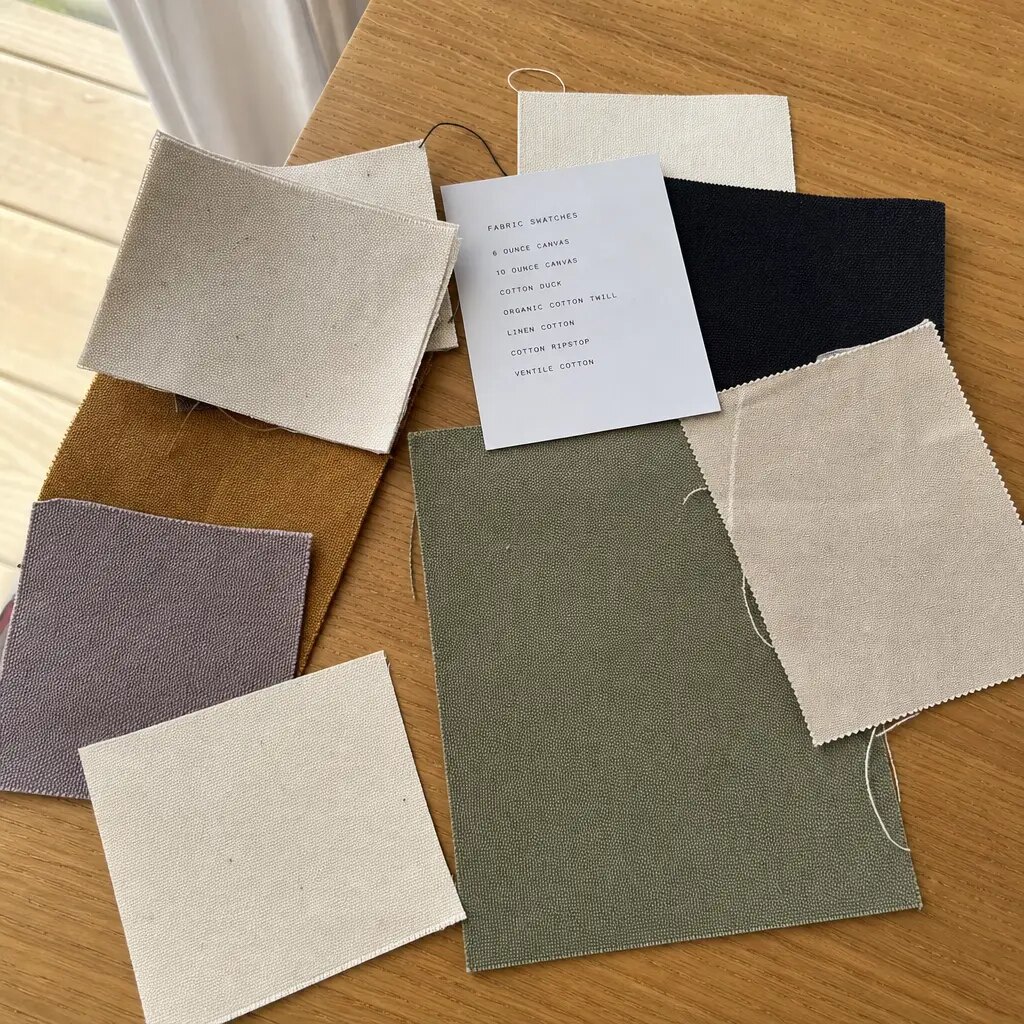
Ask when the weight is measured. Greige, finished, dyed, washed, and coated fabric can behave differently. Dyeing may add shade-control work and dye-lot minimums. Washing can soften the hand but may shrink or twist the fabric if patterns are not adjusted. Coating can change stiffness and print adhesion. Natural canvas often fits resort retail well, but it may show seed marks, slubs, and mild shade variation. Decide which natural marks are acceptable and where they are not acceptable, especially around the logo panel.
Fiber content also matters. Conventional cotton canvas, organic cotton canvas, recycled cotton blends, and cotton-poly blends are not interchangeable. They differ in texture, strength, shade consistency, documentation, and cost. If the hotel program will make organic or recycled claims, request the exact certification or chain-of-custody documentation included in the quote. If certification is not required, keep the language performance-based and avoid asking suppliers to support claims the order does not need.
Build fabric approval into the RFQ. Request a swatch, GSM confirmation or mill specification, target finished bag weight, color reference, and expected shrinkage if washing or dyeing is involved. Finished bag weight is a useful procurement control because a noticeably lighter bulk bag may signal lighter fabric, narrower handles, omitted reinforcement, or a construction change that is hard to catch in a quick visual review.
- 8 oz canvas: suitable for light amenity or low-load packaging, but usually less structured for grocery-style retail use.
- 10 oz canvas: common starting point for hotel retail totes balancing strength, printability, cost, and freight efficiency.
- 12 oz canvas: stronger premium feel for heavier short-distance use, with higher sewing, material, and freight impact.
- Natural canvas: approve acceptable slubs, seed marks, and shade range; reject stains, oil marks, holes, and strong odor.
- Dyed or bleached canvas: require lab dip or color approval, dye-lot planning, and repeat-order shade control.
- Washed canvas: check shrinkage, final dimensions after washing, panel twisting, and print performance on washed fabric.
Control Finished Size, Gusset Shape, and Sewing Construction
Specify the tote by finished size after sewing, pressing, and any washing. Cutting size is not enough. A medium hotel retail grocery tote might be 35 cm wide x 38 cm high x 12 cm bottom gusset, but the right size depends on the store fixture and the merchandise. Bottled drinks and boxed snacks need base width. Towels and apparel need height. A tote displayed folded with a hangtag may need proportions that keep the logo visible on shelf.
Gusset type changes function. A flat tote is cheaper and packs tightly, but it does not open like a grocery bag. A boxed bottom creates better base capacity and improves shelf shape. A full side-and-bottom gusset creates a more structured grocery profile, but it changes sewing cost and logo behavior when the bag opens. If the front print must stay flat and centered when the bag is filled, approve the layout on a loaded sample, not only on a pressed empty sample.
Construction details belong in the RFQ, not in a follow-up email after prices arrive. Include top hem depth, seam type, bottom corner finish, thread color, raw-edge treatment, handle placement, and reinforcement. Retail-facing hotel merchandise usually needs a clean top hem and neat seam finishing. For grocery use, strong handle attachments and reliable side and bottom seams matter more than decorative trim.
Tolerances should be practical and measurable. For many medium canvas totes, plus or minus 1 cm on body width, height, and gusset is workable. Logo placement often needs tighter control, such as plus or minus 0.5 cm to 0.8 cm depending on artwork size and brand rules. Define measurement points. For example, state whether the gusset is measured opened at the base, laid flat at the fold, or from the finished bottom seam.
- State finished width, height, bottom gusset, side gusset if any, top hem width, and measurement method.
- Use an annotated sketch or marked sample photo when comparing multiple suppliers.
- Specify boxed bottom or full side-and-bottom gusset when grocery-style capacity is required.
- Define top hem, side seam, bottom seam, corner finish, seam allowance, and raw-edge treatment.
- Set body dimension tolerance separately from logo placement tolerance.
- Ask the factory to confirm that the logo panel remains acceptable when the tote is filled.
Make Handle Strength a Quote Item, Not an Assumption
Handles are one of the easiest places for quotes to diverge. “Long handles” can mean self-fabric canvas, cotton webbing, polyester webbing, short hand-carry straps, or true shoulder straps. Self-fabric handles give a coordinated canvas look. Cotton webbing is comfortable and strong. Polyester webbing can be consistent and economical but may look less natural. The RFQ should define the material, width, length, drop, color, placement, and stitch pattern.
Shoulder carry usually needs about 55-65 cm handle length, depending on bag height and intended fit. Handle drop is even more useful because it tells the buyer how the tote sits on the shoulder. A width of about 2.5-3 cm is common for medium grocery totes and is more comfortable than narrow straps when guests carry bottles or heavier purchases. If short handles are acceptable, say so. Otherwise, suppliers may use a cheaper hand-carry option.
Tie reinforcement to real load. A light in-room amenity tote may carry less than 3 kg and be used briefly. A resort market tote may carry bottled beverages, food, sunscreen, towels, and souvenirs, making a 5-8 kg short-distance expectation more realistic. For that use, request box-X stitching, cross stitch, bar tack, or dense back-tacking at stress points, along with enough seam allowance to prevent tearing around the attachment area.
Ask how the factory checks handles before bulk production. A formal lab report may not be necessary for every order, but the pre-production sample should be loaded with realistic contents. Look for seam distortion, tearing around handle attachments, strap twisting, guest comfort, and whether the body keeps its shape. If the buyer needs a defined static load test, pull test, or duration, include it before quotation.
- Specify handle material: self-fabric canvas, cotton webbing, polyester webbing, dyed webbing, or another trim.
- Define handle length, handle drop, strap width, color, and placement from the side seams.
- Use 55-65 cm handles for shoulder carry unless the hotel approves a shorter format.
- Request box-X, cross stitch, bar tack, or dense back-tacking for grocery-style loads.
- State intended load range, such as 3-5 kg for light retail or 5-8 kg for heavier resort market use.
- Review loaded samples for comfort, seam distortion, fabric tearing, strap twisting, and logo appearance.
Choose Branding Methods Based on Artwork and Canvas Texture
Screen printing is the usual choice for wholesale canvas grocery totes with solid hotel logos, property names, slogans, or simple one- to three-color artwork. It can be durable and cost-effective when properly cured. Still, canvas texture affects ink edge, opacity, and small text. Fine lettering, large solid blocks, dark fabric, metallic ink, and tight Pantone targets should be tested on actual production canvas rather than a smooth substitute fabric.
Heat transfer can reproduce gradients, full-color graphics, and small details that are difficult to screen print. The tradeoff is that transfers may show a film edge, gloss difference, or different hand feel on canvas. Ask for cracking and adhesion checks. Embroidery can create a premium small mark, patch, or monogram, but large embroidery areas can pucker the panel and raise cost. Woven labels, inside labels, and patches can support a retail line, but they add setup, MOQ, placement, and compliance questions.
Make artwork production-ready. Provide vector files when possible, Pantone references, print size, print side, and placement from fixed edges. For a front-panel logo, define distance from the top hem and from the side seam or centerline. For two-sided artwork, confirm whether the second side requires another screen or setup. In multi-property programs, standardizing logo size and placement across properties often reduces errors and makes inspection easier.
Print QC should not rely on a nice-looking photo. Define registration tolerance for multi-color art, color approval method, minimum readable text size, and rub or tape testing. On dark canvas, confirm whether underbase printing is included. On heavy textured canvas, check small lettering after curing. Keep the approved strike-off with the pre-production sample so bulk inspection can compare color, opacity, placement, surface feel, and curing.
- Use screen print for solid logos, slogans, icons, and simple graphics on canvas.
- Request heat-transfer samples for gradients or full-color artwork and check film edge, cracking, and surface feel.
- Use embroidery for small premium marks; test puckering before approving larger embroidery areas.
- Provide vector artwork, Pantone codes, print dimensions, print side, and placement from fixed references.
- For dark canvas, confirm underbase, ink passes, opacity target, curing process, and whether these are included in price.
- Approve a print strike-off on actual bulk fabric before mass printing.
Map MOQ, SKU Splits, and Property Versions Before Price Negotiation
MOQ is rarely just one number. A factory may have minimums by fabric color, dye lot, cutting batch, bag body, print design, screen setup, hangtag version, barcode label, packing SKU, and shipment destination. A 3,000-piece hotel group order split across ten properties at 300 pieces each can become ten artworks, ten carton mark versions, ten packing lists, and ten receiving requirements.
Ask suppliers to separate common construction from variable branding. The quote should show the base tote price at the total volume, then itemize logo setup, screen charges, hangtag versions, barcode labels, special carton marks, and destination sorting. This helps procurement compare suppliers fairly. It also helps merchandising teams see whether a design variation is worth the operational cost.
Dyed fabric needs extra attention. The dye-lot minimum may be higher than the sewing MOQ, and repeat shade can vary from lot to lot. If several properties use the same fabric color, combining them into one dye lot may improve consistency. If each property wants a different fabric color, each color may require separate lab dips, sample approvals, minimums, and inspection references. Natural canvas avoids dye-lot complexity but still requires shade and slub approval.
Reorder planning belongs in the first quote, especially for hotel retail and distributor replenishment. Ask whether screens are stored, how long the sealed sample is retained, what reorder MOQ applies, and whether the factory can repeat the same SKU, hangtag, carton label, and packing method. Request batch identification on packing lists so any future quality or barcode issue can be traced to the correct shipment.
- Request MOQ by total PO, bag body, fabric color, dye lot, print design, packing SKU, and destination.
- Ask whether multiple hotel logos can share one fabric lot, cutting batch, and sewing batch.
- Separate base unit cost from logo setup, screen charge, hangtag setup, barcode work, and carton-label variations.
- Confirm whether mixed designs can be packed in one export carton or must remain separated by SKU.
- For dyed canvas, check dye-lot minimum, lab dip approval time, and repeat shade tolerance.
- Request reorder MOQ, reorder lead time, screen storage policy, and sample retention period.
Use a Quote Sheet That Reveals True Landed Cost
A strong RFQ response includes more than unit price. Two suppliers may quote the same title while including different canvas GSM, handle material, gusset construction, reinforcement, print setup, carton count, and sample process. Use a structured quote sheet so every supplier states what is included and excluded. That keeps a low price from hiding lighter fabric, shorter handles, no underbase print, weak reinforcement, or inefficient packing.
Request quantity breaks at realistic volumes, such as 500, 1,000, 3,000, and 5,000 pieces, then ask what MOQ rules sit behind those prices. Keep setup charges separate from unit cost. Screen charges, embroidery digitizing, woven label setup, hangtag printing, barcode labeling, and special carton marks can be significant on multi-property orders, even when the tote body is shared.
Freight data matters because canvas is bulky and heavy compared with many promotional items. Request carton dimensions, pieces per carton, net weight, gross weight, and CBM per 1,000 pieces. A slightly cheaper unit price may disappear once freight, warehouse handling, or overweight cartons are considered. Hotel receiving teams may also have practical carton limits if deliveries go to small storerooms, resorts, or retail backrooms without warehouse equipment.
Standardize commercial terms in the same sheet. Each supplier should state Incoterm, loading port, currency, payment terms, price validity, sample charges, sample lead time, bulk production lead time, inspection timing, and documents included. If procurement needs certificates, material declarations, palletization, barcode files, or third-party inspection support, list those requirements instead of assuming they are covered.
- Request pricing at relevant quantity breaks and identify the MOQ behind each price.
- Require fabric, construction, print, packing, and commercial terms in one quote sheet.
- Ask suppliers to itemize sample fees, setup charges, screen charges, tag costs, and barcode handling.
- Request carton dimensions, pcs/carton, NW, GW, and CBM per 1,000 pieces.
- Compare landed cost, not only FOB or unit price.
- Require quote validity date, Incoterm, loading port, payment terms, lead time, and excluded costs.
Use Samples to Freeze the Production Standard
Sampling is not just a preview of the logo. It should create the production control standard. A stock sample can show general workmanship and fabric options, but it does not confirm the final order. A custom mock-up may confirm artwork position, yet it may use substitute fabric or non-production sewing. For hotel retail, the pre-production sample should be close to bulk production: production canvas, final dimensions, final gusset, final handle material, final reinforcement, final print method, final logo size, and intended packing.
Measure the sample instead of approving it by photo alone. Record finished width, height, gusset, top hem, handle length, handle drop, handle width, logo size, logo position, and finished bag weight. Review print color, opacity, curing, rub resistance, and hand feel. Fill the tote with representative hotel retail goods and check whether it stands as intended, carries comfortably, and keeps the logo presentable.
Document any temporary detail clearly. If the pre-production sample uses a temporary hangtag string while the final tag is still in production, write that exception into the approval notes. Otherwise, the factory may treat the temporary detail as approved. The approval record should separate approved points, revised points, and points requiring one more confirmation before bulk cutting or printing.
Keep sealed approval samples on both sides. One should stay with the factory, and one should stay with the buyer, distributor, or inspection team. Attach an approval sheet listing measurements, fabric reference, print colors, logo placement, handle construction, packing method, and defect limits. For reorders, use the sealed sample as the baseline while still checking fabric lot, shade, and print ink because repeat production can drift.
- Separate sample types: stock sample, fabric swatch, print strike-off, mock-up, pre-production sample, and sealed approval sample.
- Measure finished dimensions and handle details rather than relying on visual approval.
- Weigh the finished sample and use that weight as a QC reference range with reasonable tolerance.
- Test print with dry rub, damp white cloth, tape pull, and simple wipe test when reuse is expected.
- Load the tote with realistic goods to evaluate handle comfort, base shape, seam distortion, and logo visibility.
- Record all approvals and exceptions in writing before bulk production starts.
Set QC Tolerances and Defect Classes Before Bulk Starts
Canvas tote QC works best when the factory knows what will pass before fabric is cut. Natural canvas may include slubs, seed marks, and slight shade variation. These can be acceptable if they match the approved standard and do not dominate the logo area. Major defects should include open seams, broken handle stitches, serious stains, oil marks, holes, mold smell, incorrect artwork, severe print defects, wrong size beyond tolerance, and incorrect SKU packing.
Measurement tolerance should be realistic but specific. For many medium canvas totes, body dimensions can be controlled around plus or minus 1 cm. Handle length may need around plus or minus 1 cm. Logo placement often needs plus or minus 0.5 cm to 0.8 cm, depending on artwork and display requirements. Define how to measure. Handle length can be measured along the strap from attachment point to attachment point; handle drop is measured from the top opening to the highest point of the handle.
QC should happen in stages. Incoming fabric should be checked for GSM, shade, stains, holes, and odor before cutting. Print panels should be checked for color, registration, opacity, curing, adhesion, and placement before sewing hides the problem. Sewing inline checks should review handle reinforcement, seam allowance, gusset symmetry, top hem width, and thread trimming. Final inspection then compares finished goods against the sealed sample, packing list, and agreed inspection plan.
Write the defect classification in plain language. Major defects affect safety, usability, brand appearance, retail saleability, or SKU accuracy. Minor defects are small workmanship variations that do not affect use or retail presentation beyond the approved limit. This distinction helps avoid last-minute arguments and gives the supplier a practical basis for self-inspection before the buyer or third-party inspector arrives.
- Major defects: open seams, weak handles, wrong artwork, wrong size, severe stains, odor, mold, print failure, and wrong SKU packing.
- Minor defects: small loose threads, limited natural slubs, slight approved shade variation, and tiny non-critical print specks.
- Verify GSM, finished bag weight, shade, odor, and hand feel before mass sewing continues.
- Inspect print panels before sewing for color, registration, opacity, curing, adhesion, and placement.
- Use dry rub, damp rub, tape pull, and wipe tests for print adhesion control.
- Check cartons for count, SKU separation, labels, barcodes, gross weight, and carton condition.
Plan Packing, Labeling, and Freight Handling Early
Packing affects retail presentation, freight cost, warehouse handling, and receiving accuracy. Canvas grocery totes may be flat packed, folded once, bundled, belly-banded, hangtagged, individually polybagged, or packed with a carton liner. Flat packing can protect the printed panel and improve shelf presentation, but it may increase carton size. Folding can reduce CBM but may create crease lines through the logo. Individual polybags keep canvas clean but add cost, labor, and plastic waste.
Set a maximum carton gross weight before production. Heavy 12 oz canvas totes packed 100 pieces per carton may be hard for hotel receiving teams or distributor staff to handle. The right pack count depends on fabric weight, tote dimensions, folding method, and carton strength. Ask for carton dimensions, net weight, gross weight, and CBM per 1,000 pieces for the proposed packing method. If cartons will move through humid routes or long sea transit, specify liner, moisture protection, and carton quality.
Labeling must match the hotel retail operation. Multi-property orders should show PO number, SKU, property or destination, design name, fabric color, quantity, carton number, and total cartons. If retail barcodes are required, clarify whether they go on hangtags, belly bands, individual bags, master cartons, or all of these. Barcode orientation and scan quality should be checked at sample or pilot packing stage.
Packing inspection is part of product quality. Verify pieces per carton, fold direction, logo orientation, carton marks, barcode placement, SKU separation, gross weight, and carton sequence. For distributor replenishment, request a packing list by SKU and carton number. That simple step can reduce receiving errors and helps trace any quality issue to a batch, design, or carton group.
- Choose flat pack, folded pack, bundle pack, belly band, hangtag, individual polybag, or carton liner based on retail needs.
- Set maximum carton gross weight and request pcs/carton, carton size, NW, GW, and CBM per 1,000 pieces.
- Avoid hard fold lines across large printed logos when shelf presentation matters.
- Use liners or master polybags when cleanliness, humidity, or long sea transit is a concern.
- Confirm carton marks by PO, SKU, design, property, destination, quantity, and carton sequence.
- Check barcode readability and retail tag placement before bulk packing.
Specification comparison for buyers
| RFQ item | Practical B2B specification | Quote detail to request | QC or commercial risk |
|---|---|---|---|
| Canvas weight | 10 oz cotton canvas, often about 280-300 GSM, for standard hotel retail; 12 oz, often about 330-360 GSM, for premium or heavier-use programs | Ask for both oz and GSM, fiber content, finish, shrinkage behavior, and whether weight is greige, finished, dyed, washed, or coated | The same oz description can hide different mill standards; compare approved swatch, GSM test, finished bag weight, and hand feel |
| Finished size | Medium grocery tote example: 35 W x 38 H x 12 cm bottom gusset, measured after sewing and pressing | Require finished width, height, bottom gusset, side gusset if any, top hem width, and measurement tolerance | Cutting size may be quoted instead of finished size; gusseted bags can vary if measurement points are not fixed |
| Gusset structure | Boxed bottom or full side-and-bottom gusset for grocery-style capacity and a more stable shelf shape | Ask for construction sketch, bottom seam method, corner finish, and whether the logo panel stays flat when filled | Flat totes may be substituted as cheaper grocery totes; logo distortion and uneven base corners are common issues |
| Handles | 55-65 cm shoulder handles, 2.5-3 cm wide, self-fabric or cotton webbing; shorter handles only for hand-carry use | Request handle material, length, drop, width, placement, stitch pattern, and reinforcement method | Short, narrow, or lightly stitched handles reduce guest usability and may fail before the canvas body |
| Reinforcement | Box-X, cross stitch, bar tack, or dense back-tacking at handle attachment points for grocery-style retail loads | Define intended load range, such as 3-5 kg for light retail or 5-8 kg for short-distance resort market use | Simple straight stitching may pass a visual check but fail when guests carry bottles, towels, or mixed purchases |
| Printing | Screen print for solid logos; heat transfer for gradients; embroidery, woven label, or patch for small premium marks | Ask for included colors, Pantone matching, underbase on dark fabric, setup charges, strike-off, curing process, and placement tolerance | Ink opacity, cracking, film edges, color drift, and embroidery puckering must be checked on actual bulk canvas |
| MOQ logic | Quote total order and split costs separately by bag body, fabric color, logo design, SKU, packing style, and destination | Request MOQ per fabric lot, print setup, SKU label, hangtag or barcode version, and property split | A 3,000-piece order split into 10 hotel logos may create 10 setup, labeling, packing, and receiving workflows |
| Sample approval | Pre-production sample made with bulk fabric, final handles, final gusset, final print method, and intended retail packing | Require one sealed approval sample for the factory and one for buyer, distributor, or inspection reference | Sales samples often use substitute fabric, hand sewing, or non-production ink; approving them can create bulk disputes |
| Packing | Flat packed or folded with printed panel protected; usually 50-100 pcs per carton depending on fabric weight and carton gross weight | Ask for folding method, carton dimensions, pcs/carton, GW, NW, CBM per 1,000 pcs, liner/polybag choice, carton marks, and barcode rules | Overweight cartons, creased logo panels, moisture odor, and mixed SKUs create receiving and retail problems |
Buyer checklist before sampling
- Define the retail channel: hotel gift shop resale, resort grocery market, lobby shop packaging, spa retail, conference store, in-room amenity, or distributor replenishment.
- Describe intended contents and realistic load: snacks, bottles, packaged food, towels, folded apparel, wellness products, souvenirs, or mixed resort market purchases.
- Specify canvas by both oz and GSM, fiber content, finish, color, certification requirement if any, and whether the quoted weight is before or after dyeing, washing, or other finishing.
- State finished dimensions after sewing and pressing: width, height, bottom gusset, side gusset if any, top hem width, and allowed tolerance.
- Define handle material, width, length, drop, placement, reinforcement stitch type, and whether the tote must work for shoulder carry, hand carry, or both.
- Provide vector artwork with Pantone references, print size, print side, placement from fixed edges, registration tolerance, and minimum readable text size if relevant.
- Choose or request alternatives for screen print, heat transfer, embroidery, woven label, patch, or inside label; ask suppliers to separate setup and per-unit costs.
- Request sample stages separately: stock sample, fabric swatch, print strike-off, custom mock-up, pre-production sample, and sealed approval sample.
- Set measurable QC requirements for fabric GSM, finished bag weight, size, handle pull, logo placement, print adhesion, shade, stains, odor, loose threads, and packing accuracy.
- Clarify MOQ and pricing by total quantity, fabric color, logo design, SKU, hangtag, barcode, destination split, and reorder quantity.
Factory quote questions to send
- What exact canvas weight is included in the quote in GSM and oz, and is that weight measured as greige fabric, finished fabric, dyed fabric, washed fabric, or coated fabric?
- What is the fiber content and fabric type: conventional cotton, organic cotton, recycled cotton blend, cotton-poly blend, natural, bleached, piece-dyed, yarn-dyed, or washed canvas?
- Can you provide a fabric swatch, GSM test result or mill specification, and target finished bag weight for the approved construction?
- What are the finished size tolerances for width, height, bottom gusset, side gusset, top hem width, handle length, handle drop, and logo placement?
- Which seams are single-needle, double-needle, overlocked, bound, or clean-finished, and what stitch density is used on side seams and handle reinforcement?
- What handle material is included: self-fabric canvas, cotton webbing, polyester webbing, dyed webbing, or another trim, and what are the width, length, and attachment stitch pattern?
- What load test or internal pull test do you recommend for this construction, and can it be performed on the pre-production sample before bulk approval?
- Which print method is included, how many colors are included, and are screen charges, underbase printing, strike-offs, artwork setup, Pantone matching, or curing tests charged separately?
- Can you provide a print strike-off on the actual bulk fabric and a pre-production sample made with production fabric, final handles, final print method, and intended packing?
- What MOQ applies per bag body, per fabric color or dye lot, per logo design, per packing SKU, per hangtag or barcode version, and per shipment destination?
Quality-control points to confirm
- Measure finished bag dimensions after sewing, pressing, and any washing, with separate tolerances for width, height, bottom gusset, side gusset, top hem width, handle length, and handle drop.
- Verify canvas weight by GSM cutting test or mill documentation and compare finished bag weight against the approved sample to detect fabric or construction changes.
- Review fabric shade under consistent lighting, especially for dyed, bleached, washed, or repeat-order canvas; define whether natural slubs and seed marks are acceptable outside logo areas.
- Check handle attachment strength against the intended load range, including stitch density, box-X or bar-tack execution, back-tacking, seam allowance, and fabric tearing around the attachment point.
- Inspect seam quality for skipped stitches, open seams, uneven gussets, raw edges where clean finish was specified, needle damage, thread tension issues, and untrimmed thread ends.
- Test print adhesion and curing with dry rub, damp white-cloth rub, tape pull, and wipe or wash simulation when the tote is expected to be reused frequently.
- Measure logo placement from fixed bag edges, top hem, side seam, and centerline; do not rely on visual centering after the tote is folded or filled.
- Classify stains, oil marks, dirt, mold smell, excessive odor, fabric holes, severe slubs, color streaks, print smears, and shade panels before inspection so rejection limits are clear.
- Check retail presentation: fold direction, crease position, hangtag location, barcode readability, visible logo orientation, and whether the bag lies or stands as intended.
- Verify packing against the purchase order, including pieces per carton, SKU separation, carton marks, destination labels, carton number sequence, gross weight, barcode placement, and master carton condition.