Start With the Tote’s Retail Job, Not the MOQ Number
Wholesale canvas grocery totes for hotel retail are easy to underestimate. They look simple, but the same tote can be asked to do very different jobs. A resort boutique resale item needs to feel intentional on the shelf. A guest amenity tote has to protect the room-package presentation and arrive clean. A hotel market carryout bag may be loaded with bottles, snacks, and local food items. Conference merchandise has another set of pressures: delivery date, logo clarity, carton sorting, and event-room distribution.
MOQ negotiation works better when procurement begins with the tote’s purpose. If the bag is sold at a meaningful retail price, fabric hand feel, stitching, structure, and logo execution matter more than saving a few cents. If the tote is mostly packaging, consistency, packing hygiene, and delivery reliability may be the real priorities. Those decisions affect the factory’s material planning, print setup, cutting yield, carton volume, and inspection time.
A weak request sounds like, “What is your lowest MOQ?” A stronger request sounds like, “We need a 12 oz natural canvas grocery tote, one size, one-color front print, reinforced shoulder handles, flat export packing, and a trial order before a possible reorder.” That gives the supplier room to reduce complexity without guessing what can be changed. For an opening order, keep the product disciplined: one fabric, one size, one artwork version, one print position, and standard cartons. Save custom dyed fabric, retail sleeves, multiple property logos, and specialty labels for a second PO if sell-through supports them.
- Define the channel: boutique resale, mini-market packaging, guest amenity, spa retail, event merchandise, or staff store product.
- Define expected contents: groceries, bottles, books, folded apparel, sunscreen, spa products, snacks, or mixed guest purchases.
- Define the carry requirement: hand carry only, shoulder carry, or both. This determines handle drop and comfort testing.
- Define the retail presentation: flat shelf stack, hanging display, folded counter display, pre-packed amenity kit, or warehouse replenishment stock.
- Move experimental extras to phase two: custom dyed fabric, multiple colorways, complex labels, printed sleeves, or separate property artwork.
Break MOQ Into Its Real Drivers
MOQ is not always one clean finished-goods number. A factory may be willing to sew 300 pieces, while the fabric supplier wants a full roll, the dye house requires a minimum dye lot, or the woven-label supplier starts at 1,000 labels. Printed belly bands, barcode stickers, custom sleeves, and individual polybags can add their own minimums. When a buyer asks only for “the MOQ,” the supplier often gives a conservative number that covers every risk.
Fabric is usually the first place to look. Stock natural cotton canvas is more negotiable because the factory may have access to existing rolls or can combine demand across orders. Custom dyed canvas, washed finishes, uncommon GSM, yarn-dyed stripes, recycled blends, certified organic material, or special weave construction can push the order into a separate material run. In that case, the material MOQ may be much higher than the sewing MOQ. Ask whether unused fabric can be stored for a repeat order, billed separately, or avoided by choosing a stock shade.
Decoration and retail packing create the next layer. One-color screen printing is generally easier to schedule than multi-color prints, embroidery, patches, metal trims, woven labels, or heat transfers. A small side label may improve the retail finish, but the label supplier may still have its own minimum. The goal is not to remove every detail. The goal is to understand which detail forces the MOQ upward, then decide if it is worth paying for on a first order.
- Ask for finished-bag MOQ and fabric MOQ as separate line items.
- Ask whether the MOQ assumes stock canvas, custom weaving, dyeing, washing, or certified material.
- Ask whether multi-color artwork, several hotel logos, or large print coverage changes the print setup minimum.
- Ask whether labels, hangtags, barcode stickers, sleeves, or polybags have outside-supplier minimums.
- Ask what below-MOQ options exist: surcharge, shared stock fabric, limited color choice, flexible lead time, or simplified packing.
Choose Canvas Weight With Numbers, Swatches, and Common Sense
Canvas weight should be locked before quotes are compared. Two suppliers can both describe a tote as “heavy canvas” and still be quoting very different products. A 10 oz bag, a 12 oz bag, and a 14 oz bag can share the same dimensions and logo, yet feel different in a hotel shop. Weight affects structure, load performance, sewing behavior, folded bulk, carton gross weight, CBM, and landed cost.
For many hotel retail grocery totes, 12 oz cotton canvas is a practical middle ground. It usually feels more substantial than light promotional cotton without becoming overly bulky. A 10 oz canvas can work for lighter contents, tighter budgets, amenity packaging, or programs where the tote is not positioned as a premium retail item. A 14 oz canvas can support a more substantial feel and heavier-load positioning, but it increases material cost, carton weight, folding thickness, and freight volume.
Ask for both oz and GSM where possible, and treat conversion ranges as reference points rather than hard rules. As a rough procurement guide, 10 oz canvas is often around 280-340 GSM, 12 oz around 340-410 GSM, and 14 oz around 410-475 GSM. Mills vary. Finishing can change the feel. Washing can change weight and shrinkage. The safest approach is to approve a physical swatch, then confirm the bulk cutting before production starts. If recycled or organic claims are part of the retail message, verify documentation before printing any claim on a hangtag, label, or product page.
- Do not accept “thick,” “premium,” or “heavy duty” as a fabric specification without oz, GSM, composition, and finish.
- Use 10 oz for lighter contents, price-sensitive orders, or amenity packaging when premium structure is not required.
- Use 12 oz for many hotel retail grocery totes where cost, structure, and repeated use need to balance.
- Use 14 oz for premium retail positioning or heavier loads, but include carton weight and CBM in the landed-cost comparison.
- Approve a physical swatch and, before bulk cutting, a fabric cutting from the planned production lot.
- For recycled cotton, check shade variation, lint, hand feel, and strength; for organic cotton, check certification scope and claim rules.
Specify the Size, Gusset, Handles, and Stitching as Finished Details
A grocery tote becomes a retail product when the construction is specified clearly. The RFQ should state finished width, finished height, gusset depth, handle width, handle drop, seam construction, reinforcement method, thread color, fold method, and tolerances. A common grocery tote range is about 36-40 cm wide and 38-45 cm high, with an 8-12 cm gusset. That is a useful starting point, not a universal answer.
Gusset depth changes how the bag works in a hotel market. A flat tote may be fine for books, folded apparel, maps, or printed merchandise. A gusseted tote is usually better for bottles, boxed snacks, sunscreen, spa products, and mixed convenience purchases. More gusset improves capacity and stability, but it uses more fabric and changes carton volume. That means it can affect both MOQ and freight cost. Test the sample with realistic contents instead of approving a line drawing only.
Handles deserve extra attention because they carry the failure risk guests notice first. Self-fabric handles can look cohesive and polished. Cotton webbing handles may provide cleaner edges and consistent strength. A handle width of about 2.5-3.5 cm is common for canvas grocery totes, but comfort depends on load, fabric thickness, and intended carry style. Shoulder-carry bags often need a longer finished drop, frequently evaluated around 25-30 cm, while hand-carry totes can be shorter. Measure the finished sample after sewing and then load it. Guesswork is cheap at the RFQ stage and expensive after delivery.
- State finished measurements, not only cutting measurements, and include tolerances for body, gusset, handle width, and handle drop.
- Use a shallow gusset for flat goods and a deeper gusset for groceries, bottles, and mixed hotel market purchases.
- Confirm reinforcement method: box stitch, box-cross stitch, bar tack, or another approved construction.
- Check stitch density and seam finish against the approved sample; common tote stitching may be around 7-10 stitches per inch, but supplier capability and fabric thickness must confirm.
- Inspect for twisted handles, uneven handle length, weak corners, fraying seam allowances, and puckering on heavier canvas.
- Avoid oversizing unless needed because extra fabric increases unit cost, MOQ pressure, carton CBM, and freight cost.
Keep Decoration Simple Enough to Negotiate and Strong Enough to Sell
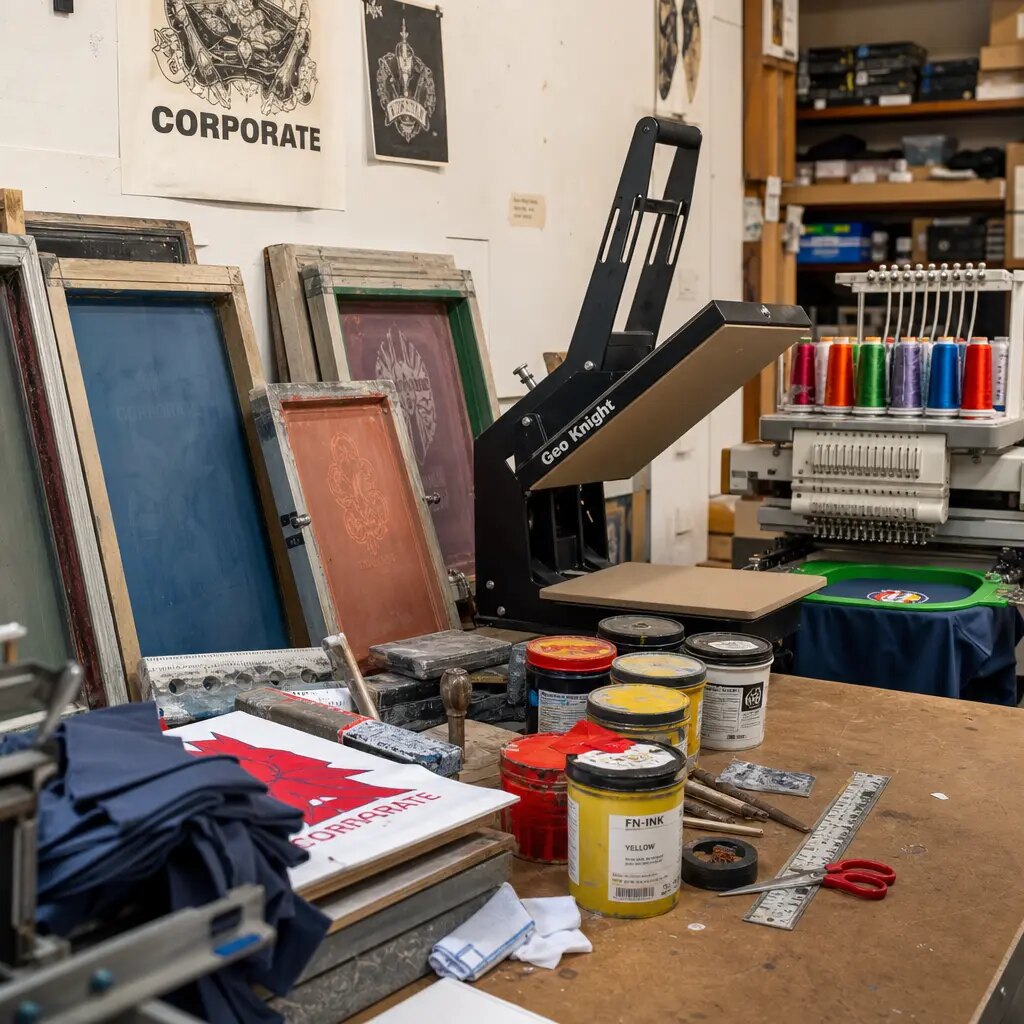
Decoration is often the difference between a flexible MOQ and a complicated production plan. One-color screen print on natural canvas is usually the most efficient route for wholesale canvas grocery totes for hotel retail. It fits understated hospitality branding, keeps setup manageable, and is easier to repeat on reorders. Simple does not mean careless, though. Canvas has texture, and texture changes how artwork prints.
Fine serif type, small destination names, thin map lines, delicate illustrations, and large solid ink areas should be tested on the selected canvas. A digital mockup cannot show ink spread, edge softness, pinholes, or the way heavy ink changes hand feel. Approve a strike-off before the pre-production sample. Define the print size, ink color reference, minimum acceptable clarity, and placement from measurable points such as the top edge and side seam. “Centered” is not enough for inspection.
Retail upgrades can be worth it, but each one adds another MOQ and QC checkpoint. Embroidery adds texture and perceived value, yet it can pucker lighter canvas and becomes costly when stitch count is high. Woven labels look refined, but they bring label MOQ, color approval, spelling checks, and placement tolerance. Heat transfers can handle detail, but they need rub, edge, and cracking checks. For a first order, protect one strong brand detail: a clean front print, a subtle woven side label, or a well-placed hangtag. Avoid stacking every upgrade into the launch PO.
- Use one-color screen print when MOQ flexibility and clean hotel branding are priorities.
- Approve a strike-off on the chosen canvas weight, not on paper or a different fabric.
- Define print placement from measurable edges: top edge, side seam, bottom edge, or center line.
- Use a small woven label when subtle retail finishing matters, but quote label MOQ separately.
- Use embroidery selectively on heavier canvas and confirm backing, stitch density, thread color, and puckering risk.
- Avoid multiple property logos in the first run unless the supplier confirms the print setup and sorting impact.
Build an RFQ That Makes Quotes Comparable
A supplier cannot quote accurately from “canvas grocery tote with hotel logo.” That description leaves too much open. One factory may quote a lighter cotton tote with basic stitching. Another may quote a heavier canvas bag with reinforced handles, cleaner packing, and full carton data. The lowest unit price is not helpful if the products are not the same.
A procurement-ready RFQ should include finished dimensions, canvas weight, GSM where available, fabric composition, color, finish, logo method, print colors, artwork size, artwork placement, handle construction, reinforcement method, seam type, packing method, sample requirements, inspection standards, order quantities, Incoterm, destination, and delivery window. Hotel retail buyers should also include barcode needs, SKU separation, property allocation, carton marks, display folding, and whether goods ship to one warehouse or multiple properties.
Stepped pricing makes MOQ negotiation more rational. Ask for your preferred trial quantity, the supplier’s normal MOQ, and the next efficient production breaks. Practical examples might be 300, 500, 1,000, 2,000, or a quantity tied to a fabric-roll yield. The price curve tells you whether the quote is driven by setup, material usage, printing efficiency, packing labor, or freight volume. A visible below-MOQ surcharge is often better than an unrealistically low all-in price that hides weaker fabric, substitute components, or rushed QC.
- Provide vector artwork and specify print size, print color reference, and placement tolerance.
- Request fabric details: oz, GSM, composition, finish, shade, and whether it is stock or custom sourced.
- Request construction details: seam type, handle material, reinforcement method, thread color, and finished tolerance.
- Request packing details: fold method, pieces per carton, carton dimensions, net weight, gross weight, and total CBM.
- Request sample cost, sample lead time, production lead time after sample approval, and inspection timing.
- Use the same Incoterm across quotes, such as EXW, FOB, CIF, or DDP, so landed-cost comparisons are not distorted.
Negotiate MOQ With Tradeoffs the Factory Can Actually Use
Factories can lower MOQ only when the production plan still works. Pressure by itself often creates bad outcomes: a supplier quotes a number it cannot support, hides cost in another line, substitutes fabric, shortens inspection time, or compresses sampling. A better negotiation starts by separating non-negotiables from flexible choices.
Non-negotiables might include the canvas weight, finished size, handle strength, approved logo position, delivery date, and sample match. Flexible choices might include the exact natural shade, individual polybags, hangtag style, carton quantity, thread shade, label type, or the number of artwork versions. For a launch order, the most reliable MOQ reductions usually come from stock natural canvas, one finished size, one print color, one artwork, standard thread, and flat export cartons.
Be clear about forecast without overstating commitment. A realistic reorder forecast can help the factory plan fabric and quote more confidently, but it should not be presented as a promise unless purchasing has approved it. If the hotel group needs a small first order to test boutique sell-through, say that. Ask for a trial-order price with a documented surcharge if needed. Quality expectations should remain the same, even when quantity is below the supplier’s standard minimum.
- Offer stock natural canvas in exchange for lower MOQ instead of requiring custom dyed fabric.
- Keep one size and one artwork version across properties for the launch order when brand standards allow.
- Accept standard flat packing unless shelf-ready sleeves or individual packaging are operationally required.
- Ask for a visible below-MOQ surcharge rather than an unclear all-in price.
- Offer flexible production timing only if the launch date allows it; do not trade away inspection time.
- Keep the approved quality standard unchanged even when the order quantity is below the supplier’s normal MOQ.
Use Sampling to Test the Tote the Way Guests Will Use It
A canvas grocery tote sample should not be approved from a table photo. Pick it up. Load it. Carry it. Fold it. Put it on a shelf. Compare it with the planned retail price and the surrounding hotel merchandise. A tote may look fine when flat but twist when loaded, sag under bottles, feel too thin beside other boutique items, or show artwork problems only when handled.
Sampling should happen in stages. First, approve fabric swatches for weight, texture, shade, and hand feel. Second, approve a print strike-off on the selected canvas so the buyer can judge ink color, coverage, clarity, and rub behavior. Third, approve a pre-production sample made with final size, final construction, and final decoration. If the supplier uses substitute fabric, temporary thread, or non-final decoration at any stage, it should be disclosed in writing.
Keep one sealed approved sample with the factory and one with the buyer. The PO should reference the approved sample, but the sample alone is not enough. Include a tolerance sheet and inspection checklist. Measure width, height, gusset, handle width, and handle drop. Load the tote with realistic contents such as bottles, grocery items, books, folded apparel, spa products, sunscreen, or local food packs. After carrying, inspect handle stress points, seams, print surface, and overall shape.
- Approve fabric swatch, print strike-off, and pre-production sample as separate stages.
- Measure sample dimensions against the RFQ tolerance sheet and record the results.
- Load the tote with expected contents plus a reasonable safety margin, then inspect seams and handle reinforcement.
- Check print sharpness, ink coverage, color, and rub behavior on the actual canvas texture.
- Confirm folded appearance, shelf stack, hanging behavior, and barcode or hangtag placement if used.
- Reference the approved sample and tolerance sheet in the PO and final inspection checklist.
Set QC Standards Before Bulk Cutting Begins
Canvas totes are simple products, which means defects are visible. Crooked handles, uneven logo placement, dirty natural canvas, loose threads, open seams, print smudges, and size variation can make a hotel retail item feel cheap. A low MOQ should not mean loose quality control. In fact, smaller hotel orders often have less room for rejects because cartons may be assigned to specific properties, events, or boutique opening dates.
Define critical, major, and minor defects before production. Critical or major defects may include wrong artwork, wrong fabric, missing required barcode, broken handle attachment, severe stains, mildew odor, open seams, incorrect size outside tolerance, or badly misplaced print. Minor defects may include trim-able loose threads or small cosmetic issues within agreed limits. Repeated minor defects still matter because they point to weak line control.
Inspection can follow the buyer’s normal AQL system if one exists, but the checklist must be product-specific. For canvas grocery totes, include measurement sampling, handle load checks, seam review, print appearance, print rub checks, label and hangtag verification, cleanliness inspection, carton count, carton marking, and packing-list accuracy. Inspect against the signed PO, tolerance sheet, approved fabric cutting, approved strike-off, and sealed pre-production sample. Do not inspect against a vague product name or digital mockup.
- Set measurement tolerances before cutting; common starting points are body ±1 cm, gusset ±0.5-1 cm, handle drop ±1 cm, and print placement ±0.5-1 cm.
- Inspect handle reinforcement for skipped stitches, thread breaks, weak corners, loose bar tacks, and tearing at stress points.
- Check print for smudging, pinholes, bleeding, poor edge definition, off-registration, wrong color, and inconsistent coverage.
- Reject serious cleanliness problems such as oil marks, mildew smell, heavy dust, dark stains, or odor transfer on natural canvas.
- Verify label artwork, spelling, barcode scanability, hangtag placement, SKU separation, and property allocation.
- Confirm carton count, carton marks, packing list, and PO references before shipment release.
Control Packing, Cartons, and Landed Cost
Unit price is only part of the buying decision. Canvas grocery totes can be bulky, especially when the fabric is heavier, the gusset is larger, or the fold is designed for retail display. Carton dimensions, pieces per carton, gross weight, total CBM, and packing method affect ocean freight, air freight, warehouse handling, hotel receiving, and property distribution. A quote without carton data is incomplete.
Flat packing in export cartons is often the most practical choice for an MOQ-sensitive launch. It reduces packing labor and avoids unnecessary individual plastic when polybags are not required. But unbagged natural canvas still needs protection. Ask for clean inner liners or equivalent protection, dry storage, proper carton sealing, and export-grade cartons. If the totes must arrive ready for a boutique shelf, confirm the fold method and compression level. Over-packed cartons can leave heavy creases that weaken the retail presentation.
Retail labeling should be decided early. Some hotel groups need barcode labels on hangtags. Others need carton-level labels for warehouse receiving or property-specific carton marks for distribution. Each choice affects labor, artwork approval, and component MOQ. For a first order, carton-level labeling or a simple hangtag may be more efficient than printed belly bands, individual sleeves, or custom retail cartons. If custom packaging is required, quote it separately so procurement can see the MOQ and cost impact clearly.
- Request pieces per carton, carton dimensions, net weight, gross weight, total cartons, and total CBM for each quoted quantity.
- Confirm whether bags are packed flat, half-folded, rolled, bundled, or individually packed because this changes creasing and freight volume.
- Avoid cartons that are too heavy for hotel receiving teams; many buyers prefer practical carton weights rather than maximum packing density.
- Require clean carton liners or equivalent protection when totes are not individually polybagged.
- Separate costs for hangtags, barcode stickers, belly bands, sleeves, polybags, and master cartons.
- Match carton marks to PO number, SKU, quantity, destination, hotel property, and any warehouse routing requirements.
Specification comparison for buyers
| Spec decision | Recommended B2B option | When it fits | Buyer risk to verify |
|---|---|---|---|
| Opening-order fabric | Stock natural cotton canvas, typically 10 oz or 12 oz; confirm GSM equivalent, composition, weave, and finish | Hotel boutique launch orders, guest-market packaging, amenity bags, and first POs where MOQ flexibility matters | Natural canvas shade can vary by roll. Approve a physical bulk cutting and define acceptable shade range instead of relying on supplier photos. |
| Premium fabric route | 14 oz cotton canvas, custom dyed canvas, washed canvas, recycled blend, or certified material if documentation is required | Resort retail, destination stores, premium grocery totes, and higher perceived-value programs | Fabric mill MOQ may exceed sewing MOQ. Ask for fabric MOQ, dye MOQ, certification scope, and unused-fabric liability separately. |
| Fabric specification | Quote by oz and GSM, composition, weave, color, finish, and whether weight is before or after washing | Any program where multiple supplier quotes must be compared fairly | Terms such as “heavy canvas” or “thick cotton” are not procurement specs. Require measurable fabric data and physical swatches. |
| Logo method | One-color screen print on the approved canvas, with a strike-off before pre-production sample approval | Clean hotel branding, lower setup complexity, faster sampling, and MOQ-sensitive orders | Fine lines can fill on textured canvas. Confirm minimum line thickness, ink coverage, print size, placement tolerance, and rub performance. |
| Retail branding upgrade | Small woven side label, cotton label, modest embroidery, or simple hangtag | When the tote needs a retail finish without moving into a fully custom material program | Labels, embroidery, and hangtags often have separate MOQs. Confirm label MOQ, backing, stitch density, placement tolerance, and barcode rules. |
| Size format | Common grocery tote range: about 36-40 cm wide x 38-45 cm high, with an 8-12 cm gusset | Hotel markets, local food items, books, apparel, wine plus snacks, and spa retail purchases | Oversizing increases fabric consumption, carton CBM, and freight cost. Undersizing can make the bag feel promotional rather than retail-ready. |
| Handle construction | Self-fabric or cotton webbing handles, commonly 2.5-3.5 cm wide, reinforced with box-cross stitch or bar tack | Repeated guest shopping use and moderate grocery loads | Handle drop must match hand or shoulder carry. Measure finished drop and load-test with realistic contents before approval. |
| Tolerance plan | Typical starting point: body width/height ±1 cm, gusset ±0.5-1 cm, handle drop ±1 cm, print placement ±0.5-1 cm | Most hotel retail totes without rigid fixture constraints | Tighter tolerances may increase rejection rate and cost. Put tolerances in the PO and inspection checklist before bulk cutting. |
| Packing method | Flat packed, often 50-100 pcs per export carton depending on fabric weight and carton size; avoid individual polybags unless required | MOQ-sensitive hotel retail launches and sustainability-conscious programs | Unbagged canvas can pick up dust, odor, or moisture. Require clean liners, dry storage, carton sealing, and carton gross-weight limits. |
Buyer checklist before sampling
- Define the commercial use before negotiating MOQ: hotel boutique resale, guest amenity, local market packaging, spa retail carryout, event merchandise, staff store item, or room-package component.
- Set measurable retail requirements: expected contents, target selling price band, maximum intended load, shelf or hanging display method, barcode need, property allocation, and required in-store date.
- Choose a realistic canvas range before comparing quotes: 10 oz for lighter or price-sensitive programs, 12 oz for balanced hotel retail, 14 oz for premium or heavier-load positioning.
- Ask suppliers to state both oz and GSM where possible; common references are approximately 10 oz around 280-340 GSM, 12 oz around 340-410 GSM, and 14 oz around 410-475 GSM, but mills vary, so swatches and supplier data must confirm.
- Separate MOQ by component: fabric, dyeing, washing, cutting, sewing, printing, woven label, embroidery, hangtag, barcode sticker, individual polybag, master carton, and export booking.
- Request fabric swatches with composition, weight, finish, shade reference, and status: greige, natural, bleached, dyed, washed, recycled blend, organic, or stock inventory.
- Set finished bag dimensions: width, height, gusset depth, handle width, handle drop, seam allowance, fold method, and acceptable tolerance for each measurement.
- Attach vector logo artwork and define print size, color reference, print position from top edge and side seam, minimum line thickness, and whether artwork can be simplified for screen printing.
- Approve a print strike-off on the chosen canvas before approving the full pre-production sample, especially for fine typography, destination illustrations, or large solid ink areas.
- Load-test the sample with expected hotel retail contents such as bottles, grocery items, books, folded apparel, spa products, sunscreen, or local food packs, and inspect handle stress points afterward.
Factory quote questions to send
- What is the MOQ for this tote if we use stock natural cotton canvas, one finished size, one-color screen print, and standard flat export packing?
- Which exact component drives your MOQ: fabric roll, dyeing, cutting, sewing line setup, screen print setup, woven label, embroidery, hangtag, barcode sticker, polybag, carton, or export consolidation?
- Can you quote the same finished size in 10 oz, 12 oz, and 14 oz canvas, including unit price, fabric composition, carton weight, carton dimensions, and total CBM?
- Please state the fabric weight in oz and GSM, the allowed fabric-weight tolerance if available, and whether the weight is measured before or after washing or finishing.
- Is the canvas greige, stock natural, washed natural, bleached, dyed, recycled blend, organic, or custom ordered? What shade variation should we expect between rolls and lots?
- If we select custom dyed fabric, what are the fabric MOQ, dye-lot MOQ, lab-dip timing, bulk shade tolerance, and liability for unused fabric?
- What print method do you recommend for our artwork on this fabric weight, and what limits apply for minimum line thickness, small text, registration, ink coverage, and edge sharpness?
- How many pieces are included in the sample fee, and will the sample use exact bulk fabric, substitute fabric, exact final decoration, or temporary decoration?
- What are your normal finished-product tolerances for width, height, gusset, handle width, handle drop, print placement, and label placement?
- Can you provide stepped pricing at our trial quantity, your standard MOQ, and the next efficient production break, such as 300, 500, 1,000, 2,000, or a full fabric-roll quantity?
Quality-control points to confirm
- Finished bag size should match the PO tolerance. A common starting point is body width and height ±1 cm, gusset ±0.5-1 cm, handle drop ±1 cm, and print placement ±0.5-1 cm unless the buyer requires tighter fixture tolerances.
- Fabric weight should match the approved swatch and quote. If a dispute is possible, request random cutting-weight checks or supplier fabric inspection records for the bulk roll.
- Canvas shade, hand feel, weave texture, and surface cleanliness should be compared against the approved bulk fabric cutting under consistent lighting, not against a digital mockup.
- Handle attachment should use the approved reinforcement method, such as box-cross stitch or bar tack, with no skipped stitches, broken thread, weak corners, loose reinforcement, or tearing at stress points.
- Handle drop should be measured on finished bags after sewing and tested for intended carry style, especially if the tote is sold as a shoulder-carry grocery tote.
- Seams should be straight and secure, with no open seams, excessive puckering, twisted panels, raw fraying edges beyond the approved seam finish, needle damage, or loose threads that cannot be trimmed cleanly.
- Print position should be checked from defined measurement points: top edge, side seam, bottom edge, and center line as applicable. “Centered” alone is not precise enough for inspection.
- Logo color should be judged against the approved strike-off or physical color reference under consistent lighting, with clear allowance for natural fabric shade variation.
- Print quality should be checked for smudging, pinholes, poor edge definition, off-registration, ink bleeding, cracking, and coverage inconsistency across the production lot.
- Print adhesion and rub resistance should be checked with dry rub and, if relevant to guest use, a light damp rub. The buyer should define whether visible transfer is acceptable or rejectable.