Start with the buying outcome, not the tote spec
Wholesale canvas grocery totes look simple, but the buying decision is not simple. For a startup team, the tote may need to do several jobs at once: carry groceries, support a launch campaign, fit employee onboarding, and remain easy to reorder without redesign. If procurement starts with a generic product description, the quote process drifts into supplier-led assumptions. The better path is to define the business outcome first and let the tote spec follow from that need.
The key distinction is whether the bag is a disposable promotion item or a repeatable program asset. A giveaway tote can tolerate a lighter fabric, simpler decoration, and basic packing. A retail tote or premium employee kit needs more control: stronger construction, cleaner finishing, tighter sample approval, and re-order terms that do not force a full requalification every time the team replenishes. That difference affects both the price and the negotiation position.
For tech startups, the first tote order often sits between marketing and operations. Marketing wants the product to look credible, while operations wants the product to arrive on time, fit a warehouse process, and avoid hidden chargebacks later. Procurement adds value by turning those goals into a spec that factories can quote cleanly. That means using measurable inputs: size, load use, print method, quantity by variant, sample requirements, and packing needs.
It also means avoiding template language that hides the real tradeoff. “Eco-friendly,” “premium,” and “durable” are not enough for a supplier to quote against. A buyer-grade RFQ says what the tote must carry, how it will be distributed, what must be printed, how it will be packed, and what can vary without triggering a re-approval. Once the supplier sees the program in that form, the negotiation changes from vague comparisons to real commercial choices.
Choose fabric weight and finish before you talk price
Fabric weight is one of the strongest drivers of both unit cost and user perception. For wholesale canvas grocery totes, 10 oz to 12 oz is usually the most practical range because it gives the bag enough structure for shelf presentation while keeping sewing and freight costs in a reasonable range. Below that band, the bag may feel thin or distort under load. Above it, the tote starts to add cost faster than it adds practical value unless the program truly needs a premium feel.
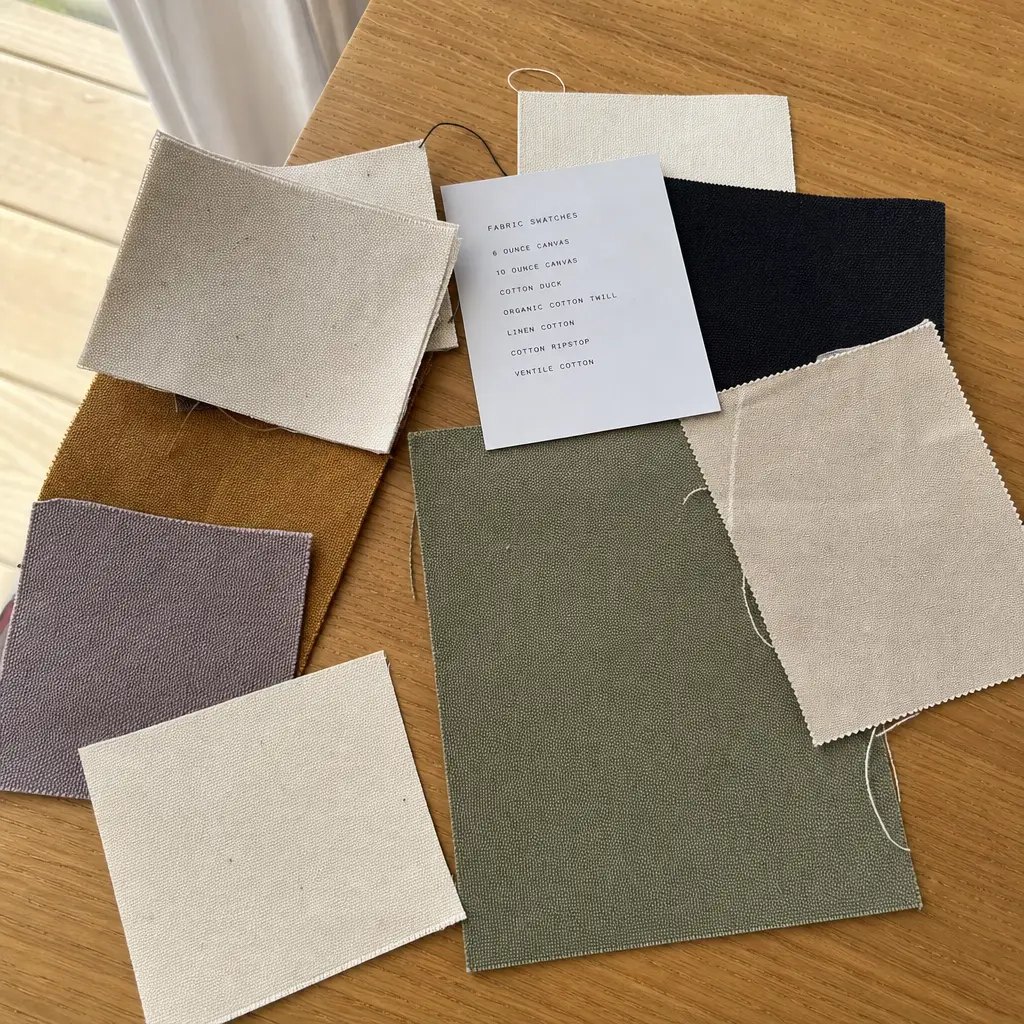
Use both oz and GSM in the RFQ if you source across regions. Many quote mismatches start because one supplier is quoting a different unit system or a different fabric assumption. Also state whether the cloth is raw, bleached, dyed, washed, or recycled-content. Each choice changes print contrast, shade consistency, shrink behavior, and in some cases the available MOQ. Natural canvas and dyed canvas can both be valid, but they are not the same procurement decision.
Do not accept “strong canvas” as a spec. Ask the supplier to state the actual fabric weight range, expected shrinkage, and whether the fabric is pre-shrunk or expected to settle after cutting or handling. If the tote must stack neatly on retail shelving, dimensional drift matters more than a marginal difference in fabric cost. The buyer should define the acceptable range, not let the supplier define “close enough.”
A good supplier answer on fabric usually includes a tradeoff explanation. If the vendor can say why they recommend 10 oz for a pilot, 12 oz for a heavier use case, or a washed finish for a softer hand, that is a useful signal. If they push the cheapest cloth without asking about the load or channel, they are optimizing for the quote, not the program.
Treat construction as a negotiation lever
A canvas tote quote is only comparable when the construction is comparable. Flat, gusseted, and lined totes all sit in the same product family, but they use different fabric amounts, different labor steps, and different finishing time. Gussets improve usable volume and help the bag stand up on shelves. Reinforced bottoms and top hems improve the finished look and reduce failure risk. Those are commercial choices, not just style preferences.
For grocery use, a gusseted body with reinforced bottom seams and a clean top hem is usually the best baseline. If the tote will carry heavier items or be used repeatedly, ask for webbing handle width, handle length, and reinforcement stitch type to be included in the quote. Box-X and bar-tack are common methods, but the buying question is not the name of the stitch. It is whether the factory can show the attachment method and explain how it affects load behavior and sewing time.
Good construction language is measurable. Instead of asking for a sturdy handle, specify the webbing width, stitch pattern, and attachment length. Instead of asking for a roomy tote, specify body width, height, and gusset depth. Those details help you compare offers and inspect the finished bag without debate. They also make it much harder for a supplier to reduce cost by quietly changing a hidden dimension after the sample is approved.
This is where buyers can push back on price intelligently. A slightly longer handle, wider gusset, or heavier top hem changes material usage and labor. If a supplier gives a higher quote, ask which construction item is driving the increase. That turns the conversation from “Your price is too high” into “Which element is materially different, and can we simplify it without hurting the program?” The second version creates leverage without damaging the relationship.
Negotiate MOQ by variant, not by a single headline number
The first MOQ question should never be “Can you do 2,000 units?” The better question is what the MOQ is by fabric color, print color, label type, and packing format. Factories often have one minimum for the body, another for printing setup, and another for custom finishing. If those are bundled into one answer, you lose visibility into what really drives the minimum.
That matters even more for startup buyers because the first order often has two jobs: prove the tote works and prove the demand exists. Ask for two prices: a pilot run and a replenishment run. The pilot may have higher per-unit cost because setup charges are spread over fewer pieces. The replenishment price should improve if the spec stays frozen and the supplier can reuse the same artwork, materials, and process. If the repeat price does not improve, press the supplier on what is still being re-set each time.
Variant minimums can hide in labels, hangtags, and carton marks. A supplier may agree to a small tote MOQ but require a separate threshold for a woven side label or a branded polybag. Buyers should ask whether those items are optional for the pilot. If removing a label unlocks a lower MOQ without hurting the launch, that is often a better commercial move than forcing the factory to absorb complexity.
A strong negotiation tactic is to ask which spec change increases MOQ the most. In many cases, the real drivers are extra print colors, a custom label, special packing, or a dyed fabric color that has to be reserved as a custom run. Once the supplier names the constraint, you can decide whether to simplify the spec, split the launch into phases, or accept a higher MOQ in exchange for a better long-term re-order path. That is a much better outcome than arguing about a number that was never based on the same build.
Validate supplier route before you compare unit price
A direct factory quote and a trading-company quote can look similar on paper while carrying very different risks. A direct factory usually gives tighter control over fabric booking, sewing, printing, and corrective action. A trading layer can be useful when procurement needs one point of contact for multiple items or wants more project coordination, but the buyer should be explicit about where the tote is actually made and who owns quality decisions if the order changes.
The commercial question is accountability. Ask who approves artwork, who books the material, who signs off on the sample, who handles packing, and who performs final inspection. If those steps live in different places, the quote should show that structure. Fragmented ownership is not automatically bad, but it raises the need for tighter documentation because blame can move around if there is a shade issue, stitch defect, or count discrepancy.
A useful supplier validation signal is consistency in answers. Buyers should ask the same question in slightly different ways: what material they use, what process they use, and what happens if the bulk does not match the sample. Good suppliers answer in a way that is internally consistent and specific. Weak suppliers often respond with broad reassurance, which is not enough when the tote program has a launch date and a fixed budget.
For a repeatable tote program, the best partner is often the one that can explain how re-orders work without starting over. Which costs are reusable? Which setup items need to be paid again? What changes force a new sample? If the supplier can answer those cleanly, procurement has a more reliable path to future buys. If they cannot, the cheapest quote may be a false economy.
Use a real supplier comparison table, not a spec summary
A useful comparison table should help buyers compare suppliers, not just compare tote features. The most important commercial variables are control, flexibility, repeat-order value, and how much risk sits outside the factory door. Buyers often get a spec-decision table that lists fabric weight and print options, but that does not tell procurement who is easiest to work with when the first run is over and the second run is due.
Before comparing suppliers, insist that each quote uses the same specification sheet. If one supplier includes labels, carton marks, and inspection while another prices only the sewn tote, the lower quote is not actually lower. Ask for a pilot quantity and a repeat quantity so the scale break is visible. If the repeat price does not improve, that is a signal that setup costs are being spread poorly or that the supplier does not expect a smooth re-order process.
| Supplier type | Commercial strength | When it wins | What to verify | | --- | --- | --- | --- | | Direct factory | Best control over construction and corrective action | Stable specs, re-orders, and tighter quality expectations | Material control, sample ownership, inspection process | | Trading company | Better coordination across multiple items | Mixed kits or buyers who need one project manager | Actual manufacturing site, escalation path, re-order terms | | Small workshop | Flexible on low pilots and special handling | Early validation runs or unusual builds | Capacity, repeatability, quality consistency | | Regional stockholder | Fast lead times on simple stock items | Rush replenishment or plain blank programs | Exact fabric weight, available colors, decoration limits |
Read samples like production documents
A sample should prove the production method, not just the appearance. For wholesale canvas grocery totes, the best approval sequence is blank fabric sample, decorated sample, then a pre-production sample made from bulk materials. Each stage catches a different risk. The blank sample shows fabric hand, shade, and weight. The decorated sample shows print behavior and logo placement. The pre-production sample shows whether the final cut, seam, and packing logic are truly ready for scale.
Approval should be documented like a production record. Note fabric weight, finished dimensions, handle length, logo placement from the top edge or seam, stitch type, and any accepted shade range. If the sample is acceptable only within a small deviation, write the tolerance down in millimeters or inches. That prevents later disputes over what “close enough” meant when the bag was signed off.
If the tote includes a woven label, side tag, hangtag, or special insert, those should appear in the sample approval as well. Branding details are often treated as minor until a warehouse rejects them or a retail team notices the placement is off. The more teams involved in approval, the more important it is to keep one version-controlled sample record that procurement, marketing, and operations all reference.
Avoid the common trap of approving the appearance and hoping the factory will manage the rest. Once the sample is approved, many factories treat that version as the standard even if the buyer later remembers a detail differently. That is why sample approval needs date, version number, and a clear link to the PO or spec sheet. A good sample is not just a nice object. It is a contract reference.
Set QC thresholds that a factory can actually test
QC only works when the acceptance criteria are measurable. For canvas grocery totes, the factory should know exactly what counts as pass and fail before production begins. That means size tolerances, stitch rules, print placement, fabric weight range, carton loading limits, and load behavior all need to be written into the order documents. If the team waits until inspection to define them, the supplier has too much room to interpret the result generously.
The practical checks are straightforward: verify fabric weight, measure finished size, inspect handle reinforcement, check print placement, review seam quality, and confirm carton count. The difference between weak and strong QC is the threshold. A buyer should not say “the tote looks fine.” A better standard is “finished width, height, and gusset depth must stay within the approved tolerance window.” Likewise, handle attachment should be checked with a pull test or load check, not just a glance.
For buyers who want a more defensible inspection plan, use AQL-based sampling for pre-shipment checks and define defect severity in advance. A critical defect is one that affects safety or basic usability. A major defect affects function, appearance, or the ability to sell the bag as approved. A minor defect is cosmetic but still counts against quality expectations. That structure helps everyone understand whether an issue is a rejection, a rework, or a note for future improvement.
Use hard examples in the PO. If a handle stitch opens during a load test, it fails. If print registration drifts beyond the agreed placement tolerance, it fails. If carton count is short, it fails. If the box-X reinforcement is visibly incomplete, it fails. The value of this language is not bureaucracy. It is leverage. It gives procurement a clean basis to reject bad work without turning the shipment into a negotiation after the fact.
Treat packing and freight as part of landed cost
Packing can change the landed cost more than buyers expect. A canvas tote is not fragile, so bulk packing should usually be the default unless the sales channel truly requires retail presentation. Individual polybags, tissue inserts, branded cartons, and shelf-ready labels add labor, plastic, and cube. They may be worth it for retail or direct-to-consumer fulfillment, but they should be priced as a distinct decision, not assumed from the start.
When requesting quotes, specify inner pack, carton count, carton dimensions, gross weight, and carton marks. Those details affect freight planning, warehouse handling, pallet patterns, and receiving compliance. A low factory price can become expensive if the carton format creates poor container utilization or requires manual rework on arrival. Procurement should compare landed cost, not just ex-factory cost.
Ask the supplier which packing method matches the channel. If the goods are going to a fulfillment center, the pack should match inbound rules. If the goods are going to stores, the carton may need clearer marks or barcode labels. If the goods are for internal distribution, bulk packing is often the best value. The point is to match the pack to the route, not to use a more expensive pack because it sounds more professional.
This is often the easiest place to save without lowering quality. A better bag does not help if the packing wastes freight volume. A retail-ready pack does not help if the tote will be distributed by HR in controlled quantities. The best procurement choice is usually the one that fits the actual distribution model with the least extra handling.
Turn lead time into a schedule with checkpoints
Lead time is not a single number, and a quote that treats it as one number is not giving procurement enough to manage. A real timeline includes artwork confirmation, sample making, sample approval, material booking, cutting, sewing, printing, inspection, packing, and shipment. If the supplier only gives a production window, it may exclude the time the buyer still needs before the order can actually start.
The cleanest approach is to separate pre-production timing from bulk production timing. Then add internal buffer for artwork revisions, approval delay, and freight booking. If the tote is tied to a launch or event date, that buffer matters as much as the quoted sewing days. A slightly higher price can still be the better deal if the supplier can lock the schedule and explain the critical path clearly.
It is also worth asking whether the supplier is quoting against available fabric or against a material booking that still has to happen. Custom fabric color, special labels, or custom packing can extend the timeline more than the sewing itself. If the supplier cannot explain what drives the delay, the delivery promise is not dependable yet. Buyers should know which steps are fixed, which are variable, and which ones change when the spec changes late.
For startup launches, simplicity is often the best schedule protection. A simpler tote spec, a cleaner approval path, and an earlier sample freeze can matter more than pushing hard on the factory for a shorter quoted lead time. Time risk tends to cost more than a modest difference in unit price.
Specification comparison for buyers
| Supplier route | What it gives you | Best-fit use case | Buyer risk to manage |
|---|---|---|---|
| Direct factory | Direct control over fabric, sewing, printing, and correction loops | Repeat orders, stable specs, and tighter control over construction details | Confirm who owns each approval step and whether the factory can support re-orders without changing materials |
| Trading company | Project coordination across multiple items or sites | Mixed branded kits, bundled procurement, or buyers who want one contact point | Verify where the tote is actually made and who signs off on quality or corrective action |
| Small workshop | Flexibility on very low pilots and unusual requests | Proof-of-concept runs or special handling where speed matters more than scale | Check capacity, finish consistency, and whether the shop can repeat the same build later |
| Regional stockholder | Fast delivery of blank or lightly branded stock items | Rush replenishment, simple giveaways, or channel tests | Confirm exact fabric weight, brandable area, and whether stock is truly available in the needed color and size |
| Material | 8-12 oz cotton canvas, 120-220 gsm cotton, recycled cotton, or blended fabric selected by use case and target price | Before price comparison | Different cloth weights, backing, or certification claims make quotes hard to compare |
| Construction | bag size, gusset, handle drop, seam allowance, stitch density, reinforcement patch, and loading expectation | Before sampling | Weak stress points create returns and failed inspections |
| Decoration | screen print, heat transfer, embroidery, woven label, or hangtag matched to fabric texture and brand durability needs | Before artwork approval | The wrong method can crack, bleed, pucker, or fail on the chosen fabric |
| MOQ | Base MOQ plus change drivers | During quote review | Custom colors, trims, and packing can change minimums |
Buyer checklist before sampling
- Write the tote use case first: grocery carry, employee kit, retail sale, event giveaway, or fulfillment insert.
- Lock body size, gusset depth, handle length, and target load before asking for prices.
- State canvas weight in oz or GSM and note whether the cloth is raw, bleached, dyed, washed, or recycled-content.
- Ask the supplier to quote pilot MOQ and replenishment MOQ separately.
- Require line items for fabric, sewing, print setup, label cost, packing, and carton marks.
- Request blank sample, decorated sample, and pre-production sample made from bulk materials.
- Ask for size tolerances, stitch spec, print placement tolerance, and color acceptance criteria in writing.
- Confirm carton count, gross weight, and packing format match the receiving rules of the warehouse or DC.
- Name the approval owner for artwork, sample sign-off, and carton label approval.
- Ask how the supplier handles failed samples, corrective action, and repeat-order pricing.
Factory quote questions to send
- What is the MOQ by fabric color, print color, label type, and packing format, not just the headline order quantity?
- Which canvas weight will you use, and what tolerance do you allow on fabric weight and finished size?
- Can you quote pilot pricing separately from repeat pricing so we can see the re-order economics?
- Does your quote include screens, artwork conversion, color matching, sample making, labels, and export packing?
- What handle width, attachment length, and reinforcement stitch do you recommend for grocery load use?
- Can you share a construction photo or sample showing the handle attachment and bottom reinforcement?
- What is the blank sample timeline, decorated sample timeline, and pre-production sample timeline?
- Will the production lot use the same fabric, thread, and print process as the approved sample?
- What shrinkage allowance do you build in for raw or washed canvas?
- What inspection standard do you use, and can we appoint a third-party inspector before shipment?
Quality-control points to confirm
- Fabric weight falls within the agreed oz or GSM range on incoming material or cut panels.
- Finished width, height, and gusset depth stay within the approved tolerance window.
- Handle width, handle length, and attachment placement match the spec and approved sample.
- Handle reinforcement uses the agreed stitch pattern, and a pull test does not show thread breakout or seam opening.
- Recommended buyer threshold: define a minimum load test in your spec, such as a 10 lb to 15 lb static hold for light grocery use or a higher buyer-approved threshold for heavier programs.
- Side seams, bottom seams, and top hem stitching are inspected for skipped stitches, loose ends, puckering, or uneven tension.
- Print position, registration, and ink density match the approved art with no blur, cracking, or off-center drift beyond tolerance.
- Shade consistency is checked against the approved reference under the same lighting condition for all lots.
- Carton count, carton marks, and gross weight match the packing list and warehouse receiving rules.
- Label placement, woven tag alignment, and hangtag attachment are checked if those items are included.