1. Why tech startup tote sourcing needs a procurement-grade spec
Wholesale canvas grocery totes for tech startups are often purchased by marketing, people operations, event teams, retail teams, or procurement. That mix creates a familiar sourcing problem: the bag is treated like a simple branded giveaway, but the order behaves like a manufactured textile product. Fabric weight, handle strength, print method, carton volume, sampling, and defect definitions all affect the final cost and launch risk.
For a tech startup, the same tote may appear in employee onboarding kits, conference booths, customer gifting, retail resale, investor events, recruiting fairs, or partnership mailers. Each use case changes the correct specification. A conference giveaway may prioritize quick production and a bold one-color print. A grocery-style reusable tote should prioritize fabric body, handle reinforcement, and seam strength. A retail merch item needs cleaner finishing, consistent sizing, and packaging that supports receiving and resale.
The bulk pricing plan should start with operating intent: what does the tote need to carry, how visible is the brand mark, how long should the bag last, and how will it be distributed? If procurement sends only a logo file and a target quantity, suppliers will fill in the missing details differently. One may quote 8 oz cotton, another 10 oz canvas, another 12 oz canvas with reinforced handles. The unit prices will look comparable, but the products are not comparable.
A stronger RFQ removes interpretation. It defines size, fabric weight, handle construction, gusset, decoration, packing, inspection, and quote basis. That does not mean over-engineering the tote. It means controlling the cost drivers before the supplier does. A clear spec also protects the brand team because the approved sample can be measured against the bulk shipment instead of judged by opinion after cartons arrive.
- Treat the tote as a manufactured product, not only a branded merch item.
- Define the end use before asking for price breaks.
- Use one controlled opening spec so all suppliers quote the same product.
- Require measurable quality criteria before PO release, not after shipment.
- Build the quote for landed cost, including packing and carton volume.
2. Start with size, fabric weight, and gusset before logo decoration
The first sourcing decision is not the logo. It is the structure of the bag. For canvas grocery totes, fabric weight and size determine handfeel, durability, sewing time, carton volume, and price. A practical B2B comparison range is 10 oz to 12 oz cotton canvas, approximately 339 to 407 GSM. A lighter canvas may work for short-term giveaways, but it can feel less stable when carrying bottles, produce, books, or boxed onboarding items. Heavier canvas can improve perceived value, but it raises material cost, can slow sewing, and may increase freight volume.
Buyers should confirm whether the quoted weight is oz per square yard, GSM, or a supplier shorthand. The conversion matters because 10 oz/yd² is about 339 GSM and 12 oz/yd² is about 407 GSM. The factory should also state whether the fabric weight is measured before or after dyeing, washing, softening, or other finishing. A tolerance such as +/-5% may be reasonable depending on the mill and fabric type, but the tolerance must be written into the approval record.
Size also needs precision. A tote described as “standard grocery size” is not enough for procurement. The RFQ should state finished width, height, bottom gusset, side gusset if used, handle width, and handle drop. If the tote will carry a laptop box, employee kit box, or retail insert, test the actual item in the sample. Flat measurements do not always predict packing performance because gusset construction and canvas stiffness affect how the bag opens.
Gusset design is a cost and function choice. A flat tote is cheaper and easier to print, but it does not behave like a grocery bag. A bottom gusset improves capacity and standing shape. A full side-and-bottom gusset gives more volume but adds cutting and sewing complexity. A reinforced base panel can help with heavier contents, but it adds fabric and labor. Procurement should ask whether the quoted base includes reinforcement or only a basic folded gusset.
- Use 10 oz to 12 oz canvas as the main reusable grocery tote comparison range.
- Ask suppliers to quote both oz/yd² and GSM, with the fabric-weight tolerance stated.
- Confirm finished width, height, gusset depth, handle width, and handle drop.
- Test real kit contents in the pre-production sample if the tote must carry boxed items.
- Do not compare a flat tote quote against a gusseted grocery tote quote.
3. Handle construction is where many low quotes become expensive
Handles are the most important stress point on a canvas grocery tote. A bag body may look acceptable on a table, but the real test happens when weight pulls against the handle base. For startup programs that expect repeat grocery use, laptop carry, books, drink bottles, or boxed kits, handle construction should be specified as carefully as fabric weight.
The RFQ should state handle material, width, length, handle drop, and reinforcement. Common options include self-fabric handles made from the same canvas as the bag or cotton webbing handles. Self-fabric handles can look more integrated and premium, while webbing handles can be efficient and strong when correctly sewn. Either route can fail if the seam allowance is narrow, stitch tension is poor, or reinforcement is inconsistent.
For reinforcement, buyers should request box-X stitching, cross-stitching, or bartacks at the handle base, depending on the design and factory capability. The supplier should confirm stitch density and thread type. Procurement does not need to dictate every machine setting, but it should ask what standard the factory will hold and how it will be inspected. A vague answer such as “strong handle” is not enough for a grocery tote program.
Load testing should be practical and tied to the use case. For example, if the intended load is 8 kg of groceries or boxed kit contents, ask the supplier to test the approved sample and random production pieces at or above that expected carry weight for a defined hold time. The goal is not to claim an unrealistic universal capacity; it is to confirm that the selected construction survives the buyer’s actual use case without seam pull, handle tear, or distortion.
- Specify handle material, width, handle drop, and reinforcement method in the RFQ.
- Require box-X, cross-stitch, or bartack reinforcement for heavier-use programs.
- Ask for the supplier’s seam allowance, stitch density, and thread standard.
- Use a defined load test based on your expected contents.
- Inspect handle bases after load testing, not just before.
4. Match decoration method to artwork, budget, and quality risk
For bulk canvas grocery totes, 1-color or 2-color screen printing is usually the most practical route for tech startup logos. It works well for bold vector marks, simple slogans, and high-volume event or employee programs. Screen print also makes pricing easier to compare because setup and per-color costs can be separated from the base bag cost.
The artwork must be reviewed before the quote is considered final. Canvas is textured, especially in heavier weights. Thin strokes, tiny text, gradients, halftones, and low-contrast colors may not reproduce cleanly. Buyers should ask the factory for minimum line width, minimum text height, maximum print area, and placement tolerance. If the artwork requires cleanup, that cost and time should be included before the PO is approved.
Color control needs realistic language. Printing on natural cotton canvas is not the same as printing on coated paper. Ink color can be affected by fabric shade, weave texture, ink opacity, and curing. If brand color is critical, provide a Pantone reference or approved physical sample and ask for a strike-off or printed pre-production sample. The approval should identify acceptable variation, especially if the base fabric is natural rather than bleached or dyed.
Premium decoration options such as embroidery, woven labels, patches, or side-seam labels can improve perceived value, but they change the cost model. Embroidery adds stitch count, machine time, backing decisions, and thread trimming. Woven labels add label MOQ, label lead time, placement control, and attachment labor. These methods can be worthwhile for executive kits or retail merch, but they should not be added casually to a cost-sensitive bulk tote plan.
- Use screen print for simple vector artwork and cost-sensitive bulk runs.
- Ask for minimum line width, minimum text height, print area, and placement tolerance.
- Approve a printed sample or strike-off when brand color matters.
- Use woven labels or embroidery only when the budget supports extra labor and QC.
- Separate decoration setup charges from the base bag unit price.
5. Build a bulk pricing plan that exposes fixed and variable costs
A useful bulk pricing plan does more than ask, “What is your best price for 5,000 totes?” It separates fixed costs from variable costs and shows how price changes at quantity breaks. Fixed costs may include sample development, artwork cleanup, screen setup, label development, cutting setup, and administrative handling. Variable costs include fabric consumption, thread, sewing labor, print labor, labels, packing materials, cartons, and inspection time.
Price breaks are not always linear. A supplier may offer a visible drop when the order reaches a more efficient cutting quantity, when screen setup is spread across more units, or when the production line can run without frequent changes. Conversely, adding more versions can erase the benefit of higher volume. Five thousand units split across five artwork versions may cost more than five thousand units of one controlled SKU.
Procurement should request a quote matrix. The rows should be quantity breaks, such as 500, 1,000, 3,000, 5,000, 10,000, and 20,000 units where relevant. The columns should show base bag, decoration, setup charges, packing, carton details, sample cost, and quote term. This format makes it easier to see whether one supplier is cheaper because the bag is genuinely more efficient or because an important cost was excluded.
For tech startups, the plan should also consider reorder behavior. If the tote is successful, the company may need another run for the next conference, hiring class, or customer launch. Ask whether the screen can be reused, whether the same fabric source will be maintained, and whether reorder pricing assumes the same carton pack and artwork. Reorders are where hidden inconsistency often appears if the first order was not documented.
- Request price breaks at defined quantities instead of one headline price.
- Separate fixed costs from unit costs in the quote sheet.
- Keep the opening order to one size, one fabric, one artwork, and one pack format when possible.
- Ask whether split shipments, split artwork, or split colors change the setup cost.
- Confirm reorder assumptions before the first PO is placed.
6. MOQ logic: size, fabric color, print colors, and packing all count
MOQ is not just a supplier preference. It reflects material purchasing, cutting efficiency, sewing setup, print setup, and packing workflow. A natural canvas tote with one print color usually has a simpler MOQ structure than a dyed canvas tote, a Pantone-matched fabric, multiple artwork versions, or retail-ready individual packaging.
Procurement teams should ask for MOQ by variable, not only total MOQ. The important questions are: What is the MOQ for one size? What is the MOQ for a custom fabric color? What is the MOQ per print color or artwork version? What is the MOQ for woven labels? What is the MOQ if each tote needs a barcode or individual polybag? These details explain why two suppliers may quote very different minimums.
Custom fabric color deserves special attention. Dyeing fabric can introduce minimum fabric requirements, shade-lot variation, longer lead time, and additional approval steps. For many startup tote programs, natural canvas with brand-color printing is more cost-efficient than custom-dyed canvas. If the brand team wants a dyed bag, procurement should budget for lab dips, shade approval, and possible MOQ increases.
Packing can also create MOQ friction. A bulk carton pack is easier than multiple ship-to labels, individual barcode stickers, inserts, or event-specific packouts. If the order will be divided by office location, conference city, team, or distributor, state that before quoting. Otherwise the supplier may price a simple bulk shipment and later add labor for sorting, labeling, or repacking.
- Ask for MOQ by size, fabric color, artwork version, print color count, label type, and packing method.
- Expect custom-dyed fabric to require more approval time than natural canvas.
- Use natural canvas plus brand-color print when cost and speed matter.
- Avoid unnecessary SKU splits in the first order.
- Include destination sorting and carton labeling requirements in the quote.
7. Sampling: approve production reality, not a showroom version
The sample approval process should prove that the chosen specification can be manufactured repeatedly. A showroom sample, catalog sample, or photo sample may help with early decisions, but it should not be treated as the production standard unless it uses the same fabric, thread, handle, print method, and finishing route as the bulk order.
For a first order, request a pre-production sample. It should include production canvas weight, final handle construction, final artwork placement, final print method, label if applicable, and representative fold style. If the factory cannot make the sample using production materials, it should state exactly what differs. Those differences should be resolved before mass production, not hidden in email language.
Sampling should be measured. Record finished width, height, gusset depth, handle drop, handle width, print size, print position, and any label placement. Take photos with a ruler or measurement reference. If the tote is intended to carry a particular kit, place the kit inside and check whether the bag closes, stands, or distorts. This is also the right time to test fabric handfeel and print opacity.
Buyers should approve the sample with conditions in writing. For example: approved size within stated tolerance, print shifted 3 mm left to center, handle drop accepted at a specified measurement, carton fold to match sample photo. The approved sample becomes the inspection baseline. If the startup plans to reorder, keep the physical sample or a signed digital sample record so later lots can be checked against the same standard.
- Do not rely on a photo sample for a brand-critical bulk order.
- Require production fabric, production thread, final artwork, and final construction.
- Measure and photograph the sample before approval.
- Test the sample with intended contents and expected carry weight.
- Keep the approved sample record for inspection and reorder control.
8. QC tolerances and inspection details procurement should write down
Quality control becomes much easier when the buyer defines acceptance criteria before production. Canvas tote defects are usually visible, measurable, or functional. Common categories include fabric defects, measurement variation, stitching defects, handle weakness, print defects, label placement errors, odor, stains, and packing mistakes. If these categories are not defined, the factory and buyer may disagree after the goods are complete.
A practical inspection plan can use critical, major, and minor defect definitions. Critical defects are safety, contamination, or severe functional failures. Major defects are issues that make the tote unsuitable for intended use or brand presentation, such as broken handles, open seams, wrong artwork, severe print misplacement, or significant stains. Minor defects are small issues that do not materially affect use, such as a trim thread within an agreed limit. Some buyers specify AQL inspection, such as ANSI/ASQ Z1.4 General Inspection Level II with agreed AQL levels, but the exact standard should be confirmed by the buyer and supplier.
Measurement tolerances should be realistic for sewn textile goods. A typical buyer may agree around +/-1 cm for width and height on moderate-size totes, with separate tolerances for gusset and handle drop. Print placement may be held to a smaller or similar tolerance depending on the print size and factory process. The key is not the exact number alone; it is that both parties know how the measurement is taken and what happens if a lot falls outside tolerance.
QC should include function, not only appearance. Inspectors should check handle reinforcement, seam security, print rub resistance, carton labeling, and packing count. For grocery-style use, random load testing on samples from production is useful. If a third-party inspection is required, include it in the schedule and quote assumptions because inspection booking, rework, and reinspection can affect ship date.
- Define critical, major, and minor defects before PO release.
- Agree measurement points and tolerances for size, gusset, handle drop, and print placement.
- Use AQL only if the supplier understands the selected inspection standard.
- Inspect function: handle strength, seams, print cure, and packing accuracy.
- Require inspection photos before final shipment release.
9. Packing, cartons, and freight: the hidden landed-cost drivers
Canvas totes are lightweight, but they can consume carton volume quickly. Fold style, handle placement, gusset thickness, and individual packaging all affect freight. A quote without carton quantity, carton dimensions, net weight, and gross weight is incomplete because procurement cannot estimate landed cost or warehouse receiving requirements.
Bulk packing is usually the most cost-efficient route. Totes are folded and stacked in export cartons, sometimes with a master polybag or moisture protection. Individual polybags may be needed for retail, kit assembly, dust protection, or barcode control, but they add material cost, labor, plastic use, and volume. If sustainability goals matter, ask whether a master bag, paper band, or carton liner can meet the handling requirement instead of individual polybags.
Carton strength and weight should be appropriate for the shipment route. Heavy cartons may reduce unit carton count at receiving or create damage risk if overpacked. Underfilled cartons can crush or shift during transit. Ask the supplier for units per carton, carton dimensions, net weight, gross weight, and carton marking format. If goods will be palletized, confirm pallet pattern, maximum stack height, and whether cartons need special labels.
For startup programs, packing may also need to support downstream operations. Employee kits may require clean folds and easy insertion into mailer boxes. Retail resale may need barcode labels or inner packs. Event shipments may need carton labels by city, booth, or activation date. These requirements should be included before quoting because post-production sorting and relabeling can add cost and delay.
- Request units per carton, carton dimensions, net weight, and gross weight with every quote.
- Confirm fold style and whether individual polybags are required.
- Specify carton markings with PO number, SKU, color, quantity, and destination if needed.
- Include barcode, insert, retail fold, and ship-to sorting requirements before pricing.
- Use packing data to compare landed cost, not only factory unit price.
10. Lead time, supplier route, and final RFQ structure
Lead time for wholesale canvas grocery totes is a chain of approvals and production steps. Artwork review, sample making, sample transit, fabric purchase, cutting, sewing, printing, curing, inspection, packing, export booking, and freight all affect the schedule. A supplier’s “production lead time” may start only after sample approval and deposit, so procurement should ask for the timeline in stages.
The main delay risks are late artwork, fabric availability, custom dyeing, print rework, packing changes, and inspection failure. Peak season can also affect sewing capacity and freight booking. If the tote is tied to a conference, product launch, employee onboarding date, or retail drop, build approval buffer into the schedule. Rushing at the end often leads to expensive air freight or accepting defects that should have been corrected earlier.
Supplier route matters. A direct factory can be strong for repeat tote SKUs because it may offer clearer control over fabric, cutting, sewing, and print. A managed sourcing or trading route can help when the buyer needs multiple products, compressed coordination, or mixed packouts. The important question is who controls the production standard. Ask who buys the fabric, who approves print strike-offs, who performs final inspection, and who is responsible for corrective action.
A strong RFQ should be a single document, not a loose email thread. Include end use, quantity breaks, finished size, fabric weight, handle details, gusset, decoration file, color references, packing, inspection expectations, quote term, sample requirement, and target delivery date. The more complete the RFQ, the more comparable the quotes will be. For a wholesale canvas grocery totes for tech startups bulk pricing plan, clarity is the buyer’s best cost-control tool.
- Break lead time into sample, production, inspection, packing, export booking, and freight.
- Freeze artwork and packing before sample approval whenever possible.
- Choose direct factory for repeatable SKUs and managed sourcing for mixed or urgent programs.
- Ask who owns corrective action if fabric, print, or packing does not match approval.
- Send one complete RFQ package so suppliers quote the same assumptions.
Specification comparison for buyers
| Spec decision | Recommended option | When it fits | Buyer risk to check |
|---|---|---|---|
| Fabric weight | 10 oz to 12 oz cotton canvas, approximately 339 to 407 GSM before any agreed finishing tolerance | Reusable grocery totes, employee kits, retail merch, conference bags, and customer onboarding programs | Confirm whether GSM is measured on finished fabric; request tolerance such as +/-5% or supplier’s stated mill tolerance |
| Finished size | Common grocery range around 14-16 in W x 15-17 in H with 4-6 in gusset, or buyer-defined metric equivalent | When the tote must hold boxed kits, groceries, bottles, laptops, or retail inserts | Do not approve only a flat width; confirm height, bottom gusset, side gusset behavior, and measurement points |
| Handle construction | Self-fabric or cotton webbing handles with box-X, cross-stitch, or bartack reinforcement at stress points | Repeat use, heavier contents, and programs where the bag is part of the brand experience | Ask for handle drop tolerance, stitch density, seam allowance, and load-test method before bulk approval |
| Print method | 1-color or 2-color screen print using vector artwork and approved ink color standard | Best bulk-pricing route for bold startup logos, simple slogans, event marks, and repeat SKUs | Fine type, gradients, halftones, and low-contrast colors can lose clarity on coarse canvas |
| Premium branding | Woven label, side-seam label, patch, or limited embroidery on a controlled placement | Executive kits, retail resale, investor events, or premium merch capsules | Higher labor cost, slower throughput, placement variation, and added QC checkpoints |
| MOQ structure | One size, one fabric color, one handle type, one artwork version, one packing method for the opening buy | Cleanest comparison across factories and best chance of stable bulk pricing | Splitting by office, event, team, or colorway can trigger separate setup, cutting, printing, and packing charges |
| Sampling route | Pre-production sample made with production canvas, thread, handle, print process, and final artwork position | Needed before supplier lock-in, first-time orders, new artwork, or retail/distributor programs | Counter samples and photo samples may not show handfeel, fabric stiffness, stitch quality, or print opacity |
| QC standard | Written inspection plan with measurement tolerances, print tolerances, stitching criteria, load test, and carton checks | B2B orders where receiving teams need objective acceptance rules | Without defect definitions, disputes become subjective after goods are packed or delivered |
| Packing route | Bulk pack in export cartons, with optional individual polybag, barcode, insert, or retail fold as required | Importers, distributors, event agencies, startup merch teams, and employee-kit assemblers | Carton dimensions, units per carton, and gross weight are required for landed-cost comparison |
Buyer checklist before sampling
- Define the end use in the RFQ: grocery reuse, employee welcome kit, trade show giveaway, retail resale, investor gift, or packaging for another product.
- State finished bag dimensions with measurement points: width, height, bottom gusset, side gusset if applicable, handle width, and handle drop.
- Specify fabric as cotton canvas by weight, for example 10 oz/yd² or 12 oz/yd², and request the supplier’s GSM conversion, test method, and tolerance.
- Confirm whether the fabric is natural, bleached, dyed, organic, recycled-content, or custom color, and ask how that changes MOQ, price, and lead time.
- Lock decoration details before comparing prices: print method, number of colors, Pantone or brand color reference, print size, placement, and whether artwork is vector-ready.
- Ask for setup costs separately from unit cost: screen charge, sample charge, artwork cleanup, label mold or weaving setup, and any refundable sample policy.
- Require a pre-production sample using production fabric, thread, handle, print process, and final packing fold if the order is brand-critical.
- Agree practical production tolerances before PO release, such as finished dimension tolerance, print placement tolerance, handle drop tolerance, and acceptable fabric weight range.
- Define QC acceptance rules in writing, including critical, major, and minor defects; do not rely on the phrase “good quality” as an inspection standard.
- Request a load test that reflects intended use, for example a static weight hold and handle-seam check using the buyer’s expected carry weight.
Factory quote questions to send
- What exact canvas weight are you quoting in oz/yd² and GSM, and what tolerance will you hold in bulk production?
- Is the quoted fabric weight measured before or after finishing, dyeing, washing, or any softening process?
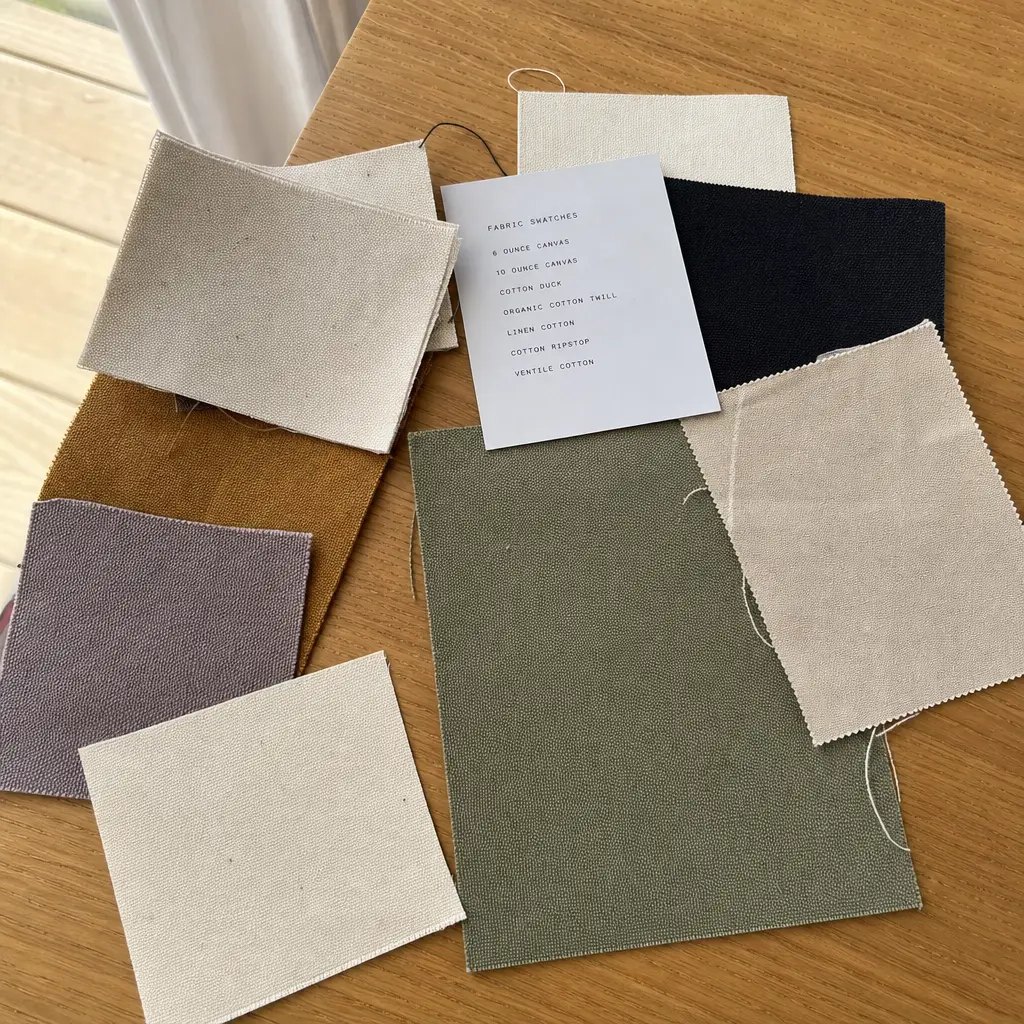
- What cotton canvas construction are you using: plain weave, duck canvas, or another weave, and can you provide a fabric swatch or material specification sheet?
- What finished dimensions are included in the quote, and what measurement tolerance do you apply to width, height, gusset, and handle drop?
- What handle material, handle width, handle length, reinforcement pattern, seam allowance, and stitch density are included in the base price?
- What load test do you recommend for this tote, and can you test the pre-production sample with the intended carry weight?
- Is the logo priced as screen print, heat transfer, embroidery, woven label, patch, or another method, and what setup charge applies to each option?
- For screen print, what is the maximum print area, minimum line width, minimum text height, ink type, and expected placement tolerance?
- Can you match brand color using Pantone or another reference, and what color tolerance or approval method do you use on natural canvas?
- What is the MOQ by fabric color, size, print color count, label type, and packing format?
Quality-control points to confirm
- Fabric weight should match the agreed specification and tolerance, for example 10 oz or 12 oz canvas with the supplier’s stated GSM range documented before production.
- Canvas should be free from obvious holes, oil stains, mildew odor, severe slubs, broken yarns, discoloration bands, and weave gaps near handles, gussets, or printed areas.
- Finished dimensions should be checked at consistent measurement points; agree tolerances in advance, commonly around +/-1 cm for smaller dimensions and a stated tolerance for gusset and handle drop.
- Handle drop should be consistent across the lot so the bag carries evenly and displays uniformly; check both handles for twist, length mismatch, and uneven attachment.
- Handle reinforcement should match the approved method, such as box-X, cross-stitch, or bartack, with no skipped stitches, broken thread, loose ends, or seam pull at the base.
- Stitching should be even, with secure backtacking at stress points, controlled seam allowance, no open seams, no raw fraying at corners, and no puckering that distorts the bag body.
- Print placement should be measured from agreed reference points, not judged by eye only; confirm acceptable placement tolerance before bulk printing.
- Screen print should be checked for opacity, registration, pinholes, ink bleeding, smudges, cracking, poor curing, and readability of small text after light rub testing.
- If embroidery, woven label, or patch branding is used, check placement symmetry, edge finish, stitch tension, thread trimming, color consistency, and attachment security.
- Gusset and base construction should be inspected for symmetry, flatness when packed, and seam strength, especially if the tote is intended to carry groceries or boxed kits.