Define the Job Before You Quote
A farmers market tote is not a generic giveaway bag. It is carried through repeated loading, set down on rough surfaces, packed with produce, jars, bread, and damp items, then reused again the next weekend. If the buyer does not define the use case, the factory will quote a bag that may be visually correct but weak where it matters, especially in the handles, seams, and bottom corners.
Start the RFQ with the operating conditions. State the planned load, whether the tote must stand upright, how often it will be reused, and whether it needs to look retail-ready after months of handling. Once the supplier understands that the bag is being sold to vendors or used by shoppers who expect repeated performance, the quote becomes much more useful. You stop buying a shape and start buying durability.
- State the intended payload in weight, not only in item count.
- Describe whether the bag is for checkout carry, vendor resale, or promotional distribution.
- Specify if the tote must survive one season, multiple seasons, or repeated wash cycles.
Fabric Weight Sets the Durability Floor
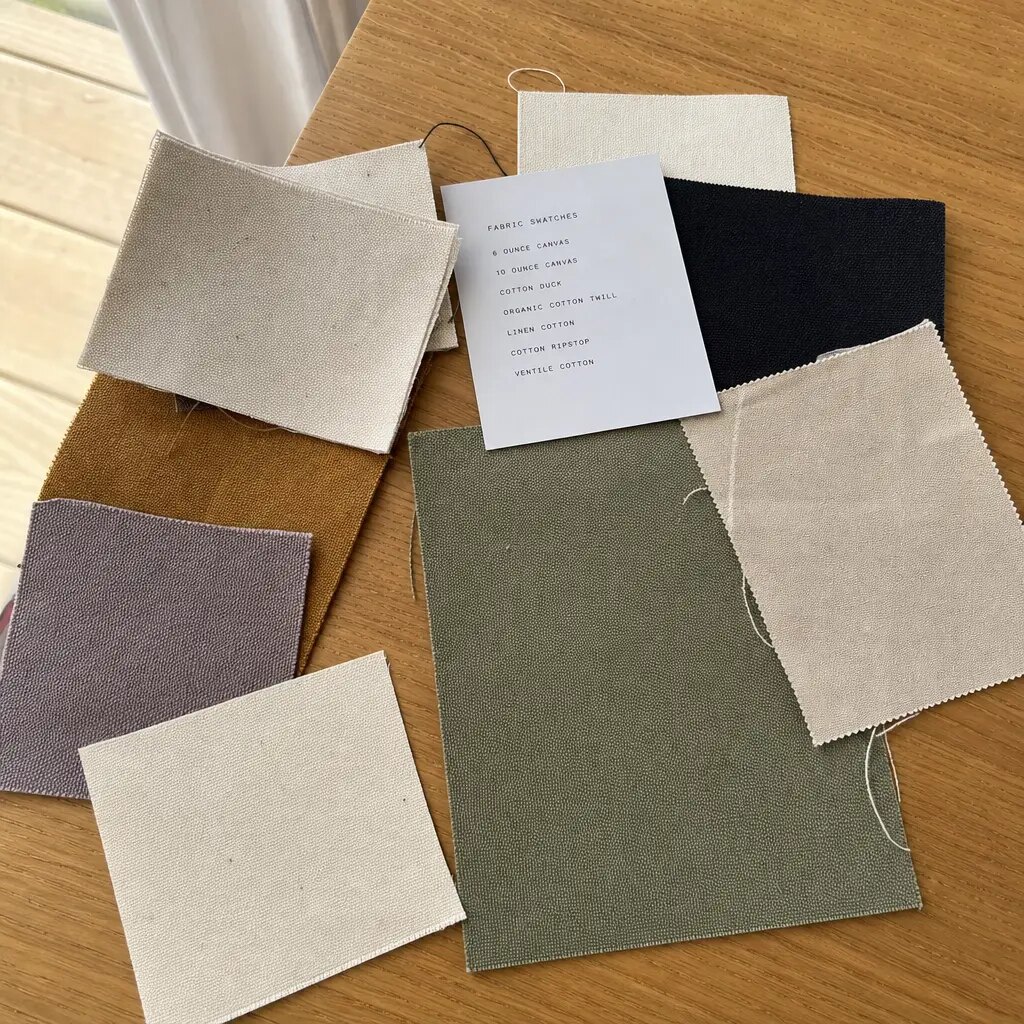
For canvas grocery totes, fabric weight is the first durability decision. As a practical buying guide, 8 oz canvas is usually the lower end for light promotional use, 10 oz is a workable floor for regular grocery carry, and 12 oz is better when the bag needs to feel premium or handle heavier loads. In GSM terms, that often means roughly 240 to 260 GSM for lighter canvas, 280 to 320 GSM for everyday use, and 340 to 400 GSM for heavier builds, depending on weave and finish.
Do not compare bags by nominal weight alone. A 300 GSM natural canvas with a loose weave can behave differently from a 300 GSM tight duck canvas after folding, rubbing, and carrying weight. Ask the factory to identify whether the fabric is greige, bleached, dyed, or prewashed, because finishing changes shrinkage, hand feel, and print stability. If you expect the tote to be reused often, specify a prewash or at least a shrinkage allowance so the finished bag does not drift out of spec after the first handling cycle.
- Use 8 oz only when the bag is a low-cost promo item with light loads.
- Use 10 oz for general farmers market use where customers carry mixed groceries.
- Use 12 oz when the bag must feel substantial and survive rough handling.
- Ask for fabric swatch, mill data, and shrinkage expectation before bulk approval.
Build the Tote for Real Carry Loads
Durability usually fails at the handle roots and bottom corners before it fails in the body fabric. A boxed bottom, reinforced side seams, and proper bar tacks at the handle attachment points matter more than a clean front panel. If a tote will hold produce and be placed on concrete, the structure has to resist both downward load and repeated flexing, not just look neat on a table.
Structure choices also affect freight and user experience. A wider gusset gives the bag more useful volume at checkout, but it uses more fabric and increases carton bulk. A flat tote ships more efficiently, yet it can collapse under heavier or uneven loads. For market vendor programs, a moderate gusset, a stable bottom panel, and handles long enough for shoulder carry usually give the best balance between strength, price, and day-to-day convenience.
- Use a boxed bottom when the tote will carry produce, jars, or mixed grocery items.
- Specify reinforcement at handle roots with bar tacks or equivalent stitching.
- Choose self-fabric handles for a cleaner brand look, or webbing handles when load strength is the priority.
- Lock seam allowance and edge finishing so the factory cannot leave raw edges if you need enclosed seams.
Print Method Changes the Failure Mode
The decoration method changes how the tote ages. Screen print is the default choice for bold logos and simple spot colors because a well-cured print can survive folding and handling better than most quick transfer methods. Water-based inks can feel softer, but they require tighter process control. Heat transfer may work for a short-run event bag, yet it is usually the first method I would question if the tote will be reused, washed, or stuffed repeatedly.
Good print decisions also avoid stress zones. Large blocks of ink placed across a handle base or a bottom fold are more likely to crack or wear at the edges. If the brand wants a more premium and longer-wearing result, a woven side label, a stitched patch, or a small embossed mark can be a better fit than a huge full-panel graphic. The quote should name the ink type, the color count, the curing method, and the expected rub or wash behavior, otherwise the buyer is not comparing the same decoration.
- Use one-color screen print for most durable retail tote programs.
- Specify Pantone targets rather than asking for a close color match.
- Keep large graphics away from seam lines and high-fold areas.
- Request rub testing or wash evidence if the tote is meant to be reused often.
Test the Sample Like a Production Lot
A tote sample can look perfect and still fail in service. The real question is whether it can survive repeated loading, set-downs, folding, and abrasion. A buyer should treat sample approval as a durability gate, not a style check. That means using the sample under realistic load and handling, then documenting what happened at the seams, handles, corners, and printed areas.
A useful internal test does not need a lab, but it must be repeatable. Load the bag to the expected carry weight, move it by hand and shoulder, place it on rough flooring, and inspect after repeated cycles. Then rub the print with a dry cloth and a slightly damp cloth, and if the tote will be cleaned by the end user, include a spot-clean check. The factory should know which defect ends approval, because a photo alone is not enough to approve bulk.
- Run a loaded carry test at the intended daily weight.
- Inspect stitch lines after repeated set-downs and flexing.
- Rub the print dry and damp to look for transfer or cracking.
- Record failure points in writing before signing off on bulk production.
Compare Quotes on the Same Basis
A good quote makes the bag easy to compare. If one supplier says canvas grocery tote and another says canvas grocery tote, they may still be quoting different GSM, different handle reinforcement, different print methods, and different pack counts. Without a shared quote sheet, the buyer is comparing assumptions rather than prices. That is how low-looking unit prices turn into expensive landed costs after revisions, repacking, and freight adjustments.
Supplier route matters too. A direct factory gives the buyer more control over fabric and sewing, but the first sample may take longer if the line is busy. A trading company can simplify communication and bundle trims, yet the buyer still needs to know where the tote is actually made and who owns QC. A domestic decorator on imported blanks may be fast for a small pilot, but the blank bag quality may not hold up for a high-reuse grocery program. The right route depends on control, volume, and the amount of risk you can absorb.
- Compare every quote against the same finished dimensions and same fabric weight.
- Include print color count, label application, carton pack count, and freight terms in the comparison.
- Ask for a separate line if the supplier is assuming a different fabric or different trim.
Set MOQ and Sampling Rules Early
MOQ is usually driven by cutting efficiency, print setup, label minimums, and the factory's willingness to hold inventory in fabric or accessories. If the tote uses stock natural canvas and a single-color print, the minimum can stay relatively manageable. If you add custom woven labels, special color matching, or dyed fabric, the minimum rises because the factory has to pay for setup, waste, and component overrun. Buyers should decide whether they are buying a one-time trial or a repeat program before negotiating the order size.
Sampling should move in a sequence that protects the bulk order. First confirm the artwork and the material swatch. Then approve a pre-production sample that uses the actual fabric, print method, and label format. Do not rely on a photo when the bag is expected to carry weight in the real world. The sample should also reflect the final cut size and packing method, because a tote that looks right loose on a table can fold or ship very differently when packed for cartons.
- Keep separate MOQs for blank bags, printed bags, and labeled bags.
- Ask whether MOQ changes by number of print colors or number of SKUs.
- Approve a physical pre-production sample before bulk cutting starts.
- Freeze artwork and trim details before the factory begins material allocation.
Pack for Vendor Distribution, Not Just Freight
Many farmers market programs distribute totes to multiple vendors, stores, or seasonal locations, so the packing spec affects operations, not just shipping cost. A tote that folds cleanly and nests well will reduce carton volume and make warehouse handling easier. A loose or overstuffed pack can increase freight cost, complicate receiving, and create extra labor when the bags are distributed one by one to different sites.
The pack plan should also handle moisture and presentation. Natural canvas can pick up warehouse humidity and odor if cartons are not sealed properly. If the bags are going to retail shelves or vendor kits, clarify whether you need bulk pack, inner bundles, or individual polybags, and whether barcode labels should be applied to the bag or the carton. For e-commerce or multi-location fulfillment, the opening experience is less important than efficient picking and no-damage receipt, so the inner pack count should be chosen for operations, not aesthetics.
- Confirm fold direction and bundle count before carton design is finalized.
- State whether polybags are required, optional, or prohibited.
- Lock carton dimensions before freight booking and warehouse slotting.
- Add moisture protection if the shipping route is humid or long-haul.
Protect the Schedule From Common Delays
Tote programs miss launch dates for ordinary reasons, not dramatic ones. Fabric availability shifts, print screens take time, trim approval moves slowly, and cartons can be delayed if the spec changes late. A realistic schedule gives the factory time to source, cut, sew, inspect, and pack without compressing QC at the end. If the bags are meant for a market season, the buyer should buffer the plan around sample approval and artwork sign-off, because those are usually the slowest decision points.
Do not settle for a single ship date. Ask for milestone dates, including sample ready date, bulk start date, inspection window, ex-factory date, and if relevant, port handoff. If the supplier cannot explain the critical path, they probably have not planned the order in a way that protects your launch. A missing label approval or carton marking issue can stop the line just as effectively as a fabric shortage, so schedule risk has to be managed at the quote stage, not after production starts.
- Reserve time for one sample revision if the program is custom.
- Freeze the final print file before the factory starts cutting fabric.
- Build a buffer for inspection and any corrective work.
- Include transit time in the launch calendar, not only production time.
Write an RFQ That Forces a Useful Quote
A useful RFQ makes the supplier quote the exact tote you want, not a convenient substitute. The request should state finished dimensions, fabric weight range, handle style and length, print method, color count, packaging, target quantity, and destination terms. It should also say what is not acceptable, such as thinner canvas, a different decoration method, raw seams, or an alternate label if the buyer needs a specific retail look. That level of clarity saves time because the factory does not have to guess what matters to the buying team.
The RFQ should also demand quote evidence. Ask for the standard tolerance on finished size and GSM, sample fee policy, lead time by quantity, carton pack data, and the inspection standard used before shipment. If you are comparing two or three suppliers, force them to answer the same questions in the same order. That makes the commercial comparison cleaner and also exposes weak suppliers quickly, because a factory that cannot quote fabric, print, pack, and schedule clearly usually cannot control them well in production.
- Include artwork format, Pantone references, and decoration placement in the RFQ.
- Separate blank bag pricing from printed bag pricing if you may order both.
- State the expected destination incoterm so landed cost can be compared correctly.
- Require written approval for any material or trim substitution.
Specification comparison for buyers
| Spec decision | Recommended option | When it fits | Buyer risk to check |
|---|---|---|---|
| Direct cut-and-sew factory with in-house printing | Use one supplier that controls fabric, sewing, and screen print | Medium to large repeat orders where consistency matters more than speed | Confirm actual factory ownership of the print line, not just the sales office |
| Trading company bundling multiple suppliers | Use only if you need one point of contact for mixed items or trims | Buyers without local sourcing staff or with many accessory requirements | Watch for markups, hidden subcontracting, and unclear QC responsibility |
| Domestic decorator using imported blanks | Use for fast local decoration on stock canvas bags | Urgent promotions or very low quantity test runs | Blank quality may be acceptable for short runs but weak for long-life retail use |
| Stock blank distributor plus local print shop | Choose when MOQ must stay very low and artwork is simple | Pilot programs, seasonal events, or limited market trials | Check print durability, blank bag consistency, and whether the blank is really heavy enough |
| Factory with custom woven label and barcode packing | Use when the tote is going to retail shelves or multi-store distribution | Brand programs where presentation and traceability matter | Label MOQ, barcode accuracy, and extra lead time can complicate the schedule |
| Low-MOQ sample factory | Use to validate shape, print placement, and load performance | New designs or buyer teams that need physical approval first | Prototype quality may not reflect bulk line speed or bulk stitching consistency |
| Large-volume audited tote specialist | Use for stable reorders and programs that will run all season | National distributors and buyers with steady demand | Less flexibility on late changes, custom trim, or last-minute art revisions |
| Split sourcing: blank bag from one supplier, decoration from another | Only use when your team controls finishing and inbound QC tightly | In-house decoration or local fulfillment operations | Double freight, mismatched lots, and divided defect ownership can erase savings |
Buyer checklist before sampling
- Define the intended load in kilograms or pounds, not just the bag size, and state whether the tote must survive repeated weekly use.
- Lock the fabric weight range in the RFQ, including GSM or ounce weight, weave type, and whether the cloth is prewashed or raw.
- Specify handle construction, handle length, reinforcement method, and whether the bag needs a boxed bottom or side gusset.
- Choose the print method up front and define the ink or decoration type, color count, Pantone targets, and placement distance from stress points.
- Ask for a pre-production sample that matches the final material, trim, print, and packing method.
- Request the factory's standard tolerance for finished size, fabric weight, and print registration.
- Confirm carton pack count, inner pack format, barcode placement, and whether polybags are required.
- Compare quotes on the same assumptions for fabric, printing, label application, and freight terms.
- Set a written approval path for substitutions so the factory cannot change fabric or trim without sign-off.
- Build schedule buffer for sample revision, inspection, and shipping delays before the market season starts.
Factory quote questions to send
- What exact fabric GSM or ounce weight are you quoting, and can you share the mill or batch specification for the fabric lot?
- Is the tote sewn from prewashed canvas, greige canvas, or finished canvas, and what shrinkage allowance did you build in?
- What reinforcement is included at the handles, side seams, and bottom corners, and how many bar tacks or stitch passes are used?
- Which print method are you quoting, what ink type or decoration process is used, and how is cure or adhesion verified?
- What is the MOQ for the blank bag, the printed bag, and the bag with labels or barcode packaging, and does MOQ change by color count?
- Can you provide a pre-production sample with the final fabric, final print placement, and final packaging before bulk approval?
- What carton pack count, carton size, gross weight, and outer label format do you recommend for this order?
- What is your lead time by stage, including sample, bulk production, inspection, and ex-factory or port handoff?
Quality-control points to confirm
- Approve fabric against a physical swatch and confirm GSM or ounce weight against the quoted spec.
- Check finished dimensions, gusset depth, and handle length on at least one pre-production sample and one bulk carton sample.
- Inspect stitch quality at handle roots, side seams, bottom corners, and any stress points where the tote will be loaded and set down.
- Run a loaded carry test using the intended market load and look for seam slip, handle stretch, or bag distortion.
- Verify print cure by dry rub and damp rub, and check for cracking at folds and near seam lines.
- Inspect for loose threads, skipped stitches, needle damage, and uneven seam allowance.
- Confirm barcodes, carton marks, bundle counts, and inner pack labels match the RFQ exactly.
- Check that the final packing method protects the bag from moisture, creasing, and odor pickup during transit.
- Sample at least one bag from the top, middle, and bottom of the bulk lot if the order is large enough to show variation.
- Record every approval and exception in writing so the factory cannot rely on verbal tolerance during shipment.