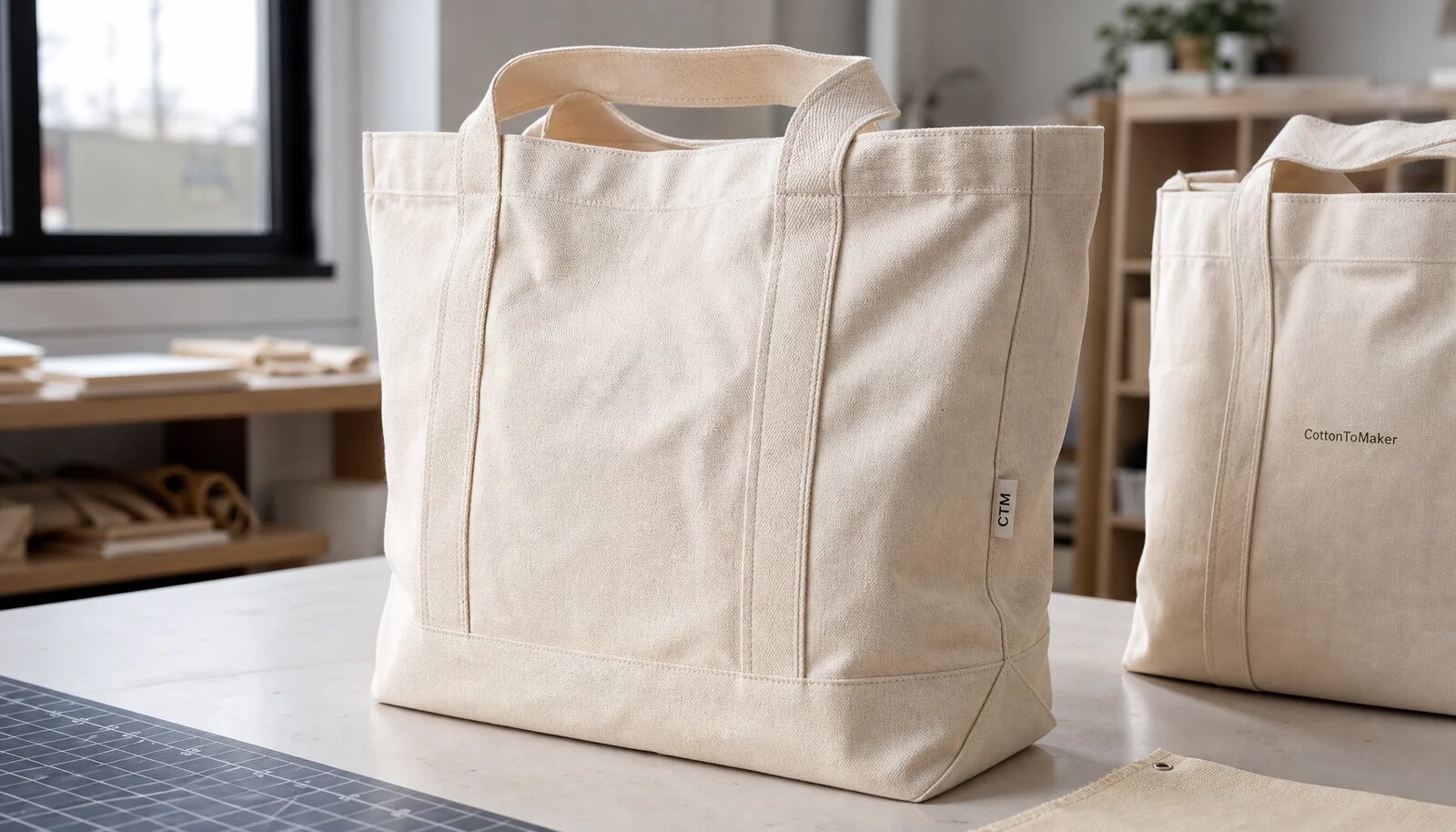
Start With the Receiving Reality
For B2B procurement, wholesale canvas grocery totes for farmers market vendors should be purchased as a packed, shipped, and received product. The sewn bag matters, of course. So do the cartons that land at the warehouse, the labels the receiving team scans, the gross weight one person has to lift, and the way the totes move into vendor kits, retail displays, market association programs, or distributor inventory.
This is where many otherwise good tote orders become expensive. A buyer may approve a strong-looking unit price, then discover that the master cartons are too heavy, too tall for the pallet plan, or too inconsistent for store allocation. Repacking labor can erase savings quickly. Crushed cartons can create claims even when the totes inside are acceptable. Late carton data can also delay freight booking because the forwarder needs cube and weight before the shipment is ready.
Begin by mapping the handoff after production. A small farmers market association may prefer 25 pieces per carton because volunteers are moving stock in and out of storage. A regional food distributor may want 50 pieces per carton, clean SKU labels, and a pallet pattern that can survive cross-dock handling. A specialty grocery chain may need inner packs aligned with store allocation. Those choices affect fabric weight, folded dimensions, handle length, print protection, carton board strength, and total landed cost.
The safest buying habit is to make the carton plan visible before final quote approval. Ask for folded tote dimensions, master carton dimensions, net weight, gross weight, pieces per carton, and cubic measurement. Then compare suppliers on the same basis. The tote is the selling unit. The carton is the shipping unit. Procurement needs control of both.
- Set a maximum carton gross weight before confirming the pack count.
- Confirm whether receiving prefers 25, 50, or another count per master carton.
- Require carton dimensions and cube with the quote, not after production is finished.
- Approve the fold method before the factory packs the bulk shipment.
Define the Tote by Finished Measurements
Farmers market grocery totes need enough usable capacity for real purchases without becoming awkward to ship. A practical starting range is often about 15 to 17 inches wide, 14 to 16 inches high, and 4 to 6 inches deep when the tote has a gusset. That range suits many produce, bakery, coffee, flower, pantry, and packaged-food vendors. It leaves room for jars and greens without creating a bag so large that it becomes costly to cut, hard to print, or bulky in the carton.
The number that belongs on the purchase order is the finished size after sewing and final pressing. Cut-panel dimensions, sewing allowance, and finished dimensions are not the same thing. If a factory quotes from a pattern marker or an old blank tote file, the final product may arrive smaller than expected. Write the body width, body height, gusset depth, handle drop, and handle width as finished measurements. Add tolerance beside each measurement, and make sure the inspector uses the same method during final inspection.
For many canvas tote programs, +/- 0.5 inch on body dimensions is a practical commercial tolerance. Print placement may need to be tighter, especially for centered logos or artwork that sits close to the pocket, seam, or top hem. If the tote must fit a retail fixture, shipping display, or prebuilt vendor kit, that should be treated as a separate requirement. A tote can be commercially acceptable and still fail a display fit if nobody wrote down the constraint.
Handle drop deserves the same discipline. A short hand-carry tote may use a drop around 5 to 7 inches. A shoulder-carry grocery tote often needs roughly 9 to 11 inches, depending on body height and handle width. Longer handles may improve comfort, but they also add bulk and can create high spots when folded. Test the carton with the real handle length, not a simplified sample.
- State finished width, height, gusset, handle width, and handle drop.
- Use written tolerances for body size, handle placement, and print placement.
- Measure samples after pressing or final finishing, not only during sewing.
- Check that folded handles do not distort the carton or printed panel.
Choose Canvas Weight Without Guesswork
Canvas weight is one of the biggest cost, durability, and carton-planning decisions in the program. For grocery totes, many B2B orders fall between 10 oz and 16 oz cotton canvas, roughly 280 gsm to 450 gsm depending on weave, yarn, and finishing. A 12 oz canvas, often around 340 gsm, is a strong starting point for reusable market bags because it has enough body for daily handling while still folding reasonably flat. A 14 oz canvas, often around 400 gsm, gives a firmer retail feel and a more structured silhouette, but it adds sewing resistance, carton weight, and freight cube.
Do not let the supplier quote only a phrase such as heavy canvas or premium cotton. Ask for both ounces and gsm. In this product category, oz usually means ounces per square yard, while gsm means grams per square meter. They are related, but finishing can change the measured result. The most useful quote states the fabric composition, weave, ounce weight, gsm, color, finishing process, and whether the same cloth will be used for the pre-production sample and the bulk order.
Shrinkage also needs a plain answer. Cotton canvas that has not been pre-shrunk, washed, or sanforized can change size after washing, steaming, or heavy pressing. If the tote is marketed as washable, if vendors expect repeated reuse, or if print placement needs to remain stable, ask the factory for the expected shrinkage range. Even when wash performance is not the main claim, shrinkage can affect finished dimensions, handle drop, artwork position, and the folded size used for carton planning.
The weight decision should be made with the shipping plan open on the desk. A 14 oz tote may look better in a showroom, but if it forces a lower carton count and raises freight cube, the landed cost may change more than the unit price suggests. A 12 oz tote may be the better procurement choice when the order must serve many vendor types and move through distribution efficiently.
- Use 12 oz canvas for broad reusable grocery programs where cost, printability, and carton efficiency all matter.
- Use 14 oz canvas when a firmer retail feel is worth the added weight and bulk.
- Ask for oz per square yard and gsm instead of accepting a vague fabric label.
- Confirm shrinkage expectations before approving finished-size tolerances.
Engineer Handles for Real Grocery Loads
Handle failure is one of the most visible problems on a grocery tote. The customer may be carrying apples, root vegetables, glass jars, beverage bottles, bread, flowers, and packaged foods in the same bag. The tote does not need to be designed like industrial lifting equipment, but the handle attachment must be consistent, reinforced, and easy to inspect.
Buyers usually choose between self-fabric handles and cotton webbing handles. Self-fabric handles give a clean matched look and can make the tote feel more custom. Cotton webbing can reduce sewing bulk and provide dependable strength in some designs. Neither option should be assumed from a photo. The quote should state handle material, handle width, handle drop, placement, reinforcement method, and whether the handles are sewn into the top hem or attached onto the body panel.
The attachment method carries the load. Bar-tack reinforcement and box-x stitching are common ways to distribute stress at the handle base. The buyer should define which method is expected, what stitch density the supplier will use, and what counts as a reject. Loose bar-tacks, skipped stitches, uneven handle placement, and weak top hems should be treated as functional defects, not small cosmetic issues.
During sampling, put weight in the bag. A light photo sample tells you almost nothing about handle behavior. Use a realistic grocery load and watch what happens: do the handles twist, does the top hem distort, does stitching elongate, does the bottom seam pull off square? Keep the test simple and repeatable. The point is not to invent a public performance claim. The point is to catch weak construction before bulk cutting begins.
- Specify handle material, width, drop, placement, and reinforcement method.
- Inspect both visual symmetry and stress-point stitching.
- Load-test samples with the kind of weight a vendor customer is likely to carry.
- Reject handle attachments with skipped stitches, loose reinforcement, or uneven placement.
Make Printing Inspectable
For many wholesale canvas grocery totes for farmers market vendors, screen printing is the most practical decoration method when artwork uses one to three spot colors. It is repeatable at volume, economical for larger runs, and well suited to flat canvas panels when ink coverage and cure are controlled. The buyer should define the print size, artwork location, color standard, ink type when relevant, and acceptable tolerance for placement and registration.
Placement should be measured from fixed points, such as the top edge, side seam, or center line. A centered logo sounds simple until the factory, decorator, and inspector each use a different reference. Put the measurement on the spec sheet. For simple spot-color artwork, a placement or registration tolerance around +/- 3 mm may be workable, but the correct tolerance depends on the art, print size, and brand expectations. Small type, thin outlines, and multi-color alignment need closer attention than a single bold logo.
Heat transfer can be useful for small runs, detailed graphics, or full-color artwork, but it brings different inspection issues. Check edge adhesion, flexibility, hand feel, and how the transfer behaves after folding. Embroidery can work for a small badge or premium logo, but large embroidery adds stiffness, may distort lighter canvas, and can create pressure points in the carton. For grocery totes that must stack flat and ship efficiently, decoration should be chosen with the fold method in mind.
Print curing is easy to overlook and expensive to fix later. Under-cured ink can rub, crack, smell, or mark the next tote in the carton. Heavy ink can create a stiff print face that creases under compression. Ask how the supplier verifies cure or adhesion and whether printed totes rest before packing. Before approval, rub the sample with a white cloth, fold it the way bulk goods will be folded, and compare it under normal light to the approved artwork and color reference.
- Use screen print for simple bulk artwork with repeat brand colors.
- Define print placement from measurable points, not from a visual guess.
- Set registration, placement, and color tolerance before production starts.
- Check rub resistance and cure before approving carton packing.
Plan Cartons With Actual Numbers
Shipping carton planning should not wait until the goods are packed. Every supplier quote should include inner pack count, master carton count, carton length, width, height, net weight, gross weight, and cube. Two factories may both quote 50 pieces per carton, but one carton may be taller because the handles fold unevenly, the canvas is heavier, or the print face needs extra protection. That difference changes freight cost, pallet stability, receiving labor, and storage space.
The best carton count depends on fabric weight, folded tote dimensions, handle length, print stiffness, and receiver limits. A 25-piece master carton may be the better choice for 14 oz canvas, long shoulder handles, or inner packs prepared for store allocation. A 50-piece carton may work well for 10 oz or 12 oz canvas if the fold is flat and the carton closes without pressure. If the lid bulges, the pack is too aggressive. Bulging cartons are more likely to crush at corners, shift on pallets, and trigger receiving complaints.
Carton strength should match the freight route. For export, long domestic transit, or warehouse stacking, a 5-ply corrugated master carton is often more appropriate than a light carton, especially with heavier canvas. If cartons will be palletized, ask for the pallet pattern, stack height, and whether corner protection or stretch wrap is planned. If they will be handled loose, confirm the gross weight is reasonable for manual lifting.
A carton pack-out sample is the cleanest way to settle the decision. Ask the supplier to pack the planned quantity using the actual tote, print, fold method, liner or inner pack, and carton style. Open it again. Look for rubbed print faces, bent handles, crushed corners, inconsistent counts, and a carton lid that has to be forced shut. This small approval step prevents a large amount of post-shipment frustration.
- Request carton L x W x H, gross weight, net weight, and cube with every quote.
- Use a carton pack-out sample to test whether 25 or 50 pieces is realistic.
- Avoid any pack count that forces the carton lid upward or compresses printed panels.
- Confirm carton board strength for the freight route and stacking plan.
Compare Supplier Routes Honestly
A direct cut-and-sew factory is usually the strongest route when the buyer needs control over fabric weight, finished dimensions, handle construction, print placement, labels, and carton planning. It also helps with repeat orders because the buyer can reference the same pattern, fabric, approved sample, and packing method. The tradeoff is that the spec must be more complete, and MOQ may apply by fabric color, dyed lot, print setup, label, or packing format.
A trading company can be useful when a buyer is consolidating canvas totes with aprons, produce bags, pouches, or other farmers market merchandise. The commercial workflow may be simpler because there is one contact and one shipment plan. The risk is that production may move between factories unless the supplier controls it tightly. That can change fabric hand feel, seam details, carton dimensions, and lead time. If using a trading company, ask the same technical questions you would ask a factory and require access to sample and inspection data.
A domestic decorator using imported blank totes can be the right path for a small pilot, urgent event, local replenishment, or demand test. The blank already exists, so development is faster. The limitation is control. The buyer may not be able to adjust body dimensions, fabric consistency, handle construction, base carton packing, or future batch matching. For a long-term custom program, blanks are often better for proving demand than for locking the final wholesale spec.
The route should match the business problem. If the order is small and urgent, speed may matter more than deep customization. If the program will repeat season after season, a direct custom specification usually pays back through consistency. In every route, make the quote comparable: same tote dimensions, same fabric data, same print assumptions, same carton count, same Incoterm, and the same quality expectations.
- Use direct factory sourcing when repeatability and carton control are priorities.
- Use a trading company when multi-item consolidation matters more than deep customization.
- Use domestic decoration when speed or small test quantity is the main constraint.
- Confirm MOQ by body color, print setup, label, and packing format for every route.
Build a Sample Gate That Proves Production
The sample stage should prove how the order will be made, not merely show the concept. A useful pre-production sample uses the intended canvas weight, body size, handle construction, print method, label, finishing, fold, and packing method. If the factory sends a prototype made from substitute fabric, label it as a fit or construction sample only. It should not approve bulk fabric weight, color, print result, shrinkage expectation, or carton cube.
Measure the sample after final finishing. Cotton canvas can relax or tighten during pressing, and handle drop may shift slightly after the top hem is sewn. Record finished width, height, gusset, handle drop, handle width, print placement, folded dimensions, and sample weight. Keep those numbers with the approved sample photos and purchase order. This gives procurement, the factory, and the inspector one shared reference.
Then use the tote the way the end customer will use it. Load it with a realistic grocery mix. Check the handle base, top hem, side seams, bottom seam, and gusset corners. Look at how the bag stands when filled and how it folds when empty. A sample that photographs well but twists under load or folds into a lumpy stack needs correction before production.
The carton pack-out sample is a separate gate. Ask the supplier to pack the planned number of totes into one master carton using the same inner pack, liner, paper band, polybag, or bulk-pack method planned for mass production. Check whether the printed faces rub, whether handles create high spots, whether the carton closes naturally, and whether the gross weight is acceptable. Approve the sewn tote and the carton pack-out as two related but distinct decisions.
- Label substitute-material samples clearly so they are not mistaken for production approval.
- Approve construction, print, and carton pack-out as separate gates.
- Measure finished dimensions after final pressing or steaming.
- Do not release bulk packing until the carton pack-out has been reviewed.
Write QC Rules Before Production Starts
Quality control is much easier when pass and fail are defined before production starts. The inspection plan should cover fabric, measurements, stitching, handle reinforcement, print, cleanliness, odor, packing, carton count, and carton labels. Many commercial tote programs use AQL sampling for visual defects, but the inspection level and acceptance criteria should match order size, channel expectations, and risk. The key is to avoid leaving important defects to subjective judgment at the end of the line.
Defect classes help everyone react faster. Critical issues may include wrong material, wrong artwork, unsafe contamination, mildew, or incorrect SKU labels on cartons. Major defects may include open seams, weak handle reinforcement, severe print misregistration, wrong finished size outside tolerance, incorrect carton count, or stains that affect saleability. Minor defects may include small loose threads or slight cosmetic irregularities that do not affect function. This structure gives the inspector a practical way to separate fix-now problems from acceptable commercial variation.
Measurement checks need a defined method. If one inspector measures the tote flat with the canvas relaxed and another pulls the bag tight, the numbers will not match. State how the bag should be laid out, where width and height are measured, how gusset depth is checked, and whether tolerance applies after pressing. For handle drop, define the measurement from the top opening to the peak of the handle when relaxed.
Print inspection should compare the bulk goods to the approved pre-production sample, artwork file, and color reference. A phone photo is not a color standard. Check opacity, registration, placement, edge quality, curing, and rub resistance. For packing inspection, count inner packs, confirm master carton quantities, check carton markings, and compare gross weight against the packing instruction. A beautiful tote in the wrong carton is still a receiving problem.
- Define critical, major, and minor defects in the purchase order or inspection checklist.
- Use consistent measurement methods for body size, gusset, and handle drop.
- Compare print color and placement to approved standards, not informal photos.
- Hold shipment if carton count, SKU labels, or PO markings are wrong.
Control Moisture, Odor, and Storage
Cotton canvas can be unforgiving when storage or packing conditions are poor. A tote may leave the sewing line clean and still arrive with odor, mildew risk, carton staining, or a damp feel if it is packed too soon or stored in a humid area. Moisture control matters more during rainy-season production, long warehouse dwell time, containerized freight, and any route where cartons may sit before unloading.
Protection starts before the carton is sealed. Bags should be clean and dry. Printed panels should be cured. Cartons should be stored away from wet floors, open loading areas, and damp walls. If the supplier uses a master poly liner, make sure it is protecting dry goods rather than trapping moisture inside. Desiccant may be useful for some routes and seasons, but it is not a substitute for dry production and dry storage.
Individual polybags are not automatically better. They can protect against dirt and handling marks, and some retail channels may require them. They also add material cost, packing labor, unpacking labor, and potential trapped-moisture risk if goods are sealed too soon. For many wholesale market tote programs, bulk packing with a master liner is more efficient, but the right method depends on the sales channel and receiving process.
Odor belongs on the QC checklist. Strong ink smell, musty odor, or unusual chemical odor can create complaints even if the tote looks acceptable at first glance. Ask the supplier to air printed goods before packing when needed and to keep finished totes in a clean, dry area while waiting for inspection. These are simple requirements, but they prevent problems that are hard to solve after cartons arrive.
- Require bags to be dry before sealing cartons or liners.
- Use master carton liners or desiccant when the route or season justifies it.
- Inspect for mildew, stains, damp cartons, and strong odor before shipment.
- Avoid unnecessary individual polybags unless the channel requires them.
Specification comparison for buyers
| Spec decision | Recommended option | When it fits | Buyer risk to check |
|---|---|---|---|
| Finished tote size | Approx. 15-17 in W x 14-16 in H x 4-6 in gusset, confirmed as finished measurement | Most farmers market grocery, produce, bakery, flower, coffee, and specialty food vendor programs | Do not approve cut-panel dimensions as finished size; require a written tolerance such as +/- 0.5 in |
| Fabric weight | 12 oz canvas, about 340 gsm, or 14 oz canvas, about 400 gsm | 12 oz for broad reuse and efficient cartons; 14 oz for a firmer retail tote | Confirm whether oz means ounces per square yard and whether gsm is measured after finishing |
| Fabric finishing | Pre-shrunk or sanforized cotton canvas when size consistency matters | Printed totes, repeat orders, and carton plans with tight folded dimensions | Unshrunk cotton canvas can change finished size after washing, steaming, or heavy pressing |
| Handle construction | Self-fabric or cotton webbing handles with bar-tack or box-x reinforcement | Reusable grocery loads, shoulder-carry designs, and vendor resale programs | Require handle drop, handle width, stitch density, and attachment tolerance in writing |
| Print method | 1-3 color screen print with defined ink, cure, and registration tolerance | Bulk runs with repeat artwork, predictable brand color, and flat panel decoration | Ask for acceptable registration shift, rub result, wash expectation, and curing temperature/time standard |
| Packing count | 25 or 50 pcs per master carton after a carton pack-out test | Export cartons, palletized receiving, distributor handling, and store allocation | Do not choose the count by habit; confirm gross weight, carton cube, handle compression, and lid fit |
| Carton strength | 5-ply corrugated export carton for heavier canvas or long transit routes | Ocean freight, warehouse stacking, palletized loads, and mixed handling environments | Verify edge crush or board grade if cartons will be stacked high or shipped loose |
| Moisture protection | Master poly liner, dry packing, and desiccant when needed | Cotton canvas, long transit, humid season, rainy loading conditions, or containerized shipping | Avoid trapping moisture from damp goods; confirm bags are packed dry before sealing |
| Source route | Direct cut-and-sew factory with carton approval | Repeat B2B orders where size, fabric, stitching, branding, and pack-out must stay consistent | MOQ may apply by fabric color, dyed lot, print setup, label, and packing format |
Buyer checklist before sampling
- Confirm finished tote width, height, gusset, handle drop, and handle width with written tolerances.
- State fabric composition, canvas weave, ounce weight, gsm, color standard, and whether the cloth is pre-shrunk or sanforized.
- Define seam construction, stitch density target, handle reinforcement method, and stress-point inspection rules.
- Specify print method, ink type, artwork placement, color reference, registration tolerance, and cure or adhesion standard.
- Require one approved pre-production sample and one carton pack-out sample before bulk cutting or final packing.
- Record folded bag dimensions, inner pack quantity, master carton count, carton outer dimensions, net weight, gross weight, and carton cube.
- Set maximum carton gross weight based on the receiving team, freight mode, lifting limits, and pallet stacking plan.
- List carton labels, PO number, SKU, color, print version, country of origin marking, and scannable code requirements if used.
- Confirm whether each tote is bulk packed, paper banded, polybagged, or packed in inner bundles, and who approves that method.
- Define moisture protection, odor limits, needle detection if required, and dry storage requirements before shipment.
Factory quote questions to send
- What is the exact fabric composition, canvas weave, ounce weight per square yard, gsm, and finishing process?
- Is the canvas pre-shrunk, washed, or sanforized, and what shrinkage range do you expect after washing or steaming?
- What are the finished tote dimensions after sewing and pressing, and what tolerance will you hold for width, height, gusset, and handle drop?
- What handle material, handle width, handle drop, and reinforcement method are included in the quote?
- What stitch density will be used on side seams, bottom seams, top hems, and handle attachment points?
- Which print method do you recommend for this artwork, what ink system will be used, and what setup charges apply?
- What registration tolerance, print placement tolerance, and color tolerance can you hold during bulk production?
- Can you provide a pre-production sample and a carton pack-out sample using the same fabric, print, fold, and packing method as mass production?
- What is the planned inner pack count, master carton quantity, carton dimensions, net weight, gross weight, and carton cube?
- What carton board grade or ply will you use, and is it suitable for pallet stacking, loose-carton handling, or ocean export?
Quality-control points to confirm
- Fabric weight is checked against the approved spec in oz and gsm, with shade compared to the approved color standard.
- Finished tote width, height, gusset, and handle drop are measured after pressing or final finishing, not only during sewing.
- Size variance stays within the written tolerance, commonly +/- 0.5 in for body dimensions unless a tighter tolerance is agreed.
- Handle placement is symmetrical, handle drop is consistent, and reinforcement stitching is secure at every attachment point.
- Stitch density is consistent, seams are locked, and there are no skipped stitches, broken threads, open seams, or needle damage.
- Print placement matches the approved artwork position, with print shift held to the approved tolerance, commonly +/- 3 mm for simple spot-color layouts.
- Print color, opacity, registration, edge quality, curing, and rub resistance match the approved pre-production sample.
- Bags are clean, dry, free of strong odor, and free of visible stains, oil marks, mildew, or excessive lint.
- Fold method is consistent and does not crease the printed face, deform handles, or force the carton lid upward.
- Inner pack counts, master carton quantities, carton dimensions, net weight, and gross weight match the packing instruction.