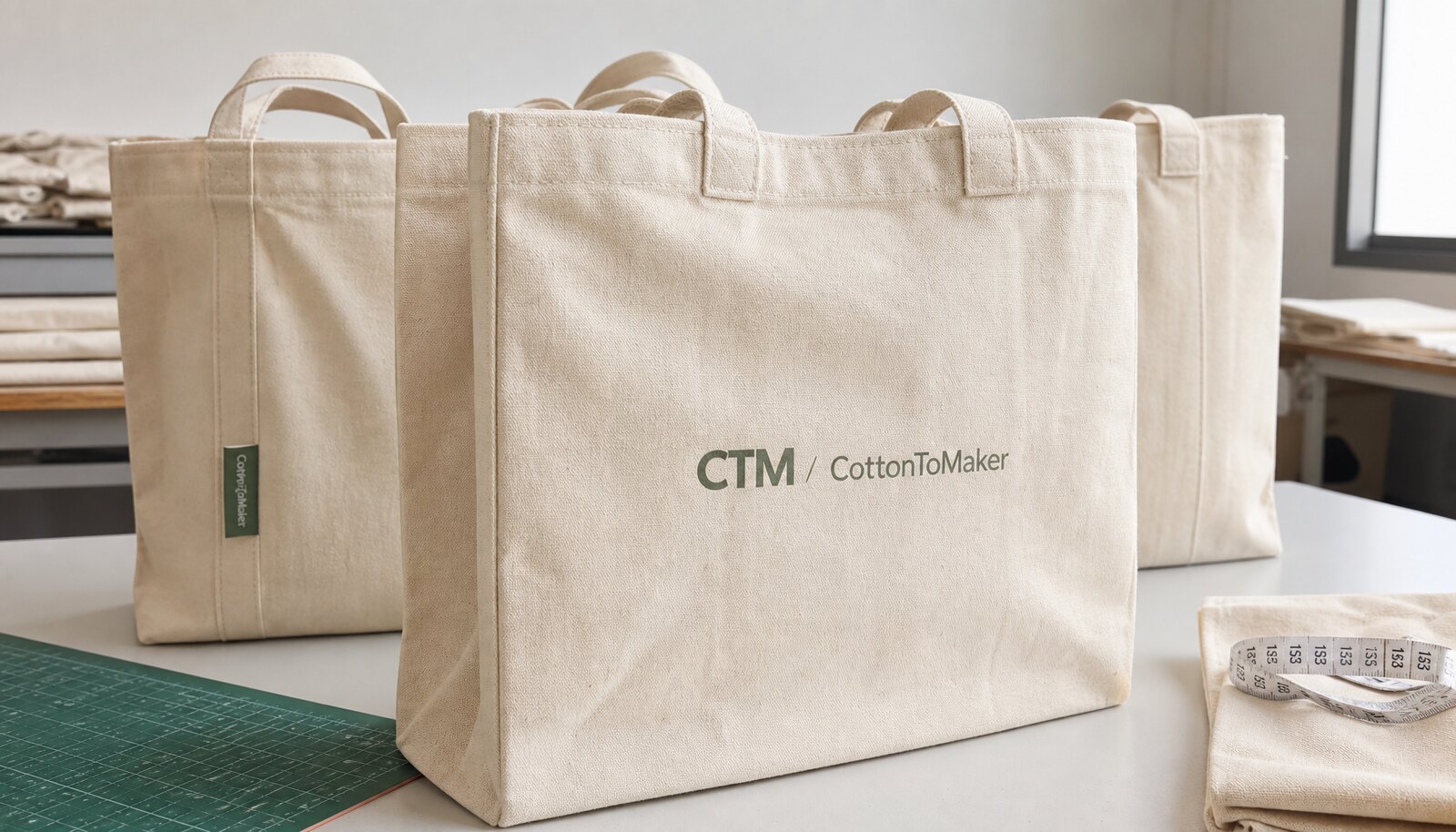
Why logo placement matters on gift shop canvas grocery totes
Gift shop buyers are not only selecting a blank tote. They are buying a retail item that has to look balanced on a shelf, photograph well in a catalog or ecommerce listing, survive customer handling, and still feel worth repurchasing when the initial stock runs low. On wholesale canvas grocery totes for gift shops, logo placement affects visibility, perceived quality, packing behavior, and reorder consistency. A tote that is technically centered but visually crowded can read like a promotional giveaway. A tote that is too low or too close to a fold can lose impact once it is packed, hung, or carried.
For procurement teams, placement also has commercial consequences. A simple front-panel logo is easier to price, easier to inspect, and easier to repeat across later orders. A logo that crosses a seam, lands near the gusset fold, or sits too close to the handle bar tack adds setup complexity and increases the chance of rejection. If the factory has to adjust the sewing line or print jig to keep the logo clean, that can affect scrap, lead time, and unit cost. The buyer’s job is not to maximize artwork in the abstract; it is to choose the placement that keeps the tote attractive and the order repeatable.
Gift shops also sell by display logic. A bag can be viewed flat in a carton, hanging from a peg hook, or stacked at the counter. The best logo location is one that still looks intentional in all three conditions. That is why buyers should check the tote in the folded state, not only as a flat panel proof. If the bag looks centered only before folding, it may look off once the final creases and gussets are in place.
Start with bag structure, not the artwork
The best logo placement depends on the bag structure. Before you approve artwork scale, confirm the finished size, handle drop, gusset depth, seam layout, hem style, and whether the bag is bound or top-hemmed. A 14 x 14 x 6 in tote behaves differently from a tall shopper or a deep-base grocery bag. The same logo can look premium on one silhouette and cramped on another. A supplier should be quoting against a dimensioned specification, not against a vague reference image.
Canvas weight is part of that structure. For many gift-shop grocery totes, 10 oz to 12 oz canvas is a practical band because it balances handfeel, body, and packing efficiency. Lighter canvas may reduce cost, but it can show more ripple in screen print and may not hold shape as well at retail. Heavier canvas can feel more substantial, but it also raises sewing resistance, carton weight, and freight cost. The right choice depends on whether the tote is meant to feel like an everyday carry bag, a souvenir item, or a slightly premium retail accessory.
The fabric finish changes the print outcome too. Natural canvas usually gives reliable ink adhesion and a familiar retail look. Bleached or dyed canvas can sharpen the brand palette, but it also makes color matching more sensitive. Washed or enzyme-finished canvas may feel more premium, yet the surface can be less predictable for small type or fine line art. Buyers should lock the fabric spec before freezing the logo position, because the placement that works on one finish may not look the same on another.
Logo placement options and what each one costs you commercially
Front-centered placement is the safest default for a wholesale gift shop tote. It gives the printer a large, clear area, gives QC an obvious measurement reference, and usually photographs well for wholesale catalog pages or ecommerce listings. The tradeoff is aesthetic: if the logo is oversized or uses too much of the panel, the tote can drift toward promotional merchandise instead of retail goods. For many buyers, that is acceptable if the brand needs strong recognition. For others, it feels too loud.
Lower-front placement can look more retail and less promotional because it leaves visual space above the mark. It works well when the buyer wants the logo to feel subtle or when the tote is intended to sit among other premium accessories. The risk is measurement. Once the print sits closer to the bottom seam or hem, a small sewing shift becomes visible. If the factory does not control the panel and fold position tightly, the logo can appear uneven across the batch. Lower-front placement is worth using only if the supplier can prove it on a sample and accept measured tolerances.
A side logo, side tab, or small woven label is usually a branding support move rather than the main identity. It is good for buyers who want a cleaner face panel or a more understated gift-shop presentation. The downside is visibility: side branding is harder to see on a shelf, less visible in product photography, and less useful when the tote is stacked flat. Multi-position branding, such as a front print plus a side woven label, can look polished, but each added position creates another tolerance, another inspection point, and another chance for mismatch between components.
The biggest cost driver is not the print fee alone. A difficult placement may require a larger safe zone, more spoilage during the first run, or additional sample cycles. Two-color placement also adds registration risk, which matters on textured canvas because the weave can make slight misalignment more noticeable. In procurement terms, a simpler logo placed correctly is often a better commercial choice than a larger or more ambitious logo placed badly.
Decoration method changes how close you can place the logo
Screen print is still the most common choice for wholesale canvas grocery totes for gift shops because it handles simple logos, keeps cost predictable, and reproduces well once the line is set up correctly. It is strongest when the artwork is bold, the number of colors is limited, and the print sits on a flat panel away from seams and stitching. The weakness is detail: thin type, tiny symbols, and tight negative spaces can fill in or soften on textured canvas. Buyers should always ask for a printed sample, not only a digital mockup, when the logo contains fine detail.
Heat transfer can help when a design has more detail than screen print can hold cleanly, but the buyer should ask about feel and durability. On a retail tote, a transfer that looks crisp at sampling may feel less natural than direct print, and if it sits near a fold or repeated stress point it may age unevenly. It is best reserved for designs that truly need the detail and where the buyer accepts the tradeoff in handfeel or process complexity.
Embroidery creates a premium look, but it introduces a different set of risks. Stitch density can cause puckering on lighter canvas, and logo placement must stay clear of seams, handles, and top hems so the fabric does not pull. If the logo is small, embroidery can work very well for a side mark or short wordmark. If it is large, the cost rises fast and the bag may lose the softer retail feel that gift shop buyers often want.
A woven label is often the cleanest option when the buyer wants low visual clutter and repeatable placement. It works especially well on side seams, handle ends, or small accent areas. But the label still needs measured placement and a clear stitch standard. Buyers should ask where the supplier measures from, what the allowable offset is, and whether the stitch line is included in the placement tolerance.
A practical placement guide by tote style and view angle
For a standard square or near-square canvas grocery tote, the logo usually looks best in the middle third of the front panel. That positioning leaves enough blank space above and below to feel balanced without crowding the handles or the hem. Buyers should specify the placement with measurements rather than relying on a mockup description. A center-placed logo that is too high can feel compressed under the handle zone; one that is too low can be swallowed by the gusset or bottom seam once the bag is folded.
For a lower-front look, keep the logo far enough above the bottom seam to avoid distortion from the fold and to prevent the art from sitting in a visually heavy zone. This placement can feel more premium on a shelf because it creates a cleaner top field, but it should be validated in both flat and filled states if the tote is meant for everyday carry. A bag can appear perfect in a print proof and then look awkward once it has contents and the base spreads.
If the tote has a deep gusset, remember that the front panel is not the only visible face. The gusset changes how the bag reads from the side and how the artwork appears when the bag is in use. A logo that is too close to the gusset line may look pinched when the bag is filled. If the brand needs side visibility, use a side tab or a small wordmark rather than forcing a full-size logo into the gusset area.
The key procurement lesson is simple: the more the placement depends on visual judgment, the more room there is for disagreement. Measured placement from known reference points is more defensible than phrases like 'looks centered' or 'place it nicely.' If you want a supplier to repeat an order successfully, you need a placement rule that the production team can actually measure on the line.
Comparison table: sourcing routes, cost deltas, defect risk, and MOQ realities
A quote becomes more useful when you compare more than price. Two suppliers can be a few cents apart yet differ completely in fabric control, placement discipline, and how they handle rework. The table below is designed for procurement decisions, not for general education. The cost ranges are directional because fabric markets, labor seasonality, and shipping assumptions vary by region and order timing. What matters is the pattern of tradeoffs.
If the bag is a repeat gift-shop item, direct factory sourcing usually gives the cleanest control over cutting, sewing, printing, and packing. If the order is a one-off or part of a mixed-product program, a trading company can reduce coordination load, but you should ask who actually owns QC and who pays for rework. Local decorators can be useful when the blank bag is already in stock and time is tight, but they may not control bag construction at all. The route matters because it changes how much confidence you can have in logo placement on a reorder.
What to include in the RFQ so the quote can be compared
A useful RFQ for wholesale canvas grocery totes for gift shops should read like a production brief, not a marketing note. Start with the fixed bag details: finished dimensions, handle length, gusset depth, fabric weight, fabric color, and any lining or closure detail. Then add the decoration spec: logo size, print method, number of colors, exact placement, and whether the artwork must avoid seams, folds, or handle attachment points. If any of those items are missing, the supplier will make assumptions. Those assumptions often become sample changes later.
The RFQ should also separate the bag price from decoration and packing. Many buyers get cleaner comparisons when they ask for the blank bag, print cost, label cost, and carton cost to be shown separately. That makes it easier to see whether one supplier is cheap because the bag is lighter, the print area is smaller, or the carton spec is bare-bones. If you only ask for one all-in price, you lose visibility into where the quote is being trimmed.
Packing instructions belong in the RFQ because they affect both labor and appearance. State whether the tote should be flat folded, whether a polybag is needed, whether tissue or interleaf is needed to protect the print, and how many pieces go into each carton. If the bag is going to a gift shop chain or a retail DC, say whether it must arrive shelf-ready or warehouse-ready. Shelf-ready often means cleaner folding and tighter carton labeling; warehouse-ready may allow more efficient bulk packing, but only if the receiving team can handle it.
Finally, if the bag has multiple branded elements, label each one clearly: front logo, side label, care label, hangtag, carton mark, and barcode are not interchangeable. Splitting them in the RFQ helps suppliers quote accurately and prevents hidden assumptions about which items are included.
Sample approval: how to lock logo placement before bulk production
The pre-production sample is the point where a good order becomes repeatable. Buyers should treat it as the reference standard, not as a courtesy prototype. The sample needs to be made from the same bulk fabric, thread, ink, and label method that will be used in production. A digital proof can confirm the artwork file, but it cannot prove how the logo will sit on woven canvas or how the bag will fold after stitching. On canvas, a few millimeters can matter visually, especially near the hem or handle zone.
A good sample approval package should include a measurement sheet with the exact reference points. At minimum, ask for the distance from the top edge to the top of the logo, the distance from the centerline to the logo center, and the distance from the nearest seam or fold to the artwork edge. If the logo is small, ask the supplier to show the artwork on the full panel so you can judge proportion, not just position. If the bag has a gusset, check it open and folded because the visible position changes once the bag is compressed.
The approval wording should be explicit. A strong sign-off note is: 'Approved for bulk production as submitted. No change to fabric weight, decoration method, print size, print position, ink color, handle length, or label placement without written buyer approval.' That wording gives procurement a clear standard if the factory later suggests substitutions. If the sample is wrong, ask for a corrected sample and note exactly what changed. 'Close enough' is not a useful procurement standard when the tote will be reordered.
If the supplier sends pre-production photos before the physical sample arrives, use them as an early warning only. Ask for photos with a ruler, plus shots of the front, back, folded state, and carton-packed state. Photos help with orientation, but they do not replace the physical check for handfeel, stitch tension, or fold memory.
QC thresholds that make the order inspectable, not arguable
Gift shop tote orders go smoother when the inspection rules are measurable. Instead of saying the logo should be 'well centered,' state the allowable deviation from the approved sample. Instead of saying stitching should be 'good,' identify what counts as a defect. The goal is not perfection; the goal is a standard the factory can actually hit repeatedly and the buyer can enforce without a debate at receiving.
For many retail tote programs, AQL-style inspection is a reasonable baseline, often around AQL 2.5 for major defects and AQL 4.0 for minor defects. Premium gift-shop programs or seasonal launches may justify tighter limits. The important point is to write the level into the PO or quality annex before production starts. If your internal tolerance is stricter, use your own numbers. The supplier does not need to guess.
Major defects should include any logo outside the agreed placement tolerance, open seam, missing bar tack, hole, torn handle, obvious stain, severe print smear, or mixed colorway. Minor defects can include a loose thread away from the decoration area, a light wrinkle outside the logo zone, or small shade variation that does not affect shelf appearance. But a defect that is minor on one bag can become major if it appears across the whole lot or in a visible pattern.
The best QC language includes rework responsibility. A buyer can write: any logo outside the agreed tolerance, any major stain, hole, open seam, missing bar tack, or mixed colorway is rejectable and must be reworked or replaced by the supplier. That is much easier to apply than vague terms like 'acceptable appearance.' It also gives the factory an incentive to control line setup before the first hundred pieces are made.
Real failure modes worth anticipating include a screen print that drifts after the operator changes pressure, a lower-front logo that migrates toward the hem because sewing tension shifts, and a woven label that is neatly stitched but off-center enough to look sloppy on a shelf. None of those issues are obvious from a single photo proof, which is why measured inspection and first-article confirmation matter.
Packing, carton specs, and shelf-ready delivery details
Packing is part of the product in gift shop programs. A tote that arrives cleanly folded, with the print protected and the counts correct, reduces receiving labor and improves shelf presentation. Flat folding is often the most efficient choice, but the fold direction needs to be tested against the logo position. If the fold line crosses the artwork, the crease can leave a visible mark or make the print look compressed. That is avoidable if the factory is told how the bag must be folded before packing begins.
Carton spec matters for freight, handling, and defect prevention. Ask for carton dimensions, gross weight, and pieces per carton. Heavy canvas bags packed too tightly can crush lower layers and crease the decoration. Underfilled cartons can allow the bags to shift and rub against each other, especially if the print is dark or heavily inked. If your market or sustainability policy allows no polybag, ask what alternative protection the supplier uses to stop scuffing or transfer.
Carton marks should match the PO exactly: style number, color, quantity, carton number if applicable, and origin marking if your market requires it. If the tote is seasonal or part of a replenishment program, ask for a date code or production lot identifier so stock can be rotated correctly. If the print is large or dark, ask whether interleaf paper or another separator is needed. That is a small-cost detail that can prevent a receiving claim.
For high-value or time-sensitive orders, request carton photos and a packed-unit photo before shipment. That does not replace inspection, but it does give the buyer a final chance to catch fold issues, miscounts, or packing methods that might damage the print in transit.
Specification comparison for buyers
| Buying route | Typical cost profile | Defect risk / control | Lead-time impact | MOQ implications |
|---|---|---|---|---|
| Direct factory | Usually best ex-factory pricing once the spec is stable; lowest hidden markup when the order is repeated | Lowest risk when the supplier controls weaving, cutting, sewing, printing, and packing in one line; easier to lock placement and rework rules | Often fastest for repeat programs if fabric and decoration are already set; can slow down if the factory must source a special weave or label | Often 500-1,000 pcs per artwork/color is workable, but the real floor depends on print colors, bag size, and whether the factory is in peak season |
| Trading company / sourcing agent | Quote may look slightly higher because of added service layer; can be useful if you need multi-category consolidation | Medium control: good agents can coordinate, but they may not control the actual sewing or printing line; ask who owns QC and rework | Can add one communication layer, which may extend sampling and approval cycles unless the agent has a strong factory relationship | MOQ may appear flexible, but small orders often carry higher per-unit costs or limited decoration options |
| Local decorator using imported blanks | Useful when speed matters and blank bags are already in stock; pricing can be competitive for simple logo work | Higher substitution risk because blank bag quality, blank shade, and blank size can vary; decoration may be done separately from bag construction | Can be faster for urgent domestic runs, but blank availability and print queue timing can still delay delivery | MOQ can be low for printing, but blank-bag minimums and color options may limit true flexibility |
| Private-label program with custom spec | Best when the tote is a retail item rather than a one-off promo giveaway | Highest control if the factory agrees to measured placement, approved sample, and carton spec; also the highest attention requirement from the buyer | Longer because fabric, labels, artwork setup, and approval loops are all custom; schedule should include sampling and correction time | MOQ is usually higher because multiple materials and set-up steps are involved; the buyer should ask whether each color or artwork counts as a separate line |
| Material | 8-12 oz cotton canvas, 120-220 gsm cotton, recycled cotton, or blended fabric selected by use case and target price | Before price comparison | Different cloth weights, backing, or certification claims make quotes hard to compare | |
| Construction | bag size, gusset, handle drop, seam allowance, stitch density, reinforcement patch, and loading expectation | Before sampling | Weak stress points create returns and failed inspections | |
| Decoration | screen print, heat transfer, embroidery, woven label, or hangtag matched to fabric texture and brand durability needs | Before artwork approval | The wrong method can crack, bleed, pucker, or fail on the chosen fabric | |
| MOQ | Base MOQ plus change drivers | During quote review | Custom colors, trims, and packing can change minimums |
Buyer checklist before sampling
- Define the selling use case before requesting price: gift shop merchandise, grocery carry tote, souvenir item, or seasonal branded retail bag. The use case affects logo size, placement, and acceptable handfeel.
- Specify finished dimensions, handle length or drop, gusset depth, closure type if any, and whether the bag has a top hem, binding, or internal lining.
- State the fabric exactly: canvas weight in oz or GSM, weave style if known, and whether the fabric is natural, bleached, dyed, washed, or enzyme finished.
- Send vector artwork and identify the exact print colors, Pantone target if needed, minimum line thickness, and any tiny type that could fill in on canvas.
- Tell the supplier the logo placement in measurements, not adjectives: distance from top edge, distance from side seam, distance from bottom seam, and distance from handle bar tack.
- Ask for the decoration method and limit it to what the bag can actually hold: screen print, heat transfer, embroidery, woven label, or a combination.
- Request a physical pre-production sample made from the same bulk fabric, thread, ink, label, and packing method that will be used in production.
- Confirm packing spec early: flat fold direction, inner polybag or no polybag, tissue/interleaf if needed, carton count, carton marks, barcode needs, and whether the bag must arrive shelf-ready.
- Write acceptance criteria for logo position, print registration, seam quality, staining, shade variation, and carton count into the PO or quality annex.
- Ask the supplier which part of the order is most likely to change if raw material availability shifts: fabric shade, handle tape, ink match, label stock, or carton spec.
Factory quote questions to send
- What finished canvas weight do you recommend for this tote size, and is that the woven weight, post-wash weight, or finished bag weight after cutting and sewing?
- Please show the logo placement on a dimensioned mockup with the exact measurement references: top edge, centerline, side seam, bottom seam, gusset fold, and handle attachment.
- Which decoration method are you pricing, and what is the incremental cost of each extra color, extra stitch count, second location, or larger print area?
- What is the MOQ per artwork, per colorway, and per decoration method? Does the MOQ change if we add a second-side logo, a woven label, or a care label?
- Can you make a physical pre-production sample with the same fabric lot and actual production decoration method, and will that sample freeze logo scale and position?
- What are the expected carton dimensions, gross weight, and piece count per carton, and can you keep the printed surface protected from rub or transfer in transit?
- What is your lead time after sample approval, and how is that time split between fabric booking, cutting, printing, sewing, finishing, and final packing?
- What QC documents can you provide before shipment: measurement sheet, inline photo set, AQL report, carton count, and any metal-detection or needle-check record if required?
- If we request a placement correction after sampling, what is the rework cost and how much delay should we expect?
- Which materials are fixed and which can be substituted without notice? Please name the fabric, handle tape, thread, ink, woven label, and carton spec.
Quality-control points to confirm
- Use one measurement reference sheet for every tote: top edge to logo top, centerline to logo center, and nearest seam or fold to logo edge. Visual approval alone is not enough for repeat orders.
- Set logo placement tolerance in writing before production. For many gift-shop tote programs, +/- 0.25 in / 6 mm is a workable starting point, but it should tighten when the artwork sits near the hem, gusset, or handle bar tack.
- When decoration crosses or approaches a seam, hem, or fold, require a tighter tolerance and a physical sample in the packed condition. A flat sample can look correct and still shift after folding.
- Set print registration tolerance separately from placement tolerance. For simple two-color art on canvas, 1-2 mm between colors is a common target; if the logo uses thin type or fine outlines, the acceptable window may need to be tighter.
- Define major defects as any out-of-tolerance logo placement, open seam, hole, torn handle, missing bar tack, severe stain, mixed colorway, or obvious print smear that affects resale.
- Define minor defects separately, such as a loose thread away from the decoration area, light wrinkle outside the logo zone, or slight shade variation that does not affect shelf appearance. Minor defects should still be capped by an agreed AQL.
- A common baseline for retail tote orders is AQL 2.5 for major defects and AQL 4.0 for minor defects, but premium or seasonal programs often justify tighter limits. Put the exact level in the PO rather than assuming the factory knows your internal standard.
- Check three stages at minimum: artwork proof, pre-production sample, and first-article output from bulk production. If the order is multi-style or multi-line, a single approved sample is not enough.
- If the bag has a gusset or deep base, inspect both flat and folded views. A tote can pass flat-position approval and still look skewed once it is folded or packed.
- Inspect handle attachment symmetry and bar tack length carefully. Uneven handle stitching often appears before decoration defects and is a useful signal of overall sewing consistency.