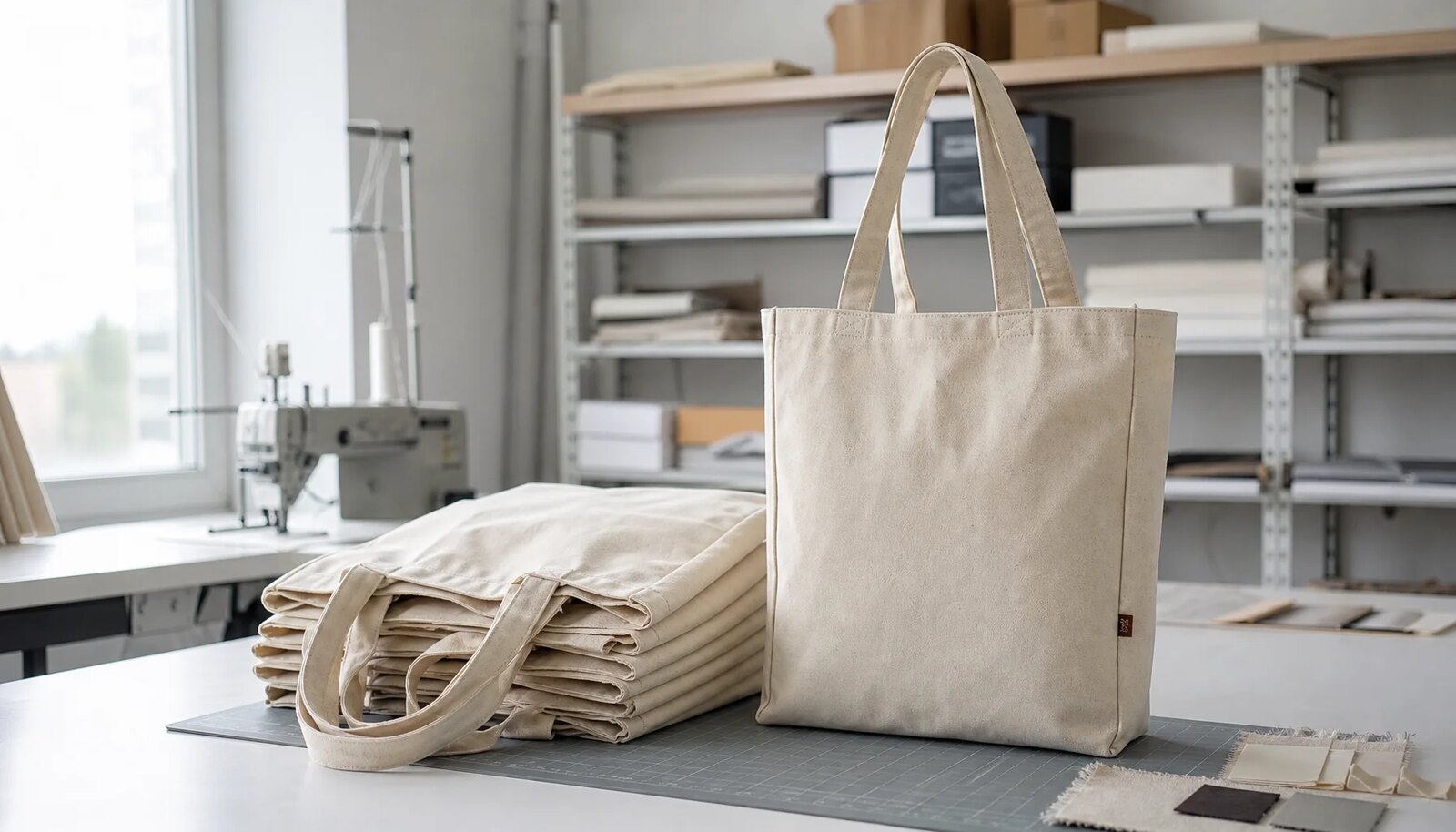
What buyers are really pricing in a canvas grocery tote
When you compare wholesale canvas grocery totes for farmers market programs, the unit price only tells part of the story. The actual buying decision is about carrying capacity, brand presentation, and how often the bag will be reused without looking worn out. A tote that is cheap at source can still become expensive if the handles fail, the print cracks, or the size is too small for produce and pantry items.
For procurement teams, the first step is to define the use case in practical terms. A vendor-facing market bag usually needs to handle mixed loads such as apples, greens, bread, and jars, so the bag must stand upright, keep its shape, and survive repeated folding. That means you should write the RFQ around the load profile, not just around an artwork file.
- Separate grocery-carry use from premium retail resale use; they do not need the same spec.
- Treat shape retention, handle strength, and print durability as commercial requirements, not cosmetic preferences.
- If the bag will be sold, specify how it must look on shelf and how it must fold in carton.
Fabric weight choices that change the quote structure
Canvas weight is one of the biggest cost drivers because it changes material consumption, hand feel, sewing time, and freight weight. For most farmers market buyer programs, 10 oz to 12 oz canvas is the practical middle ground. It gives enough body for groceries without pushing the tote into a rigid, expensive product. If the bag will routinely carry heavier produce boxes or multiple glass jars, 14 oz canvas is a safer spec.
The mistake is to compare suppliers without normalizing the fabric unit. One factory may quote 12 oz natural canvas while another quotes a lighter weave that only looks similar. Ask for the weight in both oz and GSM if possible, plus the weave density and whether the quoted fabric is pre-shrunk or finished. A lower price on lighter fabric can disappear once you factor in complaints, returns, or a second sourcing round.
- 10 oz to 12 oz suits standard grocery carry and promotional resale.
- 14 oz fits heavier loads, stronger shelf presence, and more premium branding.
- Request fabric swatches that show weave density, hand feel, and color consistency under daylight.
Print method and branding choices that affect sell-through
For bulk canvas grocery totes, screen print is usually the most economical option when the design is simple and the order quantity is solid. It gives durable ink coverage and predictable repeatability. If the buyer wants a small premium cue, a woven side label or a stitched brand patch can be added without overcomplicating the print file. Embroidery can work, but only when the logo is small and the canvas is heavy enough to avoid distortion.
Do not overdesign the branding spec. Farmers market bags are handled, folded, loaded, and washed more than many buyers expect. Fine-line artwork, gradients, and tiny type are common failure points on canvas. Keep the logo large enough to read from a distance, reduce color count where possible, and specify whether the print is on one side or both. Every extra color or placement adds setup time and risk.
- One-color or two-color screen print is the safest default for volume.
- Use woven labels or small sewn patches when you need a more retail-ready look.
- Confirm the artwork size in millimeters, not just in a design file, before sample approval.
MOQ logic and why the lowest quote is often the wrong one
MOQ is not just a factory restriction. It is often the point where fabric cutting efficiency, print setup, and sewing line balancing become viable. If your order is below the factory's economic threshold, the supplier may still accept it, but the price will usually include setup penalties or less favorable packing. That is fine for a test order, but it should be understood as a trial price, not a benchmark for future programs.
A better approach is to split the order into a test run and a re-order plan. For example, a first shipment can validate market response, while a second order can be priced against a standard run size once the buyer has confirmed dimensions, print placement, and carton count. This protects procurement from overcommitting to a spec that has not yet been validated by the end customer.
- Ask for MOQ by material, by print method, and by custom packing separately.
- If the factory accepts a low MOQ, expect higher unit cost or fewer options.
- Use a pilot order when the retail demand is uncertain or the seasonal window is short.
How to compare supplier routes without mixing quote terms
The same tote can look cheaper or more expensive depending on whether the quote is EXW, FOB, or delivered. Buyers should compare suppliers on one term only or convert every offer into the same landed basis. A direct factory quote usually gives the cleanest visibility into fabric, sewing, printing, and packing. A trading route may be useful for speed, but it can hide the origin of the actual production line and make quality escalation harder.
The comparison also needs to account for service scope. Some suppliers quote only the tote, while others include carton labels, inner polybags, and test reports. If one quote appears lower, read the inclusions line by line. A professional RFQ asks the supplier to itemize what is included and what is excluded so the buyer can see the real commercial difference, not just a headline price.
- Convert quotes to the same trade term before comparing unit price.
- Separate tote cost from print, packing, and export documentation cost.
- Ask whether the seller is the factory, a trading company, or a hybrid sourcing office.
Landing cost matters more than source price
A tote that saves a few cents at source can become more expensive once freight volume, carton count, and rework are added. Canvas is bulky, so packing efficiency has a direct effect on the landed cost. A bag with an oversized fold or loose polybag packaging can consume extra carton space and increase ocean or air cost. This is especially important for buyers supplying multiple stores or event channels with fixed shelf and warehouse requirements.
When you build the landed-cost view, include not just production price but also sample cost, carton materials, internal labeling, freight class, and any re-inspection cost at destination. If you are comparing two factories, ask for carton dimensions and pack count alongside the unit price. A slightly higher source price can still win if the cartons are denser and the sewing defect rate is lower.
- Compare carton size, pack count, and gross weight before choosing a supplier.
- Look at the cost per usable tote on arrival, not just the factory invoice.
- Include rework risk in the decision when the artwork or dimensions are tight.
Sample approval should prove fit, not just appearance
A preproduction sample should answer several questions at once: does the tote stand correctly, does the handle drop feel usable, and does the print sit where the buyer expects it? For a farmers market program, the bag should be tested with realistic items such as produce, bottled products, and a folded market flyer. If the tote collapses awkwardly or the handle rubs the shoulder poorly, that is a commercial defect even if the artwork looks perfect.
The sample should also be used to lock tolerance boundaries. Measure the body width, height, gusset, handle length, and print placement. Ask the supplier to mark any intended variation range before bulk cutting starts. A sample is not just a display item; it is the reference against which the whole order will be judged, so the buyer should keep one approved piece sealed and labeled.
- Test the sample with actual shopping loads, not only with empty-hand inspection.
- Record measurements and keep a signed reference sample for dispute resolution.
- Approve print placement and stitch quality together, not separately.
Quality control thresholds that prevent expensive disputes
Good QC for canvas totes is mostly about consistency. The stitching density should be even, the handle reinforcement should be symmetrical, and the print should stay aligned from bag to bag. Minor variation is normal in sewn goods, but buyers need an acceptable range. If no tolerance is written, each side may interpret defects differently once the cartons arrive. That is where avoidable disputes start.
Define the acceptance standard in practical language. For example, the bag should not show visible skipped stitches, loose threads longer than a short trim allowance, ink smears, or major size deviation. If the logo is critical to shelf presentation, require a specific print alignment tolerance. For larger orders, it is also sensible to ask for in-process inspection photos before packing so issues are caught while they are still fixable.
- Set tolerances for size, print position, and stitch defects before production starts.
- Require symmetry on handles and top edge reinforcement.
- Use photo evidence from the factory at cutting, printing, and packing stages.
Packing and lead time risks buyers often underestimate
Packing is not a minor detail when totes are sold to multiple channels. Bulk pack is usually the most efficient for freight and warehouse handling, but some retail programs need individual polybags, barcode stickers, or hang tags. Each extra packing step adds labor and often affects production lead time. If the buyer does not specify packing early, the factory may quote the tote correctly but miss the distribution requirement later.
Lead time should be read as a sequence, not a single number. Fabric sourcing, cutting, printing, sewing, inspection, and carton loading each consume time. If the order includes custom logo approval, add the sample cycle into the schedule. A realistic plan protects the launch date better than an optimistic promise. Buyers should ask which part of the timeline is fixed and which part is conditional on sample sign-off or fabric availability.
- Specify carton count, bag count per carton, and any retail labeling before PO release.
- Clarify whether the lead time starts from deposit, artwork approval, or sample approval.
- For seasonal market launches, build in buffer time for print corrections and carton rework.
Specification comparison for buyers
| Spec decision | Recommended option | When it fits | Buyer risk to check |
|---|---|---|---|
| Source route | Direct factory quote with print and packing included | You need control over spec, repeat orders, and landed cost | Watch for hidden extras like screen fees, carton upgrades, or re-bagging charges |
| Fabric weight | 10-12 oz canvas for general grocery use; 14 oz for heavier produce programs | You want a balance between price, hand feel, and bag body stability | Light canvas can feel cheap, wrinkle badly, and collapse under dense items |
| Print method | 1-2 color screen print for volume; woven label or small embroidery for premium positioning | You need clear branding without pushing unit cost too high | Fine details, gradients, and small type may blur on coarse canvas |
| Handle build | Self-fabric handles with bar-tack reinforcement or cross-stitch reinforcement | You expect repeated carrying and heavier loads | Short handle drop or weak reinforcement leads to tearing at the top edge |
| MOQ path | Standard fabric and standard print setup for first order | You are testing sell-through or seasonal demand | Low MOQ often raises unit price and reduces control over customization |
| Packing method | Bulk packed by carton with inner poly only if needed for cleanliness | You want the lowest freight cube and easiest warehouse intake | Retail polybags can add labor, plastic cost, and carton volume |
| Color strategy | Natural canvas with controlled print colors and limited dye lots | You want stable supply and lower risk of shade variation | Dyed canvas can vary by lot and complicate repeat orders |
| Lead time approach | Normal production window with preproduction sample approval before bulk | You have a planned market launch and can protect schedule | Skipping sample approval creates avoidable rework on logo placement or size |
Buyer checklist before sampling
- Confirm intended load profile: produce, pantry items, promotional giveaway, or retail resale.
- Lock fabric weight in oz or GSM and request the same unit across all quotes.
- Specify bag dimensions, handle length, handle drop, seam allowance, and reinforcement method.
- State print method, print size, number of colors, and exact placement from seam or edge.
- Define packing requirements: bulk carton count, polybag need, barcode labels, and carton marks.
- Request a preproduction sample or sealed reference sample before bulk release.
- Ask for production lead time, sample lead time, and the earliest realistic ship date.
- Compare quotes on the same basis: EXW, FOB, or delivered terms, not a mix of all three.
Factory quote questions to send
- What exact canvas weight will you use, measured in oz or GSM, and what tolerance do you allow on incoming fabric?
- Is the quoted price based on one-color screen print, multiple colors, or no print at all?
- What is included in the unit price: sample, plate fee, carton, polybag, label, and export packing?
- What is your MOQ by fabric stock, by print setup, and by custom color, if any?
- How do you reinforce the handles and top edge, and can you show a close-up sample photo?
- What is the production lead time after sample approval, and what part of that time is fabric sourcing versus sewing?
- What carton size, pack count, and gross weight do you propose for freight efficiency?
- What inspection standard do you use for print alignment, stitching defects, and size tolerance?
Quality-control points to confirm
- Fabric weight matches the approved range and is checked before cutting.
- Seam stitching is straight, dense, and free of skipped stitches or loose thread ends.
- Handle reinforcement is consistent on both sides with no puckering at the attachment point.
- Print position is centered and within the agreed tolerance from top edge and side seam.
- Color density is even, with no pinholes, smudging, or ink bleeding into the weave.
- Finished size stays within the agreed tolerance so carton packing and retail display remain consistent.
- Carton count, label accuracy, and outer carton marks match the packing list before shipment.